


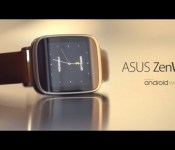
The ASUS ZenWatch will be launched on November 9th for $199
 The Android Wear space has heated up mightily over the last few months. The main offenders that have been kicking up a fuss have been the round-faced Motorola Moto 360 and the LG G Watch R, however the latest square-faced smartwatch is about to hit the scene, and boy does it look like a good one. The ASUS ZenWatch was officially announced at IFA 2014 earlier this year, and despite the fact we knew its pricing ($199 USD), we’ve yet to hear word of when it would be arriving for us to get our dirty mitts on – until today. November 9th (that’s two days away!) is the date that the ZenWatch is going to become available and will start to be sold (in the US at least) in Best Buys with it going up on Google Play at a later date.
At $199, the ZenWatch is a particularly interesting specimen. Hardware-wise, it doesn’t look all that different from the Moto 360 and the LG G Watch R, housing a Snapdragon 400 1.2GHz processor, 512MB RAM and 4GB storage, which makes it almost a steal at $50 cheaper than the two round-faced smartwatches. Couple that with a few software additions like tap features that add additional functionality and a selection of 100 watch faces to choose from. While we’ll reserve full judgement until some reviews start coming out, we’re quietly confident that the ZenWatch is the more budget Android Wear option that we’ve been waiting for.
What do you think about the ASUS ZenWatch? Let us know your thoughts in the comments below.
Source: The Verge
//<![CDATA[
ord = window.ord || Math.floor(Math.random()*1E16);
document.write('‘);
//]]>
The post The ASUS ZenWatch will be launched on November 9th for $199 appeared first on AndroidSPIN.
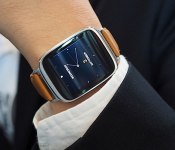
ASUS’ ZenWatch comes to the US on November 9th for $199

If you’ve been jonesing for a square Android Wear smartwatch that’s slightly more stylish than what’s currently on offer, your wait is just about over. ASUS has announced that the ZenWatch will reach the US on November 9th, when it’ll sell through Best Buy for $199; it’ll also be available through Google Play at a later date. That’s a pretty alluring price for wristwear that’s not only fairly sleek looking, but goes above and beyond Android Wear’s usual features, such as double-tapping the screen to launch a pre-assigned task. While a lot of what’s under the hood will be familiar if you’ve tried earlier Google-powered wearables, ASUS’ stand-out design could make it worth a closer look.
Source: TechCrunch

Verizon will carry the kid-friendly LG Kizon smartwatch
 When LG announced the child-tracking Kizon smartwatch, we weren’t really sure what carriers would pick the wearable up. Thanks to an FCC filing earlier today, though, we’ve got a pretty strong hint that Verizon will be offering the smartwatch later this year.
The filing lists the device with the model number LG-VC100, and some information from the Kizon PC Reset Tool confirms that it should be a Verizon variant of the watch. Verizon hasn’t made anything official, but I think we can expect an announcement sooner rather than later.
source: My LG Phones
Come comment on this article: Verizon will carry the kid-friendly LG Kizon smartwatch
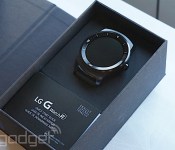
LG’s £225 circular G Watch R goes on sale in the UK

Google’s now selling LG’s G Watch R via the Play Store in the US, but in the UK, fans of the circular Android Wear smartwatch are being made to wait. Luckily, Amazon is one step ahead (not for the first time), and has opened orders for the wearable before its rival has had the chance to do the same. At £225, the G Watch R is £70 more than its predecessor, but with a heart rate monitor, better battery life and a fully circular display, it might be worth those few extra notes.
Filed under: Wearables, Internet, Google, Amazon, LG
Via: Wareable
Source: Amazon UK

What a name: Michael Bastian and Hewlett-Packard unveil the MB Chronowing smartwatch
 A while back, we heard that Hewlett-Packard (or HP as it’s probably better known as) and renowned designer, Michael Bastian, were collaborating to create a smartwatch. Little did we know that it would have the most badass name in the history of smartwatches: the MB Chronowing smartwatch. The device was effectively unveiled to subscribers of online retailer, Gilt, who is the exclusive seller of the device and opened pre-sale of the device today. Two versions of the MB Chronowing were unveiled including the standard MB Chronowing and the slightly more premium MB Chronowing Limited Edition Black smartwatch – make no mistake though, both will set you back a pretty penny with the standard version priced at $434.10 AUD (around $370 USD) and the Limited Edition version coming in at $807.30 (around $690 USD).
 That’s a pretty steep price to pay, but the watches are impeccably designed. As expected, the MB Chronowing isn’t running an operating system that we’re familiar with and is only configurable with a companion smartphone app available for both Android and iOS. There looks to be a fair number of customization options which can display music, weather and notification info on the main screen with the smaller, clock screen configurable too. For more info, be sure to visit the Gilt website at the source link below.
Source: Gilt
//<![CDATA[
ord = window.ord || Math.floor(Math.random()*1E16);
document.write('‘);
//]]>
The post What a name: Michael Bastian and Hewlett-Packard unveil the MB Chronowing smartwatch appeared first on AndroidSPIN.

Samsung will offer watch straps and bangle options for the Gear S
 If you’re planning on picking up Samsung’s Gear S, you should be happy to know that the company is planning on supporting the 3G smartwatch with several accessories, including multiple colors of wrist bands and some extra bangle straps. Samsung has updated the listing for the Gear S on their UK website to show several different straps that will likely become available once the watch starts shipping.
If you like the basic wrist watch band, you’ll be able to pick one up in five different colors: white, blue black, cobalt blue, mocha, or supreme red. The options are definitely better than some of the colors we saw from Samsung’s earlier Gear smartwatches, (looking at you, lime green Galaxy Gear) and swapping out wrist bands is incredibly easy. All you’ll have to do is pop out the Gear S from one wrist band and stick it in the new one and you’re good to go.
If you want something a little different, Samsung will also offer two bangle wrist straps which are a little thicker and wider. The bangles will only be available in blue black and white, however.
No word on pricing yet, but once the Gear S releases I’m sure Samsung will be quick to clarify.
source: Samsung UK
via: Sammobile
Come comment on this article: Samsung will offer watch straps and bangle options for the Gear S

The $299 LG G Watch R makes its way to Google Play

If you’re after a Android Wear device that looks more like a traditional timepiece, Google put LG’s wearable in its online store. The G Watch R was already tipped for the shelves of AT&T, but it made its way to Google Play today, ready to be snatched up after you part with the requisite funds. And yes, the stainless steel option with its “fully circular” display and various faces still carries that $299 price tag.
Source: Android Official Blog, Google Play
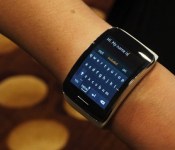
Samsung’s curved Gear S smartwatch hits the UK on November 7th for £329

With Android Wear still struggling to get out of the starting blocks, Samsung is hoping its latest Tizen-powered smartwatch can make some headway in the UK. The sleek Gear S, which comes with a curved 2-inch Super AMOLED display, will be available from November 7 for an eye-watering £329. The mammoth price-tag will almost certainly make it a niche product, although the device has a few tricks up its sleeve to tempt early smartwatch adopters. Unlike most wrist-worn wearables, it doesn’t need to be paired with a smartphone, and boasts 3G and built-in GPS. You can even take calls Dick Tracy-style when you’re too lazy to pull out your phone — just don’t blame us if you get funny looks when you do.
Filed under: Wearables, Samsung
Via: CNET
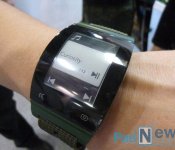
Sharp shows off extremely battery-friendly smartwatch

It seems like just about every technology manufacturer is throwing their hat in the smartwatch ring, and Sharp is no exception. They’ve recently showed off their take on a wearable device, and it takes a much more conservative approach to what we’ve been seeing lately. Instead of offering tons of bells and whistles, the Sharp watch tries to give you something with extraordinarily long battery life.
The smartwatch uses a reflective layer instead of a backlight for its LCD display. The reflective layer uses light that hits the face of the watch to illuminate the screen, drastically cutting power consumption. There’s a pretty big drawback here, though; a reflective layer means the watch can’t be used in the dark. It would have excellent viewing angles in direct sunlight, however.
The LCD is pretty lackluster for the sake of saving battery, too. It’s an LTPS display, or low temperature polysilicon, and it only displays 8 colors. It definitely wouldn’t be the prettiest screen to look at it, but it would barely use any battery.
If this device ever makes it to the market, would you be interested in one? Is extreme battery life worth sacrificing so many features and display qualities?
source: Padnews
via: Phone Arena
Come comment on this article: Sharp shows off extremely battery-friendly smartwatch
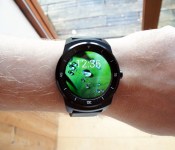
LG G Watch R review: good looks and improved battery are a step in the right direction

I think it’s fair to say by now that smartwatches are no longer the “hot new thing.” It’s an established product category. The paint might still be a little wet on the whole idea, and some might argue there are areas that still need improving, but these clever timepieces are officially here to stay. That’s thanks in no small part to Android Wear, Google’s platform that brought some sanity/unity to the wild west of wrist-worn Android tech that came before. With the software side of things taken care of, hardware manufacturers can now focus on the gear.
So far, in terms of Android Wear devices, we’ve seen efforts from LG, Motorola, Samsung and today, well, LG… again! Barely four months after launching the LG G Watch, the Korean firm is back with another one: the G Watch R. Whereas the G Watch was a square, unpolished and, perhaps, unfinished affair, the G Watch R we’re looking at today is a different beast altogether. It has a much more traditional design with a round display, leather strap and more. Was LG just eager to catch the first wave of Wear devices? Is the G Watch R the Wear device it should have released to begin with? More importantly, at $300 through AT&T (making it the priciest Wear device yet), do you want one?
Hardware
http://www.engadget.com/embed-5min/?sid=577&playList=518485800&responsive=false
I’m not saying that LG rushed the original G Watch to market, but on first sight, if you had told me, with its bland, square design and generic rubber strap, it was a prototype, I’d have believed you. The G Watch R (and that R is important), is a whole other kettle of fish. As I mentioned already, the big hardware difference isn’t some nifty hardware feature (though it does have a heart rate monitor this time); it’s that design. It does seem a little surprising that we’ve seen many, many smartwatches and, to a lesser degree, Android Wear devices, yet still we’re excited to see one that looks like a regular watch. We should be excited about features, not just because a device finally looks like a proper watch. LG’s latest effort isn’t going to give Rolex any cause for concern, but if you snuck it among a bunch of men’s watches (it is definitely more masculine than unisex) in a retail store, it wouldn’t stand out like a sore thumb.
If that sounds like a backhanded compliment, that’s because it kinda is. The G Watch R might be a step forward for Wear devices in terms of design, but it’s still fairly neutral-looking in horological terms. A steel body houses the circular display, and there’s a (non-rotatable) dial with the minute/five-minute/quarter-hour markers on it. Not so handy if you opt for a digital face, but it certainly adds to the effect when using an analog-style one. There’s also a button on the side where the crown would normally go. It doesn’t wind; instead it returns you to the home screen, wakes the watch from standby and takes you to the settings on a long press. A nice touch.
The strap is also an improvement from the original G Watch’s rubber one. This time it’s real leather. Nice as that is (it certainly passes the smell test), I found it to be a little stiff — almost cardboard like. It seems to have softened a little with use, but it’s not the most luxurious-feeling hide I’ve experienced. It’s also not the most comfortable. It’s not constantly irritating or unpleasant, but I do find myself adjusting it from time to time. The good news is, if you don’t like it, you can replace it with any standard 22mm strap of your choice.
Looks are one thing, but it’s what’s on the inside that counts, right? It’s here that the G Watch R suddenly becomes less of a departure from the original (or any other Wear watch for that matter). It has the same 1.2GHz dual-core Snapdragon 400 configuration, the same 512MB of RAM, 4GB of internal storage, Bluetooth 4.0, accelerometer and IP67 waterproof rating (submergible to one meter for about 30 minutes). The battery gets a very minor boost from 400mAh to 410, and the G Watch R gets a heart rate monitor as mentioned — which is new this time round. Lastly, if you were hoping for wireless charging, no dice there, sadly. This, too, uses a proprietary cradle, along with a micro-USB cable.

If you’re wondering how big it is, the body of the watch is 46.4 x 53.6 x 11.1mm. By comparison, the Moto 360 is 46mm in diameter by 11.5mm high. The G Watch R feels slightly less chunky than the Motorola thanks to the smaller, recessed screen (1.3 inches across against the 360’s 1.6). The thicker bezel on the LG gives the optical illusion of the whole face being even smaller. With most of the specifications between the 360 and the G Watch R being so similar, it’s details like these that are going to be deciding factors. One of those we’re about to tackle next.
Display
You might have made it through the hardware section thinking, “I can’t believe they didn’t mention that fully circular display!” Right, because I’m giving it its own section. We’re assuming the “R” in G Watch R is for “round.” Either way, LG’s clearly delighted that the display is a complete circle, and doesn’t have the black bar at the bottom that the Moto 360 has. How do we know? The company may have made reference to it filling the gap — not to mention, the press materials start with “Smart Comes Full Circle.” Motorola’s “flat tire” (as it has become known) is caused by the 360’s ambient light sensor needing somewhere to live. LG solved this problem by not including one. This means the G Watch R won’t auto-adjust screen brightness relative to your surroundings, but I think this was the right choice, given the clear aesthetic win. There are other trade-offs, though. At 1.3 inches across, the LG’s Plastic OLED display is smaller than the 360’s, but on the flipside, with the same 320 x 320 resolution (or mostly same; Motorola’s is 320 x 290) it has a small edge (no pun intended) on the sharpness front.

Another advantage of LG’s OLED display is that it’s going to be gentler on the battery. A scourge of smartwatches has been that they tend to go into standby to save battery, sorta negating their use as a timepiece you can glance at (aka, a watch). A backlit LCD (like on the Moto 360) theoretically requires about the same power to light one of its LEDs, as it does all of them. An OLED works differently, broadly speaking, only requiring enough power for the LEDs that are currently lit. So, when the G Watch R is in “always on” mode, after a few seconds, the watch face changes to a minimal black screen, just showing the time, and any active notification — meaning you can always have the time showing, without it zapping the battery. It seems to work, too, as I’ll cover later.
The display itself is bright and crisp. Colors look natural, with maybe just a hint of oversaturation, while blacks are nice and deep (as you’d hope with an OLED). You won’t find yourself looking at too many photos of course, but some of the watch faces you can choose include wallpaper/pictures, and they look great on the small display. While there’s no auto-brightness feature, I found it easy enough to view in daylight, only having to jack up the level in the most direct sunshine. As for viewing angles, these are great, meaning you can clearly read the watch face while typing or glancing down while walking (no need to lift your arm all the way).

Android Wear’s interface, with all its cards and pastel colors, translates well to the circular layout for the most part, though some of the text can be bunched up, or cut off from the notifications, which is frustrating at times (you can swipe to see all the text, but hey, I’m lazy…). Some might argue this negates the benefit of a smartwatch (after all, you could just slide out your phone), but I didn’t find it inconvenient to the point of annoyance. Another downside specific to a circular screen is that you can see the corners of pixels breaking the smooth line, as you follow the edge of the OLED around. It’s not distracting, but it can catch your eye from time to time.
In use

If you’ve not used Android Wear before, then the brief summary is that it’s a mix of Google Now and phone notifications boiled down to a watch-friendly format. Given that the software on Wear devices is always the same (unlike Android on phones, which is famously customized by manufacturers), there’s little to add here that we haven’t covered already. Instead, I’ll focus on those features that made themselves more useful on the G Watch R.
First up is the heart rate monitor. It’s hardly the first smartwatch to offer one — not even the first Wear device (Samsung’s Gear Live). But, it is the first LG Wear watch with this feature, so that’s something, right? The good news is, it actually works really well. In other devices I’ve tried (looking at you, Galaxy S5), it can feel like a bit of a last-minute add-on, but the sensor here is quick and (compared to taking my own pulse) accurate. Just ask the watch “What’s my pulse?” or “Show me my heart rate” and in a few seconds you’ll get your number. This then pipes into Google’s Fit app, to keep all your activity data in one place. This will be even more useful when combined with the step counter that’s standard in Android Wear. As more watches get GPS support (not the case here; Sony’s SmartWatch 3 will be the first), the fitness credentials will suddenly become even more useful — let’s just hope battery life doesn’t take too much of a hit.

One other new feature is actually not specific to the G Watch R, but it’s new to Wear, and we’ve not covered it before on Engadget beyond the news: the ability to store and play music directly from the watch. So, if you want to go running (for example), you no longer have to bring your phone along if you want some music. I followed Google’s instructions for transferring music to the letter, and nothing happened. The LG G Watch R later prompted me that there was an update, so I installed this. I tried following the instructions again (basically there’s a tick box in the Play Music Android app) and again nothing. Then some time later, a card popped up saying it was transferring music. Great. Despite the unclear setup process, it’s definitely nice-to-have functionality, and it shows that Android Wear as a platform is growing with the hardware that’s running it. It’s still pretty basic for now — you can’t choose exactly which music to sync, for example — but hey, it’s progress. Currently there are no alternative music player apps for Wear, but that’s something we’d expect to change soon.
As for actually navigating around the G Watch R, again, it’s more of the same. If nothing else, it’s a testament to how much Google is trying to ensure the experience is the same, which is something that can’t be said for its mobile OS. The side button wakes and puts your device to sleep. Lifting your wrist will also (theoretically) wake the watch too, and activate the voice recognition, for a seamless experience. The reality, however, does leave a few stitches showing (but maybe not full seams). By that I mean, not every time you lift your wrist, hoping for the watch to spring to life, will it do so. This leaves you in an awkward pose, expectantly staring at your watch. In fairness, this has been true of all watches I’ve tried with this feature, but I do feel the LG is perhaps slightly less responsive than those I’ve tried so far.

No bother, when this situation arises, you just casually touch the screen — as that will also wake it. So, really, you have three options when it comes to waking up the device, which should cover most bases. As for the voice recognition itself, I’ve always found it to be pretty good. For example, when you receive a Hangout, or SMS, et cetera, you can swipe left, and find a “reply” option. This sets the watch listening, and you simply speak your message. I managed to conduct continued “chats” using just the watch and this method. Again, it’s not perfect — about a third of the time there was a slight error, and perhaps 15 to 20 percent of the time I had to cancel the message and try again. But, if you’re chatting with a friend that will let things like “see you laker” slip, then you’re good. Especially as it often seems to send the message even though you thought you canceled it! Also, the feature whereby notifications (for all those replies!) can be dismissed from view, for addressing later is present this time around also. Which is good news, as it’s great to be able to clear them from your display, while knowing you can check back later.
Battery life and performance

Ok Google, what about the battery life? That’s pretty much what most Android Wear users have been asking. With good reason, too. So far, none of the watches we’ve tested have managed to last much longer than a day’s use. Even then, you’ll basically wake up needing to charge it right away. LG only added a tiny 10mAh boost to the cell from its last watch, so we weren’t expecting much. But, I am fairly pleased to report that I regularly got two days’ use out of the thing between charges. That’s with a decent amount of interaction with it: lighting up the screen, voice commands, getting plenty of notifications and so on. Also, this is with the screen set to “always on” (the mode that dims everything, but still shows the time). With the watch set to time-out to black, and with more moderate use, there might be hope of reaching day three. I’m just incapable of moderate use, it seems.
Another positive side effect, and of course one of the selling points of smartwatches generally, is that because you likely end up using your phone less — by not constantly checking it, and dealing with some basic tasks right through Wear — you also get better battery life from your phone. You might counter that by saying, “But you do have two batteries on the go/in the mix,” and we won’t argue with that, but as a combined experience, it should help you reach two days between charges for both devices that little bit easier. Don’t get me wrong — even two days is still way off from what we’d like to see for a smartwatch’s battery life, but again, progress.

Measuring a smartwatch’s performance isn’t an exact science, but as you can imagine, with a 1.2GHz, dual-core Snapdragon running the show (something that would have been in a flagship phone not all that long ago), and relatively light tasks to take care of, performance is smooth. I never experienced any screen stutters, or pauses between menus and opening messages, etc. The biggest factor, if anything, is going to be how close you are to your phone, and how speedy its internet connection is.
The competition
As of this writing, if you’re in the market for an Android Wear device, you have a total of four options (five if you include the pre-orderable Smartwatch 3). One of them is the device that (as many will see it, even if both will remain on sale) the G Watch R replaces (unless you really like the design of the original G Watch). We called Samsung’s Gear Live the best Android Wear watch at launch, but its tenure on the throne was short-lived. The Moto 360 soon usurped it, but then at $250, it is more expensive (about 20 bucks more than the original LG and 50 over the Samsung). Right now, LG hasn’t revealed the official price for the G Watch R, but AT&T is the first retailer to break cover, offering it for $300 starting November 7th. This price at least means Motorola won’t be having too many headaches. If it had been priced around the same, then, it might have been a different story. Personally, I think the LG is a smidge better, but I’m not sure it’s a full $50 better. In fairness, $300 is too much for any Android Wear device right now. I would be very surprised if you can’t pick it up for less once more retailers announce availability.
Wrap-up

With better battery life and a fully circular display, the G Watch R has two distinct advantages over its nearest rival. In many ways, that makes it an open-and-shut case. But, of course, with wearables it’s never as simple as that. You may well prefer how the Moto 360 looks. Or, heck (we’re not judging), maybe you think the Samsung and OG G Watch are the last word in fashion. And of course, there’s the question of that $300 asking price. Ultimately, bar a few minor details (a heart rate monitor here, an ambient light sensor there), you’re getting pretty much the same experience whichever Wear watch you choose. The parting of money will come down to two things: design preference and price. LG made the G Watch R nice to look at and more watch-like, so I have no complaints there. For now, the Android Wear throne hasn’t been toppled, but Motorola might well have to shuffle over and make room for a neighbor.
Filed under: Cellphones, Wearables, Mobile, LG
 AIVAnet