


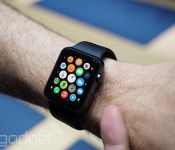
Here’s how the Apple Watch companion app works

It’s no secret that Apple is making customization a big part of the Apple Watch, but there’s apparently more to it than meets the eye. The folks at 9to5Mac claim to have details and images showing how a pre-release version of the wearable’s companion iPhone app works, and there’s a fairly extensive range of tweaks. For a start, you can create your own watch face monogram if you just have to remind everyone that it’s your wristwear. You also don’t have to embrace Apple’s fitness model if you don’t want to. You decide how often it gives you progress updates, and you can turn tracking off altogether if you’d rather not let the watch quietly judge your lifestyle.
Other noteworthy examples? You can customize the app grid from the phone, and limit when you get messages to prevent strangers (or just overly chatty friends) from buzzing your wrist non-stop. It’s not clear that this represents everything the app will do by the time it’s ready, and there’s certainly more customization on the watch itself, but this at least gives you an inkling of the control you’ll have when you strap this device on your arm.
Filed under: Cellphones, Wearables, Mobile, Apple
Source: 9to5Mac
Here’s what we expect from Samsung at MWC 2015

With CES 2015 finished up, awards given and hundreds of tech reviewers ready to crash for a few days to recover from the adventure, it is time to start thinking about what comes next in the world of Android. As far as the big events go, next up is very exciting, as we are headed into flagship season and MWC.
Samsung has been a major manufacturer of Android devices in the last few years. They have a fairly regular routine of launching one iteration after another of most styles of phone they offer. That approach has changed a little in the last half year or so, with stiff competition and the consumer desire for more premium feeling devices than Samsung’s normal plastic offerings, at a lower price than a flagship normally affords.

What should we expect from Samsung moving forward?
We applaud Samsung for reigning things in a bit. While we love the idea of having seemingly limitless options of Android devices to choose from, we’ll take quality over quantity any day. It appears that Samsung knows this, as the expectations for their next flagship device(s) may be the best that the South Korean manufacturer has yet delivered.
Materials
Starting with build materials, Samsung tested the waters late in 2014 with the Galaxy Alpha. The Alpha was touted as Samsung’s first major Android phone built of metal. While the design of the phone was not a huge departure from other Samsung devices, the metal made for a more premium feel over Samsung’s typical plastic offerings

The Samsung Galaxy Note 4 was also a welcome design change, although it did not rock the same metal build, the phone itself brought a glossy and premium look to it. This lead to the notion that the Note 4 is the phone that Samsung should lead off from in future flagship devices.
Display
One of the key features to the Note 4 that helped Samsung stand out in the crowd came in the second iteration of the device, called the Note Edge. Adding a curved display to an Android phone may not be a new concept, but the Note 4 based version took it to the next level of functionality. If you are unfamiliar with the benefits of the curved edge of the Samsung Galaxy Note Edge, I will just leave you with this video to see what I mean.
Samsung Galaxy S6
Our expectation is that Samsung will take the ‘you can’t have too much of a good thing’ approach with the Galaxy S6. That said, it is likely that the Galaxy S6 will come in two variations as well. The flat panel S6, with metal build materials, of course, and a Galaxy S6 Edge, rocking a similarly styled curved edge to the Galaxy Note Edge.

It is Samsung’s history to announce their ‘S’ line flagship at Mobile World Congress (MWC) held in Barcelona every year. MWC will be held in early March for 2015, a little bit later than the normal February dates that gave Samsung a couple months to actually launch their flagship device in April or so. We expect that Samsung will be on track for April once again, regardless their announcement date.
We’ve got a full Samsung Galaxy S6 rumor roundup all ready for your perusal, but the highlights include a 5.5-inch display, on the flat panel, 5.3-inch on the curved version. As long as Qualcomm is right that the Snapdragon 810 is still on track, it is most likely we will find the new high-end 64-bit SoC in the Galaxy S6. And an Exynos version as well, for certain primarily-Asian markets. Head on over to the Galaxy S6 rumor roundup for more details.
For good measure, check out this awesome looking fan depiction of what the Galaxy S6 could look like.

Smartwatch
But wait, there’s more! You didn’t think the next flagship Galaxy S6 was all that Samsung has in the works did you? How about a new smartwatch? Not just any smartwatch, of course, as rumor has it that Samsung is headed to MWC with a completely round watch face design. Something we’ve seen in the Motorola Moto 360 and the LG G Watch R already.

We’ve heard rumblings of a round faced Samsung smartwatch since early 2014. More recently, as suggested, those rumblings suggest a launch at MWC, and in common Samsung smartwatch fashion, we expect the new watch to run their own mobile operating system, Tizen.
Tizen
We are still debating internally the pros and cons of Samsung pushing forward with their own operating system, Tizen. There is little dispute that Samsung has built much of their success in the mobile sector thanks to the power of Android. Should they forego Android and move to their own OS?

We’re not here to debate Tizen, but we’ll tease the debate just a little. On one hand, Samsung is pushing out Tizen powered smart TVs and smartwatches all around the globe. As with any ecosystem, users of these Tizen devices may look for a Tizen phone to match. On the flip side, well, Android. Despite their best efforts, Samsung’s ecosystem can not yet compete on level with Google and Android.
As far as Tizen goes, we expect 2015 will be a big year for Samsung, shipping many general consumer electronics powered by Tizen. They may even finally get around to launching that Tizen smartphone we’ve heard about time and again. However, we do not expect to see Samsung bring any Tizen phones to MWC. Their next round of flagships, including the Galaxy S6 and Galaxy S6 Edge, should run Android Lollipop.

See you at MWC
There you have it, our expectations, based on what we know so far, are for two versions of Samsung’s next flagship release, the Samsung Galaxy S6 and a curved screen variant, plus a round faced Moto 360 competitor smartwatch. You can be sure there will be other electronics at the show, including appliances and smart home technology too.
With several weeks until the show, there is plenty of room for Samsung to make changes to their lineup. Stay tuned, as we’ll be sure to bring you all the latest credible leaks and rumors as they come around. We’ll also be at the show, to bring you the same great coverage as we did for CES.
What do you think Samsung will bring to MWC 2015?
The state of smartwatches in 2015: perception vs. reality, and the Apple Watch
CES 2015 has come and gone, and for another show, there was a huge emphasis on the wrist worn wearable, something which we’ve come to colloquially refer to as the “smartwatch“. So what exactly is the state of smartwatches in 2015? Are we at the point where it’s a mainstream consumable and people know what they […]
The post The state of smartwatches in 2015: perception vs. reality, and the Apple Watch appeared first on AndroidSPIN.
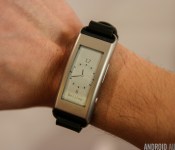
CES takeaway: wearables

As CES 2015 is coming to a close, we thought we’d take this time to go through the week’s top stories and roundup the biggest wearable announcements we saw at the trade show. Wearables have been absolutely growing in popularity over the past year, and they’ve arguably been one of the most important parts of CES. There’s a lot to recap here, so let’s jump right in.
Starting your car with Android Wear
Android Wear got a lot cooler throughout this year’s CES, largely thanks to car companies new integrations. Hyundai and Viper both announced Android Wear integration, allowing users to start, stop, unlock and lock their cars, all using an Android-Wear powered smartwatch. While Viper has only announced their compatibility with the platform so far, Hyundai showed off the technology to us at the trade show. Take a look at the video above to see how exactly it works.
Read more:
- Hyundai Blue Link for Android Wear hands-on at CES 2015
- Hyundai announces Android Wear app that can start your car remotely
- Viper SmartStart 4.0 allows you to lock or start your car with Android Wear
The future of wearable technology

Sometimes CES isn’t all about the products being shown off, but about new technology that’s used to power them. Intel recently announced their new “Curie” module, which will one day most likely run your smartwatch or smart ring. The draw to the Curie chip is its compatibility with Bluetooth Low Energy and its small-as-a-button design, allowing wearables to shrink in size.
MediaTek also announced a chip recently, specifically tailored to the Android Wear platform. The chip is called the MT2601 and its a small powerhouse of a processor. It packs in a 1.2GHz dual-core ARM Cortex-A7 CPU accompanied by an ARM Mali-400 MP GPU. The chip can be connected to up to the usual array of external sensors and wireless modems, such as MediaTek’s own MT6630 five-in-one wireless SoC, and supports a qHD display resolution. While it’s not as powerful as the Snapdragon 400 found in other Wear devices, MedaTek is confident that the combination of high power and low cost will be able to put this chip inside your next wearable.
Read more:
- Intel hopes to power your next wearable with the tiny Curie module
- MediaTek introduces its MT2601 SoC, designed for Android Wear
A prettier Sony Smartwatch 3
We’ve already reviewed Sony’s Smartwatch 3, but one of our main gripes with the device was the fact that it just didn’t really look premium. The company is finally trying to fix that with their new stainless steel watchband. Overall, this band is really nice. It’s a tad heavy, but it feels like a truly premium product. The way the Smartwatch 3 works with other bands is a little clunky, since you basically just pop out the watch module from the band, and attach it to a new one. It might be easier to switch bands on the fly, but it makes the watch clunkier than it has to be.
All in all, this is nothing groundbreaking, but we’re sure happy Sony is giving us more band options with their first Android Wear device.
Read more:
A hint of webOS wearables

Okay, so this isn’t a product that was announced, but it’s still definitely worth mentioning. For awhile now, we’ve heard many reports of LG resurrecting webOS in the form of a wearable, but we’ve all been wondering when it will actually surface. During Audi’s keynote at CES, The Verge spotted a unique LG-made watch, used to summon a self-driving car up to the stage. The folks over at Android Central tracked the watch down and confirmed it was, in fact, running Open webOS. The watch itself is beautifully crafted, offering a stainless steel chassis and a nice leather watch strap. Unfortunately, this watch was crafted specifically for Audi to show off their car prototype, so we don’t think a consumer-friendly model will arrive anytime soon. But we do know, however, that the rumors are true and that webOS is on it’s way to our wrists.
Read more:
- LG reportedly working on WebOS and SIM-enabled smartwatches
- Mystery LG smartwatch reportedly spotted at CES [updated]
Lenovo’s new fitness band
Lenovo was pretty busy this week, announcing two new phones (P90 and VIBE X2 Pro), and launching a selfie flash accessory along with arguably their most exciting product, the Vibe Band VB10. The VB10 is a fitness tracker/smartwatch hybrid that connects to any Bluetooth-enabled device running Android 4.4 KitKat and above. It’s lightweight, durable and is IPx7 approved, so you can get it wet without having to worry about it. It also notifies you of all phone notifications, as well as tracks your steps, sleep, distance traveled, and much more. The display is E Ink, similar to what we see on the Pebble. Thanks to this low-power technology, the battery will likely last up to 7 days on a single charge. The chassis is made of metal and the strap is rubber, offering a both premium and sporty feel to the device.
I think Pebble is a great example that E Ink just works on wearables. At least with the horrible battery life we see on Android Wear devices, E Ink is the way to go for the time being. Even though it’s not the most attractive watch out there, the VB10 is succeeding in all the right places.
Read more:
Garmin’s new sporty smartwatches

Garmin was one of the first companies to announce a product for CES this year with the unveiling of three new smartwatches. Well, these watches should be considered more fitness tracker than smartwatch. They tell the time and give you notifications on your Android device, but other than that, their main use is to track workouts, sleeping habits and much more. Garmin’s new Epix, Vivoactive and Fenix 3 smartwatches aren’t the cheapest wearables ever, but they boast some of the newest fitness tracking technology you can get on a smartwatch, and that has to be worth something.
The watches will be available sometime in Q1 2015 ranging from $250-$600.
Read more:
BBM coming to Android Wear

Last but not least, Blackberry Messenger is gaining Android Wear support. As much as you don’t want to admit it, BBM is one of the best, most fluid and feature-rich messaging platforms out there, and a ton of people use it. BBM on Android Wear works exactly how you think it would. You can reply and dismiss messages, and even send canned responses if you don’t want to respond via voice control.
This certainly isn’t groundbreaking technology, but it’s nice to see more services integrating with Android Wear.
Read more:
I think it’s safe to say that wearables played a huge role at CES this year. The advancements we’re seeing with car integration is particularly fascinating, and it just seems like something we would only see in the future. Five years ago, long before the smartwatch craze came about, if someone told me that I would be able to start, stop, lock, unlock and even track my car with my watch, I wouldn’t have believed a word of it. It’s finally happening, and I couldn’t be more excited. Now, this technology isn’t particularly innovative, especially since car companies have had the ability to do all of these actions from a smartphone, but I just can’t help but think I’m living in a future-esque world of technology.
As for smartwatches in general, we didn’t really see a whole lot. Garmin announced a few nice smartwatch/fitness tracker devices, but they’re very expensive and only directed toward a very niche market. The wearable I’m most excited for that was announced at CES was Lenovo’s VB10. I’m a firm believer that we need more wearables with E Ink displays, thanks to the awesome battery life they provide. The Pebble is a great example of how E Ink technology can succeed on a wearable. Especially with the 1-2 day battery life we’re seeing on Android Wear devices so far, this type of technology needs to be utilized more often in the wearable world.
Of course, we might end up seeing better battery life coming to wearables in the near future or at least by the end of 2015. Intel’s new Curie module has me very excited, providing support for Bluetooth Low Power while only being about the size of a small button. Smartwatches so far are pretty bulky, so anything to reduce the size of the devices is a great idea in my book.
Overall, I’m extremely excited for what’s to come in the wearable space. A ton of new technological advancements have come out of this year’s CES trade show, and I think wearable devices will progress at a very fast rate throughout this next year. What are your thoughts on wearable technology? Did you have a favorite or least favorite wearable announcement at CES 2015? Let us know your thoughts in the comment section!
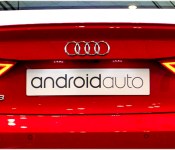
CES takeaway: Android Auto

The 2015 experience of the Consumer Electronics Show in Las Vegas is wrapping up, and it was a pretty great event. We had a good portion of our team on the ground for the week, bringing you all the best that CES 2015 had to offer. With so much to discover and experience, we had to break apart our round-up of the show into several parts.
Before we dive into our Android Auto coverage, I just wanted to thank you, our readers, for joining us on this adventure. We had a ton of fun, and we hope you did too.

Last June, Google officially introduced a number of new products and services at their Google I/O conference, most of which centered around the Android operating system. On that list was a streamlined version of the OS called Android Auto. Designed specifically to operate in the dashboard of your next car, 40 auto makers signed on to bring this system to life into 2015 and beyond
As it so happens, auto makers were a major vendor at CES, and as you can imagine, Android Auto was a major driving force behind smart and connected cars at the show.
For new vehicles
Hyundai
One of the first names to come to our attention was Hyundai. Hyundai took Android Auto to a level that we perhaps always dreamed of, but didn’t think would hit this early in the game. With the name Blue Link, and in cooperation with Viper car alarms and starters, Hyundai has not only built Android Auto into their car, but went ahead and built an Android Wear app to go with it. We took the time to talk about Hyundai and Blue Link a few times, which you can see in short in the video below.
This might be a good time to mention that Hyundai’s Android Auto implementation, as with most others, is not currently the core of the software running. As you saw in the Hyundai hands-on video over here, Android Auto is an application within the Hyundai software. This is to be expected, as you still want your car entertainment and navigation systems to work, even if you leave your phone at home.
Volkswagen
Playing fair to Android and iOS users alike, Volkswagen came to the show with their promise of Android Auto and CarPlay support for upcoming cars. Sadly, the only vehicle specifically named was the Golf, but we expect most of their lineup will see the update in coming years. Volkswagen’s new system will also feature something called MirrorLink, which will allow for direct integration with HTC, LG, Samsung and Sony Android phones.

Best of all, Volkswagen is also working on Android apps so that you can lock and unlock doors or check on your battery level from the comfort of your living room.
Aside from the Android Auto highlights of the show, CES 2015 had a good number of other auto makers on board as well, we saw innovations for everything from infotainment systems through to self driving cars. A few of the major names to make headlines were BMW with their accident avoidance tech and GM, or Chevrolet depending on how you look at it, with their new Volt electric car. Players like Dodge, Mercedes and Tesla were also on hand, but as cool as their stuff was, it just didn’t make it onto our ‘Android radar’ as much as the rest, at least not this time.
Another player that made us stop and look twice, was Ford. Ford has long been a leader in connected car technology, at least in the ‘cars under $50,000′ segment. I won’t spoil anything, but we took a good look at their tech over here.
Audi
As an added bonus, we caught wind of a new smartwatch built by LG at the show. At first we were a little perplexed, and you are probably wondering why we’re talking about it in an Android Auto article. I go further off course by mentioning that said smartwatch was found to be running WebOS, but the thing is, this smartwatch was commissioned by Audi.

We are eagerly looking forward to learning more about this watch, particularly how well it integrates with Android, as it has been called the rich and beautiful sibling to the LG G Watch R. More than this, we can’t wait to see how (if) it integrates with Android Auto in the car.
For all vehicles
The idea of purchasing a new car equipped with Android Auto is very exciting, but what if a new car is not in your immediate future? No worries, a handful of common car audio manufacturers were at CES showing off their new Android Auto wears. In general, we’re looking at stereo head units built with Android Auto, and we suspect something will appeal to you with players like Kenwood, Panasonic and Pioneer in the game.
But that’s not all, a brand that you may not have heard of has made a bit of a splash as wall, Parrot announced their new RNB6. RNB6 offers up a 7-inch touch panel to users, with a few dedicated physical buttons on the side for good measure. Running a base layer of Android Auto software, enhancements have been added to support CarPlay and the device can even hook to your car’s OBDII connector, to bring in live metrics of your drive, such as fuel level and consumption and so much more.

One last thing, did we mention that the Parrot RNB6 also packs a dash camera, and support for a rear camera? That’s right, Parrot may have build the best aftermarket Android Auto head unit around, so far.
Until next year

With CES 2015 under our belts, it’s time to look forward to what comes next. As far as Android Auto is concerned, the best is yet to come. We’ve all seen Android Auto in the news, watched the videos, read the articles, but the real fun starts now. We are very much looking forward to 2015 and all that it brings to the road.
Before you run away, be sure to check out our other CES takeaway experiences, including:
CES takeaway: Android TV (Coming soon)
CES takeaway: Smartphones and Tablets
CES takeaway: Wearables (Coming soon)
What was your favorite Android Auto news out of CES 2015?
A round Samsung smartwatch is rumoured for a MWC 2015 next month
The smartwatch wars appear to be heating up, but one thing is quite clear in the early going: round smartwatches have been the ones to watch, presumably in large part to our familiarity with the round form factor. Well, apparently even Samsung is seeing the signs now and is preparing a round Samsung smartwatch, rumoured for […]
The post A round Samsung smartwatch is rumoured for a MWC 2015 next month appeared first on AndroidSPIN.
CES 2015 Martian Watches Hands-on: Martian releases four new smartwatches with style in mind
Smartwatch wearables featured heavily again at this year’s CES, but while the attention has been squarely centred on Android Wear devices, and to a lesser extent to impending presence of the Apple Watch, we can’t help but revisit one of our favourites while CES 2015 is still alive and well. Martian Watches make some of […]
The post CES 2015 Martian Watches Hands-on: Martian releases four new smartwatches with style in mind appeared first on AndroidSPIN.
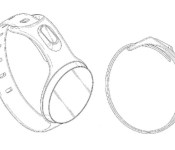
Samsung’s rumored round smartwatch will reportedly run Tizen

Round smartwatches are seemingly all the rage as of late. First, everyone drooled over Motorola’s Moto 360, followed by LG’s G Watch R. We even got a glimpse of an LG-made webOS smartwatch at CES this year. For quite some time, we’ve heard rumors of Samsung developing a round smartwatch, dating back almost a year ago. Now in a new report from SamMobile, a few more details are surfacing regarding the rounded wearable. According to the report, the device will be known as “SM-R720,” and is referred to by the codename “Orbis.” What’s more, the device will run Samsung’s own Tizen OS.
Up until now, the operating system running on the round watch has been a mystery. Samsung has put out both Android Wear and Tizen watches in the past, so this wearable could have gone either way. Now that the device will reportedly run Tizen, it makes sense from Samsung’s standpoint. Since rounded wearables are “in” right now, this is a great way for the company to get their own OS on as many wrists as they can.
There is one thing to note, though: the ring-operated rumors we’ve seen in the past aren’t exactly connected to the Orbis codename. We do know that there is an upcoming Tizen watch with the codename ‘Orbis’ and the model number SM-R720. It would make sense that a wearable with a name like ‘Orbis’ would be a rounded smartwatch with a ring-like design, but so far, the fact that the two rumors are connected is still just assumption.
The report also hints at a projected release for MWC this year, though it’s likely much too early to tell when we’ll actually see this watch. So, how do you feel about a Samsung-made ring-operated watch running Tizen? If rumors are true, is this something you’d be interested in?
Plot twist: That LG-made Audi smartwatch is actually running webOS
Yesterday, we were enthralled by the appearance of a LG-made Audi smartwatch that was shown during an Audi presentation, and it was suggested that the watch ran a customized version of Android Wear. As it turns out, that information was wrong and Android Central has confirmed today that the device actually runs webOS, an operating system […]
The post Plot twist: That LG-made Audi smartwatch is actually running webOS appeared first on AndroidSPIN.
Mediatek MT2601 is a processor for wearables, hopefully used to make cheaper smartwatches
Mediatek processors aren’t typically used in devices in markets like Europe and America, however in Asia and emerging markets, they are used in practically every device. A large part of this is because the chips are so much cheaper, and although they are aren’t quite a fast or optimized as some of their counterparts from companies […]
The post Mediatek MT2601 is a processor for wearables, hopefully used to make cheaper smartwatches appeared first on AndroidSPIN.
 AIVAnet
