



Samsung Galaxy S5 comes with premium app subscriptions worth over $500

After powering the world’s most retweeted tweet, Samsung has also revealed a suite of app-based upgrades that future GS5 owners will receive, free, alongside their new smartphone. While Evernote and Linkedin’s premium services only extend to three months, we have no complaints about six free months of the Wall Street Journal and year-long access to Bloomberg’s Businessweek. The Galaxy S5 will also include a year of Run Keeper Premium, as well as limited-time premium services for Map My Fitness and Skimple. There’s no Dropbox this time, but there is 50GB of free cloud storage — for six months — from Box. Also, in case you forgot about the Galaxy S5′s heart-rate sensor, you’ll also pick up a year’s subscription to Lark’s personal wellness app, which will plug into (and monitor) all your health metrics… until you’re ready to pay another 36 bucks to extend the service. But then, who can put a price on good health?
Filed under: Cellphones, Software, Mobile, Samsung
Source: Samsung

Samsung debuts its first Galaxy S5 ad during the Oscars and turns sponsorship dollars into all-star selfies

In case you hadn’t heard, Samsung’s newest phone is coming. At the Oscars, the Galaxy S5 just got a huge shot of publicity, both in a 30-second ad segment and the not-so-casual ceremony presence of its big bro, the Note 3, throughout the awards. We hope you like Hollywood stars and selfies, because Ellen’s going to be tweeting a whole lot of them. That’s your sponsorship dollars at work, Samsung, even if DeGeneres apparently switched back to an iPhone backstage.
Update: Oh, and that ensemble picture being taken in the shot above? The real thing is now the most-retweeted post, ever.
[Picture via @Buzzfeed]
If only Bradley’s arm was longer. Best photo ever. #oscars pic.twitter.com/C9U5NOtGap
– Ellen DeGeneres (@TheEllenShow) March 3, 2014
Filed under: Cellphones, Mobile, Samsung

Weekly Roundup: Galaxy S5 hands-on, Engadget’s 10th birthday and more!

You might say the week is never really done in consumer technology news. Your workweek, however, hopefully draws to a close at some point. This is the Weekly Roundup on Engadget, a quick peek back at the top headlines for the past seven days — all handpicked by the editors here at the site. Click on through the break, and enjoy.

Megapixels and mobile imaging
In recent years, smartphone photography has been centered around pixels. Lots and lots of pixels. But Google’s latest concept phone, dubbed Project Tango, could take mobile imaging to an entirely new level. Read on as Engadget’s Steve Dent explores the potential of handsets equipped with with multiple sensor technologies.

Nokia’s new Android smartphones
Microsoft’s acquisition of Nokia is just around the bend, but the Finnish smartphone maker apparently couldn’t wait. Say hello to Nokia’s first Android handsets: the X, X+ and XL. At $122, $135 and $150, respectively, each device packs a slightly different combination of low-end specs. Read on for our impressions and hands-on photos.

Samsung Galaxy S5 preview
Meet the Galaxy S5. Samsung’s newest smartphone features top-of-the-line specs, a 5.1-inch display and an interchangeable polycarbonate backside. What’s more, the S5 follows recent trends, packing a fingerprint scanner and heart beat sensor.

Twitch arriving on Xbox by March 11th
The second half of Microsoft’s big Xbox One update is expected just ahead of Titanfall’s March 11th release. Aside from being able to broadcast your gameplay via Twitch.tv, Xbox owners will exclusively be able to archive streams right from the console.
Filed under: Misc
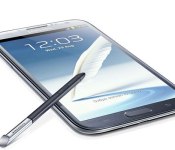
How would you change the Galaxy Note II?

In just three years, the Galaxy Note has grown from a niche device to a must-have, which is almost as eagerly anticipated as Samsung’s Galaxy S flagships. When we placed the Galaxy Note II in the hands of our tame phone driver, they had nothing but praise for the handset. Oh, except for its sky-high price, that is. But what of you, we ask? What particular things did you love or loathe about this particular slab of glass and plastic? Share your experiences on the forum.
Filed under: Cellphones, Mobile, Samsung
Source: Engadget Forum
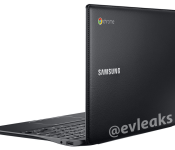
Evleaks Posts Image of the Samsung Chromebook 2

Mr. evleaks gave us a little treat today, and that treat is the new Samsung Chromebook 2. Yesterday, he teased us with just the corner of the new Chromebook, that showed that Galaxy Note 3-like faux-leather and stitching, that was also accompanied with the Chromebook logo. Now we get that full-nude backside.
I guess Samsung is just going to stick with the faux-leather look, which doesn’t exactly please my eyes, but Galaxy Note 3 users out there I guess dig it. It actually looks better on the a Chromebook than the Note 3 in my opinion, because it gives it that briefcase look to it. Not that a Chromebook is for the everyday business man, but hey, those guys need a small laptop to play around on too. Let us know what you think about the image.
Source: evleaks

Leak suggests leather-wrapped Samsung Chromebook is on the way

Take one @evleaks image, add a familiar looking faux-leather finish and a Chrome logo, and what do you get? Well, a new Samsung Chromebook on the way would be our guess.
Filed under: Laptops
Source: @evleaks

Why did Samsung play it safe with the Galaxy S5’s processor?

Of all the phone manufacturers out there, Samsung seems to have a particular talent for creating an anticlimax. Our first thought when holding the Galaxy S5 was that we’d been through all this before a year ago, with the equally underwhelming launch of the GS4. Our disappointment jibed with the reactions of other bloggers around us at Mobile World Congress and with many readers’ comments on our hands-on article. Folks seemed to forget about the phone after five minutes and switch their attention to Samsung’s new smartwatches, especially the delectable Gear Fit.
First impressions aren’t everything, however. A phone’s charm can take a while to sink in, and you only have to look at the Galaxy S3 for proof of that. (I reviewed that handset many moons ago, and must admit that I never expected it to do as well as it did.) As add-ons go, the swipe-based fingerprint scanner and heart rate monitor may not be astounding now that we’ve had the HTC One Max and fitness gadgets like the Withings Pulse, but they might prove their utility in time. Even if they don’t, the GS5 has other redeeming features, such as its 1080p AMOLED display, phase-detection autofocus and basic water resistance, and it comes at just the right time to win over GS3 owners whose contracts are coming to an end.
But the anticlimax is there nonetheless, and it most likely stems from a suspicion that Samsung’s vast scale and manufacturing strength isn’t being fully exploited. Like Apple, but unlike most other phone makers, Samsung has control over many different technologies that go into a smartphone, including the memory, display and — most importantly — the processor. It showed us glimpses of this cross-discipline expertise with the global versions of the Galaxy S2 and S3, whose in-house Exynos processors brought extra speed and graphics just when Android needed it, and it did something similar with the big-screened, stylus-equipped Galaxy Note series. But the GS5, like the GS4, seems much less distinctive, and so perhaps what we should be asking is this: Why isn’t Samsung able to muster its in-house resources to create something truly different? And that, at least, is a question we can begin to answer.
Off-the-shelf

Not everyone believes in fate, but I do, at least in terms of smartphones. I think that every handset’s destiny is fundamentally determined by its processor. If its processor is unique, a phone can be smarter than any other. But if the processor is shared with rival products, then a phone must come with convincing peripheral features if it’s to have any shot at greatness.
Neither Sony nor Nokia have the capability to create unique processors, so they’ve wisely thrown their weight behind useful extras, such as class-leading camera modules and standout design. These companies are limited in the technologies they can create, but the threat of extinction has forced them to integrate their departments and gather together every bit of technology at their disposal.
Apple, meanwhile, has spent years working on its A7 chip. This allowed it to make core improvements to all areas of the iPhone 5S: a new 64-bit architecture to boost overall performance with no cost to battery life; a new image signal processor to aid the autofocus and multi-exposure performance of the camera; and a new coprocessor that allows the 5S to work as an effective fitness tracker with no need for a separate accessory. Even when Apple has absorbed inventions from outside, it has either acquired the inventor (as in the case of AuthenTec and its fingerprint scanner) or it has established long-term contracts that give it the freedom to tailor a product to its precise needs (as in the case of Imagination Technologies and its GPU).
In the case of the Galaxy S5′s processor, however, Samsung simply went shopping. It made sure to buy the best, in the form of a highly overclocked version of Qualcomm’s Snapdragon 800 chip (called the MSM8974AC or Snapdragon 801), but ultimately this is just a marginally faster version of the chip inside Sony’s Xperia Z2 (the MSM8974AB). In turn, the Z2′s chip is just an overclocked version of the original Snapdragon 800 (MSM8974) found in the Galaxy Note 3, Xperia Z1 and Nexus 5.
“In the case of the Galaxy S5′s processor, Samsung simply went shopping”
We should therefore expect the GS5 to have great performance and battery life, just like these other Snapdragon-equipped phones, but with no real scope for deep-level integration that could make it stand out from its competitors. As one Qualcomm representative whispered to me: The GS5 has a regular off-the-shelf Snapdragon, largely the same as anybody else’s, except with more “bragging rights.”
Samsung’s reliance on Qualcomm made sense with the Galaxy S4 and American versions of the GS3, because these handsets came in the midst of the disruption caused by LTE. The Snapdragon line quickly gained a reputation as the best value, most reliable and most efficient chip for 4G, and the rest of the mobile silicon industry was caught napping by Qualcomm’s adroitness, so it seemed unfair to pick on Samsung’s semiconductor business in particular. But as time has gone on, and other silicon players like MediaTek and Intel have started to catch up with their LTE support, Samsung’s tardiness has become harder to understand; the only way to find out more is to talk to the Exynos people themselves.
The other Samsung

Far away from the clamor of Samsung Mobile’s main stall at MWC, I came across a quiet section that had been reserved for the component side of Samsung’s business, which incorporates Exynos. There I met VP Kyushik Hong, from a department called System LSI (LSI stands for “Large Scale Integration”), who gave me a rundown of his team’s latest creation: the Exynos 5422, which will power Asian variants of the GS5.
I should mention that I’ve developed a soft spot for Exynos chips over the years, because they have strong gaming performance and they’ve tended to be accompanied by audio circuitry that does good things for music playback. But the new Exynos takes things further, by adding features that are ripe for integration. The 5422 supports something called “active hibernation,” for example, which can reduce a smartphone’s power consumption by 10 percent by not refreshing pixels on the display except when they need to change — something that only works when the chip is paired with a Samsung-made display panel. For a phone that probably lasts around 10 hours on a charge, even an extra hour of battery life represents a huge improvement, but it’s one that will be absent from Western versions of the GS5.
“An extra hour of battery life represents a huge improvement, but it’s one that will be absent from Western versions of the GS5″
Hong did his best to explain this predicament without getting himself or his colleagues into trouble. He told me that it’s a “misconception” that Exynos-based smartphones are inefficient when it comes to LTE. Instead, the reason Samsung Mobile uses Qualcomm’s chips rather than Samsung ones has more to do with price: Snapdragons merge the LTE modem with the main processor, which reduces costs, but also — Hong believes — results in “de-featured” chips. Conversely, Exynos is a “high-end premium” chip that deliberately keeps the modem and processor separate for the sake of performance, even if the higher price is a turnoff to Samsung Mobile.
When I asked why Samsung doesn’t enforce cooperation between its mobile and processor arms, for the sake of developing a more integrated device, the head of marketing for Samsung Semiconductor, Thomas Arenz, stepped into the conversation to remind me of a crucial fact: Samsung’s component business can’t engage in any sort of special relationship with Samsung Mobile for fear of losing the trust of other companies that buy Exynos chips or other parts. In other words, it’s about as far as you can get from way Apple’s various departments work together.
“There’s no mechanism to ensure an Exynos chip ends up in a Galaxy phone”
“It’s not up to us which hardware ends up in which phone,” Arenz said. “There’s no guaranteed mechanism to ensure an Exynos chip ends up in a Galaxy phone. It’s not always a price issue; sometimes it’s an availability issue, but the contract goes to the one who makes the best offer.
“Our friends [inside Samsung] are some of the fiercest customers we have to deal with.”
Wrap-up

More Info
So, why did Samsung play it safe with the Galaxy S5? The first and most obvious answer is that it was incapable of doing anything else, because the entity we call “Samsung” still sees itself as a component maker as much as a phone maker; a conglomerate rather than a unified force. Put differently, the GS5 is made not by Samsung, but by Samsung Mobile: a much smaller organization that is tasked with making the best phone it can using off-the-shelf components. This subsidiary lacks special access to Samsung’s other areas of R&D, which means it has no more clout or control than HTC, Nokia or Sony. According to this view, there’s little scope for change and we should simply temper our expectations before the next phone launch.
Another, more speculative answer is that Samsung is working toward better integration, but it needs to solve problems with Exynos first. Work may be in progress to improve yields or reduce costs in its semiconductor business, and perhaps this will lead to a more joined-up, homegrown device at a later date, in the form of the Note 4, GS6 or maybe even the rumored premium edition “Galaxy F.” As to what such a device might offer, beyond what’s currently available, we’re certainly not asking for anything gimmicky, like a beyond-HD panel or 4K video recording. On the contrary, it would just be nice if Samsung could gather up its expertise and produce a subtle but fundamental improvement in battery life, or equally some other useful feature that we didn’t expect and that no other Android manufacturer could have accomplished.
Filed under: Cellphones, Mobile, Samsung

For the record: the Samsung Galaxy S5 actually has 10.7GB free on the 16GB Version
 Despite not even being official for a week, the Samsung Galaxy S5 has already had its fair share of criticisms, ranging from its appearance to the fact that people think it hasn’t innovated enough from its last iteration. One particular sticking point that has caught everyone’s attention is the fact, as discovered by Android Central, that the devices seen at MWC 2014 only had 7.86GB of its total 16GB available for use. Understandable, the community was slightly outraged: having less than half the available space available for use is slightly ridiculous, even by Samsung‘s standards, and for most people was just another nail in the coffin for the Galaxy S5. Well, you can put your hammers away, for not anyway, as the record is about to be set straight.
 While the devices at MWC 2014 did indeed only have 7.86GB free, quite a lot of the space being taken up was content that was only there for MWC and the Unpacked event. What this means is that the device will actually have quite a lot more free space on the 16GB model, 10.7GB in fact, and while this still pales in comparison to the amount of free space available to other device, least of all Nexus devices, this amount is still much better than the 9GB left by the Galaxy S4.
So there you have it: the Galaxy S5 isn’t as much of a storage hog as we previously though, so there shouldn’t be any more reservations with getting the 16GB version. Are you more convinced to get the Samsung Galaxy S5 now that you know you actually have internal storage space to play with? Let us know what you think in the comments.
Source: Telekkom-Presse, Android Central via SamMobile (1), (2)

Samsung’s Galaxy S5 is coming to Boost Mobile and Virgin Mobile

Long gone are the days of prepaid carriers being stuck with low-end smartphones. Need proof? That’s easy: Sprint has announced that both Boost Mobile and Virgin Mobile will carry Samsung’s Galaxy S5 in the second quarter of the year, or sometime around the worldwide launch in April. Neither wireless brand is giving out prices at this stage, although it’s safe to presume that the brand new, Spark-compatible flagship will carry a premium. Even so, its presence should be welcome to Boost and Virgin customers who’ve had to go without high-end Galaxies.
Filed under: Cellphones, Mobile, Samsung, Sprint
Source: Facebook (Boost Mobile), (Virgin Mobile)
Virgin Mobile, Boost Mobile call up Galaxy S5
With the recent announcement of the Galaxy S5, many carriers have already offered up their intentions to carry Samsung’s new flagship. If you’re looking for a no-contract option for your next phone, you may want to head to Boost Mobile or Virgin Mobile to pick it up.
Both Boost and Virgin Mobile will offer the phone in Q2 of this year, and pricing information is yet to be released for either carrier.
Since Q1 ends at the end of March, we will likely see the phone on Boost and Virgin soon after that. Post-paid carriers usually receive flagship phones before pre-paid carriers, so it will most likely be some time after the April release date.
The post Virgin Mobile, Boost Mobile call up Galaxy S5 appeared first on AndroidGuys.

