


Samsung looking to increase flexible display production for 2015 flagship Devices
 Ever since Samsung released the Samsung Galaxy Round smartphone, we’ve been wondering when Samsung would utilize its flexible display technology in other devices. While the Samsung Galaxy Round itself was a bit of a failure and never quite matched up to its main competitor, the LG G Flex, there are still plenty of ways a flexible display could be used and looks like Samsung is gearing up to do just that.
According to Ledwn, Samsung is planning to build a new factory to increase their output of flexible OLED displays.While the development of the site is expected to take 6 or 7 months to complete and is expected to be able to move into full production in early 2015. The flexible displays are said to be used in wearables and smartphones so it’s entirely possible that we will see flexible screens on the Samsung Galaxy S6 or Galaxy Note 5 come 2015. The development of this factory also supports Samsung’s other businesses with its curved TV production increasing as well. It will be interesting to see whether flexible displays really play a big part in the future of smartphones or not since nobody has attempted another after Samsung and LG.
What do you think about Samsung increasing production of flexible displays? Do you think there is a future in smartphones with flexible, curved displays? Let us know your opinion down below.
Source: Ledwn via TechDefault
//<![CDATA[
ord = window.ord || Math.floor(Math.random()*1E16);
document.write('’);
//]]>
What the Galaxy Gear taught Samsung about smartwatches

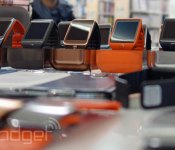
With countless (well, a lot of) Gear 2 watch straps and just under eight wearables — a mix of Gear 2s, Gear 2 Neos and Gear Fits — on the table in front of us during our interview with Samsung designers, the impression is that the company taking its wearables very seriously. There were just six months between it announcing the original Galaxy Gear and its sequel; that’s a pretty short lifespan.
To make matters more… interesting, Android announced its own wearable platform, months after Samsung’s Gear announcements. (For those not keeping notes, these Gears run on Tizen, a new mobile OS that hasn’t yet appeared on a mobile.) Min Cho, Samsung’s marketing director, explained that its wearables wouldn’t be limited to the green OS. “We’ll continue to work on the best solutions for our customers, including collaborating with Google and Android,” he says. He slows his voice and looks at me: “We are working on it.” Samsung already confirmed that it’s got plans for Android Wear, but what about the current crop of wearables? What did Samsung learn after half a year of the Galaxy Gear?

“After the first Gear, the most important lesson learned was that Gear should be a fashion accessory. It must meet the fashion needs of users,” explains Eunjoo Kim, principal UX designer for the Gear series. She adds later: “One size doesn’t fit all.” This meant more personalization in the second generation, and not just when it comes to product options. The philosophy here is different than the one we hear about the Galaxy S5: Cho told us, independently, that the GS5 is definitely a phone for “everyone.”
“One size doesn’t fit all.”
We covered the physical differences between the Galaxy Gear, and Gear 2 in our review, but Jun Yong Song, senior hardware designer for both smartwatches, tries to offer up a little more context: “Since the first Gear was designed with straps attached, it retains a solid line [that] creates a classic, holistic design. The Gear 2 has been designed to match any strap … to blend smoothly to whichever one is used.” In the process, those odd screw fittings were also banished, while softer materials were used compared to the original Gear “for greater comfort,” adds Song — well, it is a wearable. Otherwise, the core hardware design really hasn’t changed in any dramatic way, just evolutionary improvements.

Changeable straps, a variety of background colors, wallpapers (finally) and clock designs, however, do at least give credibility to this notion of a more personal wearable. Tinkering with design (at least as far as icon layout and wallpapers are concerned) can now be done from the watch itself, and it’s not just about choosing pretty images. “The default wallpaper [is made] to show the benefits and features of AMOLED display.” Kim says. “It can express [colors] that TFT LCDs cannot. Like these fluorescent greens and blues.” It’s something she eagerly demonstrates with a Galaxy Fit. “On TFTs, they become really obscure”. She also adds: “In the case of Gear smartwatches, because of the changeable straps, there was a need for daily changes [to the look of the device].”
If you thought it uncharacteristic for Samsung to settle on a form factor so easily, you’d be right.
Customization is one thing, but why (at least compared to the incoming competition) does the Gear stick to the relative-of-smartphone squarish face? “Consumers have different tastes and values. With [three devices], we are giving users the power to choose what they need and want to have,” says Song. So three equals the right amount of choice? The team previously mentioned that, as a fashion accessory, one size doesn’t fit all. How, then, are these three products expected to deliver to everyone?
“Three is the magic number!” Kim kids, but with both Gear smartwatches and the Gear Fit, the team ran through various size and design prototypes — with the eventual products being deemed the optimal combination. If you thought it uncharacteristic for Samsung to settle on a form factor so easily, you’d be right. “For the Gear and Gear Fit, the size was an issue for a long time,” Kim says. “We have two sizes now, but we are open to many other possibilities, too.” (Past form indicates this is probably very true.)

The Gear Fit is a whole different beast, however. It’s unusual design was apparently inspired by the sun rising over the ocean (there’s a hint in the early sketches, if you really stare), combined with real-world ergonomics. The team attempted to factor in gender and age at the design stage, and this lead to what it reckons is the “optimal display size and form for the content” — as well as the current curve and length of the strap. The OS here, however, is still Tizen. That means it has the same limited selection of apps and features, but it’s not as if another Android-powered wearable would fare any better at this precise stage. Half a year later, and the original Galaxy Gear still has an app-supply problem.
The big question here is why Samsung jumped to Tizen, but it’s hard to get a definitive answer to the reasoning there. Cho talks around the question: “It’s complicated. If you take a closer look at Tizen, it’s web-based; that offers a degree of efficiency in converting existing apps … But you are going to see more efforts with more devices — including Android.” There it is again. The company might have learned a few things from its first smartwatch, but it feels like it’s a case where more study is needed.
Samsung’s betting on the demand for wearables to come (it’s not the only one), but it’s a hedged bet. Tizen? Android? Health device? Smartwatch? And now that Samsung says it’s happening, what will its interpretation of Android Wear look like? Because that’s honestly what we’re more excited about. Will it be a Gear with a personality transplant, or something more “Whoa“? We’re hoping for the latter.
Verizon Samsung Galaxy S5 cameras are failing spectacularly

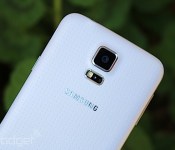
Well, this is embarrassing: the Samsung Galaxy S5 has only been on the market for two weeks, and it’s already developed a major fault — at least for Verizon customers. “Warning,” the devices reads. “Camera failure.” The camera module appears to be failing outright, with no hope of being revived. Users have tried restarting their camera apps, rebooting devices and even performing factory resets, but nothing works. For now, the only working fix seems to be replacing a device, but some users are still holding out for a software fix.
Fortunately, Verizon and Samsung are both being fairly candid about the issue — both companies have acknowledged the faulty camera and are asking customers to contact support for troubleshooting and warranty replacements. Most of the failed devices seem to be coming from Verizon specifically, but BGR says it’s seen similar reports from Sprint customers, too. Have a faulty device? Skip past the break for Samsung’s official response and customer service instructions.
Samsung is committed to providing the best experience for customers. We have learned that a limited number of Galaxy S 5 devices may have an issue that causes “Camera Failure” pop-up error message. We ask that customers affected call 1-888-987-4357 or visit their carrier for service under Samsung’s standard limited warranty.
Galaxy S5 customers who see “Warning: Camera Failed” please contact @VZWsupport & we’ll work to resolve it, including replacing the device.
– Verizon Wireless (@VZWnews) April 25, 2014
Filed under: Cellphones, Verizon
Via: GSMArena, BGR, PhoneArena
Crystal Edition Samsung Galaxy S5 due in May

A Swarovski crystal-clad version of the Samsung Galaxy S5 is coming next month, according to a recent YouTube video. The so-called Crystal Edition S5 figures to be encased in the glamorous and flashy gems an should find a home at least in Korea. Pricing and color options are not yet clear however we expect to learn more in the coming days. There’s no indication that this (or these) Galaxy S5 units would make their way to the United States however we do sometimes get the rare designs for Fashion Week.
The post Crystal Edition Samsung Galaxy S5 due in May appeared first on AndroidGuys.
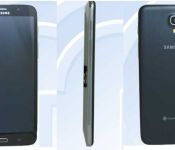
Samsung’s new seven-inch phone/tablet hybrid surfaces, promises to be a giant mid-ranger

Just when you thought phones couldn’t get any bigger, Samsung astounds us again. Last years Galaxy Mega wasn’t the most popular due to the sheer size of the thing, making it impossible to carry in a pocket while offering mid-range specifications. According to Mobile Geeks, a german mobile website, Samsung is working on something bigger than the Mega.
Shown in the picture above is the SM-T2558, a prototype from Samsung. It appears to have the body of a phone, just blown up to ridiculous proportions. It recently passed through TENNA, China’s equipment certification center, bringing a few specifications to the surface. The device is running Android 4.3 Jelly Bean, a 720p display, quad-core 1.2GHz processor, 1.5GB of RAM, 8MP rear camera, and a 2MP front camera. What’s more is that it includes TD-LTE and TD-SCDMA connectivity, making us much more confused than before. Oh, and it only has 8GB of on-board storage.
It’s still unclear as to whether this is a tablet with phone capabilities or a phone with huge dimensions. We’ll have to see at a later date as to what exactly this is.
Via: Sammobile, Source: Mobile Geeks
The post Samsung’s new seven-inch phone/tablet hybrid surfaces, promises to be a giant mid-ranger appeared first on AndroidGuys.
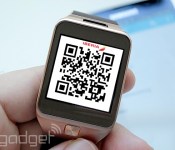
Samsung and Iberia team up to put boarding passes on smartwatches

You wouldn’t instantly associate Iberia with cutting-edge technology, but the Spanish airline is a paragon of modernity. The Madrid-based business already lets you print your own luggage tags, and now it’s teamed up with Samsung to bring boarding passes to your smartwatch. A forthcoming update to the Iberia Android app will enable you to cross the skybridge with just a Gear 2 — assuming, of course, that you’ve already got a Galaxy S5 (or another compatible device) stashed in your pocket.
Filed under: Wearables, Samsung
Via: WSJ
Source: Iberia (Translated)
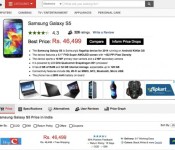
Samsung denies slashing Galaxy S5 price in India by INR 5,000
Samsung Galaxy S5 was launched in India earlier this month with a price tag of INR 51,500 ($842.90 USD). Later, HTC launched the One M8 with a price tag of INR 49,900 ($816.71 USD) and the device will be available on the 7th of May. Just after which, the Galaxy S5 was found selling for INR 47,000 ($769.25 USD) at various online stores in India. After a number of blogs reported this as a price drop of INR 5,000, Samsung today, came out to clarify that they haven’t slashed the Galaxy S5 price in India but still, various online retailers are selling it far below its official price tag just a couple of weeks after its official launch. However, Samsung states that its official price is still INR 51,500.

Samsung Galaxy S5 Price In India
The primary competitors of the Galaxy S5 are selling for a much lower price in comparison. The LG G2 is being sold at a very aggressive price of INR 34,000 ($556.48 USD) and the Xperia Z1 is being sold at a price of INR 35,000 (572.85 USD). The chief competitor of the Galaxy S5, Sony Xperia Z2, is not yet available for purchase in India. To remind you, the Indian version of the Galaxy S5 comes with a 1.9 GHz octa-core Samsung Exynos 5422 processor instead of 2.5GHz quad-core Qualcomm Snapdragon 801 chipset.
Source: MySmartPrice
//<![CDATA[
ord = window.ord || Math.floor(Math.random()*1E16);
document.write('’);
//]]>
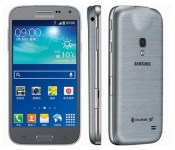
Samsung debuts projector-equipped Galaxy Beam 2 smartphone

Chances are your phone doesn’t have a built-in projector — and it never will. But there’s at least a small subset of the Chinese market that apparently has a need for an entry-level smartphone capable of projecting dim videos and presentation slides onto a flat surface. The Galaxy Beam 2 sports a 1.2GHz quad-core processor, 1 gig of RAM and an underwhelming 800×480-pixel 4.66-inch display. The battery tops out at 2,600 mAh of juice, so if you’re thinking of planning a smartphone movie marathon you might want to bring the charger along. It launched today on China Mobile’s 3G network (with pricing TBA), and while Samsung has yet to detail an international release, it’s unlikely that we’ll ever see the second-generation Beam on this end of the Pacific.
Filed under: Cellphones, Displays, Mobile
Via: Engadget China
Source: Samsung
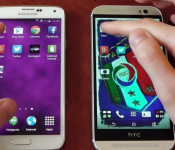
[VIDEO] UI Performance test between the HTC One M8 and Samsung Galaxy S5 is the test that we all want to See
 The battle between Samsung and HTC flagship smartphones was first ignited between the Samsung Galaxy S4 and the original HTC One. Now, the battle has moved onto the Samsung Galaxy S5 and the HTC One M8, and the competition between the two is no less fierce. While the Galaxy S5 is predictably selling like hotcakes, the real question that Android buffs everywhere want answered is which device is definitively the best? Well, if we’re talking about performance and multitasking, Chris Nacca has put together yet another video as a UI performance test between the HTC One M8 and Samsung Galaxy S5; check out the video below:
As with Chris’ previous video comparing the Nexus 5 and Galaxy S5, the One M8 and the Galaxy S5 are very evenly matched when opening apps for the first time, however, the real difference becomes very obvious when trying to multitask. The One M8 is far quicker than the Galaxy S5 with the Samsung device even looking laggy when trying to multitask quickly. Probably even more notable for those choosing between the One M8 and Nexus 5 is that the One M8′s multitasking menu looks far more useful based on the demo in this video. The real moral of the story, however, is that while the Samsung Galaxy S5 is on paper a faster device, its UI performance is still inferior to that of the HTC One M8.
Sense 6.0: 1, TouchWiz: 0
What do you think about the UI performance of both these devices? Are you surprised by the findings, or is this pretty much what you expected? Let us know your thoughts in the comments.
Source: YouTube
//<![CDATA[
ord = window.ord || Math.floor(Math.random()*1E16);
document.write('’);
//]]>
Android smartphones ranked by pixels per inch

It used to be a battle of Megapixels between smartphones to showcase their superiority in the market, but now that has moved over to Pixels Per Inch (PPI), manufactures are now looking at ways of packing more pixels into their displays.
PPI contributes to many factors, but most significantly it is how sharp and crisp the display looks. There is a certain amount of pixels per inch that the human eye can distinguish and this varies given the size of the display, and achieving a higher PPI count means users aren’t able to see those individual pixels during normal operating conditions.
We’ve taken the latest smartphones available on the market and ranked them in order of their PPI count to give an idea who is winning the battle of pixels.
Does PPI count of a device play a significant factor when purchasing your Android device? Let us know in the comments below.
The post Android smartphones ranked by pixels per inch appeared first on AndroidGuys.

