


Samsung Galaxy S5 Mini to hit shelves mid-July, source says

Just few weeks ago, we showed you a bunch of leaked pictures of the upcoming Samsung Galaxy S5 Mini, courtesy of SAMMobile. Now thanks to one of their sources, they are reporting that Samsung Galaxy S5 Mini will go up for sale in markets worldwide in mid-July.
 Obviously nothing is set on stone right now but last year, Samsung introduced the Galaxy S4 Mini in mid-July as well. However, about the specs of the Galaxy S5 Mini, we know that it will feature a 4.5-inch 720p display, a 1.4GHz Samsung Exynos 3 Quad (Exynos 3470) , 1.5GB of RAM, 8-megapixel rear camera, a 2.1-megapixel front-facing camera, and LTE, Wi-Fi 802.11n, Bluetooth 4.0 LE, IR Blaster, NFC, and GPS. Galaxy S5 Mini will feature Android 4.4.2 KitKat with Samsung’s latest TouchWiz UX, and despite being the ‘Mini’ version of the Galaxy S5, it will come with all the software goodies such as Ultra Power Saving Mode, Private Mode, and Kids Mode.
Are you looking forward to Samsung’s new addition to the Galaxy family?
Source: SAMMobile
The post Samsung Galaxy S5 Mini to hit shelves mid-July, source says appeared first on AndroidGuys.

Samsung unveils a quartet of Android smartphones for the budget crowd

Not everyone can justify splurging on a powerhouse phone like the Galaxy S5, and Samsung clearly knows it — the tech firm just unveiled four Android KitKat handsets for frugal types. The Galaxy Core II (shown here) is the standout of the bunch, although it’s a curious case of taking two steps forward and one step back. While it has a larger 4.5-inch (if still WVGA) screen and a much faster quad-core 1.2GHz processor, it also drops from 1GB to 768MB of RAM and cuts the built-in storage in half, to 4GB. Thank goodness there’s a microSD card slot, or that storage could get cramped very quickly.
As for the rest? They’re much more focused on first-time owners and developing regions, like China or India. The Galaxy Ace 4 is mostly a software-focused refresh of the Ace 3 that still has a 4-inch WVGA screen and either a dual-core 1GHz or 1.2GHz processor, depending on whether or not you’re getting 3G or LTE data. The Galaxy Young 2 and Star 2, meanwhile, are strictly for those with basic needs — both have 3.5-inch half-VGA screens, single-core 1GHz processors and fixed-focus cameras, while the Star 2 omits even 3G data. You probably won’t be rushing to line up for any of these devices, but they should be big deals for anyone who has just enough cash to dip their toes into the smartphone waters.
Filed under: Cellphones, Mobile, Samsung
Source: Samsung Tomorrow
AT&T Galaxy Note 2 Finally Gets KitKat with Android 4.4.2 Update
I’ve been running KitKat on my trusty old Samsung Galaxy Note 2 for some time now, but the day has finally arrived for AT&T to release the official 4.4.2 KitKat update to the public. AT&T is just about the last of all the carriers to release the update, but at least they did. The Samsung […]

Giving Samsung tablets another chance with the Galaxy Tab Pro 8.4

Samsung’s tablets haven’t done much for me in the past; outside of the slick Galaxy Tab 7.7, they’ve rarely had exciting designs or brisk performance. However, the Galaxy Tab Pro 8.4 caught my eye. It has an iconic (if very Galaxy Note 3-like) look, solid specs and the sharpest display on a tablet that size. With that in mind, I tried this smallest of Tab Pros for a few weeks this past spring to see if it could lure me away from the land of iPads.
You won’t hear me gripe much about the hardware. That 8.4-inch display is just big enough for the media and websites I like, and it’s so high-res that the images occasionally have a painted-on look. Also, it’s a pleasure to hold. Faux leather and metal notwithstanding, it’s both comfortable and light. The iPad Air is undoubtedly svelte, but it feels a tad ungainly next to the (admittedly smaller) Tab Pro — and that’s before seeing the Galaxy Tab S, which is even thinner and lighter.
To me, the real clincher is Samsung’s Multi Window support. While its absence isn’t a dealbreaker, I’d love if every tablet had some variant of this going forward. There’s an undeniable appeal to chatting with someone on Hangouts while a YouTube video plays. It’s not as elegantly implemented as in Windows, since you can’t easily restore a Multi Window setup if you lose it, but it does make good use of the Tab Pro’s real estate.
If only Android apps took similar advantage of that display. Titles that aren’t tablet-native generally scale well enough on this smaller screen, but it still feels like there’s a lot of wasted space compared to the iPad apps I’m used to. Also, some of them don’t cope well with the 2,560 x 1,600 resolution; buttons and other interface elements are occasionally a little too tiny for my liking. Still, these will hopefully get better as developers get comfortable, and they’re not going to sour the overall experience.
Would I toss out my iPad and get a Galaxy Tab Pro or Tab S? Probably not. The iOS ecosystem is still stronger in some places (most notably games), and the Air I already own has enough screen resolution and speed for my tastes. However, I wouldn’t balk if someone made me switch, and I’d have little hesitation recommending Samsung’s newer slates to anyone who wants a lot of performance in a small shell.
No OEM Skins Allowed For Android Wear, Android Auto, or Android TV

I’m a big proponent of the stock feel, in terms of the UI of any device I use. On my iPhone i jailbreak to get tweaks, and change little things here or there, but never anything major, because I just don’t like it. With the exception of a couple of manufacturers, most Android devices today have some type of OEM Skin over top of the Android OS. Samsung has TouchWiz (don’t get me started), HTC has Sense, and then you have companies like Kyocera or LG who have unnamed skin overlays. I won’t go on a random tangent about TouchWiz, but just know that I despise it, and I’m kind of loving Sense on my HTC One M8, but have been contemplating throwing a GPE ROM on there just for the stock experience on that device.
Fresh off the heels of Google I/O, where Google presented Android Wear, Android Auto, and reintroduced Android TV to the world, questions began springing up left and right. I saw the same question asked by different people all over social media. The question is, will OEM skins be used on these new platforms that Google has announced. This got me thinking a bit. Will Samsung really try and do something horrific with Android TV? What would happen to an OEM skin in any of the Android Auto participants?
Thankfully, Google has come out and stated that OEM skins will not be allowed for Android Wear, Auto, or TV. This has me, and many others rejoicing. The biggest issue that I have is the same issue that I have with TouchWiz. If I purchase an Android TV, or in the future, Android TV is built into whatever TV I’m purchasing, what is going to happen to the Android UI? How bad will it become? Yes, I know I’m being pessimistic, and someone could come out and build something great to go over the Android UI, but I don’t think it’s necessary, and I wouldn’t want to take the chance.
Google’s engineering director, David Burke, in an interview with Ars Technica, stated the following about Android TV specifically:
“The UI is more part of the product in this case. We want to just have a very consistent user experience, so if you have one TV in one room and another TV in another room and they both say Android TV, we want them to work the same and look the same… The device manufacturers can brand it, and they might have services that they want to include with it, but otherwise it should be the same.”
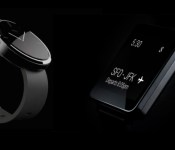
This right here is EXACTLY how I feel about Android as a whole. Why have two different manufacturers, with two different skins on top of the same base? Nine times out of 10, the devices will not work cohesively, and it will end having a negative impact on the consumer, which is bad for everyone. Another worry that I had was that Samsung was going to try to do too much with their Samsung Gear Live, and make it an unusable experience for someone who wants to get that watch, specifically.
Source: Ars Technica
// <![CDATA[
(function()
var po = document.createElement('script'); po.type = 'text/javascript'; po.async = true;
po.src = 'https://apis.google.com/js/platform.js';
var s = document.getElementsByTagName('script')[0]; s.parentNode.insertBefore(po, s);
)();
// ]]>
The post No OEM Skins Allowed For Android Wear, Android Auto, or Android TV appeared first on AndroidGuys.
What ‘Ultra High-Definition’ really means

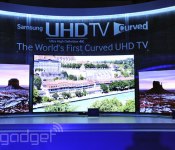
In yet another successful attempt at making the Quad HD / 4K / Ultra HD situation as clear as mud, this week the CEA updated its official… definition of the term “Ultra High-Definition.” The original spec was established in late 2012 just as the first high-res TVs debuted, and now the expanded “updated core characteristics” will let customers know the TV or player they’re buying is actually capable of playing high-res video content. What’s new is that Ultra HD TVs, monitors and projectors have to be able to upscale HD (1080p) video to Ultra HD (3,840 x 2,160), decode HEVC, have at least one HDMI input that supports Ultra HD video input at 24, 30 and 60fps and that can decode the HDCP 2.2 DRM that super-sharp video will require. Not up on all of the acronyms and buzzwords? Whether it’s a stream from Netflix or Amazon, a broadcast over cable or satellite or some new version of Blu-ray, if your new TV has the logo this fall, you’ll be ready for it — simple, right?
Filed under: Home Entertainment, HD, Samsung, Sony, LG
Source: CEA
Engadget Daily: living in Google’s world, the faces of Android Wear and more!

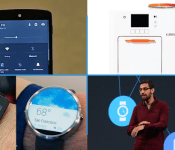
Today, we take a look at the Android L Developer preview, compare the three faces of Android Wear, evaluate a $1,000 bread-making robot and dive into the hyper-connected world of Google. Read on for Engadget’s news highlights from the last 24 hours.

The three faces of Android Wear, compared
Android Wear is making waves this summer in the form of three new smartwatches: the LG G Watch, Samsung Gear Live and Motorola Moto 360. Read on for our breakdown of each wrist-worn device and its implementation of Google’s wearable platform.

We just played with Android’s L Developer Preview
Android L is just a developer preview for now, but it’s a forthright indicator of the OS’ uber-connected future. With over 5,000 APIs, a new set of guidelines called Material Design and 64-bit support, Google’s provided a great education of its next mobile OS update.

This robot bakes the world’s most expensive flatbread
This is the Riomatic: a smart kitchen appliance that bakes a really fancy type of flatbread. Users must simply keep tabs on its water, flour and oil hoppers, and voila, it’ll spit out fresh bakes every two minutes or so. The catch? It costs $1,000.

Living in a Google world: Why Android L means you’ll never have to disconnect
As this year’s Google I/O conference came to a close, one fact became absolutely certain: Android is going to follow you everywhere. Read on as Sarah Silbert investigates Android L and its implications on Google’s ecosystem.
You also might like:
Filed under: Misc

DEALS & STEALS: Get the refurbished Samsung Galaxy Note 10.1 2014 edition (16GB) Wi-Fi tablet for $300, free shipping included

Samsung introduced its Galaxy Note 10.1 2014 tablet refresh last September. Despite the fact it’s over a half year old this is still a great tablet and you can get it on Ebay for $300 (40% off). We’re talking about a 2014 edition Wi-Fi version of the tablet with 16GB internal storage which is manufacturer refurbished.
Quick specs rundown:
- 10.1″ 2560×1600 pixels Super clear LCD screen (299ppi)
- Exynos octa-core (quad-core 1.9GHz Cortex-A15 & quad-core 1.3GHz Cortex-A7)
- 3GB of RAM
- 16GB internal storage (microSD up to 64GB)
- 8MP main camera with LED flash
- 2MP secondary camera
- Non-removable Li-Po 8220mAh battery
- Android 4.3 JellyBean with TouchWiz UI
- Weights 540g
Tablet is available in Black and White colors and shipping is free for U.S. although the tablet will ship all around. More info on the link below.
Source: Ebay
The post DEALS & STEALS: Get the refurbished Samsung Galaxy Note 10.1 2014 edition (16GB) Wi-Fi tablet for $300, free shipping included appeared first on AndroidGuys.
Watch this walkthrough of Samsung’s Android Wear device

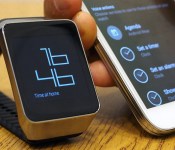
Android Wear, Google’s new platform for wearables, is fascinating stuff. We got to see a lot of it yesterday, but we didn’t get to spend a lot of time with the user interface itself because the watches were on retail mode — a limited version of the firmware. This is no longer a problem, as Samsung demoed its brand new Wear-laden smartwatch, known as the Gear Live, for Engadget. Once you’re done checking out our walkthrough of the UI below, we recommend you also take a closer look at our other coverage of Android Wear devices from yesterday. In the meantime, however, head below for a photo gallery and five-minute tour of Google’s new platform.
Filed under: Cellphones, Wearables, Mobile, Samsung, Google

The three faces of Android Wear, compared

Google made much ado about the debut of Android Wear at its I/O conference keynote, and few would doubt that this is a potentially sea-changing move in the wearable space. However, the company didn’t do much to address the differences between the first smartwatches using its brand new platform. How are you supposed to know which wearable suits you? That’s where we can help out. We’ve taken a good look at this first batch — LG’s G Watch, Motorola’s Moto 360 and Samsung’s Gear Live — to see how they compete. And it’s a closer fight than you’d think. While all three have their charms, you’ll be making some sacrifices no matter which model you choose.
LG G Watch

In many ways, LG’s G Watch is the template for Android Wear, the basic design that everyone will try to equal or beat. It has an unassuming steel chassis, a square display and a distinct lack of party tricks. Those aren’t necessarily knocks against it — if you’d rather not be flashy, this is the smartwatch for you. It also has a bigger battery than the Gear Live (400mAh versus 300mAh), so you could be looking at a longevity champ.
Having said all that, there are some worrisome points. Besides the fairly plain looks, it has a lower resolution (280 x 280), a thicker body (10mm) and a higher price ($229) than the Gear Live; if you only care about the raw numbers, you’re paying more to get less. And since LG’s rivals haven’t provided firm battery life estimates, we won’t know if the G Watch’s claimed 36-hour runtime is above-average for some time to come.
Samsung Gear Live

Design-wise, Samsung’s Gear Live strikes a balance between the plain G Watch and the posh Moto 360. It’s slimmer (8.9mm), sharper-looking (320 x 320) and more stylish than LG’s model, but not nearly the conversation starter that Motorola’s timepiece promises to be. It’s the only game in town if you’re a fitness maven, though; like its Gear 2 siblings, there’s a heart rate sensor that will let you know if your exercise is on track. At $200, the Gear Live may also be the cheapest of the lot.
You may want to see how the battery life works out in real life before you pull the trigger. Samsung is touting “all-day” usefulness, but it’s not saying how many hours you’ll get in practice. There’s a distinct possibility that LG or Motorola could come out ahead.
Motorola Moto 360

The Moto 360 has been the most buzzed-about Android Wear watch to date, and for good reason. In terms of style, there’s no contest — the round display and luxurious materials not only make this the best-looking Android Wear device so far, but the only one that could pass as a conventional watch at first glance. Motorola has also been far more eager to embrace third-party watch faces, some of which already use the circular layout to good effect. So long as you don’t mind a huge frame that would make Flavor Flav proud, it could easily be the frontrunner.
That is, so long as the specs pan out. Most everything about the Moto 360′s hardware is currently a mystery — Motorola still isn’t willing to divulge the battery life, performance, price or storage. There are hints that the exotic form factor could lead to a price tag around $249 or higher, and that big screen may be power-hungry. If you’re reluctant to risk making any major compromises in the name of fashion, we’d recommend waiting until more details emerge this summer.

