


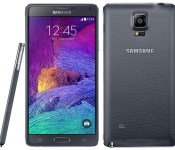
Samsung improves functionality of the S Pen on the Galaxy Note 4

I love my Samsung Galaxy Note 3, not just for its stunning Super AMOLED display, or best in class hardware (2013), but I truly am in love with it because of its functionality. I truly love the S Pen, and no I don’t need it all of the time but when I need the stylus it sure comes in handy. True multitasking with split screens is also something I can no longer live without on my smartphone.
Some can argue we have reached a point in hardware where most people won’t notice significant changes in speed, resolution or usability. Phones like the LG G3, HTC One M8, Sony Xperia Z2, Oneplus One, and the Samsung Galaxy S5 all have very similar hardware. Phone manufacturers are digging deep to dig into niche markets to grab new customers like the HTC One M8 having an all-aluminum body for design enthusiasts and two loud stereo speakers for music enthusiasts.
Samsung continues to innovate, despite claims that they copy manufacturers like Apple. No one does it better than Samsung when it comes to having a stylus integrated into a cell phone. In Samsung’s latest commercial they show off the new features of the Note 4 stylus and my favorite feature is ability to take a photo of handwritten notes and sending the image to S Note(Galaxy Note app for use with the stylus) to edit on screen with the stylus. The commercial tends to strike a chord with me because I am a chemist and I use my Note 3 daily for work so I can’t wait to get my hands on the Note 4 for its added features in software, in addition to that incredible QHD screen it’s arriving with.
Check out the commercial for yourself here.
The post Samsung improves functionality of the S Pen on the Galaxy Note 4 appeared first on AndroidGuys.
.CPlase_panel display:none;

Engadget Daily: The best non-Apple news all in one place!

So, even aside from the bevy of news that came out of Apple’s iPhone 6 and Watch event today, there was still a ton of pretty interesting reads from the past 24 hours: Destiny developer Bungie spilled on what truly separates the game from its previous work, Stephen Hawking made a plea for a connected wheelchair and much, much more — it’s all in the gallery below!
Filed under: Gaming, Home Entertainment, Tablets, HD, Mobile, Samsung, Microsoft, Dell
.CPlase_panel display:none;
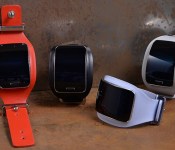
Samsung’s Gear S hits the runway with Diesel Black Gold for New York Fashion Week

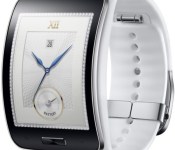
When we saw Samsung’s Gear S curved smartwatch last week, we said its design, “feels functional, but also like an afterthought.” The 2-inch behemoth certainly doesn’t blend into outfits as much as it becomes the centerpiece, for better or worse. Diesel Black Gold — the even more expensive, “premium” line of the Diesel clothing brand — is apparently down with that, and is working with Samsung on a variety of “unique” bands (seen above). That’s pretty much all the news there is about these so far — no pricing or release dates were given — but check out this amazing sentence from the announcement, describing the bands:
“Elements of the SS 15 collection, inspired by highly stylized New Wave rock stars and tough rockabilly heroines, have been used to give a sharp attitude to the device, characterized by signature leather and metal details.”
Delightful! The Stray Cats and Siouxsie and the Banshees clearly influenced the above design. And yes, they are just a series of colored bands for holding the Gear S. If that weren’t enough, the debut of said bands is being captured in 360-degree film and released for Samsung’s virtual reality headset, Gear VR, when it launches later this fall with the Note 4 smartphone. That is some serious crossbranding, y’all. Crossbanding? Sorry, we’ll see ourselves out.
Filed under: Wearables, Mobile, Samsung
Source: Samsung
.CPlase_panel display:none;
Android L to be Called Lion?! HTC may Abandon Smartwatch Production. – ManDroid Daily

Looks like Android L might get a name that isn’t so much a dessert, but the king of the damn jungle. Rumors of course. Nothing to get upset about; although the rumor suggests that the Lion name comes from the Nestle’s Lion Bar, and we know Android is still tied to Nestle since KitKat. Time will tell gang, but it also looks like HTC might drop the smartwatch game for a bit, which no one should be sad about. Take your time HTC, it’ll be good for you. Enjoy the Daily.
Android News
Android 5.0 Lion
HTC Smartwatch might be abandoned for now
Samsung Smartwatch infographic
Galaxy Note 4 wallpaper
Moto X Wallpaper
//<![CDATA[
ord = window.ord || Math.floor(Math.random()*1E16);
document.write('‘);
//]]>
The post Android L to be Called Lion?! HTC may Abandon Smartwatch Production. – ManDroid Daily appeared first on AndroidSPIN.
.CPlase_panel display:none;
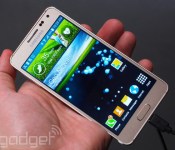
Samsung teases the US by bringing the Galaxy Alpha to Canada

Samsung is being a bit cruel to Americans jonesing for the Galaxy Alpha. The company has announced that its upscale Android smartphone will launch just north of the border (that is, Canada) on September 26th through Bell and Virgin Mobile. There’s no mention of Virgin’s pricing, but Bell is already taking orders at either $150 CAD on a two-year contract or a pricey $700 if you go contract-free. This isn’t an exclusive, though, so you should expect the Alpha to make its way to other Canuck providers in the “coming months.” As for the US? Sorry, there’s still no official word on that yet — barring success with an importer, you’ll just have to sit tight.
Filed under: Cellphones, Mobile, Samsung
Via: MobileSyrup
.CPlase_panel display:none;

Mid-range Samsung Galaxy Alpha tipped with all-metal body

As if we should be surprised, Samsung is reported to be readying a variation of its Galaxy Alpha smartphone. According to SamMobile, a Samsung SM-A500 figures to be a mid-range take on the aluminum-clad handset experience.
The most interesting thing we’ve learned from our source is that the SM-A500 will have a full metal body, without a removable back cover. If true, this means the phone won’t have the new faux leather back…
Specifications are alleged to include a 5-inch 720p HD Super AMOLED display, a quad-core Snapdragon 400 processor, and 16GB internal storage. Cameras are expected to be 8-megapixels on the rear and 5-megapixels around front. Other details include a microSD expansion card slot and nano SIM card slot.
It’s said that this device will skip out on some of Samsung’s recent sensors (fingerprint, heart rate); the device is not expected to be waterproof.
The post Mid-range Samsung Galaxy Alpha tipped with all-metal body appeared first on AndroidGuys.
.CPlase_panel display:none;
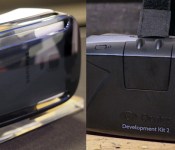
Trading ‘presence’ for untethered virtual reality: Gear VR versus Oculus Rift

Standing up and moving around with a virtual reality headset is risky. What if you walk into a table? Or step on your dog? Or bash your face into the wall? Standing up and moving around while wearing Samsung and Oculus VR’s Gear VR headset isn’t suggested. But when you put it on, seated, and turn your whole body around to look behind your virtual self, and no cords get in the way, that’s a magical experience. “There are going to be different categories of VR,” Oculus VR CEO Brendan Iribe told Engadget in an interview last week at IFA 2014 in Berlin, Germany.
On one side, there’s a tethered experience like Oculus Rift, where, “There’s going to be this bigger, more expensive experience … that has a much bigger sense of ‘presence’ right now all attached to a computer where you have power plugged into the back,” he said. That’s the concept of being transported to another world and actually being there: a sense of “presence.” On the other side, there’s mobile VR: untethered, intended for mainstream accessibility and able to use your existing devices (such, as, say, your cellphone). “It’s untethered, but there’s now limitations and restrictions around the GPU/CPU,” Iribe said.
Virtual reality, right now, is all about trade-offs. This discrepancy between mobile and tethered VR is the biggest trade-off there is: Do you want convenience, or do you want “presence”?
If you answered, “I want both,” we’re right there with you. Sadly, that’s not a reality just yet. Iribe explained:
“There are certainly trade-offs. We don’t know how long it’ll take to get to the magic VR sunglasses that are untethered. It’s a dream. We all believe in that future of a mobile, VR pair of sunglasses, but that’s pretty far away.”
Gear VR is a staging ground for mainstream virtual reality. It uses the Note 4. It’s focused on media consumption. It’s light and pretty. Heck, when it launches this October alongside the Note 4, everything you can do on it will be free experiences. That’s part of the plan of pushing virtual reality into the mainstream. Hook ‘em with casual VR, then show off the big guns with tethered, interactive virtual reality.
Having spent a lot of time with Oculus VR’s second development kit, I was skeptical of the experience being offered with Gear VR. The graphical fidelity is, of course, nowhere near that of a dedicated PC. There’s no depth-tracking, so if you move your head forward, the scene remains static. These are major barriers to delivering on “presence,” the concept of feeling as though you’re physically there while wearing a VR headset. “Presence” is at the core of VR: It’s what distinguishes virtual reality headsets from head-mounted displays.
Oculus VR CTO John Carmack agreed, and said that his team is hard at work on taking those next, necessary steps to make mobile VR more capable:
“We are absolutely tackling position tracking, multi-user experiences, better gaming — all these things — in the coming year. It’s an exciting train we’re hitched onto with Samsung here, because there technology ticks twice a year. And that’s a treadmill that we’ve chosen to get on, and we’re going to do our very best to stay on that and continue innovating at that pace.”
After Gear VR, Carmack expects the competition from other electronics giants will step up tremendously. “This is good enough that it’s going to attract competition from the other significant players,” he said. And that competition is good for us, the VR users, as it means rapid innovation. Video passthrough on Gear VR is a perfect example: If Oculus’ Rift doesn’t ship with some form of video passthrough — what Carmack calls his “Diet Coke button” — that would be tremendously surprising.
Characteristically, Oculus co-founder Palmer Luckey doesn’t see video passthrough as just the ability to interact with reality while wearing a VR headset. He wants more, like augmented reality. “It’s one thing to have a convenience window,” he told us. “It’s another to try and make something where that’s a core feature of the device like AR. That’s a much harder problem to solve.”
Despite the trade-offs, Gear VR offers Oculus a chance to get its name out there on a virtual reality product and to set a foundation for software on the first consumer version of the Rift. The basics — the dashboard and store UI, for instance — will be familiar on the Rift. “Our dashboard, the basic interface, platform and store: Expect it to be similar between the two,” Carmack said.
It also enables VR developers to start making some money. Beyond just helping push VR into the mainstream, Gear VR enables virtual reality developers to start building a financial foundation for future projects. “The critical thing, from the developer standpoint, is we’re actually going to have a market where they can sell and get checks from Oculus with this sooner than on the PC front,” Carmack noted.
In the long-term, mobile virtual reality and tethered virtual reality won’t be separate entities. Carmack foresees a not-so-distant future where the Rift has a dedicated processor that enables both tethered and untethered VR. That’s always been the end goal, really. How soon it’s coming is up for debate.
“I have my vision for where this goes for Oculus,” Carmack said, “Where Oculus starts building systems that might as well include systems-on-a-chip (SOCs), graphics renderers and things inside ours. Not state-of-the-art necessarily, something that will boost the cost all that far up. But then Oculus version three or five or whatever it ends up being is something that can be use unplugged — we’d have our own Android stuff and all that — but you could plug it into the PC and use that.” An interesting vision of the future indeed. Here’s hoping it’s even sooner than we expect.
Filed under: Cellphones, Gaming, Peripherals, Wearables, Software, HD, Mobile, Samsung, Facebook
.CPlase_panel display:none;
Samsung posts infographic of the Samsung Gear family
 Samsung looks like they are in a very ‘infographic’ mood. After posting an infographic of the Galaxy Note series over the years, Samsung has come out with another infographic of the Samsung Gear family, showing its full range of wearable devices, from the aging – but still supported – Galaxy Gear, the Gear 2, Gear 2 Neo, Gear Fit, Gear Live, right through to the brand-new Gear S announced just before IFA 2014. Check out the infographic below; be sure to click the thumbnail to view the full sized image:

It’s clear that Samsung is fully committed to the wearable craze, particularly with their efforts to update their seemingly abandoned Galaxy Gear with Tizen, their operating system baby. In fact, apart from the Gear Live smartwatch which runs Android Wear, all of Samsung’s Gear devices run on Tizen; it’s no wonder that Google has been annoyed at Samsung for investing far more effort into creating Tizen wearables rather than Android Wear wearables. Only time will tell whether Samsung has the better strategy or not, but with the influx of Android Wear smartwatches released at IFA 2014, it’s hard to imagine even Samsung triumphing in this space.
What do you think about this infographic of the Samsung Gear family? What are your thoughts on Samsung’s wearables? Let us know your opinion in the comments below.
Source: Samsung Tomorrow
//<![CDATA[
ord = window.ord || Math.floor(Math.random()*1E16);
document.write('‘);
//]]>
The post Samsung posts infographic of the Samsung Gear family appeared first on AndroidSPIN.
.CPlase_panel display:none;

Farewell, IFA 2014

Everything that goes out of fashion, we’re told, will eventually come back, which is why we still have a pair of tight leather pants and some bell-bottom flares stashed in the back of our wardrobe. It’s a similar trend with consumer technology, and this year’s IFA has seen fit to bring back head-mounted VR (last seen in the early ’90s), netbooks (declared dead a in 2011) and digital watches. Of course, it wasn’t just these devices that got unveiled at the show, after all, there was also Samsung’s bent-screen phablet and Kobo’s waterproof e-reader. Still, if you think that you missed out on any of the devices that were announced over the last week, why not check out our gallery for a few of the highlights.
Filed under: Samsung, Sony, ASUS, Google, LG
.CPlase_panel display:none;

Samsung shows off an infographic comparing the Galaxy Note series over the years
 Samsung finally announced at IFA 2014 its latest entry in the Galaxy Note series, the Samsung Galaxy Note 4, and it’s every bit as impressive as we were expecting. Although its phablet form-factor isn’t to everybody’s liking, it’s undoubtably Samsung’s most powerful device year after year, something that has happened since its first iteration with the first Galaxy Note. To commemorate its long running family of devices, and perhaps to bring to light exactly how far it has come, Samsung has released an infographic comparing the Galaxy Note series over the years. Click the thumbnail to see the full infographic:

Predictably, the Note 4 is the best of the bunch, with the best processor, best camera and biggest battery the Galaxy Note family has ever seen. Even as this is the case, it’s interesting to see exactly how far Samsung’s, and indeed all, devices have come technologically over the last four years – who would have thought we’d have 2.7GHz processors in 2014 when the first Galaxy Note came out?
What do you think about the information in this infographic? Is the Galaxy Note 4 going to be your next phone purchase? Let us know your thoughts in the comments below.
Source: Samsung Tomorrow via Phone Arena
//<![CDATA[
ord = window.ord || Math.floor(Math.random()*1E16);
document.write('‘);
//]]>
The post Samsung shows off an infographic comparing the Galaxy Note series over the years appeared first on AndroidSPIN.
.CPlase_panel display:none;

