


CEO of Cyanogen: Samsung and Apple to get slaughtered by startups within 5 years

After forming their own corporation with a round of funding, partnering with OnePlus, and now Qualcomm, things are looking up for Cyanogen. CEO Kirt McMaster sat down with Business Insider to talk about the company, and one interesting tidbit came out of the interview.
Kirt believes that Samsung and Apple won’t be able to stay at the top for long. It won’t be companies like Huawei, LG, Motorola, or HTC that will knock them off their perch though, it will be various startups making low cost handsets. Cyanogen could actually be part of that craze as their software will be part of Qualcomm’s Reference Design (QRD) devices that will release in April. Basically it’s the complete software and hardware package that any startup can use to bring a phone to market within 60 days.
There are already experienced companies like Blu Products in Latin America and Cherry Mobile in the Philippines. According to Kirt…
“All of these guys are arising. They understand local marketing and distribution better than any incumbent that attempts to move into the region. These guys are hustlers; they’re fast moving. They know what it takes to influence market dynamics.”
Samsung and Apple might not even have 5 years according to Kirt….
“It could get pretty bad pretty damn quick. This is often the case. Look what happened to Research In Motion (RIM). Look what happened to Nokia. Last summer Micromax surpassed Samsung as the dominant feature phone player in India. We’re talking literally in eight months this occurred.”
We know that all companies can’t stay on top forever so predicting one’s doom seems bold, but at the same time, when it does happen, the person who predicted it looks brilliant. But let’s not forget that all companies don’t necessarily collapse. Look at Facebook. How many people have been predicting their impending doom as they continue to get bigger and more dominating?
Still, Samsung and Apple need to watch their backs and I am sure they already are. Apple might actually be more in danger since they don’t know how to produce low cost products. At the same time Apple never set out to be the best in terms of market share. They set out to offer the best product. Best or not, lower market shares yield lower profits, which make investors miserable.
The bottom line is that the smartphone market is continuing to evolve and things are likely to be drastically different in a few years not only from many startups, but how about Project Ara? That could really change the game with all kinds of parts from manufacturers jumping on the bandwagon. How will Samsung and Apple fit into that equation?
Stay tuned because I think we are in for a wild ride.
source: Business Insider
Come comment on this article: CEO of Cyanogen: Samsung and Apple to get slaughtered by startups within 5 years
Sprint Galaxy Note 4 now getting Android 5.0 Lollipop

Listen up Sprint Galaxy Note 4 owners…..You are about to get Lollipop. Sprint started pushing the update over-the-air, but you know the drill……It could take literally 2 weeks or more until you get yours since it rolls out in stages. Yes, you can keep tapping, Check for Updates, but trust me when I say that it won’t do a thing other than make you feel like you think you are speeding things up.
You might not want the update so fast anyway because a lot of people are reporting bugs after Lollipop updates on various other phones. Let us know if you received the update and if you’re having any issues.
Thanks to the many of you that sent this in.
source: Sprint
Come comment on this article: Sprint Galaxy Note 4 now getting Android 5.0 Lollipop
Samsung Electronics talks about their new image sensor and NFC IC

Samsung seems to always look for ways to further improve their customers user experience with their devices. Yesterday the company announced an 8-megapixel (MP) RWB (Red-White-Blue) image sensor based on ISOCELL technology and an NFC (Near Field Communication) integrated circuit (IC) with improved RF (Radio Frequency) performance. According to Samsung’s VP of Systems LSI marketing:
“With our new RWB ISOCELL image sensor for richer images and NFC IC with outstanding RF performance, we are excited to offer mobile users more convenient imaging and connectivity applications.”
The 8MP image sensor will provide much better front facing camera quality with its excellent low light image quality. BussinessWire goes on to explain how this kind of technology will benefit the user:
“Samsung’s proprietary ISOCELL technology substantially increases light sensitivity and effectively controls the collection of photons, resulting in higher color fidelity even in poor lighting conditions. Physical barriers between each ISOCELL pixel allow 30 percent decrease in crosstalk and 30 percent increase in full-well capacity when compared to conventional BSI (Back Side Illumination) pixels.”
Samsung has also improved their NFC technology by drastically upgrading its RF performance, which shows an increase of about 100 percent over its predecessor in card mode and 20 percent in reader mode. While these improvements aren’t the “sexy” upgrades that most readers like to read about (e.g. processor, screen, etc.), it’s still nice to see Samsung continuing to improve their devices as a whole.
source: BusinessWire
Come comment on this article: Samsung Electronics talks about their new image sensor and NFC IC
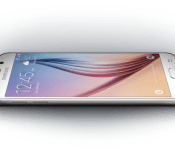
UFS 2.0 on the Galaxy S6/Galaxy S6 Edge absolutely demolishes the competition

The Samsung Galaxy S6 and the Galaxy S6 Edge make use of a new Universal Flash Storage 2.0 standard for its storage modules. This promises to offer speeds identical to SSDs, thus making data transfer super quick. A new AndroBench benchmark comparison tells us exactly how fast this new storage standard is.
The HS-G2 variant of UFS 2.0 has speeds of up to 725MB/s while the HS-G3 can output speeds of up to 1.45GB/s. UFS 2.0 also permits simultaneous reading and writing, which makes functionality even smoother than usual. In comparison, the current crop of devices which use the eMMC 5.1 standard can only reach peak read speeds of 250 MB/s and a write speed of 125 MB/s.
This combined by the GDDR4 RAM used on the Galaxy S6 and the Galaxy S6 Edge makes for a very pleasurable experience for the users. Do you plan on getting the Galaxy S6 or the Galaxy S6 Edge?
Via: Phone Arena
Come comment on this article: UFS 2.0 on the Galaxy S6/Galaxy S6 Edge absolutely demolishes the competition

Indian variant of Galaxy Note 3 (N900) is beginning to receive Android 5.0 Lollipop OTA

Samsung’s Galaxy note 3 is in the process of receiving its Android 5.0 Lollipop update around the world, with the T-Mobile version beginning to receive its OTA just a few hours ago. Now we have news of the Indian variant (N900) getting its first taste of Lollipop.
The Lollipop update is available via OTA and Samsung Kies software.This means you can choose to go into Settings/ About Device/ Software updates to manual nudge your handset into searching for the update. Or you can hook your Note 3 up to your PC and update it using the Kies software. You could also choose to update the handset manually, by downloading the update (click the source link) from Sammobile and installing it via the Odin application on your PC. Needless to say, we would rather recommend updating via OTA or Kies just to avoid any mishaps unless you are experienced in using Odin.
Source: Sammobile
Come comment on this article: Indian variant of Galaxy Note 3 (N900) is beginning to receive Android 5.0 Lollipop OTA
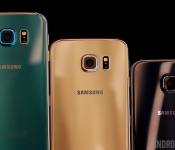
Samsung explains how they made the Galaxy S6 and Edge so ‘perfect’

As is usually the case around flagship Android device launches, the manufacturers make sure we know all about the new phone, how it was built and why it is so special. Today, we are hearing from Samsung, they want us to know that the Galaxy S6 and Galaxy S6 Edge have been designed and built to perfection, at least as far as materials go.
In a fair amount of detail, Samsung explains two factors to their device build, the glass and the metal. After all, that is what we see, feel and have asked for, right?
Starting with the glass, Samsung has gone with a new glass and technique, called 3D Thermoforming, to rise above the other boring old 2.5D glass on other phones today. Basically, 2.5D glass has fairly strict tolerances to bending, reducing the amount of bend available in design.

The process of 3D Thermoforming, in short, brings a couple layers of glass to the verge of melting, about 800 degree Celsius, then gently presses them into a mold. The result gives what we see in the upcoming Galaxy S6 Edge, that being, glass that bends in more ways than one. Take that LG G Flex 2.
After taking care of the front glass, Samsung again went a step beyond previous techniques with their metal choices. In short, they went with aircraft/automobile grade aluminum, called 6013 aluminum. The result, they say, is metal that is one and a half times stronger and 1.2 times more scratch resistant than the 6063 aluminum used for most current metal built Android phones.

All that metal, will it have an impact on the antenna? Why yes, so Samsung used ultrasonic welding to, in a way, incorporate the antenna into the metal frame. They say this gives more durability, a better signal and saves space inside the device, so they don’t have to put a big black bar on the front of the phone with their logo, take that HTC. OK, Samsung didn’t exactly say all that.
To give the ‘premium’ metal that luxurious look and feel, Samsung put special coatings on it, the result, if nothing else, gives that gleam you see in all the Galaxy S6 images out there.

In the end, Samsung has indeed stepped up their game, the Galaxy S6 and Galaxy S6 Edge are most certainly a step above the Galaxy S5. To answer just how much better may have to wait for the devices to actually ship to consumers, in April? May? Maybe even June?
Head over to Samsung Tomorrow to see all the details of The Art of Craftsmanship in the Galaxy S6.
Are you overly concerned with the process Samsung used to build the Galaxy S6 and Galaxy S6 Edge, or, like me, do you plan to judge the build quality for yourself when the phones land in your hand?
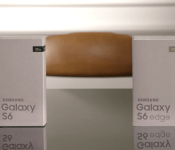
Samsung’s Galaxy S6 and S6 Edge retail packaging is shown off in unboxing video

Here we are, just a few days after the official launch of the Samsung Galaxy S6 and S6 Edge smartphones, and we’ve already heard how pre-orders are pouring in for the new flagships. We’ve seen the official hands-on video before, but what we didn’t notice was the change in retail packaging.
In a departure from the faux wood packaging that we’ve seen the Note 3 and Galaxy S5 presented in, the Galaxy S6/Edge handsets are packaged in a minimalist white box, with the device embossed in silver. And that’s it. As they appear to have done with the handsets, Samsung has refrained from attempting to make something look like something it isn’t. And that’s a good thing. Is it going too far to say that Samsung is finally making grown-up choices when it comes to design and presentation?
Click here to view the embedded video.
Source: Samsung Mobile
Via: Droid-Life
Come comment on this article: Samsung’s Galaxy S6 and S6 Edge retail packaging is shown off in unboxing video
Samsung Galaxy S6 and Galaxy S6 Edge confirmed to be MirrorLink-enabled

The CCC (Car Connectivity Consortium) has officially confirmed that the Samsung Galaxy S6 and the Galaxy S6 Edge smartphones will be MirrorLink compatible. For those unaware, MirrorLink allows for a bridge between mobile devices and automobile.
This technology allows a seamless network to be created between the smartphone and the car using the steering wheel controls or a touchscreen console. The technology was conceived back in 2011 and has since grown enormously with the support of a handful of car and mobile OEMs. We’ve already seen MirrorLink being used through Glympse on Volkswagen and Peugeot cars.
MirrorLink prides itself in being one of the very few OS agnostic car-mobile solutions out there with the likes of Android Auto and CarPlay requiring an Android or iOS device to function. Future owners of the Samsung Galaxy S6 and the Galaxy S6 Edge will be glad to know that this technology is supported by default on the handsets.
Alan Ewing who is the president and executive director of the CCC said – “Distribution on the world’s most popular Samsung devices, including the Samsung Galaxy S5, Note 4, Note Edge, and now the Galaxy S6 and S6 Edge, reaffirm that MirrorLink is real and in the hands of millions of consumers today. For consumers, the variety of MirrorLink-enabled handsets and vehicles has turned the promise of the connected car into a reality. And with deployments taking place on such a large scale, developers can focus on what they do best – creating innovative apps to redefine the connected driving experience”
Update: The HTC One M9 has also been confirmed to be MirrorLink-enabled.
Source: Business Wire
Come comment on this article: Samsung Galaxy S6 and Galaxy S6 Edge confirmed to be MirrorLink-enabled
Samsung Galaxy S6, S6 Edge and HTC One M9 are all MirrorLink-enabled
Three handsets from top hardware manufacturers, each to be released over the coming months, are MirrorLink-enabled for consumers seeking a connected driving experience. The devices are the Galaxy S6 and Galaxy S6 Edge from Samsung and the HTC One M9. The Car Connectivity Consortium announced today that owners of those devices will be able to have information transferred between them and the vehicle for an optimal experience.
MirrorLink is another connected driving experience platform like Android Auto and Apple CarPlay. Many developers, such as Glympse, are making their apps compatible with MirrorLink as various automobile manufacturers have gotten behind it.
Hit the break for the full press release.
Samsung Galaxy S6 and S6 Edge are MirrorLink®–Enabled
Millions more consumers to enjoy seamless access to content from the smartphone to the dashboard
BARCELONA, Spain–(BUSINESS WIRE)–The Car Connectivity Consortium (CCC), an organization driving global technologies for smartphone-centric car connectivity solutions, today announced that the new Samsung Galaxy S6 and S6 Edge smartphones are MirrorLink®-enabled, which includes extending the Galaxy experience into the car. With millions of mass market MirrorLink-enabled vehicles rolling off assembly lines today, MirrorLink leads the way in bringing the smartphone to the dash.
“Distribution on the world’s most popular Samsung devices, including the Samsung Galaxy S5, Note 4, Note Edge, and now the Galaxy S6 and S6 Edge, reaffirm that MIrrorLink is real and in the hands of millions of consumers today,” said Alan Ewing, President and Executive Director of the CCC. “For consumers, the variety of MirrorLink-enabled handsets and vehicles has turned the promise of the connected car into a reality. And with deployments taking place on such a large scale, developers can focus on what they do best — crating innovative apps to redefine the driving experience.”
MirrorLink is the leading industry standard for car-smartphone connectivity and is designed for maximum interoperability between a wide range of smartphones and cars. MirrorLink is also the only OS- and OEM-agnostic standard for car-smartphone connectivity and the only vendor-neutral standard where no single entity has a controlling stake. MirrorLink thus offers the quickest global route to more responsible and enjoyable connected driving.
About the Car Connectivity Consortium (CCC)
The CCC is dedicated to cross-industry collaboration in developing MirrorLink® global standards and solutions for smartphone and in-vehicle connectivity. The organization’s more than 100 members represent more than 80 percent of the world’s auto market, more than 70 percent of the global smartphone market and a who’s who of aftermarket consumers electronics vendors. For further information, please visit http://www.mirrorlink.com.
Come comment on this article: Samsung Galaxy S6, S6 Edge and HTC One M9 are all MirrorLink-enabled

Official Samsung videos highlight what to expect from Galaxy S6 and S6 Edge

Over the last few days we’ve certainly brought our fans a fair share of Galaxy S6 and S6 Edge videos, comparisons and plenty of other posts that dive into what to expect from the phone. Still craving more? You’ll want to check out Samsung’s new trio of videos.
Starting with design, the first video goes hands-on with Samsung’s latest flagship offerings, starting with the Galaxy S6 Edge and following with the standard GS6. The video not only gives us a brief look at the official packing for the two phones but also takes us through the new design changes and some of the base features found on the phones. This video is the perfect lead-in to the next one.
Samsung’s seocond video gives us a deeper look at the hardware underneath the S6 and S6 Edge. While we’ve certainly talked about the specs before, Samsung’s official video is still a great run down and worth the watch.
Finally, Samsung’s last video talks up the new camera experience. It not only breaks down the hardware aspects of the camera, it also talks about features like improved autofocus, and many of the software features as well.
What do you think of the Galaxy S6 and S6 Edge? Impressed with what Samsung has brought to the table?

