


Samsung Galaxy J2 pops up on GeekBench with a quad-core processor

We’ve known for a while now that Samsung is testing the upcoming successor to the Galaxy J1, but at last we have some evidence that shows that the Galaxy J2 is in its final testing phase. The smartphone has popped up in the official GeekBench results database with the model number SM-J200F.
According to the log, the J2 will pack a 4.7-inch qHD display, a 1.2GHz quad-core Cortex-A7 processor and 1GB of RAM. Recent rumors also suggest that the device will feature an 8-megapixel rear-facing camera, a 2-megapixel front-facing shooter and 8GB of expandable internal storage.
Check out the full list of GeekBench results in the image below:

Judging by the intensity of recent leaks, rumors and speculation we expect the device to launch pretty soon. If it follows the same path as the J1, it will debut in India, then China shortly after, followed by a worldwide release.
Source: Primate Labs
Come comment on this article: Samsung Galaxy J2 pops up on GeekBench with a quad-core processor
The Wirecutter’s best deals: a soundbar, Bluetooth headphones and more!
ss=”image-container” style=”text-align: center;”>
This post was created in partnership with The Wirecutter, a list of the best technology to buy. Read their continuously updated list of deals at TheWirecutter.com.
You may have already seen Engadget posting reviews from our friends at The Wirecutter. Now, from time to time, we’ll also be publishing their recommended deals on some of their top picks. Read on, and strike while the iron is hot — some of these sales could expire mighty soon.
Samsung 32GB EVO microSD Memory Card
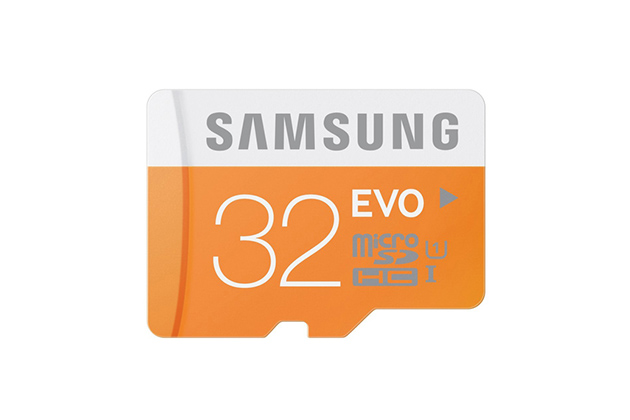
Street Price: $16; MSRP: $38; Deal Price: $13
This deal is a match for the memory card’s lowest price ever on Amazon. It’s a repeat of an earlier deal we posted in May. It hasn’t gone above $17 since then.
The Samsung 32GB EVO is our pick for the best microSD card. Kimber Streams wrote, “The 32GB Samsung EVO is the best microSD card for most people’s smartphones and tablets because of its comparatively speedy 4KB random read and write speeds, snappy sequential read and write speeds, and 10-year limited warranty. It’s inexpensive, made by a reliable manufacturer, and the fastest you can get without spending a lot more money.”
Paradigm SHIFT Soundscape Soundbar

Street Price: $1,500; MSRP: $1,500; Deal Price: $1,200
We’ve posted this soundbar before at $1,275 but this is the first time it’s dropped to $1200. Stock does seem a little limited, with Electronics Expo (via Amazon) having 9 left, but other third party sellers that also have Prime shipping matched the $1,200 price.
The Paradigm SHIFT Soundscape Soundbar is our best soundbar. Chris Heinonen said, “When you’re paying this much for a soundbar, you want it to sound great, which the Paradigm Soundscape does. It bested almost all its competitors in our testing thanks to a more-accurate lower-midrange that provides some extra richness and warmth to movies and music. It throws a very large, involving soundstage and has clear dialogue with its center channel.” He also noted that the wireless adapter included works with any subwoofer, a rarity in this age of proprietary protocols.
JayBird BlueBuds X Bluetooth Headphones Storm White

Street Price: $122; MSRP: $170; Deal Price: $110
This is the lowest price for these headphones ever offered by Amazon. They’ve been steadily decreasing in price since the first of the year. This deal is only available on the Storm White variety of the headphones.
The Jaybird Bluebuds X are the runner-up in our best exercise headphones article. Lauren Dragan said, “If you want to cut the cord and go for Bluetooth, look no further than the Jaybird BlueBuds X. Bass sounds great, they’re light and don’t chafe, and they pack a lifetime sweatproof warranty.” She added, “They were just barely edged out as our top pick.”
Refurbished Dyson AM06 Bladeless Fan

Street Price: $240; MSRP: $300; Deal Price: $140
This is a fantastic price and significantly below any price we’ve seen on new models of the AM06. Since it’s through a Dyson authorized dealer and service center, it comes with a 6 month warranty through Dyson and 6 months through ABC Vacuum’s warehouse. However, our top pick in the best fan has a 5 year warranty and Dyson themselves offer a 2 year warranty, so you’ll have to consider whether that’s a deal breaker for you.
The Dyson AM06 is what we considered the best combo desk and room fan in our best fan article. Seamus Bellamy said, “During our testing, the $250 AM06 moved more air than any other desk fan. On its highest settings, this 4-pound 5.8 by 12 by 19.7-inch fan could put out as much air as some of the room fans we tested-and it often worked as well as they did, despite being much smaller.”
Deals change all the time, and some of these may have expired. To see an updated list of current deals, please go to The Wirecutter.com.
Filed under: Household, Portable Audio/Video, Storage, Samsung
Samsung Galaxy J2 spotted on Geekbench
Samsung has been grabbing all of the news lately with their flagship devices. Now comes some news on an entry-level device from Samsung which is limited to Asian countries. In a market like India, brand value is what sells a device. People buying either high-end or low-end smartphones always want to go with an established brand. The main reason for brand value is the sales support.
As it is, in Asian markets, due to the hoard of cheap smartphones, it’s essential to have good post sales service. These low-end devices tend to breakdown very easily and are riddled with numerous software issues. Both, the Indian and the Chinese markets have conservative buyers who always look at the price-to-performance factor seriously before buying any smartphone. Due to the lack of carrier offers in India, the cost of these devices is up nevertheless. Big brands like Samsung appeal to the average consumer more because of their reliable customer service. The Galaxy J2 will surely be on the checklist of many Asian consumers when it enters the market later this year.
The Galaxy J2 was spotted earlier in an import listing where it had been shipped to India for testing. There was nothing much that we grabbed from that, only that the Galaxy J2 has a 4.7-inch screen. But, few days back an unconfirmed report from wlivenews listed all the technical specifications for the Galaxy J2. Measuring at 129 x 68.2 x 8.9 mm the Galaxy J2 is said to feature a 4.7-inch TFT capacitive display with a resolution of 540×960 ppi. 1GB RAM is said to be handling the flow with 8GB onboard storage(expandable upto 128GB via MicroSD) and running on Android 5.1 Lollipop. Media-wise it is said to feature an 8MP rear autofocus camera with a resolution of 3264 x 2448 pixels, and a 2MP front-facing camera. All of this packed into a neat 122g package, available in white or black colors.
Even though unconfirmed, the specs above look nothing promising compared to the Chinese counterparts that Samsung will have to face. A benchmark entry, on Geekbench, gave further insight on the Galaxy J2 today confirming two things; dubbed as SM-J200F, Samsung’s entry-level device features a 1.2 GHz quad-core processor and runs Android 5.1.1.

This also tells us that, the Galaxy J2 will be one of the first non-flagship devices from Samsung which will be running on Android 5.1.1. A new version of TouchWiz UX is also expected to be on this phone as with all latest Samsung devices. How well Samsung can optimize the software on the Galaxy J2 will be the game changer in the market though.
Samsung’s first entrant into the J series was a forgetful one. The Galaxy J1 packed low-end specs and was priced rather steeply. Hopefully the Galaxy J2 will fare much better if priced accordingly. Since, these devices are targeted more at Asian markets, price plays a very important role as well as software optimization. Samsung’s brand value is respected more in Asia compared to Chinese brands and people will buy this device for sure, but only if its priced right. Let’s hope Samsung gets this before delivering another sloppy device.
Source: Geekbench
The post Samsung Galaxy J2 spotted on Geekbench appeared first on AndroidGuys.
Galaxy S5 gets an update on AT&T, but it’s not 5.1

Users of the AT&T Galaxy S5 have been anxiously awaiting the 5.1 update. T-Mobile has already rolled it out to theirs and many thought the AT&T variant would follow soon after.
An update has arrived at a hefty 296MB, but it is not the hoped for 5.1 update. The change log only list security and performance improvements. The new updates build number is G900AUCU4BOF2 and requires a wifi connection.
Come comment on this article: Galaxy S5 gets an update on AT&T, but it’s not 5.1
Leaked Galaxy Note 5 and Galaxy S6 Edge Plus Cases Give Us an Idea on Design
style=”display:block”
data-ad-client=”ca-pub-8150504804865896″
data-ad-slot=”8461248232″
data-ad-format=”auto”>
(adsbygoogle = window.adsbygoogle || []).push();
We recently found out that Samsung plans a super-sized version of the Galaxy S6 Edge, simply calling it the Galaxy S6 Edge Plus. New leaked photos have hit the interwebs that display cases for the S6 Edge Plus, as well as the Galaxy Note 5 giving us an idea on the designs.
When it comes to the S6 Edge Plus’s case, it doesn’t look much different from the regular version. The Galaxy Note 5 case on the other hand shows us cutouts on the bottom indicating a spot for the S-Pen. These images come from MobileDirect, a Romanian accessory company and we thank them for the leakage.
Let us know your thoughts about the images above. Who’s getting that Galaxy S6 Edge Plus?


Source: Phonearena
The post Leaked Galaxy Note 5 and Galaxy S6 Edge Plus Cases Give Us an Idea on Design appeared first on AndroidSPIN.
Android 5.1.1 rolling out to the Samsung Galaxy S6 Duos

Owners of the Samsung Galaxy S6 Duos are reporting that an update for their device taking it up to Android 5.1.1 has started to hit their devices as an over-the-air update. The Galaxy S6 Duos is a dual-sim version of the Galaxy S6 and is only available in a limited number of markets around the globe. Despite the limited numbers, owners will be pleased to see that Samsung did not leave them behind.
Like the Android 5.1.1 update on their other devices, Samsung includes a variety of UI enhancements, improvements to security and performance, and support for advanced camera features, although those require a third-party camera app to take advantage of them. The update also includes a parallax wallpaper effect.
Users can wait for the OTA notification to show up on their device or try to update using Samsung Kies.
source: SamMobile
Come comment on this article: Android 5.1.1 rolling out to the Samsung Galaxy S6 Duos
Road to 4K: Do we need it? And who will be first?

The question of whether we need 4K (Ultra HD) displays on a smartphone has been raised in many discussions and the answer is usually that we don’t, as 4K is beyond what the typical eye can see. Yet the smartphone market is progressing at such an advanced rate that the question should be a case of when – and not if – 4K (UHD) displays become truly portable.
I vividly recall a conversation I had with a few colleagues early last year, that turned into debate about whether Quad HD would ever become a reality. Yet now, less than 18 months later, the industry already looks to be moving past QHD.
Both Samsung and LG have introduced QHD screens in their smartphones, while other manufacturers don’t seem to be showing as much interest. With that said, there are still plenty of manufacturers that strive to be the first to reach 4K UHD. Let’s take a look at who is most likely to make the first 4K phone and the benefits and drawbacks that moving to such high resolution will bring.
Display panel manufacturers
Before we can consider who will be first, we need to consider which display manufacturer is capable of producing a 4K smartphone display. There are several major LCD manufacturers, who create displays for everything from smartphones and tablets to automobiles and navigational equipment, but here’s the few that are most likely to be involved with the production of a UHD smartphone display.
Samsung Display

The name really speaks for itself; the company is one of the world’s leading display manufacturers and supplies displays to many of the world’s leading electronics manufacturers, including Apple. Samsung Display has already produced Quad HD Super AMOLED displays – which are used in both the Galaxy Note 4 and the Galaxy S6 – and also has the world’s first dual-curved smartphone in the Galaxy S6 Edge (which also uses a QHD Super AMOLED screen).
LG Display

Better known for its TV display heritage, LG Display provides most of the panels used in LG smartphones, including the stunning Quad HD Quantum Dot Display used on the LG G4. Its display technology is also used in other smartphones. It’s worth noting that LG Display has been the world’s leading large-sized LCD manufacturer for the past four years and, in 2014, the company accounted for 26.7 percent of the market for displays measuring 9.1 inches and above (closely followed by Samsung, who had 20.2 percent).
Sharp

Sharp has a long and proud history in displays, beginning with its first television sets way back in 1953. The manufacturer produces screens of all sizes and owns the only 10th generation LCD manufacturing plant on the planet. In 2010, it struck an agreement to produce displays for Samsung and it can also count Apple and other OEMs amongst its customers. In 2014, the company recorded 2.8 percent of the large-sized LCD market and it has already shown off the world’s first 4K smartphone screen (more on that below).
Innolux

The Taiwanese company is relatively young, having only been founded in 2003 before being publicly floated in 2006. In March 2010, the company in its current state was founded through the biggest merger in the flat panel display industry, when Innolux, Chi Mei Optoelectronics and Toppoly Optoelectronics merged. In 2014, Innolux was the third largest producer of large screen displays with 17.8 percent of total shipments including supplying panels to Samsung, LG, Sony and providing most of the screens used in Toshiba, Sharp (where it is equal to Sharp itself), Panasonic and Phillips devices.
AU Optronics

AUO’s 4K Curved Ultra HD TVs
AU Optronics (AUO), the second Taiwanese manufacturer on our list supplies several manufacturers including Samsung, Sony, Toshiba and several Chinese manufacturers (including HiSense, Konka and Haier). With several smartphone players amongst its customers, AUO would have plenty of potential buyers if it developed a 4K smartphone screen. In 2014, the company controlled 16.8 percent of the large LCD market and provided a large amount of the displays used in Sony devices measuring 9.1 inches or more.
Japan Display

Japan Display’s 4K Tablet Display
Japan Display Inc (JDI) is the youngest company on the market, having launched only on April 1st 2012 through the government-backed merger of the loss-making display divisions of Sony, Toshiba and Hitachi. JDI was created specifically to manufacturer small and medium sized displays for mobile devices and has the largest production capacity of LTPS LCD displays in the industry.
Benefits of 4K
There are many benefits to using 4K on smartphones, both immediate and in the future. The key benefits and reasons to use 4K in smartphones are the knock-on effect and the benefits to virtual reality.
Virtual reality
Virtual reality may seem like something that belongs in the movies but over the past year, we’ve seen a new breed of virtual reality devices, which are powered by smartphones. Samsung’s Gear VR range uses the company’s next-generation handsets (the Note 4 and Galaxy S6) as the display in a virtual reality headset and this trend looks like one that might be followed by other manufacturers.
Using 4K on a smartphone would offer more pixels for virtual reality to work with; the current smartphone market plateaus at Quad HD and while the experience is certainly immersive, the higher resolution offered by 4K would mean an even better experience.
Packing millions of pixels into a smartphone display would also mean colours and vibrancy are improved, resulting in an overall better VR experience. Virtual reality might still seem like a concept at times, but with smartphones ever developing, it’s only a matter of time before it becomes an integral part of our daily lives.
The knock-on effect

The Idol 3 is only $250 and yet has a 1080p display… an example of the knock-on effect at work?
Arguably the biggest reason for manufacturers to go to 4K on their smartphones is the knock-on effect; as 4K Ultra HD panels become affordable at a smaller size, the cost of panels with Full HD and even Quad HD would reduce dramatically. As a result, manufacturers would be able to use these panels in handsets where, previously, this wasn’t possible due to the cost.
Affordable for all…
The knock-on effect is not just with the display, as 4K on smartphones would mean advanced processors are being used in flagships. As a result, all components that are currently used in flagships would reduce in price and instead of being limited to just premium devices with a high price tag, they would be affordable enough to be used further down the smartphone chain. As a result, the knock-on effect of 4K would mean the entire smartphone industry advances ahead of where it currently is.
Those are some of the big benefits of 4K on smartphones, but what about the potential pitfalls? What do manufacturers need to watch out for and is 4K on smartphones even technically possible?
Pitfalls of 4K
There are three perceived major pitfalls to using 4K on smartphones – battery life, cost, and lack of available content – and I personally believe that the design factor will also be a concern when considering 4K smartphones. Let’s take a look at these in more detail:
Battery life
The biggest concern with using 4K on a smartphone is an issue that affects all smartphones and doesn’t just apply to Ultra HD: battery life. Although mobile technology has advanced considerably over the past few years, battery technology hasn’t followed suit and one reason that manufacturers are avoiding even Quad HD resolution is the additional strain on the battery from powering those extra pixels.
The current crop of Quad HD enabled smartphones feature battery capacities between 2,550mAh and 3,300mAh and these provide on average, between 10 and 40 hours battery life depending on usage. Something I’ve personally noticed is that using Quad HD displays at full brightness – which is really the only way to enjoy the next-generation display and resolution – can reduce battery life by half, and with Ultra HD displays, the temptation will likely be to use the display at full brightness wherever possible, to make the most out of the next-generation display.
Powering an Ultra HD display will require more than just the display itself as next-generation processors will be needed to power the display in the most effective manner. Alongside the cost factor (which we’ll look at below), these may also draw more power and the effect on battery life is likely to be impacted even further.
Cost
The smartphone industry has followed a predictable trend over the past decade; at first, smartphones were very expensive with a small feature set and then as technology advanced, the cost of components and handsets themselves reduced considerably.
Over the past eighteen months, we’ve seen a trend where smartphones are currently rising in cost and this looks set to continue as the feature set of premium flagship handsets becomes more advanced. Consider the cost of the Galaxy S6, Galaxy S6 Edge, the Apple iPhone 6 and iPhone 6 Plus as outlined in the table below:
| Storage | iPhone 6 | iPhone 6 Plus | Galaxy S6 | Galaxy S6 Edge | |
|---|---|---|---|---|---|
| 16GB | $649 / £539 | $749 / £619 | N/A | N/A | |
| 32GB | N/A | N/A | $699 / £599 | $849 / £ N/A | |
| 64GB | $749 / £619 | $849 / £699 | $799 / £660 | $949 / £760 | |
| 128GB | $849 / £699 | $949 / £789 | $885 / £730 | $990 / £899 | |
Samsung’s flagship Galaxy S6 Edge has a starting price of $849 for the base 32GB model, which rises to $990 for the 128GB model and makes the Galaxy S6 Edge the highest-priced flagship on the market to-date. This handset comes with real innovation – the dual-edged curve makes the Galaxy S6 Edge the true flagship – but if the same handset were to sport Ultra HD resolution and next-generation internals, the price could conceivably increase by $200-$300, if not more.
Based on historical trends, it could take two years for Ultra HD to become truly affordable for smartphones and even then, it might take a year or two extra before it’s widely used on all smartphones. By way of comparison, the LG G4 also has a Quad HD display but can be had for approximately $699 and the varying price is down to the difference in materials and design.
As mentioned above, battery life would also need to be improved and innovation in battery technology may result in increasing the cost of a 4K smartphone further. As a result, it’s possible we could see 4K smartphones cost upwards of $1000 when they are first introduced to the market and this could make them inaccessible to most, if not all, consumers.
At present, 4K Ultra HD televisions can be purchased for as little as £400 (approx. $600) in the UK but no more than two years ago, these retailed for upwards of £2000 (approx. $3000). The drastic reduction in the cost of a 4K TV suggests that 4K smartphones would initially be higher priced but reduce in cost as more manufacturers explore the use of next-generation displays.
Lack of 4K video
4K televisions may have been around for a few years but the available 4K content doesn’t currently reflect the wide availability of 4K TVs. In the UK at least, broadcasters are yet to adopt the next generation standard and on more than one occasion, I’ve overheard discussions where consumers opt not to go for a 4K TV as the available content doesn’t reflect the cost of said TVs.
Producing content in 4K requires advanced equipment and an overhaul of existing infrastructure. Currently, broadcasters see very little reason to bare the cost of these upgrades as consumers themselves see very little appeal in 4K and this cycle could result in a stunt in growth and innovation.
The introduction – and adoption – of 4K on smartphones could provide the boost necessary to tempt media companies into making more 4K content. However, it’s also possible that manufacturers investing in 4K on mobile devices could find that consumers themselves have little interest in it.
The design factor
This is a pitfall to 4K that I personally believe should also be taken under consideration: the design factor. Smartphone design has followed the trend of handsets becoming smaller and thinner before displays became larger and larger; the current crop of handsets suggest that displays measuring between 4.7 and 5.2 inches are the plateau for a normal smartphone with displays between 5.5 and 6.5 inches indicating a phablet device.
OEMs currently follow one of two design strategies: go as thin as possible – like the flagship Huawei P8 which measures just 6.4mm thick – or go stylish with as many features as possible – like the curved HTC One M9 or the LG G4 which measures between 6.3mm and 9.8mm thick. The introduction of a 4K smartphone along with the extra battery capacity needed and the advanced internals could result in an impact on the possibilities of design. Could manufacturers like Samsung bring a handset that is as slim and feature-packed as the Galaxy S6 or dual-curved like the Galaxy S6 Edge and still incorporate an Ultra HD display, bigger battery and next-generation internals?
Do we need 4K on smartphones?
A couple of years ago, we may have asked the same question about Quad HD and before that, even about Full HD. 4K definitely has both major benefits and major pitfalls that OEMs will need to consider and evaluate before introducing a 4K smartphone, but the question of whether we need 4K is different to both Quad HD and Full HD.
The minimum density the human eye can see without being able to discern pixels is 350 pixels per inch density, which is slightly higher than Apple’s Retina Display on the iPhone 6, which offers 326ppi pixel density.
| Resolution | Screen Size | |
|---|---|---|
| HD Ready | 1280×720 | 4.196 inches |
| Full HD | 1920×1080 | 6.294 inches |
| Quad HD | 2560×1440 | 8.394 inches |
| Ultra HD | 3840×2160 | 12.588 inches |
Reverse calculating the density leads us to the figures in the table above, which suggest that a Full HD screen measuring 6.294 inches is the point at which the average human eye stops discerning individual pixels. For Quad HD resolution, the display size increases to 8.394 inches – like the QHD display on the Galaxy Tab S 8.4 – and for Ultra HD, this increases further to 12.588 inches.
Considering the trends we highlighted earlier in the design factor, a 4K smartphone measuring 5.0 inches would result in a pixel density of 881ppi – almost three times as much as the human eye actually needs – while a phablet measuring 6 inches would result in a pixel density of 734 pixels per inch (which is far above anything on the market at the moment).
The average human eye doesn’t need anything above Full HD resolution in a 5-inch phone, but the market has already moved significantly past this threshold. Likewise, bar some major technological obstacles (battery consumption, insufficient processing power), it looks like the industry will adopt 4K. To answer the question, we probably don’t need 4K, but the electronics industry rarely settles for “good enough,” so it looks like we’re going to get it anyway.
4K – who will get there first?
Now we know everything there is to know about 4K, the question becomes who will be first to market. Based on past innovation in the market, there are just a handful of companies who would be able to successfully bring a commercially viable 4K smartphone to market.
setTimeout(function()
brightcove.createExperiences();
,
3000);
The most obvious of these are the two Korean manufacturers – LG and Samsung. Both companies have sibling divisions focusing on display technology and between them, they supply over 50 percent of the LCD panels used in consumer electronics today. LG was the first mainstream OEM to bring a Quad HD display to the market – the LG G3 – followed a few months later by Samsung with the Note 4.
Moving on from the big two and we come to two Chinese manufacturers: Huawei and Xiaomi. Speaking at the IFA 2015 GPC last month, Paul Gray – a Principal Analyst at IHS-DisplaySearch – quoted research that suggested 17 percent of all 4K televisions this year would be sold in China. The demand for technology in an ever-advancing market suggests that both of these manufacturers could be instrumental in bringing the first Ultra HD smartphone to market.
Huawei Tour of China 2015
.rvs_wrapper
width: 350px;
.rvs_wrapper.align_left
float: left;
.rvs_wrapper.align_right
float: right;
.rvs_wrapper.align_center,
.rvs_wrapper.align_none
width: 100%;
.rvs_wrapper.align_center
text-align: center;
.rvs_wrapper.align_center.cbc-latest-videos ul li
float: none;
display: inline-block;
vertical-align: top;
.rvs_wrapper.cbc-latest-videos:not(.align_none) ul li:nth-child(2n+1)
clear: both;
.rvs_title
font-weight: 600 !important;
margin: 0 !important;
font-size: 24px !important;
.rvs_wrapper.align_right .rvs_title
padding-left: 20px;
.rvs_title a
font-family: ‘Roboto Condensed’;
color: #3a3a3a;
.rvs_wrapper.cbc-latest-videos ul
padding-top: 10px;
.rvs_wrapper.align_left.cbc-latest-videos ul li,
.rvs_wrapper.align_none.cbc-latest-videos ul li
padding: 0 15px 0 0;
.rvs_wrapper.align_right.cbc-latest-videos ul li
padding: 0 0 0 15px;
float: right;
.rvs_wrapper.align_center.cbc-latest-videos ul li
padding: 0 7px;
.rvs_wrapper.cbc-latest-videos ul li > a
font-weight: 400;
.rvs_wrapper.cbc-latest-videos ul li > a .yt-thumbnail
margin-bottom: 0;
@media only screen and (max-width : 480px)
.rvs_wrapper
width: 100%;
text-align: center;
body .rvs_wrapper.cbc-latest-videos ul li
padding: 0 7px;
display: inline-block;
float: none;
vertical-align: top;

During our trip to China in January, Huawei confirmed that it had no current plans to adopt Ultra HD on smartphones due to the perceived cost to battery life but the company also revealed that it is looking into next-generation battery technology. Innovation in battery would solve the perceived cost of features over battery life and could mean that Huawei finally adopts displays above Full HD.
Rival Chinese manufacturer Xiaomi is also worth a mention as a potential candidate to launch an Ultra HD handset, but this seems less likely as the company focuses on bringing devices at an affordable price. While some of their handsets may be higher priced than the company’s ARPU (Average Revenue Per Unit), it’s unlikely Xiaomi could introduce the first 4K Ultra HD smartphone and still make it affordable enough.
Last on this list is Sharp and we’ve saved this until the end for good reason – the company appears to be working on the first 5.5 inch Ultra HD on the market, though the Japanese company never officially confirmed its existence. The screen boasts an eye-watering 806 pixels per inch density and is expected to go into mass production next year. Rather tellingly, Chinese manufacturers are being suggested as amongst the first customers for the advanced smartphone display.
This information suggests that the first commercially available 4K smartphones will launch towards the end of 2016 or in early 2017. Based on current smartphone launch cycles, if Samsung and LG were first, then we could see next year’s Galaxy Note or LG G flagship offer Ultra HD but it’s more likely that the Consumer Electronics Show in January 2017 will be our first glimpse of a 4K smartphone.
4K – the conclusion
Talking to the BBC about Sharp’s new 4K smartphone screen, analyst Tim Coulling from Calasys suggested that the perceived benefits of upgrading from 2K to 4K are minimal:
“At a certain point, the improvements get less visually stunning. Once you jump from 2K to 4K, you’re going to struggle to tell the two images apart even if you have perfect vision.”
However, while this will certainly apply to smartphones, I personally think the benefits of using Ultra HD on a tablet would be more apparent. My thoughts are that Quad HD will suffice on any device up to 7 inches in size and Ultra HD should be limited to tablets measuring 7.1 inches or more.
Using this as an example, a Quad HD device measuring 7 inches would offer approx. 420 pixels per inch density (which is considered great by smartphone standards), while an Ultra HD display on a tablet measuring 8 inches (like the Galaxy Tab S) would offer 550ppi, which is slightly higher than the 533ppi density offered by the Quad HD display on the LG G4.
Smartphone displays have evolved drastically over the past two years, but while we’re able to get pixel densities in excess of 500 on a smartphone, the same can’t be said for the tablet market. As an example, the Retina Display on the iPad Air 2 offers 264ppi density while the Quad HD display on the Galaxy Tab S 10.5 offers 288ppi density – both of these are below the human eye threshold and offer an experience that is visibly worse than their smartphone counterparts. Increasing to Ultra HD would result in pixel densities of 454 and 419 respectively, which would bring tablets beyond the point at which the human eye can notice pixels.
It’s just a question of who’s gonna be first…
As compelling an argument the numbers make, the fact that Sharp have a Ultra HD smartphone panel in the making suggests that 4K and beyond will become reality sooner rather than later. Whether we need them or not is a debate that will be contested for years to come, but 4K on smartphones is soon to be reality; it’s just a question of who will be first.
Who do you think will be first? Do you think we need 4K on smartphones? Let us know your views in the comments below.
Samsung Galaxy S6 Edge Plus images, dummies, measurements and case leaked

A rumored Samsung Galaxy S6 Edge Plus has been all the hype since yesterday, when a trademark filing for the device. Leaks and rumors have started trickling in since then. Now we have a bevy of images and details that provide ample evidence for the device’s existence. Let’s take a look!
Samsung Galaxy S6 Edge Plus case
The first evidence showed up in the form of a leaked Samsung Galaxy S6 Edge Plus case. It doesn’t really tell us much, but it gives us some form of proof the device is indeed in the works. It really looks just like a Samsung Galaxy S6 Edge case, except bigger.
#gallery-1
margin: auto;
#gallery-1 .gallery-item
float: left;
margin-top: 10px;
text-align: center;
width: 33%;
#gallery-1 img
border: 2px solid #cfcfcf;
#gallery-1 .gallery-caption
margin-left: 0;
/* see gallery_shortcode() in wp-includes/media.php */


Samsung Galaxy S6 Edge Plus image and dimensions
This one is likely the most interesting of the leaks. Not only because of the image (which portrays a phone which looks just like a Samsung Galaxy S6 Edge), but because @OnLeaks provided information about the Samsung Galaxy S6 Edge Plus’ dimensions.
If this rumor is to be believed, the device will measure around 154.45×75.80×6.85 mm, which suggests the smartphone may sport a 5.5-inch screen. That’s a pretty good size upgrade over the original Galaxy S6 Edge’s 5.1-inch display. Yet it’s still not large enough to make it too unbearable.
#Samsung Galaxy S6 Edge Plus (approx. 154.45×75.80×6.85mm (suggesting 5.5″ screen)) pic.twitter.com/aflFCe6W1i
— OnLeaks (@OnLeaks) June 19, 2015
Samsung Galaxy S6 Edge Plus dummies and design
@OnLeaks is not staying quiet about this phone, and the source seems to have a pretty good ins. The leakster went on to show us some images showcasing a Samsung Galaxy S6 Edge Plus dummy being compared to a regular sized Galaxy S6 Edge. Here you can get an idea about how large the rumored handset really is.
He also provided another design-focused image with nothing but the overall shape of the phone. At this point this one doesn’t really tell us much either, but it sure is a welcomed addition.
#Samsung Galaxy S6 Edge Plus dummy (used by chinese case maker during quality test) VS regular Galaxy S6 Edge… 😉 pic.twitter.com/O3pR3ZStc9
— OnLeaks (@OnLeaks) June 20, 2015
And here is something more, in addition to my previous #Samsung #GalaxyS6Plus leaks… 😉 pic.twitter.com/hyc5tE3G2T
— OnLeaks (@OnLeaks) July 1, 2015
Wrapping up
Remember these are still nothing but leaks and rumors. It should be a while before (and if) this phone makes it to market. Nothing is for sure until Sammy takes the stage, so take all this information with a respectable dose of salt.
In the meantime, go ahead and hit the comments to give us your thoughts. How many of you actually want a larger Samsung Galaxy S6 Edge? I am a big fan of huge form factors, so I am all for it.
Samsung cuts $30 off the Galaxy Tab A 8.0 and 9.7 in the USA

The Galaxy Tab A series is a curious product line to say the least: it’s the first non-Note to include the S-Pen (on some models), it makes use of the “A” series lettering yet is neither made or metal nor mid-range, and it’s apparently not exactly flying off the shelves. In a move that comes a bit of a surprise given the fact the product pair released less than 3 months ago, Samsung has decided to drop $30 off both the Tab A 8.0 and the Tab A 9.7, bringing the new totals to $199.99 and $269.99 respectively. It is unclear as to just how long this sale will last.
The Tab A series are the first Samsung tablets to make use of a 4:3 aspect ratio, something that we expect to see carry over onto Samsung’s Galaxy Tab S2. As nice as that might sound for those looking for an “Android iPad”, consider the remainder of the specs: a 1024X768 resolution display, a quad-core Snapdragon 410, 16GB of on-board storage, 1.5GB of RAM, a 5-megapixel rear and 2-megapixel front camera. Rounding out the specs, the Tab A 8.0 includes a 4,200 mAh battery and the Tab A 9.7 comes with a larger 6,000 mAh power cell. Android Lollipop is pre-installed, though when the OS build will be upgraded to 5.1.x is a mystery.
This sale pertains only to the models without the S-Pen: those interested in some Note-like functionality will still need to cough up the (extra) cash. While Best Buy’s inventory reflects the current discounted prices (check the source link below), Samsung’s official website also deals with the discount.
Samsung trademarks the Galaxy S6 Edge Plus
Samsung’s Galaxy S6 Edge has already gained quite the popularity over these past few months since its release. There were rumors earlier stating the existence of a larger version, the Galaxy S6 Edge Plus. We had some leaks few weeks back depicting the phone in a video as well as a press render leak. But as it is with leaks, there was no solid ground for establishment.
In a new turn of events, today, a USPTO (United States Patent and Trademark Office) filing by Samsung has revealed that the Galaxy S6 Edge Plus ‘may’ indeed be real. I say ‘may’ because, these kind of listings happen almost every other week. It may be nothing more than an attempt towards brand security from Samsung by trademarking the S6 Edge+.

Adding more weight to this ‘stunt’ was the recent filing of the Galaxy S6 Note which was also assumed to be a larger version of the Galaxy S6 Edge. With the arrival of the Galaxy Note 5 intermittent its highly unlikely we’ll see another ‘Note’ device from Samsung before this year(Apart from possibly a Galaxy Note 5 Edge).
 Two days back, we saw Samsung’s Project Zero 2 making the news rounds. It is said to be similar to the Galaxy S6 Edge with a larger display and a different processor. This also indicates that Project Zero 2 might be the Galaxy S6 Edge Plus and Samsung is just creating confusion with the code-name and USPTO filings.
Coming to rumored specs, the Galaxy S6 Edge may have a 5.4 or 5.7 inch Super AMOLED screen with a hexa-core Snapdragon 808 chipset. The rest of it, 16 MP primary camera with Optical Image Stabilization and a 5MP front camera, 32GB on board storage, 3GB RAM, 4G LTE connectivity and a fingerprint scanner remain the same.
Nonetheless, it looks like Samsung is prepping up heavily for the second half of the year. News has also been going around that Samsung will have no loose ends to the arrival of Apple iPhone 6S Plus. The Galaxy Note 5 has already been hyped enough to give tough competition to the new Apple iPhone. With the clash of phablets intermittent in the coming months, Samsung might oust the Galaxy S6 Edge Plus soon, just to rival Apple.
Although, releasing both the Galaxy Note 5 and the Galaxy S6 Edge Plus may seem as a very risky strategy for Samsung since both will be flagship phablets. The only difference would be the lack of Note features in the Galaxy S6 Edge Plus. Its a win-win for consumers though, since they will get to choose from more devices this fall.
Will you buy the Galaxy S6 Edge Plus(assuming it releases) over the Galaxy Note 5? Let us know your thoughts in the comments below.
Source: USPTO
The post Samsung trademarks the Galaxy S6 Edge Plus appeared first on AndroidGuys.
 AIVAnet