


Beddi Smart Alarm Clock review – CNET
The Good As alarm clocks go, Beddi looks terrific and comes jam-packed with handy features you won’t find elsewhere, including an impressive amount of smart-home integrations you can launch with the push of a button.
The Bad Those button-activated smart home integrations didn’t always work, and with HomeKit, you’ll need to keep the Beddi app open for them to work at all.
The Bottom Line Beddi is a likable bedside upgrade, and well worth considering if you’re a smart-home enthusiast.
The life of a smart-home guinea pig can be a fortuitous one. Case in point: about a month after my trusty alarm clock stopped working, I saw a pitch for an app-enabled, Kickstarter-funded one in need of review.
It’s called Beddi, and it’s basically the smart-home Swiss Army Knife of alarm clocks. Aside from telling the time and waking you up in the morning, Beddi syncs with Spotify, works with both Apple HomeKit and the Nest Learning Thermostat, and comes with three programmable smart buttons that can control your lights, trigger your IFTTT recipes, or even hail an Uber. It also features color-changing LEDs, a built-in wake-up light, two USB ports for charging your devices, and the ability to track your morning commute or read off the day’s weather forecast.
I took Beddi home, determined to discern whether or not those features were worth the relatively steep $99 asking price (about £75 in the UK, or roughly AU$130). Now, one week later, I’m giving serious consideration to buying the thing so I don’t have to send it back. It isn’t a must-have and it isn’t perfect, but it’s a deceptively cool little luxury, and an unexpected bright spot in the still-emerging smart home. It’d make an excellent gift for a groggy techie, or a justifiable splurge if, like me, you just really like the thing.
Geek joy for the smartest alarm clock ever
See full gallery


1 – 5 of 13
Next
Prev
Beddi makes a good first impression. It’s a simple, minimalist design that looks every bit the part of an alarm clock upgrade in both black and gray. Smarts aside, if I just wanted a bedside alarm clock that didn’t look cheap, Beddi would be on my list.

As alarm clocks go, Beddi is downright snazzy.
Ry Crist/CNET
Bring those smarts back into the equation and Beddi gets even more compelling. It syncs with your phone over Bluetooth, then lets you control everything on your Android or iOS device using an app that’s jam-packed with features. Aside from setting an alarm or two, you can control the way Beddi actually wakes you up, with options for things like alarm volume, music integration, wake-up lighting, and even the amount of minutes that come between snooze button bashes. It’s certainly superior to any alarm clock I’ve ever used.
But Beddi aspires to be more than just an alarm clock — it wants to be your smart home’s mastermind. Its secret weapon is a trio of programmable smart buttons on the top of the device. By default, the first two are set to toggle the rear-mounted wake-up light and the rainbow LEDs lining the bottom of the clock, respectively, but you can change both of them, as well as the third, to a whole host of additional magic functions. Here are just some of your options:
- Toggle your Philips Hue smart lights
- Toggle your Lifx smart lights
- Toggle your Belkin WeMo switches
- Trigger Apple HomeKit scenes
- Set your Nest thermostat
- Play a Spotify playlist
- Read the day’s weather forecast
- Play white noise
- Start a nap timer that wakes you up after a preset time
- Hail an Uber

You can sync Beddi with a variety of popular smart home gadgets and platforms.
Screenshots by Ry Crist/CNET
You can also assign functions to a long press or a double press of each button, giving you a total of nine potential smart triggers to activate right from your bedside.

Ry Crist/CNET
This is where Beddi gets into a bit of trouble, though. See, those smart buttons are awesome when they work as promised, and infuriating when they don’t. Sure enough, during my week of testing, there was more than one instance where an assigned function stopped working as expected, and I’d need to pull my phone out and set it up from scratch all over again.
Apple iPhone 7 review – CNET
The Good Improved front and rear cameras — now with optical image stabilization — deliver much improved photos, especially in low light. Water resistant. A faster processor, plus better battery life. More onboard storage than last year’s models for the same price.
The Bad No headphone jack (but there’s a dongle and compatible wired headphones in the box). Click-free home button takes getting used to. Only the larger 7 Plus has the cool dual camera. Shiny jet-black version scratches easily.
The Bottom Line The iPhone 7’s notable camera, battery and water resistance improvements are a worthwhile upgrades to a familiar phone design, but ask yourself if you really need an upgrade…and if the Plus might be a better choice.
Curved wraparound screen? Nope. Wireless charging? Not yet. Are you bothered that the new iPhone looks the same as last year’s iPhone? If you are, I understand the feeling. The iPhone 7 doesn’t feel like the “whole new thing.” Does that bother you? Maybe. But is it better? Yeah, it is. Except for one small 3.5-millimeter thing.
The iPhone 7, as you may have heard (you’ve certainly heard), has no headphone jack and it looks almost identical to the 2014 iPhone 6 and 2015 iPhone 6S. But there are still compelling reasons to consider an iPhone 7, even if you own last year’s model.
- The iPhone 7 is now fully water-resistant (it can take a shallow dunking).
- The camera takes notably better photos, especially in low light, and adds the optical image stabilization feature previously restricted to the 5.5-inch Plus model.
- The battery lasts longer — probably a couple of hours or more a day, under normal usage. (We’ll update this review after we test the battery in our lab.)
- The processor is faster, although you might only notice the speed on some intensive games and the video and photo-editing apps.
It’s also got a “wide color gamut” screen with enhanced color accuracy, and enhanced stereo speakers, though I didn’t find those improvements as critical as the ones above. And the home button isn’t “clickable” anymore — it uses the same pressure sensitivity and vibration feedback found on the 3D Touch screen. It works perfectly well, but takes some getting used to because there’s no mechanical click when you press the home button.
iPhone 7 up close: Better camera, water-resistant…
See full gallery


1 – 5 of 54
Next
Prev
As with last year’s iPhone choices, you can also opt for the step-up iPhone 7 Plus, which offers a larger screen (5.5 inches vs. 4.7 inches). But that model’s big attraction is the dual rear cameras, which can stitch together two images to offer unique effects such as 2x optical zoom and — after a future software upgrade — a cool in-camera bokeh effect, which blurs the background while keeping the foreground in focus.
Now, should you wait until 2017? All the rumors point to Apple delivering a major design overhaul for the iPhone’s 10th anniversary — anything from a Galaxy Edge-style wraparound OLED screen to a fingerprint sensor hidden under the screen to wireless charging. It’s tempting. But in the meantime, especially if you want to take advantage of the various retro-contract “free with 2-year commitment” offers, know that the iPhone 7 and 7 Plus are worthy, useful upgrades to their predecessors — even if they look almost identical from the outside.
All things iOS 10
- iOS 10: All the new features, tips and guides
- 23 hidden features in iOS 10
- 15 ways iOS 10 will make the iPhone better
Let’s not diminish the missing headphone jack. The loss will hurt, especially while other iPhones exist that still have a headphone jack onboard. If you want to plug regular headphones into your new iPhone, a process that seemed simple and uncomplicated before, you now need to consider whether you brought the included dongle, or have a pair of Bluetooth headphones. Or your special Lightning headphones that come in the box. But it’s surmountable. I lived with the new iPhone 7 and 7 Plus for a week, and this is my story of life without the jack and with everything else in the new iPhones.
Editors’ note: We’re still testing the battery and performance of the iPhone 7. Consider the ratings to be tentative until finalized.

Apple’s fall 2016 lineup.
Sarah Tew/CNET
Headphone jackless
Mark me down as someone who will miss the headphone jack.
Despite living a mostly wearable, wireless world, I don’t like Bluetooth headphones. And I also hate dongles. I’m learning to deal with both now. Apple’s new AirPods make a case for how more-advanced Bluetooth mini-earphones could be fun to carry around. But to me, nothing beats a cheap pair of plug-and-play earphones for lazy convenience.
Other phones that offer what the iPhone 7 offers don’t seem to need to get rid of a headphone jacks. But maybe the trend will grow. The adoption of USB-C, a versatile jack, may lead to headphone jacks going away in Android phones, too. Maybe we should just get ready for the change.

No headphone jack means you’ll have to make do with a dongle.
Sarah Tew/CNET
True, the iPhone 7 gives you a number of options: Get a pair of Bluetooth headphones. Apple’s AirPods, maybe? I’ll get to those in a minute. You could use the included wired Apple EarPods, which now have a strange Lightning plug instead of a 3.5mm one. Or the Lightning-to-regular-headphone adapter dongle, which Apple’s thoughtfully included in the box. (You can buy extras for $9 a pop.) But you have to remember to take it everywhere with you, and who wants to remember to carry a dongle? (If you leave it attached to your headphones, you better not bring another pair of headphones.)
That little headphone jack is the one thing that I could see bothering people about this phone. Like the single USB-C port on Apple’s newest MacBook, it’s a compromise that feels forced.
If you’re already a wireless headphone power user, you won’t miss a thing. But someday — who knows when? — you’ll find yourself somewhere wanting to use a pair of wired headphones. And you’ll find that you can’t plug them in because you left your dongle behind. Don’t cry to me when that happens.
Design: Black is the new black
In a world of curved eye-popping displays, the iPhone now looks a little old-fashioned. It’s slim and attractive and still very well-designed, but the iPhone 7 looks just like the iPhone 6 and 6S. It’s like the MacBook Air, or the iPad: A familiar, old form. Maybe more durable, but it’s mostly the same. Apple smoothed out the seams that used to hide the phone’s antennae, so the aluminum around the back looks smoother. The camera bump is larger, by just a bit.

As Spinal Tap would say, the new jet-black variant (left) is “none more black.”
Sarah Tew/CNET
Apple added new colors this year, too. Now the phone comes in two versions of black in addition to the existing silver, gold and rose gold colors. Regular black is matte, while jet black is a high gloss. Jet black, it turns out, is a fingerprint and scratch magnet. Mine is already peppered with microabrasions after just a few days. My suggestion: Don’t buy jet black if you care about scratches.
But if you’re looking at the iPhone 7 from the front, it’s almost impossible to distinguish from the iPhone 6 or 6S. That’s how similar the design is.
A home button that doesn’t click
Using the new home button, even after a week, feels weird. It’s been a hard adjustment.
I’ve clicked so many home buttons. The iPhone 7’s “button” is really a solid state circle that doesn’t move at all. It’s like the new MacBook trackpads, in a sense. Push down, and you get a haptic “click” that’s not quite as satisfying.

Say farewell to the satisfying click of the home button.
Sarah Tew/CNET
You won’t wear down the button, though, because it doesn’t move. And really, it feels a bit like 3D Touch — Apple’s new pressure-sensitive touchscreen tech introduced on the 6S and returning on the 7 — moved into the home button.
So if that home button is now just a flat surface, it also feels like a carrot on a stick to use 3D Touch more. I still don’t use it much, but iOS 10 uses it a lot more…and to some effective ends. There are so many ways to pull up apps from the home screen, or check info, that the home button really isn’t needed much. Now that the screen auto-wakes on lifting, that’s doubly true. I bet that home button will just disappear next year, with the fingerprint reader absorbed into the display. Why not?
Yeah, it’s really water resistant (but don’t go swimming with it)
Apple’s IP67 water-resistance rating on the new iPhone finally catches up to phones that have been dunkable for a while. Samsung’s Galaxy S7 can survive a drop in the sink. The Note 7 can do it, too. Even the supercheap Moto G4 can do it.
How water resistant is the iPhone 7? Apple calls it “splash and water resistant,” and by the way, IP67 means 1 meter of water for 30 minutes and complete dust resistance. But Apple also warns that any dip in salt water should be followed by an immediate rinse in fresh water. And also, you have to dry your phone for at least a couple of hours before charging (I’d take the safe side with this).

Apple finally takes the plunge and waterproofs its iPhones.
Sarah Tew/CNET
I took the iPhone 7 in the shower. I dropped it in a fish tank a few times. I put it in a sink and turned on the tap and filled the sink with the iPhone in it. Stay tuned for further, longer tests. But it’s survived every test easily. But FYI, capacitive displays go nutty in water. You won’t be able to use it when submerged — nor should you.
Other small perks: Stereo speakers, a slightly improved display, buzzier haptics
I couldn’t appreciate Apple’s wider color-gamut display on the iPhone 7, which is supposed to the best next to the iPad Pro 9.7 and 5K iMac, as well as 25 percent brighter. It’s good, don’t get me wrong. But to my eyes, next to a 6S or 6S Plus, it felt the same. And in direct sunlight (I used it in seriously bright New York September sun), it was sometimes hard to see. Like all iPhones, but not really better.
The speakers sound louder. They surround the left and right sides of the iPhone now, instead of a single speaker down by the home button. It’s better for casual game playing or movie watching, but I’d take headphones every time. Or, if I was sharing with someone, I’d pick a larger screen. They don’t always sound as defined and crisp as I’d like.
Apple AirPods Release Date, Price and Specs – CNET
I was one of the world’s first normal people to be photographed wearing Apple’s AirPods. Shortly thereafter, I became a meme. Or rather, Apple’s weird-looking earbuds did — I was just the ear model.
These little buds have become poster children for the awkwardness of wearable tech design. Noooope, the internet said. Instagram, Reddit and Twitter comments ranged from comparing them to cigarette butts to tampons. Consensus: People think they’re ugly.
 James Martin/CNET
But let’s back up a bit. As everyone already knows, the new iPhone 7 and 7 Plus don’t have a standard headphone jack. You need to use the Lightning headphones, or the Lightning-to-minijack dongle, both of which Apple mercifully throws in the box. (But still, hey, no headphone jack.)
Of course, what Apple is really trying to do is condition you for an all-wireless world. Wireless Bluetooth headphones have been around for years, and they’ve gotten quite good. Beats, Apple’s own fully-owned subsidiary and the largest headphone brand on the planet, already sells plenty of wireless headphones, including three all-new models that debuted alongside the iPhone 7 and 7 Plus.
Apple AirPods are nowhere near as ridiculous…
See full gallery


1 – 4 of 45
Next
Prev
Apple’s AirPods, the company’s own, first-ever Bluetooth headphones, come with an Apple logo to set them apart. AirPods look exactly like the ubiquitous white EarPods that have come shipped with iPhones for years, albeit with the wires clipped, and they’re “true wireless” headphones, meaning they don’t even have a cable connecting the left and right earbud. They come with a charging case that doubles as a pocketable storage unit and a battery booster that can top off the 5-hour battery life for another 3 hours in just 15 minutes.
The new headphones cost $159, £159 or AU$229, but they won’t be available until October.
I’ve been wearing a pair for the better part of a week. And you know what? They look dorky as hell, but I still like these AirPods. I know you think I’m crazy, but read on to find out why.
Editors’ note: We’re continuing to test the AirPods, and will update this to a full rated review — with comparisons to competing models — in the near future.
How dumb did I feel?
AirPods feel like regular EarPods, but wireless. So, since I can’t see them while I’m wearing them unless I look in the mirror, I generally feel fine (until the internet uses a photo of me to demonstrate how silly they look. Details, details).
Then I look in the mirror. One AirPod looks like a futuristic Bluetooth headset. With two in place, they look like hipster earrings. Or tiny vape pipes. Or sci-fi jewelry. Or worse.
OK, AirPods look ridiculous. I don’t know why Apple put that weird tail on them, except maybe for an antenna, or to make the microphones better. (More on that later.)
 CNET
CNET
How do they sound?
But here’s the thing: mostly, they’re good. I liked listening to music with AirPods. I started finding myself preferring them to plug-in headphones, thanks to the freedom of movement they provided.
Until, of course, they produced some of the same little pops and interruptions I always get from Bluetooth earphones when I’m walking. I didn’t seem to get quite as many with the AirPods, but they sometimes happened…and skipping interruptions made me wish for something wired.
The 5-hour battery life for the earphones isn’t great, but it’s good for earbuds this tiny. And the little dental-floss-box-looking charger not only packs enough total charge for 24 hours, but quick-charges them fast enough that I never worried about running out of juice in a day. Or even two. Or three. You just need to accustom yourself to swapping the buds back into the case when you’re not using them. And don’t expect to listen straight through on, say, an intercontinental flight without an extra boost from the case.
Will AirPods work with other Bluetooth devices?
Yeah, they’re Bluetooth headphones. They’ll work with any Bluetooth-enabled smartphone, tablet, computer or other wireless device. I paired them with the Galaxy S7 Edge, and they worked fine for music and calls. But when you use them with Apple devices, you get some extra special features such as auto-pairing (see below). In Bluetooth mode with non-Apple devices, the AirPods won’t turn on or off when removing them from your ears, either.
How does auto-pairing work?
The AirPods include a secret sauce that most other wireless Bluetooth headphones (except those three aforementioned new Beats models) don’t: simplified automatic pairing across all Apple devices running iOS 10 or MacOS Sierra.
 CNET
CNET
That pairing process had hits and misses in my everyday use. To connect them the first time, just flip up the AirPod case’s lid and the iPhone asks if you want to connect. On the iPhone 7 and 7 Plus I tested with (running a build of iOS 10 software with AirPod compatibility added), AirPod pairing was mostly automatic.
Many Android phones have a similar “tap to pair” function that uses near-field communication (NFC) on compatible handsets and headphones. We’ve rarely seen that work as well as the Apple auto-pairing on these AirPods, but it’s something similar in concept.
Once paired, the headphones now work with all the compatible Apple devices you own via iCloud. But to use those devices, you need to find a sometimes-hidden button in iOS to pick your audio source, and tap “AirPods.” So, while not completely automatic, it saves you a trip to re-pair the earphones via Bluetooth…and more importantly, you won’t need to pair them again when you go back to your other device.
Having one setup process for multiple devices seems helpful, but where it really pays off is if you have an Apple Watch.
Apple Watch and AirPods: Why are these the best buds?
These are the Bluetooth earbuds Apple should have always had for the Apple Watch in the first place. AirPods, because they auto-pair to both iPhone and Apple Watch, act as conduits to both. The watch acts as extension of the phone. The AirPods to the watch. There’s a seamless feel as I wander around now. Especially with just Apple Watch and AirPods on; suddenly I feel like I’ve put on my wearable astronaut suit and left my phone-world behind.
It’s particularly nice because it fixes a problem I always had with Bluetooth headphones and making phone calls while wearing Apple Watch: call handoffs.
 CNET
CNET
It’s annoying to use Bluetooth headphones and smartwatches. You have to pick where you pair, which was especially awkward when answering incoming calls if you “accepted” them on the Apple Watch. If you have Bluetooth headphones paired to your phone, Apple Watch calls get answered on the Apple Watch speakerphone…not on the headphones.
With AirPods and iOS 10, if a call comes through, you can answer on either device and just start talking. You can use them for running and listen to music. Whatever you need. They’re seamless, or, almost seamless.
Sometimes there would be a bit of a click sound, and I realized the AirPods were now paired to my other device. A few times, the handoff happened too slowly, and I missed the call. Early days for the AirPod, perhaps. But the ability to answer calls in-ear makes the Apple Watch feel more like a true communication tool.
Occasionally, I sometimes had to swipe up and pick AirPods like you would select Apple TV in AirPlay. So, not always magical and seamless. I was running a pre-release version of iOS 10.0.1 that worked with AirPods, versus 10.0, provided by Apple to test the devices.
How do you control them?
There aren’t many remote controls. You can double-tap on an AirPod to activate Siri, or turn that control into play/pause in AirPod’s settings. But you can’t adjust volume, or do the variety of things you can do with the basic in-line Apple EarPod remote. I kept reaching for my phantom remote all day long, but it wasn’t there to help me.
 CNET
CNET
Can you share AirPods?
Yes, you can. I put one in my ear and one in someone else’s and we listened to music. The earbuds turn on via proximity sensors. They turn off when you take them out.
But you can’t share a pair for phone calls. I tried, and it always defaulted to just one AirPod: whichever was put in someone’s ear first.
Can you just use one by yourself?
Yes, to take phone calls. Either bud will work the same, and it’ll switch seamlessly if you change earbuds. It’s pretty clever. But you can’t play music this way: both buds need to be in.
What if you lose one?
See above. With one bud — either one — you still have a perfectly functional monaural wireless headset for making calls. But that’s about it.
 CNET
CNET
Are they sweat-proof or water-resistant?
Apple doesn’t make any water resistance claims on these AirPods. They should be fine for workouts, but if it starts to rain I’d pop them out in a hurry.
Did they stay connected?
Mostly, but I still heard audio pops from time to time. Not as many as I usually get with Bluetooth headphones, but they were still there.
Did they stay in my ears?
Mostly, yes. I jumped around, hopped, tried jogging in place, and they stayed on.
But they fit just like Apple’s free-in-box $30 white earphones. It’s one size fits all, and tough luck if they don’t. So if those standard Apple earphones fit, these will fit. And if they don’t, these won’t. Unlike most other in-ear headphones, there are no extra tips included for different sized ears.
 CNET
CNET
Can they be used as wireless microphones for video shoots?
No. Not yet, at least. The microphones in the AirPods don’t connect to all apps. I was able to record a voice memo, but I couldn’t wear one and shoot a video of myself. And recording quality sounded digitized, like a phone call — not nearly as smooth as a normal audio recording. Right now, AirPods have limited microphone uses beyond phone calls and chats. That might change when AirPods arrive in late October.
What’s it like using Siri?
It was fine. Double-tapping either bud brings up Siri. She heard me just fine, and I heard her.
Why not get Beats?
Besides the AirPods, Apple is making three other headphones equipped with the W1 chip — the hardware that enables that cool auto-pairing, and also helps with low-power battery use. Those three Beats models Apple announced are larger and the earbuds aren’t independently wireless. But the BeatsX (which haven’t arrived yet) are almost the same price, with double the battery life: 10 hours versus 5. Those could be the better choice for workouts.
Are there other true wireless headphones?
Yes. This has been an emerging market over the past year, with at least a dozen announced or available options from large manufacturers such as Onkyo and Samsung to smaller startups such as Doppler Labs and Bragi.
So, why get Apple’s wireless headphones?
There are plenty of other options on the market. Bluetooth headphones are everywhere, obviously.
Apple’s sound nice. I can’t yet say they’re the best because we’re still comparing them with rivals. But they’re priced competitively, almost identical to the better “wired wireless” headphones like the aforementioned BeatsX and Bose SoundSport Wireless. And the EarPod-style plastic earpiece, while it fits me fine, won’t appeal to a lot of people. It feels looser in-ear than any normal sport-type earphones.
Best wireless Bluetooth headphones for iPhone…
See full gallery


1 – 4 of 31
Next
Prev
But, they’re convenient for making phone calls thanks to embedded noise-canceling microphones in both ears. They work, and people could hear me, but sometimes I was told I sounded a little digitized or fuzzy.
At least they’re tiny, and interchangeable. Each bud is separately wireless. And if you like that idea, and having Bluetooth headphones that can become a hands-free headset in a pinch, you might like these. If you can get over how they look.
But seriously: Will I look dumb if I wear them?
I don’t know. They’re headphones. They’re not Google Glass.
What they could really portend is more wireless devices
The W1 chip Apple unveiled in the AirPods could easily be used in something else. Devices that easily auto-pair and sync across other devices you own could mean HomeKit-enabled smart home accessories, or VR headsets, or other wearables. Maybe even an Amazon Echo-like product. It suggests a landscape of connected things, and Apple striving to push chips into specialized devices in its ecosystem. Are you ready for that? It could be yet another platform in a sea of connected-device platforms.
As proof of how more connected devices could glom onto your iCloud device world, AirPods show interesting promise. And they could be the type of always-in wearables that extend beyond the Apple Watch. But for now, they’re mostly just small, nice wireless earphones.
Apple iPhone 7 Plus review – CNET
The Good Dual rear cameras delivers true 2x optical zoom, with a cool bokeh mode to come via a forthcoming upgrade. The phone is water resistant, and the battery lasts longer than last year’s model. Bigger storage options include 256GB model for serious photographers.
The Bad There’s no standard headphone jack: you’ll have to use Lightning, or the included adapter, or go wireless. Design is showing its age, as competing phones squeeze a 5.5-inch screen into smaller, sexier bodies.
The Bottom Line Apple’s best camera phone pushes the envelope to offer great results, but its full potential hasn’t yet been tested.
If you’re a hardcore photographer, go for the iPhone 7 Plus.
In the mobile phone Olympics between Apple and Samsung, the two have been playing ping-pong lately. Apple had the best camera; Samsung had the best camera. The game evens up, then one pulls ahead for a few months.
Apple iPhone 7 Plus makes a good thing even…
See full gallery


1 – 5 of 54
Next
Prev
When Apple first made the larger Plus phones back in 2014, the appeal was always about screen size, battery life, and to a small extent camera. Really, all the larger 5.5-inch model had that the standard 4.7-incher didn’t was optical image stabilization (OIS). This year, the iPhone 7 finally gets OIS — great for smoothing out shaky-handed pics and videos.
But the 7 Plus, reviewed here, leaps ahead with a a new first for an Apple phone: dual rear cameras. (Apple is following in the footsteps of LG and Huawei, both of which already offer dual camera models.) One is identical to the wide-angle model on the 7, but the second one adds telephoto, including true 2x optical zoom. And the phone’s software deftly fuses the two, so you can effortlessly jump between them, or have them stitch together a single image.
All things iOS 10
- iOS 10: All the new features, tips and guides
- 23 hidden features in iOS 10
- 15 ways iOS 10 will make the iPhone better
The 7 and 7 Plus have much in common otherwise. Really, they’re two variants on the same phone. Both are water resistant, and have the same fast A10 Fusion processor. Yeah, they both lack headphone jacks. Even battery life has evened out a bit: The smaller 7 makes greater gains over last year’s 6S than the 7 Plus does over the 6S Plus.

Two iPhones, straight outta Brooklyn.
CNET
Put another way: Everything we like — and dislike — about the smaller iPhone 7 applies to the 7 Plus model, too. (Read the iPhone 7 review here.) Just know that you’re paying a premium of $120, £120 or AU$190 when you step up to the 7 Plus at each storage capacity. (Yes, the price has creeped up a bit from last year.)
I’ve bounced back and forth between the 4.7-inch iPhone and the 5.5-inch version over the past few years. I used to hate the idea of the Plus. Then I preferred it. Then I shifted back to the smaller iPhone and used a battery case. The smaller one feels better to hold. The larger one has the superior display, but feels awkward in my hand.

The iPhone 7 Plus is Apple’s most advanced phone to date.
CNET
Samsung and other manufacturers are doing a far better job folding identical 5.5-inch or larger displays into bodies like the S7 Edge that feel smaller and better in your hand. But now with cameras that can truly differentiate it from its smaller sibling, the 7 Plus finally has an easy justification for that jumbo size. It’s finally the step-up experience the larger phone needed.
I’m not a pro photographer, but I’m trying to get better. James Martin, a Senior Photographer at CNET, is. He shot with the 7 Plus in the Bay Area, while I took it around and used it for everyday life in New York and New Jersey.
Compare and contrast James’ photos from the 7 Plus to 6S Plus to the Samsung Galaxy S7 here.
Editors’ note: We’re still testing the battery and the camera performance of the iPhone 7 Plus. Consider the ratings to be tentative until finalized.

Did we mention it’s water resistant?
CNET
How the dual cameras up the ante
The dual cameras don’t actually zoom, like a point-and-shoot camera with a protruding lens. Instead, the phone switches between the wide-angle camera and the telephoto, from 1 to 2x. From there, the camera app can digitally zoom up to 10x versus 5x on the iPhone 7. For video, it’s 6x.
Digital zoom works better than it used to, but zooming in too far still results in blurry, digitized pics. It can’t work miracles. But adding the 2x optical helps frame photos: I found many landscape shots transformed.

The camera made these nosebleed seats look good.
Scott Stein/CNET
I walked around Brooklyn, went to the New York Jets’ season opener and sat in the cheap seats. And being able to zoom in closer to the game action with less loss of detail was a great change — all without a big heavy camera around my neck.
Note, too, that the camera equals the low-light performance of its smaller sibling, which is an improvement over the 6S/6S Plus models.

It takes better low-lighting photos than the iPhone 6S.
James Martin/CNET
TP-Link LB120 Smart Wi-Fi LED Bulb with Tunable White Light Release Date, Price and Specs – CNET

The TP-Link LB120 smart bulb.
Ry Crist/CNET
By this point, there are plenty of smart lighting options that work with Alexa, Amazon’s voice-powered virtual assistant, but a new trio of smart bulbs from TP-Link are some of the most affordable yet. Dubbed the LB100, the LB110, and the LB120, the new Wi-Fi bulbs start at $20 each, don’t require a hub, and promise to work with Amazon’s Alexa right out of the box.
The LB100 (the $20 option) offers 600 lumens of plain, white, dimmable light from a power draw of less than 10 watts. Upgrade to the LB110, which costs $25, and you’ll bump the lumen count up to 800, putting it right on par with what you’d expect from a standard 60W incandescent.
The LB120 adds in “color tunability,” which lets you dial the bulb’s color temperature between a low, yellowy glow and a hotter, more bluish-white daylight tone. It’s the priciest of the three at $35, so the other two are the better buy if you aren’t picky about color temperature. If you are, then I’d recommend checking out the Lifx White 800 — it offers the same tone-shifting smarts and Alexa-compatibility as this TP-Link bulb, and it also supports third-party services that TP-Link doesn’t, like IFTTT and the Nest Learning Thermostat. Plus, you can currently get it from retailers like Target for about $30 — a few bucks less than TP-Link is charging.
All three of TP-Link’s bulbs connect directly with your router over Wi-Fi, so you don’t need an additional hub to use them. There’s some nice appeal there, given that low-cost competitors like the GE Link LED, the Cree Connected LED, and the Philips Hue White LED all require you to plug a hub into your router to translate their Zigbee signal into something your home network can understand. No such hassle here with TP-Link — just screw the bulb in, download the free ‘Kasa’ app to your Android or iOS device, and let the smart lighting begin.
Best known for making router hardware, TP-Link is no stranger to offering Alexa-compatible gadgets at a discount. It already offers a pair of Alexa-ready smart switches that work like the Belkin WeMo Switch does, but cost less. These bulbs are taking the same undercutter approach, and if they work as advertised, they stand to be a good option for folks looking to save some money on their smart home build-out.
At any rate, we’ll be sure to screw a few in at the CNET Smart Home and let you know how we like them. In the meantime, you can find the bulbs for sale on TP-Link’s website, on Amazon, or at Home Depot.
Toshiba OCZ VX500 SSD review – CNET
The Good The Toshiba OCZ VX500 SSD has great performance and a high endurance rating. The drive includes a five-year warranty with advance free-shipping replacement.
The Bad The new drive is rather expensive.
The Bottom Line The Toshiba OCZ VX500 SSD is an excellent performance SSD for those with a deep pocket.
Visit manufacturer site for details.
The OCZ VX500 is Toshiba’s latest mainstream 2.5-inch standard solid-state drive (SSD,) slated to be faster than the company’s budget drives, like the OCZ Trion 100. And in testing, the new drive was indeed a beast, with sustained copy speed of 447MB/s for writing and 437MB/s for reading, among the fastest I’ve seen.
CNET Labs SSD copy tests
Toshiba OCZ VX500
235.47
447.34
435.61
Samsung SSD 850 Evo
182.78
214.45
205.63
Samsung SSD 750 Evo
180
246.45
203.67
Crucial MX300
178.34
245.67
199.32
Toshiba Q300
165.67
355.6
202.7
Legend:
As OS drive (read and write)
As secondary drive (write only)
As secondary drive (read only)
Note:
Measured in megabytes per second. Longer bars mean better performance.
But with that performance comes with a stiff price. The new VX500 is available in four capacities of 128GB, 256GB, 512GB and 1TB that have the suggested retail price of $63.99, $92.79, $152.52 and $337.06. respectively, or somewhere between 30 to 50 cents per gigabyte, making it one of the most expensive among recent SSDs on the market. You can easily find many SSDs for less than 30 cents per gigabyte nowadays. Toshiba does say, though, that the street price will “very likely” be lower. Availability and pricing are currently not available for UK and Australia, but its current US price converts to around £48 and AU$85 for 128GB; £70 and AU$123 for 256GB, £115 and AU$202 for 512GB and £253 and AU$447 for 1TB.
PC Mark Storage test
Toshiba OCZ VX500
4990
267.84
Samsung SSD 750 Evo
4986
284.78
Samsung SSD 850 Evo
4983
276.16
Crucial MX300
4914
198.33
Toshiba Q300
4894
186.68
Legend:
Storage score
Storage bandwith (MB/s)
Note:
Longer bars mean better performance.
The OCZ VX500 doesn’t use the new and trendy 3D Flash memory, found in Samsung 850 Evo, or Crucial MX300. Instead, it uses the traditional planar MLC flash memory, making it the direct competitor of the Samsung 750 Evo that was released a few months ago. And while the OCZ was clearly faster in copy speed, in random access tests — which simulates a computer’s general activities such as application launch time, game performance and so on — it wasn’t faster. In fact, it was at times a tad slower than the Samsung, which currently costs slightly less.
But the OCZ VX500 more than makes up for that in its generous warranty. The drive includes a five-year warranty (as opposed to the three-year one offered on the 750 Evo) and also offers advance replacement. In case of defect, Toshiba will ship you a new — not refurbished — replacement drive right away and then pay for you to ship the old drive back. What’s more, the VX500 also has high endurance rating, meaning you can use it for quite a long time before it becomes unreliable. Generally this is measured in TBW — the number of terabytes of data that can be written to drive. Toshiba says the 128GB, 256GB, 512GB and 1TB capacities of the VX500 have endurance ratings of 74TBW, 148TBW, 296TBW, and 592TBW, respectively. To put this in perspective, if you write 50GB — which is two Blu-ray discs worth of data — per day and every day to the drive, it will take you 4 years to use up the endurance the 128GB version, or 32 years if you get the 1TB version.
 View full gallery
The Toshiba OCZ VX500 solid-state drive has a sturdy aluminum casing.
Dong Ngo
Should I get it?
Overall, Toshiba’s new OCZ VX500 is a terrific standard SSD. I do feel, however, that it’s a little too expensive. That said, you should wait for the street price to come down before buying one. But if you can’t wait, you won’t be disappointed either. It’s an excellent standard SSD for those needing performance. On the other hand, if you just want an SSD to upgrade an old computer that still runs on a regular hard drive, a budget SSD like the Plextor M7V, or the Crucial MX300 will get the job done for considerably less.
People Power Presence 360 Release Date, Price and Specs – CNET

People Power’s Presence 360 phone stand.
People Power
People Power, the folks behind the Android and iPhone Presence app and the Presence Security Pack, are introducing a new piece of hardware today via Indiegogo: Presence 360.
Available to pre-order worldwide now starting at $99/£75/AU$130, Presence 360 is a plug-in phone stand designed to rotate 360 degrees. Like the Zmodo Pivot camera, Presence 360 is supposed to be able to capture activity happening throughout a space — not just within a fixed field of view.
Cameras, cameras, and more cameras:
- Salient Eye is the simplest of home security solutions
- This free app wants to be your DIY security destination
- Turn your old iPod into a security camera for free
Here’s a quick rundown of Presence 360’s features and capabilities:
- 360-degree pan-and-tilt functionality
- Set as many as 3 “vantage points,” like entryway, kitchen and living room
- Presence 360 can automatically scan those areas for activity
- Available in Snowflake White and Charcoal Black finishes
Combine that with the Presence app’s motion alerts and video clip storage and this seems like a fairly solid alternative to a traditional camera. I have just one question — if you’re spending $99 on this thing, why not go ahead and invest in a traditional security camera?
Close
How to turn your old iPod into a security camera for free
Drag
The whole appeal behind camera apps like Presence, Manything (featured in the video above) and Salient Eye is that you can turn a spare phone into a makeshift security device for free. $99 is less than most of the security cameras I’ve tested, but People Power plans to bump up the price of Presence 360 to $140 after the Indiegogo campaign ends.
35 connected cameras for a safer smart home…
See full gallery


1 – 4 of 36
Next
Prev
Given that the Zmodo Pivot costs just 10 bucks more at $150 (and is currently on sale on Amazon for $100), I’m not convinced that Presence 360 offers a good value. We’ll just have to test it out to be sure. Presence 360’s are expected to ship to backers in December 2016 whether or not its $20,000 funding goal is met on Indiegogo.
iPhone 7 and 7 Plus review: Apple (mostly) plays it safe
Tick-tock. Tick-tock. That clockwork rhythm has more or less defined Apple’s iPhone road map since the days of the 3GS. One year we’d get a new iPhone with a new look and loads of features to agonize over and opine about. Then, the following year, we’d get the same general design with a faster chipset and a few new tricks. The rhythm was almost comforting in its regularity, which made Apple’s unveiling of the new iPhone 7 and 7 Plus such an anomaly. It’s easy to look at these devices as another year’s worth of modest updates crammed into a familiar body, but trust me: It’s a little more complicated than that. What Apple ultimately did was create two world-class smartphones that skew more toward “safe” than “state of the art”. The big question here is whether a bunch of relatively unexciting changes add up to greatness.
Hardware

You don’t need me to tell you that this year’s iPhones look an awful lot like last year’s. Like it or not, Apple believed there was still room to improve the phone design we’ve been using for two years, so it focused on that instead of cooking up a brand-new aesthetic. It’s tempting to say Apple’s current design philosophy boils down to “if it ain’t broke, don’t fix it,” but that’s not really true either: The company actually fixed a lot this year.
Some changes are subtler than others. The 7 and 7 Plus’s antenna bands swoop around the phones’ curves instead of cutting across their backs. The iPhone’s 12-megapixel camera (or cameras, in the case of the 7 Plus) is surrounded by an aluminum hump, rather than just jutting out like in the old days. Apple finally made 32GB the new storage baseline and gave the 7 and 7 Plus a seriously spacious 256GB option. Both models are the exact same size as the models that preceded them, but the 7 and 7 Plus have each shed a couple of grams here and there. The loss of a few paper clips’ worth of weight isn’t nothing, though, especially when we’re talking about devices that we hardly ever put down.
From there, the list of changes starts to look more substantial. If you’re lucky, you’ll never need to know that the 7 and 7 Plus meet IP67 water-resistance standards. In other words, they’re built to withstand dust ingress and, more important, submersion in up to a meter of water for 30 minutes. Apple’s rivals have made big strides in making their smartphones more life-proof, so all I can really say is: It’s. About. Time. Finally, we get iPhones that’ll survive when you drop them in puddles, get caught in the rain or intentionally dunk them in beer. (Note: liquid damage still isn’t covered by Apple’s warranty.) Catching up to the competition has never been so welcome, or so tasty.

Meanwhile, the all-too-familiar home button isn’t a physical button anymore. It’s a solid-state affair that makes the phone taptically throb when you push it. This wound up being way more divisive a tweak than I expected; when I showed it off to colleagues, just about all of them recoiled at first press. As a longtime iPhone user, I can’t quite explain how off the sensation felt at first, but it only took about a day for me to get over it. Now it’s a little weird to press an older iPhone’s home button and not get the little bzzt of feedback from the Taptic Engine; but I digress.
The phones come in new colors too: a matte black and “jet black.” The former looks exactly what you’d expect a black iPhone to look like, though the dark finish does a good job obscuring those antenna bands. Jet black, meanwhile, is at once lovely and a bit of a bummer. When I say lovely, I really mean it: The moment I touched one, I couldn’t believe it was made of the same 7000 series aluminum as the others. In fact, it doesn’t feel like metal at all, thanks to Apple’s lengthy anodization and polishing process. Jet black iPhone bodies feel just as glossy and slick to the touch as their glass screens, and that unity makes them feel like seamless, cohesive wholes. The entire thing is seriously impressive, even if it feels sort of plasticky.
Then the scratches and smudges appear. I’m not a case person, but I take good care of my things and exercised what felt like a more than reasonable level of caution carrying these new phones around. It didn’t even take 24 hours for the first batch of scratches to appear on my jet black iPhone 7’s back, which was either the result of placing it on a bar’s granite countertop or repeatedly shoving it into my empty jeans pocket. Those little nicks have only multiplied, which could be an understandable deal-breaker for some of you.
And now we’ve come to the elephant in the room. Neither the iPhone 7 nor the iPhone 7 Plus has a traditional 3.5mm headphone jack. To hear Apple tell the tale, getting rid of that decades-old standard wasn’t just a practical move to make waterproofing and increased battery life possible — it was also an act of “courage.” Here’s a bit of unsolicited advice for Apple: I get that changing the world is sort of your thing, but maybe go easy on the hubris next time. Anyway. I’ll dig into audio quality in just a moment, but suffice to say that the toughest part of not having a headphone jack is trying to break all my old listening habits. I can’t tell you the number of times I tried to plug a regular pair of earbuds into these phones before — d’oh! — remembering that doesn’t work and then having to root around for the included Lightning-to-3.5mm adapter.

This also means you can forget about charging your phone while listening to music at the same time — unless you have wireless headphones or are willing to buy a third-party adapter to split that Lightning port. (When asked if the company planned to release its own splitter, an Apple spokesperson said they had “nothing to announce.”) The iPhone 7 and 7 Plus have better batteries than the models that came before them, so charging and listening honestly hasn’t been a big issue, but still, no one would fault you for crying foul. Either way, Apple isn’t the only company to have signed the headphone jack’s death warrant. Motorola released two flagship phones this year that used their USB Type-C ports for audio, though it did so at least partially because it expected Apple to ditch that jack, too.
Display and sound

Once again, the smaller iPhone 7 has a 4.7-inch Retina HD screen, while the Plus has a 5.5-inch display. The resolution and pixel density are the same too, so you’re not going to be seeing anything more crisply now than you did in 2015. Rather than chase other companies squeezing higher-res displays into their phones, Apple chose to focus on a more fundamental part of these screens: how they render color. The 7 and 7 Plus support the DCI-P3 wide color gamut, which — long story short — means they’re capable of reproducing more colors than the standard sRGB color range. Put another way, they’re able to display more vivid, nuanced images than the iPhones that came before them, thanks to a color space that’s standard in the film industry.
So what does that mean for your day-to-day life? Well, it kind of depends on how good your eyes are. The difference between these displays and the ones we got last year aren’t always obvious. Colors are often a touch brighter, and you can see subtle shades that help images feel more lifelike: Skies are bluer, sunsets are warmer and people’s skin looks more lively. Then again, changes that seemed subtle to me were more pronounced to others, so maybe my eyes are a little dim.

The screens in the iPhone 7 and 7 Plus are also notably brighter than on last year’s models, and they’ve gained a new trick for when you’re outdoors. Apple says it uses the 7 and 7 Plus’s ambient light sensor to tell if you’re inside; if not, the screen can get even brighter to compensate for sunlight. That’s right: Not all maximum brightness levels are created equal. That being the case, I’m a little surprised Apple didn’t bring the 9.7-inch iPad Pro’s TrueTone color-temperature-tweaking system to the 7 and 7 Plus. My guess is they couldn’t squeeze it into these phones’ smaller bodies.
Here’s another first: The 7 and 7 Plus are the first iPhones to feature stereo audio (another trick Android phone makers have dabbled with for ages). Why it took so long for Apple to try this eludes me; they’re a huge addition to the iPhone formula. Movies, podcasts and speakerphone calls sound dramatically better now, though the stereo separation doesn’t seem quite as pronounced as on devices like the old HTC Ones. That’s thanks to Apple’s speaker setup — rather than stick two speakers right on these iPhones’ faces, sound springs forth from the main earpiece and the speaker on the bottom-right edge. I’ll take it.
If you’re still bristling about the whole needing-an-adapter-for-your-headphones thing, well, at least the sound quality doesn’t suffer in the process. I used my go-to headphones (a pair of Samsung Level On PROs) to listen to the same music on the 6s and on an iPhone 7 with the Lightning adapter, and couldn’t tell any difference at all. Ditto for a blind listen-off between the 6s and the 7 Plus: They sounded identical to me.
Camera
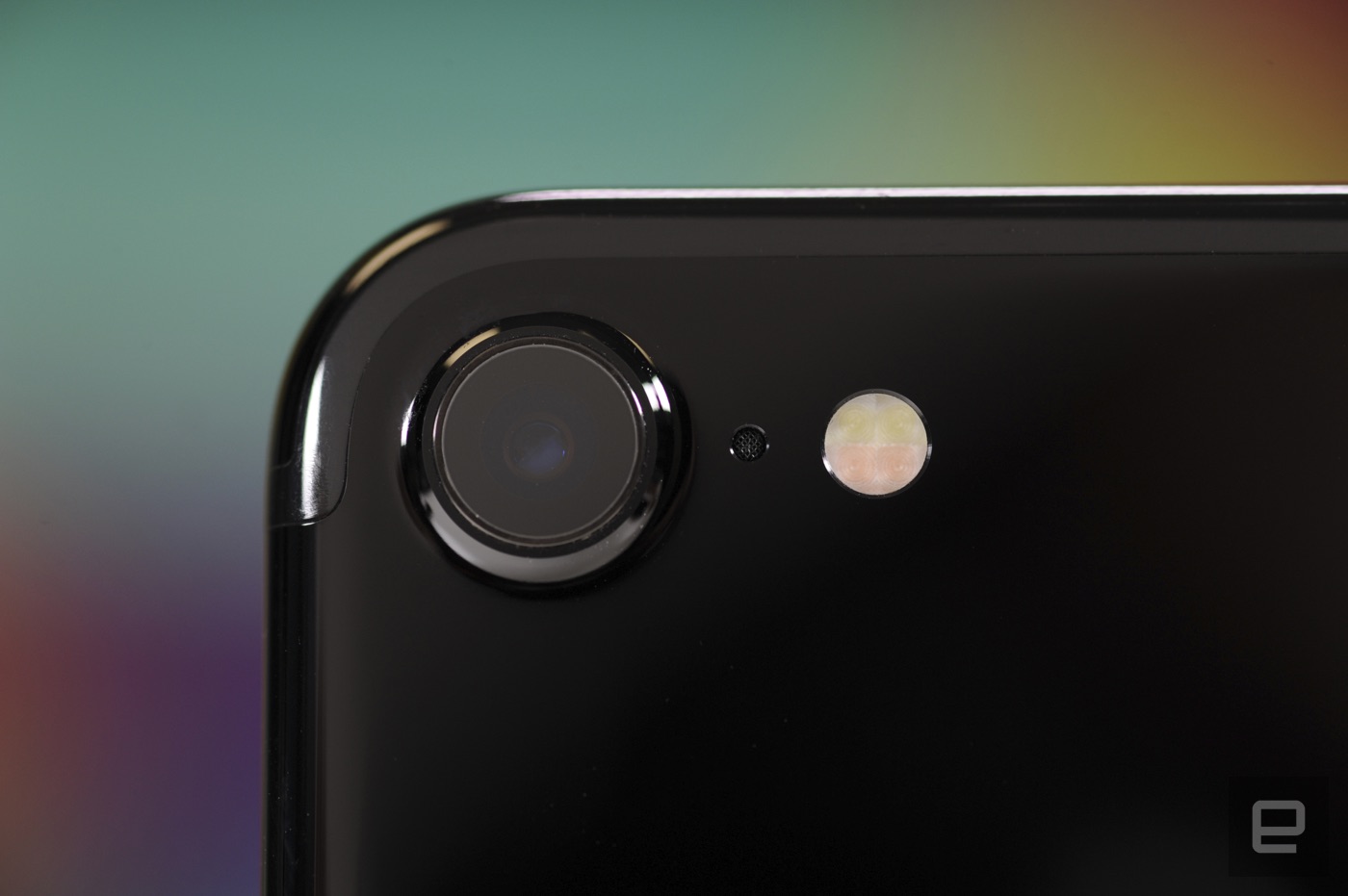
This is where things get really interesting. By now you know the iPhone 7 has a single 12-megapixel camera on its back, and guess what — it’s a damned good one. That’s saying something, considering there’s been no resolution boost since last year, and the pixels on that new sensor haven’t gotten bigger either. And yet the photos they capture come out significantly better; there wasn’t a big difference in how much detail was captured, but colors looked more vibrant and true to life than on the iPhone 6s Plus.
Surprised? You shouldn’t be. The iPhone 7’s camera captures more color data than previous ones (the better to view on that wide-color-gamut display), and the results are pretty great. In fact, I generally preferred shots taken with the iPhone 7 and 7 Plus to ones captured with a Galaxy S7 Edge. The latter captured a wider field of view and was sometimes better accurately rendering green landscapes, but the iPhone’s leg up on colors meant their photos tended to look nicer (to me, anyway). Test shots taken with the iPhone 7 were also generally better exposed than similar shots taken with the 6s, which in my case usually meant fewer blown-out skies washing out my photos. But every smartphone camera does well when it’s bright outside. What about when things get dim?
It’s a toss-up. The inclusion of optical image stabilization across both versions of the iPhone 7 helps, as does the main camera’s f/1.8 aperture. Props to Samsung: Photos taken with the S7 Edge did indeed look brighter, but the iPhone 7 and 7 Plus offered more natural colors. Before today I would’ve said the S7s and the Note 7s had the best all-around smartphone cameras, but now Apple is right there, neck and neck with the best of them. The iPhone 7’s front-facing camera has also received a major upgrade. It’s been bumped up to seven megapixels and inherited some of the architecture that made the rear cameras so formidable. Long story short, your selfies are going to look lovely. Oh, and videos look really nice too, since they exhibit the same accurate colors as stills. Go forth and vlog, you pioneer.
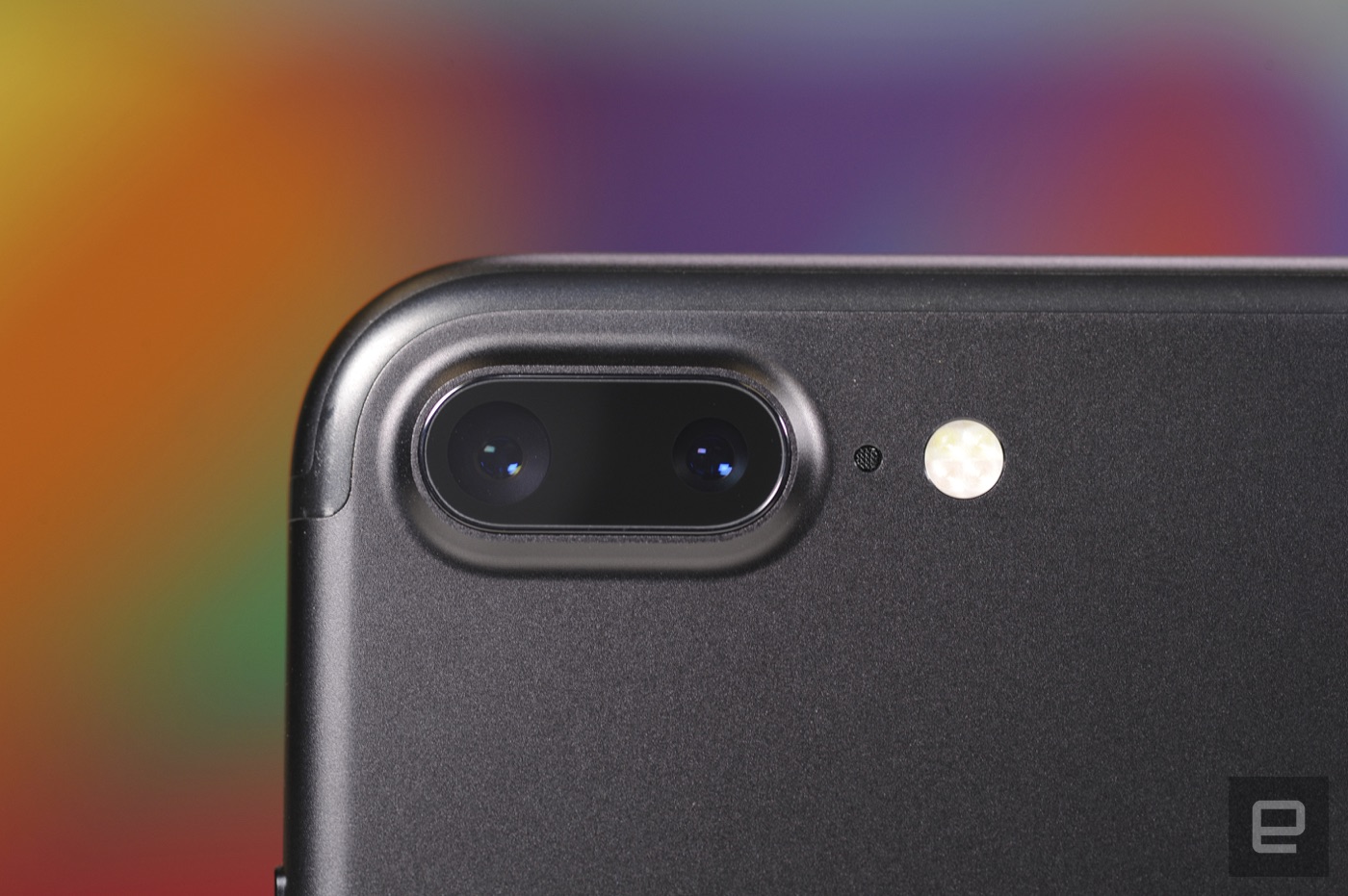
Then, of course, there’s the iPhone 7 Plus’s dual camera setup, which pairs a 12-megapixel wide-angle shooter with a 12-megapixel telephoto camera to give the Plus an actual zoom. Apple isn’t the first to dabble in dual cameras, nor is it the first company to attempt this zooming configuration; LG tried it earlier this year with half-decent results. Apple’s approach feels more elegant, though — with a quick tap you can switch between 1x and 2x zoom modes, or you can drag a slider or pinch with two fingers for more precise control. By the way, you’ll probably want to stay at 1x or 2x zoom (or somewhere in between). Apple added digital zoom up to 10x, and the closer you get to that ceiling, the noisier and more indistinct things get. That’s not surprising, though.

This whole thing might sound like a gimmick, and it sort of feels like one for a few minutes. After that, the “what do I do with this?” factor falls away and the optical zoom just becomes a handy trick to have at your disposal. The photos turned out great too, though you might notice some differences in the colors and exposure if you take comparison shots with both of the iPhone 7 Plus’s cameras. The secondary telephoto camera still shoots 12-megapixel photos, but it has a slightly wider f/2.8 aperture. Basically, it doesn’t let as much light in, so the photos come out a little different. Avid photographers might take issue with these minute changes; everyone else need not worry. For now, this is the only trick the 7 Plus has that the smaller 7 doesn’t, but that’ll change soon. Apple’s going to update it with a feature that lets you play with depth of field when you’re shooting portraits, so you can get a little more bokeh going on.
Software

The iPhone 7 and 7 Plus might not seem like the most exciting hardware updates, but there’s plenty to get excited about in iOS 10. Granted, very little of it will come as a surprise, since it’s been available as a public beta for months now. Our full review is coming soon, and I’ve already detailed some of the new features, so I’ll just recap the highlights here.
It took a while for me to get used to the revamped Photos app, but I sort of love it now. The app’s original form was really basic: You could sift through your photos by “Moment” and poke around in albums, shared or otherwise. The iOS 10 version, meanwhile, uses machine learning to sort photos into themed “memories” based on where you’ve been and when you’ve done things. The best part: searching through all your photos by keyword, since iOS 10 uses AI to identify what’s in your picture. As it turns out, I have 14 pictures with bibs in them despite not being a parent.
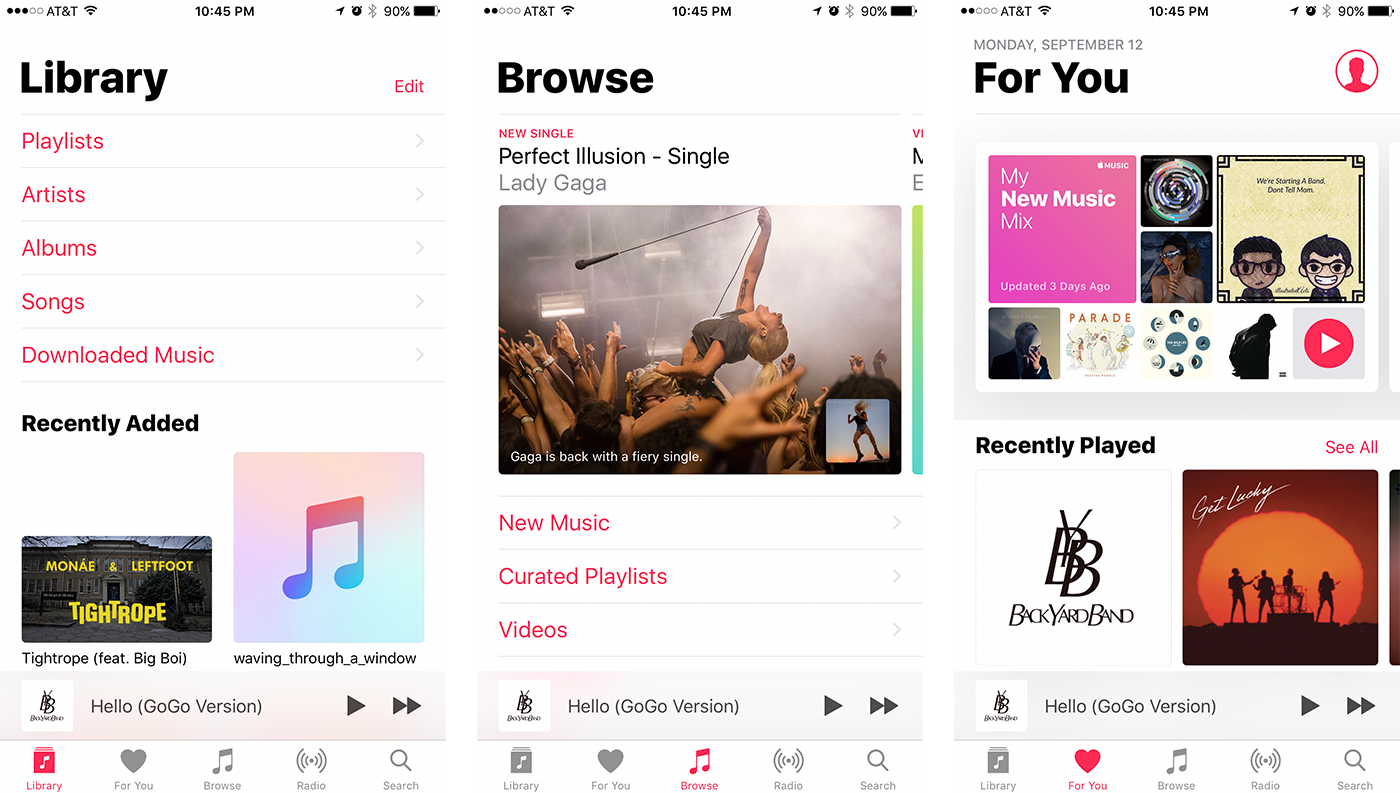
Apple’s bright, bold new Music app was easier to jump right into, and I’m a fan now. The first time you launch the app, you’re dropped right inside your music library (which is how it should be). All of the touch targets are bigger and easier to hit, even when I was glancing down at them mid-run. It’s also satisfying to see 3D Touch finally get more use. I wrote in my iPhone 6s review that using that pressure-sensitive screen was something I eventually wanted to do all the time; too bad iOS 9’s never tapped into its full potential. Not anymore. It feels like 3D Touch is connected more strongly to iOS 10’s core; I’ve been using it to expand notifications, bring up contextual menus in Apple Music and glance at widgets for first-party apps like the dialer and Weather.
Apple is also making better use of the Taptic Engine this time around, so you’ll feel it all over the place — literally. The prominent examples are the ones you’d expect, like 3D-Touching notifications and using the home button, but you’ll also feel a brief thud when you flick the Control Center open. Skimming your Apple Music collection for a specific song? Sliding your finger down the alphabet on the side of the screen feels like running your finger down a washboard, allowing you to more easily stop on a letter.
Oh, by the way, the process of forcing your 7 or 7 Plus to restart is totally different. Instead of holding down the power and home buttons like we have been for a decade, the new process requires you to hold down the power and volume down keys.

And now for some bad news: I still haven’t been able to test some of iOS 10’s headline features. Siri’s intelligence is poised to get a big upgrade thanks to third-party apps, but I couldn’t yet ask her to call me an Uber or send my friend $20 via Venmo. And while I’m also a little obsessed with sending these weird new iMessages, it’s too bad that at time of writing, the iMessage app store was still virtually barren. I’ll update this review as the store comes online and I get to play with more weird stuff.
Performance and battery life

Another year, another high-powered A-series chip to play with. The iPhone 7 and 7 Plus both run the company’s new A10 Fusion, a quad-core chipset that pairs two speedy CPU cores with two longer-lasting ones that use 20 percent of the power the others do. It’s easily the fastest chip Apple has ever stuck in a mobile device, beating out even the 9.7-inch iPad Pro’s A9X processor. More important, there’s basically zero difference in performance between the 7 and 7 Plus, even though the smaller version has 2GB of RAM, versus 3GB on the Plus.
I restored the new iPhones from backups of our 6s and the differences were immediately clear. There’s almost no delay from when you tap an app icon to when it launches, and popping in and out of apps was noticeably faster too. Both the 7 and 7 Plus were also able to handle graphically demanding games like Warhammer 40,000: Freeblade, Submerged and Mortal Kombat X without breaking a sweat.
In fairness, the 6s and 6s Plus played these nearly as well, but the 7 and 7 Plus’s batteries don’t get depleted as much in the process. Part of that is likely due to the 6s’s battery deteriorating over time, but the A10 Fusion’s GPU is also more power-efficient. Ultimately, what might be most telling is that when it came to day-to-day use, I stopped thinking about performance completely.
| 3DMark Unlimited IS | 37,663 | 37,784 | 24,601 | 27,542 |
| Geekbench 3 (multi-core) | 5,544 | 5,660 | 4,427 | 4,289 |
| Basemark OS II | 3,639 | 3,751 | 2,354 | 2,428 |
We can’t talk performance without delving into the 7 and 7 Plus’s batteries, and thankfully they’re an improvement over last year. One of the few upsides to removing that headphone jack was that it freed up more space to make these batteries a little bigger — 14 percent larger in the iPhone 7 and 5 percent in the 7 Plus. In our standard video rundown test (in which the phones are connected to WiFi with a video looping at 50 percent brightness), the 7 lasted for 12 hours and 18 minutes, or just about two hours longer than the 6s. The 7 Plus, meanwhile, looped Whiplash for 14 hours and 10 minutes, or about an hour and a half longer than the 6s Plus. That’s also on par with Samsung’s Galaxy Note 7. Not bad at all.
Eventually, though, I had to give up on bingeing on a raw jazz thriller and get some actual work done. These days, my usual routine involves lots of Slack messages, emails, Spotify playlists and marathon Hearthstone sessions. When put through that very specific kind of wringer, the iPhone 7 usually stuck around for a full workday and often survived until mid-morning the following day. The 7 Plus, meanwhile, frequently lasted through nearly two days of mixed use and downtime, a notable improvement over the 6s Plus. Obviously, your mileage will vary, but here’s hoping that these upgraded batteries stay this good over time. (We’ll see about that.)
The competition

Under normal circumstances, the Galaxy Note 7 would be at the top of this list, but, well … you know. While Samsung continues its global recall over exploding batteries, you should consider the Galaxy S7 and S7 Edge in the Note’s place. They share the same Snapdragon 820 chip and 4GB of RAM, not to mention the same lovely 12-megapixel cameras that rival the sensor Apple used this year. If you’re a screen snob, Samsung’s displays might be more appealing, since they run at a higher resolution and also support a wider color gamut than the sRGB standard. Apple and Android fans often tussle over which platform is superior, but make no mistake: The newest iPhones and the newest Galaxies are all truly excellent smartphones.
Looking for impeccable build quality and equally good sound? Consider HTC’s underrated 10. It’s easily the most impressive phone the company has crafted in years, and with support for hi-res audio and a headphone jack, it’s arguably a more versatile media machine. Speaking of HTC, it’s rumored to be working on the two most anticipated Android devices of the moment. We’re not entirely sure if they’ll be called Nexus phones or Pixel phones or something else entirely — either way, Google is said to be prepping for an October 4 unveiling. Codenamed “Sailfish” and “Marlin,” both are expected to pack quad-core Qualcomm chipsets (either the Snapdragon 820 or 821) with 4GB of RAM and 12-megapixel main cameras.
The biggest difference is reportedly the size of their screens, with the smaller Sailfish sporting a 5-inch or 5.2-inch 1080p display, while the Marlin runs with a 5.5-inch Quad HD screen. If you don’t care about smartphones as much as you care about getting the best phone, period, you might want to wait and see what Google has up its sleeve.
Wrap-up

The iPhone 7 and 7 Plus are at once the most technically impressive smartphones Apple has ever made and the most divisive. After all, they’re excellent because of Apple’s renewed attention to the basics: the speed, the camera, the screen, the battery. None of these improvements on their own are terribly exciting, but together they make for a pair of phones that are more than the sum of their parts. Then again, where’s the envelope-pushing? Where’s the Apple that upended an industry? It’s surely still there, locked behind closed doors that won’t be opened again for another year. In the meantime, we’re left to consider this year’s work.
If you can get over the all-too-familiar design and the no-headphone-jack thing, then the iPhone 7 and 7 Plus are serious contenders for best smartphones, period. Note that I used the word “best,” not “most innovative” — neither of these devices is groundbreaking. We’ve seen many of these features (or features like them) pop up in rival phones already. That headphone jack thing aside, most of the choices made in the iPhone 7 and 7 Plus feel like safe ones. There’s nothing wrong with that, but no matter how good the iPhone 7 and 7 Plus are (answer: very, very good), Apple already has us all wondering what next year’s iPhone is going to be like.
Apple’s AirPods aren’t a must-buy — yet
The iPhone 7 goes on sale in a few days, and with it comes another nail in the headphone jack’s proverbial coffin. Included in the box you’ll find a pair of Lightning-tipped EarPods and a Lightning-to-3.5mm adapter for your analog headphones, but to hear Apple tell it, the future of music is wireless. That’s where the $159 AirPods come in: the company’s totally cordless earbuds are slated for an October launch, and they promise elegance, ease of use and great sound. They deliver … some of that, but after about a week of testing, they often felt as confusing as they did cool.
Getting started

When you open the packaging for the first time, you’re met with a rounded white mass that looks similar to a container of dental floss. That’s the charging case, and it’s where the AirPods are going to spend most of their time. It’s almost completely nondescript, save for a chrome-accented hinge, a Lightning port on the bottom and a small button on the back — you’ll need that to pair the AirPods for the first time. Side note: You don’t need to be an iOS devotee to use these things. They paired just fine with a Galaxy S7 Edge, but all of the fun stuff basically evaporated; all you can do is listen to music and take calls.
Speaking of pairing, it’s a cinch if you’re using the AirPods with iPhones running iOS 10, though you’ll get an error if you try connecting them to a phone still on iOS 9. (The AirPods are also compatible with Apple Watches running watchOS 3 and Macs on macOS Sierra, but I didn’t have anything like that lying around.) Just open the charging case near the phone, et voilà: A window will pop up on the screen prompting you to connect the AirPods. Hold down the button and that’s it — you’re ready to let the tunes flow. Granted, it was never all that hard to get things connected via Bluetooth, but this simplicity is one of the best parts of using AirPods. They just work.
Design

Naturally, ease of use doesn’t mean a thing if you’re not comfortable having these in your ears. In brief, if you hated the way Apple’s wired EarPods looked or felt in your ears, these aren’t going to do anything for you. I never minded them myself — they were fine for when I went on runs, and I never had problems with them falling out of my ears. That streak continued nicely with the AirPods, but I know a ton of people for whom EarPods just never fit. Still others could get EarPods in their ears but couldn’t use them for long because they’d just fall out. Sound familiar? You probably shouldn’t take a chance on these.
They also just look sort of awkward, as though you popped in some EarPods and immediately snipped the cords off. My colleague Andy might have said it best: When I strolled into our San Francisco office wearing them, he said I looked like I had broken Q-Tips off in my ears. He had a point. In fairness, I’m stunned Apple squeezed as much tech into the AirPods as they did; there’s a pair of batteries to keep everything working, plus accelerometers and an optical sensor to determine whether the AirPods are in your ears.
Powering all that is a tiny chip called the W1 that manages the connection between the AirPods and the device they’re connected to. Apple has said this silicon will wind up in Beats wireless headphones soon too, though I’ll bite my tongue and not make jokes about Beats’ audio quality until I actually get a chance to try them. Oh, here’s a quick (and probably obvious) pro tip. The AirPods are prone to the same absentminded goofs that could spell doom for other completely wireless earbuds. In fact, just before I sat down to write this sentence, I rushed to my laundry room to fish the AirPods out of a pair of jeans I had just thrown in the hamper. Don’t be like me, people. Always put them back in the case.
In use

After popping in the ‘Pods and hearing the instrumental confirmation sound, things are ready to happen. Now we’re getting to the meaty part: How do these things actually sound? Not bad, but ultimately not much better than the EarPods we know and love. That’s not to say there aren’t any improvements. In general, the AirPods gave mids a little more meat than EarPods did, and drum fills felt crisper and more precise. My test tracks — which these days include a lot of jazz and EDM — came across warmer than I would have expected, which was a pleasant surprise.
That said, the all-too-familiar design means the AirPods inherit my biggest pet peeve with the EarPods — how airy they make my music sound. Songs that go heavy on the highs and lows tend to sound a little toothless, which, again, is natural for this design. I’m just frustrated that Apple couldn’t have tweaked it to achieve a little more oomph.
I also wish we had the option to customize the AirPods’ controls more. By default, double-tapping one of the buds wakes Siri up, and she can do all the things you’d expect. You can change these controls so that a double tap pauses and plays the current track, but that’s really about it. (You can also just remove an earbud to pause your music, which seems like the more natural way to go anyway.) The thing is, if you want to change tracks or tweak the volume, you have to either ask Siri to do it or reach for your phone. That’s it. Years of using Apple’s white earbuds have ingrained in me the double click to skip a song and a triple click to go back. It seems odd that there’s no way to program these common controls.

Lest you think I’m being needlessly picky, know that the AirPods actually work really well for voice calls. The stems that point down from the buds house the antenna and microphone, and no one I spoke to over the course of the week had any complaints about audio quality. The battery life has generally been impressive too, with the AirPods typically lasting a little over the five hours Apple said to expect. Frequent trips to the charging case help in a pinch too, since it can extend the Pods’ runtime by up to three hours with a 15-minute charge. I’ve plugged in the whole pod-and-case package just once since I received these things a week ago and the case is still sitting pretty with 33 percent battery life. Not bad at all.
Wrap-up

When I first encountered the AirPods, I said I didn’t think they’d be a must-have. One week later, that’s still where my head is: The Pods are smart, and their integration with iOS 10 is first-rate, but they fall short in some important ways — sound quality could have been better, and I wish the controls had some more nuance. That said, I’m intrigued by the possibilities they present. If Apple had made the software and controls a little more flexible, this review might have taken a very different turn. If you’re reading this, Apple, this was a solid first attempt. Don’t give up on the concept, because I believe future AirPods could be great.
The RetroUSB AVS just replaced my childhood Nintendo
When I was a child, I fought with my brothers. A lot. It was part of being the youngest, and part of being a family. Most of our sibling rivalry died with our youth, but one single, never-ending quarrel outlived our childhood: the Nintendo Entertainment System. My oldest brother and I have been bickering over our original NES for decades. Who really owns it? Me, the guy who scoured garage sales to build our collection of classic games, or him, the firstborn who — by sibling law — is right by default? To this day, we still argue about whose house our childhood console should live in. Today, that war finally ends. I don’t need our old Nintendo anymore. I have the RetroUSB AVS.
Think of the AVS as an unofficial hardware refresh for the original Nintendo Entertainment System. It plays the same games and even uses the original controllers, but everything else is brand-new. Instead of pushing a fuzzy, ugly picture through ancient composite cables, it pipes a crisp, high-definition signal over HDMI. In lieu of a cumbersome AC adapter, the AVS uses a humble USB cable — and can be powered solely by the media port on your HDTV. And, unlike the RetroN 5 or Analogue NT, the AVS is all new hardware: a custom FPGA board programmed to replicate the NES’ original processor. No emulators. No repurposed hardware.
OK, that might sound like splitting hairs. After all, don’t all three of these consoles pipe HD NES games to modern televisions via HDMI? Well, yes — but how they do it varies wildly. The RetroN 5, for instance, is actually a $160 Android device that runs cartridges through an emulator. It’s also widely derided in the gaming community for allegedly stealing code. The Analogue NT is completely legit, and actually uses repurposed Famicom chips to run the games on a mix of old and new hardware — but it’s also a premium device, costing a steep $500. The AVS is something of a happy medium: It’s not made from original parts, but it authentically replicates their functionality without legal ambiguity. At $185, the RetroUSB AVS is comparatively affordable too.
Nostalgia by design

The RetroUSB AVS’ trapezoidal chassis is nothing short of a love letter to the NES’ iconic design. Obviously, the monochromatic color scheme is a nod to the black and gray tones of the original’s case, but it’s the little things that make this homage truly delightful. This includes the shape of the lid that covers the console’s cartridge slot, and “power” and “reset” buttons that look and feel identical to their 1980s inspiration — but the most wonderful (and pointless) details can be seen only when you turn the console over.
Here you can see three trenches leading up to an empty recessed square that represents the original NES’ unused expansion slot, vent placement that mirrors the layout of the original console, and foot pads that look identical to the rubber nubs on my childhood console. All of these design nods are completely unnecessary, and on a part of the device most users will never even bother to look at. Clearly, the designers love the original Nintendo. It shows.

As much as I love how weirdly accurate the AVS’ retro design is, it might be nostalgic to a fault. That cover over the console’s cartridge slot does look exactly like the old NES chamber lid, but it’s a lot longer too. It feels like a compromise, designed to ensure that users can more easily insert and remove games — but opening and closing it feels awkward. I’m constantly worried it’ll bend too far and snap off. With front-loading US region games, it at least feels secure when the lid is closed, but Japanese region Famicom titles use a separate top-loading cartridge slot that forces the door to stay open. It looks weird, and it makes me nervous.
Speaking of games, loading them can be a bit tricky. US titles slide in horizontally, just like on the original, but I never managed to seat a cartridge into the connector on the first try. Wiggling them back and forth a little usually did the job. The connector also holds on to games tightly — removing them was just as much an exercise in wiggling as putting them in. It’s not a deal-breaker, but I do wish changing games were a little easier.

Finally, it’s worth noting that the AVS features four controller ports and a Famicom expansion slot — which enables compatibility for the rare four-player NES game (they do exist!) and for extra controllers compatible with the original Japanese Famicom.
Practically pixel perfect

Playing NES games on the RetroUSB’s console is like putting on prescription glasses for the first time: It brings a blurry, indistinguishable mess of light and color into focus. OK, the original NES isn’t that bad, but the difference between composite cables and 720p over HDMI is startling. Did you know that Mega Man’s sprite actually has white behind its eyes? I didn’t. It always blended in with the character’s pale skin tone. Backgrounds that were once a blurry haze of color now appear as distinct patterns; characters and stages are flush with “new” details and brighter colors. It’s a surreal experience: I’ve been playing these games for 30 years, but now it seems like I’ve never really “seen” them before.

I know what you’re thinking: Can’t I already play NES games in HD through the Nintendo Wii U’s Virtual Console? You can, but they’ll look worse. For some reason, the Wii U’s VC implementation presents classic games in dull, muted colors with a side of blur. I tested Punch-Out!!!, Dr. Mario and a couple of Mega Man games side by side, and the Wii U versions looked worse by every measure. The games are no less fun on the official hardware, but they lack pop and polish compared with how my old cartridges look on the RetroUSB AVS. Here, the AVS does better than even Hyperkin’s RetroN 5 — which looks much sharper than the Virtual Console but tends to have overblown, inaccurate colors.
Best of all, every classic game I own ran perfectly on the AVS — and that’s not something I can say about every NES clone console I’ve come across. Most of these products use NES-on-a-chip solutions that either gets audio wrong or simply won’t play certain games. Paperboy, for instance, isn’t playable on either the Retro Duo or the FC Twin, and both consoles play off-key audio in specific games. Not so with the RetroUSB AVS: Everything I played looked and sounded exactly as it was supposed to. It even got the glitches right, faithfully reproducing minor visual hiccups in Mega Man 3 and Super Mario Bros. 3 that were present on the original hardware.

Of all the devices that play NES games in my house, the RetroUSB AVS is the most accurate, hands down — but that doesn’t mean it’s perfect. When compared directly with my childhood NES, it’s clear that the AVS color palette is just a bit brighter. It’s not overblown or washed out like the colors on the RetroN 5, but it does come across as a bit richer than the original hardware. I noticed it most in Castlevania and Mega Man 3. On the AVS, the bricks of Dracula’s castle have more red in them, and Mega Man’s helmet appears to be a darker shade of blue.
When I asked RetroUSB’s Brian Parker about the difference, he chalked it up to differences in televisions. “NTSC,” he joked. “Never The Same Color.” I’m probably just seeing the difference between a clear digital signal and the fuzzy output of the old console’s composite cables. Even if the colors are wrong, Parker says it’s just part of the console’s NES/RGB lookup table. “Easily changed with a firmware update,” he says. The AVS also outputs only in 720p, but considering it still looks better than the RetroN 5 and Wii U at 1080p, it’s a flaw I’m happy to overlook.
Extra features

If you’re looking for a console to imbue your classic games with fancy graphics filters, instant-save-state features and other bells and whistles, look elsewhere: The AVS keeps things pretty simple. Beyond simply playing classic games in crisp, high definition, this console doesn’t do much. In terms of visual options, the AVS allows users to switch between NTSC and PAL modes, adjust the screen margins (to hide overscan garbage in specific games) and adjust scanline darkness. The console’s controller menu allows you to turn on some basic turbo features and see how many gamepads are connected, but that’s about it.

At the end of the day, there are only two special features that the AVS adds to the vanilla NES experience: built-in cheat codes and an integrated scoreboard. The first is self-explanatory: The AVS automatically recognizes the game in its slot and offers players a short list of the most popular Game Genie codes. The second takes a little more legwork; if the AVS is being powered by a PC or Mac’s USB port, users can download companion software that will keep track of their in-game score while they play and allow them to upload it to an online leaderboard.
Unfortunately, the AVS itself doesn’t make this process clear, presenting users with only a menu that fails to connect to an amorphous server. There are no setup instructions for the scoreboard in the console’s menu or the manuals that came in the box, or even on the product’s website — I had to ask Parker via email. Still, it’s a neat feature if you can get it up and running.

Finally, RetroUSB offers one special feature that no competitor can boast: new NES games. The company has kind of made a name for itself in manufacturing new cartridges for homebrew developers, and it’s neat to see that business cross over here to create a series of “launch titles” that work on both the AVS and the Nintendo’s original hardware. I tried Twelve Seconds, a simple jumping game that challenges you to race to the top of the screen as fast as possible. None of the $45 launch titles seem particularly complex, but there’s definitely a thrill to playing a new NES game after all these years.
Wrap-up

For me, the AVS is the ideal replacement for my original hardware — it plays my cartridge collection perfectly, with better visuals than the original — but it’s not for everybody. Gamers who need modern conveniences like save states and graphic filters will probably rather have a RetroN 5. Folks seeking a nostalgic experience, but who don’t already own a library of classic games will probably be happier with the 30 built-in games that come with Nintendo’s NES Classic. Even hardcore collectors who demand that their games run on original hardware have other options in the expensive Analogue NT Mini or a Hi-Def-NES mod.
If you have a classic game collection, however, and you don’t care for the prestige of original hardware or the allure of added bells and whistles, check out the RetroUSB AVS. It’s probably the best modernized NES experience you can get for under $200.
 AIVAnet