


Apple MacOS Sierra review – CNET
The Good Apple’s new Mac operating system, MacOS Sierra, adds space-saving optimizations, Siri support, and closer ties with iPhone and Apple Watch.
The Bad Setting up the Apple Watch unlock feature is complex and time-consuming. Space-saving features push towards buying extra iCloud space.
The Bottom Line This free OS update for Macs launches a new era, tying Apple’s computer OS more closely into iOS and WatchOS.
Visit manufacturer site for details.
Even without new hardware (yet), there are a lot of changes coming to Apple’s Mac line of computers. The operating system that powers MacBooks and iMacs (as well as the Mac Mini and Mac Pro) has gotten a big new refresh. So big, in fact, that it now has a whole new name.
Out is OS X (pronounced oh-ess-ten), followed by an ever-increasing version number, currently 10.11; in is MacOS, a new name that’s much more in line with Apple’s other operating systems, which include iOS (for iPhones and iPads), WatchOS (Apple Watch) and TVOS (Apple TV).
It’s yet another step in a long path to a grand unified theory of Apple operating systems, and it highlights increasing cooperation between Macs and other Apple devices and services. The code name for the first version of MacOS is Sierra, and it’s available starting today as a free update to current Mac owners (for all Macs from 2010 or later, and a handful of 2009 systems), and will come preinstalled on Mac systems going forward.
 Tyler Lizenby/CNET
The last couple of near-annual Mac operating systems upgrades, 2015’s El Capitan and 2014’s Yosemite, were less an overhaul and more a collection of handy features and enhancements. MacOS Sierra takes that a bit further, adding new features that are inspired by iOS or are designed to help Macs work better with iOS products, adding further incentive to keep your hardware inside Apple’s walled garden, which includes the iPhone, Apple Watch and Mac computers.
Siri on Mac
Voice assistants are hot right now, from Alexa on the Amazon Echo to Cortana on Windows to the original, Apple’s Siri. Once restricted to iPhones, she’s now ready to move into your Mac.
It’s still the same familiar Siri voice (depending on your region), and she does most of the same things as the iOS version. You activate Siri through a keyboard command, Cmd+Space, or by clicking the Siri icon in the dock, then simply speak your query.
 CNET/Dan Ackerman
All the standard things — weather, news, local shops and landmarks — work as expected. You can pin results, from sports scores to stock prices, to the notifications panel and see them anytime. That’s a handy extra if you find yourself looking up the same info over and over again.
More about MacOS Sierra
- How to download MacOS Sierra
- What to expect from a new MacBook Pro
- All you need to know about MacOS Sierra
The most useful new trick with desktop Siri is for searching files, which you can do by type, by date, or by keyword. For example, you can easily call out all spreadsheets, or all image files from the last two weeks with the word “screenshot” in the title. It’s a handy way to zero in on files, especially if, like me, you’re not very good at keeping files organized.
New sharing and optimization in iCloud
Using iCloud for storing and sharing photos and files is well-established at this point, and people use Google Drive, Dropbox and other cloud services for similar purposes. But, by checking off a new checkbox in the iCloud settings menu, files on the desktop or in the documents folders of multiple Macs can now be automatically synced. That’s handy if you have, for example, a work and home Mac that you need to jump between easily.
Drop a file or add a screenshot to the desktop of one MacOS system, and a few seconds later, it pops up on the other ones. The documents folder, the other place you’re likely to store important files, works similarly, but each machine gets a named folder within the documents folder on its sister machines.
 CNET/Dan Ackerman
There are plenty of ways to sync files between machines, but I liked how effortless this was, and especially how it gave me access to identical desktops (where I keep a lot of in-progress files) across different Macs.
A handful of new optimized storage options can keep more files on the cloud, rather than on your physical hard drive. For example, MacOS can be set to automatically delete iTunes movies and TV shows that have been watched, keep larger mail attachments in the cloud, or to clear items from the trash folder after 30 days.
macOS Sierra review: Mac users get a modest update this year
This is almost like part two of my macOS Sierra review. I had a chance to test Apple’s newest desktop operating system at the beginning of the summer, just before it was released in a public beta. The software hasn’t changed much since, but a few of the headline features were missing from that earlier build; Apple said they wouldn’t be available until the final version shipped in the fall. As it happens, Sierra arrives today as a free upgrade, so I’m picking up right where I left off. What follows is my full review of Sierra, though if you read my earlier preview, or have been using the software yourself, you won’t find many big surprises here.
Getting started
Sierra will work on Macs up to seven years old. (If your computer is older than that, it’s probably time to replace it anyway.) To be precise, it’ll run on MacBooks and iMacs from as far back as late 2009. If it’s any other kind of Mac — an Air, Pro, Mini or Pro desktop — your machine needs to be from 2010 or later. As you’ll see too, there are some features that simply won’t work without an iOS device. Think: an Apple Pay device for Apple Pay, a Touch ID–enabled device for Auto Unlock, and an iOS 10 device to use Universal Clipboard, Memories or the new Messages on the go.
As for setup times, downloading Sierra onto a recent iMac over my office’s usually fast WiFi network took about 20 minutes, while installing it took a little more than half an hour. As always, your mileage may vary. Suffice to say, though, if this is the only computer available to you, I suggest not upgrading in the middle of a workday — you’re going to be without a desktop for a while.
Features that are finally ready to use
Auto Unlock
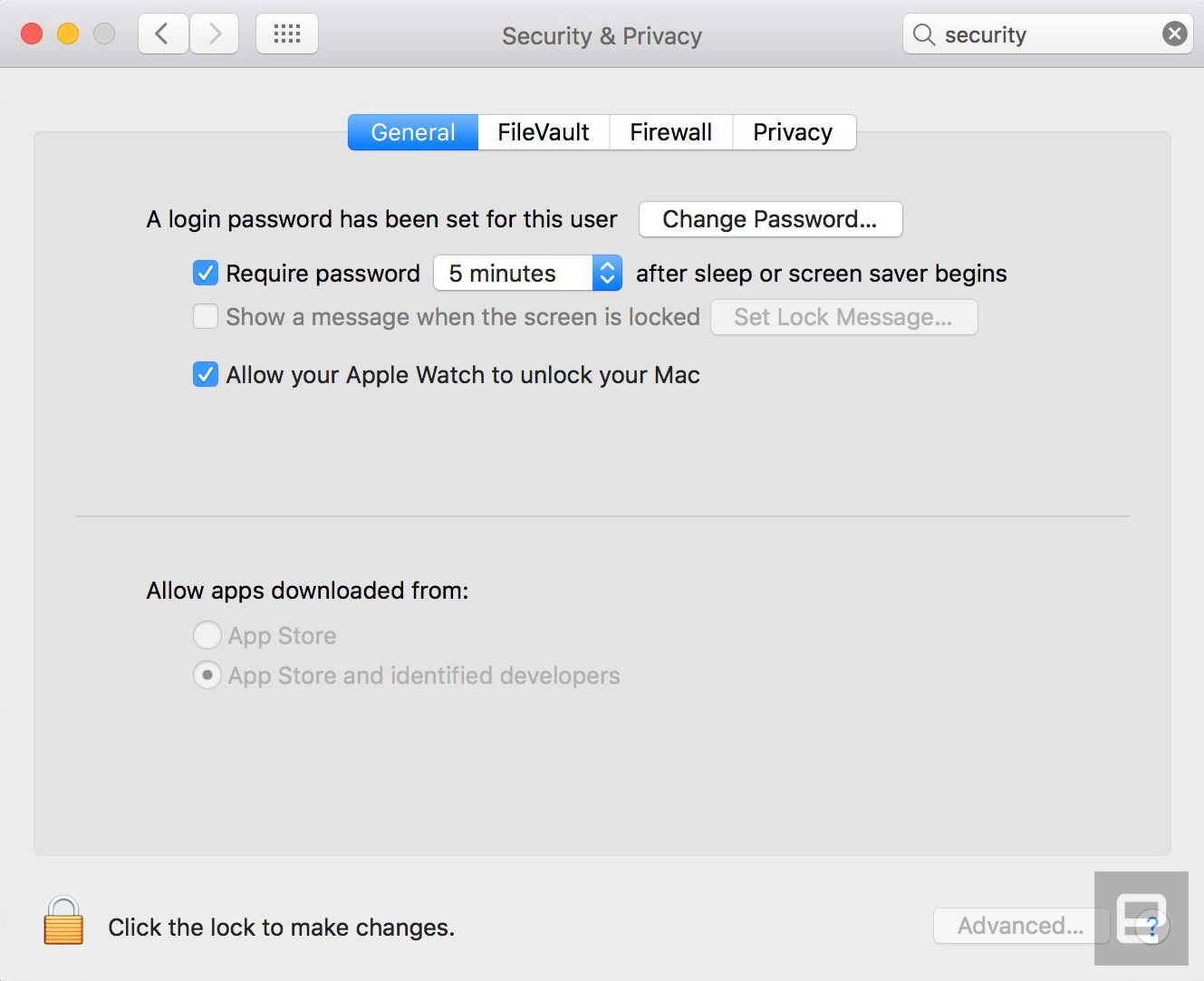
Until now, iPhones and iPads have had Touch ID; Macs have had passwords. Which is fine, but certainly not as convenient. There’s still no fingerprint sensor on the MacBook or Magic Trackpad, but a new feature promises to be similarly convenient: using your Apple Watch to unlock your Mac when you’re in close proximity. To turn on Auto Unlock, as the feature is called, go into your Mac’s Security & Privacy settings and check off the box that says “Allow your Apple Watch to unlock your Mac.” It’d be pretty troubling if this feature were enabled by default.
So it’s easy to set up — or so you’d think. When I first tried to use this feature, I would wake my sleeping Mac and see the message “Unlocking with Apple Watch,” only to be forced to enter my password anyway. Apple says you need two-factor authorization enabled on your iCloud account in order for Auto Unlock to work. But I already had that in place. What could be the problem, then? I still am not sure. What I do know is that after I signed into appleid.apple.com and reset my iCloud password, I was able to log into my machine using Auto Unlock.
Apple Pay on the web

If you already use Apple Pay on your iPhone or Apple Watch, now you can do it from your Mac too. Starting today, some 300,000 websites are expected to add an Apple Pay button, according to a company spokesperson. To actually use it, you’ll need to have the site open in Safari specifically (because of course), and you’ll also need a mobile device that supports Apple Pay — either an Apple Watch or a recent iPhone. The reason for this is that although you’ll hit “pay” from the Safari page, you’ll need to either use Touch ID or a passcode on your iPhone or double-click your (authenticated) Apple Watch to complete the transaction.
Aside from being convenient, this has security benefits, according to Apple. For starters, not having to type in your address or credit card number could feel like a blessing should the retailer ever suffer a data breach. Additionally, all transactions are encrypted, and your credit or debit card number won’t be stored on your device or Apple’s servers, or be shared with retailers. Instead, you’re assigned a unique Device Account Number that’s stored on the so-called Secure Element of your device. Lastly, Apple Pay doesn’t keep a history of your transactions, though you can choose to keep your most recent purchase details in Wallet if you prefer.

During my pre-launch testing, five sites had already added the Apple Pay button: Indiegogo, Lululemon, Spring, Warby Parker and Instacart. To test it out, I found the least expensive thing in Lululemon’s (very expensive) lineup, added it to my cart, and then had my choice of two buttons: “Add to Bag” or “Apple Pay.” Because Apple Pay already had my credit card and address stored, clicking that button meant I jumped straight to a summary box, where all I would have had to do was click another button to confirm the purchase on my watch. It was super-easy, but it also scares me how quickly I could have purchased a $12 headband I didn’t need. In real life, you’d have but one chance to reconsider that impulse purchase before pulling the trigger.
All the stuff we covered earlier
Siri

Among all the new features in Sierra, this ranks as one of the most notable: Siri finally has a home on the desktop. And it’s hard to miss: There’s a Siri button both in the system tray in the upper-right corner and in the app dock at the bottom of the screen. Additionally, there’s a keyboard shortcut you can use: command-space-hold. As it happens, this is actually one of the few things that’s changed since I tested that pre-beta build. The command used to be Fn-spacebar. Now it’s command-spacebar and hold, which is similar to the existing Spotlight search shortcut (command-spacebar). That’s good, I think; may as well tap into Mac users’ muscle memory.
Just like on iOS, you can use Apple’s virtual assistant to search the web, draft emails and texts, create calendar events, set reminders, search the web and check things like the weather, stocks and sports scores. Siri has some Mac-specific tricks too, including searching your files, adjusting your system settings and giving you information about your computer, like how much local storage you have available. Throughout, you can pin Siri’s search results, as well as copy or drag and drop them into other parts of the OS.
Ultimately, Siri on the Mac is no smarter than it is on mobile. Which is to say, Siri can handle a diverse range of requests, and understands natural language, to a point (e.g., “Show me Snowden movie times”). Over time, though, Siri’s limitations become more obvious, and you learn not to bother asking it certain things. Siri might be able to show me local Snowden showtimes, for instance, but forget about narrowing the results to evening shows, or locations in a particular neighborhood.
Universal Clipboard
Apple already has a lot of so-called Continuity features that allow you to jump between apps on iOS and macOS, picking up on one platform where you left off on the other. Now, in addition to, say, having your notes and web history synced across devices, you can copy and paste between them too. So if you spot something on your Sierra Mac, you can copy and paste into iOS 10, and vice versa. (This also works from Mac to Mac, and from one iOS device to another.)
It’s really, really easy to use too. You just have to be signed into the same iCloud account on both devices, which need to be running Sierra and/or iOS 10 specifically. Then, just copy something and it’ll appear on the clipboard across all your connected devices. To use an oft-repeated Appleism: It just works.
So far I haven’t needed this feature often, but when I do, it’s handy. In one case, for instance, I had a lengthy App Store download code waiting for me in my email, which I had access to on my iPhone but not on my test machine. (I was logged out at the time.) Obviously, without Universal Clipboard I would have had other options, including logging into my email on the laptop or dropping the code into the Notes app, which I use on both platforms. But being able to copy and paste directly is far more efficient.
Picture in Picture

New to both iTunes and Safari is a Picture in Picture view that lets you pop out video into a floating stay-on-top window, which you can then resize and drag around the screen. Apple has a developer API for this, so over time you should see the little pop-out icon appear on more websites. For now, it works on iTunes and a select few sites, including Vimeo. (I successfully tried Picture in Picture on ESPN during my earlier round of testing, but didn’t see the pop-out button there while testing the final build.)
When the pop-out button is available, the feature works well, and I particularly like that the floating window closes automatically once the video is finished. Still, it’s a shame that when viewing in Picture in Picture mode, you can’t jump forward or a back to a different point in the video.
Apple Music makeover
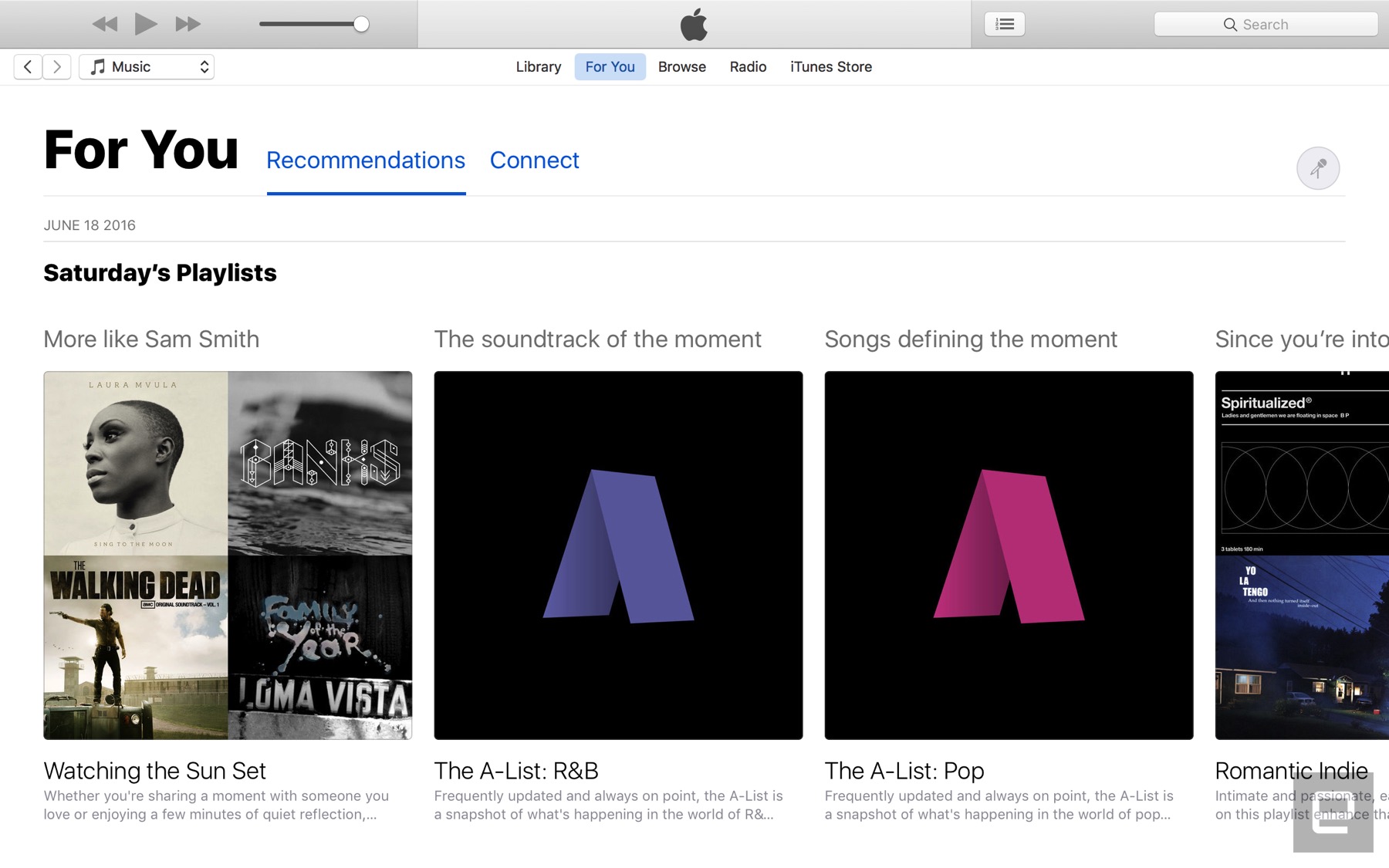
Speaking of iTunes, Apple Music has received a major redesign on both mobile and desktop. In the case of desktop (that would be the iTunes app), you’ll see three major sections: “For You,” “Browse” and “Radio.” Those last two need no explanation, but in the case of “For You,” it includes a mix of personalized recommendations and playlists, as well as updates from whatever artists you might be following. Throughout, the look is much cleaner, with large headers and oversize album art. Make no mistake: iTunes itself still feels like a bloated mess, but at least Apple Music now feels streamlined.
iCloud Desktop and Documents

If you like, you can now have your entire Desktop and your Documents folder sync directly to iCloud so that you don’t have to cherry-pick specific files for upload. Basically, then, Sierra works a lot more like Dropbox (or OneDrive, Google Drive or any other cloud storage service that allows you to automatically back up folders wholesale). As ever, you’ll find Desktop and Documents in Finder’s left-hand pane; now, though, they’re listed under “iCloud.”
Obviously, it’s up to you whether you want to take advantage of this feature (it’s not turned on by default), but personally I’ve found it very useful. Because I have an iMac on my office desk and a MacBook that I take home and into conference rooms, it’s nice to be able to quickly retrieve things like TextEdit files and know my progress was saved across devices.
Optimized Storage

While we’re on the subject of iCloud, Sierra does a bunch of things to help you better manage your large iCloud library. If you head into iCloud settings, you’ll see an option for “Optimize Mac Storage” that enables not just one feature, but a whole series of background processes that help free up space on your local drive.
By default, your whole iCloud library will be available on your machine if you have the space, but if you don’t, older files will automatically be uploaded to the cloud. Optimized Storage also moves seldom-used files and already watched iTunes videos off your local disk. You can also store Mail attachments on the server until you choose to download them. Ditto for things like dictionaries, instructional videos and special fonts, which are now available on demand instead of on the system itself.
Other low-hanging fruit include items that have been in the trash 30 days — Sierra can automatically erase that, as well as clear your cache and logs. Additionally, it flags duplicate downloads in Safari and reminds you of used application installers. Lastly, the macOS installer itself is smaller than in years past, meaning you have slightly more free space after upgrading than you might have had otherwise.
Photos

If you’re an iPhone or iPad owner, you’ve presumably updated to iOS 10, which, among other things, brings a redesigned Photos app. The new Photos makes an appearance here on Sierra too, albeit with a more sprawling, desktop-friendly design. As on iOS, Photos now uses artificial intelligence to analyze your pictures, identifying places, faces and various objects, like dogs and beaches. The app then takes all that information and puts together so-called Memories — automatically generated albums showcasing what Apple’s AI thinks are the highlights.
Though you might not always agree with the particulars (surely there was a better version of a shot Apple could have chosen?), this is a convenient way to look back on good times without having to go take on the chore of sorting and curating your photos. Scroll down and you’ll see that Apple includes “Related Memories” below the Memory you’re looking at. Be warned: This can be addictive.
Aside from Memories, you’ll also find dedicated People and Places albums. When it comes to people, Apple’s AI gets smarter over time as you tag more and more faces. To make this easier, Photos surfaces faces with a prompt to fill in that person’s name. Once you get a good backlog, you’ll notice that the People album sorts faces in descending order according to how frequently they appear in photos. That said, if you add someone as a favorite, they’ll always float to the top regardless of their ranking.
There are some UI changes here as well. There’s a search bar that can bring up pictures based on keywords — say, “cats,” “snow” or whatever else might be in the shot. As mentioned, Siri can find your photos too (try asking for photos from a certain year, or with a certain person taken at a certain place). The Albums view looks a little different as well, with rounded tiles and a view counter on videos. Also, if you’re viewing one big photo on the screen, you’ll notice that the scrubber on the bottom looks a lot like the one on iOS. (Pick “Show Thumbnails” from the View menu to make the scrubber appear in the 1-up layout.)
Lastly, Photos on Sierra ushers in some new editing tools. Among them: “Brilliance,” which applies region-specific adjustments to brighten dark areas, and “Markup” for adding text, shapes and signatures to images. You can also edit Live Photos (both stills and video), and Apple has released an API allowing third-party developers to incorporate this feature into their own image-editing apps.
Messages

Messages is yet another app that received updates on both Sierra and iOS 10. New features include larger emoji (three times bigger than before), inline previews of videos and websites, and so-called Tapbacks, which let you respond to a message by adding a thumbs-up, heart or other pictorial reaction by tapping rather than hit ‘reply.’ The fact that your reaction appears on top of the message bubble means less clutter as you scroll through a message thread.
Unfortunately, some of the most addictive new features in Messages for iOS didn’t make it into the desktop version. On mobile, for instance, you can send messages with stickers, handwriting, flashy screen backgrounds and animated text effects (think: “slam” for emphasis). Not on Sierra, though. If it’s any comfort, you can at least view these effects on the desktop when your friends send wacky messages from their iOS 10 devices. You just won’t be able to respond in kind.
Tabs

It’s not just Safari anymore — many Mac apps, including Mail, TextEdit, Maps and the iWork suite also now support tabs. So if you open a new window in Maps, you’ll see not a new window, exactly, but a neat little tab. This will automatically work across many third-party document-based apps too, without any tweaks required on the part of developers. The only apps where this won’t work are ones that didn’t already have a multi-window option. That’s why you’ll see tabs in Maps, for instance, but not FaceTime.
If you really love this feature, you can choose to always turn new windows in these apps into tabs. (That’s what I opted to do.) There are other options, though. You can elect instead to have this happen in full-screen mode only.
Odds and ends
And finally, some other miscellaneous changes that might (or might not) be of interest:
- The ability to share notes from the Notes app.
- You can now find Safari browser extensions in the Mac App Store.
- Safari automatically plays HTML5 video if the website you’re looking at supports it. If a plug-in is required to view video, you can opt to enable it just once or on an ongoing basis.
- A filter button in Mail allows you to see just unread or flagged emails, messages that are addressed to you or ones you’re copied on, or messages sent with attachments. It’s also possible to apply more than one of these criteria at a time.
- Push email support and calendar updates for Exchange accounts.
- Send read receipts for individual conversations in Messages.
- “Coordinated alerts” mean that notifications make a sound only on the device you happen to be using.
- Spotlight Search now finds files you’ve created, printed, shared, emailed, messaged and sent via AirDrop, or posted to Twitter or Facebook.
- The keyboard settings menu now has an “auto-capitalization” option.
- A new keyboard shortcut (not enabled by default) allows you to add a period by hitting the spacebar twice.
- Apple says Sierra’s autocorrect algorithm is generally smarter than it was in last year’s OS.
- Sierra adds a few new dictionaries, including Traditional Chinese and Danish. There are also two new bilingual dictionaries: Italian-English and Dutch-English.
- Japanese users are getting transit directions in Apple Maps. This includes major train, subway, ferry and national and local bus lines in Tokyo, Osaka and Nagoya.
- Right-to-left support for Arabic and Hebrew.
- Time Machine now supports the SMB protocol, making it compatible with third-party network-attached storage devices.
Wrap-up
There’s little reason to ever skip a macOS update (in fact, there are lots of reasons that’s a bad idea). But as far as annual releases go, Sierra is a fairly minor one. You probably won’t appreciate Siri on the desktop unless you already use it on mobile, and even then, Apple’s virtual assistant isn’t always as smart as we’d like. Auto Unlock is useful, but difficult to set up, and you need an Apple Watch, which many folks don’t have. Apple Pay is convenient but also conducive to impulse purchases, which is probably better news for retailers than shoppers.
Take all that away and some of the most useful features are actually the least showy. Think: Optimized Storage and the ability to automatically back up your Desktop and Documents folder to iCloud. Many people will use these features, myself included. Are these updates exciting, though? I think even the most loyal of Mac users would have to say no.
LuDela Smart Candle Release Date, Price and Specs – CNET
The LuDela Smart Candle is a real candle with a real flame — none of that cheap-looking LED candle stuff — but you can light it with an app. You read that right: You can now literally light a flame with an app.
The app connectivity isn’t just a gimmick, though. It also features extra safety features to prevent house fires or injury to young children, as well as scheduling features. According to LuDela’s CEO, voice integration is even planned for the near future.
All these features come at a price. For $100, you get the base device, including a colored wax shell and a beeswax-and-soy 30-hour candle. Each additional shell you get (for seasonal decor, for instance) costs $20, and each additional candle is $8 (or $6, if you subscribe to LuDela’s service).
 LuDela
The mechanics behind LuDela are simple, but creative. Essentially, the device comes in three layers: The outermost layer is a purely aesthetic shell; the second layer is the silicone device itself; and the third layer is the candle, which sits in a spring-loaded cradle to keep the wick at the top even as the wax burns away. The result is a pillar candle that’s only a few inches in diameter. Only when you look closely near the wick do you notice the differences between LuDela and a standard candle.
LuDela lights the flame by channeling heat between four electrical nodes that surround the wick. It extinguishes the flame with a small fan nestled right beside the wick. Other than these two mechanisms, the device consists of various sensors for safety purposes. If the candle tilts to the side, for example, it will automatically extinguish the flame. If anything passes over the top of the flame within a few feet, the flame will go out. Essentially, it seems like the LuDela’s Smart Candle will attempt to diminish the dangers of regular candles.
 LuDela
I’m not thrilled about LuDela’s price; $100 for app control and extra safety features seems a bit pricey — especially when standard pillar candles or smart LED candles will only set you back between $10 and $40. That said, as someone who hates hunting around for a lighter or matches, I like the idea of starting fire with my phone.
LuDela is available for preorder beginning today, and the company plans to ship out units by the end of 2016.
Fizzics Waytap Release Date, Price and Specs – CNET
 Fizzics
A year after surprising us with a sonic-powered beer enhancer, Fizzics is launching a crowdfunding campaign today for a new device called the Fizzics Waytap. Like the first Fizzics, you’ll put your bottled beer into Waytap, and it’ll use sound waves to give you a smooth pour topped by a creamy head — making your store bought beer taste like it came from the tap at your favorite bar.
The biggest difference between the original Fizzics and the new Waytap is the appearance — it’s smaller, thinner, and lighter than before. You’ll also put your beer into the device differently. You open the lid of the first Fizzics, place your bottle into the body of the device, then guide the tap’s hose into place while closing the lid. Waytap wants to make the process more simple and sanitary. The whole top of the cylinder comes off, you put your beer on the base, then as you put the top back, the hose should go into the bottle on its own.
A smooth pour

Fizzics on the left; Waytap on the right.
Fizzics
With both devices, once the container is sealed, pull the tap handle forward and the Fizzics Micro-Foam technology will steadily pour your beer out under pressure. Once your glass is almost full, push the handle in the opposite direction, and Fizzics will agitate the carbonation of the beer remaining in the bottle, and top off your glass with a frothy head of foam.
When I tested the first Fizzics, I thought the whole idea of using sound to make bottled beer taste better sounded like elaborate fiction, but it works. Fizzics genuinely made beer frothier and creamier. I didn’t always find that to be a positive thing, as it sometimes muted hoppier beers, but it made any chocolate or spicy notes pop and did make some bottled beers taste better and closer to their draft variety.
Outlook

Can Fizzics unlock your bottled beer’s true potential?
Fizzics claims it can make bottled beer taste like draft. We head to the corner bar to put that claim to the test.
by Andrew Gebhart
Close
Drag
Given that the Waytap will be using the same technology as Fizzics, I have every reason to suspect it will have similar success. I didn’t really find the original Fizzics too big or too difficult to use, though, so the Waytap doesn’t look to fix any of my issues with the original product. The smaller size actually eliminates one of the cool uses of the original Fizzics — pouring growlers. The Waytap can’t fit them.
Beer tech
- Synek Counter Top Beer Dispenser
- PicoBrew Pico
- Brewie
However, I’m sure the smaller size will appeal to some and it can still fit both bottles and cans. Plus, Waytap is cheaper than Fizzics — it’ll retail for $130 whereas Fizzics costs $170. Via the Kickstarter campaign, you can preorder Waytap now for discounts off of that price and it’ll ship anywhere in the world. The US price converts to roughly £100 and AU$170. The Fizzics price converts to £130 and AU$230 (plus tax).
The original Fizzics was a crowdfunding success too, so if you like the look of the new Waytap and like your beer frothy, I’d call preordering Waytap a pretty safe bet.
Forza Horizon 3 review – CNET
The Good Great open world and lots to explore. The cars are gorgeously detailed and feel great on (and off) the road.
Excellent options for driving against or with friends both virtually and online.
The Bad It’s amazing how weirdly they’ve mashed the real world into this map. Track racing fans might wish for something more serious.
The Bottom Line A great open-world racing festival that captures the Australian landscape beautifully and makes it a fun driving experience.
Visit manufacturer site for details.
Strewth mate! When I first caught wind Playground Games was making a dog’s breakfast of the Aussie map for Forza Horizon 3 I was bloody outraged! But now I’ve had a good gander ya gotta give ’em a fair shake because it turns out they’ve made a corker that really does get the Aussie vibe of the thing. Go ‘Straya!
Translation: If you know the reality, you’ll know Playground has done some very weird things with the Australian map for its Forza Horizon 3 setting. But what the game lacks in geography lessons it makes up for in sheer driving pleasure, while still capturing the spirit of what it means to make a racing game with an Australian backdrop.

The Holden Special Vehicles GTS Maloo. Please, play it like an Aussie and make this your starting car.
Microsoft
Driving games love their stats, so here’s a few: Over 350 cars, twice the map size of the previous Horizon game, 12-player online multiplayer, four-player online campaign co-op, new events and car types galore. If you want more, Forza Horizon 3 gives you more. Case closed.
The cars all feel wonderfully different too. It’s not just that they handle differently. The sounds they make are unique to each make and model. After performing upgrades the sounds change too. There’s no mistaking the difference between a BMW RLL Z4 GTE, a BMW M4 Coupe or a BMW Isetta 300 Export. Turbos pop violently, V8s thunder and race engines roar.
But there’s something else here. The game feels more open than ever. Forza Horizon games are about enjoy the open driving experience, this time around the game lets you really go wherever you want. Take shortcuts across fields, through forests or even off clifftops. Drive through the surf. There’s less of a sense of being hemmed in by invisible walls than ever before.
Fun on the open road
Your first mission in the game sets quite the tone. It’s you in a buggy versus a Jeep that spends most of the race being flown through the bush under a helicopter. It’s dumb, it’s crazy and it’s a lot of fun as you chase it through bush terrain on your way to your first Horizon Festival location.
The game is also notably not just fun, but funny. Beauty spot commentaries, radio announcers (my favourite is the classical community radio station — nothing like doing burnouts to some Beethoven) plus banter with your festival assistant (you’re now the boss, by the way). Little touches that make you laugh rather than cringe at the idea that real people with the kind of money to enjoy cars like these are sometimes jerks and, to use the Australian vernacular, wankers.

A buggy versus a jeep under a chopper? The crazy tone is set from the very start.
Microsoft
The race events are fun and a good mix of styles and locations, with environments like beaches, coastal roads, city streets, forests and the outback. But I’ll happily argue the best of the game is found out on the open road. Nothing is too gated either. Yes, you must unlock events by gaining fans to open up more festival upgrades and new venues, but the world itself is made to be explored.

It’s not all beaches, forests and outback. There’s a city on a beach too.
Microsoft
The game again features “Barn finds” as a way to discover 15 classic cars hidden out in the world. It really should have been renamed “Shed finds” for the Australian setting, but the fun of the hunt lets me overlook that faux pas. There’s danger sign jumps for doing particularly crazy stunts and bucket list objectives with races and events that are even more over the top than usual. But the best of the new additions has to be Convoy.
With Drivatars of friends still a big part of the game, you can now beep your horn while driving past Drivatars to form up in a convoy of racers heading wherever you want to go. Suddenly the basic act of driving through the open world feels like you are racing along with friends, without worrying about actually winning a race. If you go off-road your convoy will still follow along, making for some particularly fun times bouncing through the scrub in search of a hidden barn.
Canary Flex Release Date, Price and Specs – CNET
Canary, the startup behind the Canary all-in-one security system, is back with a new product — the $199/£159 Canary Flex. Here’s an overview of the Flex’s basic specs:
- 116-degree field-of-view camera
- 720p resolution
- Live streaming
- Night vision
- Motion sensor
- Motion-related alerts
- Free 24-hour event-based storage
- $10 per month 30-day event-based storage
- Related Android and iPhone app
That’s not all, though. As its name suggests, Canary’s Flex is also extremely versatile.
Canary flexes its smart-home muscle with…
See full gallery


1 – 4 of 14
Next
Prev
To begin with, it’s rated for both indoor and outdoor use. And, because your purchase includes a magnetic base and mounting hardware, you can install it pretty much anywhere. The Flex also comes with a rechargeable battery, a small-scale version of what Tesla uses in its cars, according to John Carter, Canary’s head of Communications. Carter told me the battery should last for up to 2 months, but you can also use the adapter 24-7 if you’d rather not deal with the whole recharging batteries thing.
Netgear’s Arlo, another indoor/outdoor security camera, requires four CR123 batteries to operate. The Nest Cam Outdoor has to be connected to a power adapter at all times. Offering both gives the Canary Flex an edge over its competition.
35 connected cameras for a safer smart home…
See full gallery


1 – 4 of 36
Next
Prev
But, there’s one more thing that sets the Flex apart: a 4G LTE mount. As part of a partnership with Verizon, you can opt in to cellular backup for an additional monthly fee. It’s a solid option if you want to install your camera outside of traditional Wi-Fi range — or simply have a backup when your internet connection is spotty.
In addition to the 4G LTE mount (the price of the hardware hasn’t been set just yet), Canary will also offer three other mounts — a $30 Security Mount with a “security screw” that’s supposed to deter theft, a $20 Stake Mount to install in the grass and a $20 Twist Mount, a bendy mount that you can wrap around handles, knobs and other random things in your house.
Cameras, cameras and more cameras:
- Nest’s hardy outdoor camera watches over your roost
- Netgear’s Arlo defies typical security camera limitations
- This snazzy porch light doubles as a DIY security camera
As far as integration with products from other manufacturers goes, the Canary Flex should be Wink-compatible shortly after launch. The team is also in talks with IFTTT and Apple HomeKit for potential partnerships in the future.
Canary’s Flex is available for preorder now on Canary’s site, as well as at Best Buy, Home Depot and Verizon, with shipping slated for early November. We’re hoping to get our hands on one next month, so check back soon for our full review.
GoPro Hero5 Session Release Date, Price and Specs – CNET
GoPro’s Session camera got off to a rocky start.
The tiny cube-shaped shooter — the smallest the company had ever made — received praise for its design while simultaneously being bashed for middling video quality and too few features for too high a price. It wasn’t until GoPro cut the price in half to $200 that consumers were able to look past its shortcomings.
For the Hero5 Session, let’s just say GoPro has learned its lesson. It’s still going to seem pricy to some at $300, AU$460 and £250, but at least now it has some higher-end features to back it up, including 4K-resolution video.
 Joshua Goldman/CNET
Before I dive into the features, though, you should know its design is essentially unchanged. If you didn’t like the original with its built-in battery, no screen for previewing and reviewing, and limited onboard controls, you’re not going to like the Hero5 version any better.
What you do get is the same supersmall camera that turns on and starts recording with a single button press and is much easier to mount than its rectangular linemate, the Hero5 Black. It’s still waterproof without a housing down to 10 meters (33 feet), and GoPro CEO Nick Woodman said when he announced it that it’s the toughest camera they’ve ever made.
A sliver of a screen lets you see your settings, storage and battery amounts and select your shooting mode, but it can be frustrating to use. The camera does have Bluetooth and Wi-Fi, though, so you can always connect to a phone to access that stuff and more.
 Joshua Goldman/CNET
Don’t want to mess with buttons? GoPro added voice controls for starting and stopping recordings, snapping photos and even tagging highlights for editing. Maybe you’ve mounted the camera out of reach or you don’t want to take off gloves to switch from recording video to a time-lapse or you just enjoy yelling commands at inanimate objects. Whatever the case, the Hero5 Session has you covered.
GoPro also added electronic image stabilization and a new Linear-view setting that supposedly puts an end to the wide-angle distortion in video and photos. I haven’t had a chance to test these, yet, but I’m hopeful.
The camera also supports GoPro Plus, the company’s new $5-per-month cloud service. Plug in the camera to charge and your photos and movies will automatically upload to the service for viewing and sharing your phone, tablet or computer. It doesn’t replace storing your clips locally (video uploads are transcoded to 1080p at 30 frames per second, regardless of what you recorded them at), but it does mean they’re not trapped on a microSD card somewhere.
And, just in case you were curious, the Hero5 Session is compatible with GoPro’s Karma drone and can actually be purchased as a package for $999 (about £765 or AU$1,325 converted).
We’ll be back soon with a full review.
Yi M1 Release Date, Price and Specs – CNET
 Yi Technology
Yi Technologies created a stir when it dove into the action cam market with an inexpensive but good competitor to GoPro, the Yi 4K. Now it’s trying the same thing in cameras with the Yi M1, a Micro Four Thirds standard mirrorless interchangeable-lens model. It’s not the first time we’ve seen a manufacturer trying to break in to that segment; Polaroid gave it a shot in 2013 and Kodak/JK Imaging followed in 2014. But those models felt cheap and plasticky. The M1 looks a bit like a Leica.
I only have basic specs and the company says the ship date is TBD, so it’s quite possible it may never arrive. We’ve seen that before. It uses the Sony 20-megapixel IMX269 sensor that we’ve seen in models from Olympus and Panasonic, will have a 3-inch touchscreen LCD, Wi-Fi and Bluetooth connectivity. There will be two matching lenses, a 12-40mm F3.5-5.6 (24-80mm equivalent) and a 42.5mm F1.8 (85mm equivalent).
Yi plans two kits: one for $500 with one of the lenses and a $700 kit with both lenses. The pricing is certainly aggressive. (I don’t know how much it will be elsewhere than the US, but those prices convert approximately to £383/£536 and AU$660/AU$930).
HTC Desire 10 Pro Release Date, Price and Specs – CNET
If “budget phone” conjures images of a clunky plastic handset with blah-blah specs, you’ll want to chuck that notion now. HTC is on a mission to deliver flagship-level features in a phone that costs less than half of many of today’s premium handsets.
HTC on Tuesday announced the midrange Desire 10 Pro, alongside the far more entry-level (and cheaper!) Desire 10 Lifestyle. For now, both phones will sell only in Europe, with the Desire 10 Pro arriving at the beginning of November. We don’t know for how much, although the company confirmed it would be less than the flagship HTC 10, which costs $699, £569 and AU$1,099. You’ll be able to buy the Desire 10 Lifestyle at the end of September for £249, which converts to about $325 and AU$430.
Meet the HTC Desire 10 Pro and Desire 10…
See full gallery


1 – 4 of 18
Next
Prev
The Pro is aimed at consumers who want high-end performance at a midrange price, while the Lifestyle is for those on a set budget.
The phones feature a matte plastic finish with a metal trim around the edges and the camera lens. It’s not much of an accent, but it does help make both handsets flashier than previous Desire models, although they aren’t nearly as elegant as the all-metal HTC 10.
Desire 10 Pro
One of the most interesting things about the Pro is the fingerprint sensor on the back, which marks a first for the Desire line. It’s a signal of HTC getting serious with lower-price competitors coming from Huawei, Alcatel, OnePlus and Motorola.
 Sarah Tew/CNET
Another is the camera, a 20-megapixel shooter with an f/2.2 aperture, dual-LED flash and laser autofocus. Meanwhile, a 13-megapixel camera sits up front, which can be used with HTC’s new Selfie Panorama mode to capture a super-wide 150-degree shot.
The Pro is also a large-screen phone, equipped with a 5.5-inch full HD display and an octa-core MediaTek processor. It will be offered in two flavors: One with 3GB of RAM and 32GB of storage and the other with 4GB of RAM and 64GB of storage.
Here are all the hardware specs:
- 5.5-inch 1,920×1,080-pixel resolution display (401ppi)
- 64-bit octa-core MediaTek Helio P10 processor
- 20-megapixel rear camera
- 13-megapixel front camera
- Up to 64GB of storage
- Up to 4GB of RAM
- 3,000mAh battery (non-removeable)
- MicroSD card slot for up to 2TB of additional storage
- Fingerprint sensor
- Android 6.0 Marshmallow with HTC Sense
Desire 10 Lifestyle
HTC has tough competition in the affordable market. The Desire 10 Lifestyle will match up against both the Moto G4 and Moto G4 Plus, which are two of our favorite budget phones.
On paper, the Lifestyle appears to falls short. It lacks a fingerprint sensor and the 5.5-inch display has a lower-resolution (but cost-saving) 1,280×720-pixel screen.
 Sarah Tew/CNET
It also has a low-end Snapdragon 400 processor, although it can be configured with up to 3GB of RAM and 32GB of internal storage, which should provide better performance from from the 2GB/16GB base model.
One thing the Lifestyle does have over both the Moto G4 and Desire 10 Pro is support for 24-bit Hi-Res audio. This is the same technology featured in the flagship HTC 10, and it should improve audio quality when listening to music over the speakers and through headphones.
The full specs are listed below:
- 5.5-inch 1,280×720-pixel resolution display (267ppi)
- 1.6GHz quad-core Snapdragon 400 processor
- 13-megapixel rear camera
- 5-megapixel front camera
- Up to 32GB of storage
- Up to 3GB of RAM
- 2,700mAh battery (non-removeable)
- MicroSD card slot for up to 2TB of additional storage
- Android 6.0 Marshmallow with HTC Sense
- Hi-Res Audio Certified
ReCore Release Date, Price and Specs – CNET

Joule, holding a Core. Hey, that’s like the name of the game.
Microsoft Studios
For a game set hundreds of years in the future, ReCore feels like a throwback. The futuristic shooter from Comcept and Armature studios has classics like Mega Man and Metroid in its DNA, after all, bringing in a development team with those old-school adventure games on their resumes. Available on Xbox One and PC, ReCore fuses gameplay elements from the action-adventure titles of old with 2016 sheen.
All the action takes place on Far Eden, an inexplicably failed attempt at terraforming another planet. You play as Joule Adams, freshly pulled out of cryosleep and ready to work out just why it all went pear-shaped (and also shoot a bunch of evil robots). As your prototypical video game “gun scientist”, Joule’s equipped with a laser rifle, rocket boosters and a reckless disregard for personal safety.
ReCore is a mix of third-person running and gunning and Metroid-style platforming and puzzle-solving. Joule’s jetpack and rocket shoes mean that on a small scale, movement feels incredibly free and fluid. That’s good, because you’ll be launching yourself up cliff faces and between hovering platforms with precision timing as you make your way around.

Use your rocket boosters and jetpack to double-jump and dash around.
Microsoft Studios
Accompanying you in your journey across Far Eden are three robotic companions. Your robo-dog will be able to dig up hidden treasures, the spider-bot can help you climb up magnetized strips along sections of wall and the giant can smash things. Pretty straightforward. All three also have different lethal abilities you can trigger in combat.
You’ll unlock one at a time, and these guys are where most of the Metroid-style exploration comes in. For example, returning to one of the first dungeons once you have the spider-bot means you’ll be able to climb up to that ledge you saw previously, but couldn’t access.
There’s a fairly extensive system for upgrading and customising your robotic sidekicks with blueprints and scrap salvaged from the less friendly robots on Far Eden. It was fun to play around with, but I never felt obliged to tinker with my pals more than very occasionally. There’s depth there, but more sense of peeking over the side and thinking “oh that’s quite deep”.

The auto-target system means you’ll be more worried about swapping to the best ammo types and sidekick in any situation.
Microsoft Studios
The third-person shooter combat becomes entertainingly frantic, and it’s far easier to play around with everything on offer than it is with the crafting system. You can fire your upgradable rifle from the hip, but you’ll be making a lot of use of the snap auto-targeting. While the ability to instantly draw a bead on enemies means the run-and-gun gameplay isn’t much to write home about at the start of the game, you’ll soon be matching different ammo types and robot companion attacks to colour-coded enemy health bars on the fly.
The other part of combat is using your arm-mounted grappling hook to pull the energy cores out of enemy robots. This usually triggers a tug-of-war fishing style minigame, where you can’t pull on a taut line, or you lose whatever you have hooked.
Even during boss fights, combat never really feels tough — the auto aim takes care of a lot of that — but there’s always a lot to do. You’ll be constantly on the move and keeping an eye on health bars, the special ammo you have selected and when to trigger your companions’ killer moves.

The exteriors are all quite stunning.
Microsoft Studios
Far Eden itself is about as desolate as a planet gets. Humanity’s attempts at colonisation lie half-buried or abandoned in the sandy wastes. There’s a stark beauty to the world linking together all of ReCore’s cavernous dungeons. It never really feels samey, which is something of an achievement for a desert wasteland.
Explore the planet, find entrances, hope you have enough keys to open the next dungeon you want to delve. There’s more variety in the environments here. While most dungeons just help the story along, some house special time trials or collection challenges, which really help sell ReCore’s old school feel.
Standing atop a cliff and looking down, it feels like things stretch on forever. Problem is, getting from A to B on foot makes it feel like things stretch on forever too. It takes just a shade too long to traverse the map, especially with the amount of backtracking and abundance of fetch quests baked right into ReCore’s design.
That there is ReCore’s downfall. It feels like a strange complaint, that a game is too expansive or too long, but in ReCore’s case, it feels like padding.
All the elements in isolation work well, but something about how they fit together means it never quite gels. When you nail the jumps on a tricky platforming sequence or bring down a tough boss, the game feels very satisfying. It’s just that those moments are strung between long spans of crossing a sparse desert on foot and tedious swarms of low-level enemies.
If you’re hungry for a throwback to classic action platformers, you’ll see some of the best of them in ReCore. But it’s a big desert, so get ready to go looking for them.
 AIVAnet