


2016 Lexus RX 350 F Sport review – Roadshow
The Good Plenty of excellent materials in the cabin and the large 12.3-inch display screen is good for crisp graphics.
The Bad The Remote Touch joystick is too difficult to use and requires the driver to take their eyes off the road. The F Sport model is not as aggressive as the name implies.
The Bottom Line Enthusiasts who like to carve up the twisties should look elsewhere, but those who need comfortable transportation should be satisfied.
I suppose we can credit Lexus with bringing us the first ever luxury crossover vehicle in 1998. The RX 300 showed that Americans were hungry for smaller SUVs that were chock-full of features. Other manufacturers quickly caught on and now, 18 years later, Audi, BMW and even Porsche give consumers the full-court press of luxury crossovers.
But the original is still in the game with the 2016 Lexus RX 350 F Sport, the fourth-generation of this popular crossover.

Lexus
The most obvious changes in this latest iteration of Lexus’ five-passenger crossover are on the outside. It’s gotten a little longer overall and the wheelbase has increased, but what most folks notice is that gaping, bigmouth frog of a grille. The spindle grille dominates the front of the RX 350, so much that it’s difficult to notice the handsome triple-beam LED headlights or deeply recessed fog lamps.

Emme Hall/Roadshow
Your eyes will next focus on the sculpted profile, which gives Chris Hemsworth’s cheekbones a run for their money. Come around the the rear and the deck lid slopes up steeply to a very sharp rear spoiler. It’s like the designers took a scalpel to the previous generation and hacked away any gentle curves, leaving us with this very unique and sharply creased crossover. Like it or not, you have to give Lexus props for making such a bold design choice.
With the stretched wheelbase there is plenty of room for rear-seat passengers, but utility has suffered at the hands of design. The steeply raked rear hatch allows for only 18 cubic feet of space with the rear seats up, 56 cubes with them folded down. This is subpar for the class with the Mercedes-Benz GLC offering 20.5 cubic feet behind the second row, while the Audi Q5 measures a whopping 29.1 cubic feet.
The engine got a tiny bit of a makeover as well. It’s still the same 3.5-liter V6, but output is up by 25 horsepower and 19 pound-feet of torque. Now boasting 295 horses and 267 pound-feet of torque, the engine is mated to an eight-speed automatic transmission. All-wheel-drive is standard in our F Sport review model, but other trim lines get front-wheel drive standard with an all-wheel-drive option. The all-wheel drive F Sport has an EPA fuel rating of 19 miles per gallon in the city, 26 miles per gallon on the highway and 22 miles per gallon combined. During my week with the RX 350, my lead foot produced a combined rating of 20.1 miles per gallon.
F Sport-ish
Don’t look for corner-carver abilities, even in the F Sport. This model adds adaptive suspension with drive modes, paddle shifters, well-bolstered seats, 20-inch wheels and some special interior trim, but it still manages to be more sedate than scintillating.
I took the RX 350 F Sport on my super-secret driving road in the hills just east of Oakland, California. There I found a fairly willing chassis stymied by anemic acceleration, numb steering and a transmission that is determined to keep you in automatic mode, no matter how much you want to click those paddle shifters yourself.
Redesigned
2016
Lexus
RX
350
is…bold…
See full gallery


1 – 6 of 26
Next
Prev
The RX 350 starts off the line just fine, but acceleration drops in the midrange as torque doesn’t come to full twist until 4,700 rpm. This is especially noticeable when trying to pass someone or accelerate out of a corner. Dropping a gear is absolutely necessary, at which point you may find yourself redlining at 6,500 rpm.
As I dug into corners, the traction control interceded to keep the RX 350 stable, but if the light on the dash hadn’t lit up I would never have known it. Steering feel, especially in Sport Plus mode, was so devoid of feel I had no idea when my tires were losing grip. It’s tuned to be extralight at parking lot speeds and does weight up a bit at speed, but it’s so uncommunicative as to be frightening if you really dive into the twisties.

Emme Hall/Roadshow
My final problem is with the transmission. While I’ve slowly accepted the fact that most manu-matics will shift on their own at the redline, I expect the transmission to stay in manual mode once I put it there. My test roads consist of tight turns interspersed with a few sections of cruising sweepers. The RX 350 would default back to automatic every time I got to the easier parts of the road and proceed to shift to the lowest rpm possible.
Shoulderpod R1 Pro review – CNET
The Good Shoulderpod’s R1 Pro lets you easily capture steady video on your phone. The versatile, solidly constructed design gives you a lot of freedom for adding accessories.
The Bad You still have to move your hand to press your phone’s shutter button, which can result in shakiness as your video starts.
The Bottom Line The Shoulderpod is an elegant and dead simple way to boost your the quality of your phone videos.
Visit manufacturer site for details.
Phones can shoot great video, but holding a thin phone steady for long periods is near impossible. And if you’re moving at the time — I may have a slight interest in shooting video from inside a landing airplane — you can forget it altogether.
Fortunately, a Barcelona-based company called Shoulderpod has an excellent solution in its line of smartphone rigs. You not only get a better way to hold your phone still, but also the freedom to add accessories like a microphone and a light to boost your video’s quality. And for the serious professionals out there, Shoulderpod’s rigs will attach to most standard tripods, as well.
Shoulderpod R1 Pro is an elegant way to shoot…
See full gallery


1 – 5 of 6
Next
Prev
The company’s product family starts with the simple S1, which consists of an adjustable clamp for your phone, a small handle and an arm strap. At the other extreme is the R1 Pro (which I used), which includes two handles that attach to a base that accommodates the clamp (which you must buy separately) and a “cold shoe” mount for other filming accessories. In the middle is the R1 Go, which is a hybrid of the two.
All parts are modular, which gives you the freedom to construct the solution you need, and they’re compatible with all iPhone and Android handsets.
I used the R1 Pro recently to film this video of the model airport at Hamburg’s Minatur Wunderland. Using the two handles I could keep my iPhone 6 extremely still while still panning smoothly to capture moving objects — like a model Millennium Falcon coming in for a landing. The parts are solidly constructed, either of weighty metal or solid wood, and they fasten securely together.
If I missed anything, it would be an accessory for pressing the shutter button remotely without moving my hands from the handles and potentially shaking the phone as it starts and stops filming.
The S1 sells for $35, £25 or AU$63 through the company’s site or other online retailers — see Shoulderpod’s site for the full list, as availability varies by country. The R1 Pro is sold only on Shoulderpod’s site for 89.90 euros (about $100, £70 or AU$130). If you want just the clamp — a part called the G1 — that will set you back 23.90 euros (about $30, £20 or AU$35).
HTC 10 vs Samsung Galaxy S7 / Edge vs LG G5
In the Android world, we follow a familiar release cycle when it comes to flagship smartphones, mostly centered around the two major trade shows, MWC and IFA. This year, Samsung and LG were first out of the gate with their respective flagship offerings being showcased back during MWC 2016, and while HTC was a little late to the party, we now have all three high-end offerings to choose from.
- HTC 10 review
- Samsung Galaxy S7 review
- Samsung Galaxy S7 Edge review
- LG G5 review
Each device brings something unique to the table to help distinguish themselves from the other, and we’ve covered them extensively here at Android Authority with comprehensive reviews, in-depth comparisons, and feature focus articles. Which is the best of the lot? That is what we aim to find out, as we take a closer look at the HTC 10 vs Samsung Galaxy S7 / Galaxy S7 Edge vs LG G5 in this unique triple-threat versus!
Buy the HTC 10 now!
Buy the Galaxy S7 now!
Buy the Galaxy S7 Edge now!
Buy the LG G5 now!
Design
In design, we start with the LG G5, given its complete departure from the norm with regards to design and build quality. The G5 now features a full-metal construction, but comes with a microdized coating; this essentially means that the device has a coat of primer and has been painted, which has proven to be a controversial decision. This results in the phone not feeling like a true metal device, and you don’t get the same premium feel that you get with other smartphones boasting metal constructions.
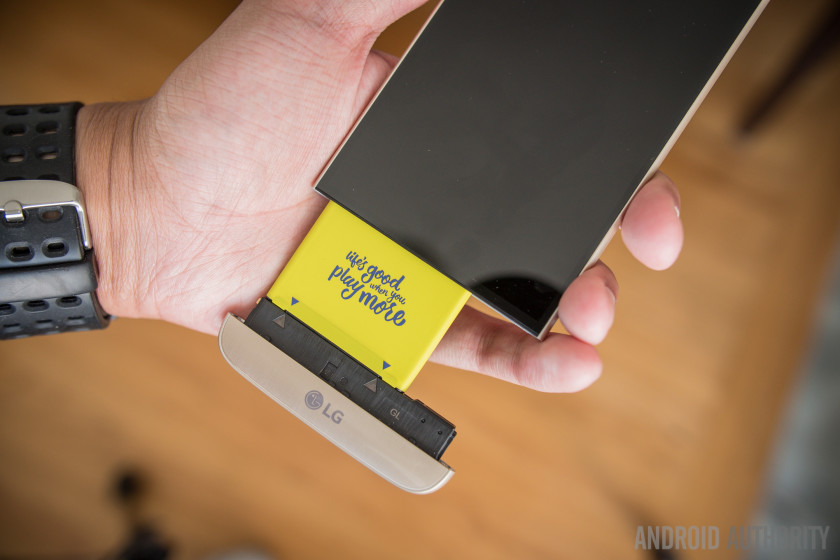
The unique aspect of the LG G5 is that it is a modular phone, with a bottom chin that is removable. This not only allows LG to to retain staple features like a replaceable battery – despite the move to a metal build – but you also get what LG calls “Friends,” which includes modules and peripherals. The modules include the camera grip, which gives you physical dials and buttons to control the camera, and the Bang & Olufsen audio DAC, that will offer better quality audio.
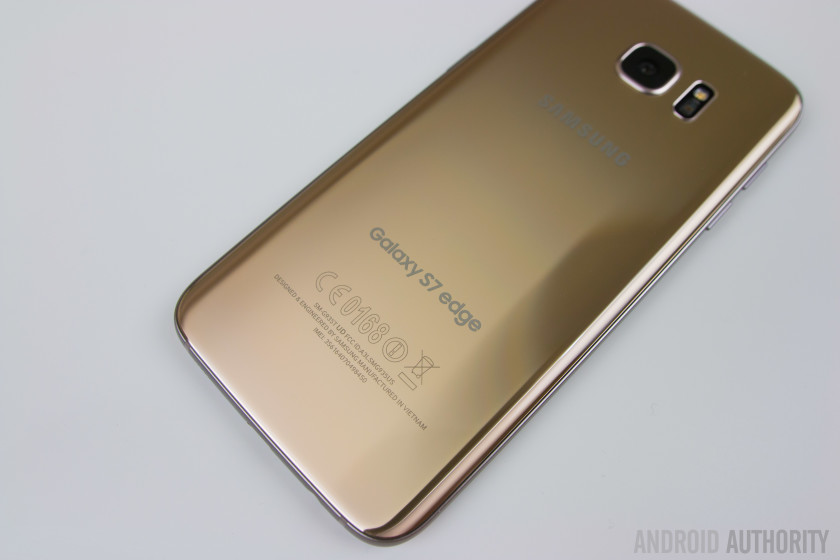
With the Galaxy S7 and Galaxy S7 Edge, Samsung continues what it started with their 2015 flagships, with both devices retaining a unibody metal and glass construction. There have been some refinements made along the way, such as the curves along the sides on the back – first seen with the Galaxy Note 5 – to help with the handling experience. Both are slightly thicker than their predecessors, to make room for larger batteries, but that also helped make the camera protrusion on the back far less prominent.
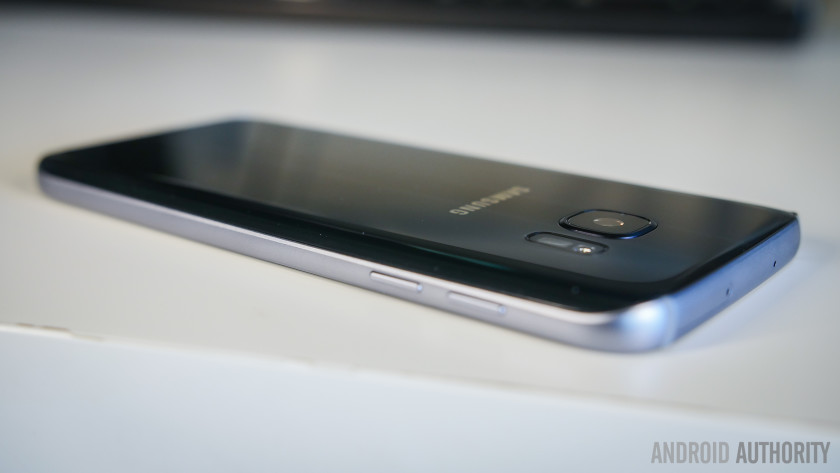
The Galaxy S7 Edge, with its 5.5-inch display, is bigger than its flagship counterpart, and of course, comes with the dual curves along the sides of the display that gives it its name. The curved edges aren’t just aesthetically pleasing, but come with an improved set of features that make them more useful.
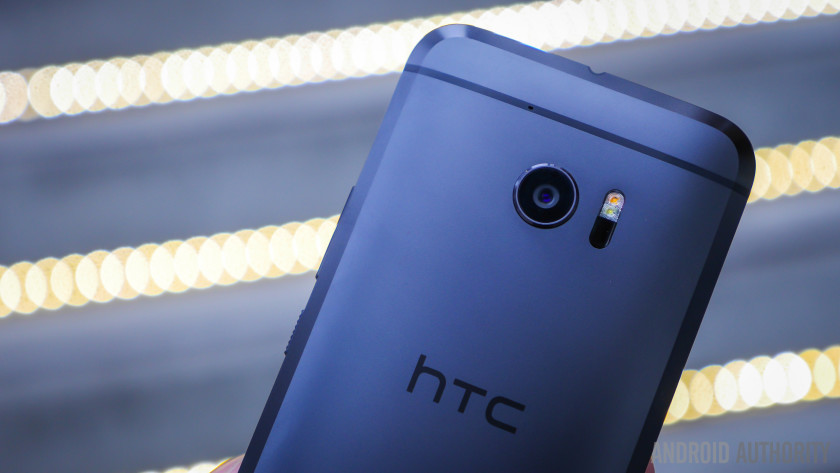
Moving on to the HTC 10, HTC brings back the premium metal build that the company is known for. The device is bigger than its predecessor, courtesy of a larger 5.2-inch screen, and the extra size appears in the form of chamfered edges all around the back, that gives the phone a nice silhouetted look. This provides a subtle aesthetic that makes the phone look really good. The HTC 10 is relatively compact, and allows for a handling experience that is manageable for the most part, but the metal backing does prove to be quite slippery, which can take some getting used to.
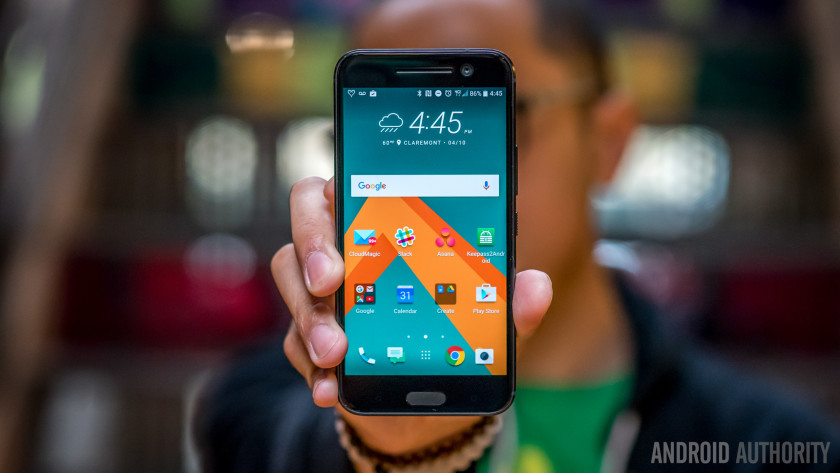
The main changes with the latest HTC flagship are seen up front, with the dual front-facing speakers no longer available, to make way for a fingerprint scanner below the display. BoomSound is still available however, with one speaker placed above the display up front, coupled with a woofer at the bottom, which adds more to the lower mids and lows when it comes to audio. Overall, the HTC 10 feels a lot like the phone HTC should have been making until now, with the dark grey version looking especially nice. If you are in the market for a metal phone, the HTC 10 is the one to beat.
Display
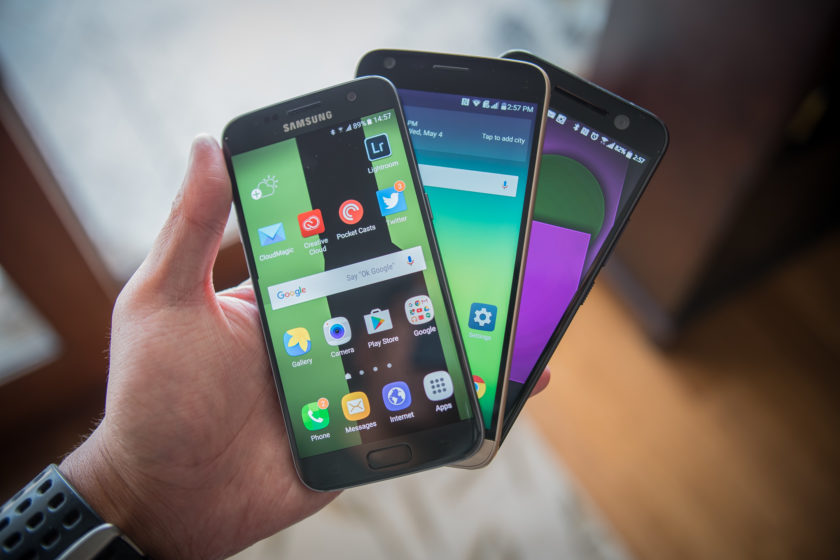
All the smartphones comes with Quad HD displays, with differing sizes – 5.1-inches for the Galaxy S7, 5.2-inches for the HTC 10, 5.3-inches for the LG G5, and 5.5-inches for the Galaxy S7 Edge – resulting in nominal differences in the pixel densities. The distinction however, comes in the form of the differing underlying technologies, with the Samsung smartphones featuring Super AMOLED screens, while the HTC 10 and LG G5 come with LCD displays, Super LCD 5 and IPS LCD respectively.
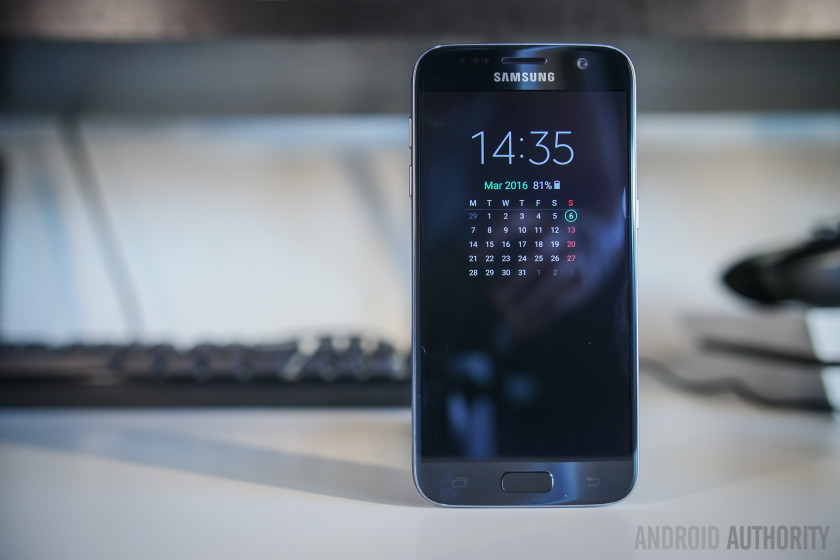
AMOLED displays are what we usually prefer, especially when it comes to Samsung’s Super AMOLED screens, that offer deep, inky blacks, and vibrant, saturated colors, that allow for a more immersive experience. AMOLED displays also see their advantage with regards to frugal battery consumption when using something like night clocks or dark themes. Overall, AMOLED screens do appear to provide the more immersive and engulfing experience.
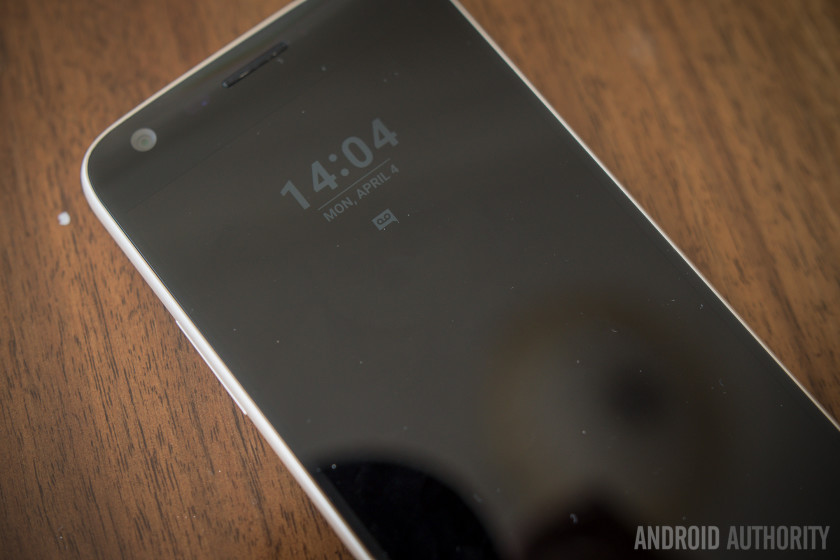
The HTC 10 doesn’t come with an Always On display, a feature that is available with the LG G5 and the Samsung Galaxy S7 and Galaxy S7 Edge. However, the Always On display of the LG G5 is lacking when compared to the Samsung devices, mostly due to the nature of the LCD panel. It would result in significant battery drain if the brightness of the Always On display was set to higher levels, so the information on the screen is actually quite dim. While it is quite easy to see indoors, it is nearly impossible to do so when outdoors and in direct sunlight. When it comes to the information available with the Always On displays, the LG G5 does have the leg up over the Samsung devices though, with the former able to show notifications from third-party applications as well.
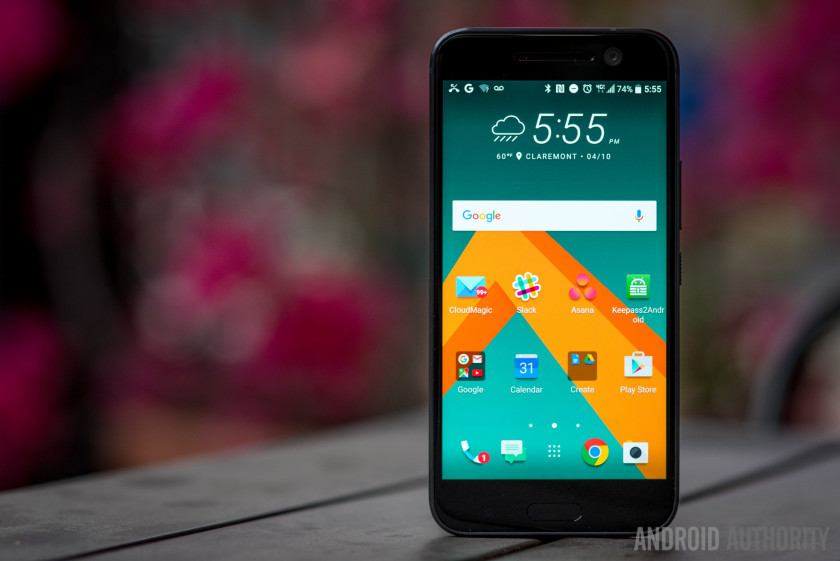
With the Super LCD 5 display of the HTC 10, you do get a decent amount of saturation and good color reproduction,. With HTC is adhering to the NTSC standard, the display is certainly no slouch, even if it may not stand up to the Super AMOLED screens of the Samsung flagships. When it comes to the display, it is the LG G5 that unfortunately seems to fall behind the competition.
Performance

When it comes to performance, every one of these flagship smartphones feature identical processing packages, and are powered by a quad-core Qualcomm Snapdragon 820 processor, clocked at 2.15 GHz, and backed by the Adreno 530 GPU and 4 GB of RAM. As expected, the performance is fantastic across the board, and any minute differences comes down to the software optimization. The performance of these devices are as smooth and snappy as expected, but worth mentioning is the Briefing screen that returns with the Samsung smartphones. There has always been an issue with lag when it comes to Samsung’s second screen experience, but the good news is that any lag or stutter is far less pronounced this time around. Of course, the Briefing screen can also be disabled if you wish to do so.
Hardware
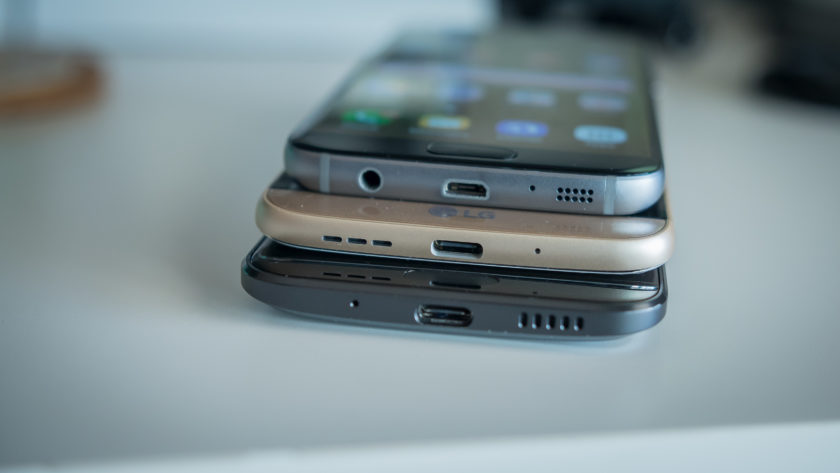
Hardware is one of the most exciting sections of this triple threat versus, with every device having something different and unique to offer. Starting with the HTC 10, this distinguishing feature comes in the form of BoomSound speakers, which is something that HTC has always offered, but now comes in a different iteration. To make way for the fingerprint scanner up front, what you now get is a front-facing speaker above the display, coupled with a woofer at the bottom that helps with the low ends in the audio. These speakers don’t get as loud when compared to previous generation HTC flagships, but it still provides a nice rich sound.
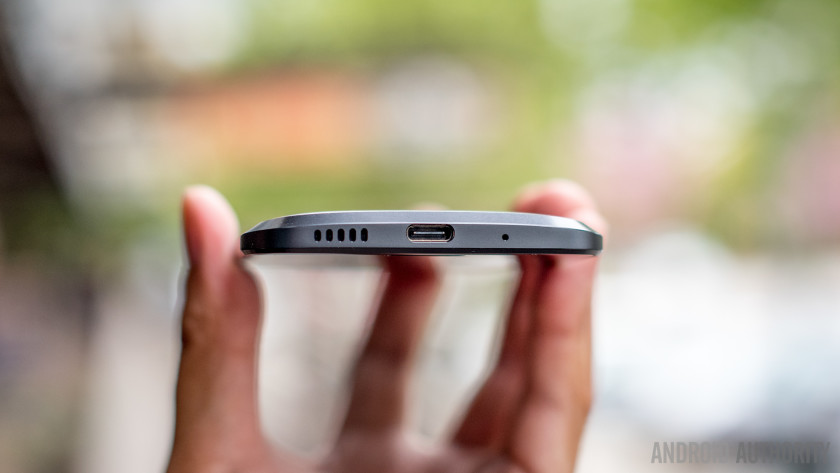
That said, the audio experience gets a significant boost when you plug in headphones. The HTC 10 comes with an AMP and a 24-bit DAC installed on the phone, that will allow for some really nice sound stages when using a good pair of headphones. When it comes to the audio and music listening experience, the HTC 10 is undoubtedly far ahead of its competitors.

When it comes to the other hardware features of the HTC 10, 32 GB and 64 GB are the internal storage options available, along with support for expandable storage via microSD card for up to an additional 200 GB. As mentioned, there is a fingerprint scanner up front, which is as fast and accurate as expected. The device doesn’t feature water resistance, and is splash proof instead, with a rating that isn’t as high as that of the Samsung Galaxy S7. Overall, what you get with the HTC 10 is a solid smartphone with a wonderful audio experience.
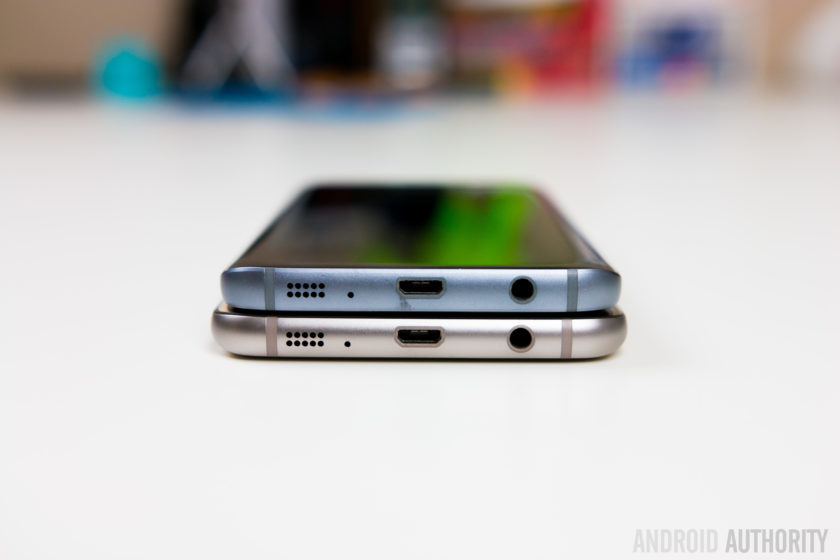
The Samsung Galaxy S7 and Galaxy S7 Edge also come with a fingerprint scanner, embedded into the tactile home button up front. You do have to press the button to use the scanner, but that shouldn’t be an issue for anyone, and the sensor is also as fast and accurate as can be. Samsung hasn’t made the move to USB Type-C just yet, with these phones coming with a standard microUSB port instead, next to which is bottom-mounted single speaker unit. The placement of the speaker isn’t ideal, and easy to cover up when using the device in the landscape orientation. The audio quality is unfortunately not the best either, with the sound slightly muffled and tinny.

The poor audio quality may be because of the protective coating that the device has, which allows for the device to be dust and water resistant. The Samsung Galaxy S7 and Galaxy S7 Edge comes with an IP68 rating for dust and water resistance, which means that you can submerge the device in up to 1.5 meters of water for as long 30 minutes without a negative impact on performance. 32 GB and 64 GB are the in-built storage options available with these devices, and returning to the fold is expandable storage via microSD card, up to an additional 200 GB.
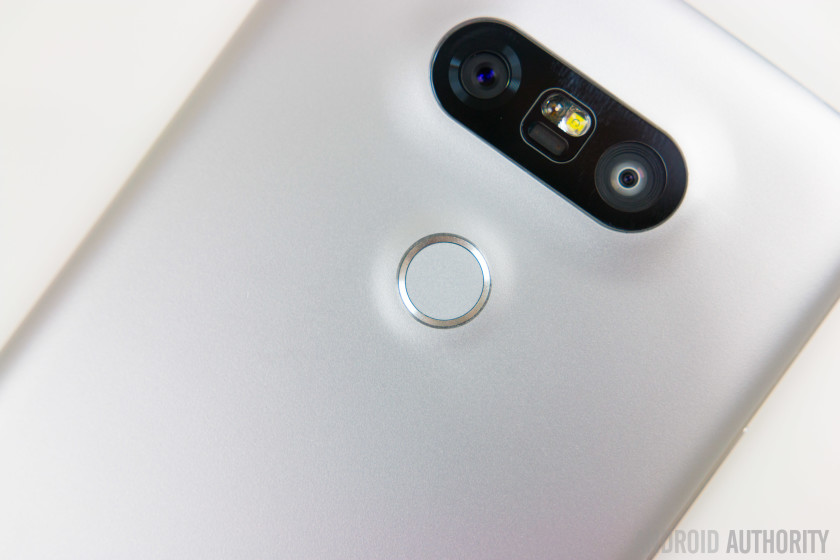
As expected, the LG G5 also comes with a fingerprint scanner embedded into the tactile power button, which is placed on the back. Unlike the Samsung phones, you don’t have to press the button to use the scanner. The sensor itself is very fast and accurate, and requires only a few taps to set up. Looking at the back, you will notice that the volume rocker is no longer on the back, and have now been moved to a more traditional placement on the side. This isn’t really an issue, but can take some getting used to if you are upgrading from a previous LG flagship, and it does take away from the uniqueness of the LG flagship line.
 See also: LG G5 feature focus: modules and peripherals32
However the unique feature comes in the form of the removable bottom portion, that allows for access to the battery, and lets you attach other modules, such as a camera grip or an audio DAC, to further enhance the hardware features of this device. 32 GB is the only built-in storage option available, but like the other smartphones in this comparison, you do also get expandable storage via microSD card, up to an additional 200 GB. The LG G5 also comes with a bottom-mounted single speaker unit, but despite the unfortunate placement, the speaker actually gets quite loud, and the audio quality is also good, making it better than what is found with the Samsung flagships.
Battery life
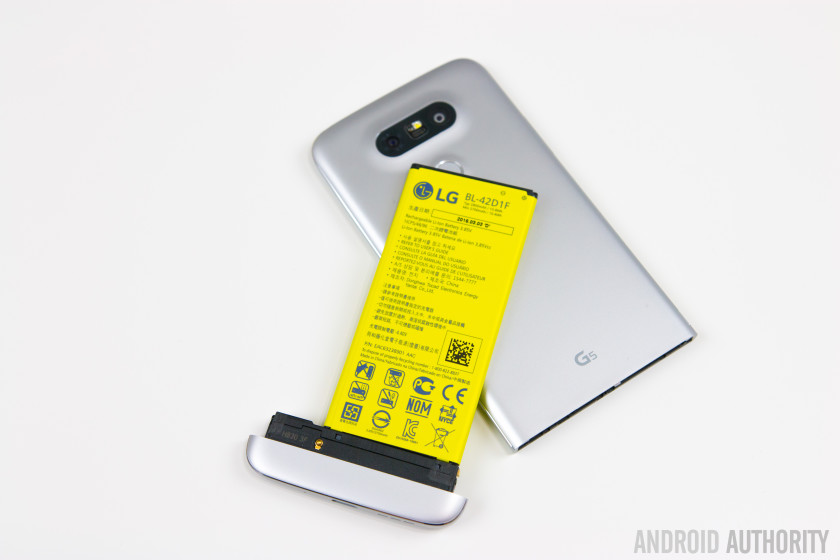
The LG G5 comes with a 2,800 mAh battery, which is the smallest of the bunch, but the advantage here is that you do have the option to carry spares. Lanh found the battery life to be pretty good, with the device able to comfortably last through a full day of use. The screen-on time numbers aren’t amazing, but with average usage that involves browsing the web, watching videos on Youtube, and playing some games, the G5 manages to provide an entire day of use.
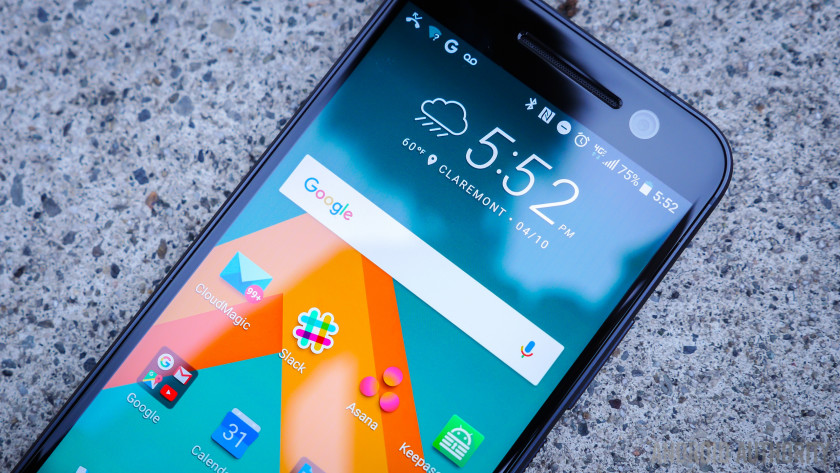
The same holds true for the HTC 10 and its 3,000 mAh battery. The device can comfortably allow for a full day of use, with a screen-on time of around 4 hours, which isn’t bad. I have to mention here that my usage does involve using GPS for navigation and listening to a lot of music throughout the day, which makes the screen-on time quite impressive.
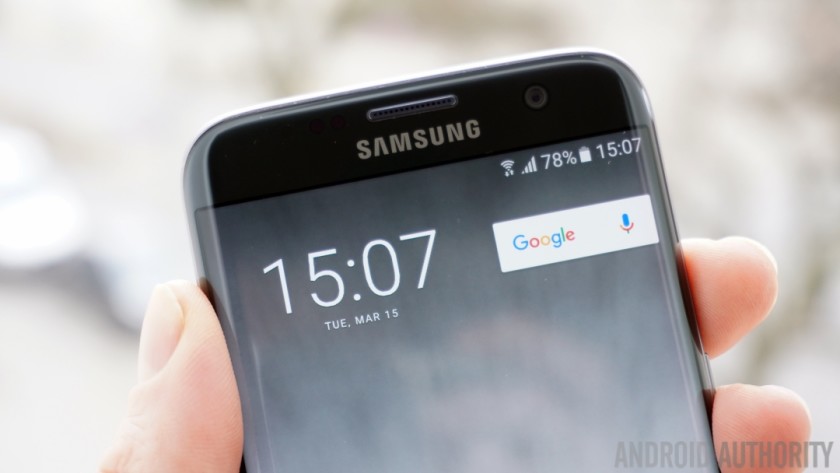
Moving on to the Samsung flagships, the Galaxy S7 and Galaxy S7 Edge come with 3,000 mAh and 3,600 mAh batteries respectively. The battery life is as expected, and not surprisingly, these phones also provide a full day of use without any issues, with around 4 hours of screen-on time with the Galaxy S7, and 4.5 hours with the Galaxy S7 Edge.
- LG G5 battery life review
- HTC 10 battery life review
- Samsung Galaxy S7 and Galaxy S7 Edge battery review
All four of these smartphones come with fast charging capabilities via Qualcomm QuickCharge 3.0 technology, which means that even if you are running low on battery, charging the device for a short amount of time will bring back a significant amount of battery life. The Samsung Galaxy S7 and Galaxy S7 Edge also come with fast wireless charging support, something that isn’t available with the LG and HTC flagships.
Camera
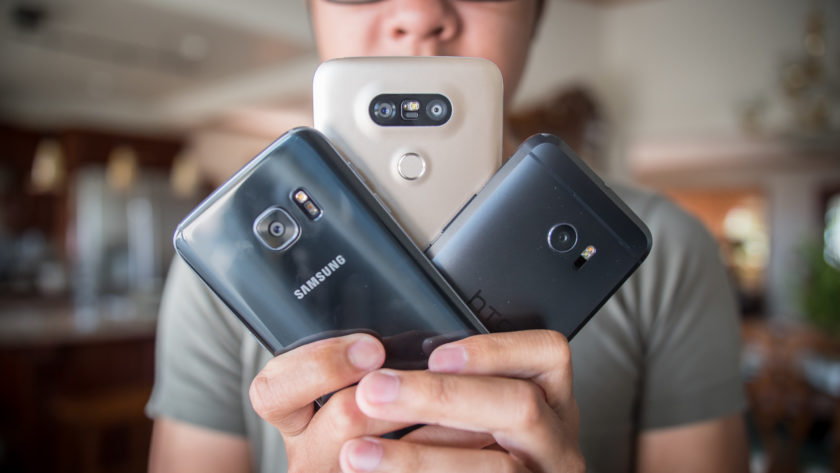
The camera has become an increasingly important aspect of the smartphone experience, and while Samsung and LG have historically been at the forefront in this area, previous HTC flagships have fallen short of expectations, which is something that the company is hoping to change this time around.
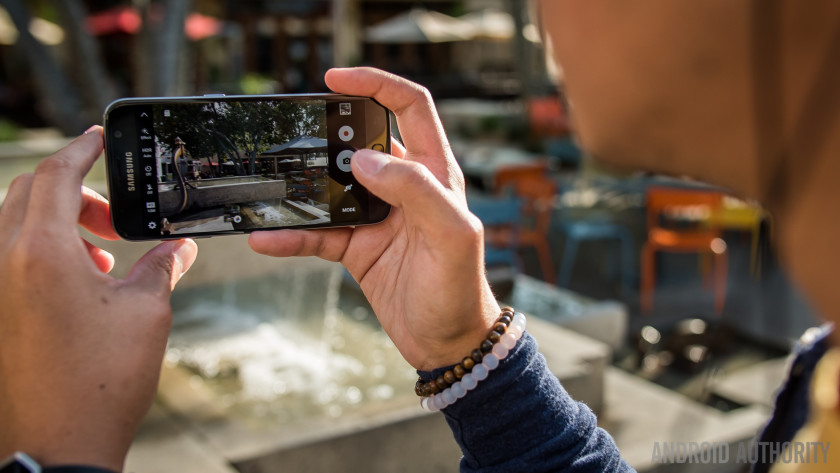
Starting with the Samsung Galaxy S7 and Galaxy S7 Edge, both smartphones come with a 12 MP rear camera, with a f/1.7 aperture and OIS, and a 5 MP front-facing unit with a wide angle lens. The cameras of the Samsung flagships have proven to be extremely reliable, and whether you are taking a picture in good lighting conditions or low-light situations, you can always be confident that you will get a good shot.
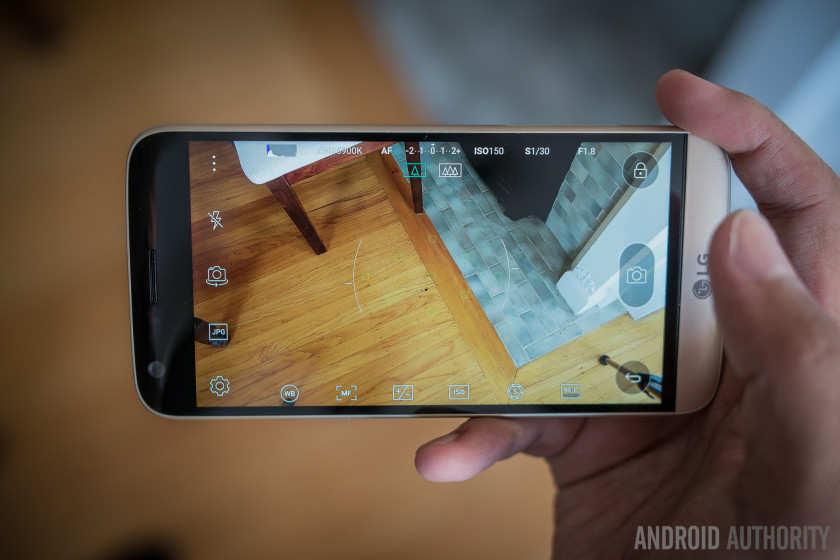
The LG G5 comes with a unique camera setup, with two cameras on the back, one being a 16 MP primary shooter, with a f/1.8 aperture and OIS, along paired with a wide angle lens 8 MP unit, as well as an 8 MP front-facing camera. LG hasn’t gone down the same route as Samsung and HTC, with the latter opting for fewer megapixels, in favor of larger pixel sizes. As mentioned, the secondary camera is an 8 MP sensor with a wide angle lens, that allows for some incredible looking wide angle photos. This is fantastic to use, and probably one of the best features of this device. As far as the front-facing camera is concerned, the 8 MP camera is capable of taking some decent looking selfies.
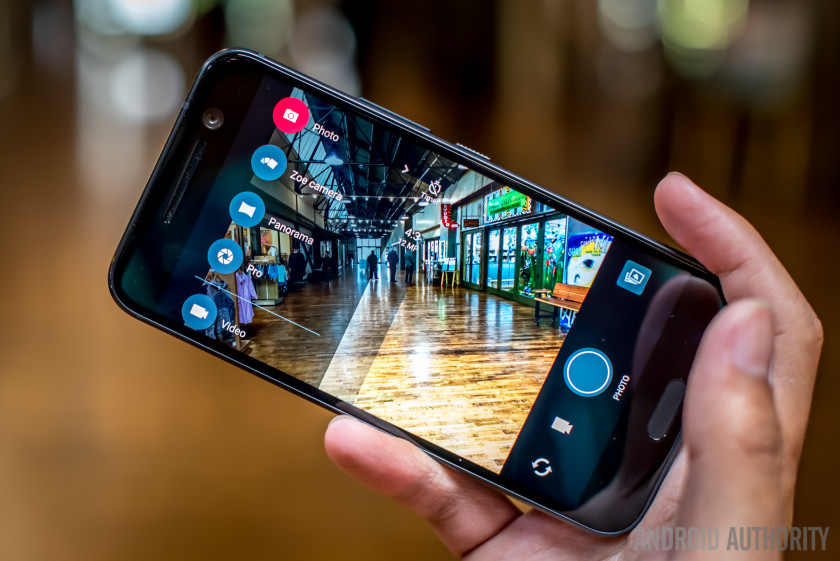
For the last couple of years, the camera has been a point of contention with HTC’s flagships, with the company going through a few different combinations to find the right fit. This year, much like what Samsung did, we get a 12 MP “Ultrapixel” camera, which essentially means the presence of larger pixel sizes, for better low light performance. The 5 MP front-facing camera of the HTC 10 also comes with OIS, which is what makes this camera setup stand out from the crowd.
 Camera Shootout: Galaxy S7 vs LG G5 vs HTC 10 vs Huawei P9 vs Nexus 6P vs iPhone 6S Plus vs Lumia 950 XL226
The other great addition is the excellent audio recording that is available when shooting video, regardless of which camera you are using, which is perfect for anyone into vlogging, or if recording video is a key part of your camera experience. The HTC camera app has been quite streamlined as well, and taking a shot is quite fast as well. However, the manual mode leaves something to be desired, because of the fact that if you have all the sliders open, it ends up covering the entire viewfinder.









As far as image quality is concerned, all three of us reached a consensus with regards to the performance of these cameras. The thing you will notice right away is that the HTC 10 tends to overexpose the images quite a lot, and the pictures also lack some color and contrast when compared to the shots taken with the Samsung Galaxy S7 and the LG G5. The next point of note is the fact that the Galaxy S7 has better dynamic range than the LG G5. The G5 tends to crush the shadows, resulting in the loss of a lot of detail. The LG G5 also suffers in low light conditions, with the camera not coming with the larger pixel sizes that the other two devices feature.
- HTC 10 camera feature focus
- Samsung Galaxy S7 camera feature focus
- LG G5 camera feature focus
Unless video recording and simultaneous audio capture are important for you, which is one area in which the HTC 10 camera excels, the Galaxy S7 and LG G5 do offer a lot more. That’s not to say that the HTC 10 camera is bad by any stretch of the imagination, but it isn’t the best either.
HTC 10 camera samples

Samsung Galaxy S7 / Edge camera samples

LG G5 camera samples

Software
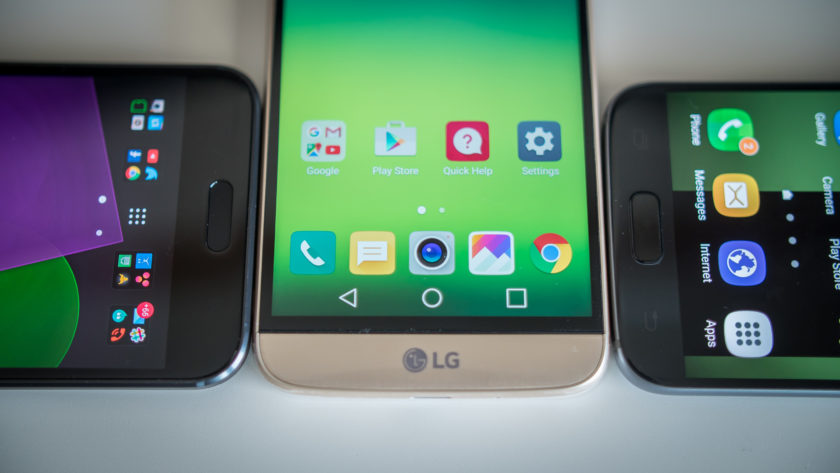
On the software side of things, all four smartphones are running Android 6.0 Marshmallow, with their respective custom user interfaces on top. Starting with the HTC 10, returning is the Sense UI, which is a take on Android that is quite close to a stock Android experience. If you’ve used an HTC device before, you will be familiar with the various elements of the Sense UI, and also returning is BlinkFeed, which has always been my favorite news aggregation second screen experience, more than Briefing, or anything that LG has to offer. Ultimately, what is great about the Sense UI is that it remains very intuitive and easy to navigate, with everything where you’d expect it to be, and is a very functional version of Android.
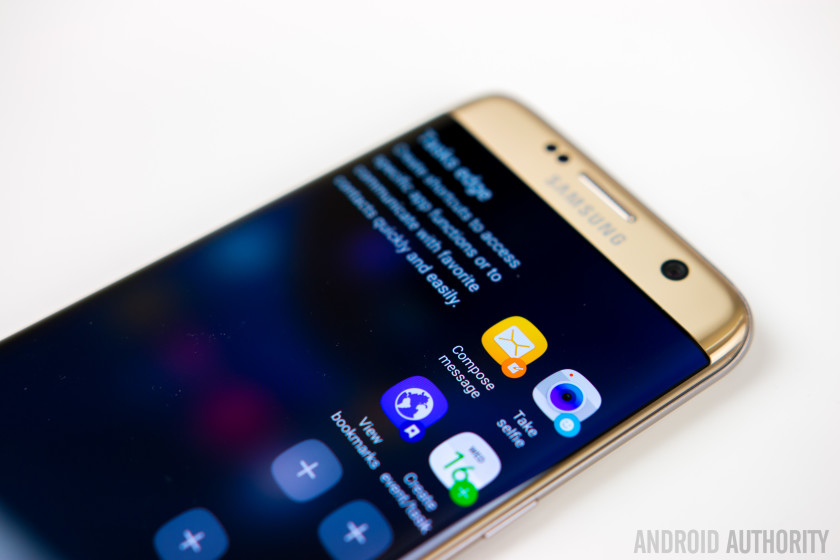
Moving on to the Samsung flagships, TouchWiz has been getting better every year, and the latest version of the UI is the best yet. TouchWiz is far more toned down now, and the color scheme has also been changed to a more subtle blue, white, and grey. Of course, you also have the option of changing the look completely via the very robust theme store. As far as the features are concerned, you get the various multi-tasking options that Samsung has always included, and the Galaxy S7 Edge also comes with improved Edge panels. The Edge panels allow for easy and quick access to app shortcuts, favorite contacts, pre-selected functions, and news and weather information. If you can leverage this feature properly, it will make the overall experience faster and easier.
- Samsung Galaxy S7 Edge – Edge UX
- LG G5 UX feature focus
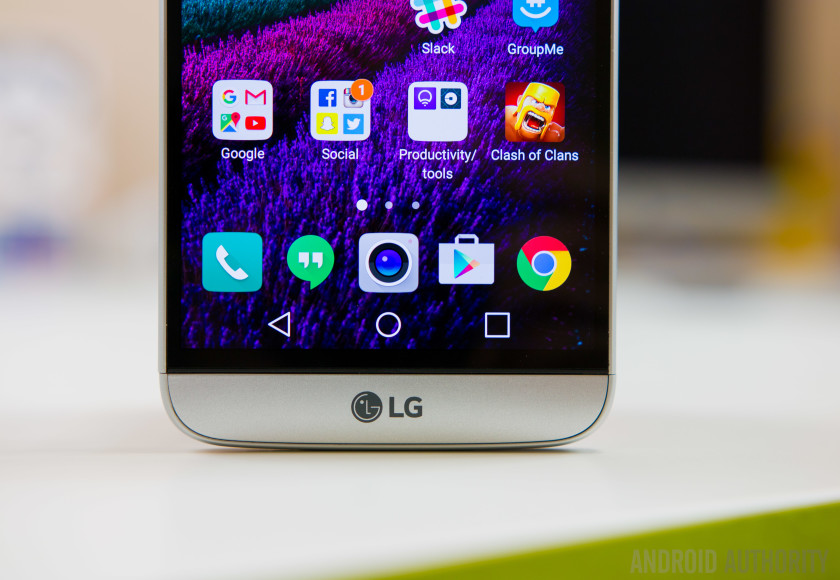
With the LG G5, you get the LG UX, which isn’t the best looking custom interface out there, but it certainly is an improvement over previous versions of the G UI. It remains a little bit cartoon-y as far as the icon pack and animations are concerned, but the overall experience is cleaner than it has ever been before, with a lot of the software features that LG used to pack into their devices now gone, or at least, better hidden, like Smart Bulletin and QSlide apps. Of course, the biggest change here is the lack of an app drawer, so the only way of keeping things organized is by using folders. However, you do have the option to bring back the app drawer by downloading the LG Home 4.0 launcher from the SmartWorld app, or by downloading a third-party launcher from the Google Play Store.
Specs comparison
| Display | 5.2-inch Super LCD5 display Quad HD resolution, 565 ppi |
5.1-inch Super AMOLED display Quad HD resolution, 577 ppi |
5.5-inch Super AMOLED display Quad HD resolution, 534 ppi |
5.3-inch IPS LCD display Quad HD resolution, 544 ppi |
| Processor | 2.15 GHz quad-core Qualcomm Snapdragon 820 Adreno 530 GPU |
2.15 GHz quad-core Qualcomm Snapdragon 820 Adreno 530 GPU |
2.15 GHz quad-core Qualcomm Snapdragon 820 Adreno 530 GPU |
2.15 GHz quad-core Qualcomm Snapdragon 820 Adreno 530 GPU |
| RAM | 4 GB | 4 GB | 4 GB | 4 GB |
| Storage | 32/64 GB expandable via microSD up to 200 GB |
32/64 GB expandable via microSD up to 200 GB |
32/64 GB expandable via microSD up to 200 GB |
32 GB expandable via microSD up to 200 GB |
| Camera | 12 MP rear camera, f/1.8 aperture, 1.55µm pixel size, OIS, laser autofocus 5 MP front-facing camera, f/1.8 aperture, OIS |
12 MP rear camera, f/1.7 aperture, 1.4µm pixel size, OIS 5 MP front-facing camera, f/1.7 aperture |
12 MP rear camera, f/1.7 aperture, 1.4µm pixel size, OIS 5 MP front-facing camera, f/1.7 aperture |
16 MP (f/1.8) + 8 MP (f/2.4) rear cameras, laser autofocus, OIS 8 MP front-facing camera |
| Connectivity | Wi-Fi 802.11 a/b/g/n/ac Bluetooth 4.2 GPS + GLONASS NFC USB 3.1, Type-C 1.0 connector |
Wi-Fi 802.11 a/b/g/n/ac Bluetooth 4.2 GPS + GLONASS NFC microUSB 2.0 |
Wi-Fi 802.11 a/b/g/n/ac Bluetooth 4.2 GPS + GLONASS NFC microUSB 2.0 |
Wi-Fi 802.11 a/b/g/n/ac Bluetooth 4.2 GPS + GLONASS NFC IR USB 3.0, Type-C 1.0 connector |
| Battery | 3,000 mAh non removable |
3,000 mAh non removable |
3,600 mAh non removable |
2,800 mAh removable |
| Software | Android 6.0.1 Marshmallow HTC Sense UI |
Android 6.0.1 Marshmallow Samsung TouchWiz UI |
Android 6.0.1 Marshmallow Samsung TouchWiz UI |
Android 6.0.1 Marshmallow LG UX |
| Dimensions | 145.9 x 71.9 x 9 mm 161 grams |
142.4 x 69.6 x 7.9 mm 152 grams |
150.9 x 72.6 x 7.7 mm 157 grams |
149.4 x 73.9 x 7.7 mm 159 grams |
Gallery

Final thoughts
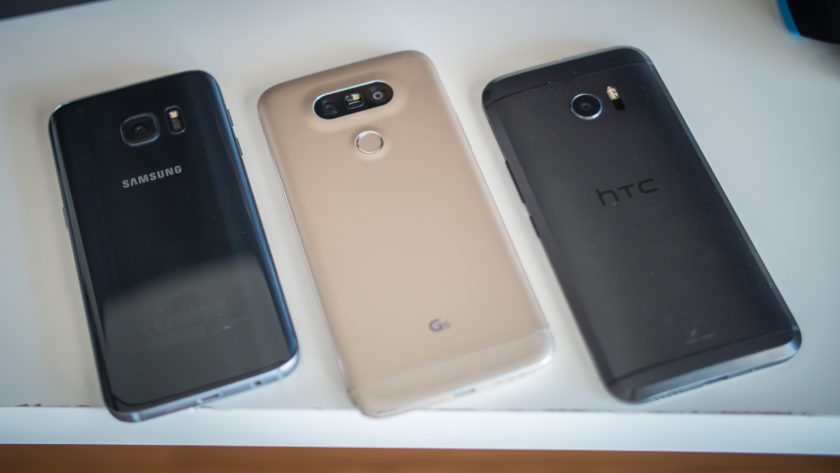
So there you have it for this closer look at the HTC 10 vs Samsung Galaxy S7 / Galaxy S7 Edge vs LG G5! The big question here which device each of us would pick, and Lanh’s choice is the Samsung Galaxy S7 Edge. Samsung has really refined the design, and key improvements across the board have made a big difference. The Galaxy S7 Edge comes with a bigger display, bigger battery, and more functionality with the Edge panels, making the curved edges more than just about the aesthetics.
Buy the HTC 10 now!
Buy the Galaxy S7 now!
Buy the Galaxy S7 Edge now!
Buy the LG G5 now!
Krystal believes that the camera is key to the smartphone experience, which is why her choice is also the Samsung flagships. However, while the HTC 10 has slightly fallen behind when it comes to the camera, the device has certainly impressed with its BoomSound speakers and audio capabilities. So if that is something that is important to you, the HTC 10 is a great choice as well.
- LG G5 review
- Galaxy S7 review
- Galaxy S7 Edge review
- HTC 10 review
- Galaxy S7 Edge vs LG G5
- What do the public think of the Galaxy S7 Edge and LG G5?
What do you think of these three devices and which would you buy? Check out the links above, vote in the poll and let us know your views in the comments below!
Note: There is a poll embedded within this post, please visit the site to participate in this post’s poll.
2016 Mazda Mazda6 review – Roadshow
The Good The Mazda6’s stellar handling dynamics make it the most engaging vehicle in the segment. Skyactiv drivetrain packs a punch, and delivers impressive fuel efficiency. Features handsome looks both inside and out.
The Bad Firmer suspension tuning and 19-inch wheel and tire package on upper trim levels provides a slightly harsher ride quality. Apple CarPlay and Android Auto capabilities are not available on the Mazda Connect infotainment system.
The Bottom Line The Mazda6 is better equipped to appeal a broader audience, while staying true to its sporty roots and remaining the midsize sedan choice for the enthusiast crowd.
For years, I’ve recommend the Mazda6 to anyone shopping the midsize sedan class who wants a vehicle that’s actually entertaining to drive. And with the third-generation model fixing many of the weak points afflicting previous iterations, I can’t help but throw my hands up in the air and wonder why more people aren’t buying Mazda’s midsize sedan.
Last month, Toyota sold 34,039 Camrys, Honda moved 31,526 Accords and Nissan saw 28,484 Altimas find homes. This while only 3,929 Mazda6s were sold in April, peanuts compared to the competition.
A driver’s midsize sedan
A week with a 2016 Mazda6 i Grand Touring again reaffirmed my belief that Mazda builds the most engaging vehicle in the segment. Crisp steering responds nearly instantly to inputs. The tight suspension along with the 19-inch Dunlop SP Sport 5000 tires on my test car keep body motions tidy around corners and through bends, with understeer not showing its ugly head until you push really hard. It feels light on its feet, and, like a well-trained dog, does everything you tell it almost immediately.

The cream of the midsize sedan crop when it comes to handling dynamics.
Jon Wong/Roadshow
It also manages to be the sportiest of the midsize sedan bunch without packing a high dose of power. Its Skyactiv 2.5-liter four-cylinder engine with 184 horsepower and 185 pound-feet of torque isn’t going to set the world on fire, but is zippy enough to confidently merge onto expressways, and have a good time on twisty back roads. The six-speed automatic transmission smoothly cracks through gear changes, and it’s fun to play with the responsive manual shift feature. However, for the highest entertainment value, a slick six-speed manual transmission is available on base Sport and midgrade Touring models.
The 6’s fuel efficiency game is also strong, receiving 28 mpg city and 40 mpg highway EPA ratings with the automatic and optional i-Eloop brake energy regeneration system, which captures electricity under braking in a capacitor to help power the car’s electrical systems. Best of all, the brake pedal doesn’t suffer from the wonky feeling of many other regenerative braking systems.
Everything comes together in a package that’s genuinely fun to toss around, which isn’t real common in the segment. I honestly believe you can show up at an autocross in this and have a blast, while turning in respectable times. That’s not to say all of the other entries in the class are total snoozers because the Honda Accord, Ford Fusion and Kia Optima are also good drivers, while the efforts Toyota and Nissan have put in to tightening up their cars are admirable. Dynamically, though, all of them still trail the Mazda.
But if you’re looking to win a drag race, the others have the upper hand with available turbocharged I-4 or V-6 engine options, while the Mazda6 is only packing a naturally aspirated four-banger. Mazda previously said a diesel engine was on the way for the 6, but those plans have since been delayed, and there are no signs of it landing in the US anytime soon. Given the diesel headaches Volkswagen has been dealing with, it may be wise for Mazda put those plans on the back burner for a bit, anyway.
The
2016
Mazda6
struggles
for
mainstream…
See full gallery


1 – 6 of 31
Next
Prev
Mainstream struggle
With the class-leading Camry outselling the Mazda6 by a ratio of nearly 9:1 last month, Mazda still has a long way to go before achieving mainstream acceptance. And that’s not for a lack of effort on Mazda’s part, because it has taken steps to broaden the appeal of the latest Mazda6. In addition to its strong fuel economy hand, the flowing Kodo exterior design language is handsome and sharp without being overdone like the previous Hyundai Sonata. It’s easily the most visually attractive entry in the segment, with small styling tweaks arriving during a midcycle update for the 2016 model year that brought a new three-dimensional grille, headlights and fog light surrounds.
Final Audio Design Sonorous III review – CNET
The Good Final Audio Design’s Sonorous III’s dynamic driver will refresh your appreciation for high-resolution audio files, but its low-impedance spec makes it sound great with streaming audio files on your phone too. The plush synthetic leather covering the headband and ear cups has the right amount of comfort relative to the headphone’s heavyweight stature, and the Y-style cable locks into the cups on both sides for additional durability.
The Bad The headphones are heavier than the average over-ear set and lack a case for protected storage.
The Bottom Line The Final Audio Design Sonorous III exceeded our expectations for comfort and audio quality and serve as an excellent introduction to the brand at an affordable cost.
You probably haven’t heard about Final Audio Design headphones before now unless you’ve considered dropping $5,000 on its flagship headphone, the Sonorous X. It’s the company’s most popular headphone with the audio elite, and it gets its price tag from parts composed of titanium, aluminum and gold-leaf trim. I haven’t heard it myself yet, but the company positions it at the “zenith” of personal audio.
But if you don’t have 5K to spend, the company has introduced the Sonorous III, a budget alternative around-the-ear headphone that carries a similar “house sound” with slightly less premium parts for $399 (UK pricing unavailable, you can find it online in Australia for AU$549).
 View full gallery
Sarah Tew/CNET
Price aside, I actually prefer the subtle design of the Sonorous III’s matte plastic finish to the X’s bright gold and reflective stainless steel materials. The ABS on the earcup connections doesn’t flex at all and the stainless-steel rails where you adjust the size add a sense of toughness to the headset. The earcups themselves are hinged on a small circular piece that allows them to twist vertically and horizontally so they don’t clamp down too tightly around your head.
Final Sonorous III headphones (pictures)
See full gallery


1 – 5 of 12
Next
Prev
Another thing the company got right is the weight to comfort ratio of the headband and earcups. With a lot of headphones, you’ll notice that the ear cups are too heavy and you can feel the headband pressing down; if they’re too light, you get the feeling that the materials are cheaply made and won’t survive long-term wear and tear.

View full gallery
Sarah Tew/CNET
With the Sonorous III, the thick synthetic leather that wraps across the top of the headband has a balance of elasticity and depth that makes the earcups feel like they’re floating on your head. I’ve worn them all day at work without taking many breaks and I haven’t felt my ears get hot once.
The headphones include a detachable Y-cable with dual entry points on the left and right that lock with a 90-degree turn. That also means you can’t replace the cable with a generic one if it breaks, but it does feel like it’ll hold up to a lot of abuse. It’s about 5 feet (1.5 meters) long and terminates in a straight plug with additional stainless-steel housing around the end to make it even stronger.

View full gallery
Sarah Tew/CNET
I’m a little disappointed that Final Audio Design doesn’t include a protective case for the headphones, especially considering the low-impedance spec (16 ohms) would indicate that the company wants listeners to use them at home with a receiver and with a smart phone. On top of that, the IIIs don’t fold down like the Oppo PM-3, a competing headphone for the same price. You get a 3.5mm adapter in the box for home stereos, but considering the price, I also expected to get second cable with an in-line remote and microphone for making calls — they keep it simple with just the one.
SkyBell HD Wi-Fi Video Doorbell review – CNET
The Good SkyBell’s latest $199 Wi-Fi doorbell has a 1080p high-definition resolution, on-demand clip recording and free video storage, as well as an IFTTT channel and integration with Amazon’s Alexa Skills Kit and Google/Alphabet’s Nest.
The Bad There’s no Web interface, it doesn’t work directly with Samsung’s SmartThings or Wink, and you can’t tweak push alert settings or the quality of the video resolution in the app.
The Bottom Line The SkyBell HD Wi-Fi Video Doorbell’s 1080p resolution and array of third-party integrations set it apart from the pack, including August’s impressive Doorbell Cam.
SkyBell’s $199 US-0nly HD Wi-Fi Video Doorbell caught me off guard. The previous SkyBell buzzer I reviewed was all right, but lacked a handful of major features. It didn’t have HD video, it didn’t work with third-party products, and you couldn’t record or save video clips.
But the startup’s next-gen doorbell is upping the ante in a very real way, with features competitive with the all-new (and noticeably pricier) $249 Ring Video Doorbell Pro. Specifically, the latest SkyBell comes complete with a 1080p resolution, on-demand live streaming and free clip storage, as well as integrations with Amazon’s Alexa and Google/Alphabet’s Nest. It also has its own IFTTT channel.
Tack on its responsiveness and straightforward app interface and you end up with an unexpected leader in the burgeoning smart doorbell category. The SkyBell HD Wi-Fi Video Doorbell is definitely worth consideration, especially if you aren’t sold on August’s Doorbell Cam and its other brand-exclusive smart home accessories.
SkyBell’s newest buzzer is a smarter door…
See full gallery


1 – 5 of 7
Next
Prev
Pretty, pretty SkyBell
With a rounded design measuring 2.8 inches by 2.8 inches and a depth of 0.9 inch, SkyBell’s HD doorbell looks virtually identical to the previous model. I like the style of this doorbell, though, so that’s a good thing. Plus, you can get it in either brushed aluminum or oil-rubbed bronze for matching it to the other hardware in your home, HGTV-style.
In other smart doorbell news:
- Knock, knock: August’s Doorbell Cam helps you see who’s there
- The second-gen SkyBell is one stealthy door buzzer
- Is Ring a better smart buzzer for your buck?
- You won’t have to guess who’s coming to dinner with these smart doorbells
- DoorBird takes on other Wi-Fi-enabled smart buzzers
- Pro version of the Ring Video Doorbell swaps flexibility for refinement
The issue arises at install time. At nearly 3 inches wide, this thing is not going to fit on every door frame. And, since it requires a hard-wired set up to work, you’ll have to relocate your existing doorbell wiring for a more permanent, tidy-looking install (unless you don’t mind your doorbell hanging into your doorway).
This isn’t unique to SkyBell. August’s $199 Doorbell Cam clocks in at 2.9 inches wide, and the $199 Ring Video Doorbell measures 2.43 inches. It’s as if every smart doorbell brand was searching for a way to differentiate itself from your everyday buzzer that’s small and rectangular and unobtrusive. But, these in-your-face designs aren’t particularly door-frame-friendly. It’s little wonder, then, that Ring’s newest model, the Video Doorbell Pro, looks a lot more doorbell-y at just 1.85 inches wide.
Despite the whole doorframe overhang issue, the SkyBell HD was simple to install. Just switch off power to your doorbell, remove your old buzzer and attach the existing wires to the included SkyBell mounting plate. If you aren’t rerouting wiring to a new location (which could require a specialized drill if you’re installing it on a brick facade or some other tough surface), all you really need is a Phillips-head screwdriver, which SkyBell includes in the box.
Note: This unit will only work with a hard-wired system and is easiest to install with a traditional mechanical chime. SkyBell does also provide a digital door chime adapter, but that requires some additional effort. Check out this tutorial video for more information.
Samsung NE58K9850WG review – CNET
The Good The $3,099 Samsung NE58K9850WG has Wi-Fi, so you can control some of the oven’s functions with a surprisingly responsive app. The range is also equipped with a Flex Duo insert that gives you double-oven capabilities, and it’s all wrapped in a stylish black stainless steel finish.
The Bad The range’s cooking performance is average at best, and the app can get finicky.
The Bottom Line The Samsung NE58K9850WG will give you a lot of bragging rights and the upper hand on connected large kitchen appliances. But it would be worthwhile to wait and see if Samsung can get rid of its Wi-Fi kinks and put connectivity in a range that performs better.
More Samsung ranges
- Samsung NE59J7850WS freestanding electric range
- Samsung NE58H9970WS slide-in induction range
- Samsung NX58H9500WS slide-in gas range
I’ve gotta give it up for Samsung — it knows how to make a bold statement in the kitchen. The Korean electronics juggernaut’s large appliances first caught our eye in 2013 when we reviewed the Samsung NE58F9710WS and its Flex Duo insert, a feature that turned a single oven cavity into a double oven. Then the company added a virtual flame to its induction cooktops to help home cooks visually adjust to this electromagnetic method of cooking. And at CES 2016, Samsung introduced the world to its line of Wi-Fi-connected ranges that was supposed to let you control the oven and monitor the cooktop from an app.
One of those Wi-Fi ranges, the Samsung NE58K9850WG, lives up to much of the hype that I’ve come to expect from a Samsung kitchen appliance. The $3,099 range’s wireless connectivity works better than I anticipated with Samsung’s Smart Home app to give you a surprising amount of control over what happens in your oven. The range is a showpiece thanks to its unique black stainless steel finish, backlit knobs and slide-in design. And the Samsung NE58K9850WG comes with the Flex Duo insert and optional double door that provides even more versatility than when we first saw the insert in 2013.
Samsung Wi-Fi oven delivers average cooking…
See full gallery


1 – 5 of 8
Next
Prev
Unfortunately, this is the part of the review at which I stop singing its praises. The range’s cook times and test results were just OK, a lackluster assessment when you consider the powerful first impression this appliance makes. And even though the app is responsive once you’re set up and actively using it, I had problems setting the app up, and it can get finicky if you’ve been away for a while. My lab tests revealed what the Samsung NE58K9850WG really is:
an average range hiding behind flashy upgrades
.
I’m sure folks who are chomping at the bit for the latest smart home appliances will be eager to buy this Samsung range. But Wi-Fi ovens are still a relatively new innovation that need some perfecting. Wait for Samsung to (hopefully) improve the performance of its Wi-Fi ranges and work out the app’s kinks. Not brand-loyal to Samsung? Hold out to see how well the Whirlpool Smart Front Control Range performs when it debuts this year. And if you don’t need Wi-Fi, consider similar slide-in electric models that have better cooking performance but no connectivity, such as the Samsung NE58H9970WS induction range or the KitchenAid KSEG950ESS slide-in range.
Stainless steel goes to the dark side
The Samsung NE58K9850WG’s appearance lives up to what you’d expect from a $3,100 appliance. This is the first range I’ve tested with a black stainless steel finish, an option that brands such as KitchenAid, LG and GE have rolled out as an alternative to fingerprint-prone stainless steel. I still had to wipe away smudges during the course of testing the Samsung, but its dark finish made the range stand out in a test lab full of standard stainless steel.

In pictures, this Samsung’s black stainless steel finish doesn’t look much different than normal stainless steel. In person, the exterior is a dark, smoky gray.
Tyler Lizenby/CNET
Other than the finish, this electric range’s appearance is similar to what we’ve come to expect in the above-$1,500 price category: a 30-inch-wide, slide-in model with burner knobs on the front of the unit (the better to show off your fancy backsplash) and a wide touchscreen panel that controls the oven. The burner knobs are surrounded by cool blue LED lights that make it easy to see at a glance which burner is in use, a nice touch that rounds out its high-end design.
As I mentioned earlier, the NE58K9850WG comes with a Flex Duo insert that you slide onto the oven’s fifth rack position. This separates the oven into two separate cooking zones that you can set to different cooking modes and temperatures. The oven door is also hinged in the middle, so you can open just the top portion of the oven when the Flex Duo partition is in place. Overall, this is a great tool if you want the flexibility of double-oven cooking without a long-term commitment to a true double oven.
Uncharted 4: A Thief’s End review – CNET
The Good Uncharted 4 is a blockbuster adventure game with a wild and compelling story, biting characters, amazing action and jaw-dropping environments.
The Bad The climbing and puzzles can start to feel repetitive.
The Bottom Line Uncharted 4: A Thief’s End is a spectacular send-off that celebrates the franchise, all while delivering superb storytelling, acting, production values — you name it.
If this turns out to be Nathan Drake’s last hurrah, then the guy’s going out on top.
Yes, things are finally going well for the luckiest (and unluckiest) adventurer in the history of the world. Every ledge he grabs breaks, every bridge he crosses collapses and every car he drives winds up exploding — but inevitably, Nathan manages to crawl his way back up to the surface, defy gravity and look damn good in the process.

Naughty Dog
Uncharted 4: A Thief’s End is the PlayStation 4 exclusive you’ve probably been waiting for — one of the reasons you plunked down a couple a hundred bucks on the console in the first place.
With blockbuster exclusives being what they are of late — and by that I mean a scarce commodity — it’s natural to hold hopes high. So if you’re the least bit concerned that Uncharted 4 is somehow destined to disappoint, rest assured. It does not.
Sure, there’s a few things to roll your eyes at. But just know this: Uncharted 4 is a spectacle of epic proportions. It suffers from adrenaline fatigue. Meaning, you will probably — no, definitely — reach a point in this game where you refuse to believe there’s more to it. But it just keeps going.

Naughty Dog
That’s only about half the story in Uncharted 4. For as much as the game turns all its dials up to 11, there’s also more downtime than I can recall in the games prior. You’ll spend a generous portion climbing around, looking for the next ledge and figuring out the game’s handful of puzzles. At times the excessive climbing does start growing redundant and there are a few too many puzzle cliches.
It’s not all guns-blazing in Uncharted 4. Far from it. Hours at a time go by without a single shot being fired. And for me, that felt great. I’ve always had morality issues when it comes to these games. They’re undeniably fun to play, but something in me can’t quite put it out of my head that I’m globetrotting around the world in search of ancient treasure all while leaving a path of murder and destruction in my wake.
There’s no skirting around it. You shoot a lot of people in Uncharted games. And the buddy-action vibe of the series just kind of makes it all okay. I think there’s some recognition of that in Uncharted 4, if only how noticeably infrequent those kind of engagements seem to be.

Naughty Dog
That’s not to say Uncharted 4 is without any memorable gunfights. I enjoyed the vast majority of them, because when they do show up, they are some of the best the series has had to offer. They take place in spectacular fashion — along rooftops, off cliffs and speeding through flatlands. Shooting feels really good, as if it’s been even further refined. It’s the most satisfying it’s ever been in an Uncharted game.
Enemy AI is also really sharp in A Thief’s End. Thankfully, Drake has a number of new abilities that open up the door for stealthier approaches.
Nathan can now tag enemies from afar and can see their awareness levels through visual cues above their heads. It’s possible to make your way through some areas without shooting anyone, though you’ll likely have that plan foiled more often than not.

Naughty Dog
I played through the campaign on normal difficulty but was significantly challenged throughout. I got the exact amount of frustration I could handle, if that makes any sense.
Little Robot Adventure – Ads and Platforms [Review]
Overview
Little Robot Adventure is the story of a tiny robot that journeys through various stages, crushing enemies and collecting pieces of a world. As you collect pieces, your world becomes more complete.
Developer: FunkyZooInk
Price: Free (Ad-Supported, In-App Purchases)
Highlights:
- 5 Worlds, 5 levels each.
- Build a vibrant world, piece by piece.
- Classic platforming style.
Setup
This app supports Google Play Games, so you’ll be prompted to log in at the launch of the game. After initial setup, there are no additional steps to perform.
Features
(adsbygoogle = window.adsbygoogle || []).push();
Little Robot Adventure will be familiar to anyone that’s ever played a Mario game. The controls are extremely simple – lateral movement left and right, and a jump button; that’s it. You begin the game in a completely grayscale world, completely without enemies. The only source of color beyond the little robot is a treasure chest at the end of the level. why is it there? Why does it have color when nothing else does? No idea. but when you open it, enemies populate the world from then, on. At the end of each level you unlock more and more pieces of the world, eventually creating a vibrant environment to explore.

Bleak beginnings…

…blossom into Beauty.
Throughout the world you will collect screws, a sort of currency with which you can purchase a few upgrades for your Robot. In addition, there are also some in-app purchases that you can use to eliminate ads, purchase additional screws, or buy extra lives. If you enjoy the game, I highly recommend purchasing the ad-free version, because this game has a lot of ads. Oh, you died? Have an ad, maybe two – heck, maybe a video! There’s ads in the banner, there’s ads in the footer…basically, anywhere you might insert an ad, there is one.

Trapped. 
I encountered a few frustrating quirks in my expedition through Robot’s world; On my very first level, for instance, I fell through the environment and became trapped inside one of the bricks! Then it happened again, on the next level. And again, on the third. After that it seemed to only happen intermittently, but definitely enough to be frustrating. The controls are, at times, unresponsive, and the game itself suffers from some performance issues, even on a Nexus 6P. I also ran into an issue where the achievement for unlocking a world did not unlock despite my being in that world.

More beauty.
The graphics are ridiculously simple, but grow more vibrant and at times beautiful as you progress through the game. The sound design is also simple, but not nearly in as charming a way as the visuals.
What I like
- Platforming.
- Creating a world.
What I don’t
- So. Many. Ads.
- Performance issues.
- Glitchy controls.
Conclusion
Little Robot Adventure is a fun, frustrating, glitchy adventure with a unique, if simple, style and a frustrating amount of ads. The controls can be a little wonky at times and you will die. A lot. If you intend on owning the game for an extended period of time, do yourself a favor and buy the ad-free version. You’ll be significantly less frustrated.
Google Play Store – Little Robot Adventure
The post Little Robot Adventure – Ads and Platforms [Review] appeared first on AndroidGuys.
Yatzy Ultimate
Overview
Developer: Seavus Group
Price: Free (Ad-Supported, $1.99 to remove ads; micro-transactions)
Highlights:
- Real-time competition with players around the world.
- Credit-based betting system.
- Offline mode.
- Three variations of the classic dice game to play.
Setup
Yatzy Ultimate has a relatively simple, if slightly counter-intuitive, setup. It does not support Google Account login (hence counter-intuitive) or Google Play, but it allows you to create and account with either Facebook or Game.IO. If you don’t feel like creating yet another game account, you can always play as a guest, and you will retain your credits persistently. There is also a handy tutorial/training mode right at the homescreen, if you don’t feel like using your credits right away.
Features
Having played Yahtzee extensively with my mother as a child, this app triggered a giant tsunami wave of nostalgia. It plays exactly as I remember, minus the pen-and-paper scoring and the irreplaceable feel of pouring the dice out of the shaker. If you haven’t played Yatzy, this app probably isn’t for you. If you’re curious about the rules, this is probably a good page with which to start. Yatzy Ultimate offers three different variations of the game to play: Yatzy, Maxi-Yazty, and American Yatzy. The variations offer different rules and scoring, though, they all essentially play the same way.

Classic.
Yatzy is relatively generous with their credits, starting you out with 5000 right off the bat. You’re able to bet as many as 750 credits and as few as 100 per game in the basic single-player stage, and you can buy additional credits via in-app purchases ($0.99 for 2,000, and up to $19.99 for 500,000). In addition to changing how much you can bet each round, you are also able to increase the score threshold you need to reach in order to win; thereby increasing the payout if you reach it.

Seven different boards to play on.
(adsbygoogle = window.adsbygoogle || []).push();
There are currently seven different stages of betting, each one requiring significantly more than the last to qualify to enter. I am fundamentally wary of a game relies on random number generation (RNG), for a number of reasons:
1) No number is every truly random.
2) As such, the game could theoretically alter your results, and
3) therefore directly alter your ability to earn credits.

The betting system.
Those things being stated, I feel that Yatzy Ultimate does a good job of making sure that your results feel fair, and not like you’re being robbed of your credits. Sound and visual design are okay, not phenomenal. The graphics look a little grainy on my Nexus 6P, which is a simple enough fix that I hope is remedied soon.
What I like
- Classic dice game.
- Decent production value.
- Fair-enough RNG.
What I don’t
- Ad-supported AND micro-transactions.
- Graphics get a bit grainy on higher resolution screens.
Conclusion
Yatzy Ultimate is a perfectly acceptable recreation of the classic dice game. To me the game will always be known as Yahtzee, but the spirit of the game is captured well, and is actually easier than playing the physical game due to built-in scoring and dice rolling. The game is free and you never need to purchase micro-transactions to advance, though the ads occasionally grate nerves.
Google Play Store – Yatzy Ultimate
The post Yatzy Ultimate appeared first on AndroidGuys.
 AIVAnet