



Panasonic’s latest Toughpad has the strength of ten smartphones, and the thickness (hands-on)

Panasonic may have bowed out of the consumer smartphone game, but gadgets for businesses are a completely different story. That’s why the Japanese company came to Mobile World Congress with a new pair of rugged Toughpad smartphones in tow. You can’t mistake them, despite their identical looks, because one runs Android 4.2.2 and the other has Windows Embedded 8 Handheld — and we just got a chance to see what they’re made of.
The Toughpads are well over an inch thick, but the heft is valuable since it helps the duo resist dust, drops, and liquid. Sadly, we didn’t have a bucket of water to hurl the things into, and drops on the carpeted floor of Panasonic’s press room weren’t as satisfying as we’d hoped. These Toughpads are modular (if not as stylish as other concepts we’ve seen). Some of the components lodged in the Toughpads’ backs can be unscrewed and swapped out completely, so folks who can’t think of anything to do with a barcode scanner can kiss it goodbye.
The company may bristle at our use of the dreaded s-word, preferring instead to call them tablets, but come now: if it looks like a smartphone, and makes calls like a smartphone, you’re not fooling anyone. That said, both Toughpads sport the same slew of rubberized buttons, port flaps and 8-megapixel rear cameras. The internals aren’t the same, though: The Windows Embedded version features a 2.3 GHz quad-core Qualcomm Snapdragon 800 chip while the Android model got stuck with a pokier 1.7GHz Snapdragon S4. Both devices felt snappy and responsive, and the 5-inch, 720p screens were better than you’d expect considering these things are meant to take a beating.
The thing to remember here is that you’re not going to waltz into a big box store and see one of these on the shelf. These Toughpads are designed for being tossed around warehouses and construction sites, not in and out of your skinny jeans. The prospective price tag just drives that point home: they’ll run you about 130,000 yen ($1,300) when they officially launch later this year.
Matt Brian contributed to this report.
Filed under: Cellphones, Tablets, Mobile
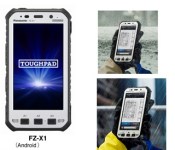
Panasonic introduces Toughpad FZ-X1 smartphone at MWC
Last year, Panasonic introduced a Toughpad and after few months they decided to decline on smartphones, but then they changed their mind. At Mobile World Congress 2014, Panasonic unveiled the Toughpad FZ-X1, a rugged smartphone running on Android, and the features are good enough as well.
 Have a look on the specs:
- 5-inch (1280 x 720 pixels ) touch screen with 500 cd/m2 brightness to avoid sunlight reflection
- 1.7 GHz Qualcomm S4 Pro (APQ8064T) processor.
- Android 4.2 (Jelly Bean)
- Water and Dust proof, IP65/IP58 certified
- 8MP camera with flash
- 1.3MP front-facing camera
- 2GB RAM, 32GB Internal memory
- Dedicated Security core – FIPS 140-2 Level 2 compliant
- Drop resistant from a height of 3 meters, MIL-STD 810G compliant
- 4G LTE/ 3G (HSPA+ 21 Mbps), WiFi 802.11 a/b / g/n/ac Bluetooth 4.0, Satellite GPS, micro HDMI
- 6,200mAh hot-swappable with up to 14 hours talk time and up to 1000 hours standby
It will go on sale in Japan by the end of August with a price tag of 130,000 yen ($1,300), and then sooner or later, it will land in Europe and US region as well.
Are you planning to grab one? Tell us about it in the comment box below.
Source: BusinessInsider
The post Panasonic introduces Toughpad FZ-X1 smartphone at MWC appeared first on AndroidGuys.

Panasonic’s newest Toughpad isn’t a smartphone, except when it is

When Panasonic said that it was done making smartphones, it meant it. The 5-inch Toughpad FZ-E1 and FZ-X1, you see, are very small tablets that just happen to make calls, okay? Both come with a 5-inch 1,280 x 720 LCD display, 2GB RAM, 32GB of on-board storage and a microSD card slot. Another way in which these devices aren’t smartphones are in the connectivity stakes, after all, you wouldn’t see a smartphone with 802.11 a/b/g/n/ac WiFi, Bluetooth 4.0, HSPA+, WCDMA, EV-DO, 3G and LTE radios, not to mention HD Voice, GPS and GLONASS, would you? Since these are Toughpad devices, they’re both ruggedized to withstand drops, dust and water to MIL-810G, IP65 and IP68 — so you can use the device’s 8-megapixel camera and 1.3-megapixel front-facing lens in any conditions. There’s also a staggering 6,200mAh battery tucked inside, which the company promises will keep you trucking for 14 hours of continuous use and up to 1,000 hours of standby. The only real difference between the two smartphones small tablets is the choice of operating system, with the E1 running Windows 8 Embedded and the X1 packing Android 4.2.2. There’s no specific word on pricing, but we could expect ‘em to retail for around 130,000 yen ($1,300) when they both drop later in the year.
Filed under: Cellphones, Tablets, Mobile
Via: Reuters
Source: Panasonic (Translated)

Daily Roundup: Panasonic’s Lumix GH4 camera, ‘Fish on Wheels’ and more!

You might say the day is never really done in consumer technology news. Your workday, however, hopefully draws to a close at some point. This is the Daily Roundup on Engadget, a quick peek back at the top headlines for the past 24 hours — all handpicked by the editors here at the site. Click on through the break, and enjoy.

Flappy Bird is no longer available
Flappy Bird was so young, but alas, all good things must come to an (abrupt) end. Despite its rapid rise to fame, the game’s developer Dong Nguyen had it removed from both the App Store and Google Play earlier today. Click the link for the story.

Sneak peek of Panasonic’s Lumix GH4 camera
Panasonic’s recently unveiled Lumix GH4 4K camera doesn’t have a release date yet, but a few professionals have already taken it for a test run. Click through for some sample photos and footage from the company’s latest shooter

‘Fish on Wheels’ mobile tank
What’s cooler than a regular, stationary fish tank? One on wheels, of course! Thanks to a company called Studio Diip, your aquatic pets can enjoy the mobility of a house on wheels. This clever contraption roams your abode based upon the movements of your fish. Follow the link for more.

HTC promises new, affordable devices
HTC is expecting its next quarter to be the worst yet. The reason? CEO Peter Chou attributes the decline to the company’s lack of mid-tier products, promising that it will bounce back with a new, compelling portfolio of affordable devices. Click on through for details.
Filed under: Misc

Here’s a sample of what to expect from Panasonic’s 4K-ready LUMIX GH4

It’s been a mere couple of days since Panasonic unveiled its next-generation GH camera, the LUMIX GH4. But, since there’s no release date information as of yet, chances are it’s going to be a little while before interested parties can take this new shooter out for a spin. Luckily, Panasonic has already let some professionals have their go at its GH4; Hungary, Japan and Northern Kenya are all places where sample photos were taken, and there’s also an incredible 4K video (embedded after the break) that was shot in Yucatan, Mexico. The results produced by Panasonic’s Micro Four Thirds camera are definitely impressive, but we wouldn’t have expected any less from something that could be priced at around $2,000. For more, head to the source link below, where you’ll find the entire set of pictures and some extra behind-the-scenes stuff.
Via: PetaPixel
Source: Panasonic
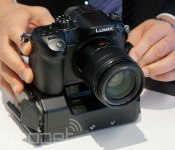
Panasonic’s GH4 clearly packs serious 4K video chops, but pricing and availability remain TBA (hands-on)

Long gone are the days when digital cameras were just for still photographers. In fact, with its GH4, it’s easy to argue that Panasonic is putting an even greater emphasis on video capture — of the 4K variety, in this case. The Lumix GH4, teased as the “next GH” just last month at CES, offers tremendous advantages over its predecessor, the GH3. Perhaps most notable are the camera’s 4K capabilities. This year’s model can shoot both 3,840 x 2,160 and a 4,096 x 2,160 “cinema 4K” format at 30 frames per second with a 100 Mbps bit rate. If you’re willing to settle for 1080p (at 60, 30 or 24 fps), Panasonic’s also added a 200 Mbps option, with 100 and 50 Mbps offerings available, too. You can capture clean HDMI video with an external recorder at 4:2:2 8/10-bit output, while a (relatively gigantic) interface unit mounts on the bottom and adds four SDI outputs with support for 4K (4:2:2/10-bit), time code, two XLR microphone inputs and a 13.8-volt Canon terminal for external power. That accessory also includes phantom power controls and LED audio level readouts.
There are significant improvements on the stills front, too. There’s a new 16-megapixel CMOS Micro Four Thirds sensor, which should benefit video captures as well. The camera supports a sensitivity range of ISO 200-25,600 (compared to a 12,800 max with the GH3), while the viewfinder has been boosted with a very sharp 2.36M-dot OLED panel and the 3-inch main tilt-and-swivel display now has a higher-res 1.04M-dot OLED screen. Panasonic is also emphasizing performance improvements, including a new 0.07-second focus speed, 12 fps burst mode or 7 fps with AF tracking and a shutter rated for 200,000 total clicks. The body is still constructed of magnesium alloy, and it’s splash- and dust-proof. Expect to snap more than 500 stills with a full charge. There’s also SDXC UHS Class 3 compatibility — you’ll need a latest-gen card to capture 200 Mbps video internally.
What we don’t have at this point is pricing or a ship date. At CES, Panasonic quoted a price below $2,000, and considering the improvements over the GH3, which currently retails for about $1,000 (and will remain on the market), we wouldn’t be surprised to see a final MSRP near the $2k mark. Reps promised more information on the availability front next month, and while the info rollout has been anything but speedy, we’re inclined to think the GH4 will be worth the wait.
Filed under: Cameras

Panasonic reverses its fortunes amid electric vehicle boom

Not every struggling company story has to have a depressing ending. Though its troubles are far from over yet, Panasonic has just announced 73.7 billion yen ($730 million) in net earnings for Q3. That’s up 20 percent over last year, a disastrous period that saw nearly $10 billion in full-year losses and painful company-wide layoffs. While those cuts are finally helping the bottom line, Panasonic also said it’s no longer relying on its consumer electronics division for profits. Instead, it saw the most growth in the automotive sector, highlighted by booming battery sales to EV makers like Toyota and Tesla — a key part of new president Kazuhiro Tsuga’s strategy. Unfortunately, another part of the plan is to keep eliminating unprofitable divisions until March, 2016. That means the recent death of its much-loved plasma TV unit isn’t the end of the slashing.
Filed under: Transportation

HDTV deals of the week: 01.29.14

Early in the year is the best time to save your hard-earned cash on a new TV. Whether you’re prepping for the big game this weekend or just looking to upgrade your existing living room display, there are price cuts across the board on 2013 models to make room for this year’s releases. In order to lend a hand with the search, we’ve selected a handful of worthy contenders after the break. With a variety of sizes and price ranges covered, there’s sure to be something for those eyeing a new HDTV this week.
Just window shopping? No worries. Join us and add the gadgets you’re shopping for to your “Want” list; every time there’s a price cut in the future, you’ll get an email alert!
55-inch Sony KDL-55W900A

Price: $1,773.55
Regular Price: $3,300
Buy: Amazon
This 55-inch HDTV from Sony’s 2013 lineup has been touted for its picture quality, which many folks note is right up there with the best models available. In fact, Engadget users have given that stat a perfect 10. When compared with the current top-scoring HDTVs in our product database, the KDL-55W900A stacks up nicely in both ratings and price. Want to see how it stacks up to your current display? Make your own comparison right here after clicking “add to compare” on your HDTV’s product page.

46-inch Samsung F8000 Series

Price: $1,429
Regular Price: $2,449
Engadget Global Score: 87
Buy: Abe’s of Maine
This 46-inch LED HDTV from Samsung has also earned high marks for both picture quality and speedy performance, tallying up an Engadget Global Score of 87. According to our price-tracking tool, this is the lowest price we’ve seen on the unit since mid-November as well. Thinking about holding off a bit? Add the F8000 Series to your “Want” list and we’ll send you alerts as soon as the price tag fluctuates.

50-inch Panasonic Smart VIERA ET60 Series

Price: $841.30
Regular Price: $1,400
Engadget Global Score: 81
Buy: Amazon
Panasonic’s 2013 Smart VIERA ET60 LCD line is getting in on the end-of-the-model-year action as well with savings of around 40 percent off the MSRP. The HDTV has mustered an Engadget Global Score of 81 thanks to sharp picture and accurate color handling. If you’re after a bit more oomph, step up to the Smart VIERA ST60 Series and its 92 Global Score that’s currently priced in the $1,600 range for a 55-incher. To compare the two, mosey right over here for a side-by-side comparison.
32-inch Vizio M-Series Razor LED

Price: $360.04
Regular Price: $399
Buy: Target
Don’t need a massive HDTV to get the job done? Well, Vizio’s M-Series Razor family offers a 32-inch option that’s been discounted $40 from its original price when it arrived back in May. While the stats and picture may not blow you away, the affordable price for a smart TV with Hulu, Netflix and more packed in make this selection worth more than just a passing glance. Right now, it’s also priced the lowest we’ve seen in more than a month, according to the 90-day price history.

Filed under: Home Entertainment, HD
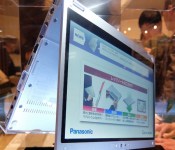
Panasonic intros CF-MX3 convertible laptop with Yoga-like design, built-in DVD drive

The category of laptop/tablet hybrids is one of the favorites among Windows PC manufacturers, including the Japan-based Panasonic. Accordingly, the Toughbook maker hosted a conference in the Land of the Rising Sun recently, where it took the time to reveal its new CF-MX3 convertible laptop. This adjustable machine comes with a 12.5-inch, 1,920 x 1,080 LCD, a removable battery that can last between 14 to 15 hours, Windows 8.1, pen support and a built-in DVD drive — yes, a DVD drive. The entry-level CF-MX3 features a 2.6GHz Core i5-4200U CPU, 4GB RAM and a 128GB SSD, while there’s also an option with double the memory and storage, a 3.0GHz Core i7-4500U CPU and a Pro version of Microsoft’s OS. Furthermore, Panasonic loaded the MX3 with a ton of ports, such as two USB 3.0, HDMI, VGA and an SD card reader; all in all, it weighs in at roughly 2.65 pounds. Pricing details for Panasonic’s CF-MX3 convertible are still unknown, though we do know it’ll be available in Japan starting February 14th.
[Thanks, Siegfried]

Spark shows how to build a Nest-like, open source thermostat

Wish you’d had the foresight to build the Nest thermostat and get Google’s attention? You can’t travel back in time, but Spark may give you the next best thing. It just posted a walkthrough showing how to build a smart thermostat of your own. The device centers around both the company’s WiFi-equipped Spark Core as well as off-the-shelf displays and sensors from Adafruit, Honeywell and Panasonic. Its software won’t compete with anything from Nest, but you can both change the temperature and view historical data from most any modern web browser. More importantly, it’s open source — you can program your own features or simply learn how things tick. While Spark’s thermostat won’t be an easy DIY project unless you’re good with a CNC mill, it’s proof that you don’t need a vast array of resources to build your own climate controller.
[Thanks, Binoy]
Filed under: Household
Source: Spark Labs
 AIVAnet