


Nokia Normandy to be Unveiled at February Press Event?

The Nokia Normandy has been a mythical creature of 2014, and now Nokia has sent out press invites for an event during Mobile World Congress next month. The event is set for the 24th of February, but it is still unclear on what they plan on showing us during this event. Some are speculating that maybe the Nokia Normandy will show its pretty face there, but with Microsoft’s acquisition of the company, we might not ever see an Android powered Nokia device.
Microsoft isn’t planning on being a huge presence at this year’s MWC, mainly because there isn’t much on the drawing board for them. Windows 8.1 is reported to be shown off at the Build Conference in April, so I guess we will see what Nokia has in store for us. You guys think the Normandy will show up? Let us know.
Source: The Verge
Nokia’s Mobile World Congress event could be long-awaited foray into Android
Nokia may finally announce its first Android-powered smartphone at Mobile World Congress, according to the latest round of reports. An invitation being sent out today has people buzzing that we could be a matter of weeks away from seeing the rumored Normandy device.
The invitation has Nokia hosting an event on Monday, February 24, which is the eve of the annual mobile conference. The rumor mill has been in full swing these last few weeks with chatter that Nokia’s Android handset is around the corner. Adding fuel to the fire, sources within Nokia have told The Verge that they plan to launch said device in Barcelona.
Lest you believe this could be something related to Microsoft or the next version of Windows Phone, The Verge reports that that WP 8.1 won’t be fleshed out until April.
Would you consider switching from your current smartphone to a Nokia device that runs Android? What is it about their hardware that you like (or don’t)?
The post Nokia’s Mobile World Congress event could be long-awaited foray into Android appeared first on AndroidGuys.
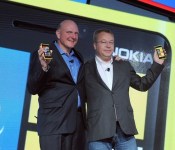
Nokia’s phone business ends not with a bang, but with a whimper

2013 is the last year that we’ll see Nokia in its current form, as the world-famous handset business should be hived-off to become part of Microsoft’s corporate family in the next few months. But how did it do in the last quarter? Not particularly well, it seems, but it’s hard to judge how badly, as the company has decided not to break out sales of its Lumia and Asha handsets, so we’re left looking for evidence elsewhere. What we do know is that the company has conceded that both smart and dumb-phone sales have fallen. Naturally, Nokia is blaming the drop on the usual suspects, like the competitive market and cheaper devices from rival manufacturers. From the figures, it appears as if the company’s phone department lost around €198 million ($270 million) in the period, so whatever Microsoft plans to do with its latest toy, it’s still got some work to do before Windows Phone 8 can be considered a success.
Filed under: Cellphones, Tablets, Mobile, Microsoft, Nokia
Source: Nokia

Daily Roundup: Lumia 1320 review, NFC iPhone case, Beats Music hands-on and more!

You might say the day is never really done in consumer technology news. Your workday, however, hopefully draws to a close at some point. This is the Daily Roundup on Engadget, a quick peek back at the top headlines for the past 24 hours — all handpicked by the editors here at the site. Click on through the break, and enjoy.

Beats Music hands-on
Beats Music is now available for download on iTunes, but can it outshine numerous competitors in an already-crowded music subscription market? Click the link for our hands-on and find out.

Nokia Lumia 1320 review
Nokia’s new $340 Lumia 1320 is a seriously low-specced version of the Lumia 1520. But if you care less about internals than you do screen size, it’s got the cheapest six inches of Windows Phone around. Click through for our review.

LogMeIn ditches free accounts
LogMeIn is shutting down all of its free accounts, forcing users to either upgrade to a paid account or find an alternative. Follow the link for more information.

NFC-capable iPhone case
Thanks to a tipster, we’ve got a photo of what appears to be AT&T retail packaging of an iPhone case with built-in Isis mobile payment support. Click on through for more information.
Filed under: Misc

Nokia Lumia 1320 review: an oversized phone that struggles to stand out

It’s not too often we can legitimately say a device is in a league of its own, yet that’s the only way we can describe Nokia’s new low-end smartphone, the Lumia 1320. With a 6-inch screen, it arrives at the same time as more expensive Lumia 1520, which shares the same screen size and battery, but is exponentially better in every other category. There’s nothing else quite like the 1320 on the market at the moment; we’ve seen plenty of large-screened Android phones already, but few of them have price tags as low as the $340 that the 1320 commands. Not only that, this is also the very first low-end Windows Phone with copious amounts of screen space.
The fact that this is the first of its kind doesn’t make the 1320 an instant hit, though. While the cost is lower than most phones its size, it’s still a high asking price for many people in emerging markets. A 6-inch size worked for the Lumia 1520, but does it make sense to come out with a stripped-down version for half the price?
Hardware and display
We’ve seen pebble-shaped smartphones before, but the shape seems even more pronounced on a larger-screened device. The 1320 has a mostly flat back with gently curved slopes near each edge, where it finally droops down sharply and tapers inward to meet the front of the phone. On top of that, the corners are rounded, and the plastic back and sides have a completely smooth, matte finish, which means you won’t have friction in your favor when you hold onto it. And in case you’re already worried about the device slipping out of your hand, we’ll warn you right now that the sides are rounded and quite pointy, which means it’s going to be hard to establish a good grip when you want to use the phone one-handed.
Much like other smartphones this size, the 1320 is quite heavy. In this case, though, it’s heavy even by large-phone standards, weighing in at 7.76 ounces (220g). This is a bit heavier than the 7.37-ounce Lumia 1520, 7.65-ounce HTC One Max and 7.02-ounce Samsung Galaxy Mega, although the difference between them is fairly subtle. It’s also 164.2 x 85.9 x 9.8 mm (6.46 x 3.38 x 0.39 in.), which makes its overall size pretty typical for a 6-inch device. That is to say: It’s big, but not significantly more so than other devices in the category.

In true Nokia tradition, you can get the 1320 in multiple colors. Our review unit was red (which, at first glance, actually looks more like orange), but you’ll also be able to grab one in white, black and yellow. Additionally, it has a removable back cover, which means you can switch things up a bit by swapping backs.
The cover itself is pretty plain. From top to bottom, you’ll see the 3.5mm headphone jack, followed by an LED flash and camera module hump, which has been raised by the slightest of hairs. In fact, you can barely even tell that it’s there unless you’re specifically looking for it. Below the camera is the Nokia logo and speaker grille, which is flanked by two nubs that clear enough space underneath the phone (when laying face-up) to prevent sound from getting muffled. Pry open the cover to reveal a non-removable 3,400mAh battery and slots for micro-SIM and microSD cards.
Eventually, the 1320 will be offered in three different versions: two LTE models for different parts of the globe and one 3G-only option (for emerging markets). Shoppers in the US will be happy to know Nokia has announced a model with AT&T and T-Mobile HSPA+ and LTE bands, but we’re still not sure when it will actually show up or if either carrier will sell it. Our particular unit was the RM-994, which promises quad-band GSM/EDGE, tri-band (850/900/2100) DC-HSPA+ and tri-band (800/1800/2600) LTE Cat 3. As for other connectivity options, you also get WiFi 802.11b/g/n, Bluetooth 4.0+LE and GPS/GLONASS support.

One of the 1320′s biggest shortcomings is its lack of internal storage, which is limited to 8GB. The platform itself takes up around 2GB, which doesn’t leave you with much to use. In fact, we already found ourselves running out of available space after downloading just a few games and apps. If you choose to buy the 1320, do not get one without a microSD card to go along with it — we have a strong feeling you’re going to need it, even if you don’t think you use that much space.
The 720p ClearBlack LCD screen manages to excel in mediocrity, which is actually not as bad as it sounds — considering this is a budget device, it makes sense that the display isn’t exactly a stunner. In fact, given its price point and intended market, we find ourselves with little to complain about. If you want to get really technical, the blacks are more like a really dark gray; the text is a tad fuzzy; and the colors are just slightly inaccurate. On the positive side, the whites are brighter than the 1520′s display when we compare them side by side. Overall, the display is hardly a dealbreaker, and it feels appropriate for a less-expensive device like this.
| Nokia Lumia 1320 | |
|---|---|
| Dimensions | 164.2 x 85.9 x 9.8mm (6.46 x 3.38 x 0.39 in.) |
| Weight | 7.76 ounces (220g) |
| Screen size | 6.0 inches |
| Screen resolution | 1,280 x 720 (245 ppi) |
| Battery | 3,400mAh(non-removable) |
| Internal storage | 8GB |
| External storage | microSD up to 64GB |
| Rear camera | 5MP, f/2.4 |
| Front-facing cam | VGA |
| Video capture | 1080p |
| NFC | Yes |
| Bluetooth | v4.0+LE |
| SoC | Qualcomm Snapdragon 400 |
| CPU | 1.7GHz dual-core |
| GPU | Adreno 305 |
| RAM | 1GB |
| WiFi | 802.11b/g/n |
| Wireless Charging | No |
| Operating system | Windows Phone 8 (Nokia Black) |
Software

There isn’t much to discuss in terms of the Lumia 1320′s software. It offers the latest update to Windows Phone 8, which Nokia bundles in with its own suite of new features and is calling “Black.” This is the same firmware on the Lumia 1520, which we’ve already discussed in detail. In addition to the standard features that come with the platform’s third update — such as screen-rotation lock, custom ringtones for specific types of notifications and the ability to close running apps in the app switcher more easily — it also introduces Bluetooth 4.0 LE support, a new and improved Glance screen with Night Mode and better battery monitoring. Most importantly, it lets the 1320 even exist, since this most recent update adds support for larger screens by throwing in an extra column of Live Tiles.
Other than that, the benefit of using Windows Phone on such a big screen is still up for debate. You’ll have a great experience using the Start menu, now that almost all of your most important content can actually fit above the fold; the keyboard’s also larger and more spacious, which improves your typing experience. Beyond that, however, we’re hard-pressed to find any extra value in a 6-inch screen. The app switcher and application list are two primary examples of areas on the phone that just don’t take advantage of the extra space, and therefore it just makes the screen feel almost too large.
As with any other Nokia device, you’ll want to prepare yourself for a long list of pre-loaded apps. This includes Zinio, Nokia Beamer, Cinemagraph, Creative Studio, Here Maps, Here Drive, App Social, Glam Me and more, but you’ll want to download Storyteller and Nokia Camera since neither one is loaded on the device at first. There are several other Nokia-sponsored options available in the store for you to peruse, and given the lack of internal storage, you’ll want to be picky about which apps you actually download.
As time goes by, it gets more and more difficult to complain about the lack of depth in the Windows Phone Store. Sure, fans of Google’s wide range of services won’t have a very enjoyable experience, but otherwise nearly all of the critical apps are now on Windows Phone in some form. Instagram, every critic’s favorite litmus test for App Store awesomeness, is now available as a beta; beyond that, there are very few major apps still missing, although we’d love to see a wider variety of well-known game titles.
Camera

A 5-megapixel camera is almost obligatory on low-end devices at this point, which just goes to show how far smartphone capabilities have progressed over the last few years; this was actually a top-notch spec not that long ago. But times, they have changed, and most budget phone cameras are now at least tolerable, if not even enjoyable. Indeed, the Lumia 1320′s 5-megapixel shooter is a solid image-taker, and ultimately manages to hold its own — even if it doesn’t come anywhere close to the 1020′s 41MP masterpiece or the 1520′s 20MP shooter.
When you first use the device, you’ll notice that Nokia has chosen to use the stock Windows Phone camera UI as the default option, which means you won’t be able to make many manual adjustments. As soon as you head into the Nokia-sponsored section of the Store, however, the Nokia Camera will be waiting for your download. This app is the same one that the PureView devices use, complete with the ability to tweak manual settings to your heart’s content — shutter speed, ISO, white balance, focus mode and exposure can be changed using this app. Several months after we first played with it, it’s still our favorite camera app on any mobile platform; adding the Smart camera to it was a very wise move that makes the app even more appealing. It’s great that Nokia offers the same app on the 1320, but does it give photographers the same amount of value as it does on the 1020 and 1520? Not really; in many cases, we were able to take better pictures when we let the algorithms do the heavy lifting for us.
Daytime pictures contain about as much detail as you’d expect from a 5-megapixel camera, which is to say that most objects become fuzzy as soon as you start zooming in on them. The white balance, meanwhile, is generally colder than we would’ve liked, and the colors are often slightly off, too. Low-light shots (taken using auto mode, since we got better results this way) are a mixed bag; thanks to the camera’s f/2.4 aperture (same as the Lumia 1520), we were able to see a lot of stuff we normally wouldn’t be able to catch, but we got a lot more noise by doing so.
Video capture is actually the most impressive aspect of the imaging experience on the 1320. By default, it records in 1080p at 30 frames per second by default (the Nokia Camera app lets you choose 24 or 25 fps as well) and records at an average bit rate of 20 Mbps, which is much better than we’d expect from a phone of its caliber. We had no problem capturing smooth motion; its continuous-focus feature worked incredibly well; audio was clear; and mics admirably picked up the voices of our subjects without snagging a lot of wind in the process.
Performance and battery life

There’s certainly nothing wrong with a dual-core 1.7GHz Snapdragon 400 chipset in a device like this. Windows Phone 8 has a reputation for being smooth, efficient and fast on lower-end devices, which, in part, explains why Nokia has been so successful selling products like the Lumia 520 and 620 at extremely low prices. As it stands, a chip like the one in the 1320 is still a solid performer for midrange smartphones, let alone more expensive ones — at least for the majority of tasks, anyway. If you take a look at the benchmark table below, you’ll notice that the performance of the 1320 actually rests right in between that of the 1020 and the 1520. We were perfectly happy with the 1020, so this is definitely a good sign.
In general, the phone ran as well as we’d expect it to, given the Snapdragon 400, but there was one bug that reared its ugly head on occasion. There were a few times in which we unlocked the phone and found that half of the screen was completely black, and the section that did show up was completely fragmented and had distorted coloration. Usually this issue went away once we turned the screen off and turned it back on again, but it also happened a few times when playing games like Temple Run 2.
| Nokia Lumia 1320 | Nokia Lumia 1520 | Nokia Lumia 1020 | |
|---|---|---|---|
| WPBench | 300 | 466 | 223 |
| Battery rundown | 3:28 | 3:30 | 2:12 |
| SunSpider 1.0.2 (ms) | 701 | 546 | 906.2 |
| AnTuTu (*GPU test off) | 14,406 (13,836*) | 25,148 (22,275*) | 11,084 (9,874*) |
| SunSpider: lower scores are better. | |||
The Lumia 1320 features a 3,400mAh battery, which is the same size as what the 1520 offers. You may recall that our experience with the 1520 battery wasn’t as good as we had hoped, but thanks to a lower-res display, two fewer cores to power the device and the use of other low-end components on the 1320, we really weren’t as concerned with its performance. Fortunately, our expectations were met: After 12 hours of solid use (which included conference calls, emails, social networking, navigating a route on Nokia Here for 45 minutes and taking a handful of pictures and video) we discovered that we still had 35 percent battery life remaining. In other words, the 1320 will easily get you through a full workday as well as any social activities you might have in the evening. Interestingly, our standard battery rundown test gives the same results as the 1520, but real-life use was more impressive.
Call quality is passable, but not great. Our calls yielded a lot more static than most devices we’ve reviewed recently, and the other voice often came through slightly muffled. We noticed the same results when using the speakerphone as well. At least we could hear the other caller fairly well, but we still weren’t able to enjoy a crystal-clear conversation.
The competition

Since its only kin is the flagship Lumia 1520, a 6-inch Windows Phone for the budget-minded buyer actually makes the 1320 a one-of-a-kind device. Of course, that doesn’t mean that you only have one option. Let’s take a look at a few other handsets that are similar in price and size.
There’s a handful of large-screened Android phones geared toward those who don’t want to spend a lot of money. BLU Products, a lesser-known name that focuses on producing lower-end Android devices, offers the 5.7-inch Life View for $300; Samsung features the 6.3-inch Galaxy Mega for $480 without a contract (subsidized price varies depending on carrier); and the Huawei Ascend Mate is a 6.1-inch option for just over $450 (its sequel has yet to be priced). There are a few other Android options out there, but we’ve still yet to find any that rival the pricing of the Lumia 1320 and still offer comparable performance. (However, keep an eye out for the ASUS Zenfone 6, which was announced at CES this month and will cost $200 when it launches.)
Wrap-up

More Info
Outside of its 6-inch size, battery life and $340 asking price, nothing about the Nokia Lumia 1320 really stands out. Problem is, even though it’s significantly cheaper than most large-screened phones out there, it’s still in a no man’s land where it’s not quite affordable enough for emerging markets — the Lumia 520 and 620 series are a much better deal, if you can stand the smaller screens. At the same time, it’s not premium enough to compete against flagships, not even Nokia’s own Lumia 1520.
In other words, the Lumia 1320 is very much a niche product. It will have a limited amount of appeal, catering to those who desire a large screen and/or long battery life and are willing to pay more than a normal low-end device to get it. Beyond that, there isn’t anything that tempts us: It’s a bit too heavy for our liking; there are still some wrinkles in performance that need to be ironed out; and you’ll want to get a microSD card to ensure you have enough storage space for everything. Without any standout features, the Lumia 1320 is about as mediocre a smartphone as you can get — and just about as forgettable, too.
Daniel Orren and Edgar Alvarez contributed to this review.
Filed under: Cellphones, Wireless, Mobile, Microsoft, Nokia

The Engadget Show 49: CES 2014 wrapup

Grab a wearable, switch on the ‘ole curved TV and fire up your favorite 3D printer. We came, we saw, we conquered and now we’re ready to distill it all for you in the form of some high-quality video content. We’re not going to suggest that it’ll replace the seemingly endless stream of posts we’ve churned out over the past week or so, but if you’ve got a cocktail party full of guests you need to impress tonight, it’ll help you drop some serious CES 2014 tech news knowledge on their collective heads.
We’ve pulled together some top editors to offer up an abbreviated view of tech’s biggest show of the year, charting trends in old standby categories like HDTV, mobile, tablets and cars, to emerging spaces set to define the changing face of the show for years to come. Oh, and we’ve also tossed in some fun video of the show’s gadgets, because, well, it wouldn’t be much of an Engadget Show without that sort of thing, now would it? Toss in a bit of video of your long-time host getting a bit welled up the end, and you’ve got yourself a little thing we like to call The Engadget Show 49.
‘Til we meet again, Engadgeteers.
Filed under: Announcements, Cellphones, Desktops, Cameras, Displays, Misc, Gaming, GPS, Handhelds, Home Entertainment, Household, Laptops, Meta, Peripherals, Podcasts, Portable Audio/Video, Robots, Tablets, Transportation, Wearables, Wireless, Storage, Networking, Science, Internet, Software, HD, Mobile, Alt, Apple, Samsung, Sony, Microsoft, HTC, Nokia, ASUS, Google, Amazon, Verizon, Sprint, AT&T, LG, AMD, Intel, Blackberry, T-Mobile, HP, Dell, Acer, NVIDIA, Nikon, Canon, Facebook, Nintendo
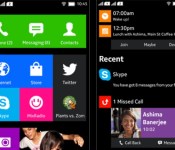
Nokia Normandy UI Screenshots Leak Showing Part Android Part WP

The Nokia Normandy has definitely become the Bigfoot of devices for 2014, and today we get another look at what the UI may look like. These screenshots are courtesy of evleaks, which he has been our prolific source for this device. Seems that Nokia has decided to design an Android and Windows Phone hybrid UI, so there goes our dreams of having a Nokia phone with just Android on it.

As you can see from the long screenshots, it looks more Windows than Android. Also, there doesn’t seem to be any Google apps present within the apps, but reports suggest that those apps will be available in the Play Store. There is still a chance that those apps may not work on the Nokia Normandy, simply because this device is rumored to have an OS similar to Amazon Fire OS, so owners might have to side-load certain apps onto it.
So one of these days maybe we will hear about an announcement of this mystery phone. Let us know your thoughts about these leaked screenshots.
Source: Android Authority
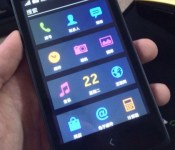
Images of Nokia’s first Android phone leak
An upcoming phone being made by Nokia code-named “Normandy” has pretty much only been seen as renders until today, when @seamissu leaked a photo of the device on Twitter.
The device was first seen in November thanks to @evleaks, and it has been said that Nokia has the device nearly ready for consumer release.
Reports have suggested that Nokia has forked Android, similar to how Amazon uses it, to create a customized operating system, a move that gives more control over the experience, differentiating it from other Android devices, while still allowing most Android apps to work on it.
Previous leaks have also suggested that the device has one capacitive back button, is running Android 4.4 KitKat with a Qualcomm Snapdragon processor and that its OS has styling similar to that of Nokia Windows Phone devices.
One other photo was leaked today by Chinese blogger Zhang Zhicheng.

This photo supposedly shows the Android app launcher on the device, but it could be an order version since the UI doesn’t exactly match up with the polish of some previous leaks.
Who knows if this device will ever see the light of day as Nokia is awaiting final notification of the acquisition of its Devices and Services division to Microsoft, expected at the end of this quarter.
via @seamissu Twitter, Neowin
The post Images of Nokia’s first Android phone leak appeared first on AndroidGuys.
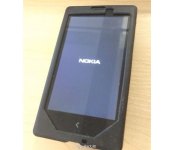
Rumored Nokia Normandy prototype surfaces on Twitter, reveals little

That thing up there? Word on the street (that is, Twitter) is that it’s an engineering prototype of the Nokia Normandy, a low-end Android device due sometime in 2014. The name has been floating around for a few months now, often accompanied by images flaunting Nokia’s usual design cues but without the hardware shutter button or LED flash that adorn its Lumia devices. Normally, that would peg the hardware for Nokia’s Asha line, but rumors persist that the Normandy will actually be running a Nokia-tweaked version of Google’s open-source OS.
Screenshots leaked earlier this month also suggested that the device would support dual SIMs and showed of mockups with touch-screen notifications and a customized Skype app. Unfortunately, the leaked device doesn’t do much to add or detract from that rumor, revealing only a generic back button, a Nokia boot screen and a rubberized case that obfuscates the handset’s features. Still, something is clearly afoot; we’ll let you know when we know what, exactly, it is.
Filed under: Cellphones, Nokia
Via: GSM Arena
Source: Twitter
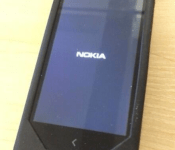
Android Powered Nokia Normandy Prototype Poses for the Camera

The Nokia Normandy has been on all our minds since we first heard word of it, simply because we are finally going to get that Android powered Nokia phone. We have already heard many rumors, as well as leaked images for the phone, provided by evleaks. The leak king has once again given us something from the Nokia Normandy, and that is the very image you see above. Apparently that is the prototype of the Normandy that someone took a picture of.
It definitely looks like a brick of a phone, but again, it is just a prototype. Wouldn’t surprise me if a video of this prototype leaks out somewhere, and I will do my best to keep an eye out for it. In the meantime, let us know if you would jump onto the Android powered Nokia phone.
Source: @evleaks
 AIVAnet