


Samsung escapes penalty after its lawyers leaked secret Apple documents

Late last year, Samsung found itself in trouble over claims it had secretly spied on Apple and Nokia documents to gain a better position in patent deals. It denied any wrongdoing, saying it hadn’t done so wilfully, and now US judge Paul S. Grewal has finally drawn the same conclusion. PCWorld reports that the US District Court for the Northern District of California ruled Wednesday that the Korean company could not have used confidential information for its patent licensing talks with Nokia, a deal that was extended in November, because it already knew all of the terms ahead of the leak.
The court considered sanctions against Samsung after the company’s legal negotiator, Dr. Seungho Ahn, had reportedly told Nokia that its terms with Apple “were known to him,” even though they were marked “highly confidential — attorneys’ eyes only.” Up to 50 Samsung employees were said to have been given non-redacted copies of Apple documents by its external counsel Quinn Emanuel, which included patent deals with Nokia, but also Ericsson, Sharp and Philips. While Samsung has escaped further action, the court will force its legal representatives to cover both Apple and Nokia’s legal fees, effectively making the “junior associate working late one night” pay for underusing that big black marker.
Filed under: Cellphones, Mobile, Apple, Samsung, Nokia
Source: PCWorld

Nokia X benchmarked on BrowserMark 2, shows predictable Performance
 When the Nokia X’s hardware specs were leaked earlier this week, many people had to do a double take just to make sure they weren’t dreaming; although we knew the device wasn’t going to be flagship quality, many of us did not quite expect the pedestrian nature of the specs and I think it’s fair to say the Android-powered Nokia phone has lost a bit of interest since then. Regardless, the leaks are still coming in fast and thick as someone has had the Nokia X benchmarked on BrowserMark 2 and uploaded the results giving one of our first looks at the device’s abilities.
Unsurprisingly, the Nokia X (which has been given the model number of RM-980) comes in quite close to the end of the pack, though I would say despite only packing what is likely a dual-core Snapdragon 200, it performs quite admirably, finding itself in the midst of budget quad-core phones. While the hardware is definitely one sticking point for Android enthusiasts, the other elephant in the room would definitely be the lack of Google certification, meaning that the Google Play Store will be present on the phone, though someone will likely figure out how to flash the device shortly after its expected release at MWC 2014.
What do you think about the Nokia X’s performance in the BrowserMark 2 benchmark: still think it’s a bit too underpowered? Let us know what you think in the comments below.
Nokia X (Normandy) specs revealed to be entry-level
Likely aimed at first-time smartphone buyers, Nokia’s first Android features low-end hardware
The purported specifications for Nokia’s first Android smartphone have leaked online, pointing to an entry-level experience. According to @evleaks, the so-called Nokia X shares much of the hardware of the affordable Nokia Lumia 520. Details include a dual-core 1GHz Snapdragon, 4-inch WVGA display, 512MB RAM, 4GB internal storage, and a 5-megapixel rear camera. Juiced by a 1500mAh battery, the phone should come in dual-SIM variants and sell in up to six colors.
Nokia X: 2 x 1GHz Snapdragon, 4″ WVGA, 512MB / 4GB / microSD, 5MP, 1500MAh, Nokia Store + 3rd party, dual-SIM, 6 colors.
— @evleaks (@evleaks) January 28, 2014
I would not be surprised if the Nokia line of Android devices featured pre-installed Nokia/Microsoft apps and services. As an entry-level smartphone it could give users enough to satisfy basic needs. Once a more powerful smartphone is called for, Nokia and Microsoft will likely position a Windows Phone in front of the user.
Should these specs prove accurate, and we think they will, the phone could be priced $50-$100 with a contract. We should find out all of the official details in the next few weeks; Nokia is expected to debut the Nokia X (formerly, Normandy) at Mobile World Congress in late February.
The post Nokia X (Normandy) specs revealed to be entry-level appeared first on AndroidGuys.
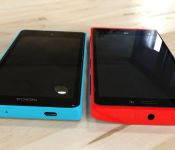
Specs for the Nokia X Get Leaked

So the mythical creature that is the Nokia X (Nokia Normandy) has gotten it’s guts spilled out on social media by evleaks tonight. The leak master just posted supposed specs for the first Android-powered Nokia phone, and the specs are very mid-ranged, borderline low-ranged. Nothing to complain about given that this is the very first phone Nokia will have that has Android running on it, but a lot of you might question the RAM.
Nokia X: 2 x 1GHz Snapdragon, 4″ WVGA, 512MB / 4GB / microSD, 5MP, 1500MAh, Nokia Store + 3rd party, dual-SIM, 6 colors.
— @evleaks (@evleaks) January 28, 2014
512 mb…what? I had to read the tweet about 4 times to make sure I was reading it right. That is super low, but then again, we did hear that Android 4.4 KitKat was able to run on devices with such low memory. We already got word that the Nokia X was going to come in multiple colors, and judging by these specs, it should be a budget friendly phone. Let us know your thoughts about these specs.
Source: @evleaks

GTA: San Andreas now available for (some) Windows Phones weeks late

Rockstar Games’ promise of an early January launch for Grand Theft Auto: San Andreas on Windows Phone devices may’ve been a bit off — the game just arrived on the Windows Phone store today, as spotted by CNET. The game carries a $7 price tag and works on a handful of WP8 devices (the HTC 8XT and Nokia Lumias 1520, 1320, 822, 820 and 810); it’s got the same touch-based, contextual controls that the iOS and Android versions employ. Should the Caricature Compton of Carl Johnson’s San Andreas entice you, you can snag it right here.
Filed under: Gaming, Software, Mobile, Microsoft, HTC, Nokia
Via: CNET
Source: Windows Phone Store

Weekly Roundup: PlayStation Vita TV review, T-Mo’s ‘Mobile Money’ and more!

You might say the week is never really done in consumer technology news. Your workweek, however, hopefully draws to a close at some point. This is the Weekly Roundup on Engadget, a quick peek back at the top headlines for the past seven days — all handpicked by the editors here at the site. Click on through the break, and enjoy.

The future of Nokia featurephones
Engadget’s Brad Molen discusses Microsoft’s impending acquisition of Nokia and how the deal might change the future of the manufacturer’s once-mighty featurephone linup. Follow the link for more information.

PlayStation Vita TV review
Sony’s PS Vita TV media streamer is cute, quiet and about the size of a deck of cards. You can even pair it with a PS3 DualShock controller and viola, you’ve got games. But would your $96 be better spent on a more portable PS Vita? Click the link for our review and find out.

T-Mo’s ‘Mobile Money’
T-Mobile’s latest endeavor is a personal finance product called “Mobile Money” that combines a smartphone app and branded prepaid Visa card. Best of all: you don’t even have to be a customer to sign up for it. Click on through for details. Click on through for details.

Uber-rare NES game lands on eBay
Back in the 1990′s, the Nintendo World Championship toured the US with 116 custom game cartridges containing special levels from Super Mario Bros., Rad Racer and Tetris. If owning a gem like that makes you flutter on the inside, now might be your chance! Click the link for details.
Filed under: Misc
[LEAK] The Nokia Normandy will actually be called the Nokia X
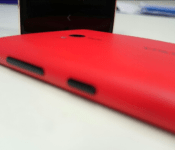
 It’s suffice to say that the proverbial ‘Bigfoot’ of the Android world right now is the Android-based Nokia smartphone that we have heard so much about the last few weeks, the Nokia Normandy. Maybe Nokia will show it to us at MWC 2014 next month, maybe we’ll never see it out in the open, but until the day that Microsoft finalizes the deal to acquire Nokia, we’ll keep dreaming. This latest leak about the Normandy refers to the name of the phone, which evleaks says is going to be officially called the Nokia X:
Project Normandy = Nokia X
— @evleaks (@evleaks) January 23, 2014
It’s interesting that Nokia is going back to the ‘X’ nomenclature seeing as the last time they used it they were still making feature phones (i.e. phones with keypads and keyboards), but seeing as they don’t really have a line for this type of phone anyway, why not? Personally, I like the idea of the Nokia X; sure, its specs aren’t going to set the world on fire, but its existence at all is certain to pull a few nostalgia strings, such as my own.
What are you thoughts about the Nokia X: Would you considering getting one if it were ever released? And do you think it’s going to be announced at MWC 2014? Let us know your 2 cents in the comments.
Source: Twitter

Red Nexus 5?!?! Google Meltdown 2014! – The ManDroid Show

It is Friday, so you know what that means…GOOGLE WILL FAIL US! Yes, that was quite a moment of panic when Google services went down today. Hpefully you all survived the ordeal. In other news, a red Nexus 5 showed its pretty face, which could very well be a Photoshop job, but we are hoping that Google will eventually let us pick the colors of our phones. Anyways, enjoy the show!
News Updates
Video shows different color options for the Nexus 5
Red Nexus 5 shows up
Nokia sends out invites for event
Moto X $100 off this Monday

Daily Roundup: PlayStation Vita TV review, the future of Nokia featurephones and more!

You might say the day is never really done in consumer technology news. Your workday, however, hopefully draws to a close at some point. This is the Daily Roundup on Engadget, a quick peek back at the top headlines for the past 24 hours — all handpicked by the editors here at the site. Click on through the break, and enjoy.
The future of Nokia featurephones
Engadget’s Brad Molen discusses Microsoft’s impending acquisition of Nokia and how the deal might change the future of the manufacturer’s once-mighty featurephone linup. Follow the link for more information.
PlayStation Vita TV review
Sony’s PS Vita TV media streamer is cute, quiet and about the size of a deck of cards. You can even pair it with a PS3 DualShock controller and viola, you’ve got games. But would your $96 be better spent on a more portable PS Vita? Click the link for our review and find out.

Apple gushes on 30 years of Mac
It’s the 30th anniversary of the Macintosh computer, and what a ride it’s been. And to commemorate the event, Apple’s put together a video presentation and interactive timeline that’s sure to make many nostalgic. Click the link for details.

Google ad patent arranges shoppers’ transportation
Google was granted the patent for an ad that can arrange transportation for shoppers who want to visit its advertisers’ stores. Why shop online when a chauffeur can take you to a real store, right? Click on through for more information.
Filed under: Misc
Nokia’s dumbphones face an uncertain future at Microsoft

“Year-on-year decline.” Those are words that no company looks forward to publishing in its earnings reports, but unfortunately we’ve seen them printed more often than not on Nokia’s quarterly statements. Though there have been a few ups and downs, struggling profits and sales have been a general concern for a long time, and unfortunately this quarter’s earnings report did little to soothe our worries; Nokia sold 600,000 fewer Lumias than the previous quarter. Now that Microsoft’s acquisition of Nokia’s devices and services division is nearly complete, much of our focus has turned to how the merger will affect the Lumia lineup of Windows Phones. An even bigger mystery at the moment, however, is what Microsoft will choose to do with the rest of Nokia’s phones — namely, the Mobile Phone division, which consists of the company’s basic featurephones and the Asha lineup of advanced featurephones, none of which run Windows Phone.
Just after Microsoft announced its intent to acquire the phone maker, Nokia insisted that the division wasn’t going anywhere; it has “substantial global reach … and a strong customer base,” but in emerging markets like India and China, it faces intense competition from fully functional smartphone platforms for a similar cost. Even worse, as we learned in yesterday’s report, sales from this division were flat — and as the competition gets heavier, it’s going to get worse, not better. Is it worth it for Microsoft to try saving a lineup of handsets that don’t feature Windows Phone OS? Or does it make more sense to push lower-end Lumia devices to cater to the next billion smartphone users?
We’ve seen several companies make huge moves to compete in emerging markets, where even a difference of $10 or $20 can have a significant impact.
In yesterday’s report, Nokia stated: “Our Mobile Phones net sales were affected by competitive industry dynamics, including intense smartphone competition at increasingly lower price points and intense competition at the low end of our product portfolio.” In other words, an influx of cheap Android and Firefox OS devices is making it difficult for Nokia’s lower-end devices to remain relevant in fiercely competitive countries like India and China.
The Ashas, which bridge the divide between featurephones and smartphones, range from $70 to $100; however, Android devices like the Galaxy Pocket cost around $85 in the same markets and offer similar specs with a much wider variety of apps. Firefox OS devices like the ZTE Open are now available for around $75. Heck, even the Lumia 520, which uses the Windows Phone platform, costs roughly the same as an Asha.
We’ve seen several companies make huge moves to compete in emerging markets, where even a difference of $10 or $20 can have a significant impact. Unfortunately, this means it’s much more difficult for the Asha lineup to compete today than just a couple years ago when they were first introduced. At the time, the concept was sound — if you offer a featurephone with smart abilities like a developer platform, messaging/email, social networking and so on, the customers will come. But today, as other platforms like Android and Firefox begin to flourish in emerging markets for the same prices, developers have less incentive to focus on making apps for Asha products, and consumers will become more hesitant to buy into the ecosystem.

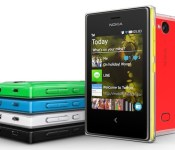
There’s still a place for the simplest of phones. The $20 Nokia 105, for instance, is a basic candybar phone that offers a few nice extras like FM radio, flashlight and (best of all) month-long battery life. But what about the $85 Nokia 301 (pictured above), which offers a camera, HSPA connectivity and Mail for Exchange? How about the $160, aluminum-clad Nokia 515? We’re not so sure there’s a place for them in the years to come. It’s fantastic to see a lot of variety in the low end, but these handsets won’t be able to stay afloat in a sea of similarly priced phones that have more capabilities.
These handsets won’t be able to stay afloat in a sea of similarly priced phones that have more capabilities.
Nokia states that featurephones won’t be going away under Microsoft’s reign, and everything under the Mobile Phone umbrella will continue on. But outside of the Nokia 105, we just don’t see how selling a featurephone that costs more than $60 makes sense — and if Microsoft continues the Asha lineup, it would have to add even more functionality in order to compete with phones that boast full smartphone platforms. This is where a device like the oft-rumored Normandy would play an interesting role, since it’s reportedly an Asha-class phone that features a forked version of Android. However, Microsoft may not be so keen on Nokia launching the phone for that very reason.
Regardless of what happens to the Normandy in the end, we doubt it will have much of an effect on Microsoft’s end goal — to help Windows Phone blossom and grow. The best place to do that right now is in emerging markets, where it’s finally becoming affordable to get a smartphone. Nokia created a lot of momentum with low-end smartphones like the Lumia 520, which Softpedia claims was the best-selling Windows device in the world in September. Microsoft should take advantage of those successes instead of focusing on products that deter from its objective.
Filed under: Cellphones, Mobile, Microsoft, Nokia
 AIVAnet