


Engadget’s smartphone buyer’s guide: winter 2014 edition

You don’t need to cast bones or read entrails to know that smartphones arrive in predictable cycles. February, home of Mobile World Congress, is likely to see the launch of new handsets from heavy hitters like HTC, Samsung and LG. Those new flagships will rule the mobile hill until the fall, when Apple and Google are likely to wheel out next-gen devices of their own. Sony, meanwhile, recently launched its latest handset, the Z1 Compact, which reverses the “bigger is better” trend to great effect.
There may have only been one top-tier phone launching in January, but the phone industry has hardly been hibernating this winter. Two years after Google bought Motorola for $12.5 billion, it sold the rejuvenated handset maker to Lenovo. AT&T, meanwhile, has rejigged its mobile share plans to shrink your monthly data bill; T-Mobile will now pay you to leave your carrier; and we’re inching ever closer to a Sprint/T-Mobile merger, the FCC permitting. If you’re already on the hunt for a new smartphone, or your deal’s only for a few more months left and you like to be prepared, this is your guide to the best handsets on the market.
Android
HTC One

HTC’s 2013-era flagship is due for a revamp, and we’re certain that the gods of irony will ensure that, as soon as we’ve published this guide, the smartphone currently codenamed as “M8″ will officially arrive. In the meantime, however, the HTC One remains a handset that we’re happy to recommend. Combining jaw-dropping unibody aluminum design, powerful BoomSound speakers and an IR blaster, it’s as at home in front of your TV as on the road. The quick performance and general polish of both hardware and software mean that it hasn’t shown its age, and the UltraPixel camera is perfect for low-light shooting. Hopefully the arrival of the One’s replacement will help knock the price down, so we’d suggest keeping your eyes peeled for a bargain in the next few weeks.
Bottom line: Good hardware, good software and some innovative little touches put the HTC One ahead of the Android pack, even though it’s now several months older than many of the other phones on this list.
Key specs: 4.7-inch 1080p (1,920 x 1,080) S-LCD 3 display, 1.7GHz quad-core Snapdragon 600, 4MP rear/2.1MP front cameras, 32GB/64GB non-expandable storage, Android 4.2 (US, to be updated shortly)/Android 4.3 (global edition).
Price: $50 (Verizon), $100 (Sprint) from Amazon and Best Buy or $200 (AT&T)
Motorola Moto X

Since our last guide, the Motorola Moto X went on sale in Europe as an off-the-shelf retail option, and the company went from being Google’s plaything to becoming part of Lenovo. The news of the purchase shouldn’t distract you, however, as the handset is still reasonably new, with much to recommend it. In the US, customization is the name of the game, with the ability to choose colors on the front, back and accent pieces. There’s even an optional wood finish. It may not appeal to those who judge a phone’s performance on its spec sheet, but Motorola (and Google) worked hard to ensure there are some neat tricks under the hood. For example, you just need to say “OK Google” at the device for it to activate and offer up its voice search prowess. Then there’s the Active Display, which will show you your notifications if it feels you holding the handset toward your face.
Bottom line: Rather than cramming in ultra-fast internals, Motorola’s tried to make the phone especially intuitive to use, with Active Display and touchless controls. Oh, and it’s assembled in the USA, which might tug at your patriotic heartstrings.
Key specs: 4.7-inch (1,280 x 720) AMOLED display, 1.7GHz dual-core Qualcomm MSM8960 Pro, 10MP rear/2MP front cameras, 16GB or 32GB non-expandable storage, Android 4.2.2 (upgradeable to 4.4 KitKat).
Price: $50 (AT&T, Verizon) from Amazon and Best Buy, $100 (Sprint) or $330 (unlocked)
Samsung Galaxy Note 3

When Samsung presented the idea of a smartphone with a display larger than five inches, we were more than a little skeptical. The Galaxy Note’s surprise success, however, has forged a trend where colossal devices are now the rule, not the exception. For the Galaxy Note 3, Samsung took everything we loved about its predecessors and turned them up to 11. Instead of mildly useful note-taking, the company has ensured that the S Pen stylus now serves a deeper purpose. It also offers whip-smart performance and a battery that’ll last close to two days with normal usage. The only downside is that you’ll still look a bit silly using one as a phone, but let’s be honest: Who uses their smartphones to make calls anymore, eh?
Bottom line: The third-generation Note is an improvement over its predecessors thanks to a more useful stylus and a longer-lasting battery.
Key specs: 5.7-inch (1,920 x 1,080) Super AMOLED display, 2.3GHz quad-core Snapdragon 800, 13MP rear/2MP front cameras, 16GB/32GB/64GB expandable storage, Android 4.3.
Price: $300 (AT&T, Verizon) from Amazon and Best Buy, $350 (Sprint) or $708 (T-Mobile)
Google Nexus 5

When Google picked LG to produce the Nexus 4, heads and eyebrows were raised, but when it launched, no one could doubt that the duo had pulled off something special. For the Nexus 5, Google raised the price to $349, but for a little extra cash, you’re getting one of the finest flagships for a mid-range price. Since it’s a Nexus device, users are entitled to the latest and greatest version of Android whenever it’s out. And, despite the low price, you’re getting speedy internals and good-quality hardware. Just be prepared for some weak battery life and poor roaming options. Otherwise, we suggest you buy it contract-free, with just a prepaid SIM plan, and don’t look back. Your wallet will thank you for it.
Bottom line: We’re baffled as to why more people don’t just buy Nexus phones over all others. After all, you’re getting a flagship smartphone for $350.
Key specs: 4.95-inch (1,920 x 1,080) IPS LCD display, 2.26GHz quad-core Snapdragon 800, 8MP rear/1.3MP front cameras, 16GB/32GB non-expandable storage, Android 4.4.
Price: $100 (Sprint) from Best Buy, $349 to $399 (unlocked) or $396 (T-Mobile)
Sony Xperia Z1 Compact

We’ve noted that a lot of Android device makers like to release a handset, like the Galaxy S 4, and then release a smaller, more pocket-friendly version shortly afterward. Unfortunately, cramming the same technology down into a tighter package causes a raft of compromises, sending prospective buyers scurrying back to the full-size edition. Sony, however, decided that it would try and produce the Xperia Z1 Compact, a shrunken down, 4.3-inch version of the original Xperia Z1, which has a 5-inch screen. The only differences of note are that the display now has 720p resolution, instead of 1080p, and the battery capacity has dropped by 700mAh due to the hardware’s reduced dimensions. If you’re interested in a top-tier waterproof smartphone, but don’t fancy carrying around a device that can double as a table tennis bat, the Z1 Compact is absolutely worth investigating.
Bottom line: Sony’s struggled to sell its Xperia handsets in the past, but this one deserves to be a hit, thanks to its 20.7-megapixel camera, great build quality and blistering performance. Oh, and it’s waterproof, so if you like dunking your phone in your friend’s drinks, this one’s for you.
Key specs: 4.3-inch (1,280 x 720) Triluminos LCD display, 2.2GHz quad-core Snapdragon 800, 20.7MP rear/2MP front cameras, 16GB expandable storage, Android 4.3.
Price: $625.50 to $689.50 (unlocked, from Negri Electronics)
Motorola Moto G

The partnership between Motorola and Google may have only produced two handsets, but the ones we got were special. Aimed squarely at the lower end of the market, the Moto G is the rare beast that doesn’t feel like it costs just $180. It can beat the HTC One mini and Galaxy S4 Mini in the benchmark stakes; it features a solid camera; and the 4.5-inch display is actually quite fantastic. If you’re not dead-set on LTE or carrying around a big music collection, but want a quick and up-to-date Android smartphone, then this is the device you should be ordering.
Bottom line: If you want a Google handset, but can’t stretch to a Nexus 5, then the Moto G is your next best option. There’s no LTE, no expandable storage and the camera’s just OK, but for this price, who cares?
Key specs: 4.5-inch (1,280 x 720) IPS LCD display, 1.2GHz quad-core Snapdragon 400, 5MP rear/1.3MP front cameras, 8GB/16GB non-expandable storage, Android 4.3 (Android 4.4 KitKat on Google Play edition).
Price: $100 (Verizon), $80 (US Cellular), $130 (Boost) or $179 to $199 (GSM, unlocked) from Amazon
iOS
Apple iPhone 5s

You know the deal by now. Apple’s flagship iPhone 5s is the best iPhone ever made, thanks to improvements both inside and outside. Though it remains dwarfed in size by many rival phones, it benefits from Touch ID, an easy-to-use fingerprint scanner built right into the home button. Then there’s the future-proof A7 chip, which offers fast 64-bit performance. Add in iOS 7, with its stark new design, and you’ve got a seventh-generation iPhone that still manages to look and feel new.
Bottom line: The best iPhone yet, and among the top smartphones, period. However, if you already own an iPhone 5, you’re probably better off waiting for the 6, as nothing here really justifies the early upgrade fee.
Key specs: 4-inch (1,136 x 640) IPS Retina display, Touch ID, A7 chip with M7 motion coprocessor, 8MP rear/1.2MP front cameras, 16GB/32GB/64GB non-expandable storage, iOS 7.
Price: $199 to $399 (AT&T, Verizon, Sprint) from Best Buy or $649 to $848 (T-Mobile)
Apple iPhone 5c

Apple’s middle child is the iPhone 5c, which is basically 2012′s iPhone 5 with a plastic shell. That switch means you’ll now be able to buy the phone in a variety of bright, Lumia-esque colors, but in every other respect, it’s the same phone that came out in 2012. So, you’ll sacrifice the headline-grabbing features you’d otherwise get with the 5s, like the aluminum shell and fingerprint recognition, but if your wallet won’t stretch the extra $100 to get the higher-end model, this is a fine choice.
Bottom line: For $100 less than the iPhone 5s, it’s 2012′s best phone in a choice of fun colors.
Key specs: 4-inch (1,136 x 640) IPS Retina display, 1.3GHz dual-core A6, 8MP rear/1.2MP front cameras, 16GB/32GB non-expandable storage, iOS 7.
Price: $99 to $199 (AT&T, Verizon, Sprint) from Best Buy or $549 to $649 (unlocked or on T-Mobile)
Apple iPhone 4s

It’s a testament to the iPhone 4s that Apple can still sell it as an entry-level device more than two years after it first went on sale. Of course, it’s missing a few key specs that early adopters will be lusting after — namely, it rocks a smaller 3.5-inch display, and makes do with a slower chip and 3G-only data. That said, it still has a fantastic camera and that 3.5-inch display is at least Retina-quality. More importantly, the phone will still run iOS 7, so you won’t feel too behind your friends on more modern hardware. Of course, you’re not eligible for every new iOS feature, and there’s no guarantee your handset will be supported in a year’s time. Still, for a free-on-contract offering, it’s tremendously compelling.
Bottom line: Despite being more than two years old, the iPhone 4s can still hold its own with brand-new budget models from its rivals — and it’s a steal if you can get it for free. Speed freaks and LTE fans won’t be interested, but it’ll beat plenty of other smartphones you can get for nothing.
Key specs: 3.5-inch (960 x 640) IPS Retina display, 1GHz A5, 8MP rear/VGA front cameras, 8GB non-expandable storage, iOS 7.
Price: Free (AT&T, Verizon, Sprint) or $450 (unlocked on T-Mobile)
Windows Phone
Nokia Lumia 1520

A handset that exists in the corridor of uncertainty between a phone and a tablet, Nokia’s Lumia 1520 is the company’s first attempt at a 6-inch device to rival the Galaxy Note. With the first 1080p display on a Windows Phone device, as well as a Snapdragon 800 processor, the 1520 offers plenty to love. Pairing this massive device with a 20-megapixel PureView module puts most other devices to shame, and it’s even reasonably comfortable in a pocket — assuming you’re not wearing skinny jeans, anyway. If you’re a Verizon customer and feel left out, then the Icon, which combines similar internals with a 5-inch display, could be right up your street.
Bottom line: It’s too early to tell if Windows Phone 8 will flourish on a massive device that sits between a fully fledged tablet and a smartphone, but nonetheless, this stands as the best Windows Phone device we’ve ever seen.
Key specs: 6-inch (1,920 x 1,080) IPS LCD display, 2.2GHz Snapdragon 800, 20MP rear/1.2MP front cameras, 16/32GB expandable storage, Windows Phone 8.
Price: $150 (AT&T) from Amazon and Best Buy or $750 (unlocked)
Nokia Lumia 1020

When Nokia announced the “experimental” 808 PureView, it set the hearts of gadget fiends afire. The device came with a 41-megapixel sensor and some clever number-crunching that gave your photos much greater depth and clarity. Best of all, you could even zoom into them to a much greater level, finally bringing a CSI-style “enhance” to your images. The common consensus was that as soon as Nokia could put that 41-megapixel sensor onto a regular Windows Phone device, people would start paying attention to the platform. Well, that phone has arrived: The Lumia 1020 combines staggering imaging technology with Windows Phone’s user-friendly interface. Moreover, now that Microsoft and Nokia are filling the holes in Windows Phone’s app catalog, a flagship like the 1020 is more appealing than ever.
Bottom line: If you want to take amazing images with a smartphone, this is the device you need.
Key specs: 4.5-inch WXGA (1,280 x 768) PureMotion HD+ AMOLED display, 1.5GHz dual-core Snapdragon S4 Plus, 41MP rear/1.2MP front cameras, 32GB non-expandable storage, Windows Phone 8.
Price: $50-$100 (AT&T) from Amazon and Best Buy
Nokia Lumia 1320

When it comes to Windows Phone devices, Nokia’s (and Microsoft’s) strategy has been easy to understand, if a bit scattergun. Produce a high-powered phone, and then whittle out features to produce sequentially cheaper versions from the 925 all the way down to the 520. The company adopted a similar approach to 6-inch units, with the 1520 acting as the “flagship,” and the 1320 being a cheaper, lower-powered version for the masses. It keeps the large display and battery, but ditches the PureView camera, large internal storage and high-power internals. That said, if you’re actively seeking out a phone/tablet hybrid, but aren’t thrilled at spending the thick end of $800, this is probably your first port of call.
Bottom line: Despite its size, this 6-inch device isn’t an all-powerful phablet — it’s more like the Lumia 620 after a bout of elephantiasis. If you want a big phone without a big price tag, however, this is probably where you’ll end up.
Key specs: 6-inch (1,280 x 720) ClearBlack LCD display, 1.7Ghz dual-core Snapdragon 400, 5MP rear/VGA front cameras, 8GB expandable storage, Windows Phone 8.
Price: $390 (unlocked, from Amazon)
Nokia Lumia 520

Nokia’s Lumia 520 (and 521) are the Windows Phone handsets that lurk at the very bottom of the company’s bargain basement. In fact, this handset is so cheap, it’s often handed out as a sweetener when you buy other Microsoft products. The price, combined with the user-friendliness of Windows Phone 8, makes it a pretty easy purchase for smartphone virgins. On the downside, the handset doesn’t have much going for it in the spec department — with a weak display, OK-ish camera and a short battery life. If, however, the purse strings are tight and you’re only browsing Twitter, then this is a reasonably safe bet.
Bottom line: It’s cheap to the point of being free, and while it may not be the greatest phone out there, Nokia has always known how to knock out a solid device for those on a budget. Take advantage of the right deal, and you’ll even be able to grab one of these for free as a party favor.
Key specs: 4-inch (800 x 480) IPS LCD, 1GHz dual-core Snapdragon S4 Plus, 5MP rear camera, 8GB expandable storage, Windows Phone 8.
Price: $29 (521, Metro PCS), $100 (520, AT&T) or $126 (521, T-Mobile) from Amazon
BlackBerry 10
BlackBerry Z30

The Z30 is, in our opinion, the best BlackBerry 10 device on the market. Thanks to the handset’s 5-inch display, BB10 suddenly feels much more comfortable than on the cramped Z10, and while it’s still just a year old, the operating system at least feels mature now. Then there’s the battery, which lasts more than a full day with intermittent usage and nearly 13 hours with nonstop use. Thankfully, the company has now moved to address the weak app selection — BB10 will now install and run plenty of Android apps at the push of a button. If you’re dead set on buying a touchscreen BlackBerry, this is the one that we’d recommend.
Bottom line: We doubt BlackBerry virgins will find anything to convince them to buy this device, but enthusiasts will find plenty to like. The bigger display and better internals make for a more comfortable experience, but beware that the usual BlackBerry issues remain.
Key specs: 5-inch (1,280 x 720) Super AMOLED display, dual-core 1.7 GHz Qualcomm MSM8960T Pro, 8MP rear/2MP front cameras, 16GB expandable storage, BlackBerry OS 10.2.
Price: $100 (Verizon) from Amazon, $520.50 (unlocked, at Negri Electronics)
BlackBerry Q10

Who can count themselves among BlackBerry devotees? Security fans and those for whom only a real QWERTY input will do. The Q10 is the only BlackBerry 10 device with a keyboard that’s worth getting. Combining BlackBerry 10′s beefy operating system with smooth, but imperfect performance, the real star of the show here is that comfortable and easy-to-use QWERTY layout. If you’re eyeing the Q5, we’d suggest saving up a little more cash and going for its bigger brother; you’ll get a significantly better handset for the money.
Bottom line: In a world where the physical keyboard is an endangered species, the Q10 is the only place you can turn to, so be glad that it’s got the best of the old Bolds with a modern spin.
Key specs: 3.1-inch (720 x 720) Super AMOLED display, 1.5GHz dual-core Snapdragon MSM8960, 8MP rear/2MP front cameras, 16GB expandable storage, BlackBerry OS 10.
Price: Free (AT&T) from Amazon, $50 (Verizon), $150 (Sprint) or $500 (unlocked)
Please note, all prices are contract unless otherwise stated. T-Mobile pricing is for full handset cost rather than subsidized.
Filed under: Cellphones, Mobile, Apple, Samsung, Sony, Microsoft, HTC, Nokia, Google, Verizon, Sprint, AT&T, LG, Blackberry, T-Mobile, Lenovo

Mobile World Congress 2014: What to expect at the biggest mobile show on Earth

If you care about the latest smartphones, you need to pay attention to Mobile World Congress. The annual show will be held in Barcelona next week, and it’s going to be filled to the brim with handsets, tablets and wearables of every shape, size and color. We’ve compiled all of the major rumors, teasers and official company announcements to give you a glimpse at what’s to come. For more from Samsung, Nokia, LG and beyond, follows us after the break and keep it locked here next week for more from MWC.
Samsung

There are enough rumors circulating about the Samsung Galaxy S5 that we’re pretty sure it will be the star of the show. With a 2K display, fingerprint scanner, Android 4.4 KitKat and other goodies as likely features, Samsung is hoping for a hit that will generate sales beyond its current 2014 estimate.
Even though the Galaxy S5 will get the majority of the attention in Barcelona, it may not come all by itself. There’s talk of other variants, which won’t surprise Samsung fans: The company is known for its gratuitous lineup of Galaxy devices, and last year’s Galaxy S flagship was just the first in a family bearing derivatives of the same name. In this case, we’re hearing that there will be a 1080p version of the GS5 in addition to the much-anticipated 2K version, but we aren’t sure if both will be announced at the same event. There are also rumors about a stylish Galaxy F clad in metal.
And let’s not forget the company’s newfound interest in wearables. According to several reports, Samsung plans to announce at least one follow-up to last fall’s Galaxy Gear, if not multiple versions. What’s more, there’s a chance it will run Tizen.
Nokia

Traditionally Nokia saves some of its biggest news for Mobile World Congress. Recent headline-stealers include its transition from Symbian to Windows Phone in 2011, its first 41MP PureView phone in 2012 and the low-end Lumia 520 in 2013. What special, groundbreaking announcement will Nokia make this year? An Android device. In fact, Re/Code reports that no Lumia smartphones will even be revealed at next week’s press conference.
According to numerous leaks (and a telltale teaser), Nokia’s Android smartphone will likely be called the X and come with a forked version of Google’s operating system similar to what Amazon did on its Kindle Fires. The pictures we’ve seen show a device that looks a lot like the latest Asha phones, which makes us wonder if the X is either meant to replace the Asha series, or if it’s just another low-cost option for emerging markets. We’re also very curious to find out if and why Microsoft signed off on such a project.
LG

LG’s always easy to predict before trade shows, because it often announces its products ahead of them. This time, the company pulled the curtain off of the G Pro 2, G2 mini and L Series III. Granted, LG still hasn’t unveiled all of the details on the new devices — it has to keep some element of surprise, after all. But we do know they will all come loaded with Android 4.4 KitKat.
The G Pro 2 features a 5.9-inch 1080p display (larger than the original’s 5.5-inch screen), 4K recording capability, a 13MP camera with optical image stabilization, 32GB of storage and a G2-esque design, with rear buttons and the knock-to-unlock option. The 4.7-inch G2 mini sadly doesn’t inherit many of the original G2′s specs: Fans of the smaller size will have to make do with either a Snapdragon 400 processor or a Tegra 4i depending on region (making this the very first phone on the market with NVIDIA’s new chip), qHD resolution, 8GB of internal storage and 1GB of RAM. Clearly it’s meant for a lower price point, but it’s unfortunate that so many corners were cut. As for the L Series III, it’s a follow-up to the manufacturer’s line of budget-friendly devices and comes in three sizes, ranging from 3.5 inches to 4.7 inches.
Sony
Sony has a few new devices up its sleeves. Problem is, it’s wearing a see-through shirt. At this point, it seems to be a lock that we’re going to see a new Xperia flagship codenamed “Sirius,” although reports indicate that it’ll be known as the Z2. While the specs are still under debate, we’ve already seen a few leaked images and videos of the smartphone. It appears to be slightly larger than its predecessor and features dual speakers, 4K video recording, a 20MP rear camera and a microSD slot. We’ve also seen a steady flow of leaked images of a tablet by the same name, and we could potentially see a midrange to budget Xperia smartphone, too.
Tizen

In the past couple of months, Tizen smartphone rumors have come to a screeching halt. Whether it’s a result of recent negotiations between Samsung and Google — which reportedly resulted in their renewed commitment to each other — or because the fledgling OS simply isn’t ready, there’s little indication that the Galaxy manufacturer will release a Tizen smartphone soon. A few months ago, we’d heard solid whispers about a phone called the Zeq coming to MWC with Tizen installed. Since then, the rumor mill has significantly dried up.
That doesn’t mean Samsung is the only phone maker considering Tizen, but it’s not a good sign that a large number of previously committed companies recently pulled the plug on the OS. We’re still hearing that ZTE’s working on a Tizen phone called the Geek, but the company hasn’t confirmed that it’ll emerge at MWC. That said, Samsung is reportedly planning to show off a new Galaxy Gear smartwatch based on Tizen OS. In other words, the nascent operating system could largely be a non-starter at MWC, or it could surprise us. We’ve got our money on the former.
In other news…
ZTE went LG’s route and pre-announced two devices: the 6-inch Grand Memo II LTE and the Firefox OS-powered Open C. Unlike LG’s approach, however, this announcement didn’t give us any additional details, aside from the fact that we’ll likely see the latest update to Firefox OS on the Open C at the show.

HTC isn’t releasing its One successor until late March, but it’s still coming to MWC with what reps claim is a “fun booth.” We’re hoping for ice cream sandwiches, smoothies and maybe a waterslide, but in reality, we’ll probably have to make do with a midrange handset or two. HTC’s introduced one so far: the Desire 8, a 5.5-inch device that will feature a 13MP camera on the back and a 5MP selfie shooter on the front. The company’s keeping quiet on other plans, but we suspect the most fun will be had in HTC’s secret meeting rooms. It will reportedly show off its upcoming smartwatch to partners and operators.
Acer will have a couple new handsets at the show, but power users won’t be interested: The Liquid E3 is designed to compete against the Moto G, while the Liquid Z4 aims at even lower price points.
Finally, we can expect a new Huawei device or two, starting with the Ascend P7 (and even a wearable, we’re told). Panasonic will be at the show, and we’ve heard whispers that it’s gearing up for another try at the European smartphone market. Lenovo may have a few new handsets to show off, and Motorola is holding an event where we hope to hear more about its recent acquisition. You can also plan on something from Alcatel OneTouch, which often has a bunch to show at MWC.
Aside from standout announcements by Samsung and Nokia, it’ll be business as usual for most exhibitors at MWC. Hundreds of phones will be shown off at the four-day event, but less than a handful will rise above the crowd. We plan on seeing a lot more emphasis on specific storylines like Nokia’s acquisition, the future of Tizen and, let’s face it, whatever Samsung decides to announce.
Follow our coverage of Mobile World Congress on our Events page!
(Photo by David Ramos/Getty Images)

Nokia Here Maps coming to all Windows 8.1 devices

Have you looked on with envy as friends with Lumia 2520 tablets use Here Maps to navigate around city streets? You won’t have to for much longer. Nokia has revealed that it’s bringing the mapping software to all Windows 8.1 PCs, including RT-based systems. The wider availability will come alongside a host of upgrades, too. In addition to the necessary additions of mouse and keyboard support, you’ll also get a search history, higher-resolution satellite images and faster map loading. Nokia will offer the app for free, beginning with those in North America and Europe; everyone should have access within a few days.
Filed under: GPS, Software, Nokia
Source: Here Three Sixty

Nokia dives into game development with Modern Mayor for Windows Phone

It looks like Nokia has added game development to its repertoire as the handset maker released free-to-play Modern Mayor for WP8 Lumia devices today. The title tasks players with the mission of saving a dying town from complete ruin and returning it to its glory days. This means that you’re in charge of of all construction, keeping the town clean and donating to local charities with in-app purchases. Don’t worry though, Townhall Laura, the city publicist, is there to lend a hand. You didn’t really think the position was just a title, did you?
Filed under: Cellphones, Gaming, Mobile

Engadget’s tablet buyer’s guide: winter 2014 edition

The tablet landscape is changing rapidly. It’s now relatively trivial to find a cheap, full-featured Windows slate, and we’ve seen a number of smaller models that still manage to pack plenty of power. In light of those shifts, our tablet buyer’s guide looks very different this winter. Dell and Nokia are on the list for the first time, and Windows tablets sit shoulder-to-shoulder with their mobile OS rivals. We’ve even brought back an older Nook that’s received a new lease on life thanks to updated software and a significant price cut. Whether you’re looking for a productivity machine or just something to watch movies on, we’ve got a tablet that should fit the bill.
10-inch tablets
Apple iPad Air

After a couple years of playing it safe with iPad designs, Apple pulled out all the stops with the iPad Air. It’s one of the lightest full-size tablets on the market, weighing in at just one pound. It’s one of the fastest, too: Its dual-core A7 processor frequently outperforms the better quad-core chips inside its rivals. You also get to download a free, fairly powerful suite of productivity apps. Buyers may not like the proprietary Lightning connector, and they could miss both the memory card slot and multi-window app support offered on other devices. Still, the new iPad is ideal for gamers and anyone else who wants a big, fast mobile OS tablet without the usual bulk.
The bottom line: A large tablet that doesn’t sacrifice performance or portability.
Key specs: Dual-core A7 processor, 1GB of RAM, 16GB to 128GB of storage, 1.2-megapixel front and 5-megapixel rear cameras, 9.7-inch (2,048 x 1,536) display.
Price: $499 and up
Sony Xperia Tablet Z

The Xperia Tablet Z is an old hand in this group; its Snapdragon S4 Pro is no longer cutting edge, and there are higher-resolution tablets available at slightly higher prices. However, it still has one of the more appealing designs on the market. With its lightweight body, water resistance and infrared blaster, Sony’s design simply has more party tricks than many of its rivals. If your tablet has to double as a TV remote, poolside computer or kitchen assistant, this may be your best choice. Be sure to watch out for its impending sequel, though.
The bottom line: Still one of the best-designed Android tablets, although it’s not the fastest.
Key specs: 1.5GHz quad-core Snapdragon S4 Pro processor, 2GB of RAM, 16GB or 32GB of storage, 2.2-megapixel front and 8.1-megapixel rear cameras, 10.1-inch (1,920 x 1,200) display.
Price: $450 and up
ASUS Transformer Book T100

The Transformer Book T100 is a value champ among larger Windows tablets. For under $400, you’re getting a quad-core slate that runs desktop Windows apps, lasts for up to 11 hours on a charge and comes with its own keyboard dock. The T100 doesn’t have the performance or storage needed for more demanding apps, but it could still be ideal for anyone who wants a tablet that can double as a basic laptop.
The bottom line: One of the cheapest Windows tablets, offering tremendous bang for your buck.
Key specs: 1.33GHz quad-core Atom processor, 2GB of RAM, 32GB or 64GB of storage, 1.2-megapixel front camera, 10.1-inch (1,366 x 768) display.
Price: $393 and up (at Amazon)
Microsoft Surface Pro 2

Microsoft’s Surface Pro 2 is billed as a tablet, but it’s really an Ultrabook without a built-in keyboard — and that makes it one of the most powerful slates on the market. The Core i5 chip inside is quick enough to do some heavy lifting, whether it’s 6K video editing or large Photoshop projects. It also fixes many of the qualms we had with the original Pro. The battery lasts longer; there are more memory options; and the kickstand is more comfortable on your lap. The Pro 2 is far from the most portable tablet in this roundup, so consider the Surface 2 if you want something lighter and thinner. Just be aware that it doesn’t support traditional Windows apps.
The bottom line: The Windows 8.1 tablet for power users.
Key specs: 1.9GHz dual-core Intel Core i5 processor, 4GB or 8GB of RAM, 64GB to 512GB of storage, 720p front and rear cameras, 10.6-inch (1,920 x 1,080) display.
Price: $899 and up
7- and 8-inch tablets
Google Nexus 7 (2013)

The Nexus 7 is no longer the most powerful small tablet on the block, but it still boasts exceptional bang for the buck. It’s fast, and it carries both a very sharp display as well as wireless charging. More importantly: It’s the standard-bearer for stock Android. The Nexus 7 is the only small tablet running Android 4.4 as of this writing, and it should get future updates quickly. While it’s more expensive than 2012′s model, it’s an even better bargain.
The bottom line: Exceptional value for the money, and the definitive Android tablet.
Key specs: 1.5GHz quad-core Snapdragon S4 Pro processor, 2GB of RAM, 16GB or 32GB of storage, 1.2-megapixel front and 5-megapixel rear cameras, 7-inch (1,920 x 1,200) display.
Price: $229 and up
Apple iPad mini with Retina display

While the original iPad mini trailed some competitors in performance, the iPad mini with Retina display comes out ahead — sometimes by a significant margin. It has the highest-resolution display of any tablet with a screen measuring eight inches or smaller, and the A7 processor helps it outperform many larger rivals. It even has a 128GB storage option that’s still extremely rare for tablets this size. Just be prepared to pay a premium: The new mini is one of the most expensive devices in its class, and it doesn’t include extras like a keyboard dock or stylus.
The bottom line: One of the priciest small tablets, but also one of the best.
Key specs: Dual-core A7 processor, 1GB of RAM, 16GB to 128GB of storage, 1.2-megapixel front and 5-megapixel rear cameras, 7.9-inch (2,048 x 1,536) display.
Price: $399 and up
Amazon Kindle Fire HDX (7-inch)

If you value a tablet’s price-to-performance ratio above all else, you can’t ignore the 7-inch Kindle Fire HDX. For $229, you’re getting a small tablet with performance that humbles the Nexus 7 — and, for that matter, many larger competitors. Features like Mayday live support and Second Screen media streaming are nice to have, too. The only catch, as is usually the case with Kindle Fire tablets, is the heavy emphasis on Amazon’s content ecosystem. If you regularly use competing services (including Google Play), you’re better off getting a tablet running regular Android. Consider the 8.9-inch model if you need more screen real estate.
The bottom line: In terms of sheer value for the money, the best tablet here; just make sure you really like Amazon’s media services.
Key specs: 2.2GHz quad-core Snapdragon 800 processor, 2GB of RAM, 16GB to 64GB of storage, HD front camera, 7-inch (1,920 x 1,200) display.
Price: $229 and up
Dell Venue 8 Pro

The Venue 8 Pro is the small tablet for people who want a tiny PC more than anything else. You can run legacy Windows apps, add microSD storage and draw with an optional pen. However, you won’t have to pay a premium for the added sophistication; the Venue costs as much as some of its mobile OS counterparts. It doesn’t have HDMI video output and has suffered from some glitches, but it remains one of the best ways to get the full Windows experience without buying a full-sized device.
The bottom line: A capable, affordable Windows PC in concentrated form.
Key specs: 1.33GHz dual-core Atom processor, 2GB of RAM, 32GB to 64GB of storage, 1.2-megapixel front and 5-megapixel rear cameras, 8-inch (1,280 x 800) display.
Price: $300 and up
Galaxy Tab Pro 8.4

While Samsung launched four new Android tablets at the start of 2014, the tiniest of them — the Galaxy Tab Pro 8.4 — may be the most interesting of the bunch. It has the highest-resolution display of any small slate, and it’s about as fast as its bigger brethren. You may also find its magazine-like interface a refreshing break from the usual grid of app icons. The Galaxy Tab Pro 8.4 is as expensive as the new iPad mini, but it promises a similar level of value for the money.
The bottom line: A very powerful Android tablet in a compact form factor.
Key specs: 2.3GHz Snapdragon 800 processor, 2GB of RAM, 16GB to 32GB of storage, 2-megapixel front and 8-megapixel rear cameras, 8.4-inch (2,560 x 1,600) display.
Price: $400 (16GB; 32GB not available in the US)
3G/4G tablets
Not everyone has the luxury of using their tablet on WiFi; whether you’re on a business trip or a vacation, you may need a cellular-equipped slate to stay connected. Thankfully, there’s an abundance of 4G models to choose from. While there’s often some premium to be paid for either the data plan or the hardware, it may be worth the expense to avoid packing a big, bulky laptop.
Apple iPad Air (WiFi + Cellular)

You know by now that the iPad Air is much faster and lighter than its ancestors. However, its WiFi + Cellular variant provides a few additional improvements for frequent travelers. The new model supports a whopping 14 LTE frequencies; odds are you’ll get full-speed data wherever you go. The tablet also supports T-Mobile USA for the first time, and the carrier’s customers can use up to 200MB of data per month for free. Limited expansion remains a concern, but there are few other big tablets that are so well-suited to life on the road.
The bottom line: Everything we love about the iPad Air, with LTE on top.
Key specs: Dual-core A7 processor, 1GB of RAM, 16GB to 128GB of storage, 1.2-megapixel front and 5-megapixel rear cameras, 9.7-inch (2,048 x 1,536) display, unlocked LTE/EV-DO/HSPA+ data.
Price: $629 and up
Apple iPad mini (WiFi + Cellular)

If you want a small, travel-ready tablet with relatively few sacrifices, the cellular edition of the iPad mini with Retina display is your best bet. It’s just as fast as the iPad Air, and it offers the same broad LTE support. The mini is undoubtedly expensive, but you’re getting a lot for your money.
The bottom line: One of the most popular LTE tablets, in bite-sized form.
Key specs: Dual-core A7 processor, 1GB of RAM, 16GB to 128GB of storage, 1.2-megapixel front and 5-megapixel rear cameras, 7.9-inch (2,048 x 1,536) display, unlocked LTE/EV-DO/HSPA+ data.
Price: $529 and up
Google Nexus 7 (2013, LTE)

The Nexus 7 is already quite capable in WiFi-only form. However, its cellular variant is truly something special. In the US, the tablet offers LTE for AT&T, T-Mobile and (technically) Verizon through one model; American travelers won’t have to sacrifice 4G speeds or carrier support as they have in the past. Combine that with global HSPA+ support, and you have a tablet that will rarely let you down when abroad. The $350 price just makes it that much sweeter.
The bottom line: One of the most flexible cellular tablets on the market, at a price that’s hard to match.
Key specs: 1.5GHz quad-core Snapdragon S4 Pro processor, 2GB of RAM, 32GB of storage, 1.2-megapixel front and 5-megapixel rear cameras, 7-inch (1,920 x 1,200) display, unlocked HSPA+ and LTE data.
Price: $349
Lumia 2520

There isn’t a huge selection of LTE Windows tablets, but Nokia’s Lumia 2520 deserves to be at the top of that list. It has an outdoor-friendly display, brisk performance and epic-length battery life. An optional, battery-equipped keyboard can turn it into a productivity powerhouse. Windows RT will prevent you from running conventional desktop apps, but it’s hard to beat the price — at $500 off-contract, the 2520 is decidedly more affordable than many big LTE tablets, no matter what platform they’re running.
The bottom line: The de facto choice for travel-ready Windows tablets.
Key specs: 2.2GHz quad-core Snapdragon 800 processor, 2GB of RAM, 32GB of storage, 1.2-megapixel front and 6.7-megapixel rear cameras, 10.1-inch (1,920 x 1,080) display, LTE and HSPA+ data for AT&T and Verizon.
Price: $500 at AT&T and Verizon
Budget
ASUS MeMO Pad HD 7

The definition of value for money. The ASUS MeMO Pad HD 7 is no threat to the Nexus 7 or other mid-tier tablets, but it costs much less while preserving some useful features from its higher-end counterparts — namely, a color-rich IPS LCD, dual cameras and a quad-core processor. There’s even a microSD slot, which the Nexus 7 lacks. Never mind the software upgrade challenges that often come with custom Android interfaces; at this price, they’re easy to live with.
Key specs: Quad-core 1.2GHz ARM Cortex-A7 processor, 1GB of RAM, 16GB of storage, 1.2-megapixel front and 5-megapixel rear cameras, 7-inch (1,280 x 800) display.
Price: $149
Amazon Kindle Fire HD (2013)

We liked the original Kindle Fire HD from 2012, so last year’s refresh is virtually a shoo-in for the budget category. Apart from the exterior, you’re not getting anything new. At a lower $139, however, it’s quite the steal; you’re getting a slate with solid performance, a pleasing display and healthy battery life. The 8GB model will do the job if you want a basic device for Amazon Instant Video streaming or Kindle books, and a $169 16GB variant is available if you have a small personal media collection. Just be aware that there are no cameras, and you’re (officially) stuck grabbing software from the Amazon Appstore.
The bottom line: The Kindle Fire HD takes on new life as a budget tablet.
Key specs: 1.5GHz dual-core OMAP 4460 processor, 1GB of RAM, 8GB or 16GB of storage, 7-inch (1,280 x 800) display.
Price: $139 and up
Nook HD

You might wonder why Barnes & Noble’s Nook HD has returned to our list after a long hiatus. Simply put, it’s a good value these days. It’s affordable and boasts a sharper display than most devices in its class. And unlike the Kindle Fire HD, you’re not locked into the manufacturer’s ecosystem — you can download any app you like from Google Play. The base 8GB Nook HD doesn’t afford much space for offline media, but you can spring for the 16GB model (or a Nook HD+) if you need more.
The bottom line: One of the few high-resolution tablets in this price range, and more flexible than some of its peers.
Key specs: 1.3GHz dual-core OMAP 4470 processor, 1GB of RAM, 8GB or 16GB of storage, 7-inch (1,440 x 900) display.
Price: $129 and up
Filed under: Tablets, Apple, Samsung, Sony, Microsoft, Nokia, ASUS, Google, Amazon, Dell
Nokia Lumia Icon review: a big step forward for Windows Phone

When Nokia came out with the Lumia 1520, we were treated to a new side of Windows Phone. All of a sudden, Microsoft’s smartphone OS had come of age; it was using the best available hardware specs and a wave of big-name apps had finally arrived in the Windows Phone Store. Even so, we were concerned that the 1520′s 6-inch screen size and AT&T exclusivity in the US would limit its appeal.
Last week Nokia announced the Lumia Icon, a new Windows Phone with nearly identical specs in a smaller, 5-inch frame. Finally, the perfect device for Microsoft to take on its high-end Android and iOS competition, right? Well, almost — the Icon is a Verizon exclusive, arriving tomorrow for $200 on-contract (or $550 with no strings attached). Meanwhile, the other three major US networks don’t offer anything comparable yet (outside of AT&T’s 1520, anyway). That said, the Icon is still worth a look if you’ve already decided on Big Red.
Hardware
Windows Phone has grown up a lot lately. The Lumia Icon is the platform’s new poster child, offering specs that would make even the most discerning of power users drool. That includes Nokia’s 20-megapixel PureView camera, a 5-inch 1080p display, top-of-the-line quad-core Snapdragon processor, 32GB of internal storage, 2GB of RAM and a 2,420mAh battery, to name just a few specs. You can check out the full list below, but for now, you get the idea.
All told, it’s hard to find fault with the specs, but the hardware itself is potentially… polarizing. With its square shape, sharp corners and flat sides, it’s as if Nokia took the Lumia 928 and changed the material from glossy polycarbonate to aluminum on the perimeters and matte polycarbonate on the back. Nokia used this same combination of materials on the Lumia 925, but that phone had a less severe design, one marked by gentle curves. What’s more, the non-removable back here bulges out slightly from the rest of the chassis. The idea was for the camera to sit flush with the device, but even so, a flat back would have made for a more streamlined look. Finally, at 5.86 ounces the Icon is a little heavy — heavier than the 4.5-inch Lumia 1020, anyway. That said, it’s still significantly lighter than the 6-inch 1520, which means it’s also more comfortable to carry around.

On the other hand, the aluminum sides and polycarbonate matte back make the Icon feel reassuringly sturdy. In particular, its 5-inch frame is small enough to fit snugly in my hand, and the edges have a blunt cut that left my fingers plenty of room to grip the device. At 9.9mm thick, it’s thicker than most high-end smartphones, but the arched back helps make its size less of a detractor from our enjoyment of the device. Oh, and speaking of durability, Nokia and Verizon must have focused on making the Icon as iron-clad as possible, because in addition to the metal sides, the phone rocks a Gorilla Glass 3 display. The glass itself curves slightly outward, so it’s exposed a little more than a standard flat sheet; it makes sense, then, that Nokia would want the glass to be as scratch-resistant as possible. It’s not shatterproof, so you still don’t want to drop it face-down on concrete, but you should at least feel comfortable putting it in the same pocket as your car keys.
As an aside, although those metal sides look nice and do indeed provide some extra durability, they’re also quite prone to dings and scratches. This is an issue we’ve experienced with the latest iPhones and the HTC One, to name but two examples. We didn’t see anything show up in our time reviewing the device, but if you’re going to be using the Icon for a year or two, the sides may look like the surface of the moon by the time you’re done with it. It may do a good job protecting your phone from impact, but it probably won’t emerge without a few battle scars.

Farther down the back, you’ll see two Verizon logos next to the external speaker grille. The sound comes out loud and clear, despite its awkward placement toward the top of that sloping back cover. You’ll also notice two tiny holes on the back for microphones (one near the top, one near the bottom). These make up just half of the phone’s four-mic setup for directional audio recording; the other two are located on the front. And, as with most Verizon phones, you also have the option of wireless charging, thanks to an embedded Qi module.
The right side of the Icon features the typical three-button layout that Windows Phone users have become accustomed to (for novices, this includes a volume rocker, power button and two-stage shutter button). The Icon’s keys stick out pretty far, but for some reason I had a difficult time pressing the camera button gently enough that I didn’t cause shaking and camera blur. Ultimately, I felt more comfortable taking shots with the virtual on-screen shutter button.
The micro-USB charging socket sits along the bottom edge of the phone, while the 3.5mm headphone jack lives up top. For symmetry’s sake, both ports are flanked by a pair of antennas. However, there’s a nano-SIM slot on the top-left corner that renders pointless any effort to make the sides look symmetrical. The Icon’s SIM slot features a small divot instead of a pinhole, so you’ll need to dig out the SIM card using your fingernail. As I discovered, this makes it much more difficult to open if your nails happen to be well-trimmed.

When we saw the Lumia 1520′s 6-inch, 1080p display, we couldn’t wait to see how that kind of screen quality would look on a 5-inch device. Having finally gotten our wish, we’re happy to say the Icon doesn’t disappoint. This time Nokia went with a 1,920 x 1,080 AMOLED ClearBlack panel, with a pixel density of 441 ppi. As expected, the dark colors are darker here than on the 1520′s LCD screen, while the whites are just a shade dimmer. One of the nice things about this type of display is that the darks blend in with the bezel, making the screen feel more expansive than it actually is. Color saturation is on par with the 1020′s OLED display as well, but if you don’t like it, Nokia offers the ability to adjust it, along with the color temperature. In addition, we could easily see the bright, 500-nit screen in direct sunlight, and the viewing angles are some of the best we’ve seen.
Since the Icon is a Verizon exclusive, its LTE radio runs on Verizon-compatible bands (700/AWS, to be specific). When 4G isn’t available, it also supports 3G CDMA. Although we’re disappointed that it doesn’t feature global LTE roaming of any kind, international travelers can use it on most GSM networks around the world; it has quad-band HSPA (850/900/1900/2100) and quad-band GSM/EDGE (850/900/1800/1900). In fact, since it’s unlocked, we were able to use an AT&T SIM and get an HSPA signal.
| Nokia Lumia Icon | |
|---|---|
| Dimensions | 136.9 x 70.9 x 9.9mm (5.39 x 2.79 x 0.39 inches) |
| Weight | 5.86 oz (166g) |
| Screen size | 5.0 inches |
| Screen resolution | 1,920 x 1,080 (441 ppi) |
| Screen type | OLED ClearBlack; Sunlight Readability Enhancement; High Brightness Mode; Gorilla Glass 3 |
| Battery | 2,420mAh Li-Polymer(non-removable) |
| Internal storage | 32GB |
| External storage | None |
| Rear camera | 20MP Zeiss, OIS, f/2.4, wide-angle lens, AF |
| Front-facing cam | 2MP sensor (1.2MP stills) |
| Video capture | 1080p / 30 fps (rear); 720p (front) |
| NFC | Yes (with secure element on SIM) |
| Radios |
LTE Bands 4/13 (AWS/Verizon) GSM: (850/900/1800/1900) HSPA: (850/900/1900/2100) CDMA: (850/1900) EVDO Rev A |
| Bluetooth | v4.0 LE |
| SoC | Qualcomm Snapdragon 800 (MSM8974) |
| CPU | 2.2GHz quad-core |
| GPU | Adreno 330 |
| RAM | 2GB |
| Miscellaneous | FM radio, GPS/GLONASS, micro-USB 2.0 HS, four-mic setup |
| WiFi | Dual-band, 802.11a/b/g/n/ac |
| Wireless Charging | Yes, Qi standard |
| Operating system | Windows Phone 8, Update 3/Lumia Black |
Software

Windows Phone 8 is now on its third major update, and the latest firmware allows the Icon to have all of the best specs on the market. Nokia took this update, bundled it with its own suite of software features and functionality and called it the “Black” update. This is the same setup that we enjoyed on the Lumia 1520, as well as a litany of older devices that also run the new software.
Aside from the obligatory Verizon apps, which are limited in number and can all be uninstalled, the Icon comes preloaded with the usual Nokia and Microsoft necessities: You’ll have roughly 500 Nokia apps (slight exaggeration), a handful of Here apps for navigation, the upgraded camera app, Data Sense, a few Bing apps and so on. There’s nothing out of the ordinary here, and nothing we haven’t touched upon before.
One thing worth noting is that since the Icon has a 5-inch display, it qualifies as a “larger screen” and is rewarded with a third column of icons on the Start Screen, just like the 1520 has on its 6-inch display. Despite the fact that you get more screen space on the Icon than the 4.5-inch Lumia 1020, the Live Tiles are actually smaller on the Icon so you have more room for that additional column.
Camera

High-end Lumia phones and good imaging seem to go hand-in-hand. Nokia’s always excelled at mobile photography, and it’s recently raised the bar with its PureView tech, which we earlier saw in the Lumia 1020′s 41-megapixel camera. That camera was so impressive, in fact, that even something as stellar as the Lumia 1520′s 20-megapixel shooter felt a little like a downgrade. The Lumia Icon’s camera is closer to the 1520′s, since it shares many of the same specs and characteristics. If that counts as cutting corners, then we can live with that.
As with the 1520, you’ll get optical image stabilization, a six-element lens, an aperture of f/2.4 and a sensor size of 1/2.5 inch (much smaller than the 1020′s 1/1.5 inch). It uses the same software algorithms and oversampling technology featured on the 1520. As you might expect, the experience is near-identical too. We won’t go into great detail on how the PureView model works — look no further than our Lumia 1020 review for the full explanation — but on the Icon, you’ll get a high-res image taken at 19 megapixels along with a 5MP lower-res shot, which will come in handy for uploading your photos to Instagram, Facebook or whatever service you want. (This is for shots taken in 4:3 mode; you can also snap images in 16:9 assuming you don’t mind a dip in resolution.)
The best part of Nokia’s photo experience is the camera app, which gives you a full suite of manual settings to help you get the perfect shot — ISO, white balance, exposure and shutter speed can all be adjusted in real time, so you’re not wasting time poking around the settings menu. And, as part of Nokia’s Black update, you now have the option of getting a copy of your high-resolution photo in RAW (DNG) format. If you’re limited on storage (32GB is a lot, but there’s also no microSD slot), we’d recommend you switch over to the standard high-res JPEG option, since each RAW file takes up nearly 25MB of space.
Largely thanks to the Icon’s smaller aperture, the 1020 still technically takes better photos in low-light situations, but even so, we were rarely disappointed in the Icon — as long as there was even a smidgen of light, we were able to achieve well-lit, detailed shots. We couldn’t rely on the shutter button for these images, however, since it’s harder to press and any little shake or bump resulted in blur. In daylight, our sample pictures showed more color saturation, and a white balance that was slightly warmer than on the 1020, although the dynamic range wasn’t quite as high. So while there are clearly some trade-offs, all but a few imaging enthusiasts will find both phones satisfactory.
Videos are captured at 1080p, and in traditional PureView fashion you get to choose among 24, 25 and 30 frames per second. (You can also bump the resolution down to 720p if you prefer.) The level of detail here is pretty good, and a bit rate of 19 Mbps certainly helps, but we noticed that the continuous focus is a little too active. What’s more, our fast-paced action footage was sometimes choppy. In low-light conditions, the camcorder had an even more difficult time trying to stay continually in focus; the footage wasn’t as crisp and the white balance even shifted on occasion. On the other hand, we picked up impressive audio, thanks to the four-mic setup. In our sample video, for instance, the two front-facing mics did a fantastic job filtering out the noise of a nearby construction crew. Aside from the superb audio, you shouldn’t expect more on the video front than what you’d get from any other flagship device.
Performance and battery life

Right now, at least, Qualcomm’s Snapdragon 800 quad-core processor reigns supreme, which means the Icon (clocked at 2.2GHz) is among the best in its class. And while even low-end Windows Phones run well, it’s still so much nicer to play graphics-intense games on a device with a top-of-the-line chip. Games like Asphalt 8 play smoothly, and we noticed that the phone saved and rendered its high-res images faster than the Lumia 1020. (In fact, it was even faster than the 1520.) In short, this is the best-performing Windows Phone we’ve ever used. As for synthetic tests, it scored slightly better than the 1520 on every benchmark test we ran, as you can see in the table below.
| Nokia Lumia Icon | Nokia Lumia 1520 | Nokia Lumia 1020 | |
|---|---|---|---|
| WPBench | 471 | 466 | 223 |
| Battery rundown | 2:42 | 3:30 | 2:12 |
| SunSpider 1.0 (MS) | 538 | 546 | 906.2 |
| AnTuTu (*GPU test off) | 25,750 (23,241) | 25,148 (22,275*) | 11,084 (9,874*) |
| SunSpider: lower scores are better. | |||
Battery life was a big question-mark for us going into this review, just because high-res screens and powerful quad-core chipsets are known to take a toll on runtime. In this case, though, none of that appears to make a difference. The Icon’s 2,420mAh battery lasted through a 12-hour day that included nonstop GPS navigation, streaming music, emails and phone calls. We still had roughly 35 percent juice left over, which means you should have no problem squeezing out a full day on a charge. And with more moderate usage, you can even get through a day and a half — not bad for a 5-inch flagship device. The only thing that gave us pause was when we were taking a steady flow of pictures and videos for testing; in one instance, the battery drained by 25 percent in an hour.
Call quality is above average, which shouldn’t come as a surprise to most Verizon customers, and the volume (for both internal and speakerphone calls) is loud enough that we didn’t have to crank it up to the max settings to hear comfortably. It handles movies and music quite well, and we had no Bluetooth connection issues. We were also able to quickly pinpoint our location via GPS, but we noticed that the Here Drive app sometimes failed to re-route when we went the wrong way.
The competition

The Icon doesn’t have a lot of Windows Phone competition at the high end. As we said earlier, the Lumia 1520 is the only other device with the same top-shelf specs, but it’s only available on AT&T in the US and is a significantly larger phone. On Verizon, your only other options are the HTC 8X ($50 on-contract), Samsung ATIV Odyssey (one dollar) and the Nokia Lumia 928 (free), none of which come close in terms of specs or performance.
For now, the Icon rests on top of the Windows Phone world, but it’s hard to know for sure how long it will stay there. Samsung’s rumored to have a high-end WP8 device coming out on Verizon. Then there’s Windows Phone 8.1, which is rumored to launch sometime in April with a full lineup of new devices. In short, there’s lots of good stuff ahead.
Wrap-up

As of this writing, the Lumia Icon is the best Windows Phone device. Just like it did with the Lumia 1520, Nokia managed to cram a fantastic imaging experience into state-of-the-art hardware. But unlike the 1520, the Icon is small enough to appeal to the masses. Although it may not be the sleekest handset, the Icon is still a sensible option (if not the best option) for Verizon users who want the best photo-taking experience possible — and don’t want to sacrifice other specs to get it.
It’s unfortunate that this combination of size, specs and functionality is only available on one carrier in the entire world. But on the bright side, this may change in the near future: Nokia will likely announce new Lumia devices in the next few months, which means the Icon may soon be just one in a handful of high-end Windows Phones. Even if that happens, however, the Lumia Icon will still be a great choice for anyone interested in a good Windows Phone device on Verizon. Its beautiful display, speedy processor and good battery life are just a few reasons to give it a close look. Most important, though, is what this means for the future: The last two high-end Windows Phones have been much better than anything we’ve used before, and it’s only going to keep improving.
Daniel Orren and Edgar Alvarez contributed to this review.
Filed under: Cellphones, Mobile, Nokia

Arr Jim lad: Nokia’s Treasure Tags keep your phone and wallet within 50 paces of each other

Phone, wallet, wooden leg. That’s the mental, if not physical, pat down today’s urban pirate typically goes through as they leave the house. Nokia’s Treasure Tag hopes to remove some of that anxiety. The “tag” part attaches to your “treasure” and connects to your phone over Bluetooth (with NFC pairing). Should your gold and your phone be parted — say, as you leave one on your desk as you dash out for lunch — both pieces of hardware alert you with an alarm. The sonic part also helps you find the forgotten item, should you not remember where you left it. There’s also a companion app that will locate your lost bounty on a map. The extra forgetful can pair unto four tags with one phone, and disable/enable alerts for each at will, and with battery life claimed to be around six months, you’re good for a long while. It comes in Nokia’s four favorite/regular hues, and costs $30 a pop. It’s not restricted to Windows Phone, either, it seems, as Nokia states there will be support for third-party iOS and Android apps. What if you’re prone to forgetting you keys and phone together? Then you probably don’t deserve nice things in the first place, swashbuckler.
Filed under: Cellphones, Mobile
Source: Nokia Conversations

Nokia X teased on MWC landing page
Nokia, getting ready to debut its first Android smartphone, is getting pretty heavy-handed with the teasing. Head to the Finnish hardware maker’s website today and you’ll find a nice big green X made out of four black arrows. The color matches other shades of green we’ve seen as of late and feels very Android-y.
 With only a few days to go until Mobile World Congress we will be happy to put all of the rumors to bed. Thus far, leaked details point to a low-cost, entry level device with mainstream appeal.
Do you think Nokia will make a breakthrough in the world of Android? Share your thoughts with us in the comment box below.
The post Nokia X teased on MWC landing page appeared first on AndroidGuys.
[OP-ED] Smartphone Focus 2014: The race for the best camera on Android Begins

Original image courtesy of Android3DVideos
With the biggest week of the smartphone calendar still to come at MWC 2014 in just a week’s time, we’ve already had a taste of things to come this year with the launch of the LG G Pro 2 with its 4K capable camera. It’s clear that in the early going in 2014, manufacturers are going to be trying to keep up with each other in the video recording domain, aiming for that elusive 4K status. However, I don’t think this is where the real battle will be waged, nor will this necessarily win over us consumers either. While it will be influenced by video recording capabilities, I think the real battle between smartphones in 2014 will be determined by who can produce the best quality photos.
 This was especially telling at the end of 2013 with the release of two of the best budget devices we’ve ever seen. The LG-manufactured, Google-mandated Nexus 5 was fantastic value for flagship level performance with none of the premium cost, and Motorola’s last hurrah under Google, the Moto G, brought surprising performance and a very impressive screen in a package that may as well have costed pocket change. However, one resounding criticism of both these phones is that the camera performance was less than stellar. To be sure, other flagship devices like the Galaxy Note 3 and Xperia Z1 have much better cameras, but despite even the Xperia Z1 having a monstrous 20.7MP camera, there hasn’t quite been an outpouring of love for its abilities.
Across the figurative pond, we have the Apple iPhone 5S and the Nokia 1020, both with their share of toys. The iPhone of course has its 8MP camera, but perhaps crucially, that camera has an aperture of 2.2 which gives it some incredible light sensitivity, and is the source of many determined photographers to show off exactly how special the iPhone’s camera is.

Courtesy of Austin Mann
There is, of course, also the Nokia 1020 with its insanely impressive 41MP PureView camera which gives it unprecedented quality and zoom capabilities that aren’t available in any other phone. Likewise, the Nokia 1020 has its staunch supporters who continually show their approval of the phone through projects which highlight exactly how brilliant the camera is.

Courtesy of ArtPhotoFeature
Several professional photographers have asserted that they would replace their secondary cameras, normally of the point-and-shoot variety, with either of these phones, some even going as far to say replacing their DSLR as a primary photography device. While certainly, some photographers may prefer Android devices for their cameras as well, they are far and few between and from what I’ve seen, produce far less impressive results. Perhaps it does not matter to the average joe, but the fact that it is widely understood that despite the fact the iPhone has “less megapixels”, but still results in superior photo quality should be most telling. Android manufacturers take note: those ever-inflating camera numbers are fooling no one.
 There are, of course, examples of Android manufacturers making an effort to subvert this fruitless pursuit of ever-increasing megapixel count: HTC is of course the prime exponent of this with their UltraPixel technology which in my opinion took canyon-sized steps to narrowing the divide between Android and its platform competitors. HTC is rumoured to be taking their improvements to the next level in their next flagship device, the ethereal HTC M8, which allegedly utilizes a dual-sensor camera configuration to give it unprecedented photo quality capabilities; for exactly why this dual-sensor camera is going to rock, check out our explanation here.
I think that Android manufacturers need to follow HTC’s lead and really invest in developing new and innovative ways to improve camera quality because I think that we’ve already seen what we’ve needed to see performance-wise in 2014. Of course, we’re going to see new processors that push the limits of what should be possible from a device that fits in your hand, and batteries will continue to increase in capacity despite staying the same size, but through all these advancements, the progression of camera and photo quality has stagnated. However, with the increasing popularity of image based social networks like Instagram, Snapchat, and Pinterest, Android can’t just concede all these users to Apple and Nokia while they bicker within the Android market; they need to compete in a meaningful way.
Furthermore, I predict that by mid-2014, or even the end of 2014, pretty well all Android flagship smartphones will be rocking a Qualcomm Snapdragon 800 or 805, 3GB RAM, and a 2K display; so what will the differentiating factor be then? I say it will be the camera, and not some novel ability to film 4K videos that you aren’t able to output to its full potential on your non-4K TV or device; it will be the ability to take pictures that rival the abilities of the iPhone, Nokia 1020, maybe commercial cameras, and definitely its Android competitors. That will, and should be, the race that Android manufacturers strive to win in 2014.
Source: Austin Mann, ArtPhotoFeature

IRL: Is the Lumia 1020 good enough to replace a standalone camera?

You only need to look at Jon Fingas’ Instagram feed to understand how much he enjoys smartphone photography. We get it: you probably have an Instagram account too, but for Jon, taking photos of flowers, Christmas ornaments, ice sculptures and even other gadgets is how the guy unwinds. So what happens when you give him a camera with more megapixels than your average point-and-shoot? Just about what you’d expect.
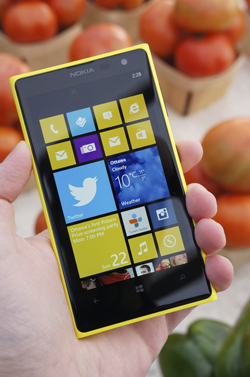 To call me a mobile photography fan would be an understatement: it’s all too common to find me shooting flower macros when I should be enjoying the scenery. You can imagine that I was over the moon, then, once Nokia launched the Lumia 1020 in Canada back in October. I picked one up to see how it would stack up against other mobile phone cameras — and whether I could afford to leave my “big” Sony NEX-5N at home.
To some extent, I can. The biggest appeal of Nokia’s 41-megapixel shooter is undoubtedly its zoom. It’s not just that I can get closer to distant subjects. It’s that I can get just the right framing for a close-up without having to get overly cozy with my subject. The experience is almost like shooting with a constant-aperture zoom lens on a DSLR, since the brightness and depth of field largely stay the same regardless of distance. What’s more, Nokia Camera provides a level of control I’m not used to in mobile photography. I’ve captured long exposures and other shots that are tough (if not impossible) to pull off using other smartphones.
The image quality also lives up to my expectations… usually. Colors pop in most images, and it’s easy to focus on just the right object in a given scene. Low-light performance is also superb. The Lumia 1020 doesn’t quite have the 920′s almost surreal ability to take bright photos in the dark, but it’s one of the few phones I’d willingly use for night shots. Color accuracy is a sore point, though. As I’ve seen on the Lumia range since the 800, the 1020 occasionally captures sickly hues. It’s not a dealbreaker when the flaw only creeps up in certain (usually dim) lighting conditions, but it’s frustrating when I have to either retake a picture or settle for an oddly tinged image.
As good as the Lumia 1020 is, though, there’s one major flaw that would prevent me from getting the phone again if I had to: the Lumia 1520. It “only” has a 20-megapixel sensor, but its faster performance and superior display are easily worth the step down in picture detail. I don’t regret owning the 1020, but I see it as more of a niche device these days. It’s what you get if you crave image resolution above all else, or if you have to get one of the best Lumias that fits comfortably in one hand. Me, I’d like something a little more futureproof.
– Jon Fingas
Filed under: Cellphones, Mobile, Nokia
 AIVAnet
