



Samsung, Nokia join 5G trials in Japan, but crazy speeds still far away

Source: NTT DoCoMo

Nokia Refocusing on HERE Maps Integration for iOS and Android [iOS Blog]
A pair of LinkedIn job listings spotted by Nokia Power User is being interpreted as a sign that Nokia’s HERE mapping and location services may be returning to iOS, but Nokia’s Pino Bonetti points out that the company is simply focused on delivering SDK tools to allow third-party developers to incorporate HERE maps into their apps.
Hi guys, just to clarify, a mobile SDK is not an app. We are providing tools to our partners so that they can build apps with our maps. We already announced this on our blog (HERE Three Sixty) and you can already see some action: Amazon is using our maps in their Kindle Fire, Deutsche Telekom is using our maps for their Arrival Control app on iOS and Android.
With Microsoft having closed its purchase of Nokia’s devices unit late last month, a scaled-down Nokia will need to focus on other areas where it holds a leadership advantage, and HERE is one way Nokia can leverage its NAVTEQ mapping expertise.
As for a standalone HERE app for iOS, it does not appear that Nokia has any public plans to return to the platform. Nokia’s HERE Maps app was previously available to iOS owners, but the app was pulled by Nokia last December due to compatibility problems with iOS 7. The company put the blame for the removal on Apple, claiming that changes in iOS 7 “harm the user experience.”

The job listings seek experienced developers to work on the company’s mobile engineering team as they assist in the building of “advanced location-based services applications for the Android and iOS platforms.”
As an Android / iOS developer you will be a key member of our growing mobile engineering team, developing industry-leading mobile SDKs / applications. This is an experienced position that requires fluency in the latest Java capabilities and improvements in the Android and iOS SDK. The ideal candidate is motivated to explore and deliver the best possible solutions to our customers.
Formerly known as Nokia Maps and Ovi Maps, the HERE service uses the Nokia-owned NAVTEQ mapping database to provide navigation services, transit maps and points-of-interest information. Nokia HERE is one of three business units remaining after Microsoft acquired Nokia’s mobile devices and services business.
HERE is attempting to gain traction in a crowded iOS marketplace dominated by rival Google Maps, iOS Maps and other third-party apps from Navigon and TomTom. After a rocky start in iOS 6 and some improvements and visual changes in iOS 7, Apple is rumored to be bolstering its Maps application in iOS 8 with new transit information, expanded points of interest, and improved cartography.

Cash-rich Nokia invests $100 million to boost connected car tech

Despite a huge influx of Microsoft dollars, Nokia still has to make a living in its new handset-free order and it looks set to expand one of its most profitable apps: Here. It just launched a $100 million connected car endeavor through the Nokia Growth Partners (NGP) fund to invest in technological innovations around travel and mapping. The purpose is to “grow the ecosystem around Here’s mapping and location products” for cars by investing in companies developing such tech. Now that it’s no longer wedded to Windows Phone, it’s also pushing for native Android and iOS apps, judging by some LinkedIn ads sniffed out by NPU. One seeks iOS and Android developers to produce “industry leading mobile SDKs,” while the other is looking for Here Android developers for crowd mapping. We imagine Microsoft will remain a steady customer for Here and other Nokia apps, which are some of the best on WP8. And giving Android and iOS users a solid mapping alternative can’t hurt either.
Filed under: Cellphones, Transportation, Software, Mobile, Nokia
Via: PhoneArena
Source: Nokia, Nokia (Linkedin) (1), (2)
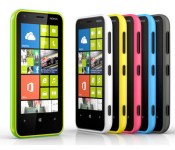
How would you change Nokia’s Lumia 620?

When Nokia launched the Lumia 620, it looked as if the company had perfected the formula for what an entry-level smartphone should be. The hardware and performance was great despite the slow internals, Windows Phone 8 worked well and it was priced to move. A year later and the Moto G may have supplanted this as your go-to budget device, but we want to know your feeling on what the last 12 months with the 620 has been like. What do you love, what do you hate, and what would you change?
Filed under: Cellphones, Mobile, Microsoft, Nokia
Source: Engadget Product Forums
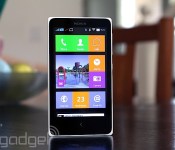
Nokia X review: What happens when Nokia makes an Android phone?

For a company now under Microsoft’s rule, Nokia has serious grit. The phone maker announced an Android phone called the X just two months before completing its merger with Microsoft. Even more intriguing is the fact that this is no run-of-the-mill Android device: The X comes with a Windows Phone-like launcher, offers Microsoft services and will be sold for around $120 in developing markets. While it may not be a powerful smartphone, it has many unique qualities that help it stand out from the low-end crowd. What’s it like, and should Microsoft invest in its success?
Hardware
The X doesn’t stray from Nokia’s signature design language. In fact, if I were to briefly see it in the wild (not knowing what it was), I’d easily confuse it for an Asha 500-series device. Just like the Ashas, the X has square corners, straight edges, a large bezel and a removable plastic back cover with a matte finish, although it lacks the transparent casing of the Ashas. My review unit is a white, dual-SIM Nokia X, but it also comes in black, blue, yellow, red and green.
Everything about the X looks and feels simple. A volume rocker and power button grace the right side, while a micro-USB port and 3.5mm headphone jack are located on the bottom and top, respectively. Keeping with Nokia’s usual style, the left edge remains devoid of any buttons. And just like the Asha 503, the front of the X features only a capacitive back button and earpiece. It lacks a front-facing camera, and when you flip the phone over, you’ll notice a rear 3.2-megapixel camera with no LED flash.
Fortunately, I had no problem holding the 4-inch, 10.4mm-thick device, although these days, such a handset is considered quite small. If you’re coming from an Asha or older 3.5-inch iPhone, you’ll likely appreciate the size of the device; just to put things in perspective, it’s 5mm wider and 1mm thicker than the iPhone 4s. Nokia will come out with a 5-inch version of the device known as the XL in the near future, so hang tight for a little longer if you’d rather go with something bigger.

Because it’s an inexpensive handset (it starts at $123 USD), the X was never intended to be a lavish device. It exists primarily to bring a modern smartphone OS to developing markets at a lower cost, so the specs are about as minimal as you can get these days. It comes with a low-power processor, WVGA display, limited internal storage (1.2GB user-accessible), small battery and so on. In other words, it’s ideal as someone’s first smartphone.
The X uses a 4-inch IPS LCD panel with WVGA (800 x 480) resolution. At a pixel density of 233 pixels per inch, the display is reasonable compared to other Android phones sold at around the same price. As expected from this kind of screen, the viewing angles are decent and whites are bright, but unfortunately, colors are unsaturated and there’s a lot of light unnecessarily bleeding out from the sides of the display. Those rough patches aside, the screen is actually pretty good for such an inexpensive device.
For connectivity, the X is a basic, entry-level 3G device suited for developing markets, though it sports a limited number of frequencies. It comes with quad-band GSM/EDGE and dual-band (900/2100) HSPA, which maxes out at 7.2 Mbps down and 5.76 Mbps up. You’ll also get WiFi 802.11b/g/n, Bluetooth 3.0 and GPS.
Software

The one area of the X that should appeal to both power users and first-time smartphone buyers alike is the firmware. In short, it’s unlike anything anyone has ever seen. Since the X is positioned between Nokia’s Lumia series and the Asha lineup, it’s not surprising that it uses a proprietary interface that takes elements from both devices, even though it technically runs on Android AOSP (version 4.1.2, to be exact). This means you can still use most apps, widgets and launchers supported on the platform, but just like on many Chinese devices running Android, you won’t have access to Google Play Services like Gmail, Contacts, Calendar and so on.
Nokia’s Android launcher

The default launcher on the X is tile-based, much like Windows Phone. The tiles can even be resized — two different options are available — and you can change the color of each one to fit your own way of organizing the phone. There’s enough space for three small tiles, or one large and one small tile, if you prefer. However, this system differs from Windows Phone in that Live Tiles aren’t supported, so most tiles don’t change at all when you make them larger (only specific ones, such as the gallery, add more functionality to the tile when enlarged).
You won’t have access to a standard Android app tray, but you can create folders if you like to download a bunch of apps. This action is done by long-pressing any tile, which also allows you to move apps around and add widgets at your leisure.
There are plenty of other gestures that you’ll need to learn as well. Tugging down on the launcher brings up a search bar (think Spotlight for iOS 7). Swiping down from the top opens up a type of quick-settings menu, which shows toggle switches for connectivity and music, as well as a list of devices or networks you’re connected to. There’s also a shortcut to your settings. Swiping up from the bottom reveals a menu that corresponds with whatever app you’re using.
Finally, a swipe to either the left or right brings up the Fastlane. This is a feature carried over from Asha (you can even trace its roots back to MeeGo), and it serves as Nokia’s version of the notification menu. It shows recently opened apps, notifications, alarms and your current music selection. Some alerts, such as texts and calls, are actionable, so you can respond to them within Fastlane itself; if you want to clear out your alerts, you can do it individually or all at once. You can also customize the list so unwanted items are filtered out. (Pro tip: Tapping the back button from the home screen will take you to Fastlane as well.)
There’s also a special lock screen that shows your recent notifications. Swipe left on an individual alert to remove it, or swipe right to jump directly into that app. You can also swipe up from the bottom to clear them all out, if you don’t want several notifications taking up all your screen space.
Just like on Nokia’s latest Lumia devices, the X features a Glance screen that lets you view the date, time and symbols for each type of notification awaiting you. Sometimes it works; sometimes it doesn’t. Additionally, you can double-tap on the screen to wake it, but I couldn’t get this to work very consistently. Unlike most Android devices, which offer reasonable multitasking options, the X is much more restrictive. You can only get to the Fastlane from the home screen, which means you can’t multitask without exiting your current app completely.

Nokia doesn’t bombard you with Microsoft services, but it does make them more readily available than, say, their Google equivalents. Skype is preloaded, but you can also get OneDrive and Outlook in the Nokia Store. Curiously, it almost feels like the company wants to avoid looking like it’s blatantly pushing Microsoft products, even though that’s exactly what it’s trying to do.
That doesn’t mean Nokia’s avoided bloatware altogether, however. You’ll still get too many preloaded apps: Opera browser, WeChat, Viber, BBM, Nokia MixRadio, Here Maps and 10 games. Many of them can be uninstalled, aside from the Nokia-branded offerings. Most core apps — dialer, messaging, calendar, camera, alarms, internet, music and email, for instance — were made by Nokia, and are thoughtfully designed. (I especially like the alarm, which was inspired by the MeeGo-based N9.) Even the keyboard has a Nokia flair that offers neat swiping gestures.
Using Android on the X

The best part is: If you don’t like Nokia’s interface, no sweat — just download a new launcher and use that as your default instead. I tried a few and each one made it feel like I was using a real Android device, but there are still some catches you should be aware of. Most importantly, Google Play Services aren’t allowed on the X (without rooting, at least). This means you don’t have the full suite of the company’s services: Play Store, Music, Games, Calendar, Voice, Google+, Contacts — the list goes on. Primarily, this is because Nokia wants to focus on selling Microsoft’s offerings instead, including Skype, Outlook, OneDrive and so on. This is actually a good idea on Nokia’s part, when you consider the first-time smartphone buyer (or anyone else who hasn’t been fallen under Google’s spell): If Windows Phone is too expensive, at least the X is a cheaper option that introduces users to Microsoft’s ecosystem in a roundabout way. In theory, once consumers are able to buy fancier phones, they’d be more inclined to give WP a closer look because they’re already tied into Microsoft services.
This kind of setup is enough to confuse most users. Along with this mix of Microsoft services, Windows Phone and Asha, the X is, at its core, an Android device. Thus, it supports most Android apps, but the means of obtaining those apps are not as cut and dry as they should be. The Nokia Store is the official place to go, but it doesn’t offer the same library as the Play Store. Instead, Nokia curates apps: It invites developers to add lines of code that make their apps compatible with Nokia’s special UI, and then submit their apps and wait for its approval. It’s quite the process, and judging by the limited number of available apps in the Store, it seems that a lot of developers haven’t bothered with it yet.
So what happens if the app you really want isn’t in the Nokia Store? To Nokia’s credit, the company’s made it possible to download or sideload any app you want — though it isn’t easy. If you can’t find the app you want in the Nokia Store, it suggests a list of third-party app stores for you to check out. Currently, it lists SlideME, Aptoide, 1Market and Yandex as options, and, by using this method, I was able to get the app I wanted around 95 percent of the time. Of the numerous searches I conducted, only a small handful produced no results. The problem is that it takes much longer to find the app you want (if you find it at all), and you have to go into individual stores if you’re looking for an update. Lastly, you can load any APK file onto the phone via microSD and internet links, though you won’t get updates unless you manually sideload them.
Camera

There isn’t much to say about the fixed-focus 3.2MP camera. The pictures aren’t fantastic (especially for Nokia), but it’s not fair to hold such an inexpensive phone to standards set by fancier devices. Since the X is intended for many first-time smartphone users on a limited budget, this camera will fit their needs quite well. It’s got a 1/5-inch sensor size and f/2.8 aperture lens, and Nokia even throws in a few manual settings to sweeten the deal, including ISO, white balance, exposure, sharpness and face detection.
Predictably, you’re not going to get great images at night. The phone simply doesn’t have the right specs to do low-light shots any justice. That said, the photos I took during the day actually looked about as good as one would expect from a camera like this; while the limited dynamic range and lack of autofocus make it difficult to have an enjoyable experience, I came away impressed by the color reproduction.
Performance and battery life

At such a low price point, the expectations for a phone’s performance differ from that of a midrange or flagship model. The X comes with a 1GHz dual-core Cortex-A5 Snapdragon S4 Play, an Adreno 203 GPU and 512MB RAM (the X+ and XL will come with 768MB). In plain English, this means it’s good enough to handle most basic phone functions, but it’s geared toward first-time smartphone users and developing markets, and isn’t meant to keep up with high-end, quad-core smartphones.
Looking at it from that point of view, I wanted to see a phone that’s usable, responsive and consistent. I didn’t expect it to make computations incredibly fast, nor did I need it to load games like Asphalt 8 on a dime. Still, it had to support all of the core apps and a few extras without crippling the user experience.
With these criteria in mind, the X has its share of good and bad traits. The mesh of various UI elements from different platforms will drive an Android aficionado nuts, but the X is also designed to keep things simple. As long as the user isn’t venturing too far into the weeds (sideloading apps, for instance), it’ll be easy enough for someone to figure their way around the phone. And while it may be a bit confusing for some, the learning curve and user experience are more reasonable than an Asha phone. In fact, as time goes by and the price of the X goes down, I wouldn’t be surprised to see this series completely replace the Asha lineup.

However, it isn’t a very responsive device. I noticed a lot of delays between my touch and the screen indicating that I’d done anything. There were plenty of times in which I had to repeat gestures over and over until it finally figured out what I wanted it to do. And at least a couple times a day, I long-pressed the back button to go to the home screen, only to be greeted by a lengthy pause and “please wait” message. I also noticed that the screen would randomly flash on and back off again, and it sometimes turned on in my pocket without being prompted (this caused frequent redials and misfiring emails to people I rarely talk to anymore). At times, notifications showed up later than they should have, and occasionally they didn’t even show up at all.
Because of all this, I can’t say that the X has consistency. Too often, I’d repeat the same action only to get different results. A handset that has a mind of its own isn’t something I can tolerate in any phone, regardless of how much it costs. In addition, it was often a pain to get even the most basic services set up on the X.
Call quality is mediocre at best, as most of my conversations have been full of static and the other end of the line is typically muffled. Additionally, my experience connecting the X to Bluetooth devices was inconsistent. On the other hand, the meager 1,500mAh battery lasted longer in regular smartphone use than I would’ve expected, although processor-heavy tasks did worse. After a day of moderate use, my review unit still had 30 percent leftover, and light phone users should be able to squeeze out at least two or three days, if not more. The phone didn’t fare well in our endless-video rundown test, making it only four hours before dying; in the X’s case, this isn’t so much an indicator of a horrible battery as it is the inability of the processor to handle such activities efficiently.
The competition

Pricing will vary depending on region, but the X officially retails for around $120. It’s positioned between the higher-end Lumias and lower-end Ashas, although, as I mentioned earlier, I wouldn’t be surprised to see the X make the Asha lineup irrelevant if it drops in price in the next couple years. Its current cost, however, is about the same as the Samsung Galaxy Star Pro, a comparable device with similar specs. The X has 3G support and a better camera, but it also has a confusing ecosystem based on Microsoft services; the Star Pro, on the other hand, has full access to Google services and features a more familiar TouchWiz interface. It’s also uncertain what kind of support Nokia will offer the X now that it’s officially under Microsoft’s wings, so it may make more sense to go with something like the Star Pro, which has a more robust ecosystem.
Wrap-up

Microsoft’s in a pickle. On one hand, its brand-new acquisition just came out with a product running its competitor’s OS; on the other, that same product might be key to gaining mindshare in developing markets, which is one of the bloodiest battlefields in mobile right now. It’s hard to feel confident in the X’s future because Microsoft may choose not to invest in the series, focusing resources on cheaper Windows Phones instead. Because of this uncertainty, the X needs to be an absolutely stunning device and a fantastic value if I’m going to recommend it — and unfortunately, it’s not.
For its cost, it has respectable features and solid hardware, but it doesn’t have enough redeeming qualities to help it pull ahead of its competition. The specs are comparable to a sub-$150 Android smartphone. However, the ecosystem is more confusing and the performance doesn’t quite meet my expectations for a budget device. Plus, who knows how long Microsoft will keep it around and update it? Nokia’s still a trusted brand, and it’ll get a lot of interest in developing markets regardless of the competition, but I was ultimately too frustrated to recommend this over other similarly priced models.
The X works better as a possible Asha replacement than a full-on smartphone experience, and perhaps that will happen in the next year or two. I’m more confident in the performance of low-end Windows Phones like the Lumia 520 than I am in comparable Androids, and a dual-SIM Lumia in this price range would be a much more compelling deal.
Edgar Alvarez contributed to this review.
Filed under: Cellphones, Wireless, Mobile, Microsoft, Nokia, Google

Good luck, Microsoft: Nokia’s phone sales are down 30 percent

Nokia, at least in the form that we once knew it, is no more. The handset business has been cleaved off and sold to Microsoft, but that union isn’t beginning on a happy note. In Nokia’s final earnings report as an independent phone manufacturer, the outfit revealed that it isn’t just feature phone sales that are dwindling, but that people are spending less on Asha and Lumia handsets too. In fact, the company’s overall sales fell by 30 percent compared to the same period in 2013. Nokia blamed the lack of interest in its low-end devices by saying that the industry was in a race to the bottom, while at the top, it let out the usual refrain of “competitive industry dynamics” — a polite way of saying that Nokia and Microsoft have been unable to topple the behemoths of Android and iOS. That’s been proven with the latest Kantar figures, where it remains a long way behind the big two in both the US and China.
But what about Nokia, the company that, post-merger, is a mapping, telecoms and research outfit based in Finland? The report details that there’s $2.8 billion in the bank, not counting the cash that Nokia will receive in payment for its phone business, but without a failing handset manufacturer to prop up, the picture’s looking a lot rosier. In fact, Nokia’s patent licensing business pulled in roughly $119 million in profit in the last three months, while HERE maps brought in $13.8 million and the networks unit adding a further $300 million. Under new CEO Rajeev Suri, the company is planning on becoming a research and mapping giant that’ll feed the industry with lots of juicy tech and provide an alternative to Google’s location-based data. Whatever becomes of it now, however, we’ll be keeping our eyes on ‘em to see how they do.
Filed under: Cellphones, Mobile, Microsoft, Nokia
Source: Nokia (.PDF)

Nokia moves on without its phones under new CEO Rajeev Suri

Where ever the future of Nokia lies, starting on May 1st it will get there under the leadership of new CEO Rajeev Suri. Known to be on the short list of candidates, he’s been with the company for over 20 years and took over as CEO of Nokia Solutions & Networks (aka Nokia Siemens, now renamed just “Networks”) in 2009 — experience that will prove relevant to the first of three focus points for Nokia going forward. Besides expanding its Networks business, Nokia is also investing in its Here services for location and mapping, and Technologies, which will license out its existing patents and develop new tech. Nokia is forming a whole new executive structure with other executive moves, as interim CEO Risto Siilasmaa goes back to his role as solely Chairman of the Board of Directors and Michael Halbherr takes over as CEO of Here. In a video address (embedded after the break), Suri says he anticipates that coming changes in tech “will be as profound as the creation of the internet,” and sees opportunities in front of Nokia that are “as great as I have ever seen.”

Now that the sale of “substantially all” of its Devices & Services business to Microsoft is complete, the remaining portions of Nokia will focus on broader problems for the telecom industry. We’ve seen hints at what else Nokia is capable of in the development and application of its Here mapping technology, which the company says can be found “in four out of five cars in North America and Europe with integrated in-dash navigation.” There’s even time for a shot at Google, as Suri points out that “Our view is that only one other company has location services that come close to the depth and breadth of those from HERE – and HERE has the advantage of being independent from any operating system or single business model” To develop new tech, it’s seeking out external inventors through the “Invent with Nokia” program, and its Networks business counts 90 of the world’s top 100 phone companies among its customers. The new company will continue to operate under the Nokia brand, and we’ll be watching closely to see what its post-Lumia trajectory is like.
Source: Nokia, Nokia (YouTube), Here Blog
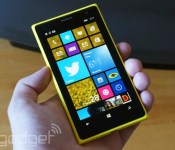
Windows Phone thrives in Europe, but struggles in China and the US

Microsoft’s quest for smartphone market share is hitting a few roadblocks, it seems. Kantar estimates that Windows Phone is still gaining ground in Europe, where it’s up year-over-year to 8.1 percent of sales in the first quarter of 2014. However, it’s taking a bruising in other areas. In the US, Windows swung from increases this fall to a slight dip in the winter; while it’s still doing relatively well at 5.3 percent of US share, it’s not posing much of a threat to Android or iOS right now. The platform also took a drubbing in China, where its share was nearly cut in half to exactly one percent thanks to the rise of budget Android handsets.
Not that it was all sunshine and roses for the industry heavyweights. Android made strides in China, the US and parts of Europe, but it sank in Australia, Europe and Japan. Some of these losses were due to a recovery from Apple, according to Kantar. The iPhone is still having trouble in China and the US, but it clawed back share in Australia and Europe. It’s also dominant in Japan; 57.6 percent of local smartphone buyers chose iOS hardware this quarter.
Whether or not these trends continue through the spring isn’t certain. Windows Phone may get a helpful boost from the launches of the Lumia 630 and 930, while Android may get a lift from Samsung’s Galaxy S5 flagship. There’s also the wildcard of the 8GB iPhone 5c. Although it’s not dramatically cheaper than its 16GB counterpart, it could draw a few mid-range buyers to Apple. It’s safe to say that Microsoft will be watching very closely — now that it owns Nokia’s device business, it has even more incentives to see Windows Phone succeed.

Filed under: Cellphones, Mobile, Apple, Microsoft, Nokia, Google
Source: Kantar Worldpanel

Weekends with Engadget: Nokia joins Microsoft, lost Andy Warhol artwork and more!

Welcome to Weekends with Engadget, a quick peek back at the top headlines from the past seven days — all handpicked by the editors here at the site. For even more action, subscribe to our Flipboard magazine!

Nokia is now officially part of Microsoft
Well, it’s finally official: Nokia is now one with Microsoft. What does that mean for the of the Nokia X and Lumia handsets? Read on to find out exactly what you need to know about the acquisition.

A traveler’s guide to in-flight WiFi
Just as airlines are becoming more friendly towards gadgets, in-flight WiFi is making great strides at 30,000 feet. Read on as Zach Honig, our own resident travel expert, explains the newest connectivity options from several major airlines.

Netflix data didn’t feed House of Cards’ success, ‘the bliss of ignorance’ did
If you were turned off to Netflix’s House of Cards after the serie’s brutal opening scene, you wouldn’t be alone. But regardless of the negative feedback, Beau Willimon, the man responsible for the show’s development, says that his only responsibility is to “tell a great story.”

Defiantly plastic: designing the Galaxy S5
Many of you might be wondering why the Samsung Galaxy S5 is crafted from polycarbonate instead of metal. According to Senior Product Designer Dong Hun Kim, plastic is warmer, friendlier and better symbolizes the company’s design concepts.

Sony Xperia Z2 Tablet review: A top-tier slate with a familiar face
The Xperia Z1 slate was Sony’s debut into the high-end tablet market. Now, the company’s back for round two with the Xperia Z2 Tablet — and it looks a lot like its sibling. The Z2 may be more of a refinement than exciting new product. But hey, if it ain’t broke, don’t fix it.

Google Senior VP and head of Google+ Vic Gundotra is leaving the company
Earlier this week, Vic Gundotra, the man responsible for Google+, announced he’s parting ways with Google. After eight years of service to the Mountain View company, Gundotra fittingly took to G+ and explained that “now is the time for a new journey, a continuation.”

Lost Andy Warhol artworks discovered on Amiga floppies from the ’80s
Apparently, pop artist Andy Warhol crafted a small, previously unseen collection with an Amiga 1000 back in 1985. And thanks to the collaborative efforts of several artists, archivists, curators and the Carnegie Mellon University Computer Club, the works have been recovered from a whopping 41 floppy discs.

Google Glass now available to anyone, may be prepping for public launch
Move over Google Explorers. As of this week, anyone can splurge on their very own Google Glass headset, not just those with an invite. Now you can finally spend the $1,500 of cash that’s burning a hole in your back pocket.

Samsung opens its own Innovation Museum, we take an early tour
Samsung recently opened its new Innovation Museum to the public, offering a stylish look at the history behind some of the greatest technological milestones of our time. Fortunately for you, our own Mat Smith already visited the complex for a tour.

Samsung Gear Fit review: a messy merger of fitness band and smartwatch
Samsung’s Gear Fit is an interesting blend between a smartwatch and fitness tracker. Sure, it’s comfortable, has a beautiful display and a built-in hear rate monitor, but its software leaves much to be desired. As is, the Gear Fit isn’t worth $200.
Filed under: Misc

Daily Roundup: Nokia joins Microsoft, a traveler’s guide to in-flight WiFi, and more!

You might say the day is never really done in consumer technology news. Your workday, however, hopefully draws to a close at some point. This is the Daily Roundup on Engadget, a quick peek back at the top headlines for the past 24 hours — all handpicked by the editors here at the site. Click on through the break, and enjoy.

Nokia is now officially part of Microsoft
Well, it’s finally official: Nokia is now one with Microsoft. What does that mean for the of the Nokia X and Lumia handsets? Nadella and Co. promised to continue supporting both lineups, but only time will tell, right?
A traveler’s guide to in-flight WiFi
Just as airlines are becoming more friendly towards gadgets, in-flight WiFi is making great strides at 30,000 feet. Read on as Zach Honig, our own resident travel expert, explains the newest connectivity options from several major airlines.
Netflix data didn’t feed House of Cards’ success, ‘the bliss of ignorance’ did
If you were turned off to Netflix’s House of Cards after the serie’s brutal opening scene, you wouldn’t be alone. But regardless of the negative feedback, Beau Willimon, the man responsible for the show’s development, says that his only responsibility is to “tell a great story.”

Watch this six-way trailer for Evolve, the latest shooter from the makers of Left 4 Dead
Turtle Rock Studios, the team behind Left 4 Dead, have a brand new co-op shooter incoming called Evolve. What’s more, the game’s trailer is interactive, allowing viewers to switch between the perspective of each player with just a click of the mouse.
 AIVAnet