


Siri Offers Humorous Responses to Questions About Hit Game Pokémon Go
Apple’s virtual assistant Siri is known for offering up funny responses to a range of questions, and Apple’s Siri team often puts time and effort into providing Siri with answers and comments on current events. This summer, augmented reality game Pokémon Go has become a worldwide phenomenon, and as discovered on Reddit and by 9to5Mac, Siri will now answer questions about the hit game.
A question like “Siri, what’s your favorite Pokémon?” receives answers like “That yellow species with an electrostatic tail of variable lengths is rather cute” or “Polymaths prefer Poliwags.” Asking Siri if it likes Pokémon Go also results in humorous answers like “I like pocket monsters. Pocket assistants, too.”
Because Siri draws in information from sources like Wolfram Alpha, which has offered information about Pokémon since 2013, the personal assistant can also answer specific questions you ask about Pokémon. Data available includes Pokémon type, abilities, stats, evolutions, and more specific comparative questions about which Pokémon have the highest attack, fastest speed, and more.

While fervor over Pokémon Go has died down somewhat in recent days due to controversial feature changes and decisions made by Niantic Labs, Pokémon Go set an App Store record for the most ever downloads during its first week of availability.
It is considered the biggest mobile game in U.S. history and has been downloaded more than 100 million times. According to estimates, the game brings in more than $10 million in daily revenue across the iOS and Google Play app stores.
To find other questions Siri gives funny answers to, Siri.io, a new website that offers a comprehensive list of Siri commands is worth checking out.
Tags: Siri, Pokémon GO
Discuss this article in our forums
Dash Charge for OnePlus 3 explained
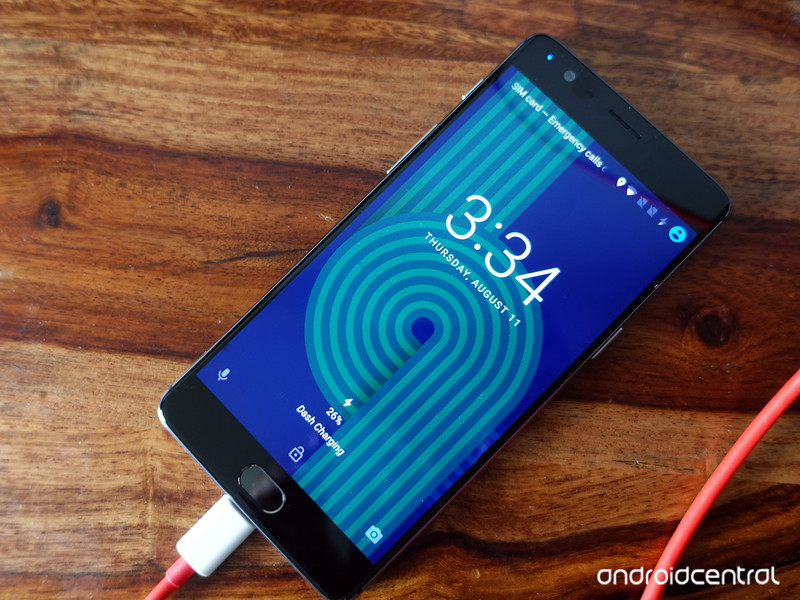
Dash Charge is awesome.
OnePlus rolled out its Dash Charge fast charging option in the OnePlus 3, which allows the phone to go from 0 to a 60% charge in just 30 minutes. Dash Charge is licensed from OPPO, the parent company of OnePlus, and is different from the majority of quick charging options available today, most of which leverage Qualcomm’s Quick Charge technology.
Here’s what you need to know about Dash Charge.
A primer on fast charging

A standard LiPo battery (which is what’s inside your phone) is highly reactive, which is why phone manufacturers have several safeguards built into the charging circuitry. Based on the depletion level, batteries can take in more power, and it is on this principle that fast charging works.
Qualcomm’s Quick Charge technology relies on delivering a higher voltage to the battery to expedite charging time. With Quick Charge 3.0, Qualcomm introduced optimizations that allow devices to constantly adjust voltage over the course of the charging cycle. Quick Charge 3.0 certified chargers can deliver voltages ranging from 3V to 20V in 200mV increments.
Quick Charge 3.0 is widely used, with the likes of the HTC 10 and LG G5 offering the fast charging option. The chip vendor licenses the technology to third-party OEMs for free, which is how companies like Samsung can offer Adaptive Fast Charging on the Galaxy S7, and more recently the Galaxy Note 7 — though those models use the older, slightly less dynamic Quick Charge 2.0.
Qualcomm uses high voltages, whereas OPPO pushes more amperage.
Meanwhile, OPPO has its own fast charging solution called VOOC (Voltage Open Loop Multi-step Constant-Current Charging). The fast charging system is used in the Find 7, the F1 Plus, the R7, and other OPPO phones, and now on the OnePlus 3 as Dash Charge. OPPO uses dedicated circuity in the wall unit for heat management and dissipation, which is why you can only get Dash Charge speeds with the bundled wall charger (or the $30 Dash Charge car charger) on the OnePlus 3.
The key difference between the two fast charging technologies is that while Qualcomm uses higher voltages to charge batteries, VOOC relies on delivering a higher amperage. For instance, Quick Charge 3.0 goes up to 6.5V at 3A, creating 19.5W, whereas VOOC delivers 5V at 4A to attain 20W. And that has a few advantages.
It’s all cool

One of the main benefits of VOOC (and Dash Charge) is its ability to keep temperatures low while charging. The fast charging option allows you to watch videos or play games while the phone is charging, with no net drop in charging speeds. That isn’t the case with Quick Charge, as the higher voltages invariably lead to the phone reverting to normal speeds to prevent overheating.
With Dash Charge, you can play games or watch videos while charging your phone without worrying about overheating.
Even though the OnePlus 3 can charge up to 60% in 35 minutes, it takes slightly over 40 minutes to go from 65% to a full charge. That’s to prevent damage to the battery (and in a way, to you), with the wall charger limiting output at 2A after hitting 75% and going even lower after reaching 85%. The microcontroller unit inside the phone constantly monitors the charge level to determine the desired amperage to be delivered.
The main disadvantage with Dash Charge is that you need to use the bundled wall unit to charge the OnePlus 3, as OPPO is yet to license the technology to third-party vendors. Also, as the technology pushes more amps to your phone, so you should probably stick to using the provided cable as well.
However, you can use your Dash Charge wall unit to charge other phones. I regularly use it to charge the LG G5, and it is just as fast as using Aukey’s Quick Charge 3.0 charger.
Your turn
What do you think of Dash Charge on the OnePlus 3? Let us know in the comments.
OnePlus 3
- OnePlus 3 review: Finally, all grown up
- OnePlus 3 specs
- OnePlus 3 vs. the flagship competition
- Latest OnePlus 3 news
- Discuss OnePlus 3 in the forums
OnePlus
Homido’s V2 headset is a huge upgrade to your VR experience!

Homido V2 brings some much needed upgrades to a great VR headset.
It shouldn’t be a surprise that we’ve started to see more elegantly designed headsets as we move into the future of VR. Manufacturers are starting to figure out how to improve their initial VR experiences, and as an early mover in this space the folks at Homido are well positioned to deliver an upgrade of their initial offering. The creators have taken the time to deliver a larger, better designed, and more comfortable headset for your VR adventures.
Read more on VR Heads!
Motorola talks redesigning its phones, building Moto Mods and more
Motorola has been working on Moto Mods and Moto Z for more than two years, and the company now explains some of the processes that took place behind the scenes. Building a phone that had good battery life and was more durable and thinner than previous phones was quite a task for the company to conquer. Between developing a liquid cooling system and using aircraft grade stainless steel, Motorola was able to keep the phone super thin while not compromising on quality.

From Motorola’s post:
Up until now, your smartphone experience has been limited by your phone’s hardware and software capabilities. When it came to developing Moto Mods, we set out to remove those barriers by creating a phone that changes as your needs change, and does so in a truly seamless way. For example, we wanted to make sure the process for swapping out Moto Mods was as fluid and natural as possible. Our solution: very strong magnets and an automatic connection process that doesn’t require additional steps or rebooting.
It doesn’t end with Motorola though. The company has opened up its Moto Mods Developer Program so that developers will be able to create their own Mods for the phone. To make it even easier to get started, Motorola is offering the same hardware and software development kit it uses internally with those who are interested.
Moto Z and Moto Z Force
- Our Moto Z review!
- Moto Z specs
- Moto Mods custom backs
- Moto Z and Moto Z Force will be Verizon exclusives until the fall of 2016
- The latest Moto Z news
- Discuss in our Moto Z forums
Motorola
Verizon
This modder turned an Xbox One S into a 19-inch laptop you can buy
If you search the web, you’ll discover several hardware hackers (aka modders) who specialise in turning bulky consoles into portable machines such as laptops, but it’s not very often that you’re able to buy these custom form-factors.
Modder Edward Zarick, who created the ‘Xbook One’ laptop, has gone back to his shop with the newer and slimmer Xbox One S and produced what he has dubbed the ‘Xbook One S’. It basically has the guts of the Microsoft’s latest game console and a 19-inch (720p) screen from Samsung. For some reason, the screen has been downgraded, as the original Xbook One had a 22-inch (1080p) display from Vizio. Bummer.
According to Zarick, he was unable to get his hands on a 1080p screen at that size. There’s also no integrated battery, so you’ll need a power source nearby in order to use this thing. Still, his Frankenstein includes two loudspeakers pointed at the player and a strong acrylic case. If this interests you, you’ll need to have deep pockets, because the 500GB one goes for $1,495.
There’s also a 1TB version for $1,545. Shipping is separate, and international shipping will supposedly cost “much more”. You’ll also have to pay a $750 non-refundable deposit upfront to cover the cost of parts, as Zarick makes all these by hand and takes up to three weeks on each.
Yes, ‘No Man’s Sky’ has a few issues
No Man’s Sky landed on PlayStation 4 this week and it wasn’t perfect. Cue a rash of backlash on Twitter, a few dozen angry Reddit threads and a handful of YouTube videos calling creator Sean Murray a liar and a fraud. Ah, the internet. Let’s break down a few of the high-profile glitches that people have found so far:
Those who pre-ordered the game receive a few perks, one of which is a ship that has a hyperdrive pre-installed, negating the need to find a hyperdrive blueprint like the rest of the plebeian galaxy. These cool cosmonauts then rush across the universe and eventually find a new ship to buy — but new ships don’t come with hyperdrives pre-installed. And without the hyperdrive blueprint, these players are out of luck in building a new one. This isn’t a bug, per se, but it is a major problem and a pretty large oversight from the developers at Hello Games.
There are a few workarounds for this issue, until Hello can roll out a fix. If you’re a pre-order superstar, don’t claim your bonus ship until after you’ve finished the hyperdrive tutorial and acquired the blueprint. If it’s too late for that, make sure to transfer your hyperdrive from your current ship to any new ships that you purchase by manually storing it in your exosuit or using the option that moves all upgrades to the new craft.

The second big issue feels like something we’d find in the Destiny forums: a resource exploit. Atlas Stones are one of the most valuable items in the game, since players need 10 of them to reach the center of the galaxy and experience the closest thing the game has to an “ending.” They’re tough to craft, but one glitch outlined by Eurogamer allows players to double their inventories, Atlas Stones and all, simply by reloading a previous save. Once you die in your ship, the game allows you to collect all previous inventory from your grave marker. But, reload a previous save and you’ll have that inventory plus the ability to reclaim the same items from your point of death. If you have an Atlas Stone or another valuable item in your bag, that number is suddenly doubled.
This is a simple glitch to avoid. If you don’t want to cheat, don’t cheat.
And then there’s a question of the game’s “multiplayer” elements. Two players discovered they were near each other (an unexpected feat in a universe of 18 quintillion planets) and staged a meet-up, but their paths never crossed. They streamed the entire thing, and though they encountered the same space stations and landmarks on the same planet, they never saw each other. Even stranger, one player saw a daytime landscape and the other saw night.
Hello Games hasn’t explained why these players didn’t see each other. Murray has said that players would be able to cross paths, theoretically, but it would be highly unlikely to see another player in such a vast game universe. On Twitter yesterday, Murray wrote, “Two players finding each other on a stream in the first day — that has blown my mind,” and, “We want people to be aware they are in a shared universe. We added online features and some Easter Eggs to create cool moments.”
It’s unclear why these two players couldn’t actually find each other during this particular livestream. The players may have been on the same planet, but perhaps they weren’t on the same server (also known as: a cooler version of The Lake House).

These are the biggest issues facing No Man’s Sky in its first week on the PS4. For a game as vast as the universe itself and filled with all manner of neon-stained, Frankenstein planets, creatures and plants, this isn’t a bad starting point. As we’ve discussed at length, the internet has changed how video games exist in the public eye. Players expect games, even boxed console titles, to be updated, patched and improved over their lifetimes. No Man’s Sky is no different — in fact, it’s remarkable.
No Man’s Sky is a massive, unprecedented game created by a small team of developers, and it’s been sold to the public as a AAA experience. This doesn’t excuse any issues with the game, but it does explain them. No game should launch as a completely busted, unplayable experience, but sometimes this happens — and these titles deserve to be called out, especially if they cost $60 and come from AAA studios with budgets of millions.
Despite the marketing hype, No Man’s Sky is not a AAA game. And, more importantly, it’s not busted. The pre-order ship problem is its largest issue and hopefully Hello Games figures out a fix soon. However, by and large, the game works. Not only does it work, but it’s gorgeous, technically astounding, innovative and engaging. And it’s only going to get better.
LG V20: Specs, release date and rumours
LG has announced it will be introducing a successor to the V10 smartphone in September. We also know that it will be called the V20.
In true LG style, there have been a couple of other snippets of information revealed too, even if the exact details of those snippets are still unconfirmed.
This is everything we know so far about the LG V20, including confirmed specs from LG mixed in with a few rumours for good measure.
LG V20: Release date
LG has confirmed that it plans to announce the V20 in September. The company has sent out invites to a press event taking place in San Francisco on 6 September, which is the day before Apple’s iPhone event is expected to happen, as well as the day before consumer electronics show IFA finishes.
The invite reads: “Play More”, along with “The second story begins, LG V20”. There is therefore no doubt that 6 September is the date the V20 official launch will occur, but whether it will hit shelves immediately is not yet clear.
Android Authority / OnLeaks
LG V20: Design
LG has revealed that the V20 will sport a dual-rear camera, as well as a dual screen, the latter of which can be found on the V10. Aside from that, no other official details regarding the design have been confirmed.
Some renders have been published by Android Authority in association with @OnLeaks however, showing the V20 from a range of angles. Based on this leak, it looks like the V20 will sport a circular fingerprint sensor on the rear, along with a protruding dual-camera setup.
The leak also shows a button to the right, coupled with what appears to be a removable bottom, like the LG G5, suggesting the modular design might make its way onto the V20. According to Android Authority’s sources, the V20 will measure 7.7mm slim, aside from the camera part, which will be 8.8mm. It is said to be 159.5 x 78.1mm, which would make it narrower than its predecessor.
Based on the images, USB Type-C appears to be on board and the secondary display from the V10 remains, while the dual camera array on the front looks to have been scrapped. Bear in mind these are merely rumours and renders though, so take everything with a pinch of salt for now.
LG V20: Display
LG hasn’t detailed what size display the V20 will arrive with, though it has confirmed there will be a secondary display like the original device, as we mentioned previously.
The LG V10 had a 5.7-inch main display with a Quad HD resolution that put its pixel density at 515ppi. The secondary display measured 2.1-inches and had a resolution of 1040 x 160.
We’d expect a similar size and resolution for both displays on the V20.
Android Authority / OnLeaks
LG V20: Camera
It has been confirmed that the LG V20 will feature a dual-camera setup on its rear, as we mentioned. LG hasn’t detailed the resolution of the camera offering, but it wouldn’t be too surprising to see the company take from the G5.
The renders don’t show a duo camera for the front like the V10 featured, so again, we wouldn’t be too shocked to see the same front-facing camera sensor as the G5.
The LG G5 has an 8-megapixel front-facing camera. On the rear, there is a 16-megapixel snapper, coupled with an 8-megapixel wide-angle sensor.
LG V20: Hardware
No details on hardware specs for the V20 have been detailed, except for that the new device will feature 32-bit Hi-Fi Quad DAC capabilities. LG claims the Quad DAC will deliver a crisp and clear sound that comes closest to a live performance when compatible wired headphones are used.
Apparently, V20 owners will “feel as if they are carrying around a professional home-audio system in their smartphone”.
Other hardware details have yet to be shared by the company, but we’d expect either the Qualcomm Snapdragon 820, or Snapdragon 821, along with 4GB of RAM. We’d also expect to see USB Type-C as the renders show.
The V10 came in 32GB and 64GB models with microSD support. It offered a battery capacity of 3000mAh, which we wouldn’t expect to see reduced for the V20.
LG V20: Software
The LG V20 is set to be among the first to launch on Android Nougat. In fact, if it launches on 6 September and hits shelves soon after, it will be the first device to come with the software from the box.
Traditionally, the Nexus devices have been the poster boys for the new software build but the HTC-rumoured devices aren’t due until the end of September, beginning of October.
It might be that LG launches the V20 but we may not see it on shelves until after, or at the same time as the Nexus handsets though. You can read our Android Nougat preview to see what software features you can expect with the new build.
LG V20: Conclusion
What do we know so far? Well, the LG V20 will be announced at an event on 6 September and it will feature a secondary display, a dual-camera on the rear and Android Nougat.
It will also sport a Quad DAC for those that want better quality audio from their device. Other than that, LG hasn’t confirmed anything else as yet but that is likely to change before launch day.
We will update this feature as we hear more so keep checking back for the latest.
Audi’s active suspension converts road jolts into electricity
Regenerative brakes capture a lot of wasted energy in hybrid and electric cars, but there’s another energy source automakers could exploit: potholes. To harness those tailbone scourges, Audi developed an active suspension called eROT that replaces hydraulic shocks with electromechanical ones. “Every pothole, every bump, every curve induces kinetic energy in the car,” says Audi’s Dr. Stefan Knirsch. “With the new electromechanical damper system in the 48-volt electrical system, we put this energy to use.
To convert kinetic to electrical energy, the shocks use a lever arm that captures up-and-down wheel motion and transmits it to a 48 volt alternator. It’s then converted into electricity, with an average recuperation output of 100 to 150 watts — as little as 3 watts on a freeway, and up to 613 watts on a rough county road. That’s not enough for your AC, but it could power other accessories and reduce fuel consumption a bit.

Audi’s A3 e-tron plug-in hybrid
As with any active suspension, it’ll also smooth out the ride by adapting to road surface defects and the driver’s style. “With eROT, Audi configures the compression stroke to be comfortably soft without compromising the taut damping of the rebound stroke,” the article explains. It also saves space in a vehicle’s luggage area by eliminating the telescopic shock absorbers.
These aren’t the first regenerative shocks we’ve seen, but Audi says that “initial test results for the eROT technology are promising, thus its use in future Audi production models is certainly plausible.” Before it can be commercialized, however, Audi says the vehicle needs a 48-volt electrical system — luckily, it’s is planning on releasing a hybrid vehicle in 2017 equipped with one.
Source: Audi
Waze will help you avoid traffic jams around big events
Navigation apps like Apple Maps, Google Maps and Waze are good for letting you know when you’re approaching a traffic jam. Waze is taking that task a bit further with its new Global Event Partner Program. The company is teaming up with organizers of big events like marathons and pro sports to keep you from experiencing unnecessary delays. Those partners will now be able to use the Waze Closure tool to input any scheduled closures ahead of an event. TechCrunch reports that event organizers will be able to add details like turn restrictions, lane reversals, parking locations for more than 65 million users.
What’s more, a Live Map can be embedded on an event’s website to provide updated information on traffic flow and more. Waze says that the new effort will help get attendees to and from events faster which will lead to happier fans and, in theory, more merchandise and concessions sales for the venues. Even if you’re not going to the race or game, the app will let you know the areas to avoid when you’re heading out on the roads close to where an event is being held.
The mapping app is launching the new initiative with 20 partners in North America, Latin America, Eastern Europe and Asia. Here in the US, that list includes the Atlanta Falcons (Georgia Dome), Washington Redskins (FedEx Field), Detroit Lions (Ford Field), Washington Nationals (Nationals Park) Atlanta Hawks (Phillips Arena) and the Rock n’ Roll Marathon Series. Timing couldn’t be better for Waze as a new NFL season is set to kickoff next month.
Via: TechCrunch
Source: Waze
SeatGeek aims at Ticketmaster with a new ticketing platform
Hoping to be more than just an online reseller, SeatGeek is making its biggest move against Ticketmaster yet with its own platform for selling tickets directly to events. SeatGeek Open will let event spaces, teams and other groups offer ticket sales within their own mobile sites and apps, as well as SeatGeek’s main app. For the most part, the company is trying to offer a more modern ticket buying experience than what’s currently available on Ticketmaster. That means it’ll focus on mobile purchases, easy reselling (SeatGeek’s bread and butter, after all), and potentially tying in other event purchases (like concession stand items and souvenirs) together with tickets.
“One of the complications of having a single place to sell is there’s no incentive to create a good service,” said SeatGeek cofounder Jack Groeztinger, referring to Ticketmaster’s inability to innovate since it’s practically a ticketing monopoly.
It’s ultimately up to event owners to price their tickets, but SeatGeek’s platform most likely won’t have the same ridiculous service fee overhead as Ticketmaster. And it’ll allow for things like dynamic pricing, which could help event owners more efficiently determine prices without changing things manually.
Sporting Kansas City, the Major League Soccer team, will be the first to use SeatGeek Open. That comes on the heels of the company’s partnership with MLS (don’t be surprised to see other teams move over to the platform eventually). It’s unclear if SeatGeek Open will be able to tempt major players away from Ticketmaster, but for now it could end up being a useful alternative for smaller events.

