


Apple adds SIM-free iPhone 7 and 7 Plus option in the US
Apple has started selling SIM-free iPhone 7 and 7 Plus — on its US website, at least — just like it did for the previous models. It’s the way to go if you’d rather not be tied down with a two-year AT&T, T-mobile, Sprint or Verizon contract. The unit you’re getting is also unlocked and supports both CDMA and GSM networks, so you can take it to any carrier you want to get the best plan for your lifestyle.
The moment you click “SIM-free” on the iPhone 7 section, you’ll get taken through a series of pages where you can choose its finish and storage size. Take note that you’ll have to wait twice as long (six to eight weeks) to get the Jet Black version, which isn’t really surprising, since it sold out way back in mid-September. Also, you’ll have pay for the phone’s full price, though Apple does offer up to 18 months of special financing. If this is the first time you’re getting a SIM-free iPhone, don’t forget to read the FAQ on the website to make sure you know exactly what you’re getting.
Via: 9to5mac
Source: Apple
This paper rolls up into an adjustable flashlight
The latest capsule collection from Design of Things (courtesy of design firm Nendo and Softbank) is just as fascinating as its 3D-printed, prune-able Bonsai trees announced last year. The Paper Torch is equal parts designs, patterns and heritage of Takeo paper (est. 1899), and electronics know-how from a startup that specializes in flat components and printed circuits (est. 2014). The results might be… illuminating. If only I could see it working in person…
Paper that rolls into a working torch. Also: When a company shows off its coolest thing with a video on a 12-inch screen. 😔
A video posted by Mat (@thtmtsmth) on Oct 13, 2016 at 8:32pm PDT
I’m infatuated with the simple design. From what I can tell, as you roll up the paper, it changes the printed circuit: shortcuts are made and more power is delivered to the bulb. A smaller circle pools that light into a smaller spot, while a bigger cylinder ensures gentler dispersion. At least on paper — and in the delightful concept animations. We’ve reached out to all the companies involved to see if we can roll one up for ourselves. If LG can make a TV display that works, I’m sure a flashlight is doable. There’s no price just yet, however. The Paper Torch will launch in search of crowdfunding affection in Japan mid-November.

Source: Softbank
Smart sleeve warns you of impending forearm injuries
Wouldn’t it be great if you could know that you’re about to injure yourself moments before you actually do? A pair of students out of Rice University believe that they’ve developed a wearable that can do just that. Ziel’s M2 Sleeve is a prototype device that’s designed for baseball pitchers to monitor the stress on their forearm. Using a combination of accelerometers, gyroscopes and muscle sensors, the unit can track motion and raise the alarm just before someone does some real damage.
There are plenty of other established performance-monitoring devices that already do a similar job, but Ziel CEO Senthil Natarajan thinks that his firm has an edge. He believes that “coaches don’t have time for a lot of needless data that they can’t understand.” Rather than bombarding people with reams of statistics about throwing speed, the company’s deep learning tech will offer simple, useful advice in real time. That should enable coaches for, say, high school baseball, to hook players at risk of injury or leave pitchers on for longer if they’re doing fine.
Major League Baseball has shown extraordinary willingness in embracing technology, and issued a memo saying such earlier this year. As it stands, players can wear a Motus Sleeve for monitoring elbow stress as well as a Zephyr Bioharness for heart-rate monitoring. While the insights can’t be used in real time, it seems like it won’t be long before coaches will run games using a data-driven approach.
The company is hoping to get the gear ready for consumers in time for the holidays in 2018 and will target high school baseball coaches first. The sleeve itself is expected to cost around $250, while a coaching subscription for each individual user will be priced at $10 a month. That subscription charge is down to the fact that the deep learning insights will develop over time, offering more granular insights the more it’s used.
It’s not just baseball pitchers who could stand to benefit from this technology, however, as any repetitive motion can be analyzed by the technology. That could mean widening the circle to quarterbacks in football, soccer players and factory workers at risk from repetitive strain issues. The firm will, however, have to make sure that it can offer a compelling alternative in what’s becoming an increasingly-competitive market.
Source: Ziel
Sony Details Smartphone Gaming Plans, Launching More Than Five Titles by March 2018
Sony today confirmed that it is working on creating more than five smartphone games for iOS and Android, all expected to launch before March 2018 (via CNBC). The games will be created through Sony’s ForwardWorks subsidiary, which it formed earlier in March of this year as a way to craft “full-fledged game titles” for smartphones.
At the time of that announcement, the company hadn’t detailed the launch plan, or specified how many games it wanted to create, so today marks the first time it talks about its smartphone gaming plans since then. Known in March and reiterated today, the Sony iOS and Android games will first hit Japan and other Asian countries, with the expectation being that each game will then slowly rollout wider after the initial release.
Despite consistently strong sales figures for its PlayStation 4 system, the company’s aim at Japan is an attempt to battle low console sales in a country where users are more likely to spend their time picking up mobile and smartphone games rather than sit in front of a home console system.
“Japan is a market where Sony and other console makers are struggling to sell units. Sony had to react. People are consuming smartphone games like there is no tomorrow,” Serkan Toto, CEO of Japanese gaming consultant and advisory group Kantan Games, told CNBC by phone.
Sony has still yet to confirm which games and franchises might receive the smartphone treatment, but any of its first party franchises published under Sony Interactive Entertainment — Uncharted, Sly Cooper, Ratchet & Clank, God of War — could be fair game. Although the company said that the experiences would be “full-fledged” games, it’s likely Sony will take Nintendo’s approach and optimize each for smartphones, like the latter company is doing in partnership with Apple for the endless runner Super Mario Run.
Analyst Serkan Toto mentioned that since Sony’s intellectual properties aren’t as recognizable as Nintendo’s, the company’s chance for failure might be higher.
“Sony doesn’t have the same power as the Nintendo IP. There is nothing that comes even close to Mario,” Toto said.
“If the first couple of games from that company just don’t work, I think the smartphone game business will see the same fate as the portable game business. Nobody talks about the Vita anymore,” the analyst added, referring to Sony’s PS Vita handheld console.
In the same vein of Sony’s announcement, back in May of 2015 Nintendo revealed that the company was working on 5 smartphone games, in partnership with DeNA, with an end-goal to launch all of them by March 2017. The first was the quickly abandoned Miitomo, followed this December by Super Mario Run.
Animal Crossing and Fire Emblem were originally planned to launch this fall, but Nintendo pushed their debut back to 2017 so as not to overcrowd the end of the year and keep the spotlight on Mario. That still leaves one unannounced Nintendo mobile title to launch before the end of Nintendo’s fiscal year — March 31, 2017 — if the company is to keep to its original promise of five smartphone games by March 2017.
Tags: Sony, PlayStation
Discuss this article in our forums
How to transfer your iCloud calendar to Android
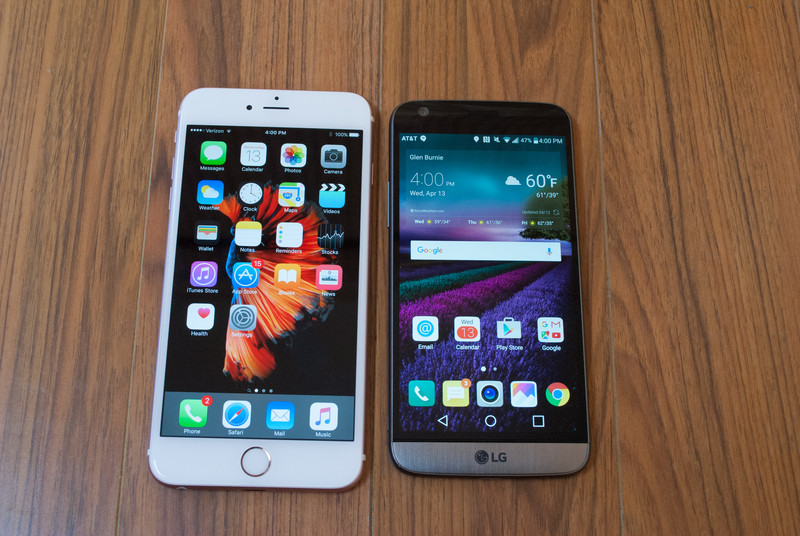
How do I get my iPhone’s calendar onto my new Android phone?
If you’re making the switch from iPhone to Android, you’ll want to take all the things that matter in your life with you, i.e. your calendar, contacts, and other personal data.
Though there’s no real way to “sync” your iPhone’s iCloud calendar to your new Android phone, you can still transfer it over pretty simply.
Here’s how!
How to transfer your iCloud calendar to your Android phone
First thing you’ll need is a Google account set up on your Android phone. If you skipped that in the setup process, you’ll need to create one.
On your iPhone
Launch Settings from the Home screen.
Tap Calendar.
Tap Default Calendar.
Tap the Gmail account you use with your Google calendar.
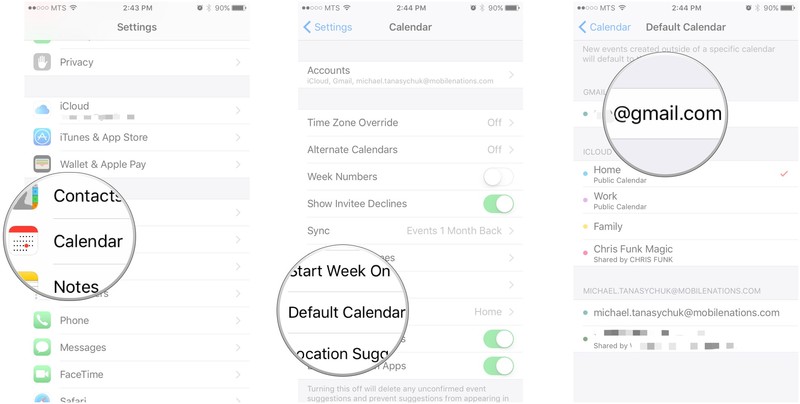
Now any dates you add to your iPhone calendar will be apart of your Google account calendar (in case you keep using your iPhone for a bit). This ensures that everything
On your Mac or PC
Log into your iCloud account.
Click Calendar.
Click the broadcast button next to the calendar you want to share.
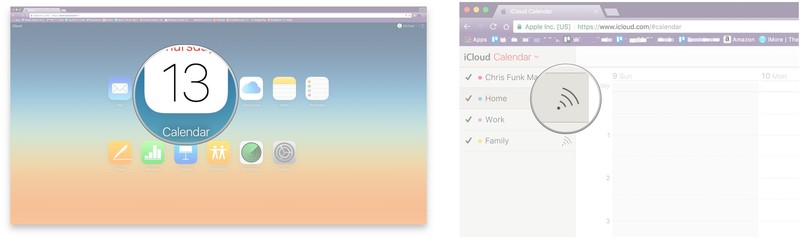
Click the checkbox next to Public Calendar.
Copy the URL that appears and paste it in the address bar of your web browser. Do not hit enter yet.
Replace webcal at the beginning of the URL with http and hit enter. You’ll either be prompted to download an ICS file or one will automatically download to your default downloads folder.

Go back to your iCloud Calendar and uncheck Public Calendar.
Log into your Gmail account.
Click the apps button on the upper right of your screen. It’s a square made of nine smaller squares.
Click Calendar.
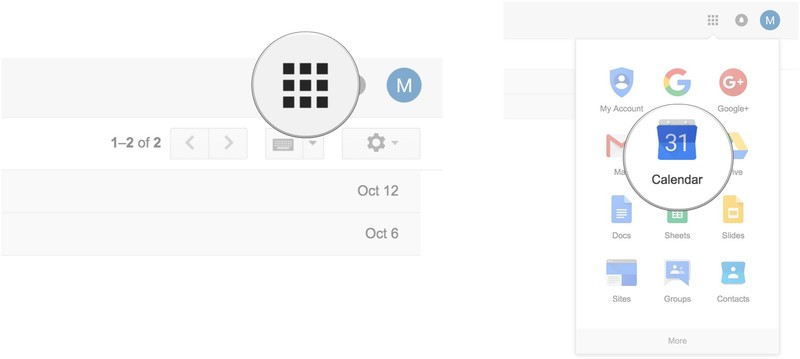
Click the settings button on the upper right of your screen. It’s the gear icon.
Click Settings.

Click the Calendars tab.
Click Import calendar.

Click Choose File or Browse, depending on your operating system.
Click the ICS file you just downloaded from iCloud.
Click Import.

Boom, you iPhone calendar events are now apart of your Google account. If you have multiple iPhone calendars, you’ll want to repeat the same steps for each one.
Use SmoothSync
SmoothSync for Cloud Calendar is a handy app that lets you sync your iCloud calendars and reminders with your Android phone.
It’s not the prettiest app in the world, but it gets the job done. All you have to do is enter your Apple ID and password, select the calendars you want to sync and that’s it. It’ll create new calendars on your Android phone for each iCloud calendar you had.
It’s a great app for folks who like to keep both an iPhone and Android phone around, since you can set it to auto-sync, and you can use your Google calendar on your Android phone as normal; SmoothSync works in the background!
Download: SmoothSync ($2.86)
Questions?
Let us know in the comments below!
Best Phone 2016: EE Pocket-lint Gadget Awards nominees
The EE Pocket-lint Gadget Awards will be taking place at the end of November for the 13th year celebrating the best devices over the last 12 months, across 14 categories. The categories span phones, tablets and games to cameras, smarthome and cars and as usual, we will be giving you a run down of all the nominees in each category through a series of features.
Best game and camera were up first so you can read all about the nominees of these categories by visiting the Awards hub, but this feature concentrates on the Best Phone of 2016. There have been quite a few changes in the smartphone market this year, not just in terms of design, but also in terms of the technology within them.
Of course they have all become faster with upgraded processors, but fingerprint sensors are now a given, dual rear cameras are now a thing and some displays continue to take things one step further with either dual-edges or force touch.
Design has greatly improved too with Samsung really pulling it out of the bag yet again with the Galaxy S7 edge, HTC making some big improvements with this year’s flagship and OnePlus and its third flagship killer also making design a key focus. Which smartphone will be crowned winner of the Best Phone of 2016 though?
Click here to see the Awards nominees for 2016’s Best Phone in a little more detail to help you make your mind up about which one should get your vote.
Voting in the 13th annual EE Pocket-lint Awards is now open so you can let us know which one of these great devices you think should win the Best Phone award for this year and give us your verdict on all the other tech across the 13 categories.
Winners will be announced at the exclusive event in London on 23 November in association with EE. For now, keep an eye on the EE Pocket-lint Gadget Awards 2016 hub for all the latest on how the voting works, who the elite judges are and the EE Pocket-lint Gadget Awards shortlist.
Leaked new HTC Vive controllers take design cues from Oculus Touch
Although the HTC Vive motion controllers are decent enough already, it seems that replacements are in the pipeline.
A Valve development slide and hands-on pictures of the prototype controllers have leaked online and they seem to own a lot to the forthcoming Oculus Touch devices.
They have been designed by Valve rather than HTC it is claimed. Valve is the owner of Steam and the Steam VR system the Vive uses.
- HTC Vive review: An experience that’s out of this world
The slide showing early prototypes was first posted on Twitter by @robmerki, director of Cognitive VR.
New Vive controllers coming soon. Prototype available at #SteamDevDays pic.twitter.com/C5HMvOrwt4
— Robert Merki (@robmerki) October 12, 2016
This was followed by postings from @mxweas and Shawn Whiting, who both tweeted images of the controllers in their own hands.
New Valve controller prototype was really cool. Much closer to having hands in VR vs holding a tool. pic.twitter.com/8LzEkGDEn1
— Max W @ SteamDevDays (@mxweas) October 12, 2016
More photos of the new Vive controllers! #SteamDevDays #Vive #VR pic.twitter.com/o99QHPZvvD
— Shawn Whiting (@shawncwhiting) October 12, 2016
If these are to be the final products, they could take a while to put on considering how much strapping can be seen in the images. However, the less you feel like you’re holding a baton, the more immersive the experience, so we heartily approve.
There’s no clue yet to when we see the new HTC Vive controllers or how much they’ll cost. We doubt they’ll be cheap though, considering the Oculus Touch controllers are priced at around £190 for the pair.
Tesla rival’s EV outed by public records request
Atieva is a Chinese company building an EV for the US market, and we’re now getting a first look at its “Atvus” sedan, thanks to a public records search by Recode. The vehicle bears a passing resemblance to the Tesla Model S, with a Citroën-esque rear-wheel cover thrown in. The company has also developed an impressive drive train in a Mercedes test mule van, with a 0 to 60 acceleration time of under three seconds (see the video below). What’s perhaps most interesting about Atieva, though, is its tangled ownership web, as the Guardian reported earlier this year.
Atieva is developing its “premium electric sedan” under the “Project Cosmos” codename, Reuters reported. It expects to unveil the EV by 2018, and wants to eventually build up to 130,000 a year following a ramp-up period. The project has serious engineers behind it, including former Tesla VP Peter Rawlinson, who led development of the Tesla Model S, and Brian Barron, who oversaw vehicle manufacturing for BMW.
Atieva was founded in 2007 by Bernard Tse and Sam Weng, and originally worked on batteries and drivetrains for buses and vans. In 2014, it received a $100 million cash infusion from Chinese state automaker BAIC and LeEco, owned by Jia Yueting, who also founded Faraday Future. At that point, it decided to build a connected autonomous car, with a mission to best Tesla’s Model S.
After a dispute with BAIC, founder Tse left, and BAIC also dropped out, reportedly selling its shares to LeEco, according to sources inside the company. If accurate, that means that LeEco’s Jia Yueting is behind three EV automakers: LeEco, Faraday Future and Atieva. Each is working on its own mainstream EV for the US market, with LeEco having recently revealed the LeSee, and Faraday Future expected to unveil its own vehicle soon.
Atieva has an R&D center in Silicon Valley near Tesla, and said it’ll build a US factory once it chooses a site. However, the public records document currently lists its manufacturing facility as an electric bike company in China. LeEco head Jia Yueting is already building a $1 billion factory in Nevada for Faraday Future, and a $1.8 billion plant in China that could pump out up to 400,000 cars per year. He’d be building another 130,000 with Atieva and an unknown number with Faraday.
However, Nevada officials recently questioned Jia’s ability to come up with the cash for his current factory proposals, let alone another one. “His Internet company is successful, but that doesn’t generate the billions of dollars he’d need. Where’s he going to get the money?” Nevada treasurer Dan Schwartz told Bloomberg. Former executive also Martin Eberhard also questioned Yueting’s strategy of investing in both Faraday and Atieva. “I left Atieva because that’s not my kind of company. It’s being run like an old-school Hong Kong company which is not my take,” he told the Guardian.
Source: Recode
Peek inside one of Nintendo’s retro gaming vaults
What secrets lie inside Nintendo’s offices? It’s a question I ask myself regularly at night, clutching my new Nintendo 3DS and dreaming about a Metroid Prime sequel (Federation Force doesn’t count.) Well, today Nintendo has drawn back the curtain — if only a smidge. In a collection of articles celebrating the Legend of Zelda, Nintendo has posted some photos from a storage room at its Kyoto headquarters. It’s chock-full of old hardware, including mint Famicoms (released as the Nintendo Entertainment System, or NES in North America) and Disk Systems.
The latter was a colorful add-on that allowed Nintendo’s home console to play proprietary floppy disks, called “Disk Cards.” Unlike traditional cartridges, these could be rewritten using store-based “Disk Writer” kiosks in Japan. So when you were finished with the Legend of Zelda, you could pop into your local convenience store, purchase a new game and have it written onto a pre-purchased disk. As Kotaku explains, the format was a piracy paradise, and eventually became redundant when Nintendo figured out how to increase the capacity of its regular Famicom cartridges.
In the storage room rundown, Nintendo shows off one of these rare Disk Writers. The company also unboxes a Famicom and Famicom Disk System to show you what came in the original packaging. (They both work too!) The photos are a tantalizing taste of the company’s history and the products it must have locked away. Which begs the question: What do you think could be just out of shot? A few Virtual Boy headsets? A Game Boy Camera and Printer? Maybe a NX prototype? We can but dream.
Source: Nintendo
Brobot can ‘sweat’ to do push-ups for longer
The Terminator may not feel remorse or pity, but does it even lift, bro? Researchers from the University of Tokyo have developed a robot called Kengoro that can sweat, helping it get through 11 minute push-up sessions that would normally fry the motors. Unlike a normal water-cooled radiator system, liquid flows into porous aluminum bones and then evaporates on the surface to cool the motors, in the same way that sweat cools a human.
The team married science with modern manufacturing tech to help Kengoro hit its training goals. The metal structure is built with laser sintered aluminum powder, using an additive 3D printing technique favored by NASA, GE and others. The process allows fine control of the metal’s permeability, so the team added channels that let water flow through the bones. It then seeps to another porous region near the surface, where it evaporates and cools motors positioned next to the aluminum “glands.”
The bot can run for a half day on a cup of deionized water, and longer if it “drinks” more to replenish the supply. The technique doesn’t work as well as an active-cooled system with a radiator, but it’s three times more efficient than air-cooling. More importantly, by using the robot’s structure to pipe the fluid, it’s significantly lighter and less complex. “Our concept was adding more functions to the frame, using it to transfer water, release heat, and at the same time support forces,” lead author Toyotaka Kozuki tells Spectrum IEEE.
Source: IEEE

