


German officials: Tesla shouldn’t say ‘Autopilot’ in its ads
Just days ago, Germany’s Federal Motor Authority sent letters to Tesla owners warning them that their cars’ “Autopilot” feature is strictly there for driver assistance, not driver replacement. As it turns out, those letters were just the opening salvo. According to a report from Reuters, the German government is asking Tesla to stop using the term “autopilot” in its advertising entirely out of concerns that people misinterpret its purpose.
To be absolutely clear, your Tesla will not drive you around town on its own… yet. A Tesla spokesperson maintained that the word “autopilot” has been used in the aerospace industry for years in reference to systems that assist pilots in flight, and that the company has always been clear that people still have to pay attention to the road.
Still, it’s not hard to see what German authorities are concerned about. After all, Tesla is clearly heading down the self-driving path: CEO Elon Musk said last year that he was aiming to have fully autonomous cars ready in 2018, though he later seemed to shy away from his claim. It’s completely feasibly to expect that some people, especially those who don’t follow advances in technology as closely as we do, could get a little confused. Thanks to near-constant coverage and announcements, it’s pretty common knowledge that Teslas can auto-steer to keep the cars running at a steady speed in the same lane, automatically change lanes when the turn signal is engaged and parallel park by themselves.
With any luck, some new changes to Tesla software should help make things more clear. An update issued last month disables the Autopilot mode if the driver keeps removing their hands from the wheel. It’s also worth noting that domestic authorities are probably keeping a close eye on Tesla’s response to this situation; a draft regulation released by California’s Department of Motor Vehicles in September prohibits advertising cars that can sort of drive themselves a la Teslas as “autonomous” or “self-driving.”
Source: Reuters
From the Editor’s Desk: Winners and losers

The ever-changing smartphone market is hard to track, and sometimes predictions go overboard.
With the Galaxy Note 7 officially dead and close to buried, focus has shifted from talking about the product and recall itself over to what the short- and long-term impacts will be for Samsung. We know the immediate financial impact on Samsung Electronics will total at least $5 billion in losses for just the next few quarters, not to mention the unknown loss of sales on other phones and the loss of good will toward the company when it comes time to launch its next big phone.
Samsung’s in a tough spot, that’s for sure. But for a company as big as Samsung Electronics — not to mention Samsung as a whole — this isn’t going to ruin it forever or have a long-lasting impact. Galaxy phones will continue to sell, new products will come out and eventually it will get past this rollercoaster couple of months surrounding the Note 7. It’s easy to exaggerate just how bad this will be for Samsung, but I’m convinced the real pain will be short lived over at Samsung HQ.
These phones aren’t going to sell just by being there; they have to be great products themselves.
On the other side of the coin, many words have been typed this week speculating as to which company has the most to gain in the wake of the Note 7’s final recall. Apple is a clear choice for many. Some say LG’s V20 is ready to steal the show in the “big, expensive phone” segment. Others say this is a godsend for the folks in Google’s hardware division launching the Pixel XL this very week.
Apple really didn’t need help selling phones; even with the Note 7 in the market it was going to sell the iPhone 7 Plus faster than it could make ’em. The LG V20 still isn’t actually available, and only one U.S. retailer has even given us pricing info (AT&T at $830, oof) despite the impending launch on October 28; that is of course some seven weeks after announcing it. And then there’s Google, which is clearly trying harder to sell the Pixel and Pixel XL to a wide market than it ever had with a Nexus phone.
As I’ve said many times this week, Google is fighting an uphill battle in terms of simple brand awareness and consumers associating the Google name with high-end smartphones — and that’s absolutely still the case even with the Note 7 off of the market. Losing the Note 7 in the $800+ smartphone range certainly creates a vacuum to which several companies can step in and sell additional phones, but that doesn’t mean phones will sell just by being there. Google, LG and everyone else still has to make great phones and tell an interesting story to get people to drop this kind of money today. So far the Pixels look wonderful, but that doesn’t mean they’ll step in and steal all of the Note 7 sales by default.
A few more thoughts as we wrap up another week in the Android world:
- It’s Pixel launch week, which means we’re just a couple days away from shipping notices for those first pre-orders. My “quite black” 32GB Pixel should be here on October 20. Can’t wait.
- On Wednesday I’ll be down in San Francisco for LeEco’s big launch event, which is really the company’s first attempt to explain to the U.S. just what it is and the kind of products it makes.
- LeEco is a giant Chinese (based there, but very much multinational) company that most people haven’t even heard of — that’s a tough battle to fight with entrenched companies that have been doing business in North America for years.
- I’m extremely excited by Project Fi group plans. People constantly point to the “high” cost-per-gigabyte data rates, but I think that’s getting in the way of people just trying this awesome carrier that’s so simple and easy to use, which also offers excellent service.
- My Under Armour Band broke last week, so I’ve been back using the Samsung Gear Fit 2 — it’s a great fitness and daily activity tracker, plus a little extra. I miss the week-long battery life from my UA Band, and the Fit 2 also kind of sucks at tracking my soccer matches.
- If you live in the Pacific Northwest I hope you made it through the stormy conditions up here okay. People on the coast really took it hard.
That’s it for this weekend. More fun coming in the next week.
-Andrew
Universe may hold 10 times more galaxies than once thought
The observable universe was already incomprehensibly big, but it now looks to be even bigger. Astronomers have determined that are likely about 10 times more galaxies than previously thought, or between 1 trillion to 2 trillion. We just don’t have the technology (or physical proximity) to detect them all, according to the researchers. They reached the conclusion after converting Hubble Deep Field images into 3D to study the number of galaxies at a given point in the universe’s history, and using mathematical models to infer the possibility of galaxies that we haven’t spotted. Simply speaking, the volume of galaxies seen over time doesn’t make sense unless there are many we aren’t aware of.
Why don’t we see them? It may be a combination of our limited technology with the evolution of the universe itself. We can only do so much to account for redshifting (the light effect as objects move further away) and interference like cosmic gas, and that’s before accounting for the ever-changing nature of the cosmos. At least the data may help answer a key riddle. The shrinking number of galaxies supports the theory that galactic mergers are shaping the universe, radically reducing the overall galaxy count as more and more collisions take place.
It could be a long while before it’s possible to directly verify these calculations. There may need to be a dramatic improvement in telescope technology. And remember, even the 2 trillion figure likely doesn’t represent the whole universe. The very nature of light limits our ability to see the whole of existence — it’s possible that there are many, many more galaxies lurking out of range.
Via: Washington Post
Source: Hubble Space Telescope
The game that makes drone warfare personal
Killbox is a game that creates humans out of brightly colored 3D shapes, only to slaughter them in the most dehumanizing way: a drone strike. And not just any drone strike — the game is based on the first real-life UAV mission ever carried out in an unofficial warzone.
Killbox has a heavy-handed message delivered in a direct, uncompromising fashion. It’s a two-player game; one person embodies a sphere in an simplistic yet idyllic farming landscape. This player cruises along pathways to collect tiny white motes that emit a pleasant sound whenever the 3D ball rolls over them. There are no instructions, but the objective is clear: Collect as many motes as possible. The sphere rolls along the flat green grass and down pathways lined with balls of soft white light, passing other bright beings that appear to be frolicking, playing and dancing around each other. Larger pear-shaped creatures wander around the area, changing colors with an adorable sound every time the player’s tiny sphere runs into them.
And then, without warning, an ominous buzzing sound fills the air. Boom. A large, black plume of smoke rises from a crater directly in front of the decimated house, blobs of color lying prone among the wreckage. The air turns a deadly shade of purple.
Zoom out. The player is transported miles above the carnage, viewing the town just before it’s bombed. The second player is now on the ground, happily rolling around the town. Static and the chatter of supporting UAV pilots fills the headphones as a black panel on the right side of the screen prompts the player to test out the controls, moving a reticle around the area where the bomb will undoubtedly fall. Below, the spheres and pears bounce around happily as the player adjusts the hit box and eventually initiates the launch command. Boom.
By the end of the game, there’s no question about the creators’ feelings regarding remote-controlled warfare. A black screen overtakes the game, stark white text offering a simple summary of the United State’s real-life, first-ever bombing campaign outside of a warzone in North Pakistan in 2004. Four people were killed, including two children.
“We were looking into all these different stories, like the psychology of the drone pilot, all the crazy, messed-up stuff that surrounds it,” says Killbox programmer Albert Elwin on the IndieCade show floor in Los Angeles. “It’s all really dark and depressing — it’s absolutely in some ways a difficult project to work on because you get kind of consumed by the reality of it.”

Since 2004, the US has conducted more than 400 drone strikes across Pakistan alone that have killed up to 4,000 people, according to the Bureau of Investigative Journalism. Hard statistics don’t exist in the world of UAV warfare, but the Bureau estimates between 423 and 965 civilians have been killed in unmanned strikes on Pakistan, including as many as 207 children.
Before starting work on Killbox about one and a half years ago, Elwin hadn’t thought much about UAVs or drone strikes. He knew they existed, that the United States was bombing areas in the Middle East using remote-controlled devices, but it wasn’t a pressing matter to him.
And then American artist and anti-drone warfare activist Joseph DeLappe approached Elwin and his friends in Scotland, where they were starting a game developer group called Biome Collective. DeLappe wanted to create a video game about the dehumanizing horror of drone strikes, and Elwin’s team dove in, researching the ins and outs of UAV operations and figuring out the best way to tell that story.
“I was kind of aware [of UAV strikes] but I didn’t know what the reality was, so working on this project I’ve learned and discovered the horrific things that have gone on and are going on today,” Elwin says. “In some ways it’s getting worse, as well.”

Killbox plays with the dehumanizing aspect of drone warfare in a literal way. The characters aren’t human at all, even when players are controlling the happy, frolicking balls on the ground. However, using spheres and pears as protagonists forces the player project human characteristics onto the geometric shapes. The adorable sounds and playful setting further drive home the human-like innocence of the spheres and the feeling of loss when it all explodes in a thick black cloud. This point is solidified when the player acting as the UAV operator realizes that there was actually another player on the other side of the screen, rolling around the village, collecting white motes.
In Killbox, players create the human connection to these shapes, right before actively, knowingly destroying everything with the press of a button from a sterile, static-filled void. It’s shockingly effective.
“People are starting to realize that you can use games for more than entertainment,” Elwin says.
Best BlackBerry Phone
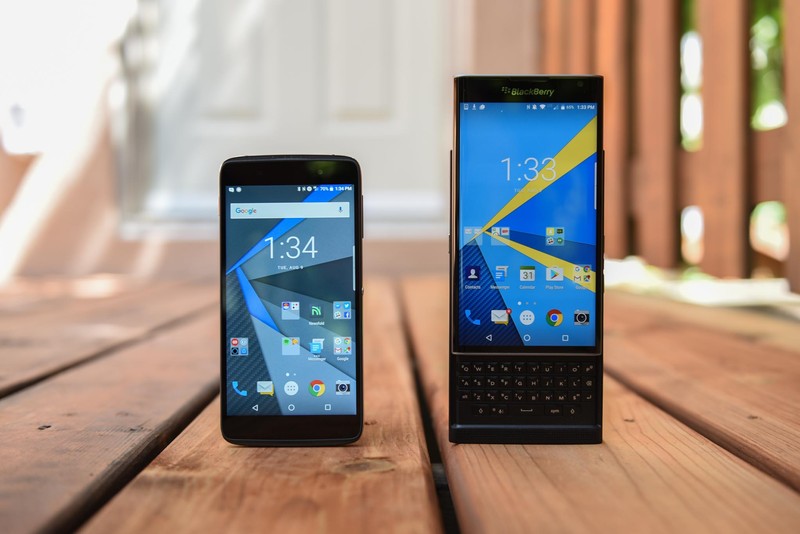
Looking for the best BlackBerry phone to buy? Right now, it’s the Priv, which is still the best phone with a physical keyboard.
Best overall
BlackBerry Priv
See at Amazon
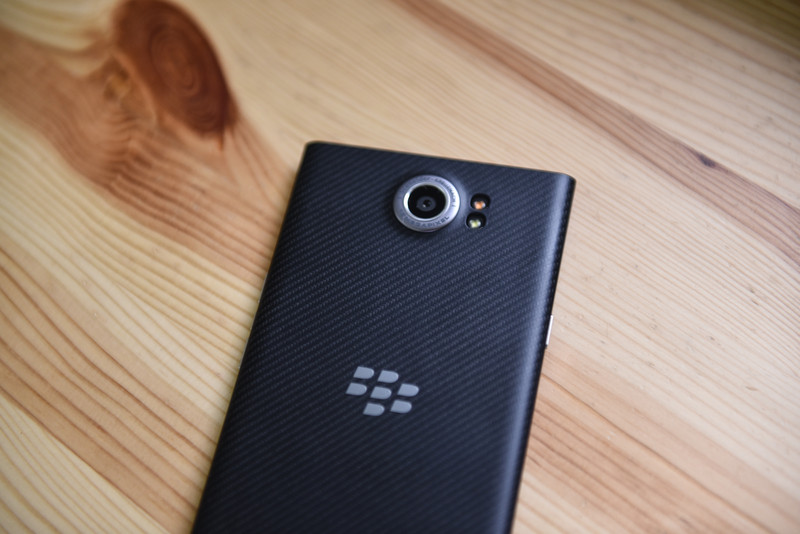
BlackBerry’s first phone running on Android was a bold attempt to buck the latest smartphone trends. In a world dominated by slabs of aluminum and glass, BlackBerry went with a slider design to incorporate a physical keyboard and a soft-touch back that’s great for maintaining your grip.
Internally, the BlackBerry Priv runs on a Qualcomm Snapdragon 808 hexa-core 64-bit processor with 3GB of RAM and 32GB of internal storage (microSD expansion available). It’s got a massive 3410 mAh battery and supports Qualcomm Quick Charge 2.0 as well as Qi and Powermat wireless charging on most models.
Running on Marshmallow, BlackBerry attempted to keep a mostly stock Android experience while certainly adding their own flourishes, including BlackBerry Messenger, BlackBerry Hub, and something called the Productivity Tab. These are entirely optional features, but reassuring for those BlackBerry users migrating over to the world of Android for the first time. Then there’s BlackBerry’s focus on privacy and security. Your data is encrypted via proprietary mechanisms, and the DTEK security app adds another layer of protection to make sure your device is never compromised.
As BlackBerry’s first Android flagship, the Priv was quite expensive when it first released back in November 2015. While it may have lost a bit of luster compared to 2016’s flagship releases, at a lowered price point it’s a great option for folks who were interested in the past but couldn’t justify the full price.
Bottom line: With its physical keyboard and top-notch Blackberry security features, the Priv is a unique and powerful option in the Android marketplace.
One more thing: The Priv is available on AT&T and T-Mobile, but won’t work on Sprint or Verizon networks.
Why the BlackBerry Priv is the best
Unlike any other flagship on the market.
BlackBerry went all out in their design and execution of the BlackBerry Priv. It instantly stands out from the crowd due to its amazing physical keyboard and design.
It’s got enough power to handle most everything, and packs in valuable features including expandable storage via microSD, wireless charging, and some of the best security features found on an Android phone. Sure, at this point there really isn’t much competition for the Priv, but it will likely take some keen innovation or
Best for less
BlackBerry DTEK50
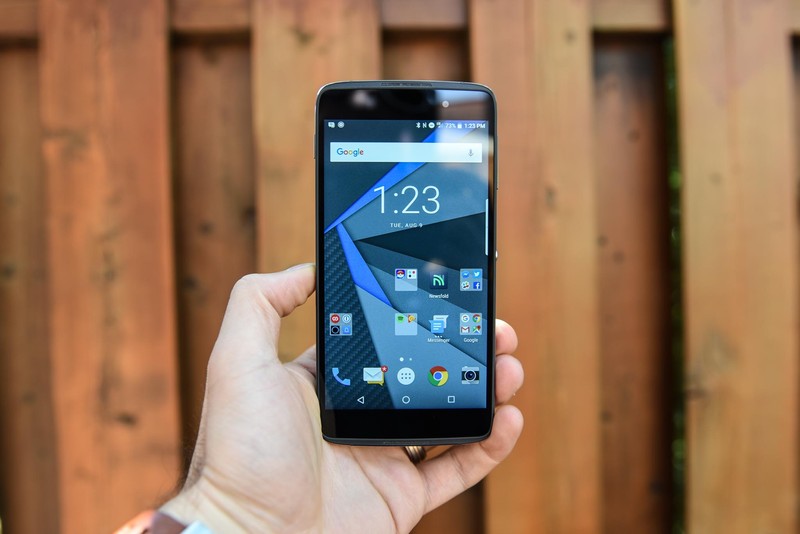
The DTEK50 is a solid entry-level phone that provides the security associated with the BlackBerry name without distracting too much from the experience of using an Android device.
The first of BlackBerry’s Android devices to be designed and built by an outside company, the DTEK50 includes decent hardware specs for its price point and a serviceable camera. Just keep in mind that this is an entry level device — more than serviceable for all your business-related needs (it’s a BlackBerry, after all), but lacking on the specs needed for gaming and other resource-hogging applications.
Bottom line: The DTEK50 is a solid phone with a focus on security that will be appealing to some. And at $299, it’s certainly not going to break the bank.
One more thing: The DTEK50 features a customizable Convenience Key, which can be mapped to quick launch an app with a single press and acts as a mute button when you’re on call.
More: BlackBerry DTEK50
See at Amazon
Conclusion
With just two BlackBerry phones currently on the market, the Priv clearly stands out as the best available so far if price is no issue. The DTEK50 remains a solid budget option for those who often do work from their phones and appreciate BlackBerry’s attention to keeping your business and personal data secured.
Best overall
BlackBerry Priv
BlackBerry’s first phone running on Android was a bold attempt to buck the latest smartphone trends. In a world dominated by slabs of aluminum and glass, BlackBerry went with a slider design to incorporate a physical keyboard and a soft-touch back that’s great for maintaining your grip.
Internally, the BlackBerry Priv runs on a Qualcomm Snapdragon 808 hexa-core 64-bit processor with 3GB of RAM and 32GB of internal storage (microSD expansion available). It’s got a massive 3410 mAh battery and supports Qualcomm Quick Charge 2.0 as well as Qi and Powermat wireless charging.
Running on Marshmallow, BlackBerry attempted to keep a mostly stock Android experience while certainly adding their own flourishes, including BlackBerry Messenger, BlackBerry Hub, and something called the Productivity Tab. These are entirely optional features, but will be reassuring for those BlackBerry users migrating over to the world of Android for the first time. Then there’s BlackBerry’s focus on privacy and security. Your data is encrypted via proprietary mechanisms, and the DTEK security app adds another layer of protection to make sure your device is never compromised.
As BlackBerry’s first Android flagship, the Priv was quite expensive when it first released back in November 2015. While it may have lost a bit of luster compared to 2016’s flagship releases, at a lowered price point it’s a great option for folks who were interested in the past but couldn’t justify the full price.
Bottom line: With its physical keyboard and top-notch Blackberry security features, the Priv is a unique and powerful option in the Android marketplace.
One more thing: The Priv is available on AT&T and T-Mobile, but won’t work on Sprint or Verizon networks.
Ben Heck’s Halloween SuperHero Wearables, part 2

It’s time to assemble our DIY superhero Halloween costume — get ready to put the micro-electronics together with the sewn outfit, including the laser-cut logo for Captain Tangent. To save time, Ben has wired together two micro controllers: the Parallax and Atmel ATMega boards. The ATMega will handle the i2c communications with the sensors, while the Parallax board will output the sound. After calibrating with some help from Karen, Ben edits together punch and kick sound effects.
We also get some insight into a different project: a wireless video game controller that will be repurposing parts taken from the EMFCamp 2014 badge. Can Captain Tangent stop the ultimate showdown between Ben and Felix over Linux? Head over to the element14 Community and let us know what your plans are for Halloween, from pumpkins to how you plan to work electronics into your costumes.
How to transfer your iCloud Drive files to Google Drive

How do I transfer iCloud drive files to Google Drive? Hint: You’ll need a computer!
If you’re making the switch from iPhone to Android, then you’ll likely want to take advantage of Google Drive and all the other Google Apps. That means you’ll need to transfer your iCloud Drive files to Google Drive.
This can get a bit tricky, since Apple really doesn’t want to see you go, but if you use the iCloud Drive and Google Drive desktop apps, it’s easy.
You can do it without the desktop apps, but it’s a bit of a pain.
How to transfer iCloud Drive files to Google Drive using the desktop apps
If you don’t have the Google Drive app for Mac or PC, you’ll need to download it before getting started. When you download it for Mac, a Finder shortcut will automatically be created under Favorites. When you download it for PC, you’ll be asked if you want to create a shortcut in the File Explorer. Do it.
If you’re on a Mac, you automatically have iCloud Drive. If you’re on a PC, you’ll need to download the iCloud Drive app before getting started.
Open two Finder windows if you’re on Mac or File Explorer windows if you’re on PC.
Click iCloud Drive in the left bar in one window.
Click Google Drive in the left bar in the other window.
Click the top file in the iCloud Drive folder.
Hold the shift key and click the bottom file in the iCloud Drive folder.
Click and drag all of your files over to the Google Drive folder.
That’s it. Google Drive does the rest and syncs it all up for you.
How to transfer iCloud files to Google Drive on the web
If you don’t want to download the iCloud Drive and Google Drive apps, you can (painstakingly) transfer files using the web apps. All you have to do is download each file from your iCloud Drive at icloud.com and re-upload everything to Google Drive.
The painstaking part comes in the fact that you have to download each individual file from your iCloud Drive. There is no way to batch-download or batch-transfer anything out of your iCloud Drive. I only recommend this method if you have just a few files to transfer.
The Prius Prime’s efficiency, and more in the week that was
What does Tesla have up its sleeve? The automaker is planning to unveil a mysterious new product on Monday, and speculation so far ranges from the finalized Model 3 to a major Autopilot update. Meanwhile, the Toyota Prius Prime received a spectacular 133 MPGe rating, making it the most efficient electrified vehicle you can buy in the US. A new European law could require all new homes to install electric vehicle chargers. And Vello launched the world’s first folding electric bike that can power itself.
Scientists around the world are working to crack fusion power, and MIT’s reactor recently set a new world record for plasma pressure. Bill Nye the Science Guy is getting into the energy game by backing a revolutionary solar company that could cut the cost of photovoltaics by 60 percent. Researchers in the UK transmitted data across a national electricity grid for the first time, marking a big step forward for smart grids. The Los Alamos National Laboratory found a way to scale up quantum dot solar window technology, and Egypt’s first solar-powered village rose from the desert in Bahariya Oasis.
A giant farm has risen in the Australian desert, and it’s able to grow 17,000 tons of vegetables a year with nothing more than seawater and sunshine. In other design and technology news, the Jellyfish Lodge is a self-sufficient floating house that purifies polluted waterways while growing healthy food. A new wind-powered gadget called the Water Seer can pull 11 gallons of drinking water from thin air every day. The world’s first “space nation” is preparing to launch a satellite that will help protect earth from asteroids. And CuteCircuit has developed a “Sound Shirt” that allows deaf people to feel classical music.
Miyamoto came up with ‘Donkey Kong’ ideas in the bathtub
In an interview posted on Nintendo’s Japanese website, Shigeru Miyamoto reminisced about the time he spent developing the classic arcade title Donkey Kong. According to Wired writer Chris Kohler, who translated the whole thing, Miyamoto dropped some previously unknown tidbits about the game in the interview. And yes, that includes the part about conjuring up ideas and getting them in order while in the company-owned housing’s communal bath.
He told the interviewer:
“There was a water boiler that was used to make the hanafuda (traditional Japanese playing cards that Nintendo manufactures), and the water from this boiler was also used for a bathtub… at night when nobody was around, you could hang out there for a long time. It totally saved me. It was really effective at letting me put my ideas in order.”
The gaming legend also revealed that Nintendo America wasn’t down with naming his famous gorilla Donkey Kong. Apparently, he wanted to convey the idea that the character was a “stupid monkey,” so he consulted a dictionary that listed “idiot” as one of “donkey’s” synonyms. His company’s American division told him it didn’t make sense, but he stood his ground.
He did listen to his American colleagues, however, when they told him the character’s voices sounded weird. Yes, the game was supposed to use human voices. “The lady stolen away by Donkey Kong was supposed to yell out, ‘Help, Help!’ And when Mario jumped over a barrel, she was supposed to yell, ‘Nice!’,” Miyamoto explained. But the Americans thought “help” sounded more like “kelp” in the voice sample, so they nixed the idea altogether. They replaced “help” with Donkey Kong’s growl and “nice” with Mario’s iconic jumping sound effect pi-ro-po-pon-pon. The rest, as they say, is history.
As for why Mario’s and Donkey Kong’s creator is talking about the old days, well, it’s likely because Nintendo is slated to release the Classic Mini NES in the West and the Famicom Mini in Japan in November. Both teensy retro consoles come pre-loaded with the Donkey Kong and Super Mario games, along with a bunch of other titles.
Source: Wired, Nintendo
Here’s Apple’s workaround when your iPhone 7 home button fails
The iPhone 7’s non-moving home button may feel odd at first, but it has its perks… especially if it ever stops working. MacRumors forum goer iwayne has shown that the new iPhone will give you an on-screen home button (along with a warning that you may need repairs) if it thinks the physical key is broken. While that’s not much consolation if your phone needs to be fixed, it does mean that you can keep using your device in a relatively normal way while you’re waiting for your Genius Bar appointment.
The technology may be short-lived when there are reports of Apple possibly ditching physical home buttons entirely with the next iPhone. However, it’s not hard to see why Apple would push for a motionless button in the short term. It’s not just the customizable haptic feedback — the new design is theoretically less likely to break (since it doesn’t click down) and reduces the pressure to get an immediate fix. That helps Apple’s bottom line, of course, but it may also make you a happier owner in the long term.

Image credit: iwayne, MacRumors Forums
Via: MacRumors
Source: MacRumors Forums

