


UK spies paid a New Zealand firm to help tap key internet lines
It’s no longer a secret that the UK’s GCHQ was expanding its mass surveillance in the years before Edward Snowden’s leaks. However, it hasn’t really been clear as to who was helping it upgrade its spying campaign… until today. The Intercept and Television New Zealand have obtained documents showing that GCHQ purchased large amounts of “data acquisition” systems and “probes” from Endace, a New Zealand company that specializes in network data recording. The agency wanted to step up its monitoring of high-speed internet cables from 87 10Gbps lines in 2009 to 800 by 2013, and buying loads of Endace technology helped it edge closer to that goal.
This wasn’t off-the-shelf gear, either. A lot of it was “bespoke,” or custom-made for GCHQ’s operations. In one case, Endace developed a data capture system named Medusa that could intercept data flying by at up to 100Gbps.
It’s crucial to note that GCHQ isn’t Endace’s main customer, or that its products are all intended for unfettered network spying. It has a slew of financial, government and telecom clients, including Verizon (Engadget’s parent company), AT&T, Sprint, Bank of America and Morgan Stanley — and many of them don’t have much of a say as to whether or not they use this kind of equipment. Sprint bought a “lawful intercept” system to obtain private customer data only when the police demand it, for instance. The Endace connection is more an explanation of how intelligence agencies like GCHQ can scoop up so much data. It’s not necessarily a matter of developing exotic technology in-house. Sometimes, it’s just about finding companies whose tech is close enough and asking them to make something more spy-friendly.
Via: TechCrunch
Source: The Intercept, Television New Zealand
Adult Swim’s latest game embraces cassette glitches
Does something look slightly off with picture you see above? Don’t worry, that’s on purpose. Adult Swim Games and Fire Face are launching the surreal puzzler Small Radios Big Televisions on November 8th for PC and PS4, and its hook is a time-traveling cassette deck that lets you “reconstruct the past” of abandoned factories through tapes. Only here, reality is just as fragile as the tapes in question — expect plenty of distortion, discoloration and other glitches that could play havoc with your head. Complete them and you’ll find retrowave tunes from Owen Deery (also available on Bandcamp) as a reward. Given Adult Swim’s solid track record with releasing off-kilter titles like Headlander and Westerado, it could be worth a try just to see how well this analog-meets-digital premise turns out.
Source: Steam, Bandcamp
Elon Musk’s Mars colony would have a horde of mining robots
If it wasn’t already clear that Elon Musk has considered virtually every aspect of what it would take to colonize Mars, it is now. As part of his Reddit AMA session, the SpaceX founder has revealed that his vision of a permanent colony would entail a huge number of “miner/tunneling droids.” The robots would build large volumes of underground pressurized space for industrial activity, leaving geodesic domes (made of carbon fiber and glass) for everyday living. As a resident, you might never see the ‘ugly’ side of settling the Red Planet.
Musk also explained how his colony would get to the point where it can reliably refuel spacecraft all by itself. Dragon capsules would serve as scouts, helping find the “best way” to extract water for fuel reactions. An unmanned Heart of Gold spaceship would then deliver the basics for a propellant plant, while the first crewed mission would finish that plant. After that, SpaceX would double the number of flights between each ideal Earth-Mars rendezvous (every 26 months) until the colony can reliably produce fuel by itself.
Oh, and don’t worry about today’s Falcon 9 rockets being consigned to the history books. Although the main booster for interplanetary travel will “have an easier time of things,” Musk believes that the final iteration of Falcon 9 (Block 5) could be used “almost indefinitely” if properly maintained. Production on Block 5 should fly in the next 6 to 8 months.
SpaceX is still a long way from explaining the nuts and bolts of large parts of the Mars mission. You won’t learn about the Interplanetary Transport System’s habitation section for “a year or two,” for one thing. However, this at least shows that Musk and team have thought about the minutiae of their plan — the big challenge is following through on all those promises.
Source: Reddit (1), (2), (3)
iPod marks its 15th birthday in a changed world
If you’re a gadget fan of a certain age (cough), you’re about to feel ancient: Apple’s iPod just turned 15 years old. Steve Jobs unveiled the first version of the media player at an event on Apple’s campus on October 23rd, 2001. To say that it had a wild ride after that would be an understatement. Many credit the iPod as the device that took Apple from niche PC maker to one of the largest companies on the planet, only to fade away as smartphones took over. But how did it get to where it is now? And is there any room left for the iPod 15 years later? Let’s take a quick look back at how the iPod has evolved through the years.
We like to think of the iPod’s 2001 introduction as a watershed moment these days, but at the time it left many scratching their heads. This was a risky side project for a company that had been on the brink just a few years earlier, and the number of caveats seemed to be a mile long. Mac-only, a $399 price and ‘just’ 5GB of storage? Many didn’t expect it to sell well… and for the first couple of years, it didn’t. While the iPod found an audience among the faithful, those steep initial requirements ruled out both Windows users (even the 2002 model’s Windows support was a kludge) and many casual Mac listeners. Competitors like Creative and Rio had little to fear at first. Still, it was a glimpse at a future where you could quickly and easily sync your whole music collection, rather than painstakingly copying songs over an abysmally slow connection.
But then something happened. In 2003, Apple not only released an iPod built with Windows users in mind, but launched both iTunes for Windows and the iTunes Music Store. It was as if a puzzle had been solved. Suddenly, most computer users could buy whatever songs they liked, sync them with an iPod, and start listening within a few minutes — no CD ripping or dodgy peer-to-peer sites required. It’s easy to complain about how unwieldy iTunes can be today, but it was a minor revelation at a time when most MP3 players had truly clunky sync processes and few (if any) ways to integrate with digital music services.
And for the next few years, it seemed as if Apple could do no wrong. iPod sales exploded, helped in no small part by falling prices and more accessible models. The iPod mini, shuffle and nano transformed the device from a near-luxury item into something virtually anyone could own. Apple grabbed such a dominant foothold in the market that no competitors posed more than a temporary threat. Even Microsoft’s Zune, with its iPod-like software integration and gobs of marketing money, couldn’t loosen Apple’s grip. The iPod’s white earbuds (and the matching silhouette ads) became iconic. With the help of iTunes, it ushered in an era where digital music was an everyday fact of life instead of a novelty. Podcasts owe both their success and very name to Apple’s pocket player — you wouldn’t be listening to Serial otherwise.

All technology has a finite lifespan, though, and Apple took the relatively radical step of hastening the iPod’s demise itself. When Jobs unveiled the iPhone in January 2007, he wasn’t shy about treating it as a do-it-all device that could help you avoid buying an iPod. Why get something separate when all your music can live on the phone you’re already carrying? The media player soldiered on for a while, in part thanks to the iPod touch (which satisfied the urge if you couldn’t buy an iPhone), but its days were clearly numbered. It’s telling that Apple unveiled the first iPod classic mere months after the iPhone arrived, indicating that the days of music-first hardware were coming to an end.
You may well know what happened next. Modern smartphones, including the iPhone, rendered dedicated players almost obsolete within just a few years. Apple increasingly shifted the iPod toward niche uses like fitness (the current iPod nano and shuffle are practically designed for runners) and away from the mainstream. Sales fell from nearly 55 million iPods per year in 2008 to a number so low that Apple no longer breaks them out in its fiscal results. To compound matters, streaming music has practically eliminated the need for a tiny jukebox. You don’t need capacious storage when you can listen to seemingly everything on services like Spotify or Apple Music. The death of the iPod classic in 2014 was less of a tragedy and more a sign of progress, when you think about it.

As such, the iPod at 15 is really in its twilight years. There’s just not much room for it. Unless you need a mountain of offline music without paying a premium, you’re usually better off using your phone. It can access a wide array of services, and you don’t have to sync it with a computer. Even the iPod nano and shuffle are facing pressure from smartwatches, which can hold or stream enough music to last your whole run.
This isn’t to say that the iPod is a footnote in history, however. In hindsight, it was a stepping stone — a way of leaving CD players and record stores behind in favor of a world where any song you want is just a heartbeat away, wherever you are. You can also see it as ushering in the mobile revolution, since the iPod’s success helped drum up interest in the iPhone and other smartphones that weren’t just about checking email or making calls. As sad as it is to see the iPod treated like an afterthought today, there’s no question that its legacy will last well beyond the day the last units leave store shelves.
Image credits: Reuters/Mike Blake; AP Photo/Eric Risberg
Samsung’s hurried Galaxy Note 7 recall doomed the phone
You knew it was just a matter of time before some of the drama behind the death of the Galaxy Note 7 came to light, and what we’re seeing isn’t all that pretty. Wall Street Journal sources claim that Samsung’s mobile chief DJ Koh thought there was enough evidence (protrusions in the batteries from one supplier) to go ahead with the speedy initial recall. He thought it was best to do “the right thing” and start a recall, insiders say, even though there was incomplete evidence. The company didn’t want to leave people in the dark, worrying what was wrong. And while there was a debate about the seriousness of the issue (some even suspected the fires were fake), it’s not as if Koh was a lone wolf. Company heir and vice chairman Lee Jae-yong was also in favor of the hasty recall, possibly due to his push for greater transparency at a company known for its secrecy.
The company still doesn’t know what led to the Note 7’s propensity to catch fire, although both Koh and Lee are now known to have shared responsibility for cancelling the phone after facing pressure from carriers like Verizon. An unnamed executive echoes a previously mentioned theory that the battery housing might have been too small for the power pack’s capacity.
The consequences of the recall don’t just extend to Samsung’s reputation, either. The tipsters report that Samsung has delayed work on the Galaxy S8 by two weeks while it tries to pin down the nature of the Note 7’s battery woes. That’s not a huge gap, but it could lead to the company missing the S8’s originally intended launch schedule. Samsung has recently taken to introducing new Galaxy S models at Mobile World Congress in February or early March, but it may have to miss the event if it doesn’t have enough breathing room.
A spokesperson didn’t comment on the backroom reports other than to tell the WSJ that Samsung is “committed to finding the root cause” and recalling every last Note 7 still in the wild. However, it’s reasonable to expect that Samsung will take its time on the S8, even if it means missing out on potential sales. The Note 7 is already going to cost Samsung billions, and that’s before you count the damage to its reputation. The S8 has to show that Samsung is back to its usual self, and can make a top-flight phone without compromising on safety.
Via: The Verge
Source: Wall Street Journal
Elon Musk answers your SpaceX questions on Reddit at 6PM Eastern
SpaceX has raised more questions than it has answered as of late. Just how will it finance its plan to colonize Mars? Can it improve the reliability of its rockets? And exactly when will it reuse a rocket? You might just get some answers. Company founder Elon Musk is holding a Reddit Ask Me Anything session for SpaceX today (October 23rd) at 6PM Eastern. There’s no guarantee that he’ll produce any stunning revelations, but we wouldn’t rule out a few surprises… or at least, answers to questions that don’t usually come up at media events. Just be sure to get in your inquiries quickly, since the AMA is bound to get plenty of inquiries.
AMA at <ahem> 3pm California time
— Elon Musk (@elonmusk) October 23, 2016
Via: The Verge
Source: Reddit (not the AMA), Elon Musk (Twitter)
Sweden effectively bans camera drone flights
Don’t bring a drone with you to document your trip to Sweden — you could find yourself in legal trouble. The country’s Supreme Administrative Court has effectively banned camera drone flights through a ruling. Camera-equipped drones are surveillance cameras, the court argues, and that means they need a permit indicating that they’ll be used to prevent crime or accidents. And since you probably aren’t flying a drone to keep watch over your home, you’re likely out of luck.
It won’t shock you to hear that local drone owners are upset. The industry group UAS Sweden contends that the court might be killing Sweden’s drone market. Aftonbladet, meanwhile, points out that the ruling doesn’t make sense in the context of existing laws. It’s legal for Swedes to capture images in public places, so why is it wrong just because that camera is attached to a quadcopter? There are no journalistic exceptions, either, which is odd when other laws allow it.
The one consolation is that the ruling may be hard to enforce. It’s up to county administrative boards to report any violations to the police, and it could be difficult to make charges stick if there isn’t evidence of a camera drone in flight. Of course, that raises another question: why rule against these drones when it could be relatively easy for amateur operators to ignore the decision? The move may primarily punish those pros who have a good reason to record drone footage, whether they’re journalists or filmmakers.
[Thanks, Samuel]
Source: Aftonbladet, UAS Sweden (translated)
Amazon Echo now fact-checks politicians
You’ve probably heard politicians make more than a few outlandish claims, and not just in the run-up to the US presidential election. Do you really want to swing by a fact-checking website every time a candidate stretches credibility? As of now, you don’t have to lift a finger. Duke Reporters’ Lab has introduced an Amazon Echo skill that lets you fact-check any politician scrutinized by PolitFact, FactCheck.org or the Washington Post. If you want to know if Hillary Clinton or Donald Trump is telling it straight, you just have to ask your wireless speaker whether or not a claim is true.
It’s not perfect. You have to sit through a lengthy introductory spiel before you can ask your question, and Duke stresses that you should mention major keywords to get the right answer. Still, there’s a certain pleasure to knowing that you can call a would-be leader’s bluff while you’re busy making dinner.
Source: Duke Reporters Lab, Share the Facts
Best Alcatel Idol 4S Cases

What’s the best case for Alcatel Idol 4S? Really, whatever’s available!
The Alcatel Idol 4S isn’t exactly a mainstream phone, and that’s made rather apparent in the selection of cases available for it, or, rather, the lack of cases available for it.
That being said, the cases that are available will work just fine for you and your Idol 4S. Here’s what’s out there!
- Incipio DualPro
- Vinve flip case
- J&D Tech
- Mama Mouth PU leather wallet case
- Harryshell Dream Catcher wallet case
- Starhemei slim wallet case
Incipio DualPro

Incipio makes great phone cases and it’s really the only bigger brand that’s making cases for the Idol 4S.
The DualPro is a hard shell case, made from strong and durable polycarbonate, which protect your phone from bumps and scratches. The inside of the case is flexible TPE, which is soft and great for shock absorption in the event of a fall.
Incipio’s DualPro cases come in black, gray, pink with gray accents, and rose gold with pink accents.
See at Amazon
Vinve flip case

Vinve’s flip folio case is made of synthetic leather and is for those who want their Idol 4s to look sophisticated while being protected from scratches and dings.
The flip cover folds back into a convenient stand for hands-free viewing, and all the necessary ports and buttons are uncovered for easy access. The opening in the cover also lets you check the time and see if you have notifications without needing to open the case.
The interior lining is soft, so your Idol 4S won’t get scratched up, and your phone is securely place by the snap-on shell inside.
See at Amazon
J&D Tech

J&D Tech’s case for the Idol 4S is a slim TPU bumper that’s flexible, providing shock absorption in a fall.
Being so slim, this case won’t add any bulk or weight to your Idol 4S, and it won’t add a ton of rugged protection either.
The textured TPU won’t feel slippery in your hands, so you won’t feel like you’re going to drop your phone every time you use it, and all the ports and buttons are left open so that you don’t have to remove the case to charge your phone.
Comes in black, blue, and red.
See at Amazon
Mama Mouth PU leather wallet case

Mama Mouth’s pleather wallet case is for folks who want their phone case to stand out, while also conveniently holding credit cards and a bit of cash, so they can ditch their wallets.
There are three slots for cards and ID and an inner pocket for a bit of cash, all held in by the flip cover and a magnetic closure. The PU leather is tear-resistant and will protect your Idol 4S from scratches.
There are eight gorgeous colors to choose from, and starting around $9, you might as well grab a couple and switch it up daily!
See at Amazon
Harryshell Dream Catcher wallet case

Another wallet case for your Idol 4S, Harryshell’s is one for folks who like more than just solid colors. The dreamcatcher design on the front is striking, and the case comes with a handy mini stylus, which is great for certain games and other activities.
The front cover folds back into a stand for hands-free gaming or video-watching, and there are slots for two cards, as well as a larger pocket for a bit of cash. You can leave your wallet at home and just carry the essentials!
Your Idol 4S is held in place by a bumper that provides shock absorption, while the folio protects your screen from scratches, dirt, and bumps.
See at Amazon
Starhemei slim wallet case

Starhemei’s wallet case is a slim addition to your Idol 4S that won’t add too much bulk or weight, but will hold up to three cards and a bit of cash in the larger pocket. Cutouts at the top and bottom let you take calls with the cover shut, so you can answer and then close it up instead of awkwardly trying to hold and open folio case.
These PU leather cases have a magnetic closure, and the front cover folds back into a stand.
They’re available in black, blue, brown, and red.
See at Amazon
What protects your Idol?
Are you using an awesome case with your Idol 4S that we didn’t mention? Sound off in the comments below!
Me, myself, and Android
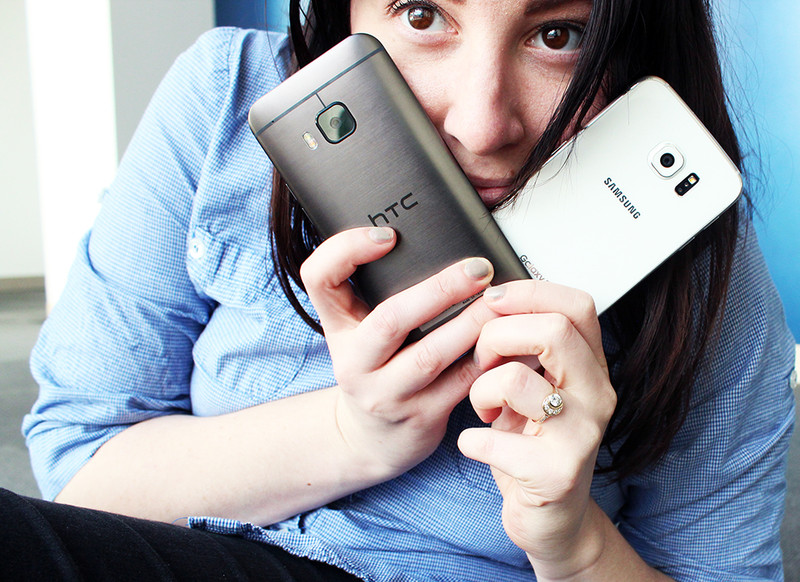
Hi, I’m Florence. You’re welcome to call me Flo.
I’ve been at Android Central since September and though I haven’t written much since I’ve started (Have you seen our Smartphone Buying Guides? I helped!), I have been writing about and reviewing Android smartphones for the past four years.
Some of you might know me from my work at Ars Technica. Most of you likely know me from my time at PCWorld/Greenbot and as the co-host of Twit.TV’s All About Android. I’m a devoted Android user and have been since 2010. My goal in life is to get everyone else and their techno-phobic mother to see the glory of the Android platform. There’s a reason I’ve stuck with it for so long (except for those six months I was on iOS—that was for science, I promise).
As a platform, Android is constantly evolving and that’s something I relate to.
As a platform, Android is constantly evolving and that’s something I relate to. As a human being, I’m constantly evolving: to be a better writer, journalist, friend, sister, daughter, and wife. And that’s part of Android’s mission, too: To be better than it used to be, not just with its software features and design aesthetic, but also to be more inclusive so that those who might not have found their place in other tech communities can belong regardless of their technological abilities and interests. It’s a beautiful message and one that particularly resonates with me.
Android is also evolving in a way that may not be as enticing to those of us die-hard users. With the launch of the Pixel and Pixel XL, we’re seeing Google attempt to pivot Android as a lifestyle for the mainstream.Why now? we ask when we’ve subscribed to this way of life for the past eight years? It’s a perfectly valid question, but we won’t know until Google explicitly spells out the answer for us. Perhaps we’ll know more by next year’s developer’s conference, though I certainly hope to uncover the reason before then in my own reporting.
It’s a bummer that Google’s new Android smartphones cost as much as a typical Samsung device, and that its Pixels will come with exclusive features, but I don’t think it’ll be detrimental to the platform. If anything, it demonstrates that there’s a major shift on the horizon. This next year will be a defining one for Android as a whole and I can’t wait to see what unfolds.
As more people become interested in using Android, it’s up to us to show them why this is the “people’s platform.”
As more people become interested in using Android, it’s up to us to show them why this is the “people’s platform.” I’ll be writing about my varying experiences with my library of devices, as well as distilling all the important information so that it’s digestible for even the entry-level Android n00b. I also hope to talk to more of you in the developer community, to hear about how you’re weathering the transition and how these changes are affecting you as contributors. My goal is to make Android more accessible to the billion-plus people that use it. So, if you’ve got a question, a comment, or even a complaint, tweet me or email me. I’m here to help with whatever you need.

