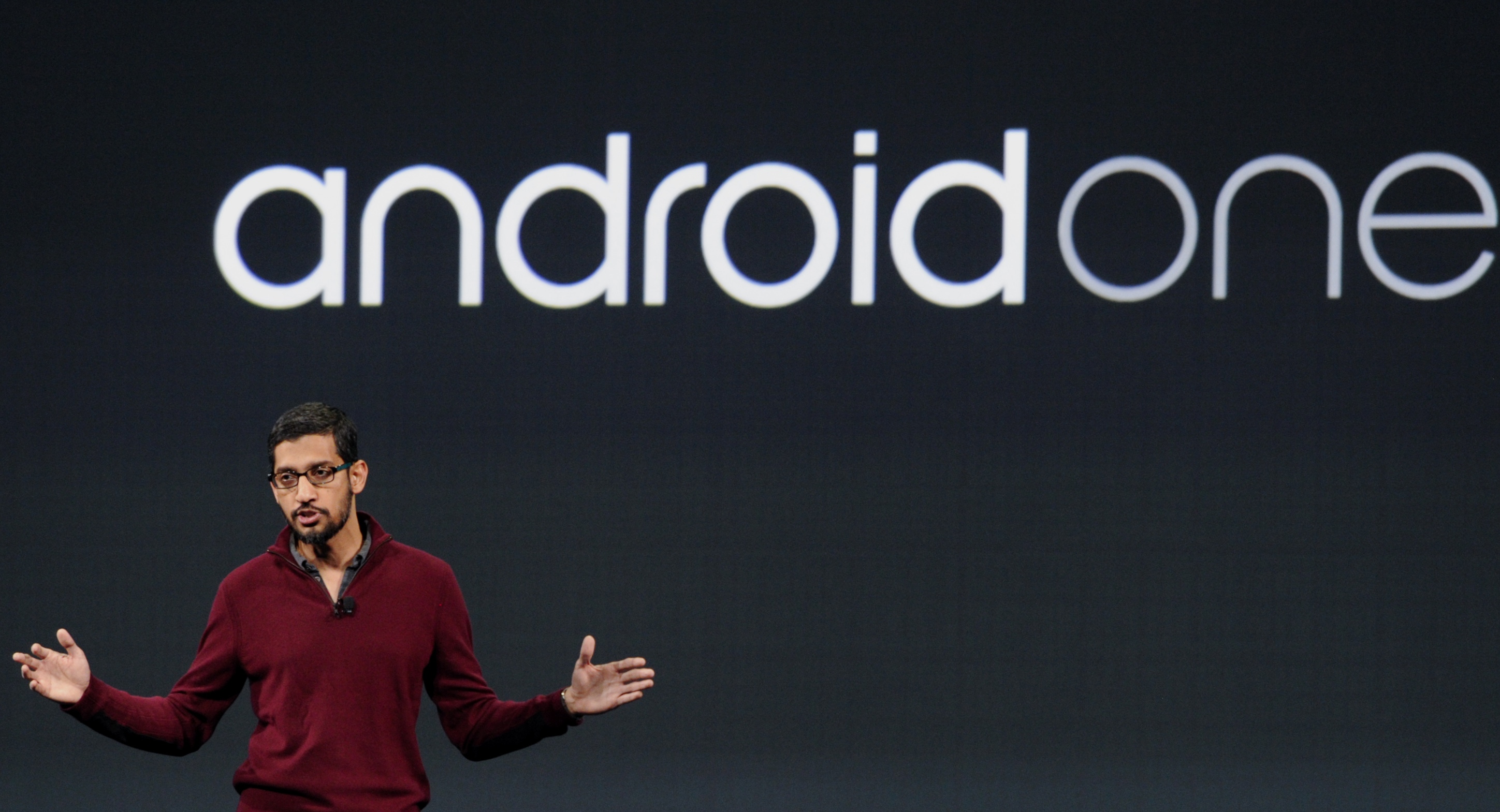
Google loosens grip on Android One partners in attempt to revitalize the program

Android One never really got anywhere, but Google isn’t giving up.
Since its launch back at Google I/O 2014, the low-cost Android One initiative was never the saving grace we had all once hoped it would be. The program promised solid Android-powered hardware, timely software updates straight from Google, a simple and easy to use software experience, and even more ways to save on high data costs. As it turns out, not many people were interested in these One devices, as the lower-cost competition began heating up in these countries, often offering users better devices for the money. Now that it’s been awhile since we’ve seen any new Android One hardware, what’s next for the program?
According to The Wall Street Journal, Google is taking another crack at it. Sourcing “people familiar with the matter”, this new report claims that Google plans to relax its rules and give Android One partners more options when it comes to choosing features and price.
Google is being much more lenient than it was before
Google and India’s Lava are supposedly planning to release a new low-cost One smartphone in the next few months. This will be the first Android One product under the more lenient, revamped initiative from the company. One major complaint many Indian phone makers had with Android One was the hardware restrictions set in place by Google that would limit the phone makers to only one or two choices for most components. Google required them to purchase from specific suppliers, as well.
This, for Google, ensured the smartphones were able to run the most recent version of Android. But for manufacturers, this meant less flexibility on pricing, and it also slowed down product launches. You see, if you’re making a smartphone that costs $100, every penny counts. That’s why Google had a difficult time getting manufacturers on board with the program, and those who committed to Android One only produced one or two devices.

This new approach, though, will allow Android One partners more freedom when choosing where each component comes from. Phone makers will now be able to purchase parts from their own approved vendors. Now, according to the WSJ’s sources, there are at least five different camera sensors to choose from. Phone makers can also now use other suppliers for the phone’s main processor, such as Qualcomm.
An executive at one phone manufacturer in India said Google’s more lenient attitude towards Android One “leaves little difference between the program and just producing regular Android phones.” With this in mind, do you think this will bring more sales to the Android One program, or do you think it will still continue to struggle? Be sure to tell us your thoughts in the comments below.
BlackBerry Priv to receive monthly Android security patches

In wake of the recent Stagefright vulnerability in Android, many OEMs have been committing to monthly security-focused updates for their devices. Companies such as Samsung, LG and Google have all committed to putting a bigger focus on security patches, and now we can add BlackBerry to that list as well.
BlackBerry has just released some detailed information as to how it plans to keep its upcoming Android-powered handset, the Priv, up to date with the latest security patches as they become available to the public. Specifically, the company says it will release monthly updates to users who have purchased the Priv through shopblackberry.com. If you happen to purchase your device from a carrier or authorized retailer, though, you might need to wait a bit longer. Only the carriers who agree to this monthly security update schedule will push out the patches in a timely manner. As of right now, we’re not entirely sure if the carriers are on-board with this update schedule.
BlackBerry will issue a hotfix if need be
Additionally, BlackBerry has detailed its plans to issue a “hotfix” to Priv devices if need be. This means that if a certain critical vulnerability is discovered that can’t wait for the monthly update cycle to roll around, BlackBerry will issue a hotfix to the affected devices. “While BlackBerry will work with its go-to-market partners on approval and delivery of hotfixes, BlackBerry has the ability to directly patch all PRIV variants and will do so when necessary to protect users and enterprises,” the company states. Of course, the ability to issue timely hotfixes largely depends on the severity of the vulnerability and the complexity of the fix.
BlackBerry also says that businesses can manage updates through the BlackBerry Enterprise Server (BES), which will let IT professionals control when these patches are rolled out.
It’s no surprise to see BlackBerry commit to monthly security patches for the Priv. The company has proven itself time and time again that it’s putting a huge focus on security, and we don’t think that will change with its new Android handset.
Firefox for Android gets a more powerful Private Browsing mode in v42 update

If you aren’t happy with your current mobile browser and happen to take privacy very seriously, perhaps you’ll want to pay attention to the new update that’s rolling out to Firefox for Android. In the big version 42 update, the third-party browser app is getting a new feature added to its Private Browsing mode called Tracking Protection.
Normally when you enter Private Browsing mode (or Incognito mode for the Chrome users), your browser will get rid of your history and cookies, but not a whole lot more than that. But when this new Tracking Protection feature turned on, Firefox will block some web content like advertisements, analytics trackers and even social share buttons that might record your behavior across sites without your knowledge.
The Firefox team is also adding in a new Control Center that will show you website security levels and privacy controls in your address bar. Using the Control Center will also allow you to easily turn off Tracking Protection in Private Browsing if the new feature ends up breaking the webpage. If you’d like more details on the two new features, check out the video attached below to learn more:
This new update is rolling out in the Google Play Store as we speak, so follow the link below to grab the latest version.
Vivo X6 teased officially as specs and images leak

Chinese smartphone brand Vivo had been expected to unveil a new handset today, but instead has taken the opportunity to tease an entirely different smartphone – the Vivo X6. Along with the teaser, images and hardware details about the handset have leaked, revealing a premium tier device.
Beginning with the teaser, it doesn’t reveal much about the X6, although it certainly looks like Vivo is going after the premium tier of the market. There are also references to a few “more surprises” and something about being “fast enough”, so says my translator. So we are probably looking at some serious performance grunt here.
While Vivo may have hidden the handset away in a box, a separate leak has given us a look at the back of the handset. There appears to be at least five color options to choose from, and the back of the phone looks to be made out of one solid piece of metal.

As for the hardware, the Vivo X6 will apparently be powered by a MediaTek Helio X20 SoC, which features 10 CPU cores arranges in three clusters with varying performance and energy targets. The X20 is built from two Cortex-A72 cores at 2.5GHz, four Cortex-A53 cores at 2GHz, and a further quad-core A53 cluster at 1.4GHz. There’s also a Mali-T880 GPU on board and support for LPDDR3 memory, which makes the chip very capable.
 Read on: 10-core MediaTek Helio X20 is official
Other specifications include 4G connectivity, 32GB of internal memory, “HiFi” audio, and a 3D Touch features, which is presumably something like Huawei’s Force Touch display. Additional rumors point to a 6-inch QHD (2560×1440) display, along with 4GB of RAM, a 21 megapixel rear camera and a 4,000mAh battery. These are not confirmed, but would certainly make the X6 a powerhouse flagship.
We’re not sure when Vivo is planning to announce the X6, but the appearance of a teaser suggests that it can’t be too far away. What do you think about the phone?
Huawei sees big growth in Europe, while Samsung and Apple lock down the US

As we enter the final months of 2015, the smartphone market is quite a different place than it was at the start of the year. Kantar Worldpanel has identified a couple of important trends, noting a big market shift in Europe while the US consolidates behind the two largest players.
In the US, Apple and Samsung now account for 66 percent of all smartphone sales, and combined account for 9 out of 10 of the top selling models in the US. According to the research, US customers looking to upgrade next year slightly prefer Apple over Samsung, by a margin of 43 to 34 percent respectively.

The majority of US consumers are looking either at an iPhone or Galaxy handset for next year’s upgrade.
That said, Android’s market share continues to grow in the US, up from 62 percent a year ago to 66 percent in Q3. Meanwhile, iOS has shrunk from 33 percent to 29 percent of the market. The situation is different in Europe, where Android has been losing ground to iOS in some of the continent’s largest markets. The United Kingdom now has a greater portion of iOS users than at any point before, while Germany has seen a 5.5 percent drop in Android’s share from a year before.
However, some Android manufacturers have been able to buck this trend to leap up in market share. Huawei has risen to second place out of all Android brands in Europe in Q3, up from sixth place in 2014. Huawei is also the top brand in China at the moment, followed by Xiaomi, meaning that the company is gaining a substantial international presence.
“With a wider portfolio of products ranging from the high-end all the way to the low-end, Huawei made particular inroads in Spain and Italy.” – Carolina Milanesi, chief of research at Kantar Worldpanel ComTech
Huawei handsets:
.rvs_wrapper
width: 350px;
.rvs_wrapper.align_left
float: left;
.rvs_wrapper.align_right
float: right;
.rvs_wrapper.align_center,
.rvs_wrapper.align_none
width: 100%;
.rvs_wrapper.align_center
text-align: center;
.rvs_wrapper.align_center.cbc-latest-videos ul li
float: none;
display: inline-block;
vertical-align: top;
.rvs_wrapper.cbc-latest-videos:not(.align_none) ul li:nth-child(2n+1)
clear: both;
.rvs_title
font-weight: 600 !important;
margin: 0 !important;
font-size: 24px !important;
.rvs_wrapper.align_right .rvs_title
padding-left: 20px;
.rvs_title a
font-family: ‘Roboto Condensed’;
color: #3a3a3a;
.rvs_wrapper.cbc-latest-videos ul
padding-top: 10px;
.rvs_wrapper.align_left.cbc-latest-videos ul li,
.rvs_wrapper.align_none.cbc-latest-videos ul li
padding: 0 15px 0 0;
.rvs_wrapper.align_right.cbc-latest-videos ul li
padding: 0 0 0 15px;
float: right;
.rvs_wrapper.align_center.cbc-latest-videos ul li
padding: 0 7px;
.rvs_wrapper.cbc-latest-videos ul li > a
font-weight: 400;
.rvs_wrapper.cbc-latest-videos ul li > a .yt-thumbnail
margin-bottom: 0;
@media only screen and (min-width : 480px)
body #page .rvs_wrapper.cbc-latest-videos ul
width: 100% !important;
@media only screen and (max-width : 480px)
body #page .rvs_wrapper.cbc-latest-videos
width: 100%;
float: none !important;
overflow-x: auto;
overflow-y: hidden;
body #page .rvs_wrapper.cbc-latest-videos ul
overflow: auto;
max-height: none;
body .rvs_wrapper.cbc-latest-videos ul li
float: left !important;
clear: none !important;

Huawei has managed to leap over several of its competitors in Europe as they have struggled with sales this year. HTC, Motorola (Lenovo) and Sony has all seen their shares slip as their latest products have not struck the same chord with consumers. Both HTC and Sony have reported particular poor mobile financial results this year, posing questions about how much longer these companies will remain interested in the smartphone market.
2015 has been testing for a number of smartphone manufacturers and 2016 could be a make or break year for a few of them. If you want to sift through some more of the data yourself, check out this interactive data visualisation below.
http://www.kantarworldpanel.com/global/smartphone-os-market-share/
Facebook passes new milestone with its AI research

Facebook’s AI brain has become rather good at detecting breeds of dog.
Facebook may be best known for its huge social network, but the company is also conducting research in exciting computing fields, including artificial intelligence. The company has been speaking a little more about how far it has come with its machine learning research this week and is preparing to put some of its technology to work in consumer products.
Facebook’s AI Research team (FAIR) has been working to train computers to identify objects in photos, understand natural language and to be able to plan ahead. Apparently, the company’s system is 30 percent faster and uses 10 time less training data than previous industry benchmarks.
The research team has devised a range of tests to teach computers a range of skills from predictive visual learning to understanding how to play Go. All of these ideas share one key theme, object recognition. This is an area that Google has been working on intensely for some time too, but Facebook is also looking to combine the idea with other technologies, such as language understanding.
Most recently, the research team has been working on object description. Facebook’s technology can analyse and pick out objects in both the real world and from pictures, including seemingly odd things like a species of dog. Facebook looks to be integrating this into its social network to help describe images to the visually impaired. In the end, the researchers envision that this type of technology can augment our own memories and provide more useful data at our fingertips.
There are a number of interesting videos in the source link below, if you want to see the technology in action. Founder Mark Zuckerberg shared the video below, which offers a closer look at what the company is up to. Facebook will also be presenting a new paper at NIPS next month, detailing how far the company has come.
Samsung sold 180,000 Gear S2 in China in under 8 hours

Samsung might have dominated the smartphone market but the company’s wearable efforts have, so far, failed to reach the same heights. The original Galaxy Gear ran Android but since then, the company has switched to its own Tizen OS – which was only compatible with Samsung smartphones – with mixed results.
Smartwatches in video:
.rvs_wrapper
width: 350px;
.rvs_wrapper.align_left
float: left;
.rvs_wrapper.align_right
float: right;
.rvs_wrapper.align_center,
.rvs_wrapper.align_none
width: 100%;
.rvs_wrapper.align_center
text-align: center;
.rvs_wrapper.align_center.cbc-latest-videos ul li
float: none;
display: inline-block;
vertical-align: top;
.rvs_wrapper.cbc-latest-videos:not(.align_none) ul li:nth-child(2n+1)
clear: both;
.rvs_title
font-weight: 600 !important;
margin: 0 !important;
font-size: 24px !important;
.rvs_wrapper.align_right .rvs_title
padding-left: 20px;
.rvs_title a
font-family: ‘Roboto Condensed’;
color: #3a3a3a;
.rvs_wrapper.cbc-latest-videos ul
padding-top: 10px;
.rvs_wrapper.align_left.cbc-latest-videos ul li,
.rvs_wrapper.align_none.cbc-latest-videos ul li
padding: 0 15px 0 0;
.rvs_wrapper.align_right.cbc-latest-videos ul li
padding: 0 0 0 15px;
float: right;
.rvs_wrapper.align_center.cbc-latest-videos ul li
padding: 0 7px;
.rvs_wrapper.cbc-latest-videos ul li > a
font-weight: 400;
.rvs_wrapper.cbc-latest-videos ul li > a .yt-thumbnail
margin-bottom: 0;
@media only screen and (min-width : 480px)
body #page .rvs_wrapper.cbc-latest-videos ul
width: 100% !important;
@media only screen and (max-width : 480px)
body #page .rvs_wrapper.cbc-latest-videos
width: 100%;
float: none !important;
overflow-x: auto;
overflow-y: hidden;
body #page .rvs_wrapper.cbc-latest-videos ul
overflow: auto;
max-height: none;
body .rvs_wrapper.cbc-latest-videos ul li
float: left !important;
clear: none !important;
However, earlier this year, the Korean OEM launched the Gear S2 at IFA 2015 and alongside its very impressive and unique circular bezel and interface, the new wearable also bought compatibility with any Android smartphone running Ice Cream Sandwich or later. The additional support was seemingly designed to make the Gear S2 more appealing to all users and based on a report out of China, it seems that Samsung’s attempts may yet prove to be fruitful.
According to the report, major retailer JD.com managed to shift 180,000 units of the new Gear S2 and Gear S2 Classic smartwatches in just 8 hours after putting them up for sale. Furthermore, retail stores are complaining about supply shortages as Samsung seemingly struggles to keep up with the demand in China while also rolling out the smart watch to additional countries around the world.
For Samsung, the news is definitely positive as it means the Gear S2 – which is arguably one of the most unique wearables ever made – has a chance to capture a stronghold in the market. Although 180,000 sales in 8 hours is definitely impressive, it does somewhat pale in comparison to the Apple Watch, which achieved approximately 1 million sales in its opening weekend.
In China, the Gear S2 is being sold for 2,198 Yuan (approx $350) while the Gear S2 Classic retails for 2,398 Yuan (approx $390). Both are competitively priced and if Samsung is able to make enough units to meet overall global demand, the Gear S2 range could prove to be the closest challenger to the Apple Watch, which currently dominates the wearables market.
Upcoming Nomad Wallet will also double as a 2400 mAh power pack

While quick charging and other tech improvements are making it easier to top off a phone’s battery, there are still times when you need to top off your phone but don’t have immediate access to a power outlet. In those instances, a power pack sure comes in handy. But how many of us actually bring an external battery everywhere we go? You just might, if this battery happened to also be your wallet.
The new Nomad Wallet looks like a fairly standard wallet at first glance, with a leather exterior and the ability to hold six cards, as well as some cash, receipts, or whatever else have you. The overall size also looks about what you’d expect from a real wallet, at 25 x 85 x 125mm. But what makes the Nomad truly stand out is that its hinge has a rechargeable power bank with a capacity of 2,400 mAh – which should be enough to charge most phones, or at the very least give it a nice top-off to last you until you’re able to get to that wall socket again.
 See also: Best Portable Battery Packs
Unfortunately, the only version currently up for pre-order is designed specifically for iPhone users, featuring a Lightning connector. The good news is that an Android version is supposedly on its way “soon”, so if you are at all interested in the concept, you might want to keep an eye on their website. We’ll also keep watch and update this post when the Android model becomes available.
As for the pricing? If the Android version sticks to the iPhone-charging model’s pricing, you can expect it to be offered for around $90. What do you think of the idea, could you see yourself purchasing one of these? Let us know your thoughts in the comments.
Samsung tops Indian smartphone market

Despite increasing competition from local and global rivals, Samsung has held onto its position as the top smartphone manufacturer in India. According to Counterpoint Research, Samsung had 23.2 percent market share in the smartphone market in Q3 2015, which is a slight reduction from 24.5 percent in the previous quarter.
Samsung in video:
.rvs_wrapper
width: 350px;
.rvs_wrapper.align_left
float: left;
.rvs_wrapper.align_right
float: right;
.rvs_wrapper.align_center,
.rvs_wrapper.align_none
width: 100%;
.rvs_wrapper.align_center
text-align: center;
.rvs_wrapper.align_center.cbc-latest-videos ul li
float: none;
display: inline-block;
vertical-align: top;
.rvs_wrapper.cbc-latest-videos:not(.align_none) ul li:nth-child(2n+1)
clear: both;
.rvs_title
font-weight: 600 !important;
margin: 0 !important;
font-size: 24px !important;
.rvs_wrapper.align_right .rvs_title
padding-left: 20px;
.rvs_title a
font-family: ‘Roboto Condensed’;
color: #3a3a3a;
.rvs_wrapper.cbc-latest-videos ul
padding-top: 10px;
.rvs_wrapper.align_left.cbc-latest-videos ul li,
.rvs_wrapper.align_none.cbc-latest-videos ul li
padding: 0 15px 0 0;
.rvs_wrapper.align_right.cbc-latest-videos ul li
padding: 0 0 0 15px;
float: right;
.rvs_wrapper.align_center.cbc-latest-videos ul li
padding: 0 7px;
.rvs_wrapper.cbc-latest-videos ul li > a
font-weight: 400;
.rvs_wrapper.cbc-latest-videos ul li > a .yt-thumbnail
margin-bottom: 0;
@media only screen and (min-width : 480px)
body #page .rvs_wrapper.cbc-latest-videos ul
width: 100% !important;
@media only screen and (max-width : 480px)
body #page .rvs_wrapper.cbc-latest-videos
width: 100%;
float: none !important;
overflow-x: auto;
overflow-y: hidden;
body #page .rvs_wrapper.cbc-latest-videos ul
overflow: auto;
max-height: none;
body .rvs_wrapper.cbc-latest-videos ul li
float: left !important;
clear: none !important;
Across its portfolio, the mid-range segment has proven to be the best seller for Samsung, with handsets such as the Galaxy J5 and J7 along with the Galaxy A series all proving to be successful for the Korean OEM. However, the company isn’t yet that competitive in the budget segment – where some of its rivals are experiencing great growth – but new handsets such as the Galaxy On5 and On7, which were announced yesterday, are expected to help the company compete in the low-tier market.
Unlike China and several other key markets, the Indian smartphone market shows no signs of slowing down with Counterpoint noting that smartphone shipments increased 12 percent compared to last quarter and 20 percent, compared to the same quarter last year. Smartphones now account for one out of every three phones sold in India and the rise of e-commerce giants Flipkart, Amazon and Snapdeal means one out of three handsets is now purchased online.
The Indian government’s “Make in India” campaign has seen many OEMs begin manufacturing handsets in the country, which has resulted in 25 percent of all devices sold in the quarter being made in India. Samsung already makes most of its Indian phones in India and now its rivals, such as Xiaomi and Sony, are also following suit. With the Indian market continuing to grow as others markets stagnate, one thing is clear – the Indian market will soon be a key battleground for all OEMs in the search for additional growth and profits.
Why an analyst thinks Samsung will stop making smartphones in 5 years, and why I disagree.

Ben Bajarin
As the market leader for Android, Samsung – both the company and the devices it makes – receives the lion’s share of attention from the media and many consumers. The world waits with bated breath for the next big thing to arrive, though some are lining up waiting for it to “fail”. The smartphone market has changed dramatically in the past couple of years however, and it is the latter sentiment which seemingly grows greater with each passing month. One analyst has now gone as far with the doom and gloom predictions to suggest Samsung will exit the market in 5 years time.
Specifically, Ben Bajarin, head of research at market research firm Creative Strategies, decreed that “Samsung will be out of the smartphone business within five years.”
His argument is largely centered around the idea that, essentially, the smartphone market has commodititized:
“Android’s new premium price point is between $300-$400 and the new mainstream Android smartphone price point is under $300. No other Android OEM, Samsung included, will sell in volume anything above those prices. At those prices, cutting edge innovation will be void, meaning the gap between iPhones and Android will grow.”
And:
“If you are not familiar with the Innovator’s Dilemma, it is that, as a market matures, the early innovators get disrupted by competitors who come into their space with lower priced products, similar specs (the specs that matter), and eat into the market share of the early innovator in the category. Once the market embraces good enough products, the innovator can no longer push premium innovations as their value is diminished once a good enough mentality sets in. Android devices in the $200-$400 range are good enough for the masses leaving Samsung’s $600 devices and above stranded on an island.”
Personally, it is difficult to believe that Samsung will ever “abandon” the smartphone market, as Bajarin suggests. Here’s why.
- Apple’s continued success is clear evidence people will pay premium prices. Bajarin’s thesis centers around the belief that Android smartphones have – on average – dropped in price point. Yet clearly, smartphone prices have not really changed. Apple not only managed to charge the same amount for this year’s 6S hardware refreshes, it actually sold more units than last year. Bajarin fails to account for the simple idea that customers who want to save money could just buy a cheap Android as an alternative.
- Bajarin’s thesis is largely centered around the idea that the smartphone market has essentially fallen into the same hole as the PC market. Most laptops now cost between $300-700 whereas they used to sell on average for almost three times that if not more. And yet. Microsoft’s Surface line is expensive. The Surface Book is super expensive. VAIO has an even more expensive product. The idea that the entire world will collectively have the same definition of pricing standards is both erroneous and narrow-minded, and is the exact reason why choice exists.
- Samsung has been making mobile phones for how many decades now? Bajarin explicitly mentions how the market has changed so much recently, yet fails to appreciate the fact that the market exists period. Jump back to 1998, or even 2004: were mobile phones the sensational tech-fest they are today? Nope. And yet Samsung – along with countless other OEMs – made, and continued to make devices even back then.
- Let’s be realistic here: Samsung, with all of its industries and divisions, is quite capable of competing directly with rival OEMs, the ones who are lowering prices. There is nothing actually stopping the company from lowering its prices, it just isn’t. This is exactly what Sony refused to do, however unlike the Japanese corporation, Samsung has been extremely aggressive about remaining competitive with new ideas and products. Why does Samsung continue to charge $800 for the Galaxy S line? Because it can. It’s the same reason Apple charges a small fortune for its products. If devices like the OnePlus 2, for example, can do high specs at a low cost, then why couldn’t Samsung as well? It certainly could, and at the very least – given the fact shareholders want results and not write-offs – the company would seemingly, sooner cut prices than exit the market entirely, thereby admitting defeat and sending investor confidence spiraling.
- Bajarin also mentions the idea that Samsung missed estimates this past quarter. It missed estimates, the likes of which are in part fueled by speculators such as himself. People who make bold claims about what might happen to any given company based on data that is often mathematically sound, yet fails to account for any kind of sudden change or unexpected occurrence.
Ultimately only time will tell how accurate this “death watch” proves to be. Just yesterday Samsung’s Vice Chairman had some very bold words to say about his company’s future, and indicated that significant, major changes were needed to continue on and survive.