


Nokia and Samsung announce patent licensing deal expansion

Nokia and Samsung have agreed to expand the cross license agreement covering patents, extending said coverage over additional patent portfolios of both parties. This newly acquired access on both fronts will enable Samsung and Nokia to further develop, launch and support more advanced technology.
While the exact list of patents already covered by the license, as well as the new specific listings, are rather vague Nokia did note in its press release the company expects revenue from patent and brand licensing to hit a combined total of approximately €950 million (just over $1 billion).
Press Release
Nokia and Samsung expand their intellectual property cross license
Espoo, Finland – Nokia and Samsung have agreed terms to expand their patent cross license agreement to cover certain additional patent portfolios of both parties. This agreement is in addition to the outcome of the arbitration between the two companies that was announced on February 1, 2016.
The agreement announced today expands access for each company to patented technologies of the other and reinforces Nokia’s leadership in technologies for the programmable world. With this expansion, Nokia expects a positive impact to the net sales of Nokia Technologies starting from the third quarter of 2016.
With this expanded agreement, Nokia Technologies’ annualized net sales related to patent and brand licensing is expected to grow to a run rate of approximately EUR 950 million by the end of 2016.
“With intellectual property portfolios from Nokia Technologies, Nokia Networks and Alcatel-Lucent, Nokia has a wealth of technologies relevant to mobile devices and beyond,” said Ramzi Haidamus, president of Nokia Technologies. “We welcome this expanded agreement with Samsung which recognizes the strength of our assets, and we continue to pursue new licensing opportunities across a number of diverse industries.”
Pokémon Go European release begins in Germany

Komm’ und schnapp sie dir!
Pokémon Go is already a huge global phenomenon, even though the game isn’t officially available outside of a handful launch countries. However there are signs that could be changing, with the game appearing on Google Play for some German Android users this morning.
So far the rollout seems to be confined to Germany, with the Play Store in the UK and other countries still the game as incompatible. As generally happens when an app is opened up to more countries, the process will be gradual, and some users may see it before others. So hold tight — we should know more as the day progresses.
In the meantime, be sure to hit the comments and let us know if you’re seeing Pokémon Go in your country, if it wasn’t available there already.
Pokémon Go
- Join our Pokémon Go forums!
- How to deal with GPS errors in-game
- Which team should you choose?
- How to play without killing your battery
- The Ultimate Pokémon Go Game Guide!
No more Oculus Rift delays, pre-orders shipped and you can buy one now
Almost four months after its consumer launch, the Oculus Rift is now available to buy without having to wait for ages.
Oculus has finally fulfilled the last pre-orders and newly ordered headsets will be packed up and shipped to customers within two to four working days.
In addition, the company is selling Oculus Rift headsets in retail locations around the US, with select Microsoft stores having units for sale to walk-in consumers. More than 500 Best Buy stores around the States will also have demo spaces to give customers a flavour of what the Rift can do.
The news came as the company announced its third annual developers convention. Oculus Connect 3 will be held 5-7 October in San Jose, with registration opening on 2 August at 9am PT (5pm BST).
- Oculus Rift: Price, shipping date and everything you need to know
- Oculus Rift preview: The VR revolution begins here
During that event, we’ll also find out when the Oculus Touch controllers are likely to be launched. Oculus says that it is still “on track to launch Touch later this year”.
More than 30 new titles, which are also expected for release this year, will also be demonstrated at Connect.
The Oculus Rift VR headset launched on 28 March, roughly the same time as the HTC Vive. Both are soon to be joined by major rival, the PlayStation VR, which is considerably cheaper and has the benefit of running from a standard PS4 console rather than a high-end PC.
NPD finally adds digital tracking to its game sales reports
For years, the NPD Group has tracked and reported video game sales figures. Every month, the company issues an email to the media detailing the top ten selling games for the month prior, total amount spent on games, hardware and accessories and year-over-year and generation-over-generation growth or decline. The glaring hole in those reports is that they didn’t account for digital game sales from places like Steam, PlayStation Network or Xbox Live. But that’s changing and with this month’s data, we’ll finally have steps toward a true, comprehensive picture of how much a particular title has sold, both from retailers and digital distribution.
It’s something that’s been in the works for five years, and the NPD Group has struck agreements with a number of publishers to track their digital data. Those include Activision, Capcom, Deep Silver, Electronic Arts, Square Enix, Take-Two Interactive and Warner Bros. Interactive. You’ll notice some pretty big gaps there: Bethesda, Microsoft, Nintendo and Sony. NPD spokesperson Liam Callahan said that if the group waited for everyone to come on board, that the tracking wouldn’t have ever launched. “If we waited to have every publisher in the world to sign up it would take forever,” he told GamesIndustry.biz.
In addition digital full-game purchases, add-on packs and micro-transactions will be tracked as well, but those sales numbers won’t be divulged to the press or public. And instead of separating the digital sales numbers from physical sales, they’ll instead be combined — much like the company doesn’t break down game sales by system. Games that come from publishers who aren’t disclosing digital sales data will be denoted as such.
Frankly, it’s about time that the NPD did this. As digital sales have ballooned (especially with the current crop of consoles), the firm’s reporting has been incredibly incomplete. With this, we’re getting closer to actually knowing exactly how popular a particular month’s games are in terms of sales.
Can you hear that? It’s the sound of the NeoGAF crowd and comment sections cheering over more data to scrub through and lord over each other’s heads come the third Thursday of every month.
NASA is making a small carbon nanotube telescope for CubeSats
A team of NASA Goddard scientists are developing a lightweight and low-cost telescope small enough to fit inside CubeSats. Those mini satellites provide the agency an inexpensive means to send various experiments to outer space. By creating a small telescope sensitive to ultraviolet, visible and infrared wavelength bands that can fit inside a CubeSat, NASA will be able to explore space for cheap. Obviously, the images it sends back won’t be as high-res as the photos taken by Hubble or by one of the humongous ground-based telescopes. However, the team says it could be a great “exploratory tool for quick looks that could lead to larger missions.” It will also likely be the first one to use the new carbon nanotube mirror the team designed.
Other telescope mirrors are made of aluminum or glass, but the team’s was created using carbon nanotubes embedded in an epoxy resin. Since carbon nanotubes are exceptionally strong, the team’s mirror is tough and is an efficient conductor of heat. It also doesn’t require polishing, which is a time-consuming process, bringing costs down even further. While NASA’s scientists plan to use off-the-shelf components for the telescope, it might still take a while before we see the finished product. Their carbon nanotube mirror is a brand new technology and requires loads of testing before it’s ready for space.

Source: NASA
London is lending its Tube payment tech to other cities
The London Underground is renowned for its iconic stations and world famous Tube map. However, millions of travellers have also come to rely on its technological expertise, which includes the ability to swipe in and out of barriers with a bank card, mobile phone or even a smartwatch. Some metros around the world employ their own version of the Tube’s contactless system, but under a new deal announced by Mayor of London Sadiq Khan, many more will soon be outfitted with payment technology first pioneered by Transport for London.
The deal, which is worth up to £15 million, will see Cubic Transportation Systems (CTS) adapt London’s contactless ticketing system to work with existing systems in other cities. It helped TfL introduce the Oyster card and then adapt barriers to support contactless cards, but also create a backend that is capable of combining millions of swipes into easy payments. It’s now possible that passengers in Sydney, Brisbane, Vancouver and Chicago, where CTS also operates, will soon enjoy the same freedom of travel.
While commuters all over the world are set to benefit from the new system, Londoners won’t miss out. Sadiq Khan says that the money earned from the new licence will be used to freeze fares across Transport for London services over the next four years and is just the start of a number of planned agreements.
“I made a firm commitment to sell Transport for London’s expertise around the globe,” says Khan. “We will use the income from those deals for further investment in new infrastructure and to freeze TfL fares.”
Xbox Live now supports high-quality PC Twitch streaming
If you want to use the Xbox Live network to tell followers you’re streaming Xbox One games on Twitch, there’s just one way: Stream from the console’s Twitch app. The problem is that the quality and options are very limited, since the Xbox One isn’t exactly a TV production studio. However, Microsoft and Twitch have teamed up to make it possible to use Xbox Live when you’re streaming from a PC using a capture card — all you need to do is link your Xbox Live and Twitch accounts.
That’ll let you use a card or standalone box like the Elgato HD60, AVerMedia GC550 or other on a PC, along with an app like OBS (open broadcaster software), to get higher quality streams, keying, graphic overlays and other options not supported on the Xbox One itself.

At the same time, your content will show up in the “activity feed on Xbox One and Xbox apps on Windows 10, iOS and Android,” according to Xbox’s Major Nelson. Followers will also receive notifications on the Xbox One and Xbox apps, and on the “product details” page of the game in the Xbox Store. In other words, you’ll be able to get the word out about your Xbox One game streaming without giving up video quality, graphics, Skype guests and other options. The feature is now up and running, so to make it work, you’ll just need to link up your Xbox Live account from the connections section in your Twitch settings.
Source: Xbox (Major Nelson)
How to get Poké Balls in Pokémon Go
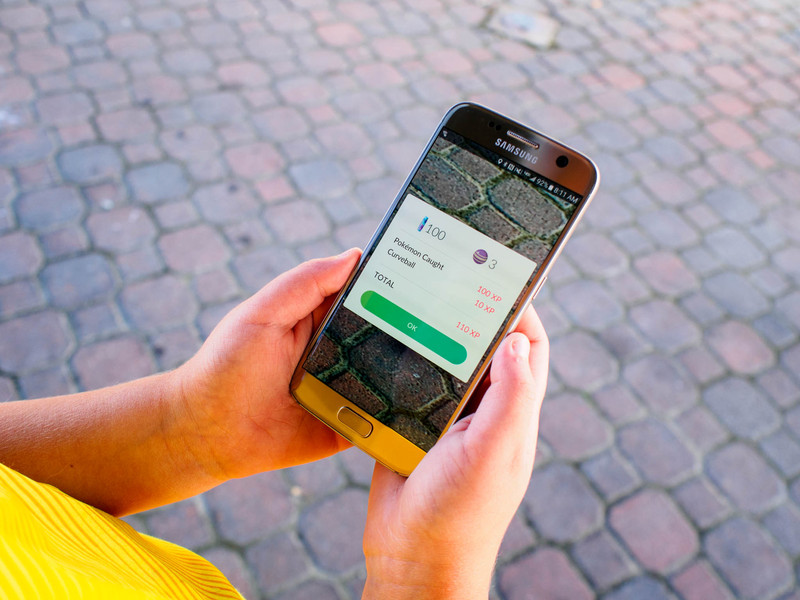
How do I get Poké Balls in Pokémon Go?
You need Poké Balls in order to capture those elusive Pokémon out in the world. If you run out, here’s how to get more.
Find PokéStops
PokéStops are special locations in the world where you can get random items, including Poké Balls, Eggs, Revives, and more. They appear as blue squares on your map and are always located in public places — look for them in areas where people gather, near distinct architecture in your region, landmarks, or public art.
Launch the Pokémon Go app from your home screen or the app drawer.
Find a PokéStop in Map View. They looks like blue squares.
Approach the PokéStop. When you are near enough to search it, it will open and present you with a wheel.
Tap on the wheel to spin it.
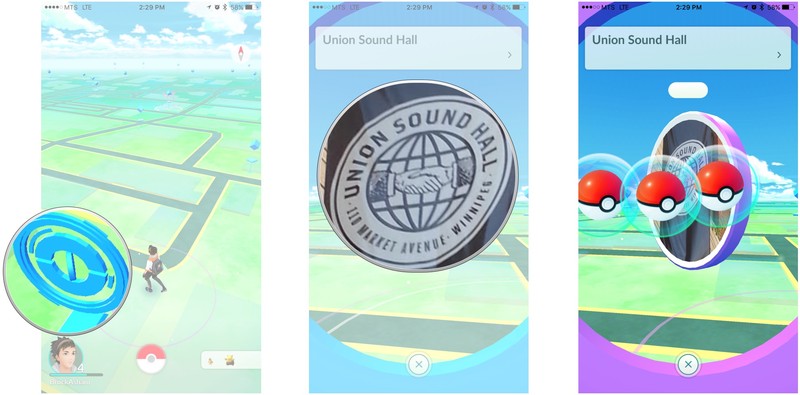
That’s it. your Poké Balls or any other items you get will appear in your Bag.
Buy Poké Balls with PokéCoins
The easiest way to get more Poké Balls is to buy them with PokéCoins. PokéCoins cost real money, so don’t go crazy with this.
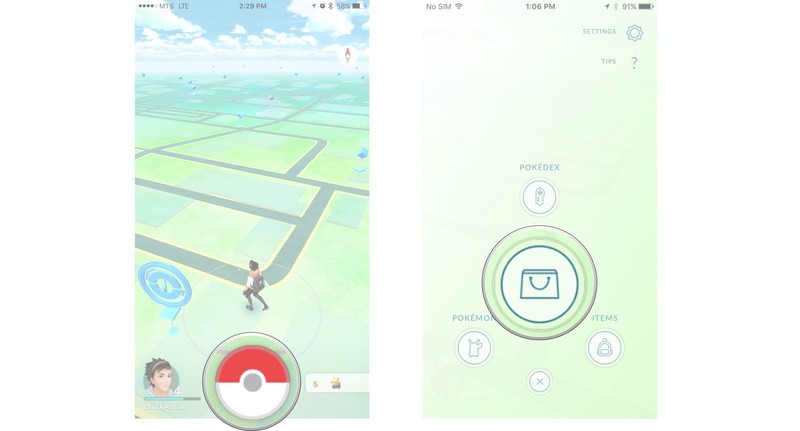
Launch the Pokémon Go app from your home screen or the app drawer.
Tap the Main Menu button in Map View. It’s the Poké Ball at the bottom of the screen.
Tap the Shop button. Your PokéCoin balance appears on the top of the screen.
Tap a Poké Ball pack to select it.
Tap the Exchange For to complete your purchase.
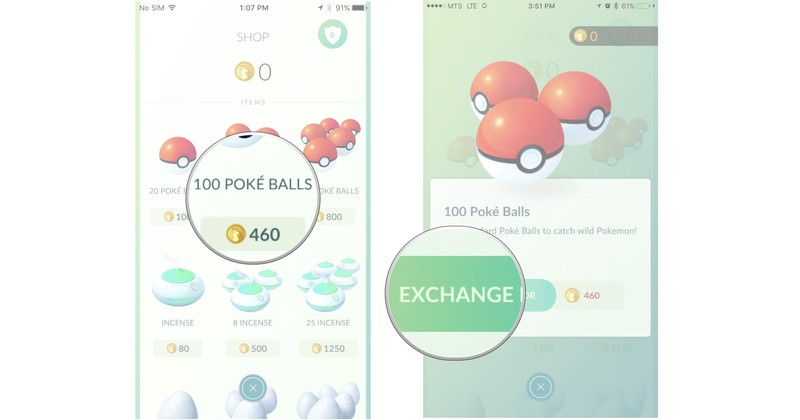
That’s it. Your Poké Balls will appear in your Bag after a short delay.
What about you?
Do you have any tips for getting more Poké Balls? If so, share them in the comments below.
Pokémon Go
- Join our Pokémon Go forums!
- How to deal with GPS errors in-game
- Which team should you choose?
- How to play without killing your battery
- The Ultimate Pokémon Go Game Guide!
Seeing a Spanish update message on the Nexus 7 (2013)? Don’t install it just yet
Several users are receiving an update message in Spanish on the Nexus 7 (2013) configured for English. The update includes the July security patch and comes in at 12.1MB, but the description is in Spanish and it looks like there isn’t a way to clear the update notification. According to Google’s issue tracker, the update is being received by users across regions.

Per the discussion in our forums, Google is aware of the issue:
Just got off the phone with a Google representative about the same issue. After contacting a specialist with the details of the problem, they recommended that I wait to install the update until further information. After hearing that others on the forums are having the same problem, she said she would bring it to Google’s attention that multiple Nexus 7 marshmallow users were having the same issue.
We’ll update the post once we hear back from Google, but for now, hold off on updating your Nexus 7 (2013).
Continue the discussion in the Android Central forums
Thanks Charlie!
Google acquires content sharing service Kifi to boost its Spaces collaboration app
Google has acquired Kifi, a startup that makes extensions allowing users to share, analyse and collaborate on links from social apps and across the internet. The startup also has a link recommendation service, which will be integrated into Google’s Spaces group chat and collaboration service in the coming weeks along with the rest of Kifi’s technology.

Commenting on the acquisition, the Kifi team wrote on Medium:
The mission at Kifi has always been to connect people with knowledge. We created a service that seamlessly enables organizing, sharing, discussing, and finding the content you and your team values, which has resulted in more flexible and intuitive collaboration across the internet. We also spent significant time creating a service that overlays context on your browsing and sharing experiences to increase usefulness and understanding.
We see a lot of alignment to Google’s mission to organize the world’s information and make it universally accessible and useful. Our team will be joining the Spaces team at Google to build solutions focused on improving group sharing, conversation, and content finding. Frankly, we’re thrilled they have a bit of “space” for us!
Google launched Spaces earlier this year to a lukewarm response, but the service’s focus on group chat could benefit from Kifi’s link recommendation feature. While exact terms weren’t disclosed, Kifi’s team will be joining Google, and the app itself will be shut down in the following weeks. Kifi’s data will not become a part of Google, and existing users will be able to export their data before the service shuts down.

