


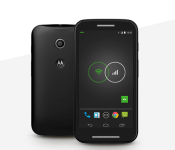
Ultra affordable Moto E gets added the Republic Wireless line-up
Republic Wireless has announced a third device addition to their official line-up today. The MVNO carrier already offers the older, but still great, Moto X and Moto G for customers looking to cut the big name carriers out of the equation with low-cost solutions. Now they are adding the Moto E to the mix.

The addition of the Moto E rounds out the Republic Wireless offering quite nicely with the device only being $99.99 out-of-pocket. The Moto E brings a smaller 4.3-inch 960×540 resolution screen, dual-core Snapdragon 200 processor, 1GB of RAM and 4GB internal storage. Unlike the Moto X and Moto G, the Moto E does offer micro SD support. Republic Wireless is currently offering the Moto E in both White or Black
Plan wise Republic Wireless has a variety of offerings suited for just about anyone. You can go for a Wi-Fi only service for $5 a month, Wi-Fi and 3G cell coverage for $25 , or Wi-Fi and 4G cell for $40. (The Moto E offering doesn’t support 4G) All of which are unlimited talk and text and data. Republic Wireless uses Sprints network as their coverage choice.
Go check out the new phone and the plans if anything above sounds like it might interest you. I am personally thinking a Moto E and the Wi-Fi only plan for $5 a month would make a great home phone option for the kids. Heck, even the $10 a month plan with no data outside of Wi-Fi would be a pretty sweet deal.
Source: Republic Wireless
//<![CDATA[
ord = window.ord || Math.floor(Math.random()*1E16);
document.write('‘);
//]]>
The post Ultra affordable Moto E gets added the Republic Wireless line-up appeared first on AndroidSPIN.
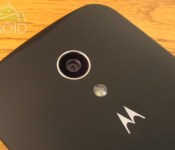
Motorola announces which devices will get Android 5.0
 Now that Android Lollipop and Motorola’s enormous Nexus 6 are official, Moto has clarified which of their devices will be seeing the update to Android 5.0. The good news? If you own any kind of recent Motorola device, you’re probably getting this update.
Both the old and new Moto X will see the update, as well as all versions of the Moto G. The Moto E is also getting updated, and Verizon’s lineup of the Droid Ultra, Droid Maxx, and Droid Mini are, too.That covers pretty much every major device Motorola has announced within the past two years.
No word on exactly when you’ll start seeing these updates, but Motorola has been very quick with their devices lately. Now we’ll just have to wait on HTC and others to clear things up.
source: Motorola
Come comment on this article: Motorola announces which devices will get Android 5.0

Moto T? Lenovo outlines its plans for a new Motorola Tablet

With the acquisition of Motorola due to be complete by the end of 2014, Lenovo plans to re-brand some of its products with the Motorola name. Sources say this will include smartphones and tablets. Depending on region and/or brand awareness, Lenovo could conceivably take any of its tablet/smartphone offerings and slap a Motorola badge on them.
Hopefully, Lenovo is wise enough to notice that Motorola’s brand identity has changed, drastically, over the last two years. Motorola has gone from a mobile phone mill, churning out model after model of basically the same phone to a company that makes much more intentional decisions based on design and function. A Lenovo tablet with a Motorola tag on it seems counterproductive.
If this is the overall strategy, all of the momentum Motorola has built will be lost. The Moto X, G, and E, along with the Moto 360, will be lost in a sea of mass produced plastic garbage built to flood the market and make a few bucks.
Excuse me for being overly critical of Lenovo, but I’ve become a big Motorola supporter in the last 18 months and want to see where their current thinking will take them.
A Motorola designed Motorola Tablet could be pretty awesome. A Lenovo designed Motorola Tablet will end up on the bargain shelf in your local electronics store.
via [G4Games]
Source [ChinaTimes]
 |
The post Moto T? Lenovo outlines its plans for a new Motorola Tablet appeared first on AndroidGuys.

AT&T Hints at Imminent Nexus 6 Release
 The Nexus is approaching! AT&Ts website has leaked news about the new device, notably that it will be available directly through the carrier and supposedly priced at $50 on-contract.
The information takes some looking for to be able to see, though. When you look at the page for the LG G3 Vigor, in the sidebar, there sits the Motorola Nexus 6. Don’t get too excited: the link will only take you to other Motorola phones already on the network.
The photo in the box is also the LG Vista, which will hopefully change after the release date tomorrow. *Fingers Crossed.* Hopefully the price doesn’t change, though. If you want to enter into a contract with the death star, it’d be better to enter into it with an extra $150 in your pocket, compared to the $200 price point for most flagships.
Source: AT&T‘
Via: Android Police
Come comment on this article: AT&T Hints at Imminent Nexus 6 Release

Motorola Nexus 6 makes early appearance on AT&T’s site with a $49.99 contract price tag
 If you have grabbed a bottle, a case, a sixer or just a few sodas to help keep you entertained though the evening while you hopefully catch anything Motorola Nexus 6 related, then you are in luck. Seems AT&T slipped up some and have a listing in their system for the Motorola Nexus 6. Before you go losing your mind, the link doesn’t work and yes, that isn’t a Nexus 6 image. Rather it is place holder image of a LG G3 Vista.
The associated link does take you to the Motorola device offerings from AT&T though. Which more than enough confirmation for me that AT&T will be launching the Nexus 6 soon. The current pricing listed on the image points to $49.99 with a new contract. I am not 100% sold on that myself, but it is very possible. If you want to see it for yourself then head to AT&T to the LG G3 Vigor page. Look over to the field on the right and you should still see it listed. I did at least.
Let the madness continue!
Source: AT&T via Android Police
//<![CDATA[
ord = window.ord || Math.floor(Math.random()*1E16);
document.write('‘);
//]]>
The post Motorola Nexus 6 makes early appearance on AT&T’s site with a $49.99 contract price tag appeared first on AndroidSPIN.

New image and details for Verizon’s DROID TURBO surface

The line of leaks surrounding the Motorola DROID TURBO from Verizon got a little longer today with another image and details about the device surfacing. You may recall the name of the new device is rooted in a desire for the smartphone to charge quickly and it appears Motorola may have succeeded. Despite having a large 3,900mAh battery that should last two days, users should be able to juice up the device for eight hours of use with only 15 minutes of charging.
Externally, the device appears to most closely resemble the DROID MAXX from last year. Red and black versions will be available and the back panel will have a distinctive pattern thanks to Kevlar reinforcement. Although not certified as water resistant, the DROID TURBO should be able to survive “everyday spills and 20 minutes in a downpour.”
Other hardware includes a 2.7 GHz Snapdragon 805 processor, 32GB of internal memory, 3GB of RAM, and a display that measures 5.2-inches with a quad HD resolution resulting in 565 ppi. The smartphone will come with a 21MP camera and will be capable of recording 4K video.
It appears the DROID TURBO will ship with Android KitKat 4.4, although sources did not specifically include operating system information in the leaked marketing materials. Despite being a Verizon exclusive, it appears buyers will have to wait 1-3 months for support for Wireless Calling 1.0 to be available on the device. The DROID TURBO is also slated to get a variety of Moto X type features like Moto Voice, Moto Actions and others along with some Droid model line specific apps and features like Zap Zone for local sharing.
The DROID TURBO is shaping up to be a high-end phone for Verizon and at least from a specs standpoint, able to hold its own against anything else on the market.
Anyone out there planning to check out the DROID TURBO when it is released later this month?

source: Android Central
Come comment on this article: New image and details for Verizon’s DROID TURBO surface

New images, specs seemingly confirmed for Droid Turbo

For those that have Verizon and are dying for some juicy new Droid Turbo details, we have them for you.
An anonymous source has given AndroidCentral some leaked marketing materials for the Droid Turbo, giving us a couple new photos, and confirming many specs that have been rumored.

Droid Turbo picture from marketing materials
Red (like previously leaked) and black versions will be available (pictured above) and will have a “metallized glass fiber” body that is scratch-resistant, and splash-resistant. The phone can withstand “everyday spills and 20 minutes in a downpour”. The display has Corning Gorilla Glass 3, and the back is reinforced with Kevlar “offering a smooth finish”.
As previously thought, there’s a 5.2-inch screen, though now we know it’s Quad HD (2560×1440) resolution display (565 pixels per inch). It also confirms a 21-megapixel camera with 4K video recording capabilities and Dual LED flash that we had also suggested, along with Qi-wireless charging and NFC support, and the inclusion of Moto features such as Moto Display, Moto Voice, etc. We also had previously reported and now can confirm that it will have a 3,900 mAh battery, and it will come with Motorola’s turbo charger.
What’s new is a 2.7GHz quad-core Snapdragon 805 processor, and 3GB of RAM. Also, there are Motorola camera features like Quick Capture and video highlights that are on the new Moto X. It will also have VoLTE capabilities within 30-90 days of launch.
It appears as though it will have Android 4.4.4 (though not confirmed in leaked marketing materials), and will have some new “Zap” features from Verizon.
As we’ve been thinking, this is going to be one heckuva phone.
Do you like what you see?
via AndroidCentral
|
The post New images, specs seemingly confirmed for Droid Turbo appeared first on AndroidGuys.

Smartphones in one year: Project Ara (Opinion)

Smartphones have come a long way since their inception; though the idea of a portable device with internet connectivity and calling features has been around since the 1980s, it was not well received until 2006, with Blackberry’s new devices such as the Curve and Pearl. It revolutionised the way mainstream society viewed portable electronic devices and our uses for mobile phones. However, Blackberry did not enjoy this success for long, with the launch of the revolutionary iPhone, from Apple. It incorporated a touchscreen, and only 4 buttons. People were amazed by the fluidity of a device which essentially had nothing but screen on the front face. Apple’s market share grew rapidly, for example, increasing 626% globally in the smartphone sector, between the last quarter of 2008 and the first quarter of 2009.
The smartphone industry proved itself unpredictable once more in 2010, with Android’s new ‘Gingerbread’ overtaking iOS in the US, having already overtaken iOS in markets such as South Korea in 2009. With this saw the rise of OEMs such as Samsung, LG and HTC. Apple released the iPhone 4, a beautifully designed phone with ‘Retina display’ which yielded a positive response from the consumer market. Blackberry’s RIM was still going strong, however, failing to generate sales. 2010 also saw Microsoft’s attempt to tap into the smartphone market with Windows Phone, which did not meet good reception.

The home interface of Android gingerbread – image source: http://developer.android.com/about/versions/android-2.3-highlights.html
In 2011, with the release of Android 4.0.4, or ‘Ice Cream Sandwich’, Android phones finally started to be perceived as high-end, mainly due to the refreshed, sleeker interface Ice Cream Sandwich brought, and the smoother user experience, thanks to ‘Project Butter’, in Jelly Bean, 4.1. Android’s market share grew further to 36% in the US, placing them in a comfortable first position in terms of market share. Samsung also released the hugely popular Galaxy S2, and Apple released the iPhone 4S, which brought in Siri, a voice controlled assistant. By this point, Blackberry’s market share in the US decreased to less than that of Android and iOS.

The home interface of Android Ice Cream Sandwich – image source: http://developer.android.com/about/versions/android-4.0-highlights.html
Fast forward to 2014, where 80% of the world’s smartphones run on Android, and where Samsung is the biggest producer of smartphones internationally. Android Kit Kat brought performance and aesthetic improvements to Android, and Apple’s iOS got its long-awaited makeover in iOS 7 – which produced mixed opinions. HTC and LG gained a significant amount of market share, with the One M8 and G3 respectively, in markets such as the US, Europe, South Korea and Australia. However, it came as a shock that less popular manufacturers such as Huawei, Lenovo and Xiaomi had superceded manufacturers such as LG, Sony and HTC in the global market. This reiterated the influence that the Chinese market had on global business, and its sheer size.
The sudden entry of China into the smartphone market was expected, but not to the scale which it has. Not only have the consumers in China played a huge role in the global market share of OEMs, but their manufacturers such as Huawei, Xiaomi, Lenovo, Oppo, and more recently, OnePlus, have given the traditional smartphone manufacturers such as Samsung a real dilemma. Samsung is rapidly losing profits; quarterly projections going down by numbers such as 40% and 60%, and LG and HTC are struggling to keep their heads above the water. Chinese manufacturers are beginning to build great devices such as the OnePlus One, or the Xiaomi Mi3, with high-end specs, but sell for half the price of their counterparts of traditional OEMs.

The ‘flagship killer’ OnePlus One, from OnePlus – image source: http://oneplus.net/
I believe that next year will be pivotal in the smartphone industry; due mainly to the speculated release of the modular phone; Project Ara.
Project Ara will be the ‘next big thing’. It can be tailored to the needs of the individual, therefore, has the capacity to be a high-end or mid-range device. The concept of not having to buy a new handset every time a new chipset comes out, or when the screen is cracked, is intriguing. If marketed and manufactured well by Google, it will cause the idea of the ‘complete handset’ totally redundant. Consumers will only buy a new processing package, insert it into their modular phone, at only a fraction of the cost of buying a totally new handset.
This will pose a serious concern for current manufacturers. Instead of building complete handsets, companies will look for ways to monopolise the industry for a certain part of the modular phone. For example, Samsung and LG may both aim to control the displays of Project Ara, while Qualcomm with the chipsets. Unless the business can achieve a monopoly or duopoly of such industries, they will experience severe losses, provided that Project Ara is successful.
What must also be considered is the third-party, non-authorised manufacturers. These will be extremely popular in markets such as China, which, as proven before, is a market crucial to the survival of a consumer-oriented business. These ‘pirate’ manufacturers will provide parts of lesser quality, however, cheaper price, and can cause a formidable dent in the income of respective manufacturers.
The potential repercussions of the launch of the Project Ara platform to the smartphone industry are concerning. If it is as popular as it is believed it will be, it will result in the complete monopolisation of the smartphone market with Android, and with only one handset. It will minimise variation, innovation, originality and creativity; the smartphone industry will be extremely static. Therefore, I can hope another company will reciprocate Project Ara in an equally fantastic product, in order not to let Google singularly rule the industry, and maintain the dynamic, multifaceted environment of the smartphone industry, which is ultimately what renders the sector as stimulating as it is.
|
The post Smartphones in one year: Project Ara (Opinion) appeared first on AndroidGuys.

Here’s what Google’s giant Nexus 6 phone (probably) looks like

You may have already seen concepts and sketchy photos of Google’s long-fabled 6-inch Nexus, but it now looks like the final veil of secrecy has been removed from this future Android flagship. Evan Blass (aka @evleaks) has posted an apparent leaked press image for the new smartphone that supports many of the existing rumors. The massive screen full of Android L imagery is likely the biggest giveaway, but the device also has the Moto X-style grilles and side trim that many have been expecting from the reportedly Motorola-made device. There aren’t any new hints as to when this supersized hardware would arrive, and it’s still not completely certain that this is what you’ll eventually hold in your hands. However, Google’s tendency to unveil new Nexus gear around October or November suggests that you won’t have very long to wait.
Filed under: Cellphones, Mobile, Google
Source: Evan Blass (Twitter)

Lenovo to launch tablets under Motorola’s name once acquisition completes

Motorola has not released a tablet in more than four years. In October 2011, it was the Xyboard that hit the market to represent what the company could do with tablets. Pretty soon, though, Motorola will return to the tablet market (just like HTC). Lenovo just needs to finish the acquisition process which is expected to happen by the end of this year.
Lenovo CEO Yang Yuanquing said in an interview that tablets would return to the Motorola brand after his company has completed the acquisition. As expected, new phones will be on the way as well. The Chinese company is applying a dual-brand strategy with Motorola. Depending upon the brand awareness in certain regions, Lenovo will either apply its own, Motorola’s, or both names to a product. For example, it is safe to assume the Motorola name will be the only one used in the United States. Other markets, like China, will likely continue to see Lenovo.
Source: China Times
Via: G 4 Games
Come comment on this article: Lenovo to launch tablets under Motorola’s name once acquisition completes
 AIVAnet