


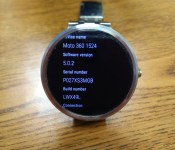
New Moto360 update offers bug fixes and updated Play Services

For those of you with the Moto 360, you’ll be happy to know that Motorola has announced a new update for the Android Wear watch. While it doesn’t add to much in terms of excitement, it does add updated Google Play Services plus bug fixes and optimizations. According to Motorola you’re going to see it rolled out in phases over the next few days so your mileage may vary.
That said, you’ll be on the most current version of Android as soon as the update hits. When you get the update, you’ll need 80 percent battery life to install it. Let us know if you’re seeing the update.
source: 9to5 Google (photo via Ryan Shyffer)
Come comment on this article: New Moto360 update offers bug fixes and updated Play Services

US Cellular Moto X 2nd Gen gets Android 5.0.2 Update
 Moto X 2nd Gen users on US Cellular are the next in line for some update sweetness with Android 5.0.2. The improvements are many, and if you want to see all of the neat new features, the info can be found here: Lollipop Moto X 2nd Gen info.
Some of the new improvements include notifications improvements, Material Design, a convenient quick settings flashlight, and better multitasking. There is also another set of improvements in the area of profiles on your phone. You can now have multiple profiles on your device, and also have guest profiles on your phone. Check the link above if you haven’t yet to find out everything that this update has to offer.
Source: Google Plus
Come comment on this article: US Cellular Moto X 2nd Gen gets Android 5.0.2 Update

Lollipop soak test for 1st Generation Moto G starting to roll out
 While most other manufacturers are busy getting their flagship devices ready for Android Lollipop, Motorola is prepping its first generation Moto G for the update. Some users with the 8 GB, 3G-only Canadian model have been notified about the Android 5.0.2 upgrade, so while that’s being limited to a very small selection of devices, it does mean that a bigger rollout is on its way.
This soak test brings devices up to Android 5.0.2, skipping 5.0.1. The incremental update really only affected tablets, but at least you’ll be able to say you’ve got the latest and greatest on your Moto G when it hits. At least until Google takes the wraps off of Android 5.1, anyway.
Keep an eye out for this update over the next few weeks if you’re still using the original Moto G.
source: Mobile Syrup
Come comment on this article: Lollipop soak test for 1st Generation Moto G starting to roll out

Android Zodiac: notable Android events
Android has come a long way since its release. From the HTC Dream to the Nexus 6, everything has changed. To come so far, significant things have happened that have changed the Android world. To highlight some of these events that have occurred, I have created an Android Zodiac! Yes, I’m aware this is not the same as the Chinese Zodiac, and this doesn’t really say anything about those born in those years. If you’re looking for something like that, check out our article called “What does your phone say about you“. Anyways, let’s dive in.

2007: Year of the Open Handset Alliance
2007 was a big year in not only the Android world, but the technology world as a whole. This was the year that the first iPhone was announced, and when Google and 47 other firms announced the Open Handset Alliance that would lead to Android. The reason for this was to unite companies to “enable everyone in our industry to innovate more rapidly and respond better to consumers’ demands” by having an open operating system, Android. The SDK is available to everyone, and the goal is to have one standard among mobile phones. If you’re interested, you can even look at the website that was released for this here. Definitely a blast from the past! Anyways, it would be the Open Handset Alliance that would help make Android the most popular OS on the market.

2008: Year of the HTC Dream
In 2008, the very first Android phone was released: the HTC Dream. Also known as the T-Mobile G1, this was the first phone to showcase Android. This smartphone not only had a sliding keyboard, but it had a home screen you could customize, complete with a wallpaper and widgets. There was also a new notification system that displays the icon for an app in the status bar whenever there’s a new notification, and you can slide down from the top to view more details about the notification. There was also integration with Google services allowing access to Gmail, YouTube, and more. On top of all of that, it was backed by the OHA, Google, and a promise to have updates brought to it that would bring new features and bug fixes. This device would change how software is designed and implemented for devices everywhere. Another interesting thing about this is HTC would later be the first for other landmarks in Android. But more on that later…
2009: Year of the Android Wars
2009 was the year that most of the manufacturers we know in Android phones today started to make Android phones. Samsung, Motorola, HTC, Sony, LG, and more all threw their hat into the Android phone ring. HTC released four other smartphones after the HTC Dream; Samsung released the first Galaxy phone, along with three other phones; Motorola released three phones along with their first DROID, Sony released the first Android Ericsson phone, and LG released a phone. Below is a collection of some of the phones along with a link to their specifications.
Note: I may have missed a few devices. Please let me know what I’ve missed!
 Samsung
 Motorola
 HTC
HTC
 Sony
Sony
 LG
LG
2010: Year of the Nexus
In 2010, Google released their first in-house designed smartphone: the Nexus One. Once again, HTC was the first with something in the Android space, as they manufactured the Nexus One. The Nexus One was a phone released with an unlocked bootloader for developers to create and test software on a version of Android that was untouched by manufacturers. It was also designed by Google to provide an example of what it believes other phones should look like in terms of hardware. The phone was sold online by Google, eventually being available through carriers. Little did we know, this would open a world of expectations from Android geeks everywhere as each year we now await eagerly to see what Google will release in the next Nexus. The Nexus One also was the first phone with Android 2.1 Eclair, which is another precedent set by this phone.

2011: Year of the Modern Phone
2011 saw the introduction of a lot of aspects in smartphones that consumers have come to expect of their smartphone. Displays started getting bigger, the bodies started getting thinner, and keyboards started disappearing. Screen resolutions started becoming important, and design started to focus more on looking futuristic. 2011 saw phones such as the Samsung Galaxy S II, the first Samsung Galaxy Note, the first Motorola DROID RAZR, and the Motorola DROID BIONIC. HTC and LG started to up their game too. Companies who were a part of the Android world started releasing more and more devices, and companies that weren’t involved before started to get involved. Users started to expect more out of their devices. A lot of the things you see in your current smartphone likely resembles most of the phones that came out in 2011.
 2012: Year of the Samsung

Let’s be honest, 2012 was all about Samsung. Not only did they have almost 50 different models and refine their Galaxy Note in the much more successful Galaxy Note II, but they released their most successful phone ever: the Samsung Galaxy S III. The S3 turned out to overtake the Apple iPhone 4S and iPhone 5 in sales in Q3 2012, selling over 18 million units in Q3 alone. The design was different, its speed and fluidity was unprecedented, and Samsung had added features to Android through its TouchWiz UI (user-interface) that helped make the OS (operating system) more friendly. Again, the Galaxy Note II also did well, selling over 3 million units in under two months of its release. The Note II had improved on the first generation in almost every way, and can certainly be accredited for the rise in popularity of the “phablet”. Samsung was on fire, and at that time it seemed no other manufacturer could touch them.

2013: Year of the User
2013 was a big year for Android. After Samsung’s huge success in 2012, all the other manufacturers took a step back and realized they needed to change things, and focus on the user. LG released their very different LG G2, where the power and volume buttons were on the back. Sony released the Xperia Z series, where durability became a focus. HTC released the gorgeous HTC One (M7). Google/LG released the Nexus 5, which improved on the widely accepted Nexus 4. Motorola released the Moto X, which focused on genuinely useful features and consumer design, and the Moto G, which brought great functionality and speed to budget phones. In 2013, we saw a huge focus on the end-user, finally bringing Android as an ecosystem to the big leagues.

2014: Year of the Chinese
After all-around positive reception to Android devices in 2013, most manufacturers pretty much just improved on their previous flagships in small ways (which is not a bad thing). However, with little to no innovation, this made way for a new player in the Android space: Chinese manufacturers. Xiaomi especially, but companies like Huawei, Vivo, Oppo, THL, and OnePlus entered the smartphone race with some serious gusto. While most of these companies had already existed, their entries in 2014 gained a lot of attention, and money. OnePlus in particular with their very controversial invitation-only system garnered many headlines. However, Xiaomi was the company that often made a couple of entries onto lists of top-selling smartphones, such as this one. Essentially, manufacturers based in China proved that they were starting to get serious about making Android smartphones.

2015: Year of the Software Design
I know I know: 2015 has just started. So you can take this as my prediction for the big thing in 2015. Some say that it will be all about wearables; others say it will be all about phone displays. In my opinion, wearables still have a ways to go before it becomes mainstream, and curved displays can only do so much at their current state, especially considering how expensive they are to manufacture. With innovation in the hardware space becoming infrequent (except for Project Ara, but that’s not ready yet), there is really only one place left to go: software. And while new features in software are introduced all the time, I think that Android Lollipop has shown us that Android can look good. Pretty soon, iOS will not be the only pretty operating system, as more and more manufacturers adopt Lollipop; with manufacturers having their own UI skin they slap on their phones, they’ll recreate Lollipop a bit, but users are going to want the design to still be there, so there is going to be a lot of creativity in the software. Hopefully.
That wraps up the Android Zodiac! Let me know what you think 2015 will bring. Perhaps in a year, we can dig this post back up and compare and add-on what really happened.
(function() var script = document.createElement(‘script’);script.src = ‘https://stacksocial.com/widget.js?publisher=androidguys&type=editorial_post_widget_preferences’;script.async = true;var entry = document.getElementsByTagName(‘script’)[0];entry.parentNode.insertBefore(script, entry);)();
http://www.androidguys.com/pubgalaxy/728×90.html
The post Android Zodiac: notable Android events appeared first on AndroidGuys.
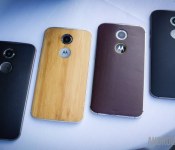
President of Motorola counters Jony Ive’s criticism of Moto Maker

In a recent interview, Apple’s Senior Vice President of Design, Jony Ive, criticized Motorola’s Moto Maker program. Now, Ive didn’t exactly use the name Moto Maker, but he did elude to the program and asked for the company name to remain private in his interview. Specifically, Ive told the New Yorker magazine:
Their value proposition was, ‘Make it whatever you want’. You can choose whatever colour you want. And I believe that’s abdicating your responsibility as a designer.
Rick Osterloh, President of Motorola, caught wind of this interview and fired back:
Our belief is that the end user should be directly involved in the process of designing products. We’re making the entire product line accessible. And frankly, we’re taking a directly opposite approach to them [Apple].
Osterloh continues, this time commenting on Apple’s pricing and availability structure:
We do see a real dichotomy in this marketplace, where you’ve got people like Apple making so much money and charging such outrageous prices. We think that’s not the future. We believe the future is in offering similar experiences and great consumer choice at accessible prices. The mobile phone industry’s greatest failure is also its greatest opportunity: to make really good, affordable devices for people who don’t want to spend a lot of money. A great smartphone, and a great mobile internet experience, shouldn’t be an expensive luxury. It should be a simple choice for everyone.
Motorola offers thousands of different color, inscription, and boot animation variations on their Moto X handsets through the Moto Maker platform. And while Apple only offers a few different color choices and two different sizes for their most recent handset, the companies may not be too far off from one another. It should be noted that while their latest handset isn’t customizable at all, the new Apple Watch is set to launch with three different watch variations, multiple different sizes and numerous watch strap options.
And when it comes to pricing, obviously there’s a big difference in the way Motorola and Apple operate. But one thing is for certain: Apple’s pricing structure is working to their advantage, since the company just posted their largest profit in history. Even so, we still wouldn’t mind if the majority of companies adopted Motorola’s business structure – offering relatively affordable, customizable handsets – while not skimping on the premium features.
What’s your take on the exchange between Osterloh and Ive?

Motorola president states obvious: Apple charges too much

In a recent interview with the BBC, Motorola President Rick Osterloh took a moment to respond to criticism from Apple’s lead designer, Jony Ive. Ive, in an interview with the New Yorker, stated that the Moto-Maker allowed Motorola to abdicate its responsibility as a designer (note: Ive did not actually mention Motorola by name).
Osterloh told the BBC that Motorola believed in a different philosophy involving consumer engagement with the design process.
Ive’s full comment to the New Yorker was as follows: “Their value proposition was, ‘Make it whatever you want. You can choose whatever colour you want.’ And I believe that’s abdicating your responsibility as a designer.”
Osterloh did not take kindly to the assault on the Moto-Maker and fired back, “Our belief is that the end user should be directly involved in the process of designing products. We’re making the entire product line accessible. And frankly, we’re taking a directly opposite approach to them [Apple].”
The Motorola exec then went on to criticize Apple’s exorbitant pricing scheme for its devices: “We do see a real dichotomy in this marketplace, where you’ve got people like Apple making so much money and charging such outrageous prices. We think that’s not the future.”
Motorola’s budget devices, the Moto G and Moto E, and especially Motorola’s flagship, the Moto X, are all devices that offer feature-rich experiences to consumers at prices that fall well below that of Apple’s. Speaking of the Moto G and Moto E, Osterloh went on to say:
We believe the future is in offering similar experiences and great consumer choice at accessible prices.
The mobile phone industry’s greatest failure is also its greatest opportunity: to make really good, affordable devices for people who don’t want to spend a lot of money.
A great smartphone, and a great mobile internet experience, shouldn’t be an expensive luxury. It should be a simple choice for everyone.
Source: BBC
Come comment on this article: Motorola president states obvious: Apple charges too much

Motorola president states obvious: Apple charges too much
In a recent interview with the BBC, Motorola President Rick Osterloh took a moment to respond to criticism from Apple’s lead designer, Jony Ive. Ive, in an interview with the New Yorker, stated that the Moto-Maker allowed Motorola to abdicate its responsibility as a designer (note: Ive did not actually mention Motorola by name).
Osterloh told the BBC that Motorola believed in a different philosophy involving consumer engagement with the design process.
Ive’s full comment to the New Yorker was as follows: “Their value proposition was, ‘Make it whatever you want. You can choose whatever colour you want.’ And I believe that’s abdicating your responsibility as a designer.”
Osterloh did not take kindly to the assault on the Moto-Maker and fired back, “Our belief is that the end user should be directly involved in the process of designing products. We’re making the entire product line accessible. And frankly, we’re taking a directly opposite approach to them [Apple].”
The Motorola exec then went on to criticize Apple’s exorbitant pricing scheme for its devices: “We do see a real dichotomy in this marketplace, where you’ve got people like Apple making so much money and charging such outrageous prices. We think that’s not the future.”
Motorola’s budget devices, the Moto G and Moto E, and especially Motorola’s flagship, the Moto X, are all devices that offer feature-rich experiences to consumers at prices that fall well below that of Apple’s. Speaking of the Moto G and Moto E, Osterloh went on to say:
We believe the future is in offering similar experiences and great consumer choice at accessible prices.
The mobile phone industry’s greatest failure is also its greatest opportunity: to make really good, affordable devices for people who don’t want to spend a lot of money.
A great smartphone, and a great mobile internet experience, shouldn’t be an expensive luxury. It should be a simple choice for everyone.
Source: BBC
Come comment on this article: Motorola president states obvious: Apple charges too much

Motorola president states obvious: Apple charges too much
In a recent interview with the BBC, Motorola President Rick Osterloh took a moment to respond to criticism from Apple’s lead designer, Jony Ive. Ive, in an interview with the New Yorker, stated that the Moto-Maker allowed Motorola to abdicate its responsibility as a designer (note: Ive did not actually mention Motorola by name).
Osterloh told the BBC that Motorola believed in a different philosophy involving consumer engagement with the design process.
Ive’s full comment to the New Yorker was as follows: “Their value proposition was, ‘Make it whatever you want. You can choose whatever colour you want.’ And I believe that’s abdicating your responsibility as a designer.”
Osterloh did not take kindly to the assault on the Moto-Maker and fired back, “Our belief is that the end user should be directly involved in the process of designing products. We’re making the entire product line accessible. And frankly, we’re taking a directly opposite approach to them [Apple].”
The Motorola exec then went on to criticize Apple’s exorbitant pricing scheme for its devices: “We do see a real dichotomy in this marketplace, where you’ve got people like Apple making so much money and charging such outrageous prices. We think that’s not the future.”
Motorola’s budget devices, the Moto G and Moto E, and especially Motorola’s flagship, the Moto X, are all devices that offer feature-rich experiences to consumers at prices that fall well below that of Apple’s. Speaking of the Moto G and Moto E, Osterloh went on to say:
We believe the future is in offering similar experiences and great consumer choice at accessible prices.
The mobile phone industry’s greatest failure is also its greatest opportunity: to make really good, affordable devices for people who don’t want to spend a lot of money.
A great smartphone, and a great mobile internet experience, shouldn’t be an expensive luxury. It should be a simple choice for everyone.
Source: BBC
Come comment on this article: Motorola president states obvious: Apple charges too much
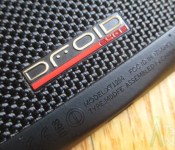
[Bug Report] DROID Turbo won’t ring when receiving calls and goes straight to voicemail

I know it’s hard to imagine, but some smartphone owners actually do make and receive phone calls with their devices. If you’re a DROID Turbo owner though, unfortunately you might find yourself waiting and waiting for that girl or boy to call you back.
Turns out there is some sort of bug that prevents the Turbo from ringing when receiving a call and it goes straight to voicemail. I stumbled up on this when a friend, who owns a Turbo, was asking if I knew of a way to fix it. It turns out that many other users are experiencing the same issue.
It seems to be software related since not everyone has the problem out of the box. For some, everything was fine for the first couple of months and then the problem arises, and for others, the problem started as soon as their first week with the phone. Verizon customer support can’t offer a solution other than blame Motorola and suggest a fix is coming.
If your DROID Turbo is experiencing the issue, here are some of the things that you can do to help alleviate the issue.
- Power off and Power back on – Everything will be fine after a reboot, but unfortunately not much more than a day, if that.
- Dial *73 to turn off Call Forwarding – I know you probably didn’t turn on Call Forwarding, but for some reason, it’s possible your Turbo either thinks it’s supposed to forward calls or the software is inadvertently putting it in Call Forward. Where it’s trying to Forward to, I have no idea. This fix is much like option (1) in that it’s likely to be a short-lived aspirin and you might find yourself dialing *73 several times a day.
- Replace your SIM card – One person that I know of tried this and things were okay for up to two weeks. Still not an absolute fix, but this might be better than powering off your phone and/or dialing *73 five times a day. Just head into your local Verizon store and ask for a replacement SIM and they should give it to you.
- Ask for a replacement device – Since this is either a software or hardware issue, this is likely not going to help. However, there are users that aren’t experiencing the issue so it might be a decent option. The only downside is that you might receive a refurbished unit instead of a shiny new one.
When Motorola and Verizon will fix this issue is anyone’s guess. We can only assume that it will happen with the Lollipop update, but I often wonder why carriers and manufacturers wait for so long to fix something so crucial as this? It’s possible that they still don’t know what’s causing it. Let’s hope the fix comes sooner rather than later.
If you’re a DROID Turbo owner, please let us know if you’re experiencing this issue or not. If so, have you found a better solution?
sources: Verizon Community (1) (2)
Come comment on this article: [Bug Report] DROID Turbo won’t ring when receiving calls and goes straight to voicemail
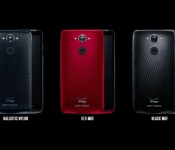
Droid Turbo review
Motorola Mobility has changed quite a lot over the past few years. From becoming a spin off of Motorola in 2011 to being bought by Google some short months later to being sold to Lenovo just this year. Amidst it all though Motorola has remained one of the strongest players in the mobile industry by proving that to make an awesome phone you don’t have to reinvent the wheel.
The Droid Turbo is one of the fruition’s of this effort and it stands out against its competitors with shining colors. What some are calling a more beefed up version of the Moto X, the Droid Turbo is an awesome phone with impressive specs, stunning build quality and fantastic performance.
Design

Let’s start off with the most obvious aspects of the phone, the design. Straight out of the box the first thing I noticed was the lack of carrier branding on the front which, to me, is a great bonus. I hate having to stare at branding when I am trying to use my phone and a nice clean surface is always a plus. With that said there really is nothing on the front other than the small camera on top, the speaker and the bottom where you will find the capacitive keys. I was slightly disappointed that they opted to use capacitive keys instead of software keys but that is by no means a deal breaker. Other than that the front of the Droid Turbo has nothing to detract from the screen as a phone should and it helps it maintain a modern sleek look.
Switching over to the back you are greeted with the iconic Kevlar back that Motorola introduced a couple of years back. This time around you get the ability to choose between Ballistic, Red MGF and Black MGF. I must say that I have always been a fan of the design of the Kevlar reinforced back plate and just holding it in my hands, I know that I am holding a high quality device. The camera is fitted on the top middle with dual flash separated on either side. On the bottom you do finally get to see some branding with the Verizon and Droid logo on the bottom but they maintain a small footprint and do not detract from the overall design of the device.
Software

When you first turn on the phone you are greeted with a stock Android experience. This has been Motorola’s take on the UI for the last few phones they have made and it is still a welcome addition. One of the first things I noticed was just how smooth everything felt. Animations were fluid, apps opened up quickly and changing screen was silky smooth. This could all be due to the fact that the Droid Turbo is quite a beast when it comes to specs and coupled with the stock Android UI, there is nothing to slow it down.
Where the Droid Turbo really stands out are the new software features that Motorola’s has built into it. You most likely are already familiar with the hands free features that Motorola introduced with the Moto X and all that and more are present here on the Droid Turbo. You can wake up the phone and give it commands by using your phone. Hand gestures can snooze or silence the phone if it is face up. The niftiest feature though is the ability to see if you have a notification by just picking up the phone. This does of course affect battery life but with the huge battery the Droid Turbo has it shouldn’t be an issue. One new feature that was recently introduced is the Zap ability of the Droid Turbo. What this basically allows you to do is send files and images to other Zap uses for fast access. You can do so publicly or using a secure pin. Again, nothing revolutionary but a welcome addition nonetheless.
Battery
The Droid Turbo comes with a 3900 mAh non replaceable battery. While a battery this size is not unheard of by any means it usually only comes in the latest trend of “phablet” phones. Motorola states the battery will net you up to 48 hours of battery life, or two full days, but I found it to be more of a day and then some. During my test drive I took it on my usual smartphone routine which consist of lots of Buzzfeed videos, checking the news periodically and streaming music. The phone lasted me all day and I didn’t have to charge it until late the next day. So I believe the 48 hours are feasible but only for light to medium usage.
Camera
Camera wise, the Droid Turbo has a 21 MP front shooter and 2 MP rear shooter. I was able to take some decent photos but nothing that is going to win any awards. It performed as a smartphone camera should though and was on par with other flagship phones except for the Galaxy S5 which did take better stills. The video quality was also good and I had no issues taking a video of my little brothers soccer game to showcase later. Nothing more than can be said in this department other than it is a smartphone camera and that’s how it performs.
Performance
The Droid Turbo performs brilliantly due to the combination of the great hardware and the fact that it runs stock Android. I loved how everything just felt smooth and fast. The main apps opened up quickly and after I finished downloading all my usual apps non of them lagged one bit. If you want a great performance and just want things to work smoothly then the Droid Turbo definitely does not disappoint in that area.
Final Thoughts
After having the opportunity to write this short review on the Droid Turbo I honestly have to rethink about stitching over to it. I already have a great smartphone but with the great build quality, awesome performance and just overall ease of use of the Droid Turbo it is hard for me not to want to do so.
Specifications
- Operating System: Android 4.4.4, KitKat
- Processor: Snapdragon 805 2.7 GHz quad-core
- Ram: 3GB
- Storage: 32 or 64 GB
- Camera: Rear 21 MP, Front 2MP
- Display: 5.2″ AMOLED
(function() var script = document.createElement(‘script’);script.src = ‘https://stacksocial.com/widget.js?publisher=androidguys&type=editorial_post_widget_preferences’;script.async = true;var entry = document.getElementsByTagName(‘script’)[0];entry.parentNode.insertBefore(script, entry);)();
http://www.androidguys.com/pubgalaxy/728×90.html
The post Droid Turbo review appeared first on AndroidGuys.
 AIVAnet