


Motorola Milestone 2 review
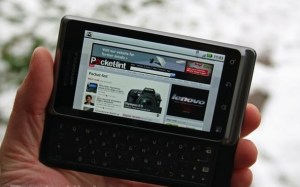 The Motorola Milestone 2 looks to build on the successes of its forebear namesake. For a time, the Milestone/Droid was pretty much the only high-end QWERTY Android device out there, until HTC threw their hat into the ring with the HTC Desire Z. Although there are lower-spec options, like the LG GW620 and Motorola’s own Dext, this is where the duel is drawn: HTC vs. Motorola, QWERTY keyboards at 20 paces.
The Milestone 2 is the half-brother of the Verizon Droid 2 which you’ll find in the US. The most significant change over the Milestone – aside from the new hardware – is the inclusion of Motoblur. Motorola told us this was in response to customer feedback, perhaps realising that pushing the Milestone 2 as a “business” device solely because it had a physical QWERTY keyboard no longer made sense. After all, aren’t business folk also social human beings?
Motorola Defy review
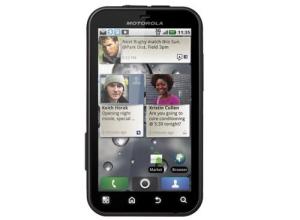 Motorola’s Android plans seem to consist of making as many different types of phones as possible, and it seems the company’s researchers have decided we’re pretty clumsy with our precious smartphones. The Motorola Defy is IP-tested to work through submersion, dust-filled environments and dropping onto concrete floors – ‘life resistance’ is how it’s been dubbed.
But beneath the rubberised exterior (including locking a battery cover to seal the innards and big rubber caps for the microUSB and 3.5mm headphone jacks) beats a Google heart – Android 2.1 to be exact.
In this Gingerbread age, that’s the not the best platform to be shipping with, as it means we miss out on using the phone as a Wi-Fi hotspot, improved touchscreen performance and being able to store apps on an SD card.
However other features (like being able to share contacts and improved camera mode) are all added in from Motorola, as well as integrated social networking enhanced widgets (where you can resize and drag them over seven home screens).
OS
Overall operation isn’t as slick as we would have liked though – the lag was palpable at times, and frequently the keyboard would struggle to keep up with our typing.
The rugged exterior does live up to its name though – despite feeling very light and a little bit cheap, the case didn’t break being dropped from shoulder height onto a pavement, the screen didn’t get scratched even with a lot of effort from a bunch of keys, and the Defy even carried on chugging when thrown in a glass of water.
Media
Another decent idea from Motorola is the connected media player – things like a free lyrics provider and YouTube music video search are a great idea and make the phone seem a little more premium. However, they don’t always work – the YouTube music video search engine had very little choice, and the TuneWiki lyrics service is more of a gimmick than useful tool.
More importantly: sound quality was only average (although perfectly passable) and the video player really wasn’t up to scratch. From not playing a number of file types to starting some movies only to have them give up after a few minutes, it wasn’t a good advert for the Defy’s media player.
The contacts menu is confusing too – with the likes of the HTC Desire or Samsung Galaxy S it’s easy to link people up to Twitter and Facebook accounts, whereas on the Defy it’s a long, convoluted and inaccurate process, often with the person you’re looking for not available for a link and the Twitter username overwriting the person’s actual contact name.
Verdict
Overall, the Motorola Defy is a confusing one. Its rugged nature is not inherent when you pick it up – people who want a phone for a workshop or building site might enjoy it, but that’s a pretty niche market. Things like the Car Dock, where you can quickly access navigation and music apps, are a nice touch, and the camera is swift and pretty decent too. But the lower-grade OS, slight lag during operation and very lightweight feel mean it’s going to be more out of necessity than desire that you pick up the Motorola Defy.
Motorola introduces the Droid 2 Global (video)
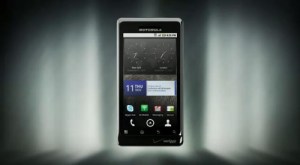 Motorola has released a brief promo spot showing off the new Droid 2 Global, which was put on sale without a formal announcement yesterday. This 1.2 Ghz global device costs $199.9, which is as much as the regular Droid 2 used to cost, so it seems pretty clear that the Droid 2 is being phased out in favor of this device.
Samsung Continuum vs. DROID X, DROID 2, Incredible, Fascinate
 We just posted the “Top Things to Know” for the Samsung Continuum over at Android Life, but we also have this sheet which shows how the device compares to the rest of Verizon’s lineup of top Android phones including the entire Droid family. Wondered how its “Ticker” matches up against the Droid X, D2, or Incredible? What about the Fascinate? Here you go.
Motorola’s NVIDIA Tegra2 handset
 Motorola has been rumored to be working on a NVIDIA Tegra 2 Android phone and, as with the original Droid, it may be the first phone to ship with the newest Android version, Gingerbread.
Motorola was first to get dibs on Android 2.0 when it launched with the Droid and that tradition may just continue if this rumor turns out to be true. The handset, which we know very little about, may launch before the end of the year, but in all likelihood will be released in early 2011.
What’s more interesting is that there’s a possibility that the handset may not be limited to just Verizon. Possibly debuting at CES this coming January, the handset could launch at multiple carriers, not unlike what Samsung has done with their Galaxy S line. We know how that’s going for Samsung – Pretty damn well.
Supposedly, the hardware has been finalized but Motorola is still working on the software, which makes me a little nervous. Could Motorola be throwing a customized skin on top of the first Gingerbread phone? Moreover, would Google let them?
Since it’s an open source OS, anything is possibly, but I would imagine that Google had some sort of deal with Motorola to ensure that the phone will ship with stock Android so all can see what Gingerbread really offers. In the end, we really have no idea what’s going on with the handset, or the availability of Gingerbread, but let’s hope both are released relatively soon.
If this mystery handset does end up showing its face at CES in January, then maybe a companion device, like a tablet, may rear its head as well. For the moment this is all speculation and as far as Gingerbread goes, if the first handset running the new version of Android is released early next year, then it will have missed the expected announcement which was expected to be sometime this month.
Motorola Spice is the Brazilian Android portrait slider of your mid-range dreams
 It was just announced at CTIA (and released in Brazil) as the Spice. Apart from the form factor, it’s basically a Flipout with a different hinge — it’s got Android 2.1 with Motoblur, a 528MHz processor, a 3.2-inch QVGA screen, Motorola’s crazy “Backtrack” rear trackpad, and a 3.2 megapixel camera — but it was apparently designed and built entirely in Brazil, so that’s something. We’re assuming AT&T passed on this one when it chose to release the Flipout, Flipside and Bravo instead, but damn — can someone please take this form factor and put it together with a high-end Android spec sheet already? We have cash money.
Motorola's MT716 OPhone launched in China
 If only this was a hoax. Yes, that’s some bitter talk alright, because this Motorola MT716 from China Mobile is almost the perfect Droid that we once had on our dusty wish list: a similar slider form factor but with a hard-cap keyboard, as opposed to one with spongy mashers. In fact, eagle-eyed readers might have already spotted that this is the exact same keyboard as featured on the Cliq. Compared to its distant relative, other differences on this OPhone include an 8 megapixel camera (with dual-LED flash and 720p camcorder feature), an extra VGA front-facing camera, TD-SCDMA radio, WAPI connectivity (WiFi-compatible), and CMMB TV streaming; otherwise, you’ll find the same weedy 600MHz TI OMAP3430 chip, 480 x 854 LCD, AGPS and Bluetooth 2.1 inside. Now if you’ll excuse us — we have a petition to write up.
Unlock FM Radio in Droid 2
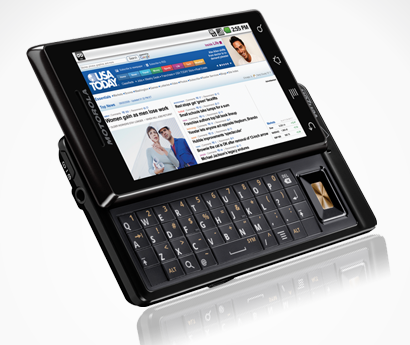
Didn’t know the Droid 2 had an FM Radio? Yeah, neither did we, but thanks to some clever folks over at XDA-Developers, you can now listen to your favorite radio stations at will. As with most things like this, a bit of hacking and command line work is necessary, but other than that it is very simple. Just make sure your Droid 2 is rooted first or nothing is going to happen. For those interested, hit the source link for full instructions!
Source: XDA Developers
 AIVAnet
