


Daily Roundup: Xperia Z1 Compact review, Facebook Paper and more!

You might say the day is never really done in consumer technology news. Your workday, however, hopefully draws to a close at some point. This is the Daily Roundup on Engadget, a quick peek back at the top headlines for the past 24 hours — all handpicked by the editors here at the site. Click on through the break, and enjoy.

Facebook unveils Paper for iPhone
Earlier today Facebook introduced yet another news aggregator into the world. Dubbed Paper, this (as of now) iPhone-only app promises a distraction-free layout with curated news from well-known sites and “emerging voices.” Follow the link for more information.

Sony Xperia Z1 Compact review
Sony’s new Xperia Z1 Compact smartphone might be smaller than the original Z1, but its internals are nearly identical. Starting at £440 in the UK, this handset brings the same waterproof housing, 20.7-megapixel camera and quad-core 2.2GHz Snapdragon 800 chipset as its older sibling. Click through for our review.

Lenovo’s Motorola deal and American manufacturing
Lenovo’s swift purchase of Motorola raises many questions about its footprint in the smartphone marketplace. But what about Moto’s employees? Click on through as Engadget’s Terrence O’Brien breaks down how the deal could affect Moto’s US manufacturing.

Satya Nadella reportedly the next Microsoft CEO
Microsoft has yet to announce a successor to previous CEO Steve Ballmer, but if a report from Bloomberg is true, Microsoft Cloud VP Satya Nadella might be next in line. Follow the link for more.
What does national security have to do with the Lenovo-Motorola deal?

Lenovo’s planned acquisition of Motorola’s mobile phone business will likely be reviewed by the Committee on Foreign Investment in the US (CFIUS), the government agency that makes sure foreign investments don’t impact national security. Though the deal will inevitably be heavily scrutinized, few experts expect the agency to scuttle it. That doesn’t, however, mean Lenovo’s deal will be rubber stamped.
When Lenovo bought IBM’s PC division in 2005, members of Congress openly fretted that the Chinese company would use its new asset to spy on American rivals – and the US government. One concern: IBM was (and still is) a major supplier of computers to the government. “Why would the US government be reliant on a Chinese company whose major shareholder is the Chinese government?” Rep. Don Manzullo told The Wall Street Journal. “That in itself sends a chill up and down the spines of members of Congress.”
Similar issues have been raised over Lenovo’s plans to buy part of IBM’s server division. However, as with IBM’s ThinkPads before them, the company’s x86 servers are already being made in China. “If you worry about penetration via your low-end server, you’re going to have to figure out a way to monitor all servers, not just say kick the Chinese company out and we’ll be safe,” says Professor Theodore Moran, a senior fellow at the Peterson Institute for International Economics.
Moran says there are three specific issues the CFIUS looks at, and none of them seem likely to affect the prospect that Lenovo will be able to go ahead with the Motorola deal. The first, having to do with allowing a foreign company or government to manipulate supply, doesn’t apply, he says, because Motorola “represents a very small part of the market.” The CFIUS also checks to make sure no sensitive or advanced technology is being leaked. “They’re not even top-of-the-line cellphones,” says Moran. Finally, there’s the risk of the technology being used to allow foreign companies or governments to infiltrate US government or military systems via backdoors or spyware, something Moran also sees as a minimal risk, given Motorola’s small market share.
In gaining approval for both the IBM server deal and the Motorola acquisition, Lenovo also has history on its side. Earlier fears that Lenovo might pose a threat have gone unrealized. After nearly a decade as the owner of the most venerable brand in the PC business, the company has become a staple of corporate purchasing managers, building on IBM’s long history in enterprise sales. “It doesn’t give them a free pass, but it weighs in their favor,” says Jason Waite, an international trade and regulatory attorney with Alston & Bird in Washington, DC. “How could it not?”
That doesn’t mean it’s smooth sailing for all deals involving Chinese companies. Today, although China and the US are more interdependent than ever, mistrust between the two nations remains high, and it extends in both directions. The NSA’s global spying operation has allegedly included Chinese computers among its targets, while the US accuses China of cyber-attacks on American computers. According to a new report, the number of investments reviewed by the CFIUS has grown in recent years, and in 2012 Chinese companies topped the list of deals reviewed by the agency; that same year, one deal resulted in a rare Presidential ban, after the CFIUS recommended rejecting the purchase by a Chinese firm of a wind farm located near a military facility.
Lenovo itself reportedly lost a bid to buy BlackBerry last year, after the Canadian government vetoed it based on national security concerns. However, Motorola, despite having a long history of supplying telecommunications technology to the US government and military, doesn’t have the kind of ties to Washington that BlackBerry does to Ottawa, and doesn’t enjoy the same kind of ubiquity among government users that BlackBerry once had. “It could be helpful that Motorola isn’t in widespread use in government,” says Waite.
Government pressure has also forced some Chinese companies to scale back their US ambitions. Huawei dropped at least two planned deals amid charges the company was a threat to national security because its networking gear could be used to spy on the US government and feed that info back to its masters in China. ZTE has faced similar accusations. Both companies have denied the charges. “You can get so much anti-Chinese bad press that a deal gets withdrawn,” says Moran, who serves on Huawei’s International Advisory Council. “Huawei didn’t do a good job” projecting an image of transparency in its congressional testimony, according to Waite. Even if Congress holds hearings on the Motorola deal, Lenovo is likely to fare better, he says. “Lenovo has been there before. They’re not going to make that mistake.”
In the end, most experts see the deal gaining approval — though it may face some bumps along the way. “I’m not saying some congressman won’t stand up tomorrow and say something nasty,” says Moran. “But I don’t see a regulatory problem here.” Adds Waite: “If Congress is going to hold hearings on Smithfield, I won’t be surprised to see them take on the sale of an iconic brand like Motorola.” That deal, in which a Chinese company sought to acquire pork processor Smithfield Foods for almost $5 billion, was later approved by the CFIUS.
(AP Photo/LM Otero)
Filed under: Google
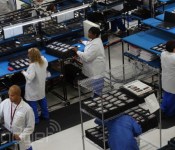
What Lenovo’s Motorola deal could mean for American manufacturing

Lenovo purchasing Motorola from Google raises a lot of questions. But, lost amid all the speculation over what this means for the marketplace, is the potential human cost. Motorola directly employs over 4,000 people, many of them at its headquarters in Libertyville, Ill. — a wealthy suburb north of Chicago rich with brick single-family homes and more trees than people. For the moment, at least, those employees and the executive team appear to be safe. During yesterday’s conference call following the announcement of the deal, Lenovo officials said there were no immediate plans for layoffs or a leadership shakeup. Things are a little more uncertain for those who rely indirectly on Motorola for their paycheck, for example the people working the Moto X assembly line in Fort Worth, which is run by subcontractor Flextronics.
On that very same call, when asked what the purchase meant for those workers, Lenovo danced around the question, saying only that it would do whatever was necessary to “grow the brand.” It was a rather ominous statement that seemed to imply the relationship with that particular Flextronics manufacturing plant would not last. But, after the Lenovo call ended and journalists rushed to update their articles, the story continued to evolve. Flextronics held its quarterly earnings call shortly afterward and said it anticipated no immediate changes at its Fort Worth facility. In fact, the company’s CEO Mike McNamara took time to brag about its “fabulous relationship” with Lenovo, which it hopes to grow on the heels of the Motorola deal. The Chinese manufacturer later issued a statement saying that “there are now no plans to change Motorola’s approach to manufacturing.”
That doesn’t necessarily mean those jobs are safe beyond the immediate future. But there is reason to believe (hope) that Motorola phones will continue to be manufactured here in the US. As a contractor with both Motorola and Lenovo, Flextronics already has its foot in the door. And, while it has never built phones for Lenovo, its experience building highly customized flagship handsets on short order may appeal to the Chinese company as it looks to distinguish itself from other players in the market and make its mark in the Americas. In fact, that ability to customize an order and still deliver it quickly was one of the many competitive advantages Jay Parker, president of Lenovo North America, cited as an advantage of its newly opened plant in Whitsett, NC, where it employs 115 people. (This was also the reason that Google decided to build the Moto Maker editions of the Moto X in Texas.) Just down the road, Lenovo has another 2,200 employees working out of its American headquarters in Raleigh, NC, with hundreds more scattered across the country.

Lenovo is particularly proud of its investment in America. The CEO, Yang Yuanqing, even took time out during the Motorola press conference to reference President Barack Obama’s call to invest in America during the State of the Union. Before announcing that his company was doing exactly that. In a follow-up statement, it claimed that the purchases of Motorola and IBM’s server business mean that it has invested about $6 billion in the American market since 2005.
Flextronics cannot predict the future and, while it’s hopeful about extending its manufacturing partnership with Motorola, it acknowledged that everything could change in a year from now. Still, when one of the few companies building PCs in the US joins forces with the only company building smartphones in the US, it’s hard not to be at least slightly optimistic about the future of high-tech manufacturing in the country.

[Rumor] Lenovo to Make One of the Last Nexus Products?

Eldar Murtazin has been stirring up some Android controversy lately, with his random tweets about about the Nexus line and Lenovo. It first started with him tweeting that the Nexus line was going to end next year, and that the Google Play Edition line was essentially going to take its place. Boy did that strike a cord. Without even giving it an ounce of thought, many out there infuriated and wanted Eldar to be hung from a tree for even mentioning the Nexus line was going to end. Then after the “out of left-field” announcement yesterday about Google selling Motorola to Lenovo, he tweeted out that Lenovo will make a splash in Chromebooks. That one doesn’t seem so far fetched, but then he dropped yet another doozy, and again, it is causing the community to scream at their monitors.
Lenovo will launch one of the last Nexus product  volume will be huge and it will be focused on US market.
— Eldar Murtazin (@eldarmurtazin) January 30, 2014
So apparently Lenovo will make one of the last Nexus devices, and then we will bid farewell to the name. Now by all means is anyone confirming this to be true. I think a lot of readers immediately insinuate that when we post about these rumors, we are agreeing with them, so we end up taking fire. But when all said and done, it goes like this: we don’t know. Sure, we can take the biased approach and call it a bunch of BS and rant about it, or we can remain neutral and just report what we hear and give our opinions.
My opinion on the matter, is that if Google thinks it is a right decision, then so be it. Yes, Nexus devices are the core of the Android Community, but having the Google Play Editions take over is not a bad thing at all. We can scream back and forth about the good things and the bad things about the move, but that is just time wasted on something out of our control. If it’s silly rumors that Eldar is spreading, well then we can all show up at his doorstep with torches and pitch forks. If not, we will have to say farewell to the beloved Nexus phones we have loved for years. Feel free to let us know your opinion about all this, but please try to do so in a not so hostile way.
Motorola’s Project Ara team being integrated with Google’s Android team
The Internet is buzzing about Lenovo’s acquisition of Motorola Mobility and you may be wondering what is going to happen to Motorola’s Project Ara.
We have great news for you…. the Googlely project will remain with Google. It seems that the about $3 billion purchase of Motorola Mobility to Lenovo does not include the Advanced Technology and Projects group led by former DARPA director Regina Dugan, whose biggest project is the Project Ara modular phone.
According to The Verge, sources familiar with the matter said that the team of just under 100 people will be moving from their current offices in Sunnyvale to Google’s Mountain View office where they will be integrated with Google’s Android team. There Dugan will report to Android/Chrome OS chief Sundar Pichai, while maintaining “a more independent role.”
Anyone think that Project Ara could potentially become a Nexus some day? Thoughts?
via The Verge
The post Motorola’s Project Ara team being integrated with Google’s Android team appeared first on AndroidGuys.
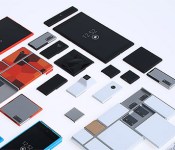
Lenovo gets Motorola, but Google gets to keep its skunkworks

Lenovo may be buying a brand to help it sell smartphones across the world, but it’s not getting everything that was under Motorola’s umbrella. In addition to the “vast majority” of Motorola’s patents, Google will also hold onto the Advanced Technology and Projects division and fold it into its Android team.
That group is responsible for some of Motorola’s more wild-eyed projects, like the authentication pills and tattoos that ATAP chief Regina Dugan showed off at AllThingsD’s D11 conference. The most eye-catching example of the group’s work was Project Ara, the modular smartphone initiative that first started turning heads in late October. Motorola CEO Dennis Woodside said the prototype phone was nearly done just over a month later, and the company planned to get the Ara module dev kit out the door this winter. It seemed like the team was making real progress, but we’ll soon see if those plans have shifted now that Motorola is leaving the building.
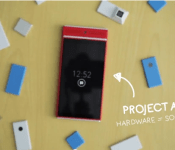
Project Ara will not be moving in with Lenovo, instead will be absorbed by Google’s Android Team
 While Google’s sale of Motorola to Lenovo is all but done and dusted, we’re still yet to find out exactly all the details of the sale and who gets what as part of the agreement. One part of Motorola that we’re most interested to find out the fate of is Project Ara, Motorola’s tantalizing modular phone project that was said to be shaping up quite well by Motorola’s CEO, Dennis Woodside, late last year.
Well, we’ve now learned that the Project Ara team, as well as the entirety of Motorola’s Advanced Technology and Projects group, will be moved to a ‘little’ part of Google‘s company under Sundar Pichai. And yes, that is the Android division. It’s hard to say what Lenovo might have done had they acquired Project Ara, but under the Android team at Google, you would hope the project would get the kind of care that Google typically gives to its other crazy, secret ideas.
What do you think of this sale of Motorola to Lenovo? And are you happy to know that Project Ara will be moved to Google instead of Lenovo? Let us know what you think in the comments below.
Source: Pocket-lint via Android Police
Lenovo buying Motorola Mobility from Google for $2.91 billion
Numerous sources reported today about a potential acquisition of Motorola Mobility that comes not even three years after Google bought it for $12.5 billion, and Lenovo just made the news official.
The Chinese-manufacturer announced that it entered into “a definitive agreement” with Google to acquire the Motorola Mobility smartphone business in order to strengthen its own smartphone market, basically to give it a presence in the U.S.
The acquisition price is $2.91 billion, subject to certain adjustments, including $1.41 billion paid at close, comprised of $660 million in cash and $750 million in Lenovo ordinary shares. The remaining $1.5 billion will be paid in the form of a three-year promissory note.
Google will maintain ownership of the vast majority of the Motorola Mobility patent portfolio… Lenovo will receive a license to this rich portfolio of patents and other intellectual property. Additionally Lenovo will receive over 2,000 patent assets, as well as the Motorola Mobility brand and trademark portfolio.
Back in August 2011, when Google acquired Motorola Mobility, it had said it was mainly interested in its patent portfolio. After becoming “A Google Company,” we’ve seen successful devices like the Moto X and Moto G, but Google was still reportedly losing hundreds of millions each quarter since the purchase.
While Lenovo said that it will be acquiring the MOTOROLA brand and Motorola Mobility’s portfolio of smartphones, like the Moto X and Moto G and the DROID Ultra series, “Google will maintain ownership of the vast majority of the Motorola Mobility patent portfolio, including current patent applications and invention disclosures.”
Google will also be licensing the patents to Lenovo, who will be receiving over “2,000 patent assets.”
One other interesting thing to note is that Dennis Woodside, CEO of Motorola Mobility, said that the company has “tremendous momentum right now” with the launches of the Moto X and Moto G and that Lenovo’s hardware expertise and global reach should help accelerate that.
Google is supposed to be reporting its quarterly earnings tomorrow, so maybe we will have even more information then.
The post Lenovo buying Motorola Mobility from Google for $2.91 billion appeared first on AndroidGuys.
Lenovo Close to $3 Billion Deal to Acquire Motorola from Google [Update 2]
 Well this is certainly something we didn’t ever expect to see. According to Reuters, China’s Lenovo group is nearing the final stages of chatter to close a $3 billion dollar deal to pick up Motorola’s handset division from Google. That was not a miss type at all. The deal is set to not only pick up the company, but of course their patent holdings as well.
Of course the information is coming from sources that are close to the matter, while Google, Motorola and the various groups in discussion on the topic have not commented on the information as of yet. However, it is said that Lenovo will be using a combination of cold hard cash, stocks and deferred payments to close the deal. An official statement and/or announcement on the deal could come from any of the parties involved later today.
Did this totally come out of left field to anyone else?
Source: Reuters
Update: Looks like this story is gangbusters everywhere. China Daily is posting up the news claiming at least $2 billion which includes 10,000 patents. Lenovo is said to be having a press conference Thursday morning to announce what just happened. THis will certainly give Lenovo a leg up and a chance to finally break into the US market finally.
It is also being confirmed from sources at TechCrunch as well. Citing that Google held off on the sale for tax purposes. Which doesn’t surprise us.

Update2: Google has officially confirmed it via their Investor Relations page. Final talley states $660 million in cash, $750 million in Lenovo ordinary shares and the remaining $1.5 billion paid over three years in promissory notes. Final purchase amount totals $2.91 billion and is subject to certain adjustments. Total number of patents that Lenovo is picking up is only 2,000. Along with Motorola Brand and trademarks. Lenovo is also gaining a license to Google sportfolio patents and other intellectual property
“Lenovo has the expertise and track record to scale Motorola Mobility into a major player within the Android ecosystem. This move will enable Google to devote our energy to driving innovation across the Android ecosystem, for the benefit of smartphone users everywhere,” said Larry Page, CEO, Google.
“As part of Lenovo, Motorola Mobility will have a rapid path to achieving our goal of reaching the next 100 million people with the mobile Internet. With the recent launches of Moto X and Moto G, we have tremendous momentum right now and Lenovo’s hardware expertise and global reach will only help to accelerate this,” said Dennis Woodside, CEO, Motorola Mobility.
Need more? Lenovo just tweeted this out.
BREAKING NEWS: Lenovo to Acquire @Motorola Smartphone Business from @Google http://t.co/SD9IlKpqqI pic.twitter.com/9CKsRclzsn
— Lenovo (@lenovo) January 29, 2014

Lenovo reportedly nearing $3 billion deal for Motorola’s handset business

According to several sources Lenovo is nearing a rather stunning deal that would put Motorola’s cellphone business in its back pocket for roughly $3 billion. Google snatched up Motorola in 2011 for $12.5 billion. Since then it’s slowly broken the company up, scaled back its device lineup and added its massive pile of patents to its legal arsenal. Now, after losing money for several years straight, Mountain View is reportedly preparing to offload the division on Chinese computer giant Lenovo. The purchase of Motorola will probably also put to bed rumors of Lenovo purchasing BlackBerry… at least for a little while. The company has been looking to step up its mobile efforts for the last couple of years, and Motorola’s existing infrastructure, patent library and brand recognition should help it make a dent here in the US.
The deal hasn’t been officially announced yet, but when (and if) it is there are bound to be plenty of questions. For one, how will the sale of Motorola to a Chinese firm effect the company’s recent efforts to bring manufacturing jobs back to the US? And how will this impact Google’s own expanding manufacturing plans in the future? Or course, we may have also just figured out how exactly Google convinced Samsung to start putting more focus on Play Services.
Filed under: Cellphones, Misc, Mobile, Google, Lenovo
Source: Reuters
 AIVAnet