


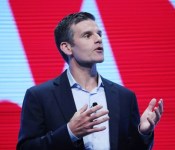
Dennis Woodside makes it official, announces move from Motorola to Dropbox
 Just a few days ago, we heard the rumour that Motorola Mobility CEO, Dennis Woodside, would be calling it quits at the recently Lenovo-acquired smartphone manufacturer and moving to cloud storage player Dropbox. Well, it’s no longer a rumour as Dennis Woodside makes it official, coming out in a post in Motorola‘s official blog to announce that he will be stepping down at the end of March to take up the position of Chief Operating Officer at Dropbox.
In what is essentially a open letter resignation, Woodside reminisces that during his tenure Motorola saw a ‘reinvention’ of itself with its brand and the devices that it brought to market in the Moto X and the Moto G, creating “unprecedented quality and performance to a value-priced smartphone, and created experiences that changed how people use and interact with their smartphones”. It’s definitely been an exciting time to see Motorola evolve under Woodside and Google, and I would say it’s a shame that Motorola didn’t profit more from it; perhaps the smartphone world wasn’t quite ready for their innovations.
Regardless, Woodside will be making what is likely his last appearance on the world stage at Motorola’s press conference at MWC 2014, and while it’s not expected that there will be any devices announced, it should be a nice trip down memory lane and a look at Motorola’s future. We salute and thank you, Dennis Woodside.
Source: Motorola Blog
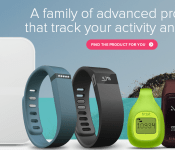
Fitbit Update adds Support for 7 Sony Xperia Z Devices and the Moto G
 For those of you out there that have been waiting long and patiently for Fitbit to gain more device support in the Android world, we are pleased to inform you that they have pushed an update to the app that does just that.
As of yesterday at some point, Fitbit updated in the Play Store and added in a slew of Xperia Z model support.
- Xperia Z
- Xperia Z1
- Xperia Z1S
- Xperia ZL
- Xperia ZR
- Xperia Z Ultra
- Xperia Tablet Z
Along with the update you also now have support for the Motorola Moto G too. The update adds to the list of slowly growing Android device support that was dominated by Samsung and the Droid Razr line mostly. The update also brought some Korean bug fixes and addressed crash reports.
Anyone out there with one of the newly supported devices happen to have a Fitbit available to try it out? If so, let us know if its working out in the comments.

Lenovo’s acquisition of Motorola doesn’t bother LG
Following the acquisition of Motorola by Lenovo in an attempt to boost their mobile presence, Kim Jong Hoon – head of LG Mobile – took the chance to state that despite the boost in market share the acquisition gave Lenovo, LG isn’t worried.
“There are many talks over Lenovo and Motorola in the media right now and how it affects LG, but internally, we aren’t discussing much about it.”
LG has firm plans to regain third place in the smartphone market by the end of the year and they don’t see Lenovo as being a threat to that goal. Currently LG is sitting in fourth place with around five percent of the market.
With LG introducing the new LG G Pro 2 it certainly has the hardware to battle for third place. Lenovo will take some time to get their acquisition in order and get a Motorola product to the market, but should LG be worried?
Let us know in the comments below.
The post Lenovo’s acquisition of Motorola doesn’t bother LG appeared first on AndroidGuys.
Motorola CEO confirms departure in blog post
Motorola CEO Dennis Woodside has confirmed his intentions to take on the role of COO at Dropbox. A post on Motorola’s blog today tells us that he’ll step down on March 31 and will be replaced by “longtime Googler” Jonathan Rosenberg.
I’m excited about what the next chapter in Motorola’s storied history will bring under the new ownership of Lenovo. While Google imbued simplicity and software sensibility into the company, Lenovo will bring it the scale it deserves. I have no doubt the two companies together will be a force for good in the mobile industry.
Woodside is deservedly proud of his achievements and time with Motorola but also understands there’s work to do. We get the sense, however, that he’s confident in Lenovo’s direction and abilities.
The post Motorola CEO confirms departure in blog post appeared first on AndroidGuys.
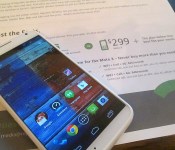
Two Days Down With Republic Wireless and the Motorola Moto X
The other day I received a Republic Wireless Motorola Moto X to utilize. Partly to test out how Republic Wireless’s service was and partly to take a look at the Moto X for the first time. Having seen all the talk about the device and how much people who owned one loved it, I needed to see how it really was for myself. Having cleared two whole days, and then some, of using it as much as possible, I thought now would be a good time to offer up a round of initial thoughts.
 Republic Wireless is a no contract monthly service that utilizes Wi-Fi and Sprint’s 3G/4G where available for service. Their devices come preloaded with the Republic Wireless app that helps you setup the device to your Wi-Fi connection and manage your account. In the settings of the app you have various bits of information and things you can adjust. For instance, setting the activity recognition to automatically select the best networks and manage how sensitive the handover from Wi-Fi to Cellular data is. You can even set it to allow you to manually hand off from Wi-Fi to cell or vise versa.
Republic Wireless has 4 plans to choose from based on your needs. (These are just for the Moto X)
- Wi-Fi only for $5 a month – Unlimited calls, text and data so long as you are on a Wi-Fi network.
- Wi-Fi + Cell $10 a month – Unlimited calling & text over both Wi-Fi and Cell connections, but only data when connected to Wi-Fi.
- Wi-Fi + Cell + 3G $25 a month – Unlimited calls, text and data on Wi-Fi plus 3G cell access.
- Wi-Fi + Cell + 4G $40 a month – Unlimited calls, text and data on Wi-Fi plus 4G cellular where available.
For the most part, these plans work out pretty perfectly for me. I spend a great deal of time at home on my Wi-Fi, I would say a good 80% of my day. Part of my day is spent assisting a disabled lady who also has Wi-Fi, so I am connected there too. I am currently using the 3rd plan, Wi-Fi + Cell + 3G. From a two day experience in my more rural, and Sprint supported, area I have above average coverage. The data is obviously fairly slow, but it handles calls, texts, G+, hangouts and emails just fine which is my primary usage when it comes to data when out and about. I have only driven around a little bit, so over the next few weeks I will be running around the area and checking it against my T-Mobile service.

 As for the the Moto X. This is my first hands on experience with it. I didn’t check it out at CES at all and haven’t ventured out to any stores to hold one. My first impression after opening up and turning it on is that it is TINY. It really is a tiny device compared to handling my Xperia Z. That isn’t a bad thing. The physical size is 129.3 x 65.3 x 10.4 mm (5.09 x 2.57 x 0.41 in) as compared to me Xperia Z 139 x 71 x 7.9 mm (5.47 x 2.80 x 0.31 in). In physical tech size the Moto X is nearly a half inch shorter and almost a quarter inch is cut from the width. It is also .10 inches thinner. You really do feel how dramatic the size is when you are holding it.
Where I really get thrown for the loop is the screen size. The Moto X is 4.7-inches while my Xperia Z is 5.0-inches. Going down in size when you have been climbing up in screen size is a bit difficult. What is sort of funny, is that I find myself reaching for the Moto X more than I reach for my Xperia Z. Even though it is smaller, it just feels so darn nice in your hands. After staring at it for a 15 or 20 minutes I can tell the difference between the AMOLED found in the Moto X and the TFT found in the Z. Something about the AMOLED in the Moto X just pops in a very beautiful vibrant way.
 I don’t want to get into too much detail and go over everything just yet; I have only had it in my possession for roughly 56 hours. So I am still learning the active display, playing around with the menu, the settings and getting a good feel for what I like and don’t like. I am also thinking that some of my dislikes might be solved in the KitKat update. I will have to do a little research on that since the KitKat update is only just now rolling out to some of the carrier branded versions.
After having it in my hands for the short amount of time, I can honestly agree with a majority of the people out there. This is a magnificent little device.

Motorola CEO Dennis Woodside confirms he’s leaving for Dropbox

Not that we had serious doubts about the Wall Street Journal’s report, but it’s nice to get confirmation of Motorola CEO Dennis Woodside’s departure. Less than two years after taking over the position from Sanjay Jha, who ran the company before the Google acquisition, Woodside is stepping down to become the first COO of Dropbox. The move comes just weeks after the announcement that Lenovo would be taking Moto off of Google’s hands. It also raises questions about the future direction of the brand which shifted its focus towards affordability and customization over the last year, even if Woodside assures that Motorola management “remains focused on our current strategy.” Obviously there is still work to be done during the transition from one owner to another, so Jonathan Rosenberg who has been Senior Vice President of Product will be stepping in as COO of Motorola to work with the rest of the leadership team.
Filed under: Misc, Mobile, Lenovo
Source: Motorola
Dropbox hires Motorola CEO Dennis Woodside
In an announcement which is sure to send a firm message to Dropbox competitors that it means business, Motorola CEO Dennis Woodside is set to be announced as their latest employee and first chief operating officer.
While the report suggests that Woodside focus on expanding services into businesses and schools, Dropbox will undoubtedly look to leverage the former Motorola CEOs vast knowledge and experience. It doesn’t hurt that he has been at Google since 2003.
Woodside became CEO of Motorola Mobility when Google acquired the mobile company in 2011. However, given Motorola has just been sold to Lenovo for $3 billion, Woodside’s role is naturally coming to an end.
The acquisition of Woodside’s service is huge for Dropbox and their need to reinvigorate their growth plans, especially with growing competition from the likes of Box, and even Google’s own Drive storage service. Perhaps this may spark rumours of the production of a Dropbox mobile device? It wouldn’t be the worst idea in the world…
The post Dropbox hires Motorola CEO Dennis Woodside appeared first on AndroidGuys.
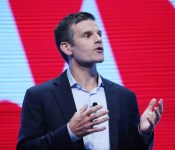
Motorola Mobility CEO, Dennis Woodside, rumoured to be moving to Dropbox
 It’s not unusual to see upper management in companies get shaken up when acquisitions happen, and whether it was instigated by acquirer Lenovo or not, Motorola Mobility‘s CEO, Dennis Woodside, is rumoured to be following this familiar path. The Wall Street Journal has reported that Woodside will be leaving Motorola to take up the position of Chief Operations Officer at cloud storage giant Dropbox, and yes, this move might be considered by some to be a step backwards.
Woodside’s time at Motorola wasn’t without its downsides, most obvious of which was the fact Motorola was still floundering in the smartphone market despite a very innovative release in the Moto X and a surprisingly impressive device in the Moto G. I personally thought that Woodside was a very good leader, at least in the talks and interviews I’d seen him in and appeared to be genuinely interested and active in all of Motorola’s projects including its modular phone project, Project Ara.
If it is true, whatever the reasons for Woodside’s move, we wish him the best at Dropbox. What do you make of Dennis Woodside’s rumoured departure from Motorola Mobility? Let us know what you think in the comments.
Source: Wall Street Journal via engadget

Motorola CEO Dennis Woodside reportedly leaving to join Dropbox
Executive departures (voluntary and otherwise) aren’t uncommon after major acquisitions, and that may well be happening in the wake of Lenovo’s deal to acquire Motorola’s cellphone business from Google. The Wall Street Journal claims that Motorola Mobility CEO Dennis Woodside is leaving the company to become Dropbox’s first Chief Operations Officer. It’s not clear just what would be driving Woodside to take a less glamorous role; we’ve reached out to both companies for comment. If true, the move would bring an abrupt end to Woodside’s brief tenure as Moto’s leader. It wouldn’t be surprising to see him go, however — while he reinvigorated the phone pioneer and helped launch some of its best devices in recent memory, the company’s earnings didn’t follow suit.
Filed under: Cellphones, Mobile, Google, Lenovo
Source: Wall Street Journal, Amir Efrati (Twitter)
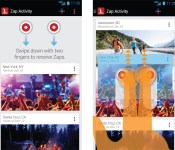
Motorola drops device exclusivity from Droid Zap photo sharing app

Would Twitter, Instagram or Vine be any fun if you couldn’t participate in the social experience? No, probably not. This is the problem that Motorola’s Droid Zap had: it was a unique, localized photo-sharing service that left non-Droid owners out to dry. Users of any Android phone could call up the app and see what other users in a 1,000-foot radius were sharing, but were barred from sharing anything unless their device was Droid-branded. Now, Motorola is finally letting other phone owners become part of the conversation, opening the app’s photo-sharing features to all Android devices. Unfortunately, the full experience still isn’t available to everyone: the new Zap Zone feature (a timed, live and shared photo album) is exclusive to Droid devices, as is the ability to send videos and regular files. Still, with the ability to participate at least a little, non-Droid users finally have a reason to try the app.
Filed under: Cellphones, Mobile
Via: Android Police
Source: Google Play
 AIVAnet