


Gionee’s M6 smartphones tackle security in a different way
Chinese phone manufacturer Gionee has unveiled a new flagship phone in the form of the M6 and M6 Plus, and it might bring other smartphones to mind. Both models of the new phone will feature various features meant to make it stand out from the crowd, namely in the form of a special encryption chip.
But while it’s meant to offer additional encryption and safety for users, it also succeeds in keeping quite close to both Huawei and Apple designs in terms of hardware. Even a quick glance at the phone brings Huawei’s product to mind, but then the phone also looks quite sleek. It’s not about how it looks, however — it’s about functionality, with Gionee noting the pitfalls of some privacy and security efforts of its competitors. It hopes to circumvent security issues that exist with the iPhone’s lock screen, for example, noting that after someone gets past that, the rest of the information on the phone is then freely accessible.
The phone will feature on-chip data encryption, a massive battery that offers up to 55 hours of call time and 794 hours of standby time. Interestingly, you can use the phone to charge other electronic devices as well. The massive battery and the alternative approach to security make Gionee’s product a unique one, but if you’re interested in checking it out you’ll have to pony up about $404 for the Gionee M6 and $449 for the M6 Plus. Even the marketing on the phone’s official page looks familiar — Apple, anyone?
Qualcomm settles gender discrimination suit for $19.5 million
Qualcomm will pay $19.5 million to settle a lawsuit filed by female employees who claim they were paid less and denied promotion opportunities that were given to men. The deal stipulates that the company must implement policies ensuring that women get more promotion opportunities in science and engineering positions. Lawyers for the group told the Associated Press the settlement was a “giant leap forward toward leveling the playing field and can serve as a model of best practices for other technology companies.”
According to the lawsuit, women who work in research and engineering at Qualcomm are paid less than men in the same positions. Females also make up just 15 percent of senior leadership, and since managers are mostly male, are promoted less often. The complaint also alleges that workers who stay late are rewarded over those who arrive early and leave at the regular quitting time, making promotions more difficult for working mothers.
This settlement represents a giant leap forward toward leveling the playing field and can serve as a model of best practices for other technology companies.
Qualcomm will hire consultants to set new diversity policies and a compliance officer to ensure they’re enforced. “While we have strong defenses to the claims, we elected to focus on continuing to make meaningful enhancements to our internal programs and processes that drive equity and a diverse and inclusive workforce which are values we share and embrace,” the company told AP. Qualcomm was a bit late to the game, but now publicly releases its diversity data.
The settlement may make Silicon Valley uncomfortable. While firms like Intel and eBay have set firm goals for gender and ethnic diversity, others like Facebook and Apple have been criticized for doing too little. The Qualcomm deal may embolden female and ethnic employees at other firms to use more drastic measures to be heard.
Source: Associated Press
Apple patents stylus that doubles as a joystick, air mouse
A simple, high-quality pressure-sensitive stylus is all well and good for tablets, but can such a device really meet the needs of a desktop user? That seems to be the question Apple’s asking with its latest patent. The company’s latest technology patent dreams up a do-everything stylus capable of being a drawing device, air mouse and even a joystick.
Over 17 patent claims, Apple outlines a stylus packed with pressure sensitivity and six and nine-axis inertial sensors — and describes a peripheral that can stand in for any number of devices. Used on a touch surface, for instance, the stylus might function as a normal pen. Lifted off a surface, it could be used to perform gestures or mouse movements. Standing on its tip, one could use it as a joystick, or rotate it left and right to turn a dial or move an object on a nearby computer screen.
It definitely sounds like a more advanced stylus than we see with most tablets, or even with Apple’s own Pencil — but not all patents make it to market. Still, the attached art shows the prospective device being used with what looks like a Mac, so at the very least we know that Apple’s /thinking/ about new input devices for its desktop line. Check out the patent for yourself at the source link below.
Source: USPTO
Xiaomi’s Redmi Pro does OLED and dual camera on a budget
Just because Xiaomi is selling Segways, drones, bicycles and rice cookers these days doesn’t mean that it’s forgotten what it started off with years ago: mobile phones. Today, the Chinese company announced the Redmi Pro which is the latest smartphone in its entry-level portfolio. As suggested by the name, this device packs some surprising features that make it stand out from its predecessors: This is the first time that Xiaomi’s featuring an OLED display plus a dual-camera setup on a device, which is a surprising move given that these are headed to the affordable Redmi line instead of the flagship Mi line. The price? From 1,499 yuan which is about $225.
The Redmi Pro comes in a gold- or silver-colored brushed metallic unibody — a real bonus at this price point — and packs a 5.5-inch 1080p OLED display (with full NTSC gamut), a fingerprint reader plus a 5-megapixel selfie camera on the front side. Flip it over and you’ll find a Mi 5-like curved back sans glass, along with a dual camera featuring a 13-megapixel Sony IMX258 main sensor plus a 5-megapixel Samsung assistive sensor for bokeh effects. Like many earlier dual-camera phones, here you can change the focus point on the image even after capturing; and there’s a dual-tone LED flash, too. There’s also a generous 4,050mAh battery inside — similar to the one in the very recent Redmi 3S — with fast charging via the USB Type-C port. Likewise, the Redmi Pro has the same IR blaster as the Redmi 3S which lets you control your TV and home appliances.

Given the base price point, it’s no surprise that the Redmi Pro is powered by a MediaTek chipset. The base spec starts with the 10-core Helio X20 plus 32GB of storage and 3GB of RAM (1,499 yuan/about $225), followed by the faster Helio X25, 64GB of storage plus 3GB of RAM (1,699 yuan/about $255), and capping with the same chipset, 128GB of storage plus 4GB of RAM (1,999 yuan/about $300). As with most Chinese and Indian smartphones these days, the Redmi Pro is a dual-SIM 4G+ device (VoLTE supported), though you can also use the second SIM slot to add a microSD card instead.
1.21 Redmi devices were sold every second over the past three years.
For those who aren’t familiar, Xiaomi launched the Redmi line back in 2013 to tap into the low-end market, i.e. the sub-1,000 yuan or $150 price point. This was achieved with minimal advertising plus cheaper components, but without sacrificing build quality (and hopefully reliability). Unsurprisingly, the sub-brand has done very well in terms of volume — a total of 110 million Redmi devices have been sold as of July 11th, meaning 1.21 units were sold every second over the past three years.

The Redmi Pro marks a significant change for the sub-brand as it’s the first Xiaomi product to feature celebrity spokespersons (which obviously requires money) plus traditional advertisements across the country (I saw them at the bus stations and elevators in Beijing). Price bump aside, such move appears to be taking a page out of the books of local rivals Huawei, Oppo and Vivo — all of which beat Xiaomi in global shipment volumes earlier this year — who are well-versed in conventional marketing tactics plus offline retail in their home country. This works particularly well in the second- and third-tier Chinese cities, which are no doubt where the Redmi brand performs well.
Unfortunately, there’s no word on when to expect the Redmi Pro to hit the markets outside China, but we’re pretty sure it’ll eventually land in India plus other developing markets. Or you can just fly yourself to China for a quick shopping trip, if you don’t mind taking a break from Pokémon Go for a few days.
Google Play gives Android app developers more categories
Two months after giving VR its own category, Google Play will soon expand the list of Android app subcategories with additional general interest ones, allowing developers to more accurately slot theirs. Here’s the full list of new ones: Art & Design, Auto & Vehicles, Dating, Events, Food & Drink, House & Home and Parenting. Ideally, the increased specificity will improve the relevance of Google Play’s search results.
They’ve also renamed a few of the old subcategories to avoid confusion with the new, so ‘Transportation’ is now ‘Maps & Navigation’ while ‘Media & Video’ will now be ‘Video Players & Editors.’ The change will go into effect over the next 60 days.
Source: Android Developers Blog
Runkeeper’s Running Groups keep you motivated
If you have running buddies, you know the advantages they bring — they’ll encourage you to run when you’d otherwise slack off, or when you just have to one-up a friend. And Runkeeper knows it. The Asics-owned developer has updated its Android and iOS apps with a Running Groups feature that, unsurprisingly, promises to keep you off the couch. As many as 25 people can participate in challenges (such as distance or the most runs), and there’s a group chat to either motivate your pals or trash-talk them when you emerge triumphant.
As VentureBeat observes, the tricky bit is getting everyone to settle on a single running app. You may use Runkeeper, but what if your friends use Endomondo or Nike+ Running (which, we’d add, already has a social feature)? Of course, that’s really the point. If Runkeeper can get you to settle on its app for your running circle, it’s going to get a few new users in one shot. Not that you’ll necessarily complain, especially if you find that solo runs just aren’t cutting it.
Source: Runkeeper Blog
Apple’s iPhone sales are still down, but Wall Street is happy anyway
After seeing Apple struggle through 2016, Wall Street set its sights pretty low for the company’s Q3 earnings report. Those financial results just dropped, and while they’re still not amazing for the folks in Cupertino, Apple did well enough to allay some nagging fears and get its flagging stock price up a bit in after-hours trading.
First, the biggest surprise: Apple shipped 40.4 million iPhones this past quarter, down from 51.2 million over the three months prior and from the 47.5 million shipped this time last year. Some outlets expected this to be the single worst quarter of iPhone sales growth since the iPhone first hit the scene in 2007, but that wasn’t meant to be — though another consecutive down quarter certainly isn’t fun to deal with. We’ve got the iPhone SE to thank for that, at least partially. This was the first full quarter of SE sales on the books, and Apple CEO Tim Cook said the device was popular in both “developing and emerging markets.” I’m not surprised: it’s a damned good little phone.
Since iPhones make up a big slice of Apple’s overall financial pie, it’s perhaps not surprising to see the company bring in more money than expected, too. Apple raked in a total of $42.4 billion in Q3, down from $49.6 billion this time last year. That’s a yearly dip of 15 percent. Again, not a terribly great turn, but it was still enough to appease investors, bolster stock prices and bring some value back to Cupertino. At time of publication, Apple’s share price is up nearly 7 percent.
While revenue and iPhone sales were down for a second straight quarter, there were other bright spots to be found in Apple’s documents. The company sold just shy of 10 million iPads — better than some had hoped — which help offset disappointing Mac sales. App Store revenue hit an all-time high, too, and Apple’s Services business as a whole surged 20 percent over last year. Those successes aside, it’s pretty clear Apple isn’t the juggernaut of growth it once was. You can’t keep up that kind of momentum forever.
Things would’ve looked a little better if Apple still had one of it major strongholds to lean on. For a long time there, Apple could consistently count on strong iPhone performance in China to help boost the bottom line. Faith in that seemingly sure thing was shaken last April, though, as sales in the greater China region (that’s China, Taiwan and Hong Kong) dipped nearly 26 percent. That accounted for more than half of the company’s overall revenue dip last quarter, and things aren’t much better this time around — we’re looking at a revenue drop of 33 percent since last year. Apple’s going to have to look elsewhere (like India) for another major growth engine. Cook said he sees “huge potential in that vibrant country,” but we’ll see how devices like the iPhone SE fare against low-cost competitors that currently dominate the market.
Professional pundits and armchair analysts say Apple’s best days are in the past, and if this were a normal year, that would sound a little premature. After all, the launch of the iPhone 6 in 2014 carried the company to new financial heights. Right now, though, leaks and rumors suggest the new iPhones that’ll be unveiled in September won’t be dramatically redesigned — we’re sure to get the usual performance bumps, a better camera and we might lose that decades-old headphone jack, but overall the hype train has been much quieter than usual. Throw in persistent reports that Apple is switching to a three-year product cycle, and you’ve got to wonder if the company’s financial course will ever swing back into insanely great territory.
BlackBerry’s second Android phone is a toughened Alcatel
BlackBerry’s back! Again! And this time it’s rocking some hardened Alcatel hardware with an awful name. Oh, BlackBerry. If you’re one of the few remaining hardware keyboard enthusiasts hoping for the Canadian phone-maker’s trademark QWERTY, look away now as you’re going to be disappointed.
What the DTEK50 (codenamed Neon) does offer is a rather middle-of-the-road spec list that includes a Snapdragon 617 Octa-Core processor, 3GB RAM and a 13-megapixel camera. Internal storage is limited to a paltry 16GB, but it does support microSD cards up to 2TB.
BlackBerry’s leaning heavily on security features to sell this phone; primarily that means a hardened kernel, a hardware “Root of Trust,” full disk encryption, a more secure bootloader and a bunch of other features designed to keep you feeling safe.
The end-to-end encryption provided by that Root of Trust ensures only authenticated devices can connect to an organization’s network, which should help it appeal to its intended business audience.
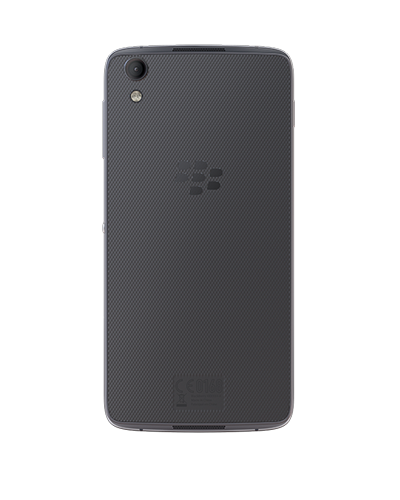
Unsurprisingly, the phone comes with BlackBerry’s own DTEK app that gives you a quick security overview and detailed feedback about which apps are accessing your details and when, is still present.
It’s available to pre-order now for $299, but before you whip out your card, you might want to just consider ordering the Alcatel Idol 4s. Why? Because it’s a slightly upgraded version of the same phone that comes with a VR headset and costs $350.
BlackBerry’s online store says the DTEK50 is due to start shipping the week of August 8.
Source: Inside BlackBerry
OnePlus 3 ‘Soft Gold’ edition arrives in understated luxury
About a month after releasing Engadget’s favorite sub-$400 phone, OnePlus is classing up the solid, budget-minded OnePlus 3 with a new, “Soft Gold” color variant. “This isn’t your typical gaudy gold smartphone,” a OnePlus staffer wrote in the subtweet-heavy product announcement. Instead of a jewel-encrusted piece of hardware, OnePlus has gone for a toned-down, “low-profile take on gold” to match the phone’s budget-friendly price.
Naturally, the new color comes with all the same build quality and impressive horsepower we’ve come to expect from OnePlus, plus the Soft Gold edition sports a luxurious-sounding finish that feels “reminiscent of holding fine, silky-soft sand.” The new limited edition is available today in the US, and in other regions starting on August 1st.
Opera Mini can download videos for offline viewing
If you’re often in areas where mobile data is spotty or pricey, the Opera Mini browser for Android has a helpful new feature: video downloading. When you’re at home or have solid WiFi, you can visit sites like Facebook, IMDB and GQ.com and download videos directly to your phone. Later, if you’re without a signal or want to keep your cell bill down, you can watch the videos offline at your leisure.
The feature works with sites like Facebook that support native .mp4, .webm and other formats, but not with YouTube and others that use their own media players. You can download a video while you’re watching it by hitting a button at the top right.
The feature should be handy for those of us who use the subway or drive in the country where cell connections are limited or nonexistent. But Opera is aiming it more at developing nations like India, where cellular data can be dicey and prohibitively expensive. Google recently did something similar with YouTube, offering an offline mode that allows you to schedule video downloads during periods where data is cheaper. Facebook is also testing an offline mode, letting users sync videos on WiFi and watch them in the app later on.
Source: Opera
 AIVAnet