


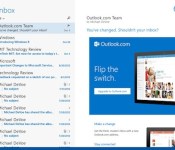
EFF lawyer questions Microsoft’s ability to search our email, claims it’s open to abuse

This week Microsoft revealed that, without a warrant, it accessed the Hotmail account of a French blogger in order to track down an employee leaking source code to some of its products, ultimately leading to that employee’s arrest. Microsoft’s actions created an uproar among users, causing it to spell out both its means, and its justification. Microsoft claims it needs to establish if “there is evidence sufficient for a court order” before conducting any searches, as allowed under its terms of service (the ones you read and agreed to). In response, Electronic Frontier Foundation fellow Andrew Crocker calls Redmond’s claim that it can’t obtain a warrant on itself a false premise with massive potential for abuse. Instead of “Warrants for Windows,” he argues that bringing in the FBI and obtaining a warrant is not only possible, but that it would be in line with Microsoft’s policy to require a warrant before revealing user info to others.
Though the process may be legal, a larger queasiness arises because, as worded, Microsoft’s TOS could submit a user’s inbox to those searches merely by violating its Code of Conduct. That could happen by (for example) emailing links that depict nudity, incite or express profanity, or facilitate the sale of firearms. Crocker himself states that, presumably, Microsoft isn’t using these standards as an excuse to dig through Outlook.com inboxes. His problem with its actions is more that by relying only on permission given by internal and external legal teams and its TOS, but not the actual court system, a potential for abuse exists.
As The Guardian details, other providers like Apple, Google and Yahoo (or likely AOL, which owns this blog) have similarly worded policies that could be used to access user data in order to protect their property. We asked Crocker about those, and he states that the EFF’s criticism stands in regards to similar policies, and that, while this particular case likely arose from an unusual set of circumstances, the fact we have no way of knowing if a company accessed our data is troubling (In the update on its policies, Microsoft said it would include data on the number of these types of searches in its bi-annual transparency report). In one case, TechCrunch founder Mike Arrington even claimed that while he cannot be sure, he’s “nearly certain” Google may have accessed his Gmail inbox to sniff out a leaker. Whatever the case, we suddenly have some weekend reading time set aside for the topic of end-to-end encryption with GNU Privacy Guard and “how to setup your own email server.”
Filed under: Internet, Microsoft
Source: EFF, The Guardian
Microsoft gives Windows XP users $100 off new Windows 8 PCs, but only on select models

First Microsoft used warnings and migration tools to help make Windows XP users upgrade. Now, it’s trying a different tack: bribery. In an effort to get folks to stop using the 12-year-old OS, Microsoft is offering XP hold-outs a $100 discount off new Windows 8 PCs. That sounds like a sweet deal — and it might well be — but there are several catches you should be aware of. First off, the promotion only applies to a select few models, and you’ll need to visit a Microsoft Store to even see the full list.
Secondly, the offer only applies to PCs priced at $599 and up, so if you thought you could use this to buy an extra-cheap tablet like the ASUS Transformer Book T100, then you’re sorely mistaken. (The Surface 2 isn’t included at all, which means even the $679 LTE model is off limits.) Finally, the deal is only valid through June 15th, so you’ll need to nab the discount soonish if you intend to use it. Regardless, with extended support for XP ending on April 8th, two weeks from now, we suggest you upgrade ASAP if you haven’t already.
Filed under: Software, Microsoft
Via: The Next Web
Source: Microsoft

Xbox One’s ‘Titanfall’ bundle gets a price cut to $450 at Walmart and Best Buy

The PS4 may have commanded an early lead over the Xbox One, partly thanks to a $100 price difference, but Microsoft is quickly narrowing the gap. Now, the company might just seal the deal with a discounted Xbox One-Titanfall bundle: both Walmart and Best Buy have cut the price to $450. The move is an aggressive one on Walmart and Best Buy’s part: Microsoft only recently started selling the Titanfall bundle for $500 a week and a half ago. Now, just 10 days later, it’s received a $50 discount. For those keeping track, that puts the Xbox One within spitting distance ($50) of the PlayStation 4, which doesn’t even come with a game in the box. Subtract Titanfall‘s $60 value from the cost, and Microsoft at last has the cheaper console. So, which of you is buying?
Filed under: Gaming, Microsoft
Via: New York Times, Joystiq
Developer pins death of Firefox for Windows 8 on Microsoft’s browser rules

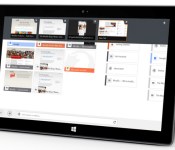
Mozilla attributed the death of Firefox for Windows 8 to low adoption, but it didn’t say why people weren’t using the beta release. Were they not interested? Former Mozilla developer Brian Bondy doesn’t think so. Instead, he believes that Microsoft’s strict web browser rules are to blame. You can’t run a browser in the modern Windows interface unless it’s set as the default, and picking that default is a drawn-out process — some people didn’t know that they could use Firefox in the newer environment, Bondy says. Whether or not the OS policy is responsible, we wouldn’t expect Microsoft to be more accommodating when Mozilla has complained to little avail for the past two years.
Filed under: Internet, Software, Microsoft
Via: Computerworld
Source: Brian Bondy

Microsoft’s Blink Windows Phone app gets a redesign, lots of new features

The Blink app for Windows Phone 8 is already pretty good, and it’s about to get even better. Microsoft Research has released a new version of its photography application, complete with a fresh look and a swath of new features. Aside from letting you create GIFs, Blink now makes it easier for you to lock on your subject, take more stable shots and quickly get to gallery view, where you can see the stuff you’ve captured. You can also see images show up on your Start screen, thanks to added Live Tile support. Plus, there’s a new tutorial mode — perfect for those who have yet to take the app for a spin. Either way, the revamped Blink is available now from the Windows Phone Store.
Filed under: Cellphones, Software, Mobile, Microsoft
Source: Windows Phone Store

Microsoft: We have the right to search your hotmail account

An ex-Microsoft employee was recently arrested for allegedly leaking company secrets, all because Redmond found evidence against him in his contact’s Hotmail account. Hold on, is it even legal for the company to go through someone’s account within permission? Well, according to Microsoft, it sure is — in fact, Hotmail’s Terms of Service apparently states that the company can “access or disclose information about you” for a number of reasons. Since Microsoft’s actions are quite dubious, it was forced to defend itself (read the full statement after the break) when news of the arrest broke. The company says that while its ToS (which people don’t usually read) clearly states that it has the right to look through a user’s account, it does so “only in the most exceptional circumstances.” Microsoft also claims that it goes through a rigorous process when it wants access to someone’s account. In this particular case, the company says that while it didn’t have a court order to search the user’s emails and chat logs, a legal team did a thorough review of the case beforehand. All this, after Microsoft’s Scroogled ad campaign called Google out for scanning inboxes to identify data for advertising.
[Image credit: Victor/Flickr]
Microsoft’s statement:
During an investigation of an employee we discovered evidence that the employee was providing stolen IP, including code relating to our activation process, to a third party. In order to protect our customers and the security and integrity of our products, we conducted an investigation over many months with law enforcement agencies in multiple countries. This included the issuance of a court order for the search of a home relating to evidence of the criminal acts involved. The investigation repeatedly identified clear evidence that the third party involved intended to sell Microsoft IP and had done so in the past.
As part of the investigation, we took the step of a limited review of this third party’s Microsoft operated accounts. While Microsoft’s terms of service make clear our permission for this type of review, this happens only in the most exceptional circumstances. We apply a rigorous process before reviewing such content. In this case, there was a thorough review by a legal team separate from the investigating team and strong evidence of a criminal act that met a standard comparable to that required to obtain a legal order to search other sites. In fact, as noted above, such a court order was issued in other aspects of the investigation.
A section in Hotmail’s Terms of Service states:
We may access or disclose information about you, including the content of your communications, in order to: (a) comply with the law or respond to lawful requests or legal process; (b) protect the rights or property of Microsoft or our customers, including the enforcement of our agreements or policies governing your use of the Service; or (c) act on a good faith belief that such access or disclosure is necessary to protect the personal safety of Microsoft employees, customers, or the public.
Filed under: Internet, Microsoft
Source: Recode

Microsoft aims to power up PC and mobile games with DirectX 12

The time for teasing is over. Today at GDC, Microsoft pulled back the curtain on DirectX 12, a shiny new edition of its venerable graphics APIs that some lucky developers can start mucking around with later this year. Microsoft Graphics Development Manager Anuj Gosalia talked up a storm out in SF: he noted that DX12 would (among other things) yield performance boosts across all of Microsoft’s platforms, including Xbox One and Windows Phone.
That mobile angle is an awfully tantalizing one considering how tightly Windows Phone integrates with Xbox Live. Polygon reports that DX12 should improve how much power those games suck, and will make porting content from consoles and PCs to mobile devices easier. On the PC side of things, game developers will also get lower-level access to hardware to help keep graphical performance as snappy as possible. Throw in smarter shuffling of processing tasks to multiple CPU cores to keep any one from getting bogged down, and you’ve got yourself a tantalizing little development package. There’s a decent chance you won’t even have to shell out for new hardware either, since Microsoft says some 80% of the gaming PCs being sold on the market right now will play nice with DirectX 12 games. Just don’t expect to nab them very soon though — those titles are expected to hit shelves in time for the 2015 holiday season.
Source: DirectX Developer Blog

Qik shutting down April 30th, three years after being acquired by Skype
 It’s been more than three years since Skype purchased the video calling service Qik, but until now, it’s lived on as a standalone app. Finally, though, it’s shutting down: Qik announced in a blog post today that it will close its doors on April 30th, taking all your videos with it. The reason: Skype has finally folded all of Qik’s features into its own service, so there’s no reason to offer a duplicate product.
So what now? For starters, you’ll want to download any recorded clips from the user dashboard, as those won’t be saved past April 30th (ditto for any videos you’ve embedded — we recommend re-embedding using a site like YouTube). Unfortunately, if someone sent you a video through VideoMail, you won’t necessarily be able to salvage it; only the original sender has rights to it, so your best bet is to ping your friend and ask nicely. Lastly, any Premium users will get a refund for any service past April 30th that they already paid for. It’s only fair, right?
Filed under: Internet, Mobile, Microsoft
Via: MobileBurn, The Next Web
Source: Qik

Ex-Microsoft employee arrested for leaking company secrets
Remember all those Windows 8 screenshots that surfaced before the platform was released? Well, some of those might have been courtesy of Alex Kibkalo, an ex-Microsoft employee who was just arrested for stealing and leaking company secrets. Unlike the HTC execs who reportedly stole trade secrets to run a new firm, though, Kibkalo allegedly leaked info to a French tech blogger for something akin to revenge — he was apparently angry over receiving a poor performance review when he was still with Microsoft. According to Seattle Post-Intelligencer, the accused sent the blogger (whom he met on a forum) parts of Windows 8′s code and Microsoft’s Activation Server Software Development Kit. While Kibkalo’s charging paper states that the blogger only posted Windows 8 screenshots, Microsoft believes its former employee also encouraged him to share the development kit online. He supposedly wanted that to happen so hackers can use the kit (one of Microsoft’s defenses against software piracy) to crack the company’s products.
If you’re wondering how exactly the accused got caught, it’s because the blogger contacted Microsoft in September 2012 to verify the Windows 8 code Kibkalo sent. When Redmond determined its authenticity, investigators looked through the blogger’s Hotmail account and instant messenger, where they found incriminating emails and chat logs. In one of those sessions, the accused even claimed that he broke into one of the company’s buildings in an attempt to copy a server. Kibkalo’s now facing criminal charges for this particular offense, but according to investigators, he also bragged about leaking Windows 7 files in the past.
[Image credit: Victor/Flickr]
Via: ZDNet
Source: Seattle PI

Google and Microsoft are using the cloud to track climate change

Data.gov is getting a whole lot greener thanks to its new section dedicated to climate information. The new channel is the product of President Obama’s Climate Data Initiative (PDF), and pulls information that can help predict the effects of climate change and prevent any damage that may result. The raw data comes from the likes of the Department of Defense, NASA and the US Geological Society, but probably isn’t easy to grok for the average person. To help with that, Google and Microsoft have stepped in. Mountain View is donating 50 million hours of its Earth Engine’s computing power — the Global Forest Watch’s backbone — and is partnering with academics in the western US to produce a near real-time drought map and monitoring system.
Redmond, on the other hand, has developed a tool (dubbed FetchClimate) that can both recall historical climate data and forecast future weather trends based on the stockpiles of information stored in Microsoft’s Azure back-end. For example, the software giant says that this could allow state planners to predict extreme rainfall, preventing flood damage to infrastructure and transit lines as a result. These are still early days for the Initiative, but, as times goes on, more applications using its wealth of info will surely surface. For now, though, it’s nice to see tech companies exploit government data instead of the other way around.
Filed under: Internet, Microsoft, Google
Source: The White House Blog, Microsoft Research, Google Maps
 AIVAnet