



How to avoid heartburn, err, Heartbleed

Don’t change your password. It’s strange advice to hear when the so-called Heartbleed bug is leaving databases all over the web open and exposed, but it’s applicable. Yes, security has been compromised for many of your favorite websites and services (including Google, Flickr and Steam, at least initially) but protecting yourself isn’t quite as easy as changing your password. Unlike past exploits, Heartbleed isn’t a database leak or a list of plaintext logins; it’s a flaw in one of the web’s most prevalent security protocols — and until its fixed, updating your login information won’t do a darn thing to protect you. What, then, can you do to protect yourself? Wait, watch and verify.
Updating your password is a must, but only after your favorite services have patched their servers to block the Heartbleed exploit. Fortunately that’s relatively easy — the open-source SSL encryption software the bug affects has already been updated with a new, secure version. Vulnerable sites need only to upgrade to the latest version of Open-SSL to protect their users. Although some companies will notify users that their services have been patched (like Google did), not all of them have or will. That means you need to be aware of which websites were vulnerable to the bug and routinely check them to see if they’re back on track. Don’t worry, that’s not too difficult either. Sites like GitHub and Mashable have already compiled lists of popular websites, services and social networks, noting if they were affected at the time of Heartbleed’s discovery, and in some cases, if they’ve been patched. You can check manually, too: concerned coders and even some companies have made tools available to help you suss out sites that are open to attack. Coder Filippo Valsorda has created a Heartbleed checker and the folks at LastPass have a similar tool — either or both will update you on the status of a site’s security certificate. If it comes up clean, you’re safe to change your password.
Of all the exploits we’ve seen over the past few years, Heartbleed is certainly the biggest nuisance. Not only is it widespread enough to worm its way into some forgotten nook of your digital past, but it’s been lying under our noses for two years. Still, there’s no need to panic: just wait for your favorites services to patch the bug, watch for announcements from sites you might use and verify their security using freely available tools. Once that’s all done, change your password, write it down and breathe easy.

Bizarrely, the next Borderlands game is for Xbox 360 and PlayStation 3

The hugely popular first-person shooter series Borderlands is getting a new entry in Borderlands: The Pre-Sequel, a game set between the story of previous two games. Not exactly shocking, but neat nonetheless. What’s shocking is where we’ll play Borderlands: The Pre-Sequel when it arrives this fall: Xbox 360 and PlayStation 3. Despite the Xbox One and PlayStation 4… ya know, existing, the next major Borderlands game apparently isn’t headed their way. That said, there’s one other platform that fans can snag it on: PC. And given the PC-like architecture of the new consoles, you’ll forgive us if we don’t feign surprise when the game eventually arrives on newer platforms.
The game’s development is being handled by both the series creators at Gearbox Software and 2K’s Australian arm. Thus far, the only footage available is pre-Alpha (read: early), but, well, it looks an awful lot like the Borderlands games you already know and love. Perhaps you don’t already know and love the series? We’ve got a trailer below the break that’ll help get you up to speed.

Microsoft teaches robots how to deal with groups and draw from memory

Us humans are good at predicting how people will behave, particularly in groups, but artificial intelligence routines still have trouble dealing with much more than controlled, one-on-one discussions. They’ll be far more flexible if Microsoft’s Situated Interaction project pays off, though. The research initiative has produced sensor-equipped robots that can not only recognize multiple people, but infer their objectives and roles. Office assistants can tell who’s speaking and respond in kind, while a lobby robot can call the elevator if it sees a crowd headed in that direction.
Some of the robots also have a human-like ability to draw from memory, expanding on what we’ve seen from virtual assistants like Cortana or Siri. In addition to knowing your schedule, they can detect your presence and make predictions of availability based on your habits; they’ll know if you haven’t been around in a while, or when you’re likely to wrap up a conversation. One robot will even know that you’re coming because you asked one of its fellow machines for directions. It’s doubtful that you’ll see production versions of these context-aware robots any time soon, but they could lead to a generation of smart devices that are better at coordinating with (and relating to) their human counterparts.
Filed under: Robots, Software, Microsoft
Source: Microsoft Research

Bing Travel’s airfare price predictor is gone, but not forgotten

Despite Microsoft’s years of effort, most of us haven’t switched from Google to Bing for our various searches. Still, one of our favorite Bing features has always been the airfare price prediction. Added in 2009 after Microsoft acquired the startup Farecast for $115 million one year earlier, it could give you an idea of the best time to buy an airplane ticket at its lowest price. That feature is gone now, as a Microsoft spokesperson told GeekWire “It was a business decision to focus resources on areas where we feel there are the greatest opportunities to serve travel needs.” It faded out earlier this year, and Tnooz mentions that key members of the Farecast / Bing Travel team left Microsoft back in 2009.
Last year, Farecast’s founder Oren Etzioni lamented the state of of the service, telling GeekWire at the time “I would have expected more [from Bing] during the past few years.” Apparently what was left didn’t survive Microsoft’s current reorganization, however travelers looking for the best time to buy can still find a similar service from Bing frienemy Kayak.com. Kayak launched a curiously similar price prediction feature last year, and now Google is beefing up its search results for travel queries with direct information on hotels, room photos and reviews. Ah well, at least Bing is still our go to for easy Bitcoin conversions.

Filed under: Transportation, Internet, Microsoft
Via: Neowin

Windows XP support officially ends today, still used by over 25% of PCs

It’s been over 12 years, folks: it’s time to let that aging operating system go. In case the insistent cries of all your favorite applications and anyone who’s used your computer recently weren’t enough indication, we’re here to make it totally clear that today is the day Microsoft ends official support for Windows XP. That means no more security updates and no more customer service calls. A paid option is available to organizations (think: governments, corporations, etc.) which offers “critical” patches and support, but even Microsoft suggests upgrading to a newer version of Windows instead of footing the bill.
We won’t rib you too much for sticking to XP, though; over 25 percent of you are still running Microsoft’s 2001 release, according to NetMarketShare. And that’s to say nothing of the world’s ATMs, 95 percent of which still run XP. Egads!

Relax, y’all — the company in charge of those ATMs says it’s in the process of upgrading and (as of last check-in a few weeks ago) should have one-third upgraded ahead of…today. We reached out to the company (NCR) and have yet to hear back on progress.
A variety of countries are also still dependent on XP for governmental affairs, such as The United Kingdom and The Netherlands, both of which had to work out paid measures with Microsoft for continued security support. China’s population is largely dependent on XP as well, with nearly half of the country’s computer users running the aged OS. Still, between years of warning, financial incentives to upgrade, and an update to XP that outright told users of today’s news, it’s hard to be upset at Microsoft. There was even free software for migrating content over.
So today we say goodbye to Windows XP: you were there for us back before the Internet was cool, and you set the standard for desktop OSes.
Filed under: Desktops, Household, Laptops, Internet, Software, Microsoft

Microsoft’s deal to buy Nokia gets thumbs-up from China

When one massive corporation buys another one, it’s not as simple as handing over the dosh and winking. There’s also the small matter of the world’s competition authorities, which check that the deal won’t affect market conditions. China has finally given its blessing to the Microsoft – Nokia tie-up, meaning that the pair can make their marriage official, probably before the end of April. Of course, that only gives us a few days to work out a facetious portmanteau to name the pair — Microkia and Nokrosoft are all we’ve got so far.
Filed under: Cellphones, Tablets, Mobile, Microsoft, Nokia
Source: Nokia

Game of Thrones’ season premiere is free to watch on Xbox this week

If you missed out on Game of Thrones‘ season 4 premiere when it first aired — say, because of the HBO Go meltdown — you’re in for a treat this week. HBO is giving all Xbox users free access to the episode between April 8th and April 14th, whether or not they’re subscribers to the premium TV service. Some cable and satellite providers are also offering gratis access through their on-demand platforms and websites. This isn’t purely an act of generosity, as you might imagine. Besides giving HBO a chance to advertise a show à la Silicon Valley, the free content could steer some of the many people pirating Game of Thrones toward legitimate sources. Time Warner’s CEO has argued that piracy promotes HBO’s series — his company may see a chance to replicate that buzz through official channels.
Filed under: Gaming, Home Entertainment, HD, Microsoft

Daily Roundup: $200 Micro 3D printer, Xbox One now shares to YouTube, and more!

You might say the day is never really done in consumer technology news. Your workday, however, hopefully draws to a close at some point. This is the Daily Roundup on Engadget, a quick peek back at the top headlines for the past 24 hours — all handpicked by the editors here at the site. Click on through the break, and enjoy.

The Micro is a $200 3D printer that can make a teacup in an hour
If you’ve been expectantly waiting for 3D printer that wouldn’t require you to wring out your wallet, now might be your chance to pick one up. Starting today, M3D’s Micro is available for pre-order on Kickstarter — and it’s only $200.

Xbox One now shares gameplay footage direct to YouTube
Previously, Xbox Owners have been able to share their gameplay through Skydrive and Twitch, but that’s about it. Starting tomorrow, however, those with Microsoft’s latest console will receive an update that let’s them share gameplay directly to their YouTube channel.

NASA is offering code from more than 1,000 programs for public use
Building your own home-grown life support system? Probably not. But thanks to NASA’s technology transfer program, such an endeavor might be possible. The administration plans to release thousands of its software systems for functions like life aeronautics and cryogenics to the public.

30 years of mobile phones, all jamming together (video)
South Korea’s SK Telecom celebrated 30 years of business by remixing its jingle with cell phones. And not just any mobile devices — we’re talking about the likes of the Motorola StarTAC and several car phones from the eighties.
You also might like:
Filed under: Misc

Microsoft’s working on Xbox 360 emulation for Xbox One, but ‘there aren’t currently any plans’ to make it

Xbox-related news from Microsoft’s Build conference last week wasn’t just relegated to Kinect for Windows, it would seem. Redmond is having a hard time bringing the Xbox 360′s considerable catalog of games to the Xbox One via hardware emulation. Last week an audience member asked lead partner developer Frank Savage if there were plans to bring an Xbox 360 emulator, as spotted by Kotaku’s Australia wing, to its new console. Savage said there are, but “we’re not done thinking them through yet, unfortunately.” He went on to say that emulating the last-gen console’s PowerPC architecture on the Xbox One’s x86-based platform is actually pretty hard to do. We reached out to Microsoft for confirmation and were told, as Savage said, nothing has been assembled yet. “It is super challenging to emulate two completely different architectures, and there aren’t currently any plans to build this,” the Redmond spokesperson said. Just like that, our dreams of playing Red Dead Redemption with the Xbox One’s controller have (temporarily) been dashed.
Filed under: Gaming, Home Entertainment, HD, Microsoft
Source: Kotaku Australia
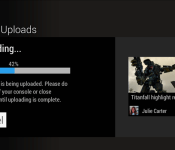
Xbox One now shares gameplay footage direct to YouTube

We can all agree that sharing gameplay footage on Xbox One via SkyDrive OneDrive isn’t really the best social solution. Okay, so there’s Twitch, too, but the holy grail of video sharing lies with YouTube. And, as of tomorrow, Xbox One owners will get just that as an app update will bring the much desired ability to share Game DVR footage directly to a user’s YouTube channel. It’s really as simple as that. Once the update hits, you’ll need to dive into the console’s settings menu and enable the social sharing feature first, but that’s about as deep as it gets.
Filed under: Gaming, HD, Microsoft
Source: Xbox

