


Windows Phone’s answer to Snapchat has you ‘winding up’ your friends

There’s no official Snapchat app for Windows Phone right now, but don’t worry — Microsoft is offering an equivalent that might do in a pinch. The new WindUp app covers very similar ground, letting you send media and messages that disappear after a set amount of time; you’re supposed to “wind up” your friends by giving them just a brief glimpse of what you’re sharing. No, we don’t get the (fairly contrived) explanation any more than you do, but Microsoft isn’t worried about marketing here. This is really a research experiment meant to explore how people “create, share and converse,” not to topple someone else’s messaging empire. Don’t expect WindUp to evolve or reach other platforms, then. Even so, it may be worth checking out if you’d like a ephemeral chat app focused solely on Windows Phone fans.
Filed under: Cellphones, Internet, Mobile, Microsoft
Via: Neowin
Source: Windows Phone Store, Inside Microsoft Research
.CPlase_panel display:none;

Next version of Windows to get public trial in the fall

While some people are still getting used to the idea of Windows 8, Microsoft’s already working to put the next major iteration of Windows in people’s hands. And that could be happening sooner than you think. According to ZDNet’s Mary Jo Foley, who has a solid track record on Microsoft-related scoops, the Surface maker is looking to release a “technology preview” of Windows Threshold, aka Windows 9, toward the end of September or the beginning of October. Foley notes that, in an effort to enhance the serviceability of the OS, people who instal the preview will be required to agree to “have subsequently monthly updates” pushed to their computer — which seems like a small pledge to make in exchange for trying some new software.
As a refresher, Threshold is expected to further unify Microsoft’s operating systems, like Windows 8 and Windows Phone 8. The OS will reportedly ship in three modes — desktop, tablet and smartphone –and is capable of tailoring the experience to fit whatever device you’re using. You’ll be able to check it out soon enough, since the “technology preview” of Threshold is said to be coming as a public teaser once it officially arrives.
Filed under: Desktops, Laptops, Tablets, Software, Microsoft
Source: ZDNet
.CPlase_panel display:none;
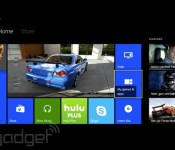
The future of Xbox One: early access gaming, Cortana and more

Since the Xbox One launched last November, Microsoft’s latest game console has changed pretty dramatically. From “going all-in” on Kinect to offering a camera-less $400 model; from focused on TV and home entertainment to appealing directly to “core” gamers. The last year for Microsoft’s Xbox division has been one massive pivot. The future sounds brighter.
You’ve already read about the updates coming to Xbox One this fall. What about beyond that? Head of Xbox Phil Spencer offered us some possibilities in an interview this week at Gamescom 2014. What about, say, a version of Steam’s massively popular Early Access program, which enables developers to release games still in development and gamers to participate in the development process? “I think it does make sense. I think we have to land it the right way on console,” Spencer told us. That’s certainly a start!
On Valve’s hugely popular Steam service, people can buy and play games that range from barely playable to nearly done. It’s a system that works especially well on PC — Steam’s main customer base — because PC gamers are more used to dealing with technical complications. On game consoles, there’s an expectation of ease of use. There’s also a guarantee of functionality. “There’s a certain bar that we want to keep on consoles because of the nature of who plays on a console,” Spencer said. “The model itself I think does make sense. I think we probably just wanna model it a little bit differently.”
So, what would something like Early Access look like on Xbox One?

“The fact that we exist on both Windows and on a console could make it a strength of ours in the long run,” Spencer said. In so many words, because of the Windows side of Microsoft, the service and its games could first exist in the PC world before making the jump to Xbox One in a more stable state. “So it starts in one space and kind of graduates up,” Spencer said. “Maybe early access starts on PC, but it’s targeting the main console customer.”
It’s also a question of Microsoft depending on its relationships with game developers to know which games are more likely to succeed in such an environment. I offered the example of Vlambeer’s Nuclear Throne, a game that’s been available on Steam’s Early Access for months, with weekly updates and development livestreams demonstrating the impact the game’s community has had on the game itself.
“Vlambeer is different. We know them,” Spencer said. “But it could be ‘Vlambo,’ and we don’t know them. And you’re like, ‘Okay, is this real; is it not real?’ I think there’s a certain bar that we want to keep on consoles because of the nature of who plays on a console.” The company’s indie game program, ID@Xbox, could help in the vetting process; dozens of indie devs and their studios are already registered through the program.
CORTANA

Phones, tablets, computers and even televisions all offer a basic level of day-to-day information: weather, traffic, stock info, news headlines, etc. Despite Xbox One’s intention to act as a living room hub — from “waking” the console with your voice to including an HDMI-in port for television viewing — it’s still missing the vital, basic information that far older technology delivered long ago.
It still feels magical every time Google Now tells me (without asking) about an upcoming flight, or the traffic on my commute, or some other helpful life information. Why doesn’t that exist on the Xbox One dashboard? Hell, why isn’t Windows Phone personal assistant program, Cortana, on the Xbox One? It’s even named after a character from Halo!
“I think we get permission to do that as we succeed as a gaming console,” Spencer said. The Xbox pivot isn’t over, clearly, and Spencer and co. are still worried about alienating the Xbox “core” audience in favor of the general public. “It makes sense that I can get up in the morning and say ‘Xbox, what’s the traffic’ and it brings up something that shows my commute in the morning,” Spencer said. “That all makes sense to me in the long run.”
That last bit — “in the long run” — is important. He repeatedly stressed that, despite already having discussed a variety of additions to Xbox One functionality (from Early Access-like games to alternate voice control inputs to Cortana), time is the primary lacking resource. “I think there’s a ton of opportunity,” he said. “Time is in precious quantity when we’re talking about those scenarios.”
Filed under: Gaming, Software, HD, Microsoft
.CPlase_panel display:none;

New Xbox One features now rolling out to preview members, all owners in coming months

Remember those new Xbox One features Microsoft announced at Gamescom this week? They’re available right now — at least to members who are part of the company’s preview program. Major Nelson just announced that Xbox Live users that have access to preview updates will be able to download the new features today. This includes the updated Friends section announced earlier this week as well as SmartGlass TV streaming, the system’s new boot to TV mode and the long awaited Media Player app. The announcement also revealed a host of previously unannounced updates, including tweaks to the Party app and Xbox One’s GameDVR.
For the most part, the new features are about getting organized: the Party app has been retooled to give specified “party leaders” more control over the group and the entire interface has been tweaked for clarity. The GameDVR allows users to select and delete multiple files at once, too — which should make it easier to keep your console’s hard drive clean. Finally, the update will reorganize a few sections of the Xbox One’s settings menu and bring “Xbox On” voice functionality to Australia, French Canada, Italy, Spain, Brazil and Mexico. All in all, not a bad set of updates. Not part of the preview program? Don’t worry, the update will roll out to you (and the rest of the community) in the coming months. In the meantime, you can check out a quick walkthrough of the upcoming Media Player below.
Filed under: Gaming, HD, Microsoft
Source: Xbox
.CPlase_panel display:none;

The gaming industry is booming and Sony’s lead is growing

Earlier this week Sony announced that it’d sold over 10 million PlayStation 4s to date, but that isn’t the half of it: the company’s latest gaming console is once again dominating the sales charts overall. As Sony tells it, July marks the seventh consecutive month that the PS4 outsold Microsoft’s Xbox One. Hardware isn’t the only area Sony is trumping its rival either, as The Last of Us: Remastered led software sales last month by a “considerable” margin ahead of number-two-seller Minecraft on the Xbox 360 and PlayStation 3. The gaming sector as a whole is incredibly healthy, too. The NPD Group reports that even though software sales are down overall for July (something it attributes directly to the lack of an NCAA Football release this year), hardware is picking up the slack. Comparing life-to-date numbers of the PS4 and Xbox One to their predecessors, the new consoles are outselling the PS3 and Xbox 360 by almost a whopping 80 percent. That puts this July ahead of last by 13 percent in terms of total money spent in the area, according to NPD.
Nintendo seems to be doing pretty well, too, despite that massive $97 million loss. The outfit says that Mario Kart 8 has now sold over a million copies in the US alone, and the Wii U has increased year-to-date sales by 60 percent compared to 2013.
What about Microsoft? Well, Redmond’s lack of a formal announcement should speak for itself. When we reached out for a comment, a company spokesperson reminded us that the Xbox One sales numbers more-than doubled in June (still no word on what they doubled from) and that “this momentum” continued into July. And, well, that’s about it. When you look at how many Xbox One software-bundled systems that Microsoft is releasing this fall, just how far behind the company is to its main competition (Sony) should be pretty apparent — the firm’s desperate and essentially giving away some of its biggest games in the hopes that people will buy an Xbox One.
Filed under: Cameras, Gaming, HD, Sony, Microsoft, Nintendo
.CPlase_panel display:none;

Most new Android phones sell for less than $200

Want to know a big reason why Android smartphones are virtually ubiquitous these days? Because many of them are very affordable, that’s why. IDC’s latest market share estimates show that 58.6 percent of Android phones shipped in the second quarter cost less than $200, many of them from surging Chinese manufacturers like Huawei, Lenovo and Xiaomi. Simply speaking, many in China and other developing countries can’t (or won’t) justify buying the expensive phones that thrive in regions like Europe and North America. It’s no wonder that Samsung is losing the battle at the moment, then — while the company has budget handsets, it’s heavily invested in high-end hardware like the Galaxy S line.
The influx of low-cost devices also helps to explain year-over-year dips in market share for both iOS (11.7 percent) and Windows Phone (2.5 percent), which pale next to Android’s 84.7 percent slice of the pie. Apple doesn’t participate in the sub-$200 realm to start with, so it won’t compete in terms of sheer units; it’s doing fine profit-wise. Windows Phone, meanwhile, has few bona fide hits in this space outside of the aging Lumia 520. There are new iPhones and more budget-friendly Windows Phone makers right around the corner, though, so it won’t be shocking if there’s a different story in the months ahead.

Filed under: Cellphones, Mobile, Apple, Microsoft, Google, Blackberry
Source: IDC
.CPlase_panel display:none;

Activision’s dipping its toe into indie gaming with ‘Geometry Wars 3: Dimensions’

Activision creates and publishes a small group of blockbuster video games aimed at mainstream consumers. The world’s largest game publishing company handles some of gaming’s most culturally impactful titles: the Call of Duty franchise, this year’s Destiny, and the entire Blizzard catalog. This week at Gamescom 2014, Activision announced its first smaller effort in many years with Geometry Wars 3: Dimensions. As the name implies, Dimensions is the third entry in the Geometry Wars franchise — a beloved series that debuted as a minigame within the first Xbox console’s Project Gotham Racing 2. People like it so much in that completely unrelated game that it spawned into its own series.
Sadly, the studio behind the originals (Bizarre Creations) was shuttered after a commercial flop with the critically-lauded racer Blur. Some of the folks from Bizarre are back on Dimensions, now part of a new studio named Lucid. But this isn’t the return of Activision’s expanded portfolio, says Activision CEO Eric Hirshberg.
“I wouldn’t read too much into it in terms of a sea change in our business strategy,” Hirshberg told us in an interview. “It’s a passion project, a skunkworks project that we’re excited about, but it doesn’t signal an overall shift in our approach to the business.”

So, no, the move to re-launch Sierra as a label within Activision — while neato — is not part of a bigger push into the burgeoning indie game movement. Hirshberg also pointed out that some of his company’s tentpole franchises, such as the mega-popular kid’s series Skylanders, started out as “small, scrappy” projects rather than intended from the jump as the monsters they’ve become.
Activision’s taking a cautious approach with the new initiative, even. Hirshberg stressed that his company isn’t “taking our eye off the ball” of the prize: blockbuster games aimed at mainstream folks. For now, Hirshberg said Geometry Wars 3: Dimensions is “a cool passion project to hopefully make some gamers happy and do something we think is cool.” As far as we’re concerned, as long as there’s more Geometry Wars to play, everyone wins.
Filed under: Gaming, Software, HD, Sony, Microsoft
.CPlase_panel display:none;

Microsoft OneNote Online tells you who else is futzing with your documents

Microsoft has just plumped up OneNote Online, and while it’s not exactly a complete overhaul, the refresh adds features critical for cloud collaboration services. For instance, the update introduces a feature called People Presence, which shows all active users working on the same page as you are, so you can ping people if you need a brainstorming session. To prevent collaborators from overwriting each others’ edits, Microsoft has also improved the service’s syncing capabilities to reflect changes nearly in real time. These updates are already live on Office Online, where you can edit any OneNote notebook you or your friends share on OneDrive or Office 365. And, yes, you can enjoy the features no matter what OS (the software’s available on several platforms) your friends used to upload.

Source: Office Blogs
.CPlase_panel display:none;

Bing now lets you ask follow-up questions after your searches

Google sometimes lets you ask follow-up questions when a search doesn’t provide all the answers. Bing, however, has required that you phrase each query as if you’re starting fresh — a bit of a headache if you’re the curious sort. That won’t be a problem for much longer, as Microsoft is rolling out a Bing update that adds conversational, context-aware searching to the mix. If you ask who President Obama’s wife is, for example, you can then ask “how tall is she?” (spoiler: fairly tall) without having to mention Michelle by name — the engine knows who you’re referring to. The feature doesn’t appear to be available everywhere just yet, but it shouldn’t take long before you’re holding short chats in your web browser.
Filed under: Internet, Microsoft
Via: Microsoft-News
Source: Bing Blogs
.CPlase_panel display:none;
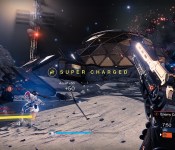
Why Activision is spending $500 million on Destiny

Yes, it’s true: Activision is spending half a billion dollars on Bungie’s Destiny. Yes, that’s true despite Bungie’s statement that, “the budget for Destiny, including associated marketing costs and pizza Wednesdays, is nowhere near 500 million dollars.” And that’s because, when Activision head Bobby Kotick revealed that gargantuan number earlier this year, he was speaking to the entire franchise, not just this September’s game.
“That number has been widely misinterpreted as a production number for the first game,” Activision CEO Eric Hirshberg explained in an interview today at Gamescom. “That number is an all-inclusive number that’s several years worth of investment, including marketing and several games, and a lot of up front investment in things like engines and tools that will be able to be used for years to come.”
This should come as no surprise to anyone closely following the tale of Destiny and Bungie working with Activision. The two companies signed a 10-year contract to produce a series of games under the Destiny moniker; the partnership was announced in April 2010, putting us just over four years into that 10-year deal. Despite being nearly halfway finished, Hirshberg said the $500 million includes more than just marketing, production and “pizza Wednesdays.” It includes additional entries in the franchise, even.
“When you see it play out, it’ll be fairly familiar: we’ll have packaged games, follow on content,” Hirshberg told us. All that is to say that Activision (and presumably Bungie as well) don’t see Destiny as the MMO-like game (think World of Warcraft) that the beta led many to believe: there’s no monthly subscription, no servers to manage, etc.. “I think that people are ascribing more mystery to the business model of Destiny than they need to,” he said.
So, yes, Destiny costs $500 million. But not this fall’s game — that’s the beginning of a much larger plan to make Destiny into the next blockbuster franchise. The next Halo. The next Call of Duty. Or even something bigger.
“Even with all that context, no one should be surprised that Destiny is a huge undertaking,” Hirshberg said, “An ambitious vision takes an ambitious investment. We wouldn’t be making it if we didn’t believe in the potential of the game.”
.CPlase_panel display:none;
 AIVAnet