


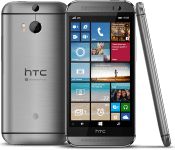
AT&T plans to sell the HTC One M8 for Windows soon

Feeling blue that the HTC One M8 for Windows is exclusive to Big Red? Good news: AT&T just confirmed that it’ll carry the flagship Windows Phone… eventually. The carrier can’t openly discuss details like pricing or availability yet — likely because it can’t sell the phone until the terms of the exclusive contract expire — but at least we can rest a little more easily knowing that this top-of-the-line Windows Phone will expand its reach to more than just one carrier. Who knows: Since a GSM version will be available, that may open the door for the device to go to other parts of the world as well. While you wait, check out our hands-on coverage of the device here.
Filed under: Cellphones, Wireless, Mobile, Microsoft, HTC, AT&T
.CPlase_panel display:none;

Ballmer steps down from Microsoft board to focus on basketball, teaching

He was Microsoft’s 30th employee, its first business manager and CEO for over a decade. Now, after 34 years with the company, Steve Ballmer is leaving Microsoft behind. In a letter to Satya Nadella, Microsoft’s new CEO, Ballmer explained that he’s leaving the company’s board of directors effective immediately. “I have become very busy,” he explains. “I see a combination of Clippers, civic contribution, teaching and study taking up a lot of time.” It’s not a surprising development — owning an NBA franchise is a pretty big responsibility, after all — but it marks the end of Ballmer’s decades-long influence over the company. Despite his departure, the former-CEO is still invested in the company’s success, and spent most of the letter encouraging Nadella and giving advice.
“Microsoft will need to be bold and make big bets to succeed in this new environment,” he told Nadella. “Our board must also support and encourage that fearlessness for shareholders to get the best performance from Microsoft. You must drive that.” While he’s no longer a voice within the company, Ballmer still cares about Microsoft’s stock performance: outside of index funds, he still owns more Microsoft shares than anyone, he says. “I bleed Microsoft, have for 34 years and I always will,” he concluded. “I promise to support and encourage boldness by management in my role as a shareholder in any way I can.”
Nadella shot back a supportive, equally optimistic response, promising that Microsoft will thrive in “the mobile-first, cloud-first world.” End of an era? For sure — you can read the full, unabridged letter (and Nadella’s response) at the source link below.
[Image credit: NBAE/Getty Images]
Source: Microsoft
.CPlase_panel display:none;
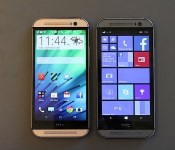
Meet the HTC One M8’s Windows Phone twin brother

The above picture isn’t Photoshopped — what you’re seeing really is the HTC One M8 with Windows Phone, and it’s available today as a Verizon exclusive. Thanks to Microsoft’s latest update, it’s now possible to put the third-place smartphone OS on existing Android hardware, and HTC is the first mainstream manufacturer to take advantage of the opportunity. Spoiler alert: The hardware of the Windows Phone-equipped One M8 is completely identical to that of the Android version launched earlier this year, aside from gratuitous Verizon and Microsoft logos. What makes this new variant so special is on the software side.
Microsoft views the new One M8 as a marketing flagship; it’s collaborating with HTC and Verizon on a nationwide ad campaign, so it appears that all three companies are committed to this device’s success. Of course, this isn’t the first time Microsoft has made these kinds of promises to HTC; a very similar thing happened with the HTC Windows Phone 8X, but that effort didn’t seem to do too well. Given the company’s acquisition of Nokia’s Devices division, it makes sense that Microsoft doesn’t want to alienate many of its long-time partners. What better way to share the love with other phone makers than to bring HTC on board?
On the hardware side, this One M8 is exactly the same 5-inch 1080p aluminum tank we’ve used for the past five months. In fact, if it weren’t for the Windows Phone logo on the back (alongside HTC’s and Verizon’s logos, making it a rather noisy affair), you wouldn’t be able to tell that anything is different until you boot it up. It comes with on-screen buttons, built-in infrared, the same Snapdragon 801 quad-core chipset and duo-camera setup on the back — and yes, it uses an UltraPixel sensor with a resolution of 4MP, as well as a 5MP camera on the front. The height, thickness and weight are all exactly alike, too.

It’ll also come with 32GB internal storage and microSD slot for up to 128GB, as well as a 2,600mAh battery (also identical), though we’re assuming overall battery life will differ from one OS to another. Windows Phone has a good reputation for maintaining power efficiency, so I”m looking forward to testing it out to see what difference the OS truly makes. The device only comes in gunmetal grey, so silver or gold fans will have to stick with Android for now. (HTC wouldn’t say if it plans to add more colors down the road, though we wouldn’t hate a red-colored exclusive for Verizon employees at some point.)
It’s all about what’s on the inside that counts this time — the firmware will be the make-or-break factor here. It comes with the first update to Windows Phone 8.1, so fans of the OS won’t have any problems getting around. Cortana, folders, quick access panel… they’re all present, but they’re not alone.
That’s because HTC’s brought over several of the One M8′s defining features. BlinkFeed is included, but you can’t get to it by swiping to the right; here, it’s presented as a separate app. I found it a little funny that it actually looks like it belongs on Windows Phone, primarily because of its tile-based setup. Additionally, video highlights are included as a separate app, so you can still put together fun 30-second clips using whatever theme and music you want. Sense TV is also here, and most of the duo camera effects made the cut as well. Note that I said most; a few effects, such as seasons and stickers, aren’t available. (The options I use the most, such as foregrounder, Ufocus and Dimension Plus, are all there.)

Because the stock Windows Phone camera isn’t designed to handle HTC’s duo camera customizations, the company added its own default app. The UI is nearly identical to what you’d find on the Android version, although Zoe functionality and dual-capture mode are missing. (The brand new Zoe app won’t make it to Windows Phone, either.) You can download other lenses, however, so hopefully HTC offers these modes as downloadable options at some point. You’ll still be able to save your manual settings though, so there’s still plenty of the same functionality you’ve enjoyed on Android. It’s reassuring to see that the company’s engineers were able to recreate many of its best features for Windows Phone, so it’s an indication that the OS is able to handle most manufacturer-specific needs.
As a Verizon exclusive, it’ll come with dual-band LTE (bands 4 and 13) along with quadband HSPA+ (850/900/1900/2100), quadband GSM/EDGE (850/900/1800/1900) and dual-band CDMA. This means it’ll work internationally, though I’d prefer to see some extra LTE bands for other countries. The device will be $99 with a two-year contract ($600 at full retail) and is available starting today.
Filed under: Cellphones, Wireless, Mobile, Microsoft, HTC, Verizon
.CPlase_panel display:none;

Microsoft optimizes OneNote for Android tablets, adds handwriting support

Microsoft’s OneNote has long been available for Android (among many other platforms), but this latest update makes it easier to use specifically on tablets. The note-taking app now comes with handwriting support that takes advantage of the devices’ relatively bigger screens, as well as with better options for formatting your notes. If you’re going back to school soon and have a Windows device, though, OneNote for Windows sounds like the better choice with its new ink highlighter, printing support and ability to insert files and PDFs. Finally, the latest Livescribe+ update lets you set up a OneNote notebook where the Livescribe 3 pen can automatically upload what you’re writing down on paper. All these changes are rolling out right now, so expect to get pinged for an update soon if it hasn’t appeared yet.
Filed under: Tablets, Mobile, Microsoft
Source: Google Play, Office Blogs, Livescribe+
.CPlase_panel display:none;
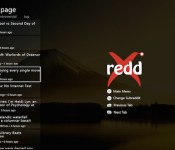
You can now browse Reddit from your Xbox One

The internet’s front page is coming to an Xbox One near you. ReddX is what Microsoft is calling the first ever Reddit app for TVs and it’ll allow you to browse through r/gaming or the rest of the site while you’re, you know, playing games, and it’s rolling out today. A post on Xbox Wire notes that there are media-specific achievements to unlock that are named after gaming memes (Scumbag EA, perhaps?) and there’s even a customized main page. More than that, you’ll be able to upvote, comment and perform any of the site’s functions while holding an Xbox One controller or SmartGlass device. You can also control GIFs, view image galleries and even watch embedded YouTube videos without leaving the app, and, because it’s on the Xbox One it can of course be snapped in alongside something else and is controllable with voice. To show off just how it all works, Larry “Major Nelson” Hyrb wrote a post to Reddit directly from the application.
Posting to @reddit using the new ReddX app for Xbox One pic.twitter.com/tMXnqIMr1H
– Larry Hryb (@majornelson) August 19, 2014
A few new features are coming to the Twitch app, too. You’ll now be ale to capture audio from a chat headset and watch broadcasts with pals. Perhaps most notably, though, is that the Kinect can now follow and zoom in on your face (like it does for Skype) so you don’t have to sit two feet from the sensor anymore, making it easy for fans to gaze upon your mug.
For a moment, let’s say the internet’s largest message board and live-streaming service aren’t your bag, though. That’s totally fine! MTV is coming to the Xbox One as well and it’s bringing full episodes of certain TV shows in addition to bonus clips and behind-the-scenes access for US cable subscribers. Will there be music videos? We doubt it, but you never know.
There’s a new workout available in Xbox Fitness that fans of the Seattle Seahawks might be excited about, as well. Quarterback Russell Wilson’s workout apparently is a high-intensity affair that focuses on power and agility, among other aspects, in 40 and 20 second intervals. After a 3D Blu-ray marathon, a little exercise might be in order. Or not.
Filed under: Gaming, Home Entertainment, HD, Microsoft
Via: Twitter
Source: Xbox Wire (1), (2), Major Nelson
.CPlase_panel display:none;

The government shouldn’t be in charge of smartphone kill switches

Few things are worse than realizing your smartphone’s been stolen. Your personal information is now in the hands of a dishonest soul, who can decide to either erase and sell the device or — even worse — do whatever they want with your contacts, photos and texts. If it’s happened to you, you’re not alone; millions of people have gone through the same nightmarish experience. The technology to deter thieves, known as “kill switches,” exists, but it’s up to phone makers and carriers to implement it.
Most major phone companies have committed to adding kill switches to their products, and some have already begun selling phones with the tech included. A handful of state governments, like California and Minnesota, don’t believe this is good enough, so they’re passing bills that mandate anti-theft measures in every phone sold in those states beginning next year. This seems like a great idea, but let’s take a closer look at what exactly these laws mean and if they make sense.
What is a kill switch?

The most basic definition of a kill switch is a feature that allows an owner to render a phone useless after it’s been lost or stolen. In theory, it’s supposed to deter thieves from being able to sell your phone or access any of the data on board; if every phone can be disabled remotely, why would thieves even bother trying to steal them anymore? If anything can be done to curb smartphone theft, it’s worth considering. An FCC report states these types of theft comprised nearly 30 to 40 percent of robberies in most major cities across the country in 2012. And it appears to be getting worse: According to Consumer Reports, 3.1 million Americans had their smartphones stolen in 2013 alone, which is a jump from 1.4 million in 2012.
There are two kinds of kill switches: Hard and soft. The former would “brick” the phone so it becomes a permanently disabled hunk of circuitry, never to be enjoyed or loved again, while the latter — the more popular alternative among companies and legislators — can be reversed as long as you have the authorization to do so. (At this moment, every existing switch is soft, as hard switches are much more difficult to implement.)
Even if your phone doesn’t have a kill switch, it likely can be remotely locked and wiped. This clears all of your personal data from your phone and reverts it back to the way it was when you bought it. Android’s official Device Manager is an example of this. Problem is, your device can be sold and reused. If you activate a kill switch and the thief can’t figure out how to bypass your authorization (more on that later), he or she has a useless and unsellable phone.

Regardless of government involvement, some companies are already adding soft kill switches to their products. Apple added Activation Lock to iOS 7 last year, which allows users to turn on Lost Mode (using Find my iPhone) and prevents others from unlocking your device without your Apple ID and password. Samsung’s added a similar feature called Reactivation Lock to the Galaxy Note 3 and Galaxy S5 that does essentially the same thing. Both options are opt-in, which ensures that your phone doesn’t get disabled by pure accident. That said, it also means a lot of phones will still be vulnerable if they’re stolen, so thieves still have a good shot at success if they snatch your handset.
A few preliminary studies show that kill switches have already caused a drop in smartphone theft. Police officers in London and San Francisco reported a noticeable drop in iPhone robberies (24 percent and 38 percent, respectively) between the six-month period before the feature came out and the six-month period after. This is an encouraging report, but it’ll be even more telling as a larger chunk of the wireless industry follows Apple’s and Samsung’s lead.
Within the next year, we may see exactly that — if you trust tech companies to live up to their word. Google and Microsoft have vowed to incorporate kill switch tech into the next major releases of Android and Windows Phone; and the CTIA, a lobbying group that represents nearly every wireless carrier and manufacturer in the country, teamed up with the US branches of LG, Samsung, HTC, Huawei, Motorola and Nokia, as well as the five largest US networks, to commit to adding “baseline anti-theft tools” to their devices by July 2015. Curiously, phone insurance provider Asurion was also listed as one of the supporters of the CTIA’s pledge; the company makes money by convincing people they need insurance to cover stolen phones, so the fact that it’s even voicing support for anti-theft measures is important.
Government to the rescue!

Phone makers and carriers may be getting their gears in motion, but it’s not enough for the government. In May, Minnesota passed a bill requiring that any smartphone manufactured (and sold or purchased in the state) on or after July 2015 “must be equipped with preloaded anti-theft functionality or be capable of downloading that functionality.” Additionally, it mandates manufacturers and carriers submit a report describing the anti-theft tool they use.
At first, it sounds like this is a foolproof method of ensuring that all phones will now come with a built-in kill switch, but the text of the bill is incredibly vague. It never mentions a kill switch, nor does it even specifically describe what the anti-theft functionality is supposed to do. Furthermore, it also doesn’t have to be installed on the device at launch; at minimum, it needs to be available as a free download for anyone who wants it.
Last week, California passed a very similar bill after its second run through the state Legislature, and it’s awaiting a signature from Governor Jerry Brown. In this case, the text of the bill, known as SB962, is more clear: It states that any smartphone manufactured on or after July 1, 2015, must have anti-theft functionality included at the time of sale. As long as the essential features of the phone are rendered inoperable when it’s stolen, it doesn’t matter if it’s a hardware or software solution. The feature should, “when enabled, be able to withstand a hard reset … and prevent reactivation of the smartphone on a wireless network except by an authorized user.”

The bill specifies that a soft switch is required; it must be reversible so that the owner can reuse their phone if it’s recovered. It’s also opt-out, which implies that manufacturers can enable the kill switch right out of the box as long as they let the user disable it at any time.
Arguably, California’s bill is important because it could impact devices all across the country. Since the state boasts a good chunk of the nation’s smartphone buyers, it likely doesn’t make sense for manufacturers to push out state-specific firmware. And because most companies are already committed to adding kill switches to their products anyway, this is simply more incentive for them to do so on all of their devices — precisely what the government wants.
Enforcing kill switches on a state-by-state basis might be messy, so it makes sense that it’s also being considered on a federal level. Members of Congress have proposed the Smartphone Theft Prevention Act, which is very similar to California’s in that a soft kill switch be made available to all new phones. It hasn’t been brought to the floor yet, and there’s no indication of if or when it’ll actually be voted on.
That’s a bad thing?

Just because these laws may seem innocent and even helpful doesn’t mean they’re the best idea for the consumer. If companies are already adopting kill switches, do we really need the government getting in the way? The Electronic Frontier Foundation (EFF), a nonprofit that focuses on defending digital civil liberties, doesn’t think so. The group argues that numerous kill switches are already available to the end user, either as built-in features or as third-party approaches (such as Lookout, Avast, Prey and others). And once the government gets in the way, SB962 could potentially “lock in” options that aren’t as effective and could therefore stifle competition and innovation among third-party developers. “Technology is fast; the law is slow,” the EFF’s Adi Kamdar said. The other issue, the EFF claims, is that the bill isn’t specific enough in its language regarding who’s “authorized” to activate the kill switch. If it’s not explicitly defined, the group argues, what’s stopping the government or wireless providers from considering themselves authorized to do it as well?
Even the CTIA, which (as mentioned earlier) voiced its support for the installation of kill switches in April, opposes SB962 for several reasons. The CTIA argues that the bill doesn’t make mention of educating consumers on smartphone theft and how to protect yourself; a stolen-phone database was established late last year and the government hasn’t given it enough time to prove its usefulness; state law may interfere with federal smartphone requirements, such as the mandate that each phone gets 911 service at all times; and if individual states pass bills with different requirements, it’ll make it more difficult for manufacturers to produce phones that can be sold in all 50 states.
Finally, other opponents of the measure, such as California state Sen. Mark Wyland, believe that the maximum $2,500 penalty that manufacturers would have to pay per phone is too high — especially if the wrong devices accidentally get shipped to California instead of some other part of the country. “It’s a big burden on a retailer to ensure that every single product they sell meets every single standard,” Wyland told the LA Times.
California and Minnesota may be the first states to pass legislation, but they may not be alone for long. New York and Illinois are also discussing similar measures, and other states — especially those with high rates of smartphone theft — could follow along as well. Additionally, a group of elected officials and law enforcement leaders signed the Secure Our Smartphones Initiative in June 2013, which calls for a hard kill switch in every device.

Kill switches in their current form aren’t foolproof, either. They can’t be activated without an internet connection, so the thief can simply activate airplane mode before the victim realizes the phone is missing. Hackers may also be able to find ways to bypass the switch and falsify authorization. After Apple introduced Activation Lock, a few loopholes were found in the phone’s security that allowed knowledgeable thieves to bypass the kill switch; the iPhone has fallen victim to a few of these bugs, and to its credit, Apple is often quick to fix them. But will other manufacturers take care of similar issues in a timely and effective manner? Especially when they require additional carrier tests before they can roll out? Proper and successful kill switch implementation takes time.
Sadly, although there are plenty of reasons to oppose legislation, state mandates still hold more weight than the CTIA’s commitment. Just because a group of companies have agreed to add anti-theft tech to their phones, doesn’t mean they’re held to a blood oath. The agreement isn’t an enforceable contract, nor will ramifications befall any of them if they fail to get it done in time.
There’s no longer any reason a phone shouldn’t have kill switches installed, but companies — not the government — need to be in charge of making sure the functionality is done properly. State involvement isn’t anywhere close to a perfect solution, but without their interference, individual companies won’t be held accountable if they sit on their hands and take forever to add this functionality to their phones. States like New York and Illinois aren’t going to wait around and see if companies will stay true to their word; if the wireless industry puts it off for too long, the government will simply take matters into its own hands.
[Image credits: Getty Creative (pickpocket), Getty Images (Killswitch Engage, California chambers)]
Filed under: Cellphones, Wireless, Mobile, Apple, Microsoft, Google
.CPlase_panel display:none;

Latest Xbox One update adds remote game buying, 3D Blu-ray

On top of the updates that Microsoft announced at Gamescom last week, the folks in Redmond are rolling out August’s monthly update to Xbox One consoles. First, you’ll be able to purchase extra content for that title of choice before you head back to your living room with SmartGlass or by visiting Xbox.com on a mobile device. During marathon gaming sessions, you’ll now get a pop-up notification when that trusty controller is running on fumes. Despite lacking the feature at launch, this round of addition finally brings 3D Blu-ray support to the Xbox One. To round out the update, Activity Feed now sports a single-column view with more sharing ability, notifications can be disabled when watching video and your Friends List will display the last time your mates were online. The tweaks are on the way to consoles starting today, so you’ll be getting cozy to the new features shortly.
Filed under: Gaming, Microsoft
Source: Major Nelson
.CPlase_panel display:none;
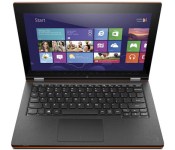
How would you change Lenovo’s Yoga 11?

Back in the old days, Yoga was all about sitting quietly wearing earth tones, so when Lenovo announced a range of transforming laptops, we were delighted. While the Lenovo IdeaPad Yoga 13 was a revelation, the, um, Lenovo IdeaPad Yoga 11 was a significantly more underwhelming proposition. That’s because it was running Windows RT, Microsoft’s poorly-handled attempt to beat Android tablets with an operating system that looked like Windows, but couldn’t run any Windows software. When Dana “The Laptop Lady” Wollman reviewed it, her opinion could be summed up with this single quote: “what good is a Windows laptop without the ability to run legacy x86 apps?” So, what about you, gentle folk of Engadget? Did you buy one? Has the experience improved to the point where you don’t miss your legacy software? Why not share all on our product forum or write a review of your own?
Filed under: Laptops, Microsoft, Lenovo
Source: Engadget Product Forums, Engadget Product Database
.CPlase_panel display:none;

Creator of Xbox dashboard ads is sorry for all the Mountain Dew tiles

You know all those annoying ads cluttering the Xbox 360 and Xbox One dashboards? Well, one of their creators has issued an apology. Former Microsoft employee Allen Murray writes on Gamasutra just how his noble intent to get digital games noticed on the Xbox 360 got away from him, and, as he tells it, Redmond initially opposed the idea. Prior to joining the Xbox team Murray worked at Amazon, which he says gave him a keen insight into how tech can be used to enhance retail sales. His idea was to highlight titles like Hexic HD on the dashboard and allow users to purchase them directly from the dash almost effortlessly. So, with the encouragement of Larry “Major Nelson” Hyrb, Murray pitched the idea to his bosses and was immediately shot down. Eventually the higher-ups relented and, clearly, the results speak for themselves. “If you hate the Mountain Dew ads, I truly am sorry,” he says. Well, at least we have a target for our fist shaking now.
Filed under: Gaming, Home Entertainment, HD, Microsoft
Via: Gamasutra
Source: The Illuminated Squid
.CPlase_panel display:none;
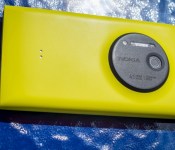
IRL: Nokia Lumia 1020 (one year later)

A year later, and strangers still ask.
“Is that the Lumia with the crazy camera? How do you like it?”
And, after a year, I still offer up the same basic response.
“Great camera, solid phone.”
But after 12 months, and with a slew of new handsets on the way, it’s time to reevaluate if my bright yellow Lumia 1020 is still the best choice as my daily driver. Is being great good enough?
The camera, of course, is the first thing waiters and passers-by ask about. That 41-megapixel sensor is still impressive and I don’t hesitate to sing its praises. The Lumia 1020′s rear shooter is certainly the main reason I decided to return to the Windows Phone ecosystem.
There’s plenty I still love about this phone and, particularly, its camera. The xenon flash is properly powerful (and can trigger my external flashes if I wanted). Its low-light performance makes it the go-to shooter if I’m among friends in a dark restaurant or bar. Nokia’s camera software, with its suite of manual controls, is also a highlight, even if the UI can be a bit fiddly at times.
Meanwhile, the phone itself remains a solid performer, dutifully carrying out nearly all the tasks I need from a smartphone. While the still camera gets most of the attention, the 1020′s audio-recording chops are also astounding. Clips taken at live concerts have clear, full sound, whereas other smartphone mics seem easily overwhelmed. The recent 8.1 update also brings some great new features I’m still exploring.
And yet…
You knew that was coming, right? As much I’ve enjoyed the past year, it hasn’t exactly been a trouble-free experience. That feature-packed camera software I love so much can take ages to load on the 1020′s Snapdragon S4 Plus-based hardware.
And by “ages,” I mean six to nine seconds from icon press to shutter snap, which is plenty of time for impromptu moments to come and go. For comparison, a colleague’s HTC One M7 can snap a pic within three seconds and my wife’s Nexus 4 manages similar times. Microsoft’s default camera app loads quicker, but I prefer the manual options in Nokia’s offering. Of course, camera specs and apps are different among phones, but the main takeaway is my 1020 can take impressively detailed images — if I’m willing to wait.
Beyond the sluggish responsiveness, I’m not even sure I need such a capable shooter on my phone anymore. Two years ago when the 808 PureView first piqued my interest, my main shooter was a bulky Nikon DSLR that weighed close to 1kg with a battery and lens. Having a crazy-good camera attached to my phone had a lot of appeal at that point in my life. These days, my Fuji X-E2 weighs a bit less and is much more discreet. In short, my phone’s picture-taking abilities aren’t quite as important now that my main camera isn’t such a chore to carry around.
And despite the ongoing ecosystem improvements and additions found in Windows Phone 8.1, there are still a few missing features and apps I would love to see for both work (HipChat) and play (Fujifilm’s WiFi image-transfer app, a whole list of games).
Overall, though, I’ve few regrets one year later. Having been an early adopter of WP7, I knew what I was getting myself into by picking up the Lumia 1020. I got a solid smartphone that’s capable of excellent image and audio capture, all wrapped in a can’t-miss-it shade of banana yellow polycarbonate. I’ll still be closely examining the upcoming range of smartphones to see if one of them makes more sense for me now, but these past 12 months have been time well spent.
Filed under: Cellphones, Mobile, Microsoft, Nokia
.CPlase_panel display:none;
 AIVAnet