


Microsoft’s FCC filing hints at a Chromecast rival called Miracast dongle

Microsoft might very well be gearing up to launch a Google Chromecast rival. While the tech giant hasn’t announced anything official yet, one of its latest FCC filings details a device codenamed HD-10, which features WiFi, HDMI support and a USB connection. Those three will sound familiar if you know what the Chromecast is, but what really demystifies the device’s nature is a separate document on the WiFi Alliance website. That filing, unearthed by Nokia Power User, called the HD-10 a “Miracast Dongle.” Miracast, as you might know, is Microsoft’s screen-sharing technology available on Windows 8.1, Windows RT and, most recently, Windows Phone 8.1, though it’s also built into Android 4.2 (and later) and BlackBerry 10.2.1.
The dongle will likely be able to mirror phone, tablet and laptop screens on a TV then, so long as they’re loaded with those platforms. Unlike Chromecast’s technology, though, Miracast can only show what’s on the source device’s screen à la Mac OS X’s Airplay Mirroring, meaning you can’t play mobile games while you’re casting a show on TV. That’s pretty much what’s known about the mysterious casting stick for now, but we might hear more about it (and find out if it’s priced as aggressively as Chromecast) soon enough.

Filed under: Home Entertainment, HD, Mobile, Microsoft
Via: PCWorld, Windows Phone Daily
Source: Nokia Power User, FCC
.CPlase_panel display:none;

Microsoft’s DeLorean is a cloud gaming system that knows what you’ll do next

When it works, cloud streaming video games can feel like a magical experience. Think about it: some remote server is pushing high-quality gameplay directly to your TV — through the internet! It’s a crazy, impressive achievement, but it’s still not ready for primetime. Cloud streamed games face latency and control delay issues far too often, and the easy solutions (moving servers nearby or increasing bandwidth) can be expensive. Microsoft proposes another fix: a system that predicts what the player is going to do before they do it. It’s called DeLorean, and well, it’s ambitious.
The technology hasn’t been announced as part of a budding cloud gaming service, but Redmond is hard at work developing it all the same. A paper from Microsoft Research describes DeLorean a “speculative execution system for mobile cloud gaming that is able to mask up to 250ms of network latency” by sending a streaming client the results of the player’s next action before it’s made. Technically, the system sends multiple possible actions. Imagine a situation where a player could chose to make their character jump, attack or stand still — Microsoft’s system would render all of these possibilities and send them all to the player’s game console early, which would simply choose the “correct” option after the player made their choice.
The team created demos using the technology using both Doom 3 and Fable 3, and found that players “overwhelmingly prefer DeLorean to traditional thin-client gaming.” In other words, it had less of a noticeable delay then the methods employed by today’s cloud-gaming setups. The predictive angle is a little creepy, but it could significantly reduce input lag for future generations of the technology, though it sounds like it will require quite a bit more processing power on both the server and client sides of the equation.
What about the DeLorean nickname? Well, Microsoft’s project isn’t exactly time travel, but it is predicting multiple future outcomes, which, could be interpreted as splits of alternate timelines. Not that we’re geeky enough to think about the world that way. Not at all.
[Image credit: Getty Images]
Filed under: Gaming, Microsoft
Via: TechCrunch
.CPlase_panel display:none;

‘Halo 2: Anniversary’ edition shows some games get better with age

Halo: The Master Chief Collection promises to be the ultimate compilation for fans of John-117′s adventures and online competitors alike, featuring remastered versions of all four numbered Halo titles (and access to the Halo 5: Guardians beta when it’s live). Undoubtedly the most exciting part of the package is Halo 2: Anniversary, a fully remastered version of the 2004 title that set the bar for online multiplayer gaming on consoles. With attentive level design, balanced gameplay and a strong online ranking and matchmaking system, the game spawned a pro scene that’s persisted from sequel to sequel, console to console. Halo: Combat Evolved may have introduced us to Master Chief’s world, but it was Halo 2 that assured the franchise’s legendary status, and it’s coming back for more.
Microsoft’s 343 Industries, the studio compiling The Master Chief Collection, showed off more footage of Halo 2: Anniversary at Gamescom last week. Four fantastic games updated for a new generation of hardware is a mouth-watering proposition, but Halo 2 is the jewel in the crown, being the only title to receive a complete visual overhaul. The other three main installments in the saga haven’t needed nearly as much attention. Halo 3 and 4, which both made increasingly efficient use of the Xbox 360′s horsepower, have improved lighting and run at higher frame rates. Halo: Combat Evolved Anniversary has received more or less the same treatment, since it’s a heavily remastered version of the original game anyway.
It’s key to the modernization of Halo 2 that the core experience remains unchanged, emphasized by a player’s ability to switch between classic and remastered visuals on the fly. The transformation is remarkable. The graphical detail is so far improved as to be almost incomparable to the original, and jumping between these two views instantaneously is something to marvel at in itself. As an ex-Halo 2 addict, I expected nostalgia to impact my enthusiasm for the reboot in the same way the remake of your favorite childhood film is always a disappointment. Instead, I’m only excited for a new game — one that just happens to have a multiplayer experience I already know and love. Not to mention online co-op has been included in the Anniversary version, previously only a feature of the Halo 2 PC release.
Halo 2‘s online ranking system, which is based more on won/lost games than play time, remains intact. (In fact, all games in The Master Chief Collection will use this rating method, though progress will be separate for each one.) The studio has even made a point to preserve Halo 2‘s glitches, many of which were an important part of high-level play — I got the impression from 343, however, that including an option to disable them is being considered. Every multiplayer map ever conceived for the game will be included in Anniversary, and they’ll be old and new matchmaking modes, as well as a few favorites that were created for later games. Six remastered versions of popular levels have also been rebuilt specifically for the Xbox One and modified with power-ups, additional weapons and a new vehicle, the “Gungoose.”
Long story short, whether you’re an old hand or new blood, you’re getting an all-access pass to revisit one of the most important console games in history. Multiplayer appeal has been so carefully considered, in fact, I’d be surprised if we didn’t see a healthy resurgence in competitive play when The Master Chief Collection launches this November, 10 years after Halo 2 graced the original Xbox. And I mean beyond promotional tournaments like the one held at Gamescom. It’s never been easier to drum up interest in such competitions, either. No longer is the community reliant on complicated streaming setups and highlight clips buried on YouTube. Ten years on, Twitch is our window to that world; Twitter is our forum. You can even bet on e-sports matches these days to make watching them a little more interesting.
A solid fan base is what allows 343 to invest in making things like Halo 2: Anniversary and The Master Chief Collection happen. And as if the game compilation wasn’t fan service enough, true devotees will also be able to get all the UNSC-approved content they could ever want through the new Halo Channel.
The Halo Channel

Launching for the Xbox One, Windows 8.1 and its mobile equivalent on the same day as The Master Chief Collection, the Halo Channel is a portal to all manner of video content related to the game franchise. Some may have played around with Halo Waypoint on the Xbox 360, which was a similar front for hosting interviews, strategy tips, machinima, the Halo Legends animated shorts and more. You could also digest news and fiction, buy games, review your Halo career and earn in-game achievements and new gear for your Avatar.
The Halo Channel is more than just a Waypoint update with a prettier UI. It wants to be the HBO of Halo, with scheduled programming and on-demand content connecting seamlessly with The Master Chief Collection and later, Halo 5. Rather than just a video dump, you’ll be able to interact with practically everything on the Halo Channel in one way or another — a new weekly show called The Bulletin, for example, will run polls and solicit viewer feedback from within the Channel’s apps. Twitter is fully integrated, too, so you’ll be able to check your feed and tweet about the new episode of Red vs. Blue while you’re watching it. The Channel will also be tailored to individuals based on their viewing habits, though you can bet everyone will be seeing a lot of the new live-action series Halo: Nightfall on their home screens.
Nightfall‘s narrative will intersect with Halo 5: Guardians, and watching the show will unlock things in-game, and vice versa. Even when you’re enjoying an episode, more content will never be far away; 343 used a clip from Halo 4: Forward Unto Dawn to show an overlay that’ll give you a synopsis of the scene, the characters involved, the gear in-shot — everything you need to know from Halo lore about what’s on-screen.

Personally, I’ve never cared much for Halo media outside of the games, which is why I was most interested to hear about the Twitch integration. The Halo Channel not only pulls streams and their associated chatrooms from Twitch, but also bundles in other game data like an activity log and team/player scores. This feeds into making the multiplayer aspect of The Master Chief Collection and Halo 5 extra accessible, and I can’t wait to catch a stream with this richer, more informative layout. And when you’re pumped after watching someone nail a long-range sticky, you can jump straight into matchmaking right from the Channel app. In which case, see you online.
Filed under: Gaming, HD, Microsoft
.CPlase_panel display:none;

Apple blocks access to Secret in Brazil after anti-bullying ruling

A few days ago, a Brazilian judge ordered Apple and Google to pull Secret from the local app store and wipe it from the handsets of whose who had downloaded it. The same ruling covered Microsoft, who was ordered to do the same to Windows Phone clone Cryptic. So far, however, only Apple has begun to comply with the order, after suspending fresh downloads of the app to iOS accounts registered in Brazil. According to local news media, the company hasn’t started pulling the software from individual handsets, but that’s still more than Google or Microsoft have done. Both companies claim that they’ve not been directly notified of the widely-reported ruling, although it’s more likely that they’re waiting on a final decision from the courts before taking any action.
Filed under: Internet, Software, Mobile, Apple, Microsoft, Google
Via: GigaOM
Source: CenarioMT (Translated), DM.com (Translated)
.CPlase_panel display:none;
Nokia Lumia 930 review: like the Icon, but better

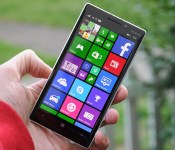
Microsoft’s acquisition of Nokia is now bearing fruit, but as often happens when big companies merge, there aren’t enough jobs to go around. More than 10,000 former Nokia employees are due to be laid off by the end of the year, but their legacy will live on for a time in the Lumia 930: one of the last all-Nokia creations. If you live in the UK, then you already know where to get the flagship Windows Phone, but the more important question is whether you want one. We’ve already taken a deep dive on the 930 in our review of the Lumia Icon, which is essentially the same phone, just exclusive to Verizon in the US. Let’s revisit the good, the bad and the competition.
The Lumia 930 won’t leave many wanting when it comes to raw specs, but it could leave the more design-focused buyer a tad underwhelmed. It’s a fairly inconspicuous marriage of Gorilla Glass 3, aluminum and polycarbonate, with the latter adding a dash of Lumia color to brighten up the proceedings. If you’re not a fan of Nokia’s more playful, plastic-clad models, then the 930′s utilitarian look might be right up your alley. The aluminum band spanning the perimeter of the phone is a nice reminder you’re dealing with a top-end device that deserves a dose of premium materials. A slight pillowing of the back panel makes the 930 comfortable to hold, and with a 5-inch display, it has much more agreeable dimensions than the 6-inch Lumia 1520. The smaller device is still relatively heavy at 167g (or sturdy, depending on how you look at it), but well within most people’s tolerances.
| Nokia Lumia 930 | |
|---|---|
| Dimensions | 137 x 71 x 9.8mm |
| Weight | 5.89 oz. (167g) |
| Screen size | 5.0 inches |
| Screen resolution | 1,920 x 1,080 (441 ppi) |
| Screen type | OLED ClearBlack; sunlight readability enhancement; high brightness mode; Gorilla Glass 3 |
| Battery | 2,420mAh Li-Ion (non-removable) |
| Internal storage | 32GB |
| External storage | None |
| Rear camera | 20MP Zeiss, OIS, f/2.4, wide-angle lens, AF |
| Front-facing cam | 2MP sensor (1.2MP stills) |
| Video capture | 1080p/30 fps (rear); 720p (front) |
| NFC | Yes (with secure element on SIM) |
| Radios |
LTE Bands 1, 3, 7, 8, 20 GSM: (850/900/1800/1900) HSPA: (850/900/1900/2100) |
| Bluetooth | v4.0 LE |
| SoC | Qualcomm Snapdragon 800 (MSM8974) |
| CPU | 2.2GHz quad-core |
| GPU | Adreno 330 |
| RAM | 2GB |
| Miscellaneous | FM radio, GPS/GLONASS, micro-USB 2.0 HS, four-mic setup |
| WiFi | Dual-band, 802.11a/b/g/n/ac |
| Wireless Charging | Yes, Qi standard |
| Operating system | Windows Phone 8.1, Lumia Cyan |
The Lumia 930 launched already running Windows Phone 8.1, but the Icon, its US doppelganger, was built before Microsoft eased up on design requirements with the release of 8.1. As a result, the 930 is probably the last phone you’ll see with capacitive navigation keys and a physical camera button alongside the standard power and volume rocker arrangement. Undoubtedly, one of the best bits of the external hardware is the 5-inch display: a 1080p AMOLED ClearBlack panel nestled under a sheet of Gorilla Glass 3. It’s hard to fault, what with its great sunlight readability, viewing angles and color saturation.

You can check out our Windows Phone 8.1 review if you’re unfamiliar with what the latest update to Microsoft’s mobile OS brings, but the biggest features to note are the addition of a notification center and virtual assistant Cortana. The latter is still in beta in the UK, but that in itself means we shouldn’t be far from a consumer-friendly release. Aside from the two main highlights that make for a much more competitive OS, the keyboard now supports swipe-based typing, and there are various other improvements to the core experience, like a new battery saver mode and redesigned calendar app, among others.
Being a Lumia, the 930 also reaps the benefits of Nokia’s Cyan update on top of Windows Phone 8.1, which includes enhanced Camera, Creative Studio and Storyteller apps. Packing the heaviest hardware in Nokia’s lineup, the 930/Icon and 1520 get some special treatment, like the Living Images photo feature that creates multi-frame moving pictures. Then there are the improvements to sound-recording quality when shooting video, as well as color temperature, low-light capture and autofocus when using the camera in general.

On the imaging front, the 930 has a more-than-capable 20-megapixel PureView camera with f/2.4 aperture. It’s not quite on the level of the Lumia 1020, but it’s also not as inferior as the raw specs would suggest. Low-light performance is especially good, and Nokia’s Camera app allows you to tweak deeper settings like white balance, ISO and shutter speed straight from the viewfinder — things you may actually find yourself doing on a mobile with such a large sensor. While picture quality may be impressive, video is of a slightly lower standard. The overly skittish autofocus noted in our Icon review is much improved with Windows Phone 8.1, but auto-exposure compensation is still somewhat overactive. The audio that accompanies the video is basically as good as it gets, thanks to four microphones that focus on the sound in front of the lens and while canceling out what’s behind it.
There’s nothing negative to be said about the overall user experience. Windows Phone is designed to run smoothly on super-cheap hardware configurations, so with a 2.2GHz quad-core Snapdragon 800 and 2GB of RAM to work with, the 930 does it better than any. All that power isn’t at the expense of running time, though, and the 2,420mAh battery will keep the 930 chugging along happily for at least a full day, even with intensive use. You can also juice it up wirelessly thanks to an integrated Qi coil — every 930 comes with a wireless charger in the box, too, which isn’t the case with the Icon. Incidentally, the Icon also doesn’t support any form of LTE roaming, making it well and truly a Verizon-exclusive handset. The 930, on the other hand, works on bands 1, 3, 7, 8 and 20, which should take care of all needs, foreign and domestic.

For now, the Lumia 930 is simply the top of the pile when it comes to Windows Phone handsets, and with flagship status comes flagship pricing. Unlocked, you can currently pick up a 930 for £395 in the UK, but search around and you’ll find the Apple iPhone 5c, HTC One M8, LG G3, Samsung Galaxy S5 and Sony Xperia Z2 all within roughly £50 of that price. As Verizon called dibs on the Icon, it’s unlikely we’ll see US carriers ranging the 930 any time soon. That said, if you’re keen on the 930′s wider LTE frequency support, unlocked models are available on Amazon from around $580.
Chances are you might not want to pay up front for the handset in the UK, and should you journey the contract route, there’s almost no delineation in prices across the top handsets. For around £30 per month, you’re free to pick your poison. And if your poison happens to be a top-spec Windows Phone with unmatched performance, a great display and a camera that’s practically as good as they get, well, prepare to get very sick indeed.
Filed under: Cellphones, Mobile, Microsoft, Nokia
.CPlase_panel display:none;

Xbox One gamers could soon try before they buy with a ‘Free Play Day’

At $60 per year, an Xbox Live Gold subscription isn’t cheap, but Microsoft’s working to make the all-access package a bit more attractive to gamers. The ‘Games with Gold‘ offering that we first saw with Xbox 360 made its way to One as well, and now it appears that the company’s latest console may soon get a second bonus feature. Xbox One beta users noticed a new ‘Free Game Day’ option this week, which enables 24 hours of access to select titles, giving you a chance to preview games before making a purchase. Max: The Curse of Brotherhood appears to be the first offering, and if an Xbox Support tweet is any indication, a broader rollout may be on the way very soon.
Filed under: Gaming, Microsoft
Via: VG24/7
Source: Eurogamer
.CPlase_panel display:none;

Bing Maps spices up more than 100 cities with 3D and Streetside views

Bing Maps just got much, much better if you’re tired of looking at plain old satellite pictures. Microsoft has just added either 3D maps, Streetside views or both to more than 100 cities, many of which you’ll definitely recognize. You can now see what it’s like on the ground near the Chicago Theater or San Francisco’s Golden Gate Bridge; if you have the Bing Maps Preview app for Windows, you can go on a 3D flight through famous places like Disney World or the Las Vegas Strip. You’ll want to hit the source link for the full upgrade list, but most of the additions are in the US. If you’ve wanted to tour America from the comfort of your couch, you’re going to have a field day.
Filed under: Internet, Microsoft
Source: Bing Blogs
.CPlase_panel display:none;

Skype chat notifications will now only hit the device you’re using

Chances are you have a smartphone, tablet and computer combo, so it could get pretty annoying to get pinged simultaneously on those devices when you’re exchanging messages with someone. Skype and iMessage both do this, but now the Microsoft-owned service is keen on changing that. Today, Skype announced that it’s found a way to reduce all the noise for people who are logged in to their accounts on multiple devices, thanks to a new feature called “Active endpoint.” Now when you’re messaging back and forth on your phone, those chat notifications will only be sent to that device — as opposed to before, where it would also send them to, say, your tablet or laptop at the same time. Skype says that, while notification are set to hit that one active device, the chat history is still being synced across multiple devices, making it easy for you to keep your conversations going from anywhere. This new feature is coming to Skype “over the next few weeks,” so expect to see the changes soon.
Filed under: Internet, Software, Mobile, Microsoft
Source: Skype
.CPlase_panel display:none;

Brazilian judge tells Apple and Google to pull Secret from people’s devices

Secret’s app is ostensibly meant for office gossip and getting transgressions out of your system, but it has also been abused by bullies wanting to intimidate and shame others. Well, one Brazilian judge is fed up with that misuse — enough so that he’s ordering Apple and Google to remove Secret not just from their respective local app stores, but from people’s devices. Microsoft also has to yank Cryptic, an equivalent Windows Phone app. If the companies don’t take action within 10 days, they face fines of 20,000 Reals ($8,876) per day. That’s a drop in the bucket given their massive revenue streams, but it’s reasonable to say that they’d rather not pay that much just to keep one title available in one country.
The request is certainly feasible. All three companies have removed apps from their stores, and they can technically pull or block software installed on gadgets. However, that last measure is primarily used as a last resort, such as in the event of a malware outbreak; Apple, Google and Microsoft might be reluctant to act unless they have no choice. Whether or not they’re stuck isn’t clear. Brazil’s Constitution bars anonymous attacks that don’t let you defend yourself, but there are arguments both that the data isn’t truly anonymous (Secret knows the culprits) and that the ban hurts freedom of expression. Don’t be shocked if one or more tech firms contest the ruling.
Filed under: Cellphones, Tablets, Internet, Mobile, Apple, Microsoft, Google
Via: 9to5Mac
Source: Estadao (translated)
.CPlase_panel display:none;
Xbox 360 HDD now comes in 500GB format, costs less than 320GB version

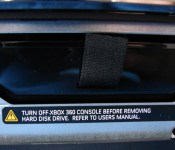
Been taking advantage of the Xbox 360′s “Games with Gold” deal? You might be running out of hard drive space, and Microsoft knows it: it just updated the Xbox website with a teaser for a 500GB hard drive. At $110 it’s still more expensive than PC storage, but it’s oddly cheaper than the 320GB Xbox 360 HDD that’s currently on the market. It’s not clear if the new drive will serve as a replacement or if the price is merely a placeholder, but we’ll never scoff at more storage space. Unfortunately, you can’t order the new drive just yet — the product page just says that pre-orders are “coming soon.”
[Image credit: yum9me, Flickr]
Filed under: Gaming, Microsoft
Via: IGN
Source: Xbox
.CPlase_panel display:none;
 AIVAnet