



‘Destiny’ launches tomorrow — watch us play it live today!

The folks who created Halo have a new game, Destiny, and it launches tomorrow on both last-gen and current Xbox and PlayStation consoles. While that prospect might be enough for some folks, there are no doubt many more of you unsure if Destiny is worth your ducats. Thankfully, the game’s servers are online one day early and we’ve got a PlayStation 4 copy handy to give it a live run before it’s officially available tonight at midnight (via retail and for pre-load on current-gen consoles). Join us for a jaunt through the next big online game from Bungie Studios, just beyond the break. And bring your best Peter Dinklage impersonation!
Filed under: Gaming, Software, HD, Sony, Microsoft
.CPlase_panel display:none;

Microsoft MSN homepage reborn as a blend of news portal and online desktop

Visit the MSN portal right now and you’ll get a straightforward news site. It’s informative, but it’s busy, inflexible and doesn’t give you easy access to Microsoft services — a bit odd when it’s frequently your initial homepage on a shiny new Windows PC. Thankfully, Microsoft is aware that it needs to shake things up a bit if it wants to keep you coming back. It just launched a preview of a redesigned MSN that it hopes will not only be easier to browse, but should serve as a kind of web-based desktop that lets you accomplish many of your daily tasks. Read on to see what I mean.
Let’s start with the obvious: the new MSN looks a lot like Windows, and that’s not just because Microsoft is fond of brand synergy. The layout is both less cluttered and lets you personalize what you see; if you’re fond of cars but not entertainment gossip, you can easily add, remove and shuffle the appropriate sections. The company has teamed up with a whole host of content providers for different categories, including the New York Times, Conde Nast and, yes, our parent company AOL.
However, the real centerpiece is the much stronger emphasis on services that turns MSN into more of a hub than a starting point. The top of the site centers on a “Services Stripe” that lets you hover over icons to check your Outlook email, check Bing Maps or even take a quick glimpse at OneNote projects, if you use it. If you thrive in Microsoft’s cloud, you may stick around for quite a while. You’ll also find utilities like shopping lists, a symptom checker and a 3D body explorer. Moreover, a lot of your personalized content will sync across platforms. Microsoft plans to launch Android and iOS versions of previously Windows-only apps like Food & Drink and Sports — if you add a recipe or a favorite football team on the MSN website, you’ll also see it on your phone or tablet no matter what OS you’re using.
You can check out the preview today, although the old site will hang around for an unspecified amount of time. Microsoft hasn’t said when it hopes to roll out the site to the public at large, but the Android and iOS apps should arrive with the next few months.
Dana Wollman contributed to this report.
Filed under: Internet, Microsoft
Source: MSN Preview
.CPlase_panel display:none;

Steve Ballmer wrote Windows’ first Blue Screen of Death error message

Whether Microsoft likes it or not, Windows’ Blue Screen of Death error is iconic — it’s the universal sign that something really bad has happened to your software. But who wrote the original message that would grace the screens of sick PCs worldwide? None other than Steve Ballmer, according to company veteran Raymond Chen. The executive (then in charge of the Systems Division) reportedly didn’t like the warning text that engineers first wrote, and took up a challenge to write better material himself. As it turns out, Ballmer did a good enough job that his version made it into the shipping product “pretty much word for word.” The message has long since changed and thankfully appears much less often on modern computers, but it’s fun to think that the owner of the LA Clippers is also responsible for an app crash alert seen by millions of people.
Filed under: Software, Microsoft
Via: SlashGear
Source: The Old New Thing
.CPlase_panel display:none;

Windows Phone’s Cortana assistant now predicts NFL football games

Windows Phone’s Cortana assistant raised some eyebrows during the World Cup, when it accurately predicted all but one of the knockout matches (that Germany-Brazil upset caught nearly everyone off-guard). Microsoft was clearly happy with that result, as it’s now applying those oracle-like abilities to NFL football games. Ask Cortana (or Bing on the web) who’s likely to win an upcoming match and you’ll quickly get a favorite. You sadly won’t be told why that team will emerge victorious, although the Bing crew notes that the decision is based on a combination of stats, previous match-ups, and subtler criteria like stadium conditions. It’ll be a long while before we know whether Cortana is as good at predicting American football as it is the international kind, but you can at least get her prognostications right away.
Filed under: Cellphones, Internet, Mobile, Microsoft
Source: Blogging Windows, Bing Blogs
.CPlase_panel display:none;

‘Minecraft’ hits Xbox One this Friday and an upgrade only costs $5

Let’s face facts for a minute: you’re probably still playing Minecraft on your Xbox 360 more than anything on the Xbox One that’s sitting under your flat-screen. That’s perfectly fine! To sway you into spending more time with Microsoft’s new console, however, Redmond has a clever plan in mind. When the game releases this Friday, you’ll get a hefty 75 percent discount off the $20 purchase price. That’s right, Minecraft: Xbox One Edition could cost you as little as $5. You simply need to own and have played the previous version and have it tied to your Xbox Live account, according to Xbox Wire. Pretty rad, yeah? Just when you’d finally recovered from the news that importing saved worlds from the previous hardware was a thing, boom, this hits like a creep in the night. It’s a bit later than earlier promised, sure, but unlike the PlayStation 4 and PS Vita versions, at least there’s a firm date in sight. Lady geeks and gentlenerds, ready your pick-axes.
Filed under: Gaming, Home Entertainment, HD, Microsoft
Source: Xbox Wire
.CPlase_panel display:none;

Microsoft Office Apps for iPad Gain Support for Monthly Subscription Purchases [iOS Blog]
Microsoft today updated its Word, Excel, and PowerPoint iPad apps to allow users to purchase a monthly subscription to Office 365 directly in the apps.
Previously, customers were able to purchase a yearly subscription for Office 365 Home within the apps for $99.99, but it’s now possible to buy a monthly subscription for Office 365 Personal and Office 365 Home via in-app purchase.

As we continue to bring Microsoft Office to all platforms and devices, it’s important for customers to manage their Office 365 subscription–easily and on the go. You asked for more flexibility in signing up for Office 365 subscriptions on iPad. So starting today, you can buy a monthly subscription to Office 365 from within Microsoft Word, Excel, and PowerPoint for iPad. You can choose between Office 365 Personal and Office 365 Home
Introduced in March, Office 365 Personal is aimed at individual users who want to use Microsoft’s apps on just one PC/Mac and one tablet, while the Office 365 Home subscription is designed for households with up to five computers and five tablets.
Office 365 Personal is priced at $6.99 per month, while Office 365 Home is available for $9.99 per month. All of Microsoft’s apps can be downloaded for free from the App Store.
– Microsoft Word for iPad [Direct Link]
– Microsoft Excel for iPad [Direct Link]
– Microsoft PowerPoint for iPad [Direct Link]
.CPlase_panel display:none;

What you can expect at IFA 2014

IFA is one of the largest consumer electronics trade shows in the world, and it’s also one of the most unique. The annual show, held this week in Berlin, has a knack for announcing new washing machines, sewing machines and kitchen appliances alongside the latest smartphones, smartwatches and tablets. Here at Engadget, we’re primarily focused on the latter (though who doesn’t love a free fruit smoothie sample from time to time?), and there’s a lot to cover. Let’s head straight into what new gadgets and devices we can expect to see announced at this week’s event.
Smartphones
Before 2011, very few companies launched smartphones or tablets at IFA. Only a handful of phone makers bothered showing up with new devices, and in most cases they were mid-range at best. That all changed after Samsung launched the Galaxy Note at the show — and turned the practice into an annual IFA tradition. Now, as the company prepares to release its fourth large-screened flagship phone in as many years, several manufacturers have followed and now use IFA as a launching pad for the latest and greatest gadgets.
Samsung has made it no secret that it plans to follow precedent and announce the next entry in the Note series, thanks to a series of teasers leading up to this week’s unveiling. It’s done a fantastic job of preventing major leaks, however; nobody knows for sure what it looks like, because the company’s managed to keep images and specs of the Note 4 close to its chest so far. Chances are, Samsung won’t be ready to ship the device for a few more weeks, which would follow the same pattern set by the Galaxy S5 this spring.
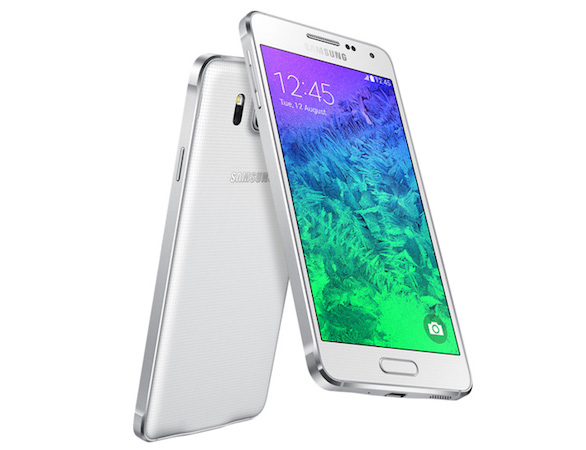
The rumor mill is pretty dry for other Samsung phones. We’ve seen recent reports that Samsung has filed a trademark with the USPTO for something called the Galaxy Note Edge, but we can’t take this as a guarantee that the company will introduce such a product at IFA. We’re also excited to see the Galaxy Alpha, which is a sleek device with a metal frame that was officially announced a couple weeks ago.

Whereas Samsung has done a fantastic job at keeping quiet about its upcoming Note phone, Sony’s the complete opposite. Unless the company has something new up its sleeve, we’ve likely seen its entire holiday roadmap. At IFA, plan on seeing the Xperia Z3 and Z3 Compact: As you might expect, the former is the flagship, while the latter is a smaller version. If the rumors are true, the Z3 Compact will be just as close in specs to its larger brother as the Z1 Compact was. This is fantastic news, because it means that users who prefer smaller screens won’t be forced to endure midrange hardware.
Microsoft Devices — y’know, Nokia’s phone division — will also come to Berlin with at least one or two smartphones. The company hasn’t been shy about showing it off internally to employees, as we’ve heard several reports indicating that Stephen Elop has been proudly talking up the devices at recent town hall meetings. The higher-end of the two is the Lumia 830, which will be the most affordable PureView-branded device. If the leaks are accurate, we can expect the 830 to look similar to the 930 and come with a 10MP camera. There’ll also be a “selfie phone,” presumably the Lumia 730, which will focus on bringing a solid front-facing imaging experience to mid-tier buyers.

LG’s already announced most (if not all) of its product lineup, which includes the G3 Stylus. It’s a less-expensive version of the G3 that comes with a 5.5-inch qHD screen and — you guessed it — a stylus. We may also see the Gx2, a followup to a device that landed exclusively in Asia last year, and a couple of low-end L-series devices designed for emerging markets.
IFA will house several other manufacturers, so there will be plenty of other smartphones on display. Acer, ASUS, Alcatel OneTouch, HTC and Lenovo will all be there, so be on the lookout for some of their wares. Lenovo’s made the most noise from this group, thanks to its Vibe X2 teaser mocking Apple’s iPhone event invites. (And yes, that is indeed a lollipop in the teaser.)
Smartwatches

Smartwatches have been around in at least some capacity for several years — it all started with Microsoft SPOT and has continued on through Sony, Pebble and others — but people didn’t seem to notice or care until Samsung came out with a “mainstream” product known as the Galaxy Gear. The Android-based watch came out alongside the Galaxy Note 3 at last year’s IFA. It’s amazing how much can change in twelve months: Samsung is showing off its sixth watch, LG will have its second on display, Sony will have two more and ASUS will join the party with its first.
Both Samsung and LG officially announced their watches last week — curiously, within just a few minutes of each other — and the two devices are completely different from each other. The Samsung Gear S is a Tizen watch that comes with a curved display and built-in SIM slot, so you can either pair it to a phone or use it as a phone. On the other hand (wrist?), LG’s newest Android Wear watch steers closer to a truly classic look thanks to its circular display. It’s called the G Watch R, and despite the clunky name, it’s got enough chops to give the Moto 360 some tough competition.
Sony hasn’t made any announcements yet, but the leaks for its watches, the Smartwatch 3 and SmartBand Talk, are just as prominent as the company’s phones. The former is a squarish Android Wear watch, while the latter is a fitness band with E-Ink display and a mic. Finally, ASUS’ first watch will be an Android Wear device called the ZenWatch, and the company will reportedly sell it for under $200, which will be aggressively priced against its competitors.
VR and everything else

A few months ago, we broke the news that Samsung was working on its very own virtual reality headset called the Gear VR, and reported that it would likely launch at IFA. Sure enough, plenty of leaked images and renders have followed; given the number and strength of the rumors, we’d be surprised if Samsung didn’t release the product at this year’s show.
There’ll also be a few tablets, but they seem like much more of an afterthought. Sony’s leaked Xperia Z3 Tablet Compact is a horrible name, but looks like a good 8-inch tablet; Huawei’s got a Mate 7 tablet inbound; and per tradition, ASUS will have at least one or two tablets there.
Finally, expect to see some news on the chipset and Chromebook fronts. For the former, Intel is planning to introduce hardware — likely tablets and laptops — running its new Core M chipset based on Broadwell architecture. Additionally, Qualcomm teased a new HTC smartphone with a 64-bit processor inside. As for Chromebooks, at least a couple new models from Acer and Toshiba will pop up, although we wouldn’t be surprised to see a few other options showing up.
As always, these are simply a few products we expect to see at the show, and let’s face it — events like this hardly ever go exactly as planned. There’ll be new TVs and Smart Home products, and we’re sure a new washing machine or two. We’ll be liveblogging Samsung’s and Sony’s product launches, and we’ll be there to cover everything else that happens in Berlin, so keep our event page bookmarked!
[Image Credit: Getty Images (washing machines), Ausdroid (Z3 Compact), Sammobile (Gear VR)]
Filed under: Announcements, HD, Mobile, Samsung, Sony, Microsoft, HTC, Nokia, ASUS, LG, Intel, Acer
.CPlase_panel display:none;

What you need to know about the world’s most popular game streaming service, Twitch

Twitch was an accident. The live video streaming service, which boasts over 55 million unique users each month, began life in 2007 as “Justin.tv”: an all-hours video livestream of co-founder Justin Kan’s life. That wasn’t the whole point of the service, of course; later that year, “Justin.tv” opened up to the public, who could then “livestream” to various “channels.” At its inception, Justin.tv was a form of internet television, offering live broadcasts across a variety of topics. One such topic — gaming — took a particularly large portion of Justin.tv’s audience. So much so that, in 2011, the company spun out gaming into its own website: Twitch.tv. Three years later and Justin.tv is dead, the company is now known as “Twitch Interactive,” and Amazon just bought it for $970 million. Not too shabby for an “accident”.
WHAT IS TWITCH?
Like Justin.tv, Twitch.tv is a live video broadcasting service. Unlike Justin.tv, Twitch focuses solely on gaming. More specifically, Twitch focuses primarily on e-sports: the burgeoning world of competitive games played professionally for money.
For example! Twitch hosts a non-stop livestream of “The International,” an annual game tournament. At The International, teams compete in a Valve game named DOTA 2. Twitch broadcasts those games in real-time. This year, over 20 million people tuned in. Over 2 million people tuned in simultaneously at one point. Oh, and the winning team took home just over $5 million.
So, what are those 20 million people watching? They are literally watching live video of a video game being played by other human beings. The live video often has commentary (sometimes by the players themselves, other times by other folks), and often has a picture-in-picture view of the players face. That description can be applied to much of the content on Twitch, albeit with varying levels of production. The International (seen below) is a massive event, so its stream has very high production value.

In short, Twitch is mainly a venue for e-sports fans to watch live e-sports. But there’s another side to Twitch: participation. Within each Twitch user’s channel is an embedded chat widget, enabling the person (or people) broadcasting live video to interact directly with viewers. Interactivity expands the use of Twitch beyond simply watching e-sports being played live.
For example! Game development studio Vlambeer use their Twitch channel to broadcast a weekly stream of game development. Since their game is already available to purchase, fans can offer feedback directly on what they’ve played, see what’s currently in-development, and even influence the final product. It’s a direct pipeline from development team to player.

But these two examples are exceptions to the rule. They represent the “premium” end of Twitch’s content — the “whales” (especially high viewer numbers). Anyone can broadcast games on Twitch — even Engadget! — and, beyond using the web interface on a computer, it’s built into both the Xbox One and PlayStation 4. There’s even a new Android tablet with Twitch broadcasting capability built in. That accessibility means that the vast majority of video content broadcast on Twitch is, well, “just some person playing a game.” Some channels attract millions of viewers. Some attract single digits.
WHO’S USING TWITCH? AND WHY?
Twitch’s full user base is enormous: over 55 million “unique viewers” use Twitch annually, and over one million people use Twitch to broadcast each month.
 Not these guys
The heavy-hitters — that is, the channels with the most views — tend to be “partners.” Twitch describes its “partner” program as such: “an exclusive group of the world’s most popular video game broadcasters, personalities, leagues, teams and tournaments.” That includes everything from The International to live broadcasts of press conferences; at this year’s big gaming trade show, E3, Twitch carried live broadcasts of every console maker’s press conference.
That said, the people broadcasting on Twitch vary dramatically. Though e-sports dominates the most-viewed list, Twitch is home to some incredible — and incredibly bizarre — user-generated content. Take, for instance, “Twitch Plays Pokémon.” Using Twitch, a programmer in Australia created an interactive game for Twitch viewers. He combined an emulation of GameBoy classic Pokémon Red with a bot that took text from chat. If a viewer entered “up” in chat, the character in Pokémon Red would move up. Simple enough! It becomes far less simple when hundreds of thousands of people are entering commands all at once. The result is what you see below.
 Madness
Unbelievably, the game was eventually completed solely based on community commands. The system actually defeated a whole mess of Pokémon games. And now, fish are getting in on the action. Really!
Yet another use of Twitch: the phenomenon known as “speedrunning.” The term literally means to complete a game as quickly as possible. Sound lame? Watch this incredible video of Nintendo classic Mario 64 being defeated in under 10 minutes.
One particularly interesting subcommunity is helmed by the group “Games Done Quick” (GDQ). Each year, the group holds two marathons of non-stop live speedruns in an effort to raise money for charity (this summer’s event already happened, and they raised over $700K for Doctors Without Borders). In total, the group’s raised just shy of $3 million for charity by playing games as fast as humanly possible while live broadcasting the whole thing.
As for the general public, live broadcasting became far more mainstream when it entered the living room. With Xbox One and PlayStation 4, living rooms were suddenly thrust online in full view of the world. In the case of PlayStation 4 tech showcase The Playroom, Twitch was forced to outright ban the game; it enabled users to directly broadcast a full screen video feed of their living room. As you can imagine, that led to some occasionally lurid content.

Of course, that’s also the exception — many are simply using Twitch, and game broadcasting in general, as a social platform. Their friends are online, and they can participate remotely in each other’s games, follow the same people, and broadcast or watch together. It fosters community, and it’s instantly relatable to a generation that’s grown up with fast internet and computer ubiquity. As Ben Davis wrote in a recent New York Magazine piece, “So much of social life has migrated online already; why wouldn’t it be the entertainment that was live and social and digital that feels most vital?”
WHY SHOULD I CARE?
Perhaps you like money? With Twitch’s huge user base, there’s plenty of opportunity to jump in and get broadcasting. Between running ads on your content through Twitch’s partner program and charging a subscription price to your channel (which gives viewers an ad-free experience), you could make it a full-time gig. Of course, you’re one of millions. But that never stopped anyone before, right?
Okay, okay — let’s appeal to your more reasonable senses. This whole e-sports and live broadcasting thing is quickly becoming a pretty big deal. Maybe you dig traditional sports? E-sports might be your thing. The same rivalries transpire, and it’s full of the same human emotion. All the words they’re saying might sound like jargon at first, but that disappears after a few intense matches pique your interest.
Though e-sports gained prominence with the mass popularity of competitive first-person shooter games like Call of Duty and Halo, the game dominating Twitch’s charts now are of the “MOBA” genre (multiplayer online battle arena). Of this genre, millions are playing League of Legends and DOTA 2. Though from different developers and made independently of each other, both games are nigh identical in the way they play. Like sports, there is only one “arena” where players compete. Teams battle for control of the other’s side, carefully organizing tactics and strategies to win. In so many words, it’s a hell of a lot like traditional sports.
Loaded as the term “e-sports” may sound, Twitch offers a great (and free) opportunity to give them a shot. At very least, the fantasy sports players among you will feel right at home.
WANT EVEN MORE?
Despite Twitch’s relative newness as a company and service, there’s been quite a bit of words spilled in that time. From New York Magazine‘s excellent recent breakdown of the company’s purchase by Amazon, to our sister site Joystiq‘s coverage of Twitch Plays Pokémon, to The Next Web‘s interview with Twitch when the company spun out its video game arm, there’s quite a bit of material out there. Oh, and there’s the BBC‘s recent take on defining the service’s importance to the uninitiated (seen above) and this recent piece from the New York Times which digs in on e-sports.
[Image credit: Twitch (ESL TV), BBC Newsnight (“What is Twitch?”), Suzi Pratt/FilmMagic (The International DOTA 2 Championships, 2014), Vlambeer (Nuclear Throne devstream), Shutterstock (“Gamers”), Twitch Plays Pokémon (via Joystiq), Twitch (Fish Plays Pokémon), Sony Computer Entertainment/Reddit (The Playroom), YouTube]
Filed under: Gaming, Internet, Software, HD, Sony, Microsoft
.CPlase_panel display:none;
MSN Messenger will finally, definitely be dead in October

Microsoft’s 15-year-old MSN Messaging service will soon be a part of computer lore. It has been shut down in most places for over a year, but Microsoft kept it running in China where it was still quite popular. However, with the advent of Tencent’s QQ, Line and other services, Redmond recently emailed Chinese users (on their Hotmail accounts, naturally) that the service would ride into the sunset on October 31st. To give you an idea of how old it is, the service was created in 1999 by Microsoft to compete against AOL’s AIM chat service (disclaimer: AOL is Engadget’s parent company). However, we doubt too many users will get misty-eyed about its demise — the only nostalgia we have is how difficult it was to get rid of.
Filed under: Software, Microsoft
Via: The Verge
Source: Technode
.CPlase_panel display:none;

The Xbox One is ready to play your music, videos and even GIFs

Well, that happened a bit sooner than we expected. The Xbox One update detailed earlier this month is rolling out to everyone over the next few days, according to Xbox Live’s Larry “Major Nelson” Hyrb. The patch brings a revamped party app and multiple simultaneous deletes from the Game DVR in addition to the new GIF-capable (but not MKV-ready as of yet) media player app and bandwidth usage monitor. The latter of which will be very handy to those living with data caps and the multiple-gigabyte updates that have become de rigueur with this generation of gaming. There are a few more bits and bobs packed into the 258MB update, and if you’re feeling impatient you should be able to force the patch this very instant.
Xbox One’s September update is now rolling out with a new media player, Party features & more http://t.co/rXEf2GV2tN http://t.co/ow9XIyCLKK
– Larry Hryb (@majornelson) August 28, 2014
Filed under: Gaming, Home Entertainment, HD, Microsoft
Via: Larry Hyrb (Twitter)
Source: Major Nelson
.CPlase_panel display:none;
 AIVAnet