



LG’s bringing Ultra HD OLED TVs in more sizes to CES, ramping up production

Last year LG and Samsung did battle with their first few commercially released OLED HDTVs, and now at CES 2014 we’re moving on to round two. The curved 77-inch Ultra HD OLED shown as a concept late last year will return, this time rocking a model number (77EC9800) and focus on specs (3D, upscaling, apps and processing of 4K video) that makes it seem due for release very soon, along with 55- and 65-inch sizes. It’s also showing off a second gen 55-inch curved OLED HDTV (no ultra) that it claims has “more recyclable materials and considerably fewer parts” than its predecessor. While being green is nice, we’re most interested in knowing if the 55EB9600 can ship for a price well below $10,000.
Flat TV fans will have to live with the same 55-inch “Gallery OLED” from a few months ago (and possibly US release information?), however the most important news will probably not be seen on the show floor. LG closes its press release with word that it’s expanding production in a number of countries outside Korea, with plants in Brazil, Poland, China and Thailand already built. Of particular interest to us is a facility in Mexico opening later this year specifically meant to serve the North American market. Now that OLED TVs are a reality the race has moved to who can produce an affordable version, and these new plants will go a long way towards helping LG do that.
Filed under: Displays, Home Entertainment, HD, LG
Source: LG
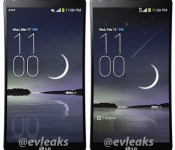
LG G Flex for AT&T, T-Mobile shows up in pictures

Just in case you haven’t seen enough of LG’s limber 6-inch G Flex smartphone, the bowed wonder has appeared in press shots posted by @evleaks. The pictures aren’t shocking for a phone we’ve already had our hands all over and even reviewed as an international model, but after passing through the FCC’s database, we suppose this just another step on the way to release. There’s no word on a release date or US pricing (the Sprint edition that’s surfaced is also missing, but the renders above do show different dates on the phones — March 17th for AT&T and February 12th for T-Mobile), but we’re sure those details will be revealed in due time.
LG G Flex for AT&T (D950, left) and T-Mobile USA (D959, right). pic.twitter.com/xdHaTrMWw3
– @evleaks (@evleaks) January 3, 2014
Filed under: Cellphones, Mobile, LG
Source: @evleaks (Twitter)

Daily Roundup: Samsung Galaxy Camera 2, LG WebOS TV, ZTE BlueWatch and more!

You might say the day is never really done in consumer technology news. Your workday, however, hopefully draws to a close at some point. This is the Daily Roundup on Engadget, a quick peek back at the top headlines for the past 24 hours — all handpicked by the editors here at the site. Click on through the break, and enjoy.

Samsung unveils Galaxy Camera 2 and NX30
Samsung revealed two new additions to its camera lineup: the NX30 and the Android-powered Galaxy Camera 2. Click the link for hands-on photos and more information about their NFC-based “Tag & Go” feature.

Rumored LG WebOS TV interface leak
LG is rumored to be releasing a new WebOS Smart TV at CES, and according to @evleaks, this is what it looks like. Click through for more details about the smartphone-like UI and potential launch apps.

Mozilla delays Windows 8 Firefox app
After being announced almost two years ago, Mozilla has yet again delayed the release of its Windows 8 Firefox app until mid-March. Follow the link for details.

ZTE Grand S II and BlueWatch for CES debut
ZTE is bringing an impressive seven devices to CES, and leading the pack are the Grand S II handset and BlueWatch smartwatch. Click on through for more information.
Filed under: Cellphones, Misc, Home Entertainment, Blackberry
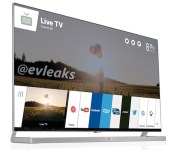
Leak shows LG’s radical new interface for its webOS Smart TVs

LG’s rumored webOS Smart TV is tipped to arrive at CES in the coming days, but that hasn’t stopped intrepid leaker @evleaks from giving us what could be an early preview of its next connected set. In what appears to be a significant departure from the smartphone-like UI utilized in its current Smart TVs, the leaked render shows off LG’s modern interpretation of the Cards interface we first saw in Palm’s webOS-powered smartphones and tablets. LG chiefs have already indicated that the company has thrown its weight behind the Enyo open-source JavaScript development framework, which it acquired from HP as part of the webOS project, in the hope it will encourage third parties to create apps and services for its next-gen TVs. If the leaked image is real, YouTube, Facebook, Twitter and Skype apps will likely be available at launch, but we’re set to find out for sure when CES 2014 commences next week.
Filed under: Home Entertainment, Software, HD, LG
Source: Evleaks (Twitter)

Daily Roundup: NSA iPhone malware, Mac Pro teardown, this year in reviews and more!
You might say the day is never really done in consumer technology news. Your workday, however, hopefully draws to a close at some point. This is the Daily Roundup on Engadget, a quick peek back at the top headlines for the past 24 hours — all handpicked by the editors here at the site. Click on through the break, and enjoy.

The year in reviews
We reviewed more than 170 products in 2013, but rather than leave you to sift through them yourself, we’ve compiled our most memorable reviews into one simple package. Click on through for more details.

Leaked NSA iPhone Hack
Leaked documents dating from 2008 reveal an NSA program called DROPOUTJEEP, which developed iPhone malware that can remotely access files on the devices. Follow the link for the video and more information.

Mac Pro teardown
Apple products aren’t exactly known for their serviceability, but according to iFixit’s latest teardown, repairing the new Mac Pro is a surprisingly straightforward affair. Click through for details on the repairability score.

Google Glass available to All Access subscribers
Are you a Google Play Music All Access subscriber? If so, you now have the option to purchase your own Google Glass headset. Click the link for more information.
LG Lifeband Touch surfaces
After the holidays and just before the start of the International Consumer Electronics Show (CES) is one of my favorite times of the year. Companies are prepping announcements, and in turn leaks (intentional or not) happen.
The latest leak comes from a familiar source. Early Tuesday morning @evleaks posted a photo of what appears to be a fitness tracker made by LG. The name is apparently the LG Lifeband Touch.
Without knowing more about the device, it’s hard to say for sure what exactly it will or won’t do. However, I think it’s safe to assume it’s LG’s entry into the activity tracker market, taking on the likes of Fitbit, Nike and Jawbone.
Luckily, CES is just around the corner and we can either expect additional leaks to shed light on what exactly this thing is and how it works, or an old-fashioned announcement from LG itself confirming and detailing the device.
The post LG Lifeband Touch surfaces appeared first on AndroidGuys.

The year in reviews: 2013’s best and worst gadgets scored and scrutinized

Fun fact: Engadget reviewed 176 products in 2013, and that’s not even counting the umpteen times we got hands-on with stuff at tradeshows and press events.
In general, we try to review just the top-tier gadgets, but even then, some of it ends up being forgettable. (Can you name-check everything we tested from memory? We can’t.) So, as the year draws to a close, we’re taking a look back at the last 12 months of reviews, and this time, we’re including only the products you’d have no trouble remembering. Across every category, we’ve noted the flagships everyone coveted — along with the duds that could’ve been so much better. Oh, and you might notice that we included some numbered scores throughout. That’s right; Engadget is bringing back numerical ratings, and they’ll follow the same format as the critic score gdgt has already been using for years. Which is to say, each rating takes into account various criteria for a given product category — things like battery life and portability. Wanna see how your favorite gadgets did? Meet us after the break for a walk down memory lane.
E-Readers
Amazon Kindle Paperwhite (2013)

Engadget Score: 93
The “all-new” Paperwhite doesn’t really offer anything all that different from last year’s edition, but an improved frontlight and some software tweaks have made an already great reading experience even better. Unless Goodreads is a must-have app for you, it’s a tempting, but largely unnecessary upgrade if you already own last year’s version.
Kobo Aura HD

Engadget Score: 83
The Aura HD is packed with features specifically aimed at the power reader, including best-in-class specs like a 6.8-inch display with blisteringly sharp text and a robust 4GB of internal storage space. Unfortunately, its niche status is further cemented by a high price and a hard-to-hold form factor that escapes easily from those with sweaty hands.
Barnes & Noble Nook GlowLight

Engadget Score: 73
Barnes & Noble giveth and taketh away with the Nook GlowLight. Sure, it’s the best Nook so far, with a better display, improved frontlight and a lighter form factor. But, all those improvements come at the cost of features like the microSD slot, physical page turn buttons and the contoured back, which all served to distinguish the line from its competition.
Gaming
Sony PlayStation 4

Engadget Score: 83
It doesn’t look like a PC, but underneath the PlayStation 4′s sleek black exterior is a powerhouse that rivals gaming PCs, with a user-friendly interface, a great controller and the ability to share your gameplay at the touch of a button. The next generation of consoles might just be getting started, but it’s one hell of a start with the PS4 at the head of the pack.
Microsoft Xbox One

Engadget Score: 81
The Xbox One may not be the prettiest belle at the next-generation ball, but with the wonders of Kinect voice control, robust media features and the ease of switching between games and apps at the drop of a hat, it certainly is vying to be the center of attention. It just needs a few more exclusives to get consumers to look past that $500 price tag.
OUYA console

Engadget Score: 66
The initial backer editions of the OUYA shipped with a flawed controller and access to a limited games selection. But even after the retail release, the OUYA’s still a system best left to hackers and developers, as it’s likely to leave most gamers disappointed by its average smartphone-level internals and rehashed games library.
NVIDIA Shield

Engadget Score: 83
The NVIDIA Shield wants to be the Swiss Army knife of hand-held game consoles, and it largely succeeds as a product — but not as a handheld. Its size and weight mean you won’t be carrying it around much, but the larger screen, great battery life and the ability to stream PC games to the Shield mean you’ll still get a lot of use out of it.
Home Entertainment
Google Chromecast

Engadget Score: 84
The Chromecast might not be as fully featured as competitors like Roku or Apple TV, but you know what? It doesn’t matter. This palm-sized dongle is easy to set up and turns any modern set into a smart TV, all for the low, low price of $35. Its app selection is still experiencing some growing pains, but even now, you’re still getting more than your money’s worth.
Roku 3

Engadget Score: 89
The newest Roku doesn’t have analog AV support like its predecessors, but it does offer incredible ease of use and a wide selection of channels, all for a nice price of $99. Even users of older Roku boxes should look into the Roku 3, whose upgraded CPU and improved UI help future-proof against new, more demanding apps.
Laptops and Hybrids
Microsoft Surface Pro 2

Engadget Score: 77
The Surface Pro 2 retains its predecessor’s durable body, but it’s equipped with a Haswell processor, boasts faster performance and has longer battery life. Microsoft has yet to find the perfect balance for a hybrid device, though — its weight and thickness make it a better notebook than a tablet, so you may want to look elsewhere for an everyday slate.
Apple MacBook Pro with Retina display

Engadget Score: 90
With a starting price that’s $400 less than the 2012 model, the new MacBook Pro with Retina display is a much better deal. In addition to its speedier SSD and better graphics, its epic battery life and thinner, lighter body might make you reconsider if you’ve been in the market for the slightly wispier MacBook Air.
Google Chromebook Pixel

Engadget Score: 79
Google infused the Chromebook Pixel with sophisticated looks and high-end specs, including a 2,560 x 1,700 touchscreen display and LTE connectivity. Even so, its $1,299 price tag might not be worth it unless you’re always connected to the web — hard to do with its poor battery life — and plan on storing huge files in the cloud.
Smartphones
MOTOROLA MOTO X

Engadget Score: 88
The Moto X doesn’t have the specs to compete with heavyweights like the Galaxy S 4 and the HTC One, especially at the same price. But, with user-friendly enhancements to the UI and the magic of customization with Moto Maker — now available for all major carriers — this truly is a phone for the people.
Apple iPhone 5s

Engadget Score: 92
Apple continues to improve on the iPhone line with the 5s, and while the phone maintains the same body as its predecessor, it packs in enough upgrades to appeal to hardcore and casual users of iOS alike. However, even with future-proofing measures like 64-bit support and the M7 coprocessor on board, only the most forward-looking Android power users will find incentive to switch.
HTC One

Engadget Score: 92
The HTC One is a top-shelf smartphone, boasting a unibody aluminum shell, a gorgeous display and a fast Snapdragon 600 processor that runs buttery smooth. The Sense 5 UI didn’t thrill us, but a solid battery and excellent call quality, among other things, made this one of the best phones to buy this year.
Samsung Galaxy S 4

Engadget Score: 88
With a familiar chassis and some impractical features, Samsung’s newest flagship isn’t exactly turning heads. Market-topping specs and minimal learning curve make this worth considering if you’re due for an upgrade from an older Samsung device, but anyone looking for something fresh would be better served by the more polished HTC One.
LG G2

Engadget Score: 87
With its bright 5.2-inch screen and phenomenal battery life, the G2 is a great phone for taking photos, watching videos or just general everyday, all-day usage. That is, if you can get used to its other standout feature — all three of its buttons are on the back, better to make room for the gorgeous screen, but not so friendly to those who like to hold their handset in a death grip.
LG Nexus 5

Engadget Score: 86
Not only is the Nexus 5 gifted with a great 1080p display and a fast quad-core processor, but it also heralds the release of a leaner and meaner iteration of Android, 4.4 KitKat. Take all that and offer it to consumers at an outstanding off-contract price of $349, and the Nexus 5 not only succeeds, but also puts rival handsets on notice to deliver more bang for your buck.
Samsung Galaxy Note 3

Engadget Score: 87
Those with small hands still need not apply, but for the third iteration of the Galaxy Note, Samsung has packed in a robust processor, a solid battery and even more useful S Pen features. The display has also gotten bigger and better, though those who want to watch videos on this thing shouldn’t depend on the built-in speakers.
BlackBerry Z30

Engadget Score: 62
The Z30 was supposed to be the phone that would make BlackBerry relevant again. And while the comfortable hold and large screen will more than please the BlackBerry faithful, an average battery, poor call quality and crash-prone software mean few, if any, will be making the switch from Android or iOS anytime soon.
LG G Flex

Engadget Score: 83
The G Flex’s top-to-bottom curve means it’s very comfortable next to your head, but not so much in your pocket. That curve comes with a chassis designed to be pretty durable, with a flexible body and screen, and a self-healing back that resists scratches. Does it work? Somewhat. Is it worth the $900 price tag? Not really.
Tablets
Google Nexus 7

Engadget Score: 90
The price may be (slightly) higher on our returning favorite tablet, but the Nexus 7 is still an obscene value. That this year’s model got a noticeable boost everywhere it counts and sells for significantly less than a comparable iPad mini is nothing short of impressive — even though Apple’s tablets still have more apps designed for bigger screens.
Amazon Kindle Fire HDX

Engadget Score: 85
The Kindle Fire HDX may be the most compelling case yet for Amazon’s tablet ecosystem. Advanced users might scoff at the device’s somewhat limited capabilities, but the display’s gorgeous color accuracy could make Bezos’ Prime directive an easy sell for just about everyone else.
Apple iPad mini

Engadget Score: 92
The iPad mini is an inexpensive way to join Apple’s tablet family, but it remains more costly than its similarly sized competition. Besides the striking Retina display, what makes the minuscule iPad so attractive this year is it’s essentially a shrunken-down version of its powerful bigger sibling. Very few sacrifices were made to accommodate the smaller stature — something the competition can’t quite claim.
Apple iPad Air

Engadget Score: 92
Tablets went mainstream thanks to the original iPad, but thanks to economies of scale and Moore’s Law, the competition’s become rather fierce — maybe unexpectedly, from Cupertino itself. The iPad Air is the best Apple tablet we’ve reviewed, but it could be hard to justify when the iPad mini now offers nearly the same experience — Retina display, similar styling, A7 64-bit processor — for less.
Microsoft Surface 2

Engadget Score: 78
If the Surface 2 existed in a world where only hardware mattered, its brawny battery and rock-solid construction might put it at the head of the tablet pack. In reality, though, Microsoft’s slate is hamstrung by the shortcomings of its OS, Windows RT, and its inability to run traditional desktop apps.
Galaxy Tab 3 10.1

Engadget Score: 65
We’re not entirely sure what Samsung’s game is with the Galaxy Tab 3 10.1. It hasn’t changed much in terms of specs from the GTab 2, packs a subpar display and severely lacks in features and power compared to the company’s line of Galaxy smartphones. Most damning? The $300 asking price.
Wearables
Samsung Galaxy Gear

Engadget Score: 65
It’s hard to justify paying $300 for the Galaxy Gear when it feels like an incomplete product and is only compatible with a handful of Samsung devices. Still, it stands out as one of the most feature-rich smartwatches we’ve tried, and as the company issues software patches and the app catalog grows, it could become better in time.
Google Glass

Engadget Score: Not Yet Scored
We’ve yet to see a consumer-facing Google Glass, but suffice to say the current version’s more of a research project — definitely not worth its $1,500 price tag for most folks. Mountain View still has to polish its features, address privacy concerns and entice developers before it hits the market. Until then, current Explorers will just have to deal with lots of confused stares when they wear it outside.
Sony SmartWatch 2

Engadget Score: 71
Unlike the Galaxy Gear, you can tell time on Sony’s SmartWatch 2 without having to interact with the screen, and it even costs $100 less. Unfortunately, few will be able to stand its buggy software and limited app selection. But, hey, at least it’s compatible with most handsets running Android 4.0 or higher.
Pebble

Engadget Score: 80
Pebble doesn’t have as many features as other smartwatches: It can only read texts, skip music tracks and tell time. Unlike its competitors, though, it costs a more reasonable $150 and offers both great battery life and an e-ink display that’s easy to read in daylight. As an added bonus, it also works with both Android and iOS devices.
Mariella Moon, Timothy J. Seppala, Kris Naudus and Dana Wollman contributed to this feature.
Filed under: Cellphones, Gaming, Laptops, Tablets, Wearables, HD, Mobile, Apple, Samsung, Sony, Microsoft, HTC, Google, Amazon, LG, NVIDIA
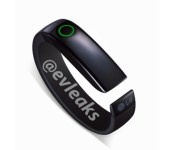
LG Lifeband Touch leak suggests fitness wearable could be imminent

We love it when a leak and a rumor come together. LG’s Lifeband Touch (as claimed by @evleaks), pictured above, is most likely the wearable that was hinted at just last week. The fitness band is likely an evolution of that which we saw back at CES, and at a guess, we might see again in the next week or so (unless we’re made to wait until MWC). The name — and image — suggest a touchscreen component making this a swipe-friendly FuelBand competitor. Whether it’ll be an LG G2 companion (as rumored) or a standalone device is yet to be known (we’re hoping maybe a bit of both). Unless LG has had a change of heart, it’s also likely to include an altimeter, some mobile notification features and play nice with the firm’s Smart TV fitness/dance apps. What certainly is clear, however, is that there’s going to be even more competition for your wrist in 2014.
Source: @evleaks

LG makes Knock a standard feature, update coming for L Series II models

LG first rolled out its Knock feature on the G2 earlier this year, but now that item will become a standard feature on future handsets. If you’ll recall, the power button on that smartphone is situated around back, so Knock allows users to turn the unit on by double tapping on the screen. In addition to those upcoming devices, the outfit will add Knock to existing L Series II gadgets via a maintenance release update starting next month. Of course, specific availability will depend on region and carrier, so you might have to wait a bit longer for the add-on.
Filed under: Cellphones, Software, Mobile, LG
Source: LG

Daily Roundup: Taiwan fines Apple, LG HomeChat, Siri photo-tagging patent and more!
You might say the day is never really done in consumer technology news. Your workday, however, hopefully draws to a close at some point. This is the Daily Roundup on Engadget, a quick peek back at the top headlines for the past 24 hours — all handpicked by the editors here at the site. Click on through the break, and enjoy.

Samsung’s latest developer kit
Samsung’s new Smart TV SDK 5.0 gives developers the ability to tap into home automation. Follow the link for more information about its January 6th release.

Apple photo-tagging patent
Apple’s latest patent hints at potential photo- and geo-tagging functionality through Siri voice commands. Click through for more details.

Taiwanese FTC fines Apple
Apple awoke to a not-so-merry surprise on Christmas day as Taiwan’s Fair Trade Commission accused the company of unlawfully mandating pricing to iPhone carriers. According to WSJ, Cupertino can appeal the ruling, but could face steep penalties. Click the link for more information.

LG announces HomeChat
LG announced that its 2014 Smart Appliance lineup will be able to be controlled through natural language commands via the Line messaging app. Click on through for details on the feature’s 2014 arrival.
Filed under: Misc
 AIVAnet