


LG’s curvy G Flex smartphone is coming to Canada through Rogers

Canadians have been left out of the curved smartphone frenzy so far, but they’ll soon learn what all the fuss is about: LG has announced that the G Flex is coming to Canada as a Rogers exclusive this spring. While the local edition won’t include any radical changes, it should have very fast data with dual-band, 150Mbps LTE support. Pricing isn’t available yet. However, the American launches suggest that Rogers’ model won’t be cheap. You’d better really, really like that banana-shaped display.
Filed under: Cellphones, Mobile, LG
Source: CNW
LG announces the G2 mini ahead of MWC launch date
A few days ago, LG posted a photo on Facebook hinting at a Mobile World Congress launch date for the LG G2 mini. The company came out today, ahead of the launch date, and officially announced the new miniature phone.
A decent amount of the specs were already leaked, so there isn’t a whole lot of surprise. Sony’s take at a mini phone with the Z1 Compact is something to aspire to. While encompassing a smaller screen size, it boasts almost all the same specifications as the Z1. Sadly, it’s a different story for the G2 mini.
It has a 4.7-inch display with a 540×960 qHD resolution, 1.2 GHz quad-core processor, and 1 GB RAM. It also has an 8 MP rear-facing camera and a 1.3 MP front-facing camera, 8 GB of internal storage, a 2,440 mAh removable battery, and expandable storage via microSD.
Probably the most notable feature is that it’s launching with Android 4.4 Kit Kat, something that we didn’t think would make it on the phone right away. On top of launching with Kit Kat, the mini includes LG’s Guest Mode and other features.
It will be available in Russia beginning in March, and will quickly roll out to the Middle East, Asia, Europe, and Latin America. There is no word on a US release quite yet, but we will cover that as soon as we can.
As you can see, the specs are so-so, and they definitely don’t compare to the G2 the way we would like them to. Hopefully LG recognizes this and sells it for a good price, considering the sacrifices. Keep checking back for more on the G2 mini and other MWC 2014 coverage!
Source: GSMinfo.nl
Via: The Verge
The post LG announces the G2 mini ahead of MWC launch date appeared first on AndroidGuys.
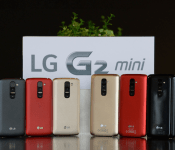
LG’s G2 mini is a smaller flagship by name, not by nature

LG’s not left much to the imagination before this month’s Mobile World Congress. After it confirmed the G Pro 2 last week, the Korean phone maker today officially announced a smaller version of its current Android flagship: the G2 mini. If you were expecting LG to take a similar approach to Sony, which crammed impressive specs into its Z1 Compact, the G2 mini has its fair share of drawbacks. In that regard, the device is powered by Qualcomm’s quad-core Snapdragon 400, the same chip found in the Moto G, while its smaller 4.7-inch display boasts a rather unflattering 960 x 540 qHD resolution.
The handset also features 1GB of RAM, an 8-megapixel camera, 8GB of onboard storage, and retains the same unique backside as its bigger brother, where the volume rocker and power button are placed just below the rear camera. LG has, however, equipped the mini with Google’s latest OS, Android 4.4 KitKat, and will port its custom knock-to-unlock and Guest Mode features over from the flagship G2. The mini is set to go on sale in Russia from March and roll out across Europe, the Middle East and Latin America shortly after. Given the specs, we’re looking at a low-priced handset but we don’t know yet how low LG will go. Hopefully it’ll share more details at MWC next week.
[Image Credit: Android Planet]
Filed under: Cellphones, Mobile, LG
Via: The Verge, Android Planet
Source: Tweakers
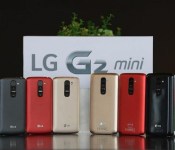
LG G2 Mini is now official, probably closer to a Lite than a Mini
 LG has been hinting for a few weeks now that they are about to announce a smaller version of their flagship device, the LG G2. That device was expected to be called the LG G2 Mini and today that name was confirmed as the device was officially announced. All the major smartphone manufacturers have started making ‘mini’ versions of their flagship devices like the HTC One Mini, Samsung Galaxy S4 Mini and Sony Xperia Z1 Compact, just to name a few, so it’s not surprising to see LG follow suit. ‘Mini’ smartphones have had the unfortunate perception of being a capitalization of their flagship device’s fame, Xperia Z1 Compact aside, and it appears LG has taken this concept a step further than any manufacturer before it.
The LG G2 Mini comes with either a Snapdragon 400 processor or Tegra 4i chipset, likely determining whether the device has LTE support or not, as well as 1GB, 8GB storage with microSD slot and 2,440mAh battery. Probably the most surprising specification for this 4.7-inch device is the 960×540 pixel resolution of its display, which makes for a pixel density of 234ppi; for reference, the 4.3-inch HTC One Mini has a pixel density of 342ppi. This is quite a large difference in screen clarity, and given that the G2 Mini will only be 0.5 inches smaller than the original, it makes the G2 Mini seem more like a G2 Lite; hopefully the price of the G2 Mini, which has not been detailed, is more representative of its abilities than its namesake.
The LG G2 Mini is expected to release in Russia in March, and the Middle East, Latin America, Asia and Europe in April. Would you be interested in the LG G2 Mini assuming its pricing was appropriate? Let us know what you think about this ‘Mini’ device in the comments.
Source: GSMInfo.nl via Phone Arena

Do you really need a 4K smartphone screen?

See those two screens up there? Pretty soon the smartphone will have the same resolution as the much bigger panel (a 27-inch Dell U2711 monitor with 2,560 x 1,440 pixels). While the snappiest CPUs, more RAM, better cameras and other frills are a must for the latest handsets, the current marketing pièce de résistance is a higher-resolution screen. In four years, we’ve passed from a norm of 800 x 480 to 960 x 540 and up to 720p, 1080p and soon — likely on Samsung’s upcoming Galaxy S5 — 2,560 x 1,440 Quad HD (QHD). That works out to a borderline-insane 500-plus pixels per inch (depending on screen size) and manufacturers aren’t stopping there. But is more resolution worth the extra expense if you can’t even see the difference? Well, it’s complicated.

Are higher pixel counts worth the manufacturing cost and effort?
The first smartphone with Quad HD, the 6-inch Vivo Xplay 3S (pictured above), has already been announced. Others that could have that pixel count, like Samsung’s Galaxy S5 and the Oppo Find 7 are rumored to be launching at Mobile World Congress next week. As a reality check, that’s the maximum supported by most 27-inch and larger pro monitors, apart from several recently announced 4K models. While such screens pack a pixel density of about 110 ppi, the Vivo Xplay 3S handset clocks in at a whopping 490 ppi, more than four times as much. Most people (according to Apple) hold their phones about 10 inches from their eyes, but sit only a touch more than twice that distance from their monitor — around 24 inches on average.
Are higher pixel counts worth the manufacturing cost and effort? In justifying the Retina display on the original iPhone 4, Apple famously said that the human eye could only resolve about 300 ppi from 10 inches. That seems to have merit considering that most glossy magazines are (effectively) printed at 300 ppi, and no one complains about the resolution of magazines. Others have said that it’s possible to distinguish pixels up to about 480 ppi or even more, but that requires closer viewing distances and perfect, youthful eyesight. Most of us fall somewhere between those extremes, depending on our age and the state of our orbs.

You might be sacrificing a lot of your smartphone’s other capabilities in exchange for pixels that are (arguably) imperceptible.
If you’re willing to allow that 480 ppi or so is the maximum resolution the best of us can see, then guess what? We’re already there, pretty much. LG’s Nexus 5 (above) for example, has 1,920 x 1,080 pixels jammed into its relatively petite 4.95-inch screen. That works out to 445 ppi, far in excess of Apple’s first Retina display and, for this editor, completely artifact-free at eight to 10 inches, even on fine fonts. You could make the case that Vivo’s much larger 6-inch phone is deserving of its 490-ppi Quad HD screen. But then again, six inches is pushing into tablet territory, and you’d probably hold such a phone farther from your eyes — Apple figures on 15 inches for an 8-inch iPad mini with Retina, for example. From that distance your eyes will resolve less (again, assuming you can even see that close), negating the need for more pixels.
At about 3.7 megapixels, a Quad HD screen has nearly twice the resolution of a 1080p model (2.1 megapixels). Those extra pixels aren’t going to push themselves around, meaning you’ll need beefier graphics if you want to keep the whole “butter” thing going. Of course, Samsung’s upcoming flagship will likely be powered by a state-of-the-art Snapdragon 805 or Exynos 6 CPU if the rumors pan out. However, with the extra resolution, you may not get a corresponding performance boost. On top of that, unless the Korean company’s pulled off some coup, battery life may be the same or worse than the current Galaxy S4. All that means you might be sacrificing a lot of your smartphone’s other capabilities in exchange for pixels that are (arguably) imperceptible.

Despite our reservations, pixel progress marches on.
Despite our reservations, pixel progress marches on. Japan Display announced 5.4- and 6.2-inch Quad HD panels; LG has at least a 5.5-inch screen incoming (above); and Qualcomm showed off a 5.1-inch 2,560 x 1,440 model. Along with Vivo’s 6-inch display, that covers a wide gamut of screen sizes, most of which are bound to show up in new models this year. And if the rumors are true about Samsung’s Galaxy S5, it’ll be QHD with a 5.2-inch screen size — that’s 560 ppi, if you’re keeping score at home.
It seems that’s not enough, because Samsung has already said that it’ll have 3,840 x 2,160 (4K) screens out by 2015 with 700 to 800 ppi, depending on screen size. Even the most ardent pixel-lovers would have to agree that’s crazy, passing the limits of human acuity and matching 110-inch 4K home theater panels pixel-for-pixel. Naturally, we want our tech dripping from the bleeding edge and we love us some 4K. But after Quad HD becomes the gold standard later this year, manufacturers should focus on more important things like battery life, user experience and design. Don’t hold your breath, though, because smartphone marketers love bigger numbers — even if, like the emperor’s clothes, you can’t actually see the extra pixels.
Filed under: Cellphones, Mobile, Samsung, LG

LG intros trio of L Series III smartphones
LG on Monday introduced its third generation of mid-range L Series smartphones. Powered by Android 4.4 Kitkat (with custom LG UI touches), the three devices offer HSPA+ connectivity, Bluetooth , GPS, Wi-Fi, and should be offered in markets with 3G networks.
L Series III smartphone features:
- L90: Includes a 4.7-inch qHD display, quad-core 1.2GHz processor, 1GB RAM, 8GB internal storage, 2,540mAh battery, an 8-megapixel rear camera, and 1.3-megapixel camera.
- L70: Includes a 4.5 inch (800 x 400) display, dual-core 1.2GHz processor, 1GB RAM, 4GB internal storage, 2,100mAh battery, and either an 8-megapixel/VGA or 5-megapixel/VGA camera combo.
- L40: Features a 3.5-inch (480 x 320) display, dual-core 1.2GHz processor 512MB RAM, 4GB internal storage, a 1,700mAh battery, and a 3-megapixel camera.
LG did not make pricing or availability clear; we might learn more at Mobile World Congress.
The post LG intros trio of L Series III smartphones appeared first on AndroidGuys.

LG’s L Series III budget smartphones tout KitKat and smart covers

LG isn’t just bringing high-end smartphones like the G Pro 2 to Mobile World Congress — it’s also launching its L Series III phones for the budget-minded among us. The 3.5-inch L40, 4.5-inch L70 and 4.7-inch L90 are subtle evolutions of the Optimus L II range in terms of hardware. All of them sport faster 1.2GHz dual-core processors and refined designs that are more in line with the company’s higher-end devices. There’s a larger 1GB of RAM on the L70 and L90, too. However, the real stars of the show are the L Series III’s software and accessories. They’re some of the first big-name budget phones to run Google’s efficient Android 4.4 KitKat; they’re also LG’s first non-flagship devices to support optional Quick Window covers, letting you check an incoming call without exposing the whole screen. There’s no word as to when these third-generation handsets will hit store shelves, although they’re built for markets where 3G data is the best you’ll get. In other words, don’t expect them to reach LTE-obsessed American carriers any time soon.
Filed under: Cellphones, Mobile, LG
Source: Korea Newswire (translated)
Lenovo’s acquisition of Motorola doesn’t bother LG
Following the acquisition of Motorola by Lenovo in an attempt to boost their mobile presence, Kim Jong Hoon – head of LG Mobile – took the chance to state that despite the boost in market share the acquisition gave Lenovo, LG isn’t worried.
“There are many talks over Lenovo and Motorola in the media right now and how it affects LG, but internally, we aren’t discussing much about it.”
LG has firm plans to regain third place in the smartphone market by the end of the year and they don’t see Lenovo as being a threat to that goal. Currently LG is sitting in fourth place with around five percent of the market.
With LG introducing the new LG G Pro 2 it certainly has the hardware to battle for third place. Lenovo will take some time to get their acquisition in order and get a Motorola product to the market, but should LG be worried?
Let us know in the comments below.
The post Lenovo’s acquisition of Motorola doesn’t bother LG appeared first on AndroidGuys.

Daily Roundup: LG G Pro 2 announced, Comcast acquiring TWC, and more!

You might say the day is never really done in consumer technology news. Your workday, however, hopefully draws to a close at some point. This is the Daily Roundup on Engadget, a quick peek back at the top headlines for the past 24 hours — all handpicked by the editors here at the site. Click on through the break, and enjoy.

Canon’s PowerShot G1 X Mark II
Meet the G1 X Mark II, Canon’s latest flagship PowerShot. This $800 camera packs a 24-120mm f/2-3.9 zoom lens, DIGIC 6 processor and a 1.5-inch sensor. Click on through and watch Engadget’s Zach Honig take the shooter for a spin.

Comcast and TWC merger
Earlier today, Comcast announced plans to acquire Time Warner Cable. The proposed deal must gain approval from the FCC and Justice Department first, but what would the $45 billion merger mean for its 30 million combined subscribers? Read on and find out.

Alternatives to Google’s Android apps
Engadget’s own Matt Brian investigates some alternatives for Google’s native mail, messaging, calendar and photo apps. Who knows, newfound productivity might only be a click away. Follow the link and learn more.

The LG G Pro 2
LG’s newly announced G Pro 2 smartphone doesn’t have a price tag or release date just yet, but we do know it packs a 5.9-inch screen, an upgraded knock-to-unlock feature and a 13-megapixel, 4K capable shooter. Click the link for additional details.
Filed under: Misc
LG debuts 5.9-inch G Pro 2
LG on Thursday announced its latest smartphone, the G Pro 2, a 5.9-inch successor to last year’s big Mobile World Congress device (G Pro). Details include a 2.26GHz quad-core Snapdragon 800 processor, 3GB RAM, 16/32GB internal storage capacities, and a 3200mAh battery. The rear camera is 13-megapixels and can record video at 120 frames per second (slo-mo) as well as 4K Ultra HD. As is the case with other LG smartphones, the G Pro 2 offers features such as KnockOn, Magic Focus for the camera, Content Lock, Mini View, and Dual Browser.
LG has not announced pricing or availability for the G Pro 2 but could reveal more at Mobile World Congress. The annual conference takes place in roughly two week’s time. If history is an indicator then we could see at least one or two U.S. carriers add this one to their roster.
The post LG debuts 5.9-inch G Pro 2 appeared first on AndroidGuys.
 AIVAnet