


Inside LG’s G3: How vacuums, focus groups and competitive pressure shaped a smartphone

Nine months ago, deep in a heavily guarded lab in Seoul, South Korea, LG’s mobile design team set out to create a phone to rival Samsung’s flagships. It was no light responsibility: According to IDC, Samsung dominated smartphone sales in 2013 with 31.3 percent of the market compared to LG’s 4.8 percent. Yet, in the amount of time it takes a newborn baby to blossom from conception to her first appearance in this world, LG cranked out a compelling piece of circuitry. The G3, announced today, comes with the highest-res display on the market, a 5.5-inch body that feels smaller than it really is, a fresh metallic finish and a never-before-seen imaging component invented by a robotic vacuum company.
LG is struggling. It may not have the same image problem HTC does, but it’s clearly coming into this project as an underdog. Sales of the G2, its prior flagship, sputtered against expectations despite a new design direction and market-topping components. The company wasn’t able to climb out of the Galaxy S4′s shadow, so it turned its focus to beating Samsung. The G3 uses a larger, higher-resolution screen than its rival without making the phone feel unwieldy. It features a larger battery and it boasts a faster autofocus (thanks to its new laser sensor), all while fixing sore spots users had with the G2.
LG is struggling. It may not have the same image problem HTC does, but it’s clearly coming into this project as an underdog.
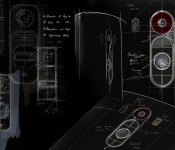
After walking through what seemed to be a typical, sterile, cubicle-laden office building, we entered a white-walled, nondescript meeting room in LG’s design headquarters in Seoul. On a table, amongst an endless series of office chairs and whiteboards, sat a plethora of G3 mockups. Next to them sat several different variations on back button arrangements and at least two dozen back covers in nearly every color you can imagine. The full lineup was obviously transplanted here from some secret lab in another part of the building. Although none of the mockups functioned — the front of each one was just a blank plastic face — they were made to mimic the proper weight and feel of a real phone. Despite repeated requests, we weren’t allowed to take pictures of the mockups because, understandably, any of them could be used for a future device.

These design candidates were just a few of the 300 models LG considered, and ultimately rejected, for the final G3 design. Each version had a different texture, color or material. Some were glossy, others ridged and still others built with materials we couldn’t quite put a finger on. The back buttons were arranged in ways we’d never seen before; one version even replaced the buttons with a circular apparatus of undisclosed purpose. Not only were we staring directly at LG’s past, but we were also likely gazing into its future.
The G3 isn’t the first phone to feature a Quad HD display, but it’s the first from a major manufacturer. Some argue that such high resolution on a small screen doesn’t make enough of a difference; naturally, LG believes it does. The company touted blind tests that show people prefer screens with 500 pixels per inch (ppi) over 400 (the G3 sits at 538 ppi), and they found that small text and nighttime scenes were definitely clearer on the higher-res display. There will always be demand for more than what we already have, and LG is anxious to beat the competition in any way possible.
Not only were we staring directly at LG’s past, but we were also likely gazing into its future.
LG is confident that if the display doesn’t get you interested in the G3, the phone’s new laser sensor will — and the feature almost didn’t even make it into the final product. A first in the digital camera industry, the new feature was actually developed by Roboking, the makers of LG’s robotic vacuums. Originally, it was intended to measure the distance between the vacuum and obstacles that it may have to maneuver around. Roboking dropped it for a number of reasons, but it told the mobile team about it over a coffee break and the rest is now history: Imaging specialists went to work adding the vacuum’s laser beams to the G3, which helped the camera snag an even faster focus lock than its closest competitors (both the One M8 and Galaxy S5 boast 300ms focus times, whereas the G3 claims 276ms). Fortunately for our eyes and sanity, this sensor doesn’t double as a laser pointer.
To our surprise, nearly half of the prototypes didn’t even feature a spot for the sensor because the team had to prepare for the possibility that it might not be ready in time. The feature was confirmed for the G3 two months ago, just before the final deadline. There was just enough time for Chul Bae Lee, VP of mobile design, and his team to tweak the design to make sure everything fit properly, which involved a few changes to the device’s shape. “Any small treatment could affect the shape of the phone,” Lee said. “Before, the shape was slightly different; the arc was a bit more flattened.”

To our amazement, one of the mockups was aluminum. Wait: LG actually considered a metal phone? Like Samsung, LG has historically opted to use polycarbonate plastic for most smartphones. Alas, aluminum was vetoed at some point in the process, in favor of a metallic hairbrush finish that looks and feels like the real deal, but doesn’t attract fingerprints or scratches. It’s warmer, lighter and offers an anti-scratch coating. It’s also much less slippery, a pain point that frustrated us with the HTC One M8. There’s less risk of attenuation issues (as we saw with the iPhone 4 a few years ago), and wireless inductive charging is much more effective on a plastic surface, since it tends to heat up metal surfaces too easily. As it turns out, there are plenty of reasons why so many manufacturers avoid the material.
But why not use the same self-healing finish found on the curvaceous G Flex? While its ability to fend off dings and cuts isn’t perfect, it was a groundbreaking feature that helped it stand out from the crowd. It’s also a few steps ahead of anything LG’s competitors have come out with. According to Lee, “We couldn’t find a way to adapt self-healing without making it glossy.”
Users’ aversion to glossy plastic was just one of the lessons LG took to heart from the G2.
Users’ aversion to glossy plastic was just one of the lessons LG took to heart from the G2. As good as the phone was, it had its share of flaws, and user feedback was critical. The G3 is designed to be more comfortable, simpler (tagline: “Technology, simplified”) and easier to hold. To bolster the support of power users, the rear cover and battery are now removable and a microSD slot sits underneath for expandable storage. And as Dr. Ram-Chan Woo, head of mobile product planning, is quick to point out, “The [G2] back cover is more plasticky and a fingerprint magnet.” Indeed, if you liked the G2, the G3 should look incredibly tempting right now.
Lee added that only half of G2 users liked the back button setup. It’s an acquired taste that grew on us after a while, but it has to grab the attention of buyers from day one. His team changed the shape of the buttons to circles and added more separation between them and the camera in an attempt to make it more difficult to smudge the lens. The designers also added a pointy power key in the center, the highest peak on the phone’s chassis, because too many users lose their grip on big phones. The new style, Lee said, stabilizes your thumb to offer a secure grip, despite the device’s 5.5-inch frame. This, in addition to the thin sides and arched back cover, also makes the G3 feel smaller than it really is.

The G2′s 3,000mAh battery was among the best for flagship smartphones of a similar size (that is, not a “phablet”), so LG chose not to make compromises on its successor by shrinking its size. This was a challenge, thanks to the device’s floating arc design; the arched back is the reason why this 5.5-inch phone doesn’t feel like a behemoth, but there was too much curvature for LG to fit a standard battery of that size. The solution: an “arc battery.” Upon closer inspection, the battery seemed just as flat as any other battery on the market. Not so, according to Woo: “It looks flat, but it isn’t. Since the back cover is slightly arched, the battery is also arched in order to fit the cover.”
Trendy colors aside, LG can and has brought some innovative solutions to the table.
But if the battery stays exactly the same size, won’t the higher-res Quad HD panel suck up a lot more power? Not if the company’s marketing claims speak the truth: The display utilizes something called dynamic frame rate control, which tells the display to stop refreshing if you’re on the same screen for long periods of time. If the content on the screen stays the same, the frame rate drops to 30 fps, which should be a huge aid to battery efficiency.
The G3 will come in five colors. White and “titanium” are the obvious go-tos for phone manufacturers. “About 80 percent of actual sales are white and black, so you have to offer [those colors],” Lee said. While we always prefer a choice of colors, it doesn’t always equate to success, so the design team chose shades that reflect current trends: Gold, violet and red will also be offered. All of LG’s biggest competitors have gold-colored flagships now, and red is starting to surface on more devices. Violet was an unusual choice, but Lee insisted: “Purple seems to be quite the fashion these days.”
Trendy colors aside, LG can and has brought some innovative solutions to the table. The back buttons, laser sensor and metallic finish are primary examples of that, but it’s had a difficult time selling the message that its flagships can hold their own against Samsung, HTC and other competitors. The G3 is a step in the right direction, but it’s not going to matter if it can’t beat Samsung at its own game: Marketing and mindshare.
Mat Smith contributed to this post.
Filed under: Cellphones, Wireless, Mobile, LG

Get the LG G3 look with these 10 wallpapers

LG’s hot new flagship smartphone, the G3, might not be available in your neck of the woods for a few more weeks but that doesn’t mean you can’t copy its look on your Android. Somehow, some way, the G3 wallpapers have already been extracted and posted online. These 10 images should be the pre-loaded wallpapers for the upcoming G3. See anything you like?


The post Get the LG G3 look with these 10 wallpapers appeared first on AndroidGuys.
The LG G3 has a keyboard that grows, shrinks and learns

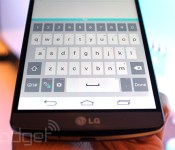
Despite an occasionally groan-inducing press conference in London, there’s little denying that LG’s new G3 has plenty going for it (personal aside: I’ve never been more smitten by an LG phone). It’s usually the little things that make the biggest difference, though, and the G3′s thoughtful Smart Keyboard seems to fall right into that category. Why? Because it pays attention.
The keyboard will slowly shift the way it interprets your touches as it learns how you type, though it won’t actually look any different. Do you always type S’s when you want A’s? The G3 will try to discern your meaning and expand the sensing area for the A key if it “thinks” you’re having trouble. That’ll sound more than a little familiar if you’re a BlackBerry buff: a very similar feature is baked into BlackBerry 10′s soft keyboard. You can also manually change the size of the G3′s keyboard, too, a real boon for those of us suffering with sausage fingers or bum eyes. You’ll only be able to stretch and compress the keyboard so much though — at their largest (see above), the keys are spacious and plenty accommodating for my gorilla thumbs, and the smallest is well-suited for preserving precious screen real estate. Throw in the ability to change the symbol keys that appear on either side of the spacebar and you’ve got yourself a pretty flexible way to jot down your innermost ruminations. On some level, it seems a little silly to get worked up over a keyboard (especially when LG has spent the better part of our morning/evening lauding other technical achievements), but it’s always nice to see companies shape our user experiences in subtle, smart ways.
Filed under: Mobile
Watch the LG G3 launch event live

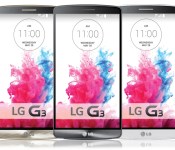
With the LG event underway, we’ve embedded the live stream below for you to watch the company unveil their flagship LG G3 device.
Watch the company go into great detail about how they have achieved the specs with the LG G3, including what is expected to be a device powered by Android 4.4.2 KitKat, a 5.5-inch 1440×2560 pixel display and a 2.5GHz quad-core Snapdragon processor. Other specs include 2GB RAM, 16GB internal storage, and a 3000mAh battery.
The post Watch the LG G3 launch event live appeared first on AndroidGuys.
LG announces flagship G3 for summer

After what feels like months of rumors, LG on Tuesday officially announced the flagship G3 will arrive this summer. Hardware details should not come as much of a surprise if you’ve been following the space closely these last few weeks. Oh, but what hardware it is indeed.
Powered by Android 4.4.2 KitKat, the G3 boasts a 5.5-inch 1440×2560 pixel display and a 2.5GHz quad-core Snapdragon processor. Other details include 2GB/3GB RAM, 16GB/32GB internal storage configurations, and a 3000mAh battery.
In terms of cameras, the G3 features a 13-megapixel rear camera with optical image stabilization and laser-assisted autofocus. Around front you’ll find a 2.1-megapixel shooter. Connectivity comes via 4G LTE, WiFi, Bluetooth, NFC, DLNA, Miracast, and FM radio.
User Experience
Moving over to software, LG has put a tremendous level of custom touches to the user experience. Picking up where its predecessor leaves off, the G3 includes:
- Smart Keyboard: Adaptive technology learns as you type for faster input with fewer mistakes.
- Smart Notice: Like a personal assistant, Smart Notice provides suggestions and recommendations based on user behavior, phone usage patterns and location to offer user information when it’s needed the most.
- Smart Security: Understanding the importance of maintaining and securing confidential data when smartphonesare shared, misplaced, lost or stolen, the LG G3 offers a number of enhanced security features such as:
- Knock Code™ enables users to unlock their device with a pattern of taps.
- Content Lock keeps personal files safe and hidden from view when sharing the LG G3 with friends.
- Kill Switch gives LG G3 owners the ability to disable their phones remotely in the event of theft.
Accessories
LG will also be offering a collection of new premium accessories to accompany the LG G3:
- QuickCircle™ Case: Available in five colors, QuickCircleTM Case allows easy access to frequently used functions such as calling, text messaging, music and camera all from the QuickCircle window without opening the cover. In addition to the QuickCircleTM Case, LG will offer a lineup of Slim Guard Cases and premium Slim Hard Cases to protect the LG G3 in style.
- LG Tone Infinim™ (HBS-900): Developed in collaboration with Harman/Kardon, the Bluetooth stereo headset delivers premium audio quality sound in a stylish design. Built with retractable wire management technology and jog buttons for easy search, Tone Infinim also features Name AlertTM to verbally notify you who is calling before you answer.
- Wireless Charger: Compact and foldable, LG’s Wireless Charger is optimized for easy portability. Compatible with Qi’s wireless power charging technology, the Wireless Charger from LG makes staying powered up as convenient as possible.
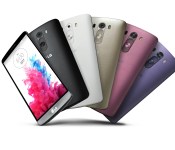
The LG G3 will begin rolling out worldwide (starting on May 28 in South Korea) on over 170 carriers. The LG G3 will be sold in Metallic Black, Silk White, Shine Gold, Moon Violet and Burgundy Red color options. Exact availability and pricing will be announced by various carriers in the coming days and weeks. We do know for certain that it will “arrive on U.S. soil later this summer with T-Mobile, Sprint, AT&T, Verizon, Best Buy and Best Buy Mobile specialty stores.”
The post LG announces flagship G3 for summer appeared first on AndroidGuys.
T-Mobile giving an LG G3 away each day until June 29

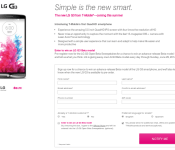
T-Mobile is the first U.S. carrier to announce the upcoming availability for the newly introduced LG G3. Although the Un-carrier has yet to reveal pricing or a firm date, we can expect the flagship to touch down this summer. In other words, pretty much what LG said in their press announcement.
Current and prospective T-Mobile customers can now sign up for pre-registration of the LG G3. Doing so could actually earn them a free G3 ahead of its actual debut. Indeed, T-Mobile will be giving away one free LG G3 per day until June 29. Called the Open Beta Sweepstakes, it’s a chance to win an advance-release Beta model. Good luck!
The post T-Mobile giving an LG G3 away each day until June 29 appeared first on AndroidGuys.
LG G3 gallery

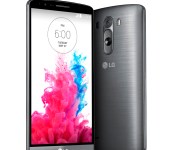
You’ve heard the news by now and now you want to look at the biggest, baddest smartphone of 2014. Behold the LG G3 and its quad-core, Quad HD glory.


The post LG G3 gallery appeared first on AndroidGuys.

LG’s G3 flagship is a bigger, simpler, higher-res smartphone

Simple is the new smart. That’s how the invite to today’s LG event in London reads. But what’s simple about the newly announced LG G3 flagship LTE phone? We’ll decode the marketing talk soon, but for now lets look at the simple facts about the hardware. As suspected (and oft leaked), the G3 has a 5.5-inch display, again with a much-talked-about Quad HD (2,560 x 1,440) display. As for the innards, there’s a Snapdragon 801 chip clocked at 2.5GHz plus 2GB of RAM to serve you up Android KitKat, along with 16GB of storage. There’s also a 3GB/32GB variant if you want to up the ante. Other hardware highlights include a removable (3,000mAh) battery, wireless charging and SD card support. Budding photographers will want to know that the main camera is a 13-megapixel unit, and comes with OIS and tap to focus. And yes, again, as rumored there’s an (infrared) laser auto focus — we’ll be exploring that in detail in our review for sure. That’s the key spec list, but in this increasingly experiential mobile world, there’s a lot more going on than just a laundry list of features, which we got a chance to explore for ourselves.
What about the phone design itself? Well in many ways it feels like a collage of some of its contemporaries/competition. The curved top and bottom edges are reminiscent of the (albeit LG-made) Google Nexus 5 and (to a lesser degree) the OnePlus One. The curved back (which is just 2.75mm at its thinnest/the edges, 8.9 at its fattest) has a whiff of the HTC One (M8) about it, as does the metallic finish. It’s definitely metal-like though, and not actually the cold stuff.

LG describes it as “metallic skin,” and it’s anti-scratch, but not fully self-healing like we saw on the G Flex. As for choice of colors, you’ll be able to pick from metallic black, silk white, shine gold, moon violet and burgundy red at launch. It’s not all about aesthetic’s though, as the G3′s finish has been designed to be less slippery, and less prone to fingerprint-hoarding than the G2, and that seems to definitely be the case in our initial time with the device. But, why not go with actual aluminum? LG says the material was designed to look and feel like metal but not be as cold. That’s a shame, as it’s that cooler temperature that many might think actually gives metal phones that quality feel (even if it’s mostly because of that sensory distinction from polycarbonate). Either way, the G3 still feels nice, and remarkably doesn’t feel as big as the spec-sheet tells us it is, until you directly compare it to a smaller phone.
We briefly mentioned those rear buttons, but we’re glad to confirm they’re an improvement on the G2′s. These very same buttons were one of the standout design features last time of course, and LG thinks they were worthy enough of a return visit. On the G3 though they lay much flatter, and protrude less than on the G2. It makes for a more comfortable fit, especially given the phone’s size. So, maybe if you weren’t a fan last time, they might be more to your liking? There’s hope at least.

As for the “simple” part? As usual, that’s mostly in reference to the user interface. It’s a common theme, but LG really does think it’s made thing’s simpler to use with the G3. It’s done this by doing some digital housekeeping. It’s tried hard to remove as much friction between you deciding what you want to do, and actually getting there. In reality, this means the camera interface has been pared right back. It’s almost empty, just tap the screen and it’ll take a picture. If that freaks you out, you can switch them all back on again, but for the most part, LG’s trying to keep things simple. The camera has a few other tricks too, such as gesture controls which solve one of the biggest problems faced by the selfie taker. Hold the phone at arm’s length, and instead of fumbling for the shutter button, you can just get your hand in view, make a fist, and it’ll countdown from three to one before taking a picture.
Oh, and that front-facing camera? LG’s just gone right ahead and re-branded it the “Selfie camera.” It’s even been optimized to better perform the task it’s become most known for. This means bigger pixels to increase the amount of light it soaks up, and a low f-stop for the same reason (f2.0 for those that like to know). LG’s clearly assuming you hang about in dark places.

Other UI tweaks that LG hopes will reduces the amount of friction include a Google Now-esque smart notification system. Smart Notice will gently remind you when you didn’t return a missed call (and sent a message saying you would, or suggest you add a number to your contacts that you often get calls from. Best of all, it’ll also apparently hint you might want to upgrade when LG’s got a new product you might want to upgrade to. We just hope you can turn that off.
So far it’s seems the G3 is off to a good start, and we’re waiting for the company to confirm world-wide price and availability. What we do know, is that it’ll be landing in Korea first, possibly as soon as next week, with western markets to follow.
Filed under: Cellphones, LG
LG G3 specs revealed by official LG site ahead of launch
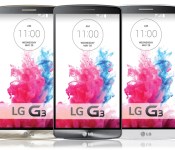
With only a few hours before the LG G3 is officially unveiled, yet another leak has confirmed what specs the upcoming device will have by non other than LG themselves.
Whilst there’s nothing that stands out, since a lot has already been revealed by previous leaks, it does confirm what to expect before the official unveiling.
Here’s the full specs:
- 5.5-inch 2560 × 1440 display
- 2.5GHz quad-core Snapdragon processor (Snapdragon 801?)
- 2GB of RAM, 16GB storage
- 13-megapixel rear camera with optical image stabilization, laser-assisted autofocus, 2.1-megapixel front camera
- 16GB storage and microSD card slot with up to 128GB
- 3000mAh battery
- Android 4.4.2
- WiFi, Bluetooth, NFC, 4G LTE, FM Radio
- DLNA and Miracast
- Metallic Black, Silk White, Gold Shine colors
- 146.3 x 74.6 x 9.1mm
In addition, there’s also mention of a metal housing for the LG G3, which is something that we’ve yet to hear about as it was suggested from previous leaks that the back would be plastic.
One thing’s for sure is that we won’t have to wait long until we officially see the LG G3.
SOURCE: LG
The post LG G3 specs revealed by official LG site ahead of launch appeared first on AndroidGuys.
LG G3 compared in size to HTC One (M8) ahead of launch

It’s been kind of hard to keep up with all LG G3′s leaks lately, the closer the release date gets the more leaks came to us.
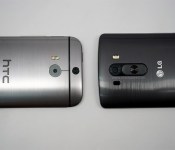
We’ve seen how the device will look already and this time we have it compared to HTC One (M8) in size, at least to some degree, we can see the width of LG G3 compared to HTC’s flagship in the picture above. It seems noticeably wider than HTC One (M8), thanks to its rumored 5.5″ screen we believe, despite those thin bezels. On the picture below you can clearly see the back of the device along with what is leaked to be a laser autofocus sensor which should improve focus speed and be more accurate while doing that.

LG G3 announcement is due tomorrow, May 27 and these are the rumored specifications. Do you think LG G3 will be too big?
SOURCE: PhoneArena
The post LG G3 compared in size to HTC One (M8) ahead of launch appeared first on AndroidGuys.
 AIVAnet