


LG fixes G Watch charging flaw that can irritate your skin

Whatever you think of LG’s G Watch, it has a flaw that can get under your skin a little too literally. Wearers have noticed that its charging pins maintain a current even when they’re on a sweaty wrist, triggering corrosion, skin irritation and even minor burns. Thankfully, some relief is at hand. Both LG and Google have confirmed to Android Police that they’re rolling out an over-the-air fix which turns the current off unless the Android Wear gadget is sitting in its charging cradle. The companies say that only a “small number” of G Watches have produced this problem, so your arm isn’t likely to be in danger. However, it’s safe to say that the patch can’t come soon enough — it’s not often that code can damage both people and their devices.
Source: Android Police
.CPlase_panel display:none;

Verizon adds wallet friendly LG G Vista to roster

Verizon Wireless on Thursday began offering the LG G Vista, an affordable 5.7-inch Android smartphone. Priced at $100 with a two-year service agreement, the device runs Android 4.4.2 KitKat and features a 1.2GHz quad-core processor, 1.5BG RAM, and 8GB internal storage. The rear offers an 8-megapixel camera with 1080p HD video capture while the front houses… Read more »
The post Verizon adds wallet friendly LG G Vista to roster appeared first on AndroidGuys.
.CPlase_panel display:none;
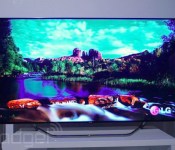
LG’s first big 4K OLED TV may have a non-ridiculous price tag

If you’re set on an OLED Ultra HDTV instead of LCD, you can now put a price and date on your idealism: LG’s 65-inch 65EC9700 4K model will reportedly ship in September with a sticker price of $8,999. Apart from those deep OLED blacks, the model also features passive 3D, Miracast/MHL and nearly invisible bezels. The first 4K OLED models, including that one, arrived earlier this year at CES, but so far none have hit stores. We also haven’t seen any pricing, other than for a few exotic models like LG’s $30,000 curved 77-inch UHDTV. Though the 65-inch model is far more reasonable, according to HD Guru, the lowest possible price (UPP) set by LG is $6,999 — still more than double LG’s 4K LCD model.
Filed under: Home Entertainment, HD, LG
Source: HD Guru
.CPlase_panel display:none;
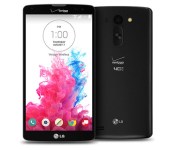
LG’s G Vista looks like the G3 but lacks the power and resolution

What do you get when you cross a 5.7-inch screen with 960×540 resolution and a 3,200mAH battery? Pretty sparse pixel density, that’s for sure, but the new LG G Vista for Verizon will keep smartphone-ing through a day and then some. Aimed at the mid-range crowd who want a flagship feel, the G Vista strongly resembles the top-end G3 with an even narrower bezel. But don’t be confused: on top of the meager qHD screen, it gets by with a quad-core 1.2GHz chip, 1.5GB of RAM, 8GB of storage, microSD and an 8-megapixel rear/1.3-megapixel front camera. On the plus side, it does have LTE, Android 4.4.2, LG software like Knock Code and a prodigious 15 hours of talk time. For all that, you’ll pay $100 with a 2-year contract, or $400 off contract with Verizon’s Edge. A little pricy considering the competition, but not a bad mid-range option if you’re set on Big Red.
Filed under: Cellphones, Mobile, Verizon, LG
Source: Verizon
.CPlase_panel display:none;

Virgin Mobile lets you customize your family’s prepaid phone plan

In the US, prepaid cellphone service tends to be a like-it-or-leave-it proposition that rarely fits perfectly, especially for families. Virgin Mobile may have a smarter approach in store; it’s launching Custom, a prepaid family plan that lets you tailor usage to your liking. You can put as many as five people on plans that start at $7 each ($35 for unlimited talk and text) and scale up depending on individual needs. If Mom is a big fan of streaming music but rarely makes calls, she can pile on the data (or use a $5 Unlimited Music plan) and reduce her voice minutes; a chat-happy kid, meanwhile, can have gobs of messages but only minimal internet access. You can change the plans at any time from mobile apps, and built-in parental controls let you declare certain apps as off-limits during specified hours.
Custom will be available in Walmart stores on August 9th, although your device selection will be limited to some bottom-rung Android devices at first, including the ZTE Emblem ($80), LG Pulse ($100) and LG Unify ($130, shown here). You won’t have to put everyone on the plan to control it, however. As of September 1st, you’ll get a management app for Android and iOS that lets you change Custom plans whether or not you’re a Virgin customer yourself. As such, it could be handy for parents who want to stick to high-end devices and plans, yet keep their kids’ cellphone service on a tight budget.
Filed under: Cellphones, Wireless, Mobile, Sprint, LG
Via: CNET
Source: Virgin Mobile (1), (2)
.CPlase_panel display:none;
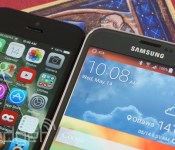
Samsung’s phone market share takes a bruising as Chinese rivals surge

Samsung warned that its smartphone sales weren’t that great this spring, and now we have the numbers to show just what the company meant. IDC estimates that Samsung’s smartphone shipments saw a rare year-over-year drop in the second quarter, taking it from a lofty 32.3 percent market share down to 25.2 percent. That’s still enough to give it a comfortable lead, but a shock for a company which is used to growth. The cause, analysts say, is the rapid rise of Chinese brands that cut directly into Samsung’s low-end business. Huawei claimed 6.9 percent of the smartphone space after doubling its shipments, thanks in part to heavy discounts on phones like the Ascend P7; Lenovo jumped to 5.4 percent on the back of both budget phones at home as well as rapid expansion abroad.
Both Apple (11.9 percent) and LG (4.9 percent) lost share, although IDC notes that their shipments were up. Also, neither firm was expected to have a stellar season. LG only just launched its hot-selling G3 flagship at the tail end of the spring, while many expect Apple to jumpstart sales with at least one new iPhone in September. It may be trickier for Samsung to bounce back, however. The spring was supposed to represent a big spike in sales as the Galaxy S5 arrived, but that didn’t materialize. The company is pinning its hopes on both a new Galaxy Note and a mountain of budget phones. However, historically, neither has sold as well as the Galaxy S series.

Filed under: Cellphones, Mobile, Apple, Samsung, LG, Lenovo
Via: AppleInsider
Source: IDC
.CPlase_panel display:none;

Engadget Daily: EA Access, upgrading your dumb home on a budget and more!

Today, we review LG’s Heart Rate Monitor earphones, learn how to upgrade your dumb home on a budget, check out Apple’s new Retina Macbook Pros and learn about a new Xbox game-streaming service called EA Access. Read on for Engadget’s news highlights from the last 24 hours.

How to make your dumb home smarter without spending a fortune
Want to make your home smarter, but can’t afford premium services like ADT Smart Home or Vivint? Don’t worry, we’ve compiled a list of the best (and more importantly, affordable) gadgets that can upgrade you abode.

‘EA Access’ subscription on Xbox One brings all-you-can-eat gaming for $5 per month
Look out PlayStation Now. Earlier today, Microsoft and EA announced their own game subscription service called EA Access. For only $5 per month, users get unlimited access to a vault of games, including Peggle 2 and Battlefield 4.

Apple gives Retina MacBook Pros a speed boost ahead of Yosemite rollout
OS X Yosemite is reportedly due sometime this October, but Apple’s not waiting around to revamp its line of Retina Macbook Pros. As of today, both the 15- and 13-inch models received a few upgrades in preparation for the upcoming OS.

LG Heart Rate Monitor Earphone review: good fitness gadget, poor earphones
LG’s Heart Rate Monitor Earphones (which do exactly what you’d expect) mean you need one less gadget to track your workout. The only problem? These Bluetooth buds sound pretty bad.
You also might like:
Filed under: Misc
.CPlase_panel display:none;
LG G3 in Mood Violet and Burgundy Red to be available this August

Almost 2 months ago, LG officially released the LG G3 – their latest flagship smartphone and probably the most successful to date. LG mentioned that the phone will be available in five colors Metallic Black, Silk White, Shine Gold, Moon Violet, and Burgundy Red. However, the latter two are still not available in the market, but… Read more »
The post LG G3 in Mood Violet and Burgundy Red to be available this August appeared first on AndroidGuys.
.CPlase_panel display:none;

LG Heart Rate Monitor Earphone review: good fitness gadget, poor earphones

Heart rate monitors are no longer the exclusive domain of fitness gadgets. The last 12 months have seen sensors make their way into smartphones and wearables, replacing for many of us the need for a standalone pulse monitor. The problem is a lot of these options have been unable to deliver accurate heart rate mesurements, partly because those sensors have to maintain contact with your skin; if they slip, then the readout skips. Maybe LG has the answer, then: Put heart rate monitoring technology into a pair of Bluetooth headphones. If you’re like me and are constantly wired for sound during workouts, what could possibly be better?
LG’s Heart Rate Monitor earphones link to an iOS/Android app, with absolutely nothing burdening your wrists. LG’s fitness app can even add your exercise sessions to a step counter, so long as you buy LG’s optional Lifeband Touch fitness band. What’s more, the app also integrates with other fitness apps like RunKeeper. It all sounds great on paper, but there’s a problem: the headphones don’t actually sound good. Let me explain.
Hardware

LG’s new headphones look like run-of-the-mill sports headphones, but at $180, they’re pricier. They’re in-ear buds supported by rubberized tubing around the wire, which help keep them inside your ears. There’s even an extra flexible wing to support the fit, ensuring they stay snug during your morning run or squat superset — that’s important here because the heart rate sensor needs to be against your skin to measure blood flow and give that all-important readout.
The headphone wires draw together at a lanyard clip which also houses play, pause and volume controls. The clip is sturdy, and it’s at the perfect point to tether to your t-shirt, making the wires less likely to get in the way — at least while you’re wearing it. The earphones then plug into a Bluetooth module which provides the power and has its own clip; this one’s waist-level. The module is small and light, with a backlit power switch that offers up a color-coded guide to your heart rate at a button press. (There’s also audio guidance for battery levels and your activity, but I’ll come back to that.) Despite their Bluetooth connectivity, that means there’s just as much cabling as other wired earbuds. It would have been better if all the hardware was housed inside the headphones.
Because the earphones connect through micro-USB to the Bluetooth module, it means you won’t be able to use these with a typical headphone socket, which also means having to keep the set well charged. I found they lasted roughly four hours — about four gym sessions of constantly monitoring my pulse. But you can expect them to last much longer if you’re just listening to music.
In use
The heart rate module itself is lodged inside the right earbud, and there’s a subtle design difference between the two buds, suggesting that the sensor points to your outer lobe rather than shining (infrared shines, right?) into your earhole. The results are accurate, especially compared to the erratic results we’ve seen from other heart rate sensors. During training sessions — it only measures your pulse when you start a session from the app — I also strapped myself into a blood pressure monitor at my local gym to get a second reading. Measurements from both were within one or two beats per minute of each other. What’s nice, too, is that the earphones’ heart rate reading doesn’t fluctuate as much as wrist-worn monitors I’ve tried, probably because these stay more firmly in place. If you’re curious about such things, you can view your readout in the app anytime.
Alas, while the headphones make a pretty excellent heart rate monitor, the sound quality is distinctly trebly. Maybe my tastes tend toward Beats-style bass sound profiles, but compared to other in-ear buds, wired or wireless, these don’t pack the same audio punch. My guess is something had to be sacrificed to make space for the heart rate sensors. Worse, at substantial volume there’s a moderate degree of noise leakage. Gyms and outdoor running can often require the top volume, but move into a quieter area with other people and they’ll soon twig to your shameless workout soundtrack — the one you wouldn’t ever make public. It’s a shame, but sound quality appears to be a secondary concern here.
Software

To use the headphones you’ll need LG’s Fitness app, which does a lot of things right. There are both Android and iOS versions, meaning you can use it with nearly every modern smartphone capable of connecting to Bluetooth Smart. That might not seem like a big deal, but remember Nike’s FuelBand was iOS-exclusive until very recently, and Samsung’s Gear Fit will only work with Samsung phones.
Four tabs guide you through a summary page for the day, week and month; an activity tab for calorie-based scrutiny; as well as a heart rate tab, workout tab and the (practically hidden) “more” tab, where you’ll find most of the settings. This final tab is where you connect with third-party apps and compatible hardware. Cleverly, LG has offered cross-compatibility with MyFitnessPal, RunKeeper and MapMyFitness, apps that you might actually use. LG also supports a few third-party heart rate monitors, including devices from Polar and Zephyr.
Alongside your daily activity and step counts (the app will keep a running total of your top “scores”), LG’s Fitness app comes into its own with sessions: dedicated training segments you “set off” from the workout tab. There are no pretensions to sleep monitoring thankfully, or even diet guidance — it sticks to movement. So I started moving. One swipe of the switch within the fourth tab starts things off. After that, you have the chance to toggle several mid-workout features.
The GPS option monitors your running or cycling routes. As you move, your smartphone will track your route while color-coding your course depending on your heart rate (warmup, endurance, aerobic, anaerobic and high intensity). This same color-coded system, from hardly trying blue to gonna collapse red, is also replicated on the companion heart rate monitor’s clip: one button press on the Bluetooth transmitter will show a color-coded notification illustrating how hard you’re working. You can also get the app to narrate how many calories burned, distance traveled, current heart rate and more. The voice guide will specify your current beats per minute, but try not to laugh when the voice says “bits per minute.” And if you can’t help chuckling, you can fortunately turn the commentary off. Which I did.
Optional: The Lifeband

LG’s Lifeband Touch is yet another fitness band — and it’s a hard sell. Announced at CES alongside the headphones, it’s proof consumer tech never stands still, especially in nascent categories like wearables. Half a year later, we’ve seen products attempting to straddle the divide between fitness gadgets and smartwatches, with the best example so far being the imperfect Gear Fit from Samsung — a fitness wearable paired with a beautiful screen and a heart rate monitor, albeit with a fuzzy interface and temperamental pulse readings.
LG’s band is friendlier but dumber. There’s no OLED screen, but it works with both Android and iOS devices. No heart rate monitor, but then, that’s the earphones’ job. The Lifeband Touch is a solid, slightly flexible rubbery band with no clasp. Instead, there’s a break in the band to slip your arm in — it’s a bangle, basically. It bends a little at the end, while the scrolling monochrome display and single button are both at the more solid end. The device feels heavier than the FuelBand, which is probably its closest competitor. LG had the foresight to add a degree of motion detection, so if you raise your wrist, the device can either show the time or the option screen you saw last.
I tried the Lifeband for a few weeks, but our review sample abruptly stopped charging; LG says we received a lemon. Even after a short testing period, I’m not desperate to use it again. Its biggest drawback is the dot-pixel screen, which is nigh-on unreadable in direct sunlight. While I haven’t torn down the device to investigate, I think it’s because the display appears to be pretty deep inside, meaning there’s a lot of space (and glass) between the surface and what you’re trying to read — ideal for sunlight to refract and bounce around, making viewing your vitals trickier. Gesture controls be damned, you’ll be cupping the Lifeband with your other hand in an attempt to read the time, your pulse or your step count. When you can finally make out the display, you’ll notice three menu sections: one for battery, time and date; another for fitness stuff (calories, distances, steps, session tracking), and the last for controlling music playback.
The interface and features are richer than the FuelBand, but Samsung’s Gear Fit simply looks nicer, and with a color OLED touchscreen, is more technically accomplished even if the software is a muddled mess. Swiping through the Lifeband’s touchscreen is a nice way to navigate the readouts, especially compared to the FuelBand’s laborious button presses. That said, the Lifeband Touch already looks dated. It seems odd that it’s appeared alongside the company’s new headphones, which are pretty exciting. Well, as far as headphones go, anyway.
Wrap-up

I’ve never used a wrist-based heart rate monitor for an extended period because I find it uncomfortable having something attached tightly to my arm, so heart rate monitor headphones sounded like the perfect solution. LG’s earphones aren’t quite perfect, though. I found the wiring between the earbuds themselves and the Bluetooth unit a bit unwieldy — the cords were prone to tangling every time I took them off. For headphones, they’re not cheap either: $180 at Best Buy. There’s really no other device like it, however. Intel’s smart ears are just a concept for now, while other options are either gestating in crowdfunding or outright hoaxes. LG’s headphones, which you can buy today, give surprisingly accurate heart rate readings. Particularly thanks to the capable app, I can recommend them to fitness types who can’t do without music — just be prepared for some underwhelming audio.
Filed under: Portable Audio/Video, Wearables, Mobile, LG
.CPlase_panel display:none;

LG’s 105-inch 4K TV is here, if you can afford it

Sure, Samsung just launched its 105-inch ultrawidescreen, Ultra HD TV, but if spending $120,000 on such a screen is probably out of reach there may be a solution. For the the budget minded-consumer, we’d recommend taking a look at LG’s 105-inch 4K (they call it 5K, because of the expanded number of pixels horiontally) set. Beyond coming with an integrated speaker (value!), if we’re reading this machine-translated Korean press release correctly, in Korea it’s priced at 120 million won, or about $117,000 and will start shipping in just a few days. That way, you can buy one of these and a nice 65-inch TV for your kids instead of that college education they wanted. During CES we’d heard that the MSRP would be around $70,000 US so we’re still hoping for even more savings on this side of the Pacific — of course, as much as we like high-res TVs we’re not sure any of them are worth two Teslas.
Filed under: Home Entertainment, HD, LG
Source: LG
 AIVAnet