


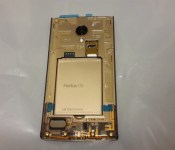
LG Fx0 impressions: Firefox OS is no threat to Android right now

Regardless of what side of the “OS coin” one falls on, there is no question that Google’s Android has taken center stage of the mobile marketplace, with Apple’s iOS taking the role of supporting cast. Backstage we have the two understudies: Microsoft’s Windows Phone and Blackberry’s BB10, and somewhere off set, in a quiet office, lies Mozilla’s Firefox OS, still attending casting calls.
Given the fact that Android has the lead, the idea of new challengers helps to keep Mountain View on its proverbial toes. Interestingly enough, Firefox OS (hereafter to be referred to as “Fx”) isn’t so new, having launched on several carriers last summer in Spain, though given the extremely low-end hardware it was pushing, one might be forgiven should they have missed it entirely.
Meanwhile, here in Japan, a quiet cold war has been brewing among the conservative carriers, NTT docomo and KDDI au, with Softbank taking a much more liberal approach to business given things like its 2013 acquisition of Sprint Nextel. The silent fight taking place is not between each other, but instead, a dependency on Google. Docomo’s canceled Tizen prototype phone was leaked some time ago, and then just a couple of weeks back, au surprised seemingly everyone when it announced the Fx0, a Firefox smartphone that had (relatively) amazing specs, was made by Korean OEM LG, and would be releasing just days later, on Christmas.
Having now spent more than a week with the Fx0, I am here to share my impressions, and to provide a discourse as to the threat (or lack thereof) it stands to Android. Before I begin however, I want to issue a stern warning to anyone who is itching to import one of these devices, as they can indeed be had on eBay: the carrier, KDDI au, will under no circumstances, unlock their phones. This means that if you buy one, unless there is some kind of magic 3rd party solution by the folks at XDA or elsewhere, you will never be able to use it with any foreign SIM. Furthermore, au operates on CDMA networks and thus even if the device was unlocked, barring you have a Verizon SIM, there would be little point. With that said, let us begin:
In for the experience
 When au announced the Fx0, suffice to say there was a bit of a shock to be had. The carrier has long been trying to improve its market position, as it’s usually ranked last place among Japan’s big three carriers. In recent years, it has begun selling products the other two ignored, including the LG G Flex, HTC One (M7), HTC Butterfly, and several Motorola phones. The logo was changed to come across as more mature and refined, and some months back, the carrier opened a gigantic flagship store in the Shinjuku area of Tokyo. Couple this with the carrier’s long history of releasing “concept” devices, and the Fx0 actually seemed surprisingly par-for-the-course in the carrier’s continued attempt to gain relevancy.
The first reaction I had to the press images was mixed: the transparent design looked mildly interesting, but also somewhat tacky and cheap. The fact that au was making a point of advertising the designer Tokujin Yoshioka, someone neither I nor anyone I know had even heard of, seemed like a misplaced marketing mishap. Aside from the fact that it was running an OS that the world doesn’t really care about – especially not Japan – it seemed quite shocking, as did the fact that only a few stores in the country (one being the aforementioned Shinjuku flagship) would carry it initially.
Walking into the store to purchase one, the staff immediately tried to do what could only be described as talking me out of the decision, for they were clearly attempting to explain the “concept” nature of the product and all the warnings that would ensure. Upon indicating I was purchasing it for “something like developer use” they immediately left me alone and the sale was on.

The packaging is nothing short of exquisite. LG’s attention to detail is fantastic, with the package encased inside a plain white box, and with a slide-out inner box of Gold color. The phone comes with a transparent matrix-grid back cover, however a transparent version was also included with it free of charge. In addition, a thick gold bumper is available, but at the price of ¥6588.

Indeed the phone looks very nice in person. The transparent nature seems to mask the fact that the product is a $500 piece of plastic with mid-range specs: it has a 4.7 inch IPS display (1280 X 720), a Snapdragon 400 CPU, a 2370 mAh battery, 16GB of on-board storage and 1.5GB of RAM, an 8.0 megapixel rear camera and 2.1 megapixel front, and support microSDXC up to 64GB. These specs are technically nothing high-tech to be sure, but when one considers the remainder of the Firefox OS platform, they are as killer as killer can get. Relatively, of course.

Firefox OS
To be fair, Firefox OS isn’t horrible. The OS itself is very clean, and in some ways a hybrid of iOS and Android. The problem, though, is that it lacks the refinement that its rivals – Windows Phone 8.1 included – have. While Firefox OS 2.0, the build running on the Fx0, at least has cut and paste, but the overall product is very bare bones and at times, and a bit buggy.
#gallery-1
margin: auto;
#gallery-1 .gallery-item
float: left;
margin-top: 10px;
text-align: center;
width: 33%;
#gallery-1 img
border: 2px solid #cfcfcf;
#gallery-1 .gallery-caption
margin-left: 0;
/* see gallery_shortcode() in wp-includes/media.php */


The pull-down notification shade is very familiar, and in a move that I can only describe as semi-brilliance, Mozilla has decided to move all the quick access buttons (such as Airplane Mode, GPS, Bluetooth, etc) to the bottom part of it, something that makes accessing them so much easier than reaching for the top a la TouchWiz. Of course by doing this, I am eternally trying to swipe up from the bottom of the screen because that is the most logical place for them to appear from. It also features a built-in data usage monitor so you can constantly see how much you’ve been eating up every time you access the notification shade.
The home screen is essentially the same as iOS, with grids of icons (all of them circular in this case) which can be rearranged by long-pressing and sliding, and a bit of Android going with the permanent embedding of a search widget hovering at the top part of the screen.
#gallery-2
margin: auto;
#gallery-2 .gallery-item
float: left;
margin-top: 10px;
text-align: center;
width: 33%;
#gallery-2 img
border: 2px solid #cfcfcf;
#gallery-2 .gallery-caption
margin-left: 0;
/* see gallery_shortcode() in wp-includes/media.php */


Unfortunately, many other elements of Firefox OS 2.0 are problematic:
1. You can not seem to edit any draft e-mails that aren’t locally saved (on the device). This is a jarring issue for a user coming from Android, where the default mail system (Gmail) is completely cloud based.
2. The OS tends to be overly sensitive to touch. Many times, especially when browsing the web, I have gently pushed the screen in an attempt to prevent it from turning off, only to find that it thinks I’m trying to save a picture.
3. Typing is a somewhat cumbersome experience. This is largely a personal issue as I use Swiftkey, and have done so since it was in beta. On the whole, there are just a handful of keyboard replacements to be had, all apparently from independent developers.
4. The ‘Marketplace’ is so barren that it makes Windows Phone look like a venerable encyclopedia of what’s what. It’s almost strange to see the handful of Japanese staples that are present, including messaging app Line, travel info app Navitime, and shopping portal Rakuten, simply because it’s so obvious that their inclusion is clearly the work of KDDI’s pushing for it. Line in particular is an extremely bare-bones experience, with many key features from the Android/iOS version missing including VoIP calls, Timelines, and more. Texting also becomes insanely glitchy with the auto-predictive input enabled and thus I was forced to disable it. Other than these few apps, there is absolutely nothing to speak of, save for dozens upon dozens of “shovelware” the likes of which populated the Android Market in the early days, and which still remain big on Windows Phone and Amazon’s Fire OS.
Video courtesy of Engadget Japan
The Facebook app is also extremely glitchy, and due to the hardware’s lack of back/menu buttons, a minuscule pop-up menu must be activated to do things as simply as navigating one page back.
That is actually a major issue in an of itself: the distinctive lack of buttons. To an extent, every argument about why iOS needs to have additional system buttons (be they on-screen or hardware based) holds true here. The OS has a function similar to that in Windows 8.1 wherein you can swipe in from the left side to change active applications, however I found myself doing it by mistake any number of times out of habit (from using iOS) thinking it will go back to the previous screen or “layer”. In my own personal opinion, Firefox OS really needs to address this issue because even something like the aforementioned Facebook app becomes a chore when you’re constantly having to activate a minuscule tab to pull up the back button, only for it to then disappear again.

The verdict
At the end of the day (or week as it were in this case), I am left contemplating a very critical question in regards to this phone: who is it for exactly? The Fx0 is, as far as I know, the most expensive “concept” product ever pushed out by a carrier here. At just under $500, you would expect the device to offer real substance. To an extent this is true, in that the phone is on-par with similar mid-tier products offered by Android OEMs, LG included. But for the significant number of shortcomings with respect to the OS itself, coupled with the lack of applications, the end result is nothing short of a mystery.
There is no question that the Fx0 is intended to be a developer phone, as the probability of any casual consumer dropping so much money (or commit to a two year contract for that matter) is extremely unlikely. Similarly, even phone enthusiasts might be hard pressed to splurge given that there is such limited functionality, especially app-wise. KDDI plans to sell the Fx0 at carrier stores and retail venues later this month. As Japan has a no return policy on just about everything (especially anything electronic) there is no “test window” grace period as Americans have: you buy it and you are stuck with it.
As it stands now, Firefox OS is in no way a threat to Android, iOS, or even Windows Phone and Blackberry for that matter. Putting aside my personal feeling that it doesn’t do anything better or more efficiently than any existing mobile OS, Firefox OS clearly has a lot of work cut out for it. While the core OS itself is surprisingly decent, the lack of hardware and lack of developer support are absolutely crucial for the success of the platform. This situation will only become more problematic for Mozilla when Samsung finally releases its Tizen mobile OS platform. While it might have similar problems, Samsung at least has the financial resources and name recognition to potentially provide better support for Tizen.

Android Authority this week

New devices, amazing technologies, lots of gadgets, some more useful than others. It was the week of CES, and, as always, it was a wild ride. The star of the show was LG’s curved G Flex 2, but a slew of other devices made their debut in Las Vegas. HTC brought the selfie-focused Desire 826, Lenovo launched several smartphones, ZTE had a nifty Android-powered projector, Sony introduced a new Smartwatch 3 model and a crazy expensive Android Walkman, Nvidia made a big fuss about its latest mobile chip, and, outside of CES, Samsung announced its newest mid-range smartphones. And that’s the biggest news – dozens of smaller companies announced everything from smart flower pots, to motorized belts, to self-driving vehicles.
Welcome to Android Authority this week.
Video roundup
Here’s Jayce’s video take on the events of the week.
Inside AA HQ
One of the reasons we love big shows like CES, MWC, and IFA is because they are some of the few times when AA members can get together. We talk online all the time, but there’s really nothing like meeting IRL for building the team and getting the creative juices flowing. Darcy, Derek, Andrew, Josh, Kev, and Lanh had a blast in Vegas, but they also worked hard to bring you quality coverage. For a big picture view of the week’s events, check out our roundups below, our CES 2015 tag page, and our YouTube channel.
Android Authority is podcasting again! This week’s Friday Debate included the first episode of AA’s new Friday Debate podcast, starring Josh, Kev, Lanh, and Andrew. The guys talked about a bit about themselves, and riffed on all the cool – and not so cool – stuff they saw at CES. We’re going for an audio-only format for now, but we could go video if we figure out how to bring you a great experience. Expect team AA members as regulars, talking about all things Android and more. Guests from throughout the industry will be joining us from time to time. We’re on YT for now, but we’ll get on other podcasting platforms soon. Let us know what topics would you like us to cover in our podcast!
As always, on our Sunday Giveaway, we put up for grabs a cool device. Today, it’s a G Watch R. Good luck!
The stuff you shouldn’t miss
Here are some interesting posts for your Sunday reading:
- Friday Debate: What was the best and worst of CES 2015? (Post and Podcast)
- Opinion: Fresh back from CES, Andrew looks at HTC’s road ahead for 2015
- Tech talk: Rob weighs down on the rumors about Snapdragon 810 overheating issues
- Roundup: CES takeaway: Android Auto
- Roundup: CES takeaway: wearables
- Roundup: CES takeaway: smartphones and tablets
- Opinion: Competition is not always good for customers, argues Simon

Top news of the week
And here are the top news in the Android world this week:
ZTE
- ZTE Grand X Max+ hands-on and first impressions
- ZTE SPro 2 first look and hands on
- ZTE Star 2 hands-on and first impressions
Lenovo
- Lenovo announces the 64-bit P90 and VIBE X2 Pro at CES
- Lenovo launches VIBE Band VB10 fitness band and VIBE Xtension Selfie Flash

Asus
- Asus launches 5.5-in ZenFone 2 and ZenFone Zoom, featuring 3X optical zoom
- Asus Zenfone 2 hands-on and first impressions
- Asus Zenfone Zoom hands-on and first impressions

G Flex 2
- LG G Flex 2 hands-on and first impressions
- LG G Flex 2 officially announced with Snapdragon 810 and improved design
- LG G Flex 2 vs Samsung Galaxy Note Edge quick look
- LG G Flex 2 vs LG G Flex quick look
- The bendy LG G Flex 2 is coming to AT&T, Sprint and US Cellular

Sony
- Sony SmartWatch 3 gets a new stainless steel version, interchangeable bands too/
- Sony’s new 128GB Hi-Res Walkman offers excellent audio, for a price
- Sony SmartWatch 3 steel model hands on
- Sony goes all in with Android TV for their 2015 Bravia Smart TVs
- Hands-on with Sony’s 2015 Bravia TVs with Android TV

Nvidia X1
- Nvidia announces latest mobile processor, the Tegra X1
- Nvidia Tegra X1 powers Nvidia Drive CX car infotainment system
- Tegra X1 – a closer look at Nvidia’s “superchip”

Samsung
- Samsung’s new mid-rangers Galaxy E5 and Galaxy E7 debut today in India
- Samsung Galaxy Grand Max launches in South Korea, Galaxy A7 to debut in Malaysia
HTC
- HTC launches Desire 826 with UltraPixel selfie camera
- HTC Desire 826 vs HTC Desire Eye quick look
- HTC Desire 826 hands-on

Sound off
We always want to hear your feedback. Whether it’s criticism or praise, feel free to tell us what you think about Android Authority’s content, design, and community. Comment here or get in touch with us on our social channels:
Happy Sunday!
Android 5.0 Lollipop for the LG G2 leaked running on Korean version of the device
It’s bigger brother has already had its updated rolled out, but Android 5.0 Lollipop for the LG G2 is just starting to make its first appearances now. In a sneak peek of the latest software update for the LG G2, the video details just some of the improvements that have been made to the UI of […]
The post Android 5.0 Lollipop for the LG G2 leaked running on Korean version of the device appeared first on AndroidSPIN.
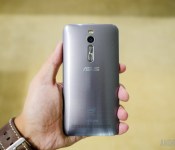
CES takeaway: smartphones and tablets

If you missed our coverage of CES 2015, that’s okay! As the event is coming to a close, we thought we’d take this time to go through the week’s top stories and roundup the biggest smartphone and tablet announcements we saw at the trade show. There’s a lot to recap here, so let’s jump right in.
Smartphones
LG’s G Flex 2
LG’s early announcement of the G Flex 2 was arguably the biggest announcement of CES 2015. LG’s first G Flex brought a ton of new features to the smartphone world, but it fell short in many critical areas. With the G Flex 2, it seems as though LG stepped up and really made this a device worth buying. It’s 5.5-inch 1080p curved screen, rear-facing 13MP camera and even the super attractive Flamenco Red color make it an overall killer device. What’s more, the G Flex 2 is the first smartphone on the market to tote the Snapdragon 810 processor.
Last year’s G Flex was really difficult to recommend to almost anyone, but this year’s iteration will definitely be one of the most interesting phones of the year, especially for those looking for something a bit more unique when it comes to form factor.
Read more:
- LG G Flex 2 hands-on and first impressions
- LG G Flex 2 vs. Samsung Galaxy Note Edge quick look
- LG G Flex 2 vs. LG G Flex quick look
The superphone/supercamera hybrid: Panasonic’s Lumix CM1
Panasonic was showing off their Lumix DMC-CM1 smartphone at CES, but it was announced at the tail end of last year. That didn’t seem to bother anyone though, because this camera smartphone can really pull its own weight. The phone itself has a 4.7-inch 1080p display, a Snapdragon 800 processor backed by 2GB of RAM, and it’s running Android 4.4 KitKat. But the phone isn’t the star of the show here, it’s the camera. Panasonic managed to throw on a huge 1-inch sensor, an f2.8 Leica lens and a 20MP sensor that truly makes for an amazing camera experience. To top it all off, there’s a smartphone attached to it? Sign us up.
When the device was originally announced, Panasonic made it very clear that this device was meant solely for the European market. Turns out it’s coming to the US on AT&T and T-Mobile to the tune of roughly $1,000 unlocked. It’s expensive, but we think it’ll be worth it for any photography lovers out there.
Read more:
- Hands-on with the Panasonic Lumix CM1
- Panasonic’s Lumix CM1 phone/camera hybrid is coming to the United States
The multimedia powerhouse: Saygus V2
The Saygus V2 (V squared) is probably one of the most talked about handsets to hit CES this year. It’s marketed as a true multimedia powerhouse that is perfect for anyone who values tons of storage and great speaker quality. The most notable feature of the phone is definitely that it can house up to 320GB of storage. No, the phone doesn’t have a massive hard drive. There’s 64GB of on-board storage, and two microSD card slots (maximum of 128GB each), equalling 320GB of storage. What’s more, the device features a removable 3100mAh battery, front-facing Harman Kardon speakers, a 5-inch 1080p screen and a Snapdragon 801 processor backed by 3GB of RAM.
This really is the phone for you if you’re into one of the best multimedia experiences you can get on a smartphone. We’ll have more to say about this device in our full review, but for now, we’re really excited about this device. Of course the fact that it is from an unknown handset maker might be a turn off for many folks, and it’s worth mentioning that no exact pricing has been announced just yet, though supposedly it will hit the hands of consumers in the next few months.
Read more:
- Hands-on with the feature-filled Saygus V2
- The powerful Saygus V2 supports up to 256GB of external storage
Asus Zenfone 2: The first smartphone with 4GB of RAM
Moving along, Asus also had a pretty big keynote at CES with their announcement of two high-end devices, one of which being the Zenfone 2. This device is such a hit thanks to its premium build quality, customizable software and unbeatable price point. There are three different variations of the Zenfone 2, all of which are at different price points. The “middle” device (the one featured in the above video) features a 5.5-inch 1080p screen and 2GB of RAM. The lesser of the three versions has the same screen size, but with a resolution of 720p and with 2GB of RAM. This device will cost less than the other two. The most powerful of the bunch, while no pricing information is announced yet, features a 1080p display and a whopping 4GB of RAM.
The three devices will be available beginning in March starting at $199 unlocked. There are a lot more specifications to cover with these three iterations, so follow the links below for more information.
Read more:
- Asus Zenfone 2 hands-on and first impressions
- Asus launches 5.5-inch Zenfone 2 and Zenfone Zoom, featuring 3X optical zoom
Asus Zenfone Zoom
Asus also unveiled the Zenfone Zoom alongside the Zenfone 2. As the name suggests, the Zoom is a camera-centric smartphone with a 13MP camera and 3X optical zoom, optical image stabilization and a laser auto focus system. While the device is quite bulky, it’s not as bad as other camera-focused smartphones out there. Overall, the 5.5-inch 1080p display and the sturdy build quality should suffice for anyone looking for a great camera experience on their mobile phone.
The Zenfone Zoom will be available in Q2 of this year starting at $399.
Read more:
HTC’s budget-friendly Desire 826
The Desire 826 is HTC’s next iteration in the Desire 820 line. Sure, the HTC One M8 and M7 were terrific smartphones, but HTC has really put a ton of effort into their mid-rangers lately. Many Desire phones are even considered to be towards the high end of the mid-tier, and the 826 is no exception. Much like the rest of the Desire series, the 826 is either glossy or matte plastic (depending on the color combination), and two SIM slots, a vibrant 5.5-inch 1080p display, and a 64-bit Snapdragon 615 processor. The big story here is HTC’s decision to move the cameras around a bit. On the 826, there’s a 13MP rear-facing camera and a 4MP UltraPixel shooter, instead of the other way around like we see on a few other Desire devices. This seems to be a really nice phone so far, and we’re looking forward to putting it through its paces in our full review.
The Desire 826 will be available later this year for China and other Asian markets, with the potential to roll out to other markets.
Read more:
- HTC Desire 826 hands-on and first impressions
- HTC Desire 826 vs. HTC Desire EYE quick look
- HTC launches Desire 826 with UltraPixel selfie camera
ZTE Nubia Z7
Last but not least, we have the ZTE Nubia Z7. Shown off alongside the Grand X Max+ and the Star 2 at CES, this is the most high-end device out of the three. It has a 5.5-inch QHD screen, a Snapdragon 801 processor, 3GB of RAM, a 3000mAh battery and 32GB of on-board storage. To be honest, there are very few compromises when it comes to this device. Unfortunately, it’s set right now as a China-only release, and there’s no word yet of the Z7 making its way out of Asia.
Read more:
The devices listed above aren’t the only smartphones unveiled at CES this year. If you’d like our full coverage on other recently-announced phones, check out the list below.
- Lenovo announces 64-bit P90 and VIBE X2 Pro at CES
- ZTE Grand Max+ hands-on and first impressions
- Interview with Yota Devices at CES 2015
- Samsung’s Galaxy E5 and E7 debut in India today
- ZTE Star 2 hands-on and first impressions
- BLU has just announced seven low-cost Android handsets
- Kodak IM5 officially announced
- HTC desire 320 headed to the UK and Germany
- Acer announces 4G-capable Liquid Z410 smartphone
- Archos unveils budget-friendly 50 Diamond smartphone
- Alcatel Onetouch announces Pixi 3 series smartphones
Tablets
Fuhu’s television-sized kids “tablets”

Fuhu has released big tablets in the past, but none even close to this size. But at CES 2015, Fuhu announced some products to really expand their tablet lineup – 32, 43, 55 and 65-inch variants of their Big Tabs.
Fuhu is really pushing the “Internet of Things” movement, and would like their new Big Tab XL models to be the centerpiece of your home entertainment. There’s no mention of which version of Android these tablets are running, but the press release does say that they run “the latest Android software” and Fuhu’s groundbreaking Blue Morpho OS. All four of the new “tablets” will also double as televisions, which justifies the purchase a bit more. The two smallest models sport 1080p screens, 2GB of RAM and run on a NVIDIA Tegra K1 processor. The two biggest models both have 4K resolutions, 4GB of RAM and use NVIDIA’s new Tegra X1 chip. The tablets will go on sale sometime this year and will range in price from $699.99-$3,999.99.
Read more:
Arbor’s rugged Gladius 10 tablet

Arbor isn’t usually the name we think of when talking about Android devices, but the company has just announced the Gladius 10 rugged tablet. It’s meant specifically for warehousing, transportation, medical, and mobile point of sale applications.
The Gladius 10 features a 10.1-inch TFT LCD display with 1280×800 resolution with a Corning Gorilla Glass 2 coating. It also brings a MediaTek MTK8392 Octa-core Cortex A7 CPU, a Quad-core ARM Mali 3D GPU, 2GB of RAM, optional barcode scanner, a 13MP rear-facing camera, 2MP front-facing camera and a dual-SIM card slot. On top of these already decent specifications, the tablet is also rated with IP65 protection, and meets the U.S. Military’s 810G standard for drops and other hazards. There’s no mention of the battery capacity in the release, but Arbor is quoting the tablet to have up to 10 hours of battery life.
The Gladius 10 seems like a decent tablet so far, until we get to the price. The tablet will go on sale in May of 2015 for $1,030, and can be customized to the user’s preferences.
Read more:
Archos 80b Helium tablet

Archos recently announced their new 80b Helium tablet, a 4G LTE-capable budget tablet for less than $150. Details are pretty scarce when it comes to this one, but we’ll definitely keep an eye out for more details. So far, though, a 4G-capable tablet for under $150 is bound to be a big seller.
Read more:
As much as people might want to disagree, I thought this year’s CES offered up a decent amount when it came to smartphones. We haven’t seen anything truly groundbreaking with smartphones in the past few days, but that surely doesn’t mean it was a bad CES. There are a few devices that are getting me excited, though.
First of all, I really like what LG is doing with the G Flex 2. It’s smaller, prettier and has specs that might give some other flagships a run for its money. LG hasn’t really had the reputation to skimp on their devices’ internals, and this year is no exception. It’s great to see them focusing hard on a smartphone that isn’t their “flagship,” and I really think more companies need to adopt that trend.

Other than the G Flex 2, of course I’m going to love the Lumix CM1… and I think you’d be crazy not to. It’s a relatively high-end device on it’s own, only with a super powerful camera on its back. Speaking of devices with cameras strapped to the back, the Zenfone Zoom isn’t half bad either. Remember when the Galaxy S4 Zoom launched? It seems like Samsung didn’t even try to make the phone compact in the slightest. We’ve absolutely come a long way since then… the Lumix CM1 and Zenfone Zoom are actually viable options for folks who want to take photography a little bit more seriously.
One device that stuck out in particular was the 65-inch Fuhu Big Tab. It’s an interesting concept, and makes me feel a little bit more like I’m living in the future.
CES 2015 wasn’t a year that pushed any boundaries with smartphones or tablets, but it was a trade show that needed to happen.
A tablet that doubles as a television… with a 4K display… and NVIDIA’s new Tegra X1 processor? Awesome. What’s not as awesome is the price, though. When the devices launch, prices will likely hover around the $700-$4,000 range. Prices aside though, while there likely isn’t a huge market for devices like this, the concept is still very intriguing.
CES 2015 wasn’t a year that pushed any boundaries with smartphones or tablets, but it was a trade show that needed to happen. A few companies bumped up the specs of their devices, sure, but we all knew these progressions would come in time. While 4GB of RAM, 320GB of storage, or even QHD displays on more affordable handsets are great, we all knew these were going to happen eventually. So, I’m not too upset or excited about this year’s CES, it has just made me more excited for what’s to come in 2015.
What were your most favorite/least favorite smartphones and tablets from the trade show this year? Did you think this was a particularly good or bad year for mobile devices? Let us know your thoughts in the comments!
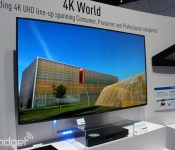
4K movies are coming to Blu-ray discs and hard drives

Sure, there are plenty of Ultra HD televisions floating around the Las Vegas Convention Center, but how will you find anything suitably super high-res to play on them? Netflix, Amazon and a few others have started 4K internet delivery while DirecTV and Comcast also have limited approaches, but sometimes you prefer media you can hold onto. Physical media fans have help on the way in two forms, but the bad news is neither one is ready to launch right now. The Blu-ray Disc Association has confirmed the name of its 4K format (Ultra HD Blu-ray) and many of its capabilities, while the Secure Content Storage Association has its own demo for Ultra HD movies you can download and transfer (almost) at will, with backing from Fox, Warner Bros., Samsung and others.

Panasonic is showing off a prototype Ultra HD Blu-ray player in its booth here, and shockingly — it’s a Blu-ray player. The demo unit has a hole cut in the top, but we didn’t spot any extra pixels leaking out anywhere. According to statements from various board members, licensing is on track to happen this summer and we could see discs by the end of this year. It’s expected that Ultra HD Blu-ray will upgrade the format to handle 33GB layers (up from the 25GB per layer of current discs) and discs that hold as much 100GB of data. You’ll need a new player to read the new discs, but the new players will be backwards compatible with existing Blu-ray movies. In our discussions with studio execs, we’ve heard that most movies encoded with HEVC (h.265, the new compression format for 4K video) should fit on dual-layer discs comfortably.

There’s room for 60fps video, HDR / Dolby Vision support, at least 10-bit color gradation and wide color gamut (read: better and more colors). Panasonic’s prototype player spec says it can push video at up to 100Mbps — far higher than the 15Mbps profiles we saw demonstrated by Netflix last year. Of course, there’s a lot of work to be done before the spec is final, and we still haven’t heard much about improvements to audio.
But what about those who have moved on to a discless lifestyle, or are just interested in a version of digital copies that can be carried around? The Secure Content Storage Association has stepped up and, like the BDA, says finalization of its spec is “coming soon.” We got a preview of what it’s working on this week, when Samsung announced that its new TVs would support 4K downloads from M-Go, by using the SCSA’s standards. We got a quick demo of what the consortium has planned and it most reminds us of what we’ve seen from internet stores for videogames like Steam, Xbox and PlayStation.

We’ll still need to wait and see exactly how Hollywood studios implement the DRM, but it’s set up so users can download copies of movies, store and watch them without hassle. There’s an ability to copy, move or share the stored files, and access various profiles for different devices like TVs, phones or tablets. In mocked-up player, users had the option make a licensed copy, registered to them and playable on any device, or an unlicensed copy. That copy of the movie can be shared, but if someone else wanted to play it they’d need to buy it from a store in order to unlock it for viewing.
Also built-in is support for finding any compatible files across a network, so if the movie is stored on your NAS, a PC, a phone or tethered hard drive it will pop up in the menu for playback. For better and/or worse, it all struck as as a sort of movie studio-designed variant of XBMC (oops, Kodi) or Plex.

The SCSA is also talking about quality, with support for Ultra HD, HDR and potentially things like high frame rate video. It’s also considering that customers might be able to upgrade their copies to a new version, so if for example a remastered HDR version of a movie comes out, it will be in your library. Our remaining questions cover things like studio / store support — you can count in the usual names from Ultraviolet plus some newcomers, but we’ll have to wait and see if Disney jumps in or goes its own way again. It appears that finding compatible devices won’t be difficult, and Qualcomm is on board to make sure its chips (probably inside your phones / tablets already) are compatible.
Formerly known as Project Phenix the SCSA is several years in the making, we’ll see if that long gestation was enough to strike a balance between the desires of studios and the customers it hopes will want to pay for downloadable movies.
Filed under: Home Entertainment, HD, Samsung, Sony, LG
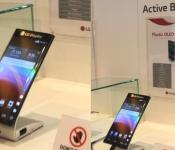
LG shows off “Active Bending” Dual Edge display

Just like its rival Samsung, LG has an interest in smartphones with unusual displays. We’ve already known both companies have invested in curved displays, and now it appears they are pursuing dual edge technology as well.
While the LG G Flex 2 unveiled at CES has a curved display instead, LG has developed “Dual Edge” technology. It is likely it will be used in their next flagship.
Android Community is somewhat sure that LG showcased the new display in a private show. In the beginning, this technology was known as “Active Bending.” It’s possible other manufacturers also have shown an interest in this.
The site states that LG is planning to use “Active Bending,” but it does not know how the company is going to use it.
The dual edged, six-inch display unit LG displayed, with its low 720p resolution display, was most likely just a demo unit. However, it is likely LG will feature the technology in the LG G4, which will have a 1080p or 2K resolution.
Source: Android Community
FEATURED POSTS


The post LG shows off “Active Bending” Dual Edge display appeared first on AndroidGuys.
Plot twist: That LG-made Audi smartwatch is actually running webOS
Yesterday, we were enthralled by the appearance of a LG-made Audi smartwatch that was shown during an Audi presentation, and it was suggested that the watch ran a customized version of Android Wear. As it turns out, that information was wrong and Android Central has confirmed today that the device actually runs webOS, an operating system […]
The post Plot twist: That LG-made Audi smartwatch is actually running webOS appeared first on AndroidSPIN.
iHeartRadio to now support upcoming Google Cast for audio, Sony PlayStation
The music streaming service, iHeartRadio, has announced a host of new partnerships at CES 2015 that will enable it to bring its services to Sony’s PlayStation 3 and PlayStation 4 consoles among other devices. The other high-profile brands that iHeartRadio will be joining hands with include TiVo, DISH, Google and LG etc.
It will become one of the first apps that are ready for Google’s new Cast for audio system, launching next month. Google Cast for Audio uses a similar technology to that of Chromecast to remotely connect with sound bars, speakers and A/V receivers. Just like Chromecast, users can listen to music on a Google Cast Ready speaker by tapping the cast button on the iHeartRadio app.
iHeartRadio will find its way to in-home entertainment domain by partnering with DISH and TiVo. The service will expand to in-dashboard multimedia systems by BlackBerry’s QNX subsidiary and Clarion.
“These multiple integrations are setting the tone for 2015, which will be another banner year where iHeartRadio focuses on a consumers-first approach – from launching its app on all meaningful devices to continuing to leverage its live radio and entertainment events to provide the best music experience for its listeners,” said Darren Davis, President of iHeartRadio and iHeartMedia Networks.
The all-in-one streaming music and live radio service, which already has 60 million registered users, will come preloaded with at least a dozen devices to be launched by its partners.
These latest integrations add to iHeartRadio’s growing list of device platforms across web, mobile phones, tablets, automotive, smart TVs, gaming consoles and more.
Via: CNET
The post iHeartRadio to now support upcoming Google Cast for audio, Sony PlayStation appeared first on AndroidGuys.

Turns out the LG smartwatch made for Audi is running webOS

The saga of the coolest smartwatch of CES 2015 continues. Yesterday, Ulrich Hackenberg of Audi used an LG smartwatch to summon the self driving Prologue to the stage during a press conference. It was first thought that it could be the G Watch R 2 since it’s round. Then later, it was revealed that it was made specifically for Audi, but the assumption was that it was running Android Wear. Not the case.
Android Central was able to get up close and personal with it and found out that its running webOS. I guess this isn’t surprising since the word on the street is that LG plans on coming out with a smartwatch running webOS. Whether it will look like this watch is a great question, but we can only hope that LG will offer an Android Wear watch that looks similar to it.
source; Android Central
Come comment on this article: Turns out the LG smartwatch made for Audi is running webOS
LG’s new mystery smartwatch actually runs webOS

CES 2015 has been an insane ride, but the craziest news out of the show wasn't even an announcement: the LG smartwatch that Audi was using to control their autonomous car runs webOS. Yes. webOS. On a watch. In a week that brought us the news that TCL is resurrecting the Palm brand and the latest webOS TV's from LG, we also get webOS expanding to a new platform: the wrist.
Yes, at CES 2015, we're writing about Kodak, Palm, and webOS. It's like a tech episode of the Twilight Zone. The reveal of the smartwatch came as a surprise, with an Audi executive revealing the watch as being from LG and using it briefly in his demo, but not saying much more about it. The assumption was that it was running Android Wear, but our friends at Android Central decided to dig in to the watch and found that it was in fact not Android Wear.
Google's imposed strict restrictions on the customizations that can be made to Android Wear, so the more we looked at it the more curious we became. It was clearly not Android Wear, and then we ended up deep in the settings and saw something amazing: webOS Version Open webOS.
It. Runs. webOS.
LG's teased webOS smartwatches before, but never made a public statement on where they would next expand webOS beyond their TVs.
Most interesting is that the watch has a number of LG's custom apps built in, including apps for calendar, dialer, messages, email, and more. It even sports NFC and a cellular radio. Yes. This thing is a ready-to-go webOS portable.
We hate to be speculative (that's a lie, we love it), but everything here indicates that LG is working hard to make a device that's thoroughly capable of operating independently, and has the makings of a proper modern webOS smartphone.
In a world where Samsung's ported their Tizen OS from smartwatches to smart televisions, LG is bringing their webOS smart TV OS to portable devices. It's a mad mad world, and we're excited to find out even more about what LG has in store for webOS.
 AIVAnet