


[GUIDE] How to set up Smart Lock on the LG G3
Android Lollipop has brought in a whole raft of neat new features, one of which I find extremely useful on a day-to-day basis: Smart Lock. Smart Lock allows you to unlock your device when an approved (or “trusted”) Bluetooth device or NFC tag is near, a combo that is particularly suited to smartwatch and smartphone […]
The post [GUIDE] How to set up Smart Lock on the LG G3 appeared first on AndroidSPIN.
Minor update to the LG G3 finally brings Android Lollipop on-screen soft keys
Although the LG G3 has to be counted as one of the luckiest devices around considering it has had Android Lollipop for a few months already, my primary gripe with it (possibly because I am somewhat obsessive and compulsive) is that the on-screen soft keys are still the old, pre-Lollipop style with no option to update […]
The post Minor update to the LG G3 finally brings Android Lollipop on-screen soft keys appeared first on AndroidSPIN.

Deal Alert: Best Buy offering discounts for Moto 360, Jawbone UP and more for two days only

Best Buy is currently offering a ton of great tech deals on various different smartphones, accessories and even computers. The 2-day sale is going on now and ends Saturday, February 7th (tomorrow). There are dozens of great deals to be had, so let’s jump right in.
First and foremost, you can grab either a Black or Light Gray Moto 360 with a leather band for only $219.99, which is $30 off the list price. They’re also discounting the slimmer 18mm Moto 360 with a Champagne metal band by $50, bringing the price down to $279.99. Considering both Motorola and Google rarely discount these watches, this is a great time to pick one up if you’re interested.
Take a look below for the rest of the great deals:
- Moto 360 with leather band (Black or Light Gray) – $219.99 (normally $249.99)
- Moto 360 with 18mm metal band (Champagne) – $279.99 (normally $329.99)
- Jawbone UP – $29.99 (normally $79.99)
- Beats by Dre Mixr On-Ear Headphones (Neon Green or Neon Yellow) – $129.99 (normally $249.99)
- Beats by Dre urBeats Earbud Headphones (Silver or Pink) – $79.99 (normally $99.99)
- LG Tone+ Bluetooth Headset – $54.99 (normally $69.99)
- Samsung Galaxy S4 (with a 2-year contract) – $1 and a $25 Best Buy gift card
- LG G3 (with a 2-year Sprint contract) – $1
Best Buy is also offering discounts on washers, dryers, monitors, cameras, flash drives and a ton of others. As an added bonus, most of these items qualify for free shipping when you order online. If you’re interested in any of these deals, head to the link below to see the full list.
Did anything on this list catch your eye? Let us know if you pick anything up!
Best Buy 2-Day Sale (Friday and Saturday only)

Android 5.0 Lollipop soon expected for multiple Sprint devices
This is some great news for Sprint customers out there. A few of HTC, LG, and Samsung’s most popular devices are receiving updates for Android 5.0 Lollipop on the network.
The update for the HTC One M7 was confirmed via Twitter by Mo, the Vice President of Product Management at HTC. Its OTA update started today. He notes that Lollipop is coming to other devices as well.
Android Central said that Lollipop is also coming to the HTC One M8 and One M8 Harmon Kardon edition on February 13th and to the LG G3 on February 16th. Although, this could be subject to change.

You can also see in the image that the Galaxy S5 should have also started receiving the update earlier today. That appears to be true based on confirmation directly from Samsung.
Congrats to all the Sprint owners out there. Hopefully, the other characters will quickly follow with updates for these and other devices.
(function() var script = document.createElement(‘script’);script.src = ‘https://stacksocial.com/widget.js?publisher=androidguys&type=editorial_post_widget_preferences’;script.async = true;var entry = document.getElementsByTagName(‘script’)[0];entry.parentNode.insertBefore(script, entry);)();
http://www.androidguys.com/pubgalaxy/728×90.html
The post Android 5.0 Lollipop soon expected for multiple Sprint devices appeared first on AndroidGuys.

Leaked Sprint doc reveals One M8 and G3 Lollipop updates coming soon

When it comes to market penetration, Lollipop still has a long ways to go before it reaches a meaningful number of Android users. After all, the update is currently sitting on just 1.6% of Android devices. Thankfully, OEMs seem to be much more aggressive with Lollipop than previous Android updates, and this week alone we’ve seen Lollipop rollout to the Verizon Galaxy S5, the Sprint HTC One M7 and the Sprint Galaxy S5. Now it seems that Sprint is rolling out at least two more Lollipop updates this month, at least if a leaked release schedule proves correct.
The leaked schedule comes from Android Central, and indicates that the One M8 and the M8 Harman Kardon Special Edition will see the update on February 13th, with the LG G3 following on the 16th. It goes without saying that the dates listed are tentative and could certainly be subject to change, but the bigger takeway is that most major OEMs are holding true to their promises to bring Android 5.0 Lollipop to their flagship devices in the earlier part of 2015.
What do you think of the way the Lollipop update has been handled by carriers? What do you think of Lollipop in general? Let us know in the comments.
Future of LG G4 and stylus less clear after latest leak

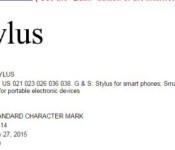
As we look down the road in 2015 for a successor to LG’s LG G3 smartphone, one of the rumors that surfaced was that LG may equip their flagship device with a stylus to be able to compete a little more directly against the Samsung Galaxy Note 4. That rumor was fueled by information about a trademark filing for the “G Pen” name. A new trademark filing for “G4 Stylus” could be a sign that LG is actually planning to equip a mid-range device with a stylus instead of their flagship device.
LG did not get much press here in the U.S. for their stylus equipped smartphone as it launched in foreign markets. Nevertheless, the company is present in the stylus-equipped smartphone space with the LG G3 Stylus which was a 5.5-inch device carrying a 1.3GHz processor, only 960 x 540 resolution on the screen, and 1GB of RAM. Despite sharing the G3 moniker it its name, the G3 Stylus was definitely not a high-end device with those specs.
Along with the new trademark application, a leaked document appears to show an entry for a stylus equipped pen that is somehow related to the LG G4 even if only in name. In the screen capture, a listing appears for an LG device with model number H810 and project number P1 which is believed to be the AT&T variant of the G4. The same listing shows a project with codename “P1s” which could signify the addition of a stylus to project P1. However, the resolution for the P1s is only 1280 x 720 and the model number is listed in a different series, H63x. Except for the P1 part being the same, this seems to be more consistent with the LG G3 and LG G3 Stylus model where the stylus equipped smartphone was a mid-range unit.
The question now is whether the previous trademark entry for the G Pen was in reference to new equipment for an LG flagship device or is LG just trying to protect their investment in a line of stylus-equipped smartphones that fall in the middle tier in terms of specs.

source: MyLG
Come comment on this article: Future of LG G4 and stylus less clear after latest leak
Deal: get a $100 gift card when buying an AT&T LG G3 on Amazon

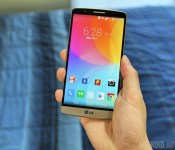
Looking for a great Android phone on AT&T? It doesn’t get much better than the LG G3 available with a free $100 gift card on Amazon right now.
If you opt for a 2-year agreement or a Next installment plan, you can have the AT&T LG G3 (white or black) for free, but the gift card offer still applies. In this case, AT&T and Amazon are effectively paying you $100 to pick up the LG G3, monthly commitments not considered. The deal is good for new contracts, upgrades, and new lines.
If you prefer to pay upfront, you can get AT&T LG G3 for $478, but considering the gift card, the effective price of the device goes down to a very appealing $378.
Get the AT&T LG G3 on Amazon with a free $100 gift card
In both cases, the device will be locked on AT&T’s network. Once you buy the LG G3, Amazon will automatically apply the $100 gift card to your account. The promo is valid until February 14, at midnight.
The LG G3 is one of the finest Android flagships of last year, and it’s still holding strong, thanks to a very compact design, large Quad HD display, and fast focusing camera. Read more about the LG G3 in our review.

LG’s Optimus UI vs. Vanilla Android
When I received my first Android smartphone about six years ago, I remember how much I desired stock Android on my HTC Droid Eris. I badly wanted to root my device, but as a young teenager at the time, I thought it would have been better to not risk bricking a phone I wasn’t paying for.
Fast forward to today, and now I’m on my fourth phone, an LG G3. If there is one thing I got the device for, it was the RAM. My last phone, with its 1GB of memory, just got so painfully slow that I couldn’t stand using it after it had been powered on for a few hours. It couldn’t even playback music without it hiccuping constantly.
Of course, this phone could end up the same. I’ve barely owned it for a month, which is not nearly enough time to measure its stamina.
Anyway, I knew right away that I might be dealing with a lackluster skin in the Optimus UI when I bought the G3. I recalled reviews of LG’s previous devices circa 2011 to 2013 where its skin was criticized time after time. Regardless, I just wanted the power the device offered, and at $30 on Verizon at the time, I felt it was calling my name. I’ll just put a launcher on it, I thought.
While it is true that I did put a launcher on it (Google’s Now launcher to be exact, which makes the home screen like the current version of Android), I’d be lying if I said LG’s skin didn’t make improvements on this pseudo-UI of Lollipop and that I didn’t enjoy the interface as a whole.
Before I go on, I should be clear that that my statements of stock Android are based partially on the Google Now Launcher since my phone still has KitKat. Likewise, my descriptions of Optimus UI are based on Android 4.4.
With the Now Launcher, a Google Search widget is located at the top of the screen. For better or worse, it cannot be moved around or removed from the display. I rarely use it, but I do like its minimalist appearance.
Speaking of minimalism, the Now Launcher starts the user off with two home screens, one of which is reserved for Google Now. There’s nothing inherently wrong with this, although I find it surprising that I can’t add a blank home screen manually. In order to add another, there has to be at least one app or widget on it, and if you remove them, the screen deletes itself. I don’t use many displays (Typically, just three), but this seemed a little cramped to me especially with its use of non-re-sizable, large icons.

By the way, LG allows for easy customization of icons by long pressing them until a smaller icon of a paintbrush in the top right appears and tapping them once more in order to enter a menu to resize it or change its appearance. Some will immediately like this idea because while LG’s icons for its apps aren’t ugly in my eyes, the company has used some rather bland colors like for messaging. I can easily see people preferring Material Design’s vivid color palette.

Next, there is the app drawer, which has apps sorted in alphabetical order on an opaque, white background. At first, I found this a bit jarring coming from LG’s UI since that allows the user to group apps into folders and to access widgets. The only way to do that with the Now Launcher (and probably with a stock ROM I’m assuming) is to long press an empty area of the home screen and select the widgets option above the home button. Of course, that becomes more difficult with a screen filled with apps.


Based on what I’ve seen on notifications in Lollipop, I’d say Google’s vision is superior. On the G3’s lock screen, I can see indicators for missed phone calls and text messages but not for emails. In addition, I can’t see a preview of those messages as I could if I was using vanilla Android (Google gives an option to hide those previews as well). Filtering notifications for just the important ones through Priority mode also sounds like a plus to me as is turning off an app’s notifications entirely.

Nonetheless, I still do enjoy LG’s use of the panel. At the top, I can activate toggles for Wi-Fi, Data, Bluetooth, and so on (which can easily be moved around), change the screen brightness (and even turn on or off auto brightness), and control the volume.
I do see how this would be annoying for someone who receives a lot of notifications because almost half of the screen is taken up by these toggles. My Gmail and just one other notification can be seen before I have to start scrolling.

Honestly, I’m not sure about the practicality of the Recents carousel in Lollipop. I think it could be easier to accidentally swipe away or activate apps in this view, but I’m going to reserve judgement until I actually get Lollipop on my G3. Until then, I have no problem using the cards system of the recent apps tray.

LG has added a nice addition of being able to activate dual window mode, which is similar to Samsung’s Multi Window, from this tray. Admittedly, I haven’t used it much, but it was useful for when I wanted to keep listening to a YouTube video while responding to a message.
Both UIs feature battery saving modes. For Lollipop, a device’s battery life can be extended for up to 90 minutes. The estimated time left on the battery can be found in the battery settings, and the OS immediately lets you know when it will be fully charged once it is plugged in.
Optimus UI’s battery saver works starting at 30% of a full charge once it is turned on, but I question why power usage of the phone cannot be scaled back as soon as it comes off the charger. Again, I have not used Lollipop personally yet, but I assume its interface does allow this.
Moving on to security–This might be more of KitKat vs. Lollipop at this point–, Optimus UI gives the options to lock files in Gallery, encrypt the internal storage, encrypt the SD card storage, set up a SIM card lock, install apps from unknown sources, install credential certificates, etc.
I expect Lollipop to also have most of these options especially for encryption, installation, and credential certificates. Additionally, to not be outdone, Google promises that all new devices will be shipped with encryption already turned on. It hopes to increase protection against malware and other vulnerabilities by using SELenforcing for all apps. Lastly, a phone or tablet can be paired to a device the user trusts such as a smartwatch or a car.
Device Sharing is similar as well, except Lollipop can set up multiple users for a single device on top of guest mode.
Android 5.0 supports USB microphones, speakers, amplifiers, mixers, etc., OpenGL ES 3.1 for supposedly desktop- and console-like graphics performance, raw photographic formats like YUV and Bayer RAW, HVEC for UHD 4K video playback, and improved HLS support for streaming.
While KitKat and Optimus UI support 64-bit SoCs and native apps just like Lollipop, Lollipop is built on the ART runtime. This gives the UI four times the performance of stock KitKat and more compact background apps and services, leading to improved memory usage. This is not everything, of course. You can read more these features at the official Android page for Lollipop.
To wrap this up, LG has shown me that with its Optimus UI on the G3 that it has been listening to consumer feedback and has made an interface that is enjoyable for me in many ways. Sure, I may never use the IR remote control or Smart Bulletin, but I just don’t mind because the overall package is that great. Meanwhile, Google has demonstarted that while it has a vision of the OS that it wants the various manufacturers to follow, it has updated it with features that were used in the likes of Samsung and Motorola’s phones.
Ultimately, as someone who has not yet used Lollipop, I can’t make a conclusion about which is better. Although, I will say this. Based on what experiences I’ve had with Android and various UI up until this point, I don’t feel that desire to root and install a ROM of Lollipop. I was quite satisfied that my last device received KitKat a month or two before I retired it and had 4.2 Jelly Bean before that. Perhaps, because KitKat did not do much if anything for my phone that I began to unconsciously think of Android updates as not as significant performance-wise. Hoping for an update for the latest version also has fatigued me for at least five years now.
I’ve been satisfied for well over a year to have a relatively modern version of Android that can fit my needs of occasional browsing and reading, music streaming and native playback, and downloading any app for the Google Play Store. Yes, I’m still excited Lollipop is coming quite soon to my device, but I’ll wait as long as it takes.
FEATURED POSTS


The post LG’s Optimus UI vs. Vanilla Android appeared first on AndroidGuys.
US variants of the LG G3 to see Android 5.0 Lollipop updates ‘soon’
The LG USA Mobile Twitter account pushed out a tweet earlier this morning with the image you see above. It is obviously in reference to the LG G3 and a Android 5.0 Lollipop update. Being that the tweet came from the LG USA account, we surmise that this means the US variants are close to seeing the […]
The post US variants of the LG G3 to see Android 5.0 Lollipop updates ‘soon’ appeared first on AndroidSPIN.
LG says Android 5.0 Lollipop coming soon to G3
LG G3 users get ready for because your time is almost here; Android 5.0 Lollipop is coming to your device very soon.
The company took to Twitter to greet LG G3 owners with the news that the update will be “coming soon” to their device.
Introducing Lollipop: a sweet treat for your #LGG3. pic.twitter.com/yg0qPqgzjM
— LG USA Mobile (@LGUSAMobile) January 23, 2015
Unfortunately, it doesn’t seem like any sort of timeframe was offered, but soon has to mean soon, right?
The post LG says Android 5.0 Lollipop coming soon to G3 appeared first on AndroidGuys.
 AIVAnet