


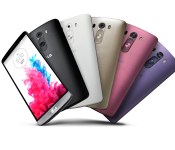
LG G3 global rollout starting June 27

LG G3 was announced about a month ago and until now it has been available for purchase in South Korea only. It has exceeded expectations on that market by selling 100,000 units in just 5 days and it even outsold Samsung’s Galaxy S5 in that time frame. LG is ready to launch their flagship globally and see how it fares on other markets.
They will launch G3 in waves. Hong Kong, Indonesia, Singapore, and the Philippines will get it first, starting June 27, exactly one month after it was announced. Other Asian markets will get it soon after. Europe and the Middle East among other regions will get it in July. Expected price for Europe is €615/£500.
LG G3 in its European and Asian variants will come with Qi wireless charging capabilities, you can opt for a proprietary wireless charger if you wish. No word if other regions will get the same treatment.
Will you be getting the G3?
Source: LG Newsroom
The post LG G3 global rollout starting June 27 appeared first on AndroidGuys.
Global launch of the LG G3 to start June 27th in Asia, Europe and Middle East
The LG G3 was announced to much fanfare just over one month ago, however its presence has so far only been felt in LG‘s native country of South Korea. Despite this, The LG G3 managed to post some very impressive sales figures, even outselling the peak rate of sales for the Samsung Galaxy S5. Luckily […]
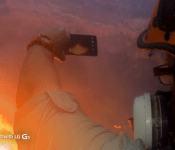
The LG G3 is so hot: LG shows the best way to advertise 4K video is in an active Volcano
 There is some pretty elaborate advertising out there these days, but this one definitely takes the cake for being the most breathtaking in recent memory. The ad was put together as part of the LG G3 4K Active Volcano Photo Shot Project, which follows the journey of photographer Jung-won Park and his life-long dream to photograph the heart of an active volcano. As part of the project, Jung-won visited Ambrym Island, took in all the local culture as well as all the sights before making his ascent to the volcano, taking pictures with his LG G3 all the while. Check out the full 5 minute ad below:
It’s a fascinating journey, and surprisingly a really good way for LG to showcase the wonderful OIS+ enhanced camera on the LG G3; whether the pictures featured in the video are actually from the LG G3 is entirely up for debate though. And even if it was a pretty expensive and extreme way of advertising the LG G3, you can’t argue with the results: a 4K video of the bubbling surface of an active volcano. If only YouTube supported 4K videos…
What do you think about Jung-won Park’s journey into a volcano with a LG G3? Let us know your thoughts on the ad in the comments.
Source: YouTube
//<![CDATA[
ord = window.ord || Math.floor(Math.random()*1E16);
document.write('’);
//]]>
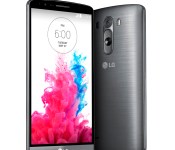
Verizon to carry LG G3 on July 17, report says

Verizon will offer the LG G3 starting from July 17, or so says a source close to @evleaks. Reportedly, the device will be made available for pre-orders one week earlier, on June 10. It’s unclear whether other carriers are expecting to carry the flagship device on or around the same time but we’d be surprised if any provider had an exclusive for more than a few days. So there you have it, put aside your money or start selling your stuff!

The post Verizon to carry LG G3 on July 17, report says appeared first on AndroidGuys.

Weekends with Engadget: Apple’s developer conference, LG G3 review and more!

This week, we watched Apple announce iOS 8 and OS X Yosemite, reviewed the LG G3, gave Cortana a psych eval and investigated the reality of life with autonomous cars. Read on for Engadget’s news highlights from the last seven days. Oh, and be sure to subscribe to our Flipboard magazine!

Apple reveals iOS 8 at WWDC, available for free this fall
This week at its 25th annual developers conference, Apple unveiled iOS 8, the newest version of its mobile operating system. Design-wise, it looks a lot like iOS 7, but there’s a bunch of brand new features under the hood, including a health app, widgets, and yes, third-party keyboard support!

LG G3 review: the company’s best phone yet
The G3 may only look like it’s made of metal, but we’re not holding any grudges. LG’s 5.5-inch handset has 10-hour battery life and top-shelf specs, not to mention the nicest display on the market. Assuming it’s not too pricey, the G3 could be one of the best Android phones available.

OS X Yosemite: Apple’s latest desktop operating system is free this fall
Apple’s next desktop operating system is called Yosemite, and will arrive as a free upgrade this fall. Besides getting a few slight UI adjustments, the OS gained a pumped-up version of Spotlight and Safari, as well as a new AirDrop feature that let’s you seamlessly transfer work between all of your Apple devices.

What you need to know about the ‘right to be forgotten’ on Google
Thanks to a recent case between Google and Europe’s biggest court, European users have the “right to be forgotten.” Read on as our own Matt Brian breaks down the ruling and what it means for you.

Here are a few lesser-known new features in iOS 8
This week, Apple unveiled a bunch of new features coming to iOS 8, but many of them didn’t make it to the spotlight. Read on as our own Brad Molen uncovers a few of the lesser-known but awesome additions to the mobile OS.

Apple attempts to conquer the connected home
Many companies have tried their hands at home automation and failed to stir things up. Android @ Home ring any bells? With its new HomeKit platform, Apple might have the market power to pull it off, but can it succeed?

Her name is Cortana. Her attitude is almost human.
Confident, caring, competent: these are just a few of the terms Microsoft’s Susan Hendrich uses to describe Cortana, the personal assistant with attitude. Read on as our own Brad Molen investigates the lovable AI’s development and the real-life personal assistants behind her demeanor.

An up close look at the giant gaming PC that’s also a desk
What you’re looking at is Lian Li’s DX-01: a sleek, glass-faced office desk that happens to have a high-powered PC stuffed inside. What’s more, you can buy it right now, starting at $990. That’s just for the empty case, though — you’ll have to get all the computer bits yourself.

What you need to know about self-driving cars
Self-driving cars have the potential to make our roadways safer and more efficient, but what does a world full of AI-controlled vehicles really look like? Read on as our own Sean Cooper explains the reality of life with autonomous cars.

Intel: Where we’re going, we don’t need cables
What do devices of the future look like? Intel believes they’ll be cordless, portless and won’t need any passwords. Read on as our own Dana Wollman investigates the company’s vision for 2015 and beyond.
Filed under: Misc
LG G3 sells like crazy: 100,000 units sold in Korea after just 5 days

Earlier this week we reported that LG G3 outsold Samsung’s Galaxy S5 in Korea at a 3:1 ratio, selling 25-30,000 units a day. We’re talking initial launch period but these are still some respectable numbers. Now we have some more numbers for you.
I don’t think even LG expected to sell as many units in Korea, though it’s far early to judge anything, especially considering these are only Korean stats. But here’s yet another encouraging bit of information; LG sold 100,000 G3′s in just 5 days. In Korea alone.
It seems like LG is currently on fire in its homeland these numbers could soon be substantially grown internationally.
Looks like the work put into making the G3 is paying off for LG and that its beastly screen and other specs in combination with the phone’s design is working perfectly when it comes to appealing consumers. Are you going to get the LG G3?
SOURCE: KoreaTimes
VIA: PhoneArena

The post LG G3 sells like crazy: 100,000 units sold in Korea after just 5 days appeared first on AndroidGuys.
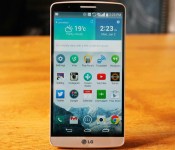
LG G3 review: the company’s best phone yet

Bigger, higher resolution, simpler to use. That’s how we described LG’s latest flagship, the G3, when we finally got our hands on it last week. The headline feature is, without a doubt, that Quad HD (2,560 x 1,440) screen. I’ve been gazing at it intensely since the review unit landed in my hand. But, the G3′s not just a one-trick pony; there’s a lot going on under that “metallic skin.” Good thing there’s a full Engadget review here to tell you all about it.
Hardware
I already mentioned that display, but LG’s not scrimped on the rest of the spec sheet. In fact, it pretty much reads like an Android fan’s wish list. That means a 2.5GHz Snapdragon 801 processor, 3GB of RAM, 32GB of built-in storage, a 13-megapixel camera and, of course, that QHD screen. There’s also an option with 2GB of RAM and 16GB of storage if you don’t need all that memory (and like having more money). As for the design, the G3 has a sharp, modern look with subtle curves and a brushed-metal finish. Compared to Samsung’s “don’t ever change anything” approach, LG appears positively progressive, especially if we think back to the Optimus G. Last year’s G2 was a decently built, smart-looking phone, and the G3 inherits some of its charm (not to mention the G Pro 2′s). The primary difference between the G2 and its successor is, of course, the size. The G3′s 5.5-inch display makes the handset much larger — we’re well into (excuse the term) “phablet” territory here, despite this being marketed as a mainstream flagship.
In fact, the G3 has a bigger panel than the original Samsung Galaxy Note, which blew some people’s minds when it launched with its then-wrist-bending 5.3-inch display. But times change, and a 5.5-inch screen is no longer out of the ordinary. So, yes, this is a big phone — and while it definitely feels bigger than, say, the G2 or a Nexus 5, it’s worth remembering that other mainstream handsets like the OnePlus One carry a display the same size as the G3′s. In fact, both the Galaxy Note 2 and OnePlus One rock a 5.5-inch screen — the difference being both those phones sport wider frames. Perhaps I’ve adapted to larger phones over the years, but the G3 is easily the most comfortable handset of this size I’ve encountered to date. That said, it’s definitely still going to be a stretch for some people.

For example, as with the G2, all three of the physical buttons are located around the back, just under the camera lens. If you like to hold your phone firmly around the base, your digits need to travel quite a distance to reach them. And once they do, the combination of your grip around the bottom and your extended finger creates a kind of lever. So, when you try and push the button, there’s often not enough resistance and you need to either adjust your grip, or use your other hand. You’ll likely get the one-handed technique down with time, but it won’t suit every hand. A related issue is that the circular main/central button, which locks or unlocks the phone (the other two are primarily for volume control), is much more flush to the back of the handset. This is generally a good thing, as it means the G3 sits flat on a desk, but it also means that you’ll sometimes find yourself prodding at the camera lens situated just above it (which is also flat and round). Symmetry fans will love the G3′s rear, though, as the inclusion of an infrared laser for the camera gives it a nice, balanced design.
The “metallic skin” paint job (another one of LG’s marketing terms) is basically to brushed metal what Samsung’s latest phones are to leather — they look legit, but feel like plastic. It’s pleasing to the eye, and gives it a classy appearance, but if you’re a fan of cold, hard metal, it’s a bit disappointing. Luckily, it’s at least less susceptible to fingerprints than glossier materials — something that couldn’t be said for the G2. By contrast, the front is almost entirely dominated by the display; the bezels are narrow, save for the modest chin at the bottom, so the only splash of that metallic color up front is the thin strip at the bottom.

LG made a fair amount of noise over that floating arc design (i.e., the curved back). The idea being that, to counter the width increase that a bigger display commands, you taper the edges in, thus creating an illusion (in the hand) of holding a thinner, narrower device. I’d say it mostly works. The official specification claims the sides of the G3 measure just 2.7mm (0.1 inch) at their thinnest, growing to a still-reasonable 8.9mm (0.35 inch) at their thickest. The Galaxy Note 3 is only 3.6mm (0.14 inch) wider than the G3, but it’s much flatter, and feels all the broader for it in side-by-side comparisons.
The rest of the hardware is more utilitarian, but for those who want to know, here’s a quick run-through. The radios include 2G (GSM/EDGE), 3G (HSPA+ 42 Mbps/HSPA+ 21 Mbps) and LTE (SVLTE, CSFB, CA, VoLTE RCS, MIMO). There’s Bluetooth 4.0 (with aptX), 802.11a/b/g/n/ac, GPS and GLONASS, a 3,000mAh removable battery, IR blaster, microSD card slot, wireless charging and NFC. There’s also support for SlimPort and USB OTG. The 2-megapixel front camera has, groan-inducingly, been rebranded as the “selfie-camera.” Our handset has a subtle gold hue, but it’ll mostly be available in black and white (plus red and violet, depending on the market).
| LG G3 | |
|---|---|
| Dimensions | 146.3 x 74.6 x 8.9mm (curved) |
| Weight | 5.26 oz. (149g) |
| Screen size | 5.5 inches |
| Screen resolution | 2,560 x 1,440 (534 ppi) |
| Screen type | IPS LCD |
| Battery | 3,000mAh Li-Ion (removable) |
| Internal storage | 32GB |
| External storage | Up to SDXC standard/2TB theoretical |
| Rear camera | 13MP with OIS |
| Front-facing cam | 2.1 |
| Video capture | 3,840 x 2,160 (4K)/30 fps |
| NFC | Yes |
| Radios |
SK Telecom/ Korean Model: LTE (800/1800/2600) |
| Bluetooth | v4.0 |
| SoC | Qualcomm Snapdragon 801 |
| CPU | 2.5GHz quad-core |
| GPU | Adreno 330 |
| RAM | 3GB |
| Multimedia | SlimPort/DLNA |
| WiFi | Dual-band, 802.11a/b/g/n/ac |
| Wireless Charging | Yes |
| Operating system | Android 4.4.2 (near stock) |
Display

Did you hear? It’s Quad HD. That’s 2,560 x 1,440 if you prefer pixels, or 534 pixels per inch if screen density is your metric of choice. That’s not bad if we’re just going by numbers. The G3 isn’t the first phone with a screen of this resolution, but it’s the first of the current wave of flagships from the big names. In fact, I’m surprised Samsung didn’t endow the GS5 with a similar screen. That company loves being the first with such features, and (like LG) it makes panels itself, so it’s certainly capable. But, perhaps this is an indicator of just how far LG has come in the phone game.
Before we delve into how the display actually performs, there’s a bit of background worth mentioning. At the G3′s launch event, LG went out of its way to refute Steve Jobs’ claim that the iPhone’s Retina display surpasses what the human eye could detect in terms of detail. The truth, said LG’s Dr. Ramchan Woo, is more complicated than that. The theory is that the print world has known the resolution tipping point for some time. When it comes to displays, though, the digital ppi doesn’t directly translate from print dpi. In fact, it needs to be roughly double. LG’s calculations led to a magic number of (based on two x 270) 540 ppi, which the G3′s QHD panel just misses, at 534 ppi. Close enough, we guess.

So, how does it look? The short answer is: pretty great. The long answer, though, is more nuanced. High-resolution videos and images look pin-sharp and beautifully recreated — especially, and unsurprisingly, the pre-loaded (and optimized) content included in the Gallery app. Colors look vivid but not oversaturated; blacks are dark; and viewing angles are decent (though not quite as good as we’d expect from an IPS panel). The reality is, for most of your daily/vanilla Android usage — browsing, navigating menus and so on — that high resolution doesn’t make itself obvious. By that, I mean that everything looks more or less the same as, say, a regular HD display on a competing phone. Basically, then, if you were hoping for the OS to suddenly pop out at you with newfound crispness, it doesn’t. Icons do look sharper compared to, say, a Nexus 5. But even then, it’s only when you look at them side by side that you’ll notice.
All told, while it’s a great display, it’s a bit like having an HDTV in 2004. Great if you can get the content for it, otherwise it’s just a good TV. Over time, more and more apps and content will be made for such resolutions, but for now, they’re scarce. In fact, the resolution appears to make some apps incompatible — and unfortunately, the Play Store hides apps that won’t run on your phone. Usually this is to stop older handsets from downloading apps they can’t handle. But, if you try searching for Candy Crush Saga, for example, it won’t come up. So, whether intentional or not, it appears some developers haven’t optimized their apps for 2K/QHD displays yet.
Software

“Simple” was easily the dominant buzzword LG chose when marketing the G3. “Simple is the new smart,” and, “To be simple is to be great,” were some of the slogans of choice. That manifests itself in the G3 in a few software tweaks that (hopefully) improve the Android experience. As with any custom take on Google’s software, though, it can be a risk. Unique features can be as much a hindrance to the seasoned user as they are a help to the beginner (if they’re a help at all). Sometimes, though, you can strike gold and create something useful enough that it gets adopted by everyone, even on stock Android (think: Swype-style keyboards). Has LG cracked any such nuts this time?
Probably the “simplest” part of the software is the camera. Open it; point at your subject; tap the screen; and you’re done — picture taken. That’s the default mode, anyway. You can still access all the options (though there are fewer, in the name of simplicity), and change things up, but for the most part, this setup will serve you well. The main Android interface is flatter than before, and despite being a skinned version of the OS, it’s a relatively light one. It’s pretty much the standard Android home screen, just with LG’s custom weather widget at the top, which you can of course remove if you please.

There are other new touches peppered discreetly around the UI. One interesting addition is what LG calls “Smart Notice.” To use an obvious analogy, it’s like Google Now, just more focused on your usage of the phone. For example, if there’s a number you call often or receive calls from, it’ll suggest you add it to your contacts. Or, perhaps you skipped a call with a message saying you’ll call the person back? If, some time later, you don’t, it’ll prompt you to do so. In my testing, I didn’t get many notifications — just some birthday reminders — but I suspect this is a feature that becomes far more valuable over time. As with Google Now, Smart Notice have the potential to occasionally dazzle you, or even creep you out with its prescience; mostly, though, it’s out of sight.
Another addition is “Smart Tips,” which you can find by swiping right from the home screen. It sits in a window of its own that’s important enough to get a tiny “G” symbol instead of the usual bullet point along the bottom of the screen. It shares this space with LG Health (yep, an S Health rival). Open Smart Tips, and you’ll see a menu of options that by default includes Camera, Knock Code and Smart Notice. Bizarrely, all each menu does is open up a page with short YouTube tutorial videos embedded! I’m not sure what’s smart about that. They’re undoubtedly tips, though, so the name is at least half right. I did go back in later and see that different topics were available, so I guess the smart part might be that it learns what it thinks you need to bone up on. The weird thing is that Smart Tips occupies 50 percent of that special home screen (the one with the aforementioned “G” symbol), yet it isn’t something you’d refer to that often. You can remove the entire home screen if you like, but perhaps the better option would have been to devote that space to something other than LG Health and Smart Tips.
The rest of that screen is less wasteful. This is where you’ll find LG Health, the company’s health-tracking app. It’s also a bit of a dark horse. LG gave it nary a mention in the run-up to the phone’s launch, but it’s a well-implemented, surprisingly competent tool. When HTC launched the One (M8), it made a big deal about the phone’s new sensors and its Fitbit integration, allowing the phone to double as a fitness tracker. The problem was, it wasn’t very good — especially given the dedicated sensors. LG’s understated implementation, on the other hand, is pretty solid. I punched in my vitals (age, sex, weight, etc.) and checked back a little later. Sure enough, it had logged what seemed like an accurate amount of steps (it matched my Garmin tracker’s step count). I’ve also walked with the phone in hand, watching it count up accurately.

LG Health also allows you to log activities such as runs, walks, hikes and even inline skating sessions. This records a GPS-based map route and gets filed into a calendar for later viewing. You can pull up some basic statistics (calories burned, etc.) and even compete with friends. It’s perhaps not as feature-rich as a dedicated platform like RunKeeper or Strava, but for a freebie add-on that requires no extra hardware, it’s pretty good. As a bonus, I didn’t notice any impact on battery life, either.
Two other features LG was keen to make sure everyone knew about were Knock Code and the new keyboard. KnockOn was a new feature with the G2, and a bit of a novelty. Sure, it was kinda cool, but it was a party trick at best. Knock Code is its more powerful successor, and has already replaced KnockOn on the G2 and Flex. It’s here with the G3 right from the start, though, and it’s pretty handy — especially if you’re not a fan of the rear button configuration. Setup is easy; tap in a pattern, choose a fallback PIN and you’re set. Now, you can wake your phone and go straight to the home screen using your chosen tap pattern. This means you can open your phone quickly while keeping some sort of relative security. Of course, if anyone spots/guesses your code, you’re toast. Given that the backup is a PIN, it shares the same level of security as just having a four-digit code. A double-tap will still wake the G3 up, but only as far as the Knock Code entry screen (when enabled).
What of that new keyboard? The biggest news is that you can change its height to your preference. The reality is that most people will likely keep it as is, given that the “about halfway up” default is probably fine for most. Another useful feature: If you hold down the space bar and slide left or right, the cursor moves within the last typed word, which comes in handy for fixing typos quickly. The keyboard is also meant to learn your tap habits, so that if you keep thumbing “U” when you mean “I,” it’ll figure that out and fix those taps for you automatically. It’s hard to see if this is really happening with any consistency. I’m a swipe-input (or “Path” as LG calls it) kinda guy anyway, so this feature won’t be of much use if that’s your preference (or if you prefer another third-party keyboard). Still, it’s nice to know LG is trying to improve the experience.
Camera

I already touched on the camera UI. Basically, what you need to know is that the default UI is extremely minimal. Android’s menu ellipses are in one corner, and a back button can be found diagonally opposite. Give the screen a tap and, boom, you just took a photo. Like that, huh? It’s pretty nice. If simplicity’s not your jam, or you want to get into the options, you can do that too. You can even get the on-screen shutter button back if you wish. The number of camera modes, however, has been cut from 14 to four (dual, panorama, magic focus and auto). LG has also pared back the number of menu options overall, keeping things pretty simple.
There are no manual options for ISO, white balance or any of those types of settings. To make up for it, there’s a voice shutter option, which takes a picture when you say: “Whiskey,” “smile,” “cheese,” “LG” or “kimchi.” Amusingly (unsurprisingly?), the only one we could get to work reliably on our Korean version was “kimchi.” This feature works for both front and rear cameras, so it might be more useful for selfies. That said, there’s that hand-gesture option too. When using the front-facing camera, if you bring a hand into view and wait a moment, blue lines appear around it letting you know it’s been recognized. Then you can just make a fist and the camera counts down from three before taking a snap. It’s pretty cute. If you keep the camera in the most basic/default mode, with no menus to distract you, you’ll mostly be good to go. I was expecting that, as the whole screen has become a shutter button, I’d be taking accidental photos all the time just by holding the phone. But that hasn’t turned out to be the case.
Probably the main talking point, other than that 13-megapixel sensor, is the infrared laser focus system. This is something of a first on any camera, according to LG, and it’s a technology the firm originally developed to keep its robot vacuum cleaners from banging into walls. The conical laser can apparently focus the camera in just 220ms, blowing the competition (the GS5 and HTC One, for example) away. Those handsets take up to 300ms to focus, the company claims. That extra 80ms counts, we guess. In practical terms, while the camera definitely does focus and take pictures quickly, if no one had told us about this new feature, we most likely wouldn’t have noticed too much of a difference. It’s definitely quick, though, and that’s what counts.
As for the pictures themselves? Pretty impressive. There are, however, a few lighting situations that seem to cause it trouble. Sometimes when the sun is in shot, or at dusk, pictures can look a little washed out. Other times, the camera performed quite well, especially in lower light conditions. Taking photos around London as the sun went down, I was impressed by how low the noise was and how well colors were reproduced. Even at night, the G3 can pull off some good shots, provided you have a steady hand. The OIS also seems to help when taking candid shots, where you’ve gone from pocket to photo relatively quickly (and probably shakily), especially when using the screen as a shutter button.
The selfie camera around the front is different story. LG gave it larger pixels to help it under low-light conditions (where most selfies are taken, according to its research) but the result is a soft image that appears cartoonish at times, especially if you jack up the “beauty” filter. There’s a “flash,” too — but in reality it just shrinks the preview and projects a bright screen to light up your face. It’s nice that LG cares about selfies so much, but the flash doesn’t work well. If video’s more your thing, you can shoot up to 4K (if you have something to view it on.) Interestingly, there’s no native/2K option, though, which might have made more sense.
Performance and battery life

Given that LG has kept things light on the software front, there’s not a lot of bloatware going on. The main concern for both performance and battery life is probably that display. The first thing I noticed was the smallest amount of delay when flicking through menus. Everything opens quickly, and the scrolling is plenty smooth, but there’s just the tiniest of moments between moving your finger and the menu following along. It’s hard to tell if this has to do with the power needed to keep that display updated, or if it’s just the result of all the software and hardware elements combined. Either way, it’s the first time I’ve noticed anything like this with a box-fresh phone. To be clear, this is minor, but it’s something I noticed all the same.
There are a few other things we must mention at this point, too. The handset we were given is actually a Korean carrier model. That means there are likely some software tweaks that won’t be present on the official US/European models. It also means I was unable to test the LTE. As such, most of the performance and battery life observations are likely to be very close to, but perhaps not exactly what you can expect once the G3 goes official over here later this month.
| LG G3 | HTC One (2014) | LG G Pro 2 | |
|---|---|---|---|
| Quadrant 2.0 | 25,548 | 25,548 | 18,349 |
| Vellamo 2.0 | 1,405 | 1,804 | 1,672 |
| 3DMark IS Unlimited | 16,662 | 20,612 | 17,241 |
| SunSpider 1.0.2 (ms) | 918 | 782 | 727 |
| GFXBench 3.0 Manhattan Offscreen (fps) | N/A | 11.2 | 8.7 |
| CF-Bench | 24,667 | 40,223 | 36,840 |
| SunSpider: Lower scores are better; results compiled on Chrome. HTC One benchmarked on Android 4.4.2 | |||
With that caveat out of the way (and the benchmarks in), I can confirm it generally performs like a boss. During my usual routine tests of gaming (both casual and a bit of Real Racing), browsing and everyday business use, the G3 held up just as well as the HTC One and Galaxy S5. That is to say, its ample processor and RAM capacity mean it can handle pretty much anything you throw at it.
As for the less tangible aspects of usage (those that can’t be measured in numbers), it’s still good news. While I don’t have a huge dislike of Samsung’s TouchWiz interface, LG’s much cleaner UI reminds you how old-fashioned and dated the interface Galaxy users have to endure can feel. The near-stock experience is appreciated, and if LG ever makes a Nexus/Google Play version of the G3, I’d suggest it’s only really an issue for the Android purist.

Battery life was an area of particular concern. With so many pixels to take care of, the processor has some extra lifting to do. Add to this the fact that the screen is LCD (i.e., backlit) and not OLED (which only lights the required area), and you might think it’s a recipe for disaster. In fact, I was pleasantly surprised to find that the G3 can easily go a whole day (and often a bit more) without needing a top-up. This is without LTE running, but still with the moderate to heavy usage that being an Engadget editor requires. As for the more formal battery test, the 3,000mAh cell managed a reasonable 10 hours. We’ll be sure to repeat this test once we get a model with local LTE support.
LG says that to compensate for the demands of the display, it did some serious thinking about power consumption, making savings wherever it could. Whatever it did, it seems to have worked. If you’re a power user, or just like to be on the safe side, that cell is removable, meaning you can carry a spare if you like. The only downside is how long it takes to charge over USB. To be fair, the phone does tell you as much when you plug it in, so you can’t say you weren’t warned.
The competition
With the paint still wet on both the Galaxy S5 and the HTC One (M8), those two would seem like the likeliest rivals for your affection. Along with the G Pro 2, perhaps. The problem is, LG’s being tight-lipped about the official US price for the G3, which makes comparisons difficult. One UK retailer has pegged it at £500, and the Korean version can be bought right now for about $800 and up if you’re really impatient, but I would’t put much stock in those prices, as things could well change (we’ll update this review if they do). Pricing issues aside, the LG G3 might not have the depth-perceiving camera of the HTC One, or the heart rate monitor of the GS5, but it beats them both on a far more important (and future-proofing) feature — that display. Much of the rest will come down to design and software preference — and of course that price.
Wrap-up

I’ll admit, when I first laid hands on the G3, I wasn’t sure. I wanted it to be metal (as it appeared to be), but it wasn’t. I wanted it to be a bit smaller and more like the Nexus 5, but it wasn’t. I didn’t think I’d like the rear placement of the buttons, and I don’t. But, like two cops with different ideologies forced to work together on a crime, before long, these perceived negatives turned out to be charming qualities. The smooth, curved lines of the G3 make it feel like a much smaller phone. Those rear buttons mostly just need some muscle memory to get used to. And that metallic skin: It might not be metal, but it sure looks better than the G2 (or any Galaxy phone). That just leaves the positives. The display might not be quite as impressive as I’d hoped, but it’s still shines given the right content.
The camera is a great workhorse and will really turn out some good images, even under low light. All told, there’s little to complain about, save for the fact that our test unit was a Korean-specific model (I’d like to test the LTE and see how the battery holds out). So, when we finally do know the price, we can make a better call, but assuming LG doesn’t do something crazy, this should be one of the best Android phones you can buy right now.
Daniel Orren and Edgar Alvarez contributed to this review.
Filed under: Cellphones, Mobile, LG

LG Exec: LG G3 almost had even smaller bezels

The LG G3 is renowned for its slim bezels and is an engineering marvel when it comes to design, but the company were constantly pushing for even slimmer bezels.
According to Chul Bae Lee, the VP of LG Mobile’s design lab, the executive team were constantly urging the engineers to decrease the width of the LG G3′s bezel even more, but were only stopped by technical restrictions.
In order to accommodate this large screen, the bezel has to be very slim, that’s a given condition. I kept squeezing my engineers to make it slimmer and slimmer. They are all my friends but they didn’t meet my expectations and this is the best we can do as of today. It is still one of the best in the market and it is all related to the technology development as well.
Any slimmer and the device would have been simply unstable and wouldn’t have passed LG’s quality control test, notably the four-feet drop test. Another option would have been to use thicker glass for the display, which again wouldn’t be an option in order to retain the thinness of the device.
LG feel that they got the perfect balance between bezel size and robustness of the device. What do you guys think?
SOURCE: TrustedReviews
The post LG Exec: LG G3 almost had even smaller bezels appeared first on AndroidGuys.
A metal LG G3 would’ve costed $300 more

With the much anticipated LG G3 announced last week, some people were a bit let down by the fact that the phone isn’t made of metal like rumors suggested. With the teaser videos making it sure seem like it would be, this phone could’ve taken the spotlight off of HTC’s One M8 for good with a truly premium build. The phone instead went with a plastic material like the G2 but with a metallic design finish.
According to LG Vice President of Mobile Design Chul Bae Lee, there were a few reasons behind the choice for plastic. “If you could charge $300 more for a phone, maybe we could make it metal.” He said to TrustedReviews.
He also mentioned the fact that metal would’ve made the phone bulkier and much less thin then what they have achieved with the G3. If I had applied metal to the G3 is would be much bulkier in the bezels and in all four directions. It would be very big and very heavy. It would be really slippery as well.”
He added: “What would be the best material for this phone? I don’t think metal would be the answer for that.”
The G3 is expected to hit markets soon, and is expected to be around $100 cheaper than other flagships, inclding the One M8 and Galaxy S5, despite having its new QHD 1440p display.
SOURCE: TrustedReviews
The post A metal LG G3 would’ve costed $300 more appeared first on AndroidGuys.

LG G3 outsells Samsung Galaxy S5 in Korea

I don’t know about you, but we certainly didn’t expect this to happen. About a week ago LG released its new flagship for this year and the G3′s sales are apparently going far better than anticipated, in Korea at least.
Korea media reports that the LG G3 is being sold like crazy over there. Reportedly they sell 25-30,000 units per day, which is crazy, that is approximately twice that of LG’s previous G2 flagship. This information is even more unbelievable if we take into consideration that Samsung’s Galaxy S5 sold 7-8,000 units per day in that same period after launch. The report also says that LG’s marketing expenses are a lot lower than Samsung’s. If we take all that into consideration this is quite significant, and it will be interesting to see what will happen to those sales in the coming time and also abroad, LG made a really good phone and apparently consumers realize that.
Do you think that LG G3 can continue outselling Samsung’s Galaxy S5 in Korea? How about on international stage? We do think it is unrealistic to expect that will happen (internationally), but we have no doubt the G3 will sell like crazy.
SOURCE: ETNews
VIA: PhoneArena
The post LG G3 outsells Samsung Galaxy S5 in Korea appeared first on AndroidGuys.
 AIVAnet