


Lenovo P70 mid-range phone brings a 4,000 mAh battery device to China
Lenovo has launched a new mid-ranged device in China today. The P70 carries some pretty solid specs with a 5-inch 720p display, 2GB of RAM, a 1.7GHz MediaTek 64-bit octa-core processor, 13MP rear camera and a 5PM front shooter. The new phone brings in Android 4.4 unfortunately. Where the device really stands out though is […]
The post Lenovo P70 mid-range phone brings a 4,000 mAh battery device to China appeared first on AndroidSPIN.
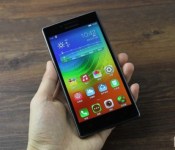
Lenovo launches the P70 in China

Back in December, Lenovo announced its latest mid-range smartphone, the P70, and, earlier today, the company launched the long-awaited handset in China with a 1399 yuan ($224) asking price.
Lenovo’s newest mid-range offering does provides quite a lot of bang for your buck with it 5-inch 720p display, a 1.5GHz MediaTek quad-core processor, 1GB of RAM, 8GB of expandable internal storage, a 13-megapixel rear-facing camera and a 5-megapixel front-facing shooter.
The device will run the latest build of Android 4.4.4 KitKat, skinned with Lenovo’s Vibe user interface straight out of the box. If you’re not a fan of custom UI’s, don’t worry. You could always install one of the many third-party launchers available on the Play Store if you wanted to give your handset a more “vanilla” feel.
If you live in China, like the sound of the Lenovo P70 and want to pick one up — click the source link below.
Source: CNMO
Come comment on this article: Lenovo launches the P70 in China
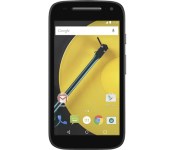
Best Buy reveals the next Moto E gets 4G and a price cut

Motorola’s tactic when launching last year’s Moto E was to let it appear on Brazilian retailer FastShop for a few hours, and then whip it away as soon as people began to notice. Looks like it’s another case of history repeating with the refreshed version of the low-end handset, with a listing popping up on Best Buy only to disappear shortly afterward. If the since-pulled listing can be believed, however, then the device is about to get around $30 cheaper and significantly more powerful than the 2014 vintage.
The 4.5-inch 960 x 540 display remains unchanged, but whereas before there was just a 4GB storage and no 4G, you’ll now find 8GB and an LTE modem. Even better is that the price has fallen from $129 down to just $99, at least if you buy the prepaid version on Sprint. When we played with the original, the ridiculously low price was enough to send us googly-eyed with excitement, so if the above is true, it’s hard to see how this new edition will be anything other than a hit.
Filed under: Cellphones, Mobile, Lenovo
Via: PocketNow, Pocket-lint
Source: Best Buy (Pulled), Android Police
Oh snap: Motorola chief suggests Samsung, like Nokia and Blackberry, will fade away in the future
In case you haven’t heard, Motorola has had a great quarter. While it hasn’t yet translated to profit for its now-parent company Lenovo, it’s innovation and growth is almost back to Motorola’s heyday, and people are starting to take notice. But with the rise of multiple manufacturers, including Motorola, there has to be someone who […]
The post Oh snap: Motorola chief suggests Samsung, like Nokia and Blackberry, will fade away in the future appeared first on AndroidSPIN.
Motorola ships record 10M units over last quarter
Things are definitely looking up for Motorola as the company today announces a new record in shipments. Over the three month period ending on December 31, 2014, Motorola moved 10 million units. That’s up 118 percent year over year and the first time ever eclipsing the mark.
Now, to be fair, this can include the mobile phone business, Android tablets and TVs. What’s more, this is shipments and not sales. However, getting beyond that, it is a record for Motorola and they’ve just now broken into the Chinese market. Thanks to a device lineup that includes variations of the Moto X, Moto G, and Moto E, the next few quarters could be quite fun for the crew at Lenovo/Motorola.
Lenovo (PDF)
The post Motorola ships record 10M units over last quarter appeared first on AndroidGuys.
Leaked details emerge for upcoming Lenovo Vibe Z3 Pro
I have high hopes for Lenovo over the next few years, especially since they now own Motorola. That deal is already making waves for Moto as it has made its way back into China. Now we just need the same thing to happen in reverse and for Lenovo phones to make their way stateside. A […]
The post Leaked details emerge for upcoming Lenovo Vibe Z3 Pro appeared first on AndroidSPIN.

Motorola sales doubled year on year, more than 10 million phones sold in Q4

Lenovo announced results for the first quarter with Motorola in the house, and everything seems to be going according to plan so far.
Lenovo completed the acquisition of Motorola from Google on October 30, following the announcement of the $2.9 billion deal in January 2014.
Lenovo’s plan to make Motorola profitable within six quarters is on track.
In the quarter that ended December, Motorola sold more than 10 million smartphones, a 118 percent increase over the same period last year. Motorola revenue was $1.9 billion, out of the total of $3.4 billion generated by Lenovo’s mobile unit, which includes Lenovo-branded smartphone, tablets, and TVs. However, the mobile unit ended in the red, with a loss of $89 million for the quarter.
According to IDC research, thanks to Motorola and its own brand devices, Lenovo grabbed 6.6 percent of the global smartphone market, behind only Samsung and Apple. That’s a 78 percent increase year on year.
Lenovo said that its plan to make Motorola profitable within six quarters is on track.
Lenovo highlighted its global reach (67 countries and counting) and slipped in a jab at Chinese mobile rivals (read Xiaomi) that make the bulk of their profits in China. That’s opposed to Lenovo, which sold 60 percent of its phones outside of China.
Overall, Lenovo beat analyst margins by a long shot, with net profit of $253 million, compared to the $184.6 million consensus of analysts consulted by Bloomberg. The Chinese giant even increased its PC sales by 5 percent, which is quite a performance given the general weakness of the market.
Lenovo is just getting started with Motorola, and it will be interesting to see what the future holds for the venerable phone maker. Motorola cost Google hundreds of millions each quarter, but Lenovo is confident it can turn it around relatively quickly. Lenovo just re-introduced the Motorola brand in China, while in the fast-growing Indian market, Motorola is already thriving, having sold three million units in 2014.
Lenovo closes 2014 with dipped profit, Motorola acquisition partially to blame

Today, Lenovo recapped its year-ending quarter’s performance with both positive and negative takeaways.
Hit the break for more.
The quarter’s net profit dipped to $253 million compared to the previous year’s $265 million. That is a drop of 4.5%. The purchase of Motorola contributed to the decline. Lenovo acquired Motorola for almost $2.91 billion and the company also made a deal with IBM for $2.1 billion. Basically, Lenovo spent big on two major businesses and it weighed heavily on this report.
Revenue, however, did exceed $14 billion and that is an increase of 31% compared to the previous year. And Motorola was part of that, too, alongside Lenovo-branded devices. Motorola sold more than 10 million devices throughout the quarter. The 2014 range of Motorla devices really captures the attention of consumers around the world. The increase was above 118%. With its re-entry into China, Lenovo says Motorola should be profitable within the next 4-6 quarters.
Lenovo noted that it expects growth across the board in coming quarters.
Lenovo Q3 2014/15 Results Exceed Consensus Estimates with Strong Core Business and Fast Traction in New Investments
Powered by new smartphone and enterprise engines, profitability set to expand
- US$14.1 billion in revenue
- Pre-tax income before non-cash, M&A-related accounting charges* of US$348 million and pre-tax income of US$274 million
- Net income before non-cash, M&A-related accounting charges* of US$327 million and net income of US$253 million
- Achieved record high milestone of 20 percent PC market share**
- M&A delivers more balance: 65 percent of revenue now from PCs, 24 percent from Mobile and 9 percent from Enterprise vs. one year ago when PCs were 81 percent
- Basic EPS of 2.32 US cents, or 17.99 HK cents
- Net cash reserves of US$1.3 billion (as of December 31, 2014)
HONG KONG–(BUSINESS WIRE)–Lenovo Group (HKSE: 0992)(PINK SHEETS: LNVGY) today announced consensus-beating results for its third fiscal quarter ended December 31, 2014, showing a strong PC business and fast traction in the integration of its Motorola Mobility (Motorola) and former IBM System x, x86 server (System x) investments. Quarterly revenue was US$14.1 billion, a 31 percent increase year-over-year.
Third quarter pre-tax income before non-cash M&A-related accounting charges was US$348 million, up 8 percent year-over-year. These non-operational, non-cash, M&A-related expenses totaled US$74 million and included charges such as intangible asset amortization and interest on promissory notes related to the Motorola and System x investments. Including these expenses, pre-tax income was US$274 million, down 15 percent year-over-year. Similarly, third quarter net income was US$253 million, down 5 percent, while net income before non-cash, M&A-related accounting charges was US$327 million, up 23 percent.
Lenovo’s core PC business remains strong even as it drives a significant transformation and diversification with the addition of the Motorola and System x businesses. Balance has become a major strength for Lenovo: PCs now account for 65 percent of the company’s revenue, while Mobile delivers 24 percent and Enterprise contributes 9 percent. Just a year ago, PCs accounted for 81 percent of Lenovo’s business.
“This quarter, we are at the starting line of a new race, but the results show that we have the right strategy, we made the right acquisitions and we executed well globally, so I am confident we are ready to win,” said Yuanqing Yang, chairman and CEO of Lenovo. “Our core PC business maintained its leading position and further improved profitability. The two newly acquired businesses are achieving great momentum in their first quarter of integration. They are definitely becoming our growth engines. Motorola is already a global strength: for the first time it sold more than 10 million units in the quarter and it is now re-entering the China market. Meanwhile, we have a strong start with the System x integration, even while we further refine and develop it, leveraging Lenovo’s operational excellence and efficiency to be even more competitive. I remain fully confident we will meet all of our financial commitments this year, and also that we are on the right track to win in the long term.”
The Company’s gross profit for the third fiscal quarter increased 54 percent year-over-year to US$2.1 billion, with gross margin at 14.9 percent. Operating profit for the quarter decreased 3 percent year-over-year to US$325 million. Basic earnings per share for the third fiscal quarter was 2.32 US cents, or 17.99 HK cents. Net cash reserves as of December 31, 2014, totaled US$1.3 billion.
Innovation in Lenovo continues to drive business model transformation and deliver impressive products that drive sales and profitability. In October, the company executed a major global consumer product launch, announcing a new family of Yoga convertible PCs and tablets. Lenovo won a record 77 awards at the Consumer Electronics Show in early January across every category – PC (where Lenovo’s lightest ever LaVie laptop won top honors at the show), tablet, smartphone, applications, software and peripherals – demonstrating its unique breadth and depth of product innovation.
BUSINESS GROUP OVERVIEW***
In the PC Group or PCG, which includes PCs and Windows tablets, Lenovo sales were US$9.2 billion with a record high pre-tax income (PTI) of US$494 million. Lenovo shipped 16 million PCs in the quarter, up 4.9 percent year-over-year, for a total market share of 20 percent. Going forward, consolidation trends favor this business. Lenovo sold its 100 millionth ThinkPad laptop PC, marking a historic milestone for this legendary brand.
In the Mobile Business Group or MBG, which includes products from the Motorola investment, Lenovo-branded mobile phone business, Android tablets and TVs, Lenovo sales were US$3.4 billion generating PTI of negative US$89 million. Motorola shipped more than 10 million units, up 118 percent year-over-year, adding US$1.9 billion to MBG’s revenues. Soon to re-enter China, Motorola is on track to be profitable within 4-6 quarters of close.
Combining shipments of Motorola and Lenovo-branded devices made Lenovo a truly global player, the third largest vendor of smartphones behind Samsung and Apple and their most credible challenger. Together, the two brands had nearly 6.6 percent market share, up 78 percent year-on-year. Global tablet market share was 4.8 percent, with 3.7 million shipments, up 9 percent year-over-year, powered by the launch of our latest Yoga tablet.
Unlike many smaller mobile phone players that rely almost completely on a slowing China market, Lenovo now drives about 60 percent of its mobile phone volumes outside China, having entered 67 countries in the last two years. Lenovo has built the scale, distribution, brand assets and IP portfolio required to compete around the world and challenge the top two players. And, as smartphone trends move from premium to mainstream, and mature to emerging markets, Lenovo is in the best position to capture these next waves of growth and deliver its stated profitability commitments in the Motorola business.
In the Enterprise Business Group or EBG, which includes servers, storage, software and services sold under both the Lenovo ThinkServer brand and the System x business unit, sales were US$1.2 billion. Sales of the System x unit were US$986 million. Only 90 days into the integration of System x, EBG delivered positive operational PTI, although its standard PTI – which included non-cash, M&A-related items – was negative US$42 million. It is solidly on track to be a US$5 billion business with better margins than PC in 1 year.
Combined shipments of Lenovo ThinkServer and System x servers made Lenovo number 3 worldwide, with 10.4 percent market share. Despite the intense competitive fire in the year since Lenovo said it planned to acquire System x, its business is stabilizing, with rapid success in China making it number one in that market, while benefiting from access to new opportunities in 160 countries that were previously unavailable to IBM or Lenovo.
GEOGRAPHIC OVERVIEW
Lenovo’s China geography totaled US$4.1 billion in revenue in the third fiscal quarter, an increase of 1 percent year-over-year, which accounted for 29 percent of the Company’s worldwide revenue, while operating margin improved by 0.3 points year-over-year to 5.7 percent. During the third quarter, Lenovo protected its PC leadership with 38.2 percent share. Fierce competition in the China mobile phone business was a drag on the performance of Lenovo-brand smartphones.
In the Asia Pacific geography, Lenovo’s revenue totaled US$1.7 billion for the third quarter, or 12 percent of the Company’s worldwide revenue, up 7 percent year-over-year, with record high operating margin of 5.4 percent, up 3.9 points year-over-year and record high PC market share at 16.1 percent, up 0.2 points year-over-year. Strong volumes in smartphone shipments were seen across the ASEAN region.
Lenovo’s revenue in the Europe/Middle East/Africa (EMEA) geography during the third fiscal quarter saw continued growth and increased profitability with revenue up US$1.6 billion, a 40 percent increase, to reach US$4 billion, while margin improved by 1.2 points year-on-year to 3 percent. Powered by strong consumer performance, this success drove a record-setting contribution to Lenovo’s worldwide revenue of 29 percent. During the quarter, Lenovo had record PC market share of 19.6 percent in EMEA, up nearly 4.4 points. Lenovo achieved the number 1 position in PC across 13 EMEA countries, further improving its number two position in the EMEA PC market.
The Americas geography revenue was US$4.3 billion for the third fiscal quarter, up 88 percent year-over-year, comprising 30 percent of the Company’s worldwide revenue, mainly due to the inclusion of Motorola and System x in the geography’s results. The Americas geography saw PC market share of 11.1 percent. Lenovo maintained the number four position in the US while avoiding fierce price competition in lower end, low profit devices to protect profitability. The North America region saw strong revenue and shipment growth and solid profit improvements, while the Company is taking decisive action to reverse challenges in Brazil, which impacted the geography’s overall performance.
* These figures are provided for greater transparency and to aid further analysis of the business.
** see IDC data 4Q 2014
*** Previously, the company provided financial breakdowns by product. With the acquisitions of Motorola and System x, management believes reporting by business groups best reflects the Company’s performance.ABOUT LENOVO
Lenovo (HKSE: 992)(ADR: LNVGY) is a $39 billion global Fortune 500 company and a leader in providing innovative consumer, commercial, and enterprise technology. Our portfolio of high-quality, secure products and services covers PCs (including the legendary Think and multimode YOGA brands), workstations, servers, storage, smart TVs and a family of mobile products like smartphones (including the Motorola brand), tablets and apps. Join us on LinkedIn, follow us on Facebook or Twitter (@Lenovo) or visit us at http://www.lenovo.com.
Come comment on this article: Lenovo closes 2014 with dipped profit, Motorola acquisition partially to blame
Q4 2014 was a photo finish between Apple and Samsung

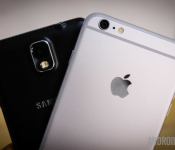
Research firms have been busy collecting data regarding smartphone shipments throughout 2014 and are finally ready to publish their findings. Although figures for Samsung vary by a tiny margin of error from firm to firm, the consensus is clear: 2014 was a tough year for Samsung, while Apple saw a surge in Q4 smartphone shipments.
Beginning with Apple, the company saw iPhone shipments soar to 74.5 million units in Q4 2014, a growth rate of 46.1 percent compared with Q4 2013, and saw a 25.6 percent increase throughout the year. The arrival of the iPhone 6 Plus as a competitor to larger Android phones is speculated as one possible reason for this uncharacteristic surge. It will be interesting to see is whether Apple can actually sustain this momentum this time around, or whether shipments will fall back towards Apple’s usual cycle.
Samsung, on the other hand, has been a little vaguer about its figures. The company stated that it has shipped around 95 million handsets in total last quarter and that smartphone sales accounted for a “high 70 percent” of that amount. Counterpoint Research has estimated Samsung’s smartphones shipments at 73.8 million, a smidgen behind Apple, while Strategy Analytics places the two companies neck and neck at 74.5 million each. Either way, there’s only a 1 percent margin of error between the figures, and both suggest that Samsung saw a slump in shipments last year.
On the positive side, the decline in Samsung’s smartphone shipments appears to be slowing. Volumes were down 14.9 percent between Q4 ’13 and Q4 ’14, but only 0.5 percent lower when comparing yearly totals.http://embed.chartblocks.com/1.0/?c=54ca26c2c9a61db46852f48e&t=e4b683fac02021bIt is probably worth mentioning that shipments aren’t quite the same thing as actual sales, especially given the usual surge in stock levels around the holiday season.
Other Android manufacturers fared much better in the fourth quarter, with both Counterpoint Research and Strategy Analytics awarding third place to Lenovo and Motorola, following the finalization of the merger. The new company secured 25.9 million shipments in Q4 2014, a gain of 43.9 percent year on year and 54.3 throughout 2014 over Lenovo alone. Huawei came in fourth with a similarly impressive 24.2 million smartphones shipped last quarter and a 47.6 percent growth rate throughout the year.http://embed.chartblocks.com/1.0/?c=54ca2962c9a61d386952f48e&t=5832926b5ab3070Xiaomi turns out to be the real success story last year though, despite landing in fifth place with 17.1 million Q4 shipments. Xiaomi’s shipments grew by an astonishing 167.2 percent over Q4 2013 and surged by a huge 227.3 percent throughout 2014, according to Counterpoint Research.
In terms of an overall market share, Samsung remains firmly out in front with 24.4 percent, followed by Apple on 14.8 percent, Lenovo and Motorola on 7.2 percent, Huawei with 5.8 percent and Xiaomi grabbing 4.7 percent of the global market.
Without a closer look at the regional figures, its difficult to say exactly what has contributed to Samsung’s slowdown and Apple’s surge. New product competition in the West and a growing Chinese presence in emerging markets are both likely to have contributed to varying extents. We’ll have to see if this is just a one off quarter or the start of a new trend.
2015 is going to be an important year for Samsung, the company clearly needs a new approach to mobile. This year will also no doubt present plenty of new opportunities for the fastest growing brands to further close the gap on the big two.
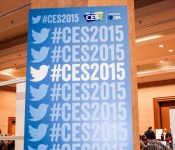
Looking back at CES: Brands to watch out for in 2015

The heavy hitters in the American and European Android smartphone market didn’t have a great deal to say at CES 2015. Only LG released a big smartphone in the shape of the G Flex 2. We’ll see many more new smartphones in and around MWC, but there were some interesting moves from some lesser known names at CES this year. Alcatel, Asus, Lenovo, BLU, ZTE, the list goes on.
Let’s take a look at the different strategies they’re employing to try and get noticed in an increasingly crowded Android market.
Alcatel sets sights on States
We’ve seen steady progress from TCL, the Chinese manufacturer behind the Alcatel brand, and it has been a whole year since we wrote about Alcatel’s assault on mobile. It has continued to build the Alcatel Onetouch brand since then with a string of affordable budget and mid-range Android devices. Just before CES it unveiled a new smartwatch and the Pixi 3 line of smartphones. There was also news of a new e-commerce website to sell direct to the US public.

But that’s the not the extent of TCL’s play to enter the market Stateside, because it also has plans to rebuild the Palm brand it acquired as some kind of crowdsourced project. It looks like TCL believes a two-pronged attack might be the way forward and the brands will stay separate.
The crowdsourced idea for the Palm brand sounds an awful lot like Xiaomi’s philosophy and it has the potential to be very successful. Can TCL combine its existing budget credentials with a recognized brand, in the shape of Palm, and persuade people to buy in to the idea of designing a new smartphone?
BLU is all about budget
This lesser known brand is headquartered in Miami. It only popped up in 2009, but it has been doing quite well selling budget, unlocked phones in the Americas. BLU unleashed seven handsets at CES, all under $300. The specs aren’t going to wow you, but the prices might. The standout is the Vivo Air, a premium-looking phone that’s impressively slim at 5.1mm.

The strategy here is to reduce overheads as far as possible and undercut the competition. Some of BLU’s phones are re-badged versions from other manufacturers like Gionee. All their smartphones are sold unlocked through Amazon. The question is whether BLU can keep up the momentum when more budget OEMs, especially from China, move in next door.
Asus and Android
The Taiwanese manufacturer Asus has been a major PC vendor for years now. It joined the Open Handset Alliance in 2008, but its biggest success on the Android platform so far has been the Nexus 7. Asus built both models for Google. It has dabbled with its own tablets and smartphones and it started to look serious with last year’s Zenfone.

This year’s CES saw Asus announce the Zenfone 2 which is an impressive-looking, Lollipop smartphone with a really solid set of specs for just $200. There was also the Zenfone Zoom for anyone hankering for 3X optical zoom on their smartphone camera. The Asus strategy for Android looks much the same as its PC strategy – offer a solid experience at a budget price.
Lenovo is third
Already a major player in the PC and tablet market, after acquiring Motorola, Lenovo claimed the third spot in smartphones behind Samsung and Apple. The company showed off a couple of sexy mid-rangers, the P90 and the Vibe X2 Pro, at CES, but neither are aimed at the States.

A number of Chinese manufacturers have been climbing the charts on the back of sales in China and other emerging markets, where the growth rate is still high, but cracking the US and Europe is a whole different prospect. The difference with Lenovo is Motorola. Google seemed to be guiding the Motorola brand back to success with a budget approach that should suit Lenovo.
Motorola may offer a route to success that the Lenovo brand couldn’t manage, and the company has deep enough pockets to make things very difficult for everyone else. It will be interesting to see what develops.
ZTE is a player
The ZTE Nubia Z7 is the new top of ZTE’s range, but it doesn’t look likely to get a release outside Asia. However, ZTE has plenty of bargain wares available across the globe and it seems to have found a home on Cricket in the States. The latest $200 release there is the Grand X Max+ which looks like a solid mid-range phablet. ZTE also showed off the Star 2 at CES.

We also named the ZTE SPro 2, Android projector, in our best of CES 2015.
Saygus says hello
A fresh new start-up that caught the eye at CES this year, Saygus is an American smartphone maker that’s throwing everything, but the kitchen sink into its debut super smartphone, the Saygus V2. It starts out gently with a 5-inch 1080p display with tiny bezels, a 2.5GHz Snapdragon 801, Adreno 330 GPU, and 3GB of RAM.

Then there’s a 21MP main camera with a 13MP selfie cam. 64GB of storage which can be boosted up to 320GB with two 128GB microSD cards. The removable battery is rated at 3100mAh. It has front-facing Harmon Kardon speakers. It’s also waterproof and has a premium aluminum and Kevlar body. There’s even a fingerprint scanner. It has all the makings of a cult classic. The Saygus strategy seems to be to listen to what hardcore Android fans want, which could definitely carve it out a profitable niche.
And the rest
We can’t cover everyone, but it’s worth mentioning that Huawei is still huge. There were no major announcements, but Huawei had more than a hundred different products on show at CES. It’s done well with the Honor and Ascend Mate lines, dropping the Huawei brand in Europe, but it still hasn’t cracked the US.
The Android scene, especially at the budget end of the market, has never been more competitive than it is right now.
Archos and Acer continued their budget lines at CES too. Acer’s Liquid Jade S looks like a decent mid-ranger. Xiaomi waited until a few days after CES to launch the Mi Note and Mi Note Pro, but they may never be released outside of China. There were also a number of hot players that didn’t really have an official presence at CES, such as OnePlus, which is expected to unveil two handsets sometime later this year.
The Android scene, especially at the budget end of the market, has never been more competitive than it is right now. It remains to be seen which strategy will reap the greatest rewards in 2015. Place your bets now.
// <![CDATA[
(function () document.getElementsByTagName('body')[0]).appendChild(opst); ());
// ]]>
 AIVAnet