


Apple says most iPhone metal suppliers conflict-free, pushes the rest to get in line

It’s easy to forget that the wondrous, tiny computer in your pocket is built from components sourced all over the world, and sometimes, those building blocks come from not-so-nice origins. War-torn regions of the world often use resource and mineral sales to fund local conflict, creating a moral dilemma for gadget consumers and hardware manufactures alike. Naturally this issue has gotten some attention, and Apple says it’s doing its part to ensure that its products are built from conflict-free materials.
In the company’s 2014 Supplier Responsibility report, Cupertino confirmed that as of January 2014, all of the smelters that provided tantalum metal to its supply chain were verified as conflict-free by third-party auditors. The company couldn’t quite say the same for the other metals used in consumer electronics, however: several of its gold, tin and tungsten suppliers won’t openly verify compliance with the Conflict-Free Smelter Program (CFSP). Apple hasn’t cut ties with these manufactures, but it has pledged to publish a quarterly report of the names, countries and CFSP status of all its suppliers to help “drive accountability” and promote participation. With any luck, Cupertino will be able to shame the rest of its supply chain into boycotting conflict-minerals — delivering on its 2011 promise to build guilt-free iPhones.
Source: Apple, Wall Street Journal
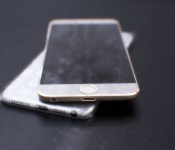
Supposed iPhone 6 parts surface on Twitter, hint at a larger screen on the way

Lately it’s seemed like Apple can’t build anything without a few prototype shells and cases leaking into public view, and now we’re seeing pictures of what could be the next iPhone. Posted by a Twitter user earlier today and addressed to several Apple-focused websites, the empty iPhone 6 shells look very close to current models, but appear to have space for a larger edge to edge-style display, which has been rumored before. Sonny Dickson, who has previously obtained iPhone and iPad parts prior to the launch of new devices, has also apparently received the same pictures and tells MacRumors they came from a source in China. Are these pics the real thing, and if they are, do they represent what we’ll likely see from Apple later this year? Without any details to back them up we can’t be sure, but you can check out a few more pictures for yourself after the break.
iphone 6 #apple pic.twitter.com/T7URVS8O6f
– mornray886 (@mornray886) February 12, 2014
iphone 6 #apple pic.twitter.com/GW6jKLG9FP
– mornray886 (@mornray886) February 12, 2014
Filed under: Cellphones, Mobile, Apple
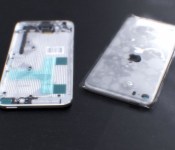
Alleged iPhone 6 Prototype Depicted in New Images
A set of images depicting what is said to be the shell of the next-generation were shared with MacRumors by an anonymous Twitter user earlier today. Australian writer Sonny Dickson, who shared several of the same images, claims that they were initially shared by someone in China.

It is entirely unclear whether the device in the images is a legitimate iPhone 6 part or a fake. Early prototypes of the iPhone 5s and the iPhone 5c exhibited a blank rear shell while the iPhone 6 shell in the picture clearly shows FCC text that is generally added to the phone at a later date.

The device depicted in the images has a width of 2.6 inches, while the existing 4-inch iPhone 5s has a width of 2.31 inches.
Even if these images are fake, they give a good idea of what a larger screened iPhone 6 could look like.
     |

Shazam’s new iPhone app gives you faster access to lyrics and music videos

If you’re like us, you usually stop using Shazam as soon as you’ve identifed that catchy tune — while the software has a lot of features under the hood, they haven’t been easy to find. That’s why the company is rolling out the first phase of an iPhone app redesign. Its new song interface (available later today) puts real-time lyrics front and center, and a song’s music video is just a short hop away. Shazam is also making it easier to buy or stream content, whether it’s a hit song or a TV show. iPhone owners should expect further big updates later this month. Android-based listeners will have to be more patient, however, as today’s interface revamp won’t hit their devices until sometime in the “coming weeks.”
Filed under: Cellphones, Home Entertainment, Internet, HD, Mobile
Via: TechCrunch
Source: App Store

Snapchat Vulnerability Can Lead to iPhone Denial-of-Service Attacks
 A vulnerability in the Snapchat app opens the iPhone up to denial-of-service attacks that can cause the device to freeze and crash, according to cyber security researcher Jamie Sanchez [Google Translation] (via The Los Angeles Times).
A weakness in the app’s system can allow a hacker to send thousands of messages to a Snapchat user in seconds, which can cause a crash that requires a hard reset to fix. Tokens generated by the app used to verify user identity can be reused by hackers to send a flood of messages.
By reusing old tokens, hackers can send massive amounts of messages using powerful computers. This method could be used by spammers to send messages in mass quantities to numerous users, or it could be used to launch a cyber attack on specific individuals, [Sanchez] said.
Sanchez demonstrated the flaw for The Los Angeles Times, sending a reporter 1,000 messages within five seconds in a denial-of-service attack, which caused the reporter’s iPhone to freeze until it restarted.
The security researcher declined to contact Snapchat with his findings as he believes the startup “has no respect for the cyber security research community” after ignoring previous app vulnerability reports.
Snapchat has faced multiple problems as its private messaging app has grown in popularity, including vulnerabilities that allowed users to bypass screenshot notifications and a recent security breach that compromised the user names and phone numbers of more than 4.6 million customers, which Snapchat was warned about ahead of time by a security group.
When asked about this particular vulnerability, Snapchat said it was unaware of the problem but interested in learning more.
| |

Steve Wozniak thinks Apple should build an Android smartphone

Yes, folks, this is real life. In an interview with Wired, at the Apps World North America conference, Steve Wozniak revealed his belief that Apple should create a phone using Google’s Android operating system. According to him, “There’s nothing that would keep Apple out of the Android market as a secondary phone market.” “We could play in two arenas at the same time.” As Wired’s Mat Honan notes, the idea of such a handset wouldn’t be technically impossible, but anyone who’s familiar with the Apple of today knows that the chances of this actually happening are slim to none.
“We [Apple] could compete very well. People like the precious looks of stylings and manufacturing that we do in our product compared to the other Android offerings,” Wozniak stated during the interview. Of course, this isn’t the first time (and very likely won’t be the last) in which the great, legendary Woz has spoken openly about his thoughts on Apple- and Android-related affairs — still, it’s always interesting to hear his perspective on the tech industry. Steve also spoke to Wired about the film Her, Moore’s Law and even why he thinks the Cupertino company has yet to release a smartwatch or TV. You can check out the full interview right here.
Filed under: Cellphones, Mobile, Apple, Google
Source: Wired
Steve Wozniak suggests Apple to make Android phones
Apple founder Steve Wozniak has found himself in a bit of a fanboy brouhaha after this week suggesting that Apple should consider make an Android smartphone.
Speaking with WIRED at the Apps World North America conference in San Francisco, Woz said:
“There’s nothing that would keep Apple out of the Android market as a secondary phone market.
We could compete very well. People like the precious looks of stylings and manufacturing that we do in our product compared to the other Android offerings. We could play in two arenas at the same time.” – Apple co-founder Steve Wozniak
This is not the first time Wozniak has looked at Android as a viable platform; he told us nearly 4 years ago that Android will win at the end. He’s also advised that Android does things better than the iPhone.
Obviously this isn’t something that’s going to happen, but it’s fun to think of the potential device. Hardware as polished as Apple’s, paired with a platform as robust as Android sounds like a recipe for great things. While we’re somewhat keen on the idea, die-hard Apple fans are getting their knickers in a twist. Take a look at the comments in WIRED and you’ll see fun banter on all sides of the argument.
Don’t forget to share your thoughts with us in the comment box below.
Source: Wired
The post Steve Wozniak suggests Apple to make Android phones appeared first on AndroidGuys.
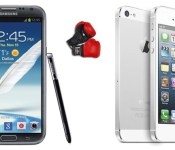
Apple and Samsung to spar over iPhone 5, Galaxy Note II at next trial

Perpetual court combatants Apple and Samsung have revealed their final list of allegations ahead of a trial starting March 31st. Though each started with five disputed patents, Samsung only has four now since a multimedia sync patent was knocked out earlier by Judge Lucy Koh. She also gave Apple a summary judgement win on its auto-complete IP, putting it ahead before the trial even begins. As for the rest, it’s worth noting that all of Apple’s patents are related to user interaction, while two of Samsung’s are standards-essential (FRAND) patents — which companies are normally obligated to license out. Samsung did have one point in its favor, however: the USPTO has agreed to take a second look at the validity of Apple’s aforementioned auto-complete patent.
As for the devices accused of infringing those patents, none are very recent models and many aren’t even on the market anymore. However, the historical sales of each will affect the size of any award given by the court if an allegation is upheld. That’s a lot of infringement for ultra-popular models like the Galaxy Note II, Galaxy S III, iPhone 5 and iPhone 4s, which have far outsold disputed models from the previous trial (like Samsung’s original Galaxy S). Other names on the list include the Galaxy Nexus and Galaxy Tab 2 10.1 from Samsung, along with Apple’s iPads 2, 3, 4 and Mini. Of course, there’s always the upcoming negotiations between company CEOs to avoid all that, but… nah, who are we kidding.
Filed under: Cellphones, Mobile, Apple, Samsung
Source: Foss Patents

Google Wallet for iOS update adds loyalty card scans and merchant notifications

Last week, loyalty card scanning was added to the Android version of Google Wallet, but today the iOS faithful can get in on the action. An update allows you to add all of those pesky rewards cards that clutter the ol’ billfold and ditch the unsightly key ring tags. Just like the previous release, you’ll just need to scan the barcode of each card and the app will automatically populate your account info. If you’ll recall, credit card snapshots were enabled on the iPhone change purse last month for adding a full range of payment options. In addition to the new frequent buyer functionality, Wallet will also notify you when you’re strolling past a merchant that matches one of those saved memberships. You know, just in case you’re having trouble finding the nearest GameStop.
Filed under: Software, Mobile, Google
Via: 9to5Mac
Source: iTunes

Apple says Happy Birthday Mac with a video shot solely on iPhones

Apple isn’t done celebrating the Macintosh’s 30th birthday just yet. To further mark the occasion, the folks in Cupertino dispatched 15 film crews to locales around the globe, armed with 100 iPhones to document just how far Apple has come in 30 years. The end result is 70 hours of footage culled into a minute and a half of gorgeous vistas and enough Apple gadgets to make you (or your wallet) groan.
Source: Apple
 AIVAnet