



Watch an artist bring cartoons to the real world using his phone

If you think that plain reality is boring, you’re not alone. Storyboard artist Marty Cooper (aka Hombre McSteez) has been bringing cartoons into the real world through a clever technique that draws on both his iPhone and the transparent plastic cells used by old-school animators. When he finds an interesting location, he both draws dozens of frames to match the scene and captures it all with an equal number of photos; from there, he stitches together short videos that bring everything to life.
The stop-motion technique leads to animations that are best described as an analog take on augmented reality, with interactions that you couldn’t reproduce after the fact without digital effects. An imaginary monster will cough up a real cat, for instance, while a mailbox will eat its own letters. Cooper hasn’t said how long he’ll keep producing these clips, but you can always check out both his social feeds and the highlight video below to see what he has been up to so far.
Filed under: Cellphones, Mobile
Source: Marty Cooper (Tumblr), (Instagram), (YouTube)

Bounden is an iPhone dancing game that gets better when you hold hands

You met on Tinder, you romanced on Snapchat, and now your smartphone can also help you to get physical. (No, not in that way, pervert.) An iPhone game called Bounden has just arrived at the App Store and it’s designed (in partnership with a ballet company, no less) to instruct you on how to make beautiful shapes with another person. As demonstrated in the video below, you both hold onto the phone and then try to move some gyro-responsive dots around the screen. Get it right, and you end up with some nice twirls, a high score and a partner for life. All for $4.
Filed under: Cellphones, Mobile, Apple
Via: Eurogamer
Source: Apple App Store
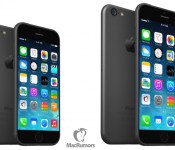
Apple May Adopt 1704 x 960 Resolution Display for Upcoming iPhone 6
Apple’s next generation iPhone 6 may adopt a higher resolution display, jumping from the current iPhone 5s resolution of 1136 x 640 to a sharper 1704 x 960 resolution, reports 9to5Mac. On the rumored 4.7-inch model, this would result in a display with 416 ppi and the same 16:9 ratio of the iPhone 5/5s/5c, while a 5.5-inch model at the same resolution would carry a density of 356 ppi.

With Apple’s rumored move to larger displays in the iPhone 6, much discussion has been centered around what resolution Apple will use and how any changes would affect developers. Some speculation had suggested Apple might simply maintain the same resolution as on the iPhone 5s, making a seamless transition for developers. This stretch process would, however, drop the pixel density of the display below Apple’s criteria for a “Retina” display.
Alternatively, Apple could boost the resolution to maintain or increase the pixel density, although this move would require work from app developers to maintain compatibility with the new devices. KGI Securities analyst Ming-Chi Kuo suggested last month that Apple would maintain the current 326 ppi density, which could be achieved by bumping a 4.7-inch display to 1334 x 750, and we previously explored how that might work.
But according to 9to5Mac, Apple may adopt an even higher-resolution display that triples the base number of pixels of the iPhone screen in both length and width. This “3x” mode would take the base “1x” resolution of 568 x 320 and expand it to 1704 x 960. Using this method, Apple would retain the Retina branding at 416 ppi and keep the current 16:9 ratio of the iPhone 5/5s/5c.
This means that Apple will likely be tripling the aforementioned “base resolution” (568 x 320) of the iPhone screen in both directions, and that the iPhone screen resolution will be scaled with an increase of 150% from the current 2X resolution of 1136 x 640. Of course, Apple tests several different iPhones and display technologies, so it is possible that Apple chooses to take another route for display specifications for the 2014 iPhone upgrade.
Apple has allegedly been testing this 1704 x 960 resolution and while the design specs for the iPhone 6 are undoubtedly complete, it is not known for sure if Apple has elected to proceed with this resolution. Apple may be preparing to launch the 4.7-inch iPhone 6 sometime this fall with a faster A8 processor and improved camera technology.
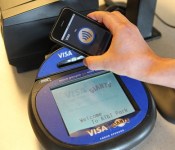
Apple Reportedly Integrating NFC Technology into iPhone 6
Apple is gearing up to incorporate Near Field Communication (NFC) technology in the iPhone 6, according to a report from BrightWire citing sources familiar with the matter. The report also notes that Apple has struck a deal with China UnionPay to integrate the banking company’s services into Passbook and elsewhere.

Apple is likely to incorporate a Near Field Communication (NFC) payment function in the next generation iPhone and has reached an agreement with China UnionPay on a mobile payment service, according to a source close to the matter.
…In addition to NFC payment, the two companies will also work together on another mobile payment solution that can be used for purchases in Apple Stores, added the source.
Integrating NFC into the iPhone 6 would be a bit of a surprise move by Apple, as the company’s head of marketing Phil Schiller stated in 2012 that the technology was “not the solution to any current problem.” Notably, KGI Securities analyst Ming-Chi Kuo predicted last month that Apple would integrate NFC chips into the next-generation iPhone alongside a host of other features.
The news also comes as Apple is pursuing plans to develop a mobile payment solution, which will be possibly tied to the Touch ID fingerprint sensor currently found in the iPhone 5s and reportedly headed for the iPhone 6 and next-generation iPads. It is also possible that Apple combines its existing Touch ID fingerprint scanner and NFC technology into the home button, as the company filed for a patent detailing such a system last September.
Apple is expected to unveil the iPhone 6 in two sizes of 4.7-inches and 5.5-inches later this year, with the smaller version of the phone launching ahead of the larger model. Aside from a larger display, the iPhone 6 will likely feature a thinner profile, a faster A8 processor, and an improved camera in the form of image stabilization. Apple is also said to be negotating with carriers for a $100 price increase on the iPhone 6.
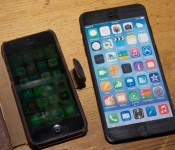
3D Printable 4.7-Inch and 5.5-inch iPhone 6 Mockups Now Available from Free Plans
Yesterday, designer Martin Hajek started selling a $25 set of 3D files that allow you to print your own 4.7-inch iPhone 6 mockup using a 3D printer. Today, a second set of 3D plans for both the 4.7-inch and 5.5-inch version of the iPhone 6 were released by MacRumors forum user Arthur Tilly and made available for free on Thingiverse.

Using measurements available from leaked design drawings, the plans allow anyone with access to a 3D printer to print out the alleged iPhone 6 design and see how it feels in their hand. The set includes an .STL file for 3D printing and an editable OpenSCad file that can be used to modify the design and add some of the missing details like the Apple logo.
So, here’s an OpenSCad file to create one, and the STL file it makes. There are some comments in there, so you can adjust things to your personal rumour preference. And improve it, of course. It doesn’t print the expected lump on the back for the lens (that would mean the entire build would be on supports, or it would have to be printed a different way around). Neither does it have an apple logo or some other details that would be nice. Maybe I’ll improve it soon, or feel free to do so yourself…
There has been no shortage of renderings of the rumored iPhone 6 that provide an advance look at the possible shape and size of Apple’s upcoming smartphone. A new post from Taiwanese blog AppleCorner provides precise measurements of 138 x 67 x 7.0 mm obtained from one of these mockups, while a Sonny Dickson leak shows physical mockups in roughly the current three colors used on the iPhone 5s.

While there are a variety of cases and mockups all pointing in the same direction for the design of the iPhone 6, it is important to remember that most of these products are essentially all based on the same sets of leaked design drawings, and they ultimately may or may not prove correct.
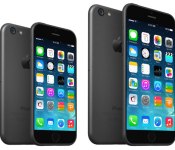
Report Claims Apple Will Launch 4.7-Inch iPhone 6 in August, Larger Model in September
A new report from Taiwan’s Economic Daily News (via Reuters) claims that Apple will unveil and launch the 4.7-inch iPhone 6 in August, with a larger 5.5-inch or 5.6-inch model to be released in September. The report also notes that Apple will produce 80 million iPhone 6 units this year, with Apple suppliers Foxconn and Largan Precision aiding with assembly and camera module production, respectively.

An August launch of the iPhone 6 would be a different strategy for Apple, as the company has typically released prior versions of the iPhone in September or October. The news also contrasts prior reports claiming that the 4.7-inch iPhone 6 will launch in September, with the 5.5-inch version not launching until later this year or early 2015 due to issues with the device’s battery life and display technology.
In addition to a larger screen, Apple’s next-generation iPhone is expected to include a thinner profile, a faster A8 processor, and an improved camera. Jefferies analyst Peter Misek also claimed last month that Apple is negotiating with carriers to raise the price of the iPhone 6 by $100.
Here’s what Apple does when US law enforcement wants your data

Apple insists that the US government doesn’t have backdoor access to its data (despite signs to the contrary). So what happens when law enforcement comes knocking at the company’s door, then? We have a fairly good idea as of this week. The company has published guidelines showing just what data it can provide to the authorities and the legal steps needed to get that information. As a rule, Apple can hand over anything from iCloud and its stores as long as there’s a proper court order, subpoena or warrant. It can also pull call records, contacts, text messages and media from locked iOS devices sent to its headquarters in Cupertino, although calendars, email and third-party apps are off-limits.
The company goes into significant detail about what it won’t do. It doesn’t intercept either FaceTime calls or iMessage chats, since they’re always encrypted; while some security researchers believe it’s possible to scoop up iMessages, Apple doesn’t plan on doing that itself. The tech firm also can’t remotely switch on Find My iPhone or grab GPS information, so don’t expect Apple to lead the feds to your door. Apple will warn you if the government is requesting information, but it will stay silent if a heads-up is either illegal or likely to put someone in immediate danger.
The policies are largely in line with those of other tech giants, and it’s clear that Apple wants formal requests before it turns over anything sensitive. As Ars Technica suggests, though, the only surefire way to prevent Apple (or any other third-party) from disclosing data is to keep it to yourself.
Filed under: Cellphones, Mobile, Apple
Via: Ars Technica
Source: Apple
Pegatron Reportedly Receives 15% of 4.7-Inch iPhone 6 Orders Ahead of September Launch
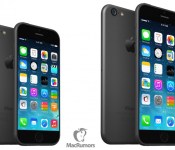
According to a new report from Taiwan’s Industrial and Commercial Times (Google Translate, via Mac Otakara), Apple supplier Pegatron has received 15% of the orders for Apple’s upcoming 4.7-inch iPhone 6 ahead of the device’s launch this September. The report also notes that Pegatron will produce a total of 50 million iPhones this year, which includes iPhone 6, iPhone 5c, and iPhone 4S units.
The report contrasts a story from Taiwan’s Liberty Times in January, which stated that half of all iPhone 6 orders were expected to go to Pegatron. A report last month also noted that Foxconn was preparing for iPhone 6 production in the second quarter of this year at its new Kunshan, China plant, as the company has recruited new workers in China to meet the desired number of orders. In addition to Pegatron, fellow Apple suppliers Foxconn and Hon Hai are also likely aide with production.
Last year, Apple shifted iPhone 5c production to Pegatron in order to improve supply chain risk management, allowing Apple to balance its supply chain and minimize the risk of potential supply chain disasters.
Apple is expected to launch the iPhone 6 in two different screen sizes of 4.7-inches and 5.5-inches. The 4.7-inch iPhone 6 will likely ship ahead of the 5.5-inch version, as Apple attempts to solve issues with the latter’s display and battery. Aside from a larger screen, Apple’s next-generation iPhone is expected to include a thinner profile, a faster A8 processor, and an improved camera.

Rising Sapphire Display Cost May Limit Production of 5.5-Inch iPhone 6
A new post on Weibo citing supply chain sources (Google Translate, via GforGames) claims Apple’s 5.5-inch iPhone may see a limited production volume due to the use of high quality sapphire as a display material. According to the report, the high cost of producing the sapphire may hinder Apple’s ability to include the scratch-resistant material in a large number of its smartphone models.
The report notes that Apple’s sapphire display may cost 1743 yuan (or $280) in materials, which is a significant jump over the $44 estimated for the 4-inch Retina display used in the iPhone 5s. This extra expense could increase the retail price of the next generation iPhone by approximately 50 percent, which may price the smartphone beyond the affordability point for most consumers.
These latest reports suggest that the sapphire screen costs around 1743 yuan (or $280), which would raise the final cost of the device to about 8000 yuan (or $1285) – at least in China. At the moment, the 16 GB iPhone 5S costs 5288 yuan in China ($850), whereas the beefier 64 GB variant is retailed at the price of 6888 yuan (or $1106)
This rumor corresponds with an earlier report from analyst Ming-Chi Kuo, who suggested that supply constraints may force Apple to reserve the sapphire display for premium iPhone models such as the 64GB version of the 5.5-inch iPhone 6.
Though Apple still buys sapphire from third-party suppliers, the company is starting to produce the material in small quantities at its Arizona facility. The sapphire production plant, which is financed by Apple and operated by GT Advanced, is expected to produce between 100 and 200 million sapphire displays, enough for an entire line of devices when it reaches full operating capacity.

Engadget Rewind 2008: BlackBerry Storm

Smartphone makers were still reeling from the arrival of Apple’s touchscreen-only iPhone when 2008 rolled around. Research in Motion (RIM), a mobile manufacturer best known for its BlackBerry line and QWERTY keyboard prowess, was at the top of its game and primed to jump into this emerging form factor. That year, it launched the BlackBerry Storm smartphone — a direct rival to Apple’s handset. As RIM’s premier effort in touchscreen smartphones, it offered an interesting spin on the interface with what it called SurePress. This was a touchscreen you could depress or click; an innovation RIM hoped would bridge the gap between the company’s current physical keyboard-accustomed clientele and the next generation of smartphone buyers. The Storm was RIM’s attempt to solve the “problems associated with typing on traditional touchscreens” and leverage its longtime experience with clickable keys. While the phone had a sleek and solid build, a vibrant 3.25-inch display and was backed by Verizon’s network, that SurePress technology ended up doing more harm than good.
Touch-typing on a screen that required a tactile click for each letter put a damper on the fluidity and speed of the messaging experience — a con echoed in many reviews. Not only that, but also the software, BlackBerry OS 4.7, wasn’t built from the ground up for touch-style navigation, making the experience far from intuitive. It was just a hopped-up version of the previous operating system that had powered QWERTY- and trackball-based devices like the Bold. It did have some impressive media capabilities, though, offering unparalleled Microsoft Office functionality on a smartphone for RIM’s enterprise customers.
Out-of-the-box, however, the Storm failed to include a way for Mac users to sync their audio and data, a glaring omission that would have otherwise helped lure back potential iPhone converts. RIM was forced to hurriedly address this, as well as other issues, with software updates to the phone and even pushed out an improved model a year later called the Storm 2.
RIM, as they say, was “once bitten, twice shy,” and it wasn’t until 2013 that it once again ventured to release an iPhone-like competitor with the touchscreen Z10. The company even used that device’s launch event to rebrand as BlackBerry. While the Z10 had an OS that was custom-tailored to the touch experience, the effort ultimately failed to ignite a comeback. And the results of that misstep have been haunting the company ever since.
Did you own a BlackBerry Storm? Add it to your Engadget profile as a device you had (or still have) and join the discussion to reminisce or share photos of your device with other like-minded gadget fans.
Filed under: Cellphones, Blackberry
 AIVAnet