



Apple Cuts Maximum iPhone Trade-In Value Down to $225 in U.S. and Canada [iOS Blog]
Last year, Apple launched its iPhone trade-in program at its retail stores across the United States, as customers could receive up to $250 for turning in an eligible device. Now, iPhone in Canada notes (via 9to5Mac) that Apple has reduced the value of iPhone trade-ins, with customers in the U.S. and Canada now only receiving up to $225. Before the change, the value of iPhone trade-ins had climbed to $275.
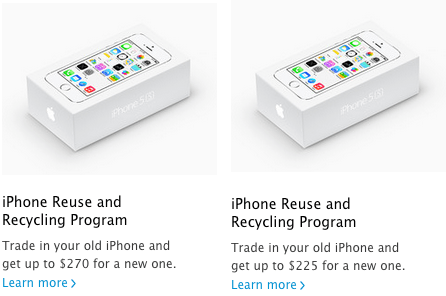
Before (left) and after (right) maximum iPhone trade-in values as listed by Apple
The adjustment comes as older iPhones typically lose their value over time, with Apple likely gearing up to launch the iPhone 6 this fall. Apple started the program before the release of the iPhone 5s and iPhone 5c last fall, with the company noting that it would discard of older iPhones in an environmentally conscious manner.
Since then, Apple has expanded the program to a number of countries, including the UK, France and Germany. Alternatively, Apple also offers a mail-in recycling program that allows customers to send in a device for store credit.
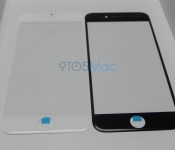
Possible 4.7-Inch iPhone 6 Front Panel Compared to iPhone 5s
As we creep closer to the fall release date of the iPhone 6, component leaks are becoming more frequent. While we originally saw the alleged front panel of the 4.7-inch iPhone 6 back in April, 9to5Mac has shared additional photos of the component.
Depicted in both black and white, the front panel in the photos features a slight gloss and somewhat tapered edges, lending credence to both rumors and mockups that have suggested the iPhone 6 will have rounded iPod touch-style corners.

The two front panels in the photos appear to have varying locations for the device’s front camera, and it is unknown why there is a difference between the parts. The white front panel camera hole appears to be centered above the earpiece as it is in the iPhone 5s, with a sensor to the left, but the black front panel’s front-facing camera hole is to the left of the earpiece as it was in the iPhone 4.
The front panel was also compared to the front panel of the iPhone 5s, showing the size differences between the two devices.

In addition to these photos of the 4.7-inch iPhone’s front panel, we have also seen images that depict manufacturing molds, backlight panels, and rear shells, but the latter component may not be from the actual iPhone 6 as a new rumor from Japanese site Nikkei has suggested the finished device may not have the thick antenna breaks that have been depicted on mockups thus far.
Though only the 4.7-inch iPhone front panel has been seen, Apple is expected to be releasing the iPhone 6 in a larger 5.5-inch size as well. It is unknown at this point if the larger iPhone 6 will be released at the same time, as there have been some conflicting reports on its potential launch due to production issues. The most recent rumors indicate a simultaneous release, however.
Both versions of Apple’s iPhone 6 are expected to be thinner and lighter than the existing iPhone 5s, with an A8 processor and various camera improvements. Rumors have suggested the larger iPhone will be positioned as the premium version, offering features like optical image stabilization, a higher storage capacity, and a $100 price increase over the 4.7-inch version.
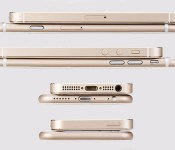
iPhone 6 Mockups of Low Quality, Antenna Breaks Not in Final Design
We’ve seen a steady stream of mockup devices that claim to represent the form factor of the rumored 4.7-inch and 5.5-inch iPhone 6. According to sources for Nikkei (via GforGames), these mockups provide a fairly accurate look at Apple’s upcoming iPhone hardware.

Though they may reflect the overall design of the next generation iPhone, the mockups, thus far, have been produced quickly with low quality materials. This haphazard construction misses a few key design elements, the most notable of which such as a curved glass display that Nikeei sources say will seamlessly transition into the aluminum shell that encloses the device.
This isn’t the first report that claims the iPhone will feature a curved glass display. A rumor earlier this year from Mac Otakara and one from Bloomberg last year also claimed the iPhone 6 will ship with a curved display that will lay flush with the iPhone’s round corners.

Nikkei sources also say the white stripes on the back of the some mockups will not appear in the final version of the iPhone 6. These lines are thought to mark out the location of the back panels and are not actual design elements. As a result, the backing on the iPhone 6 may closely resemble the iPhone 5/5s.
Apple is rumored to be preparing both a 4.7-inch and 5.5-inch version of the iPhone 6 for launch in September. The devices are thought to feature an A8 processor, an improved camera and a thinner design with oval buttons that are similar to the sixth generation iPod touch. The iPhone may be priced in tiers, with the larger 5.5-inch model costing $100 more than the 4.7-inch version.

Google drops Quickoffice now that its own apps can handle your work

Google bought Quickoffice to boost the productivity of its Apps suite, and it clearly accomplished that mission when it released a slew of mobile editing tools that merge Quickoffice’s file tech with Google Drive. Accordingly, the search firm is pulling the plug on the earlier software; it’s going to remove Quickoffice from both Apple’s App Store and Google Play “in the coming weeks.” You can still download it after that if you’re an existing fan, but newcomers will have no choice but to use either Google’s apps or their rough equivalents.
The move isn’t surprising, since there’s no need for Google to keep a redundant app hanging around. However, it marks the end to a long, long chapter in cellphone history. Quickoffice was a mainstay of mobile workers before smartphones took off, and it has run on most major (and not-so-major) platforms over the span of roughly 12 years — it’s sad to see the name go, even if the technology will live on.
Filed under: Cellphones, Mobile, Google
Source: Google Apps
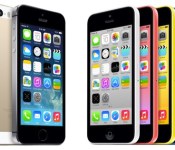
Walmart dropping iPhone 5c to $29, 5s to $99 beginning tomorrow

If you’ve been holding out for reduced pricing on Apple’s latest smartphones, you’re in luck. Walmart is planning to make both models a bit more affordable beginning tomorrow, according to a spokesperson. The 16GB iPhone 5c will be available in stores for $29 with a two-year contract (down from $49), while the 16GB iPhone 5s is expected to retail for $99, a 50-dollar savings. The retailer ran a similar promotion earlier this year, but this week’s move is permanent and should take effect beginning at 9 tomorrow morning (local time), available only in stores. We don’t have specifics for the 32GB versions, but pricing will be reduced for both of those models as well.
Filed under: Cellphones, Mobile, Apple
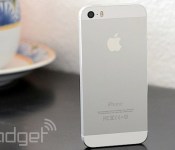
Costco is now selling iPads and iPhones, with a patchy selection

Costco has a rough history with Apple products; the big-box chain sold Apple goods for a while, but pulled them in a huff after it was denied a chance to sell the original iPad. Time must have healed those wounds, then, since the retailer is now selling iPads and iPhones. There are some solid bargains, depending on what you’re looking for. The iPhone 5s for AT&T, Sprint and Verizon is selling for $78 on contract, a full $120 lower than the regular sticker; you can also lop $100 off the price of Verizon-ready editions of the iPad Air (now $520) and iPad mini with Retina display ($420).
Good luck tracking down exactly what you want, however. T-Mobile gear is only available through some Costco kiosks, and the only iPhone 5c on tap is a 16GB blue model for AT&T (which, strangely, sells for more than the higher-end 5s). Likewise, you’ll have to shop elsewhere if you want a cellular-equipped iPad for AT&T or Sprint. But hey, it’s a start — and if you don’t mind getting Apple gear when updated models are likely just a few months away, you’ll save some change.
Filed under: Cellphones, Tablets, Mobile, Apple
Via: 9to5 Mac
Source: Costco (iPhones), (iPads)
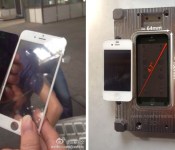
Foxconn Hiring Record 100,000 New Employees for iPhone 6 Production as Pegatron Also Staffs Up
Apple’s manufacturing partners are gearing up for the launch of new iOS devices later this year, with primary partner Foxconn bringing on 100,000 new workers to help assemble the iPhone 6, reports Taiwan’s Economic Daily News [Google Translate] as picked up by Reuters.
Hon Hai Precision Industry will recruit over 100,000 people in mainland China to produce the newest iPhone from Apple Inc, Taiwan’s Economic Daily News said, in what the report called the firm’s largest single hiring spree in China.
 Supposed front panel and manufacturing mold for larger iPhone 6
Pegatron is reportedly also involved in iPhone 6 production, with early reports on Pegatron’s production share ranging from 15% to 50%, but today’s report and other recent ones have put Pegatron’s share at closer to 30%. According to today’s report, Pegatron is boosting its workforce by 30% to support production of the next iPhone. The company made a similar hiring surge last year in support of its role as the primary assembler for the iPhone 5c.
The timing of these hiring surges is about right for the rumored iPhone 6 schedule, with production reportedly set to ramp up next month ahead of a launch around the usual September timeframe. Most of the iPhone 6 attention has focused on a rumored 4.7-inch model that is expected to represent the bulk of sale, but Apple is said to also be working on an even larger 5.5-inch model that may launch alongside or in the months following the debut of the 4.7-inch model.
Apple Looks at Using Wearable Sensors to Auto-Adjust iPhone Notifications and Alarms
The U.S. Patent and Trademark Office today published several patent applications describing an iPhone-based system to collect and analyze data from wearable and other types of accessory sensors, reports AppleInsider. Under the system, the iPhone could then track the owner’s activity and respond with appropriate notifications and changes in the device settings.
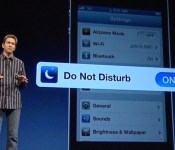
One patent application, “Method and apparatus for automatically setting alarms and notifications,” describes a method of associating motion data with a set of alarms. In this described invention, the iPhone could detect whether a user is sleeping or awake and adjust the settings for features such as “Do Not Disturb,” for example. These motion data points may be collected from a device that is worn by the user.

In a second patent application, “Method and apparatus for automatically repeating alarms and notifications in response to device motion”, Apple proposes methods to control the timing of notifications that are delivered to an iPhone owner. In this invention, the iPhone can use sensor data to determine when a user is napping and can turn off all notifications until the owner is awake and moving again.
A final patent application, “Method and Apparatus For Personal Characterization Data Collection Using Sensors,” describes how an iPhone-driven system could detect a user’s activity level from “motion sensors, location sensors, ambient light sensors, and the like.” This sensor-based data may be used to create a “personal scorecard” that compares your activity level to others in a group.
A processor-based personal electronic device (such as a smartphone) is programmed to automatically collect data sent by various sensors from which the user’s activity may be inferred. One or more of the sensors may be worn by the user and remote from the device. A wireless communication link may be used by the device to obtain remote sensor data. In certain embodiments, data from on-board sensors in the device–such as motion sensors, location sensors, ambient light sensors, and the like–may also be used to deduce the user’s current activity. In yet other embodiments, user data (such as calendar entries) may also be used to characterize the user’s activty.
As with many patent applications, these inventions may or may not be incorporated into consumer-level products. In this case though, these methods align with Apple’s rumored iWatch device, which is expected to ship with a variety of sensors to measure basic health and fitness parameters. Apple also recently announced a new Health app and HealthKit API that allows for the aggregation of health and fitness data from apps and wearable devices into a central repository that can provide an overview of a user’s relative health.
Police say Apple’s anti-theft switches have dramatically reduced iPhone thefts

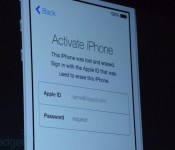
When mobile sales are booming, smartphone thefts are almost certain to rise. That’s something San Francisco and New York prosecutors George Gascón and Eric Schneiderman have been telling smartphone makers for over a year, but now they’re finally making some headway. After pressuring Apple to implement a “kill switch” inside its devices, the New York Times reports that police officers in London and San Francisco saw iPhone robberies in the cities fall by 24 percent and 38 percent respectively in the six months before and after the company implemented its Activation Lock feature inside iOS 7. Over in New York, robberies were down by 19 percent and those involving grand larcenies dropped 29 percent when the police compared data in the first five months of 2014 with the same period from 2013.
It’s clear to see those small changes are making a difference, and lawmakers have rightly commended smartphone makers for implementing tougher security measures. However, things will move forward significantly from July 2015, when all smartphones sold in the United States will come with an anti-theft tool set as standard. Apple and Samsung are on board, as are Google, HTC, Huawei, Microsoft (and Nokia), Motorola and the country’s biggest wireless carriers. It could save collective total of $2.5 billion a year in replacement costs and insurance fees, and some major headaches too.
Filed under: Cellphones, Mobile, Apple, Samsung
Source: New York Times

T-Mobile Test Drive lets you borrow an iPhone 5s for a week

T-Mobile clearly wants you to become a customer — the company’s “UnCarrier 5.0” move will get you an iPhone 5s to try out for a full seven days. At an event in Seattle today, the carrier introduced Test Drive, a service that will help customers avoid “buying blind,” giving you an opportunity to experience LTE at home before you commit to making a purchase. The service launches this Sunday and lets you borrow Apple’s latest handset for a week, at which point you’ll need to return the device to any T-Mobile store, even if you plan on signing up and purchasing a device.
After you sign up on T-Mobile’s website, the carrier will place a hold on your credit card in the amount of $700. Your loaner device (typically a refurb unit) will arrive with two-day shipping, and the clock starts ticking the moment you sign for the package. You’ll have free unlimited access to talk, text and data within the US (T-Mobile doesn’t want Test Drive to become an international loaner phone service, so this device is for domestic use only). A T-Mo rep will call you on day two to see how the test is going, and you’ll get a few reminders as the big day draws near.
If you return the phone with a cracked screen, water damage or entirely non-functional, you’ll be charged a $100 fee. The same penalty applies if you lose the iPhone — if you simply keep the device (which you’re absolutely not supposed to do), you’ll be responsible for the full $700. It’s available only once per household, so no, you can’t simply sign up again each week and avoid paying for a phone altogether. T-Mobile isn’t the first carrier to run such a program — Verizon’s own “test drive” ran from 2007 through 2009 — but reps appear to be committed to the initiative, with Test Drive set to continue indefinitely.
Filed under: Cellphones, Mobile, Apple, T-Mobile
Source: T-Mobile
 AIVAnet