


Google’s augmented reality turf war, ‘Ingress,’ arrives on iOS

Google’s Niantic Labs grew the potential audience for Ingress in a big way late last year, when it put out the finished Android version of its augmented reality game. Today, the studio is taking the next (if fairly obvious) step toward grabbing more players: it’s releasing the long-promised iOS edition. Both iPad and iPhone owners can now capture territory (“portals” in Ingress-speak) and build up their virtual skills by visiting real locations. The experience will be very familiar if you’ve played before; missions give you an incentive to keep coming back, while faction chats let you coordinate turf battles and meet fellow players. There aren’t any major tweaks or upgrades that we’ve seen. The game ultimately remains an excuse to explore new places, but that’s not a bad thing if you’re tired of visiting the same old haunts — hit the App Store if you’re willing to give it a spin.
Filed under: Cellphones, Gaming, Mobile, Google
Source: Ingress

Sapphire phone displays are tough, but the realities are even tougher

Sapphire is the birthstone of September, the traditional gift on your 45th wedding anniversary and a material associated with both luxury and ruggedness. It can be found in opulent products like jewelry, camera lenses and fancy watches. Given that, it’s also one of the toughest materials in the world, which makes it ideal for military-grade items like aviation displays and even missiles. So when rumors emerged that a sapphire display may be featured on the next iPhone, a chorus of excitement followed. However, many phone manufacturers don’t share the same sense of optimism that Apple might hold toward this different kind of next-gen display.
Earlier this week, YouTube vlogger Marques Brownlee showed what appears to be a sapphire display for the next iPhone. While the use of sapphire won’t be confirmed (or denied) by Apple until the product is released, the idea that it would want to use the material in its next flagship smartphone isn’t too hard to believe: The company announced late last year that it partnered with leading sapphire producer GT Advanced Technologies to build a manufacturing facility in Arizona. And according to a report from 9to5mac, the deal included enough new equipment to make around 100 million to 200 million iPhone-sized displays per year.
There’s one major reason why manufacturers are looking into using sapphire displays: The material is strong. Very strong. Sapphire is about four times as tough as glass. Gorilla Glass, regularly found protecting current smartphone screens, fares pretty well against hard objects too, but in order to scratch sapphire, you’d need to find something higher than nine on the Mohs scale — a system of measurement used to rate mineral hardness from one to 10, with 10 being the highest. (For comparison, Gorilla Glass rates a seven; sandpaper is a nine; and diamond is a 10)
It’s no coincidence that existing sapphire display phones are incredibly expensive.
Using sapphire instead of glass for a smartphone display isn’t a groundbreaking concept. The material is already used in the (admittedly far smaller) protective glass covering the iPhone camera, as well as the 5s home button (for Touch ID); and luxury brands like Vertu, Savelli and TAG Heuer use sapphire displays in their existing phones. However, it’s no coincidence that existing sapphire display phones are incredibly expensive — manufacturing sapphire is time-intensive, limited by available quantity and very costly. The price of sapphire camera lens covers is 2.6 times higher than glass. On a large phone display, the difference in cost is even higher; last year, GT Advanced reps estimated the cost for a pane of Gorilla Glass at $3, while sapphire was around $30.
I reached out to multiple representatives from major smartphone players and while most companies I talked to had already researched and analyzed the possibility of using sapphire, their impressions were much more lukewarm than I expected. “The cost and supply aren’t where we’d like them to be for sapphire to be practical just yet,” said Ken Hong, Global Communications Director for LG. “Sapphire’s durability and scratch-resistance are certainly attractive, but Gorilla Glass isn’t going to be displaced anytime soon.”
“Right now, the cost doesn’t justify the nominal benefit of sapphire over Gorilla Glass”
There are plenty of other issues associated with sapphire. It’s heavier than Gorilla Glass and the material remains less transparent than glass, meaning it would be more difficult to see the screen unless manufacturers add a special coating to increase transparency. (Even then, it still wouldn’t be as good as glass.) Additionally, each representative I talked to confirmed that while sapphire is durable, it certainly isn’t unbreakable. In fact, the larger the display is, the more brittle it becomes; “The sapphire is too hard to withstand bending,” said a representative of a top-tier phone maker who also asked to remain anonymous. “It’s easier to break during drop tests when the size of sapphire increases.”

Another representative replied, “In a cost-benefit analysis, I doubt [using sapphire] makes sense, unless there is some perceived marketing advantage.” Despite the potential downfalls of using such a material, that’s exactly what Apple would be gunning for by using the display in the iPhone: marketing power. Sapphire’s got a solid reputation; if the new iPhone features the same material used in premium watches, necklaces and earrings, and the company can throw it in without raising the price to consumers, Apple has a great new way to distinguish itself from the competition.
Only large companies with enough resources and bargaining power will be able to secure enough sapphire for mass production.
Even if other phone makers wanted to use sapphire displays, it would be difficult for them to secure enough inventory due to a very limited supply — a problem that the iPhone maker has avoided. “Apple uses its massive cash hoard to fund big upfront commitments for key components,” said Jan Dawson, chief analyst at Jackdaw Research. “[It’s] something that almost every other OEM but Samsung will struggle to do.” In other words, only large companies with enough resources and bargaining power will be able to secure enough sapphire for mass production.
This doesn’t mean that sapphire displays won’t be embraced in the future; they might just come in a different form. We wouldn’t be too surprised if multiple hardware manufacturers decided to use the material on smartwatches for now, since the screens — and the number of devices to build — would be much smaller and thus more affordable than smartphones. (The Moto 360, for example, is rumored to have a sapphire screen.) Then, as supply goes up and production becomes more cost-efficient, more doors may open for phone makers who want to give sapphire a shot.
Filed under: Cellphones, Wireless, Mobile, Apple, LG

China thinks the iPhone’s tracking features are a risk to national security

If there’s one thing that China has enjoyed doing this year, it’s taking pot-shots at the US as a result of the Snowden revelations. After banning Windows 8, allegedly pushing banks to ditch IBM hardware and calling for severe punishments on Apple and Google, the government is now gunning for the iPhone. Buried deep in iOS 7 is a Google Now-esque location tracking feature that can offer recommendations and improve the mapping experience. China, via its state television mouthpiece, believes that the system’s logs could be used by nefarious researchers to extract state secrets. Of course, as the company points out, the data is only uploaded to Apple’s servers with your explicit consent, and can be turned off — but then again, perhaps this latest bout of saber rattling is destined to direct attention away from China’s own espionage record.
Filed under: Cellphones, Mobile, Apple
Source: WSJ

Chinese State-Run Media Labels iPhone’s Location Tracking a ‘National Security Concern’ [iOS Blog]
 China’s state-run media broadcast today labeled Apple’s location tracking services found iOS 7 and the iPhone a “national security concern”, reports The Wall Street Journal. The broadcast cited researchers who said that those with access to the country’s location data could gain “knowledge of the broader situation in China” and perhaps even state secrets.
The Chinese government said that it began developing these concerns about U.S. technology companies after the discovery of PRISM last year, which is a secret intelligence program ran by the NSA. In its broadcast, China’s state run media said that Apple would need to “take on any legal responsibilities” if any data leaks harmed citizens.
Last year, a privacy lawsuit concerning Apple’s location tracking services in iOS was dismissed by the US District Court of Northern California. The suit alleged that Apple was collecting location data in violation of its own privacy laws, however Judge Lucy Koh ruled that the plaintiffs had not provided sufficient evidence.
In the U.S., Apple has made a number of privacy-related moves in the past year, choosing to notify users of information requests from law enforcement and backing congressional bills to increase transparency in government surveillance.
The news also comes as Apple has made efforts towards improving its presence in China over the past few years, which include partnering with the country’s biggest carrier China Mobile and opening new Apple Stores in populated regions. CEO Tim Cook has also visited the country numerous times, meeting with government officials and China Mobile executives to discuss market growth. Apple also became China’s fifth-largest smartphone vendor in Q4 2013, taking 7% of the total market share in the country.
Note: Due to the controversial nature of this topic, the discussion thread is located in our Politics, Religion, Social Issues forum. All forum members and site visitors are welcome to read and follow the thread, but posting is limited to forum members with at least 100 posts.
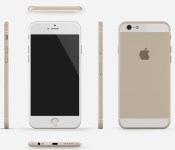
Report Claims iPhone 6 Will Feature New Dynamic Haptic Feedback Technology
Apple’s iPhone 6 will feature a new haptic feedback technology when it ships later this year, claims Chinese mobile phone information site Laoyaoba (Google Translate, via GforGames).
 iPhone 6 render by Tomas Moyano and Nicolas Aichino
Citing inside sources, the report claims that Apple will ship the iPhone 6 with a tactile feedback linear motor, which can allow the user to feel subtle vibrations depending on different app scenarios and even on specific areas of the touch screen. The report also notes that this new haptic feedback motor will cost twice or three times as much as the $0.60 vibration motor found in the iPhone 5s.
Apple has expressed interest in haptic technology in the past, filing a patent on the subject in 2009. That patent discussed the idea of allowing users to “feel out” the different elements on a web page with haptic feedback, noting that the lack of such a technology was a disadvantage for the iPhone’s multi-touch screen.
The iPhone 6 is expected to launch in September in two sizes of 4.7-inches and 5.5-inches. Aside from a larger display, the device is also expected to include a faster quad-core 64-bit A8 processor, and a thinner design with curved edges like that of the fifth-generation iPod touch. Both iPhone 6 models are also expected to receive an improved camera, which will come in the form of optical image stabilization for the 5.5-inch model and a new lens module for the smaller 4.7-inch phone.

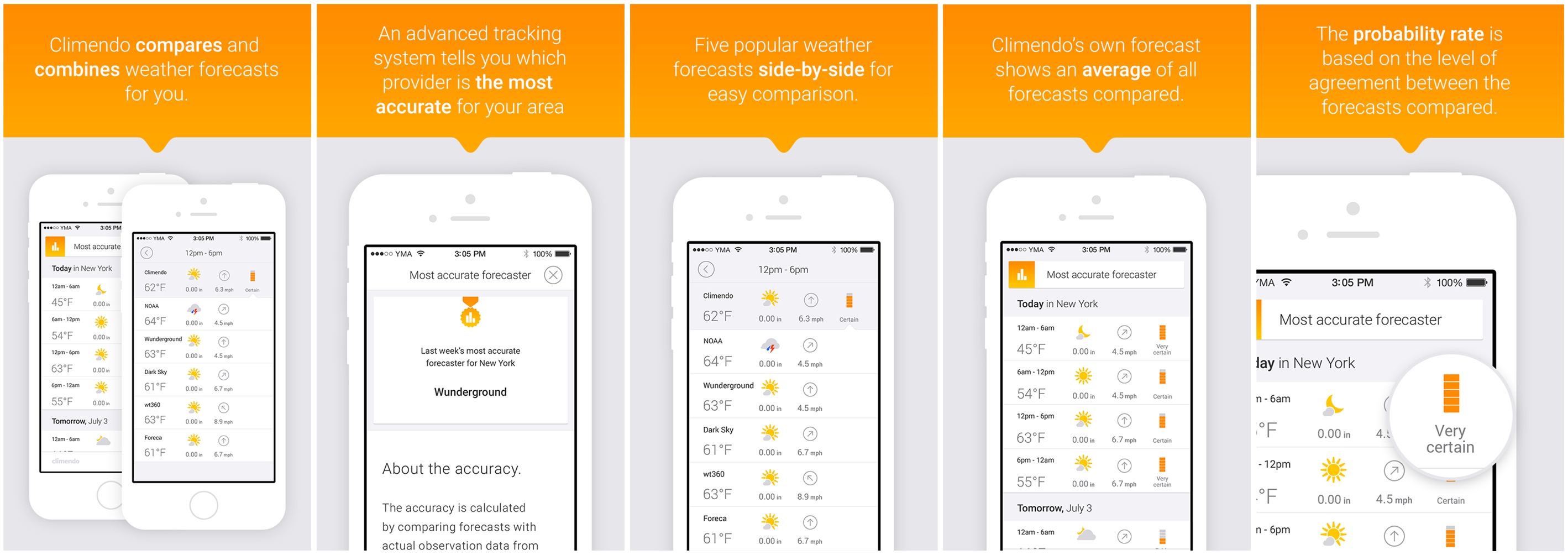
Climendo’s weather app compares forecasts to deliver the most accurate

Sure, your favorite weather app might look good, but can you really tell how accurate it is? Instead of relying on just one weather source to provide you with an overview of the week’s weather, Climendo wants to do things a little differently. It compares and combines data from the most popular and/or accurate providers to give you the most precise forecast possible. On top of that, it’ll also match predictions with historic data from professional weather stations, letting you know exactly which provider you can trust.
While the app launched in Sweden last year, it’s only now making a break for global success. It’s undergone a redesign, displaying a five-day forecast with six-hourly predictions of upcoming weather, which is supplied by 12 providers located in the US and Europe. They include NOAA, Forecast.io (Dark Sky), Weather Underground, Storm and TV2.dk, with more being added all the time. Based on their predictions (drawn from 10,000 weather stations around the world), the app generates an average forecast and calculates a probability rate (fairly uncertain, certain, fairly certain etc). The more readings that are similar, the higher the chances that you’ll experience the weather it tells you to plan for.
Currently, the app displays the temperature, the current weather condition and wind speed. However, the team says more detailed statistics will come to the app, breaking the data down so that “farmers, sailors, sun bathers, surfers can dig into what they think is the most important part to keep an eye on.” While the new features and design are currently only available to iOS users, the Android and web apps will receive a similar update in the coming weeks. Climendo is $0.99/69p for a limited time and can be downloaded from the App Store or Google Play.
Filed under: Internet, Software, Mobile
Source: Climendo, (App Store), (Google Play)

Apple’s ‘Find My iPhone’ Web Maps for iCloud.com Beta Move from Google to Apple
Apple is beginning the transition to move its Maps application online starting with the Find My iPhone web app on its iCloud.com beta website, as noticed by iPhoneBlog.de [Google Translate]. Though the public version of iCloud.com is still pulling data from Google Maps, beta.icloud.com now uses an online version of Apple maps for its location information.

Apple has been slowly switching away from Google Maps after using the competing mapping service in the early versions of the iOS. The Cupertino company dropped support for the Google-based mapping solution and introduced Apple Maps as part of iOS 6 in 2012. While iCloud.com still remained tied to Google, iOS apps such as Find My iPhone and Find My Friends also were converted to Apple’s mapping data in the same year.
After a highly-criticized launch, Apple has been making efforts to bolster its mapping data, recently improving its points of interest database as well as notifying users when reported problems had been fixed. Apple was said to be adding indoor mapping and other new features to Apple Maps in iOS 8, but internal politics and the departure of key employees may have delayed those plans.
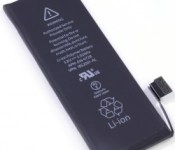
iPhone 6 May See Only Modest Battery Capacity Boost as Apple Pursues Ultra-Slim Designs
 A recent survey suggests consumers are looking forward to improved battery life as well as a bigger screen in the iPhone 6. But according to Chinese media reports (via GforGames), Apple’s next-generation iPhone may disappoint with a lower-than-expected battery capacity that will provide only a slight boost from the battery used in the iPhone 5s.
Chinese media sources claim the 4.7-inch version of the iPhone 6 will ship with a battery between 1,800 and 1,900 mAh, while the 5.5-inch iPhone 6 will include a 2,500 mAh battery. Though larger than the 1,560 mAh battery in the iPhone 5s, these modest capacity increases place Apple behind competitors with similar sized handsets, and leave some wondering if Apple is keeping the battery too small in order to design an ultra-slim device. The larger screens on the iPhone 6 will naturally create more volume for larger batteries while maintaining a slim profile, but the displays themselves are likely to require increased battery to support the higher resolutions.
Of course, these rumored battery capacities for the iPhone provide only part of the equation, with Apple’s tight software-hardware integration also contributing to overall battery life. It is also possible that real-world battery life may be better than these speculated hardware specs imply due to underlying performance improvements added to iOS 8.
Apple is expected to unveil the iPhone 6 during a September media event. The company may debut both a 4.7-inch and a 5.5-inch version that could feature a faster A8 processor, an upgraded Touch ID scanner and an improved camera with some form of image stabilization.

Mythbuster Adam Savage explains how to bring cartoons to the real world with an iPhone

Last month, you might remember seeing the work of storyboard artist Marty Cooper (aka Hombre McSteez). If you didn’t (then go watch it right now), he’s the man behind “Aug(De)mented Reality,” a three minute collection of entertaining stop-motion cartoons that have been brought into the real world. He does so using only transparent plastic cells, a sharpie, Wite Out, then capturing it all on his iPhone 5s. If it left you wondering what iPhone app Cooper uses (StopMotion Recorder) or how he manages to match each frame with the scene, then you’re in luck, as he’s taken the time to show none other than Mythbusters legend Adam Savage the tricks of the trade. In the video below, Cooper unleashes one of his creations inside the workshop, giving you a taste of how to bring your own imaginary monsters to life without any special effects.
Via: TUAW
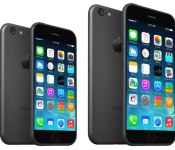
Report Claims September 25 Launch for iPhone 6, 16GB 5.5-Inch ‘iPhone Air’
Apple will look to announce the iPhone 6 on Monday, September 15th ahead of a launch on Thursday, September 25, according to various Chinese media reports citing “inside sources” (Google Translate, via GForGames). The sources also claim that the larger 5.5-inch iPhone will be called the “iPhone Air”, with the 16GB version selling in China for 5,998 yuan ($965). Meanwhile, the 4.7-inch version will reportedly start at 5,288 ($850) for 32GB, which is the current price of the 16GB iPhone 5s in China.
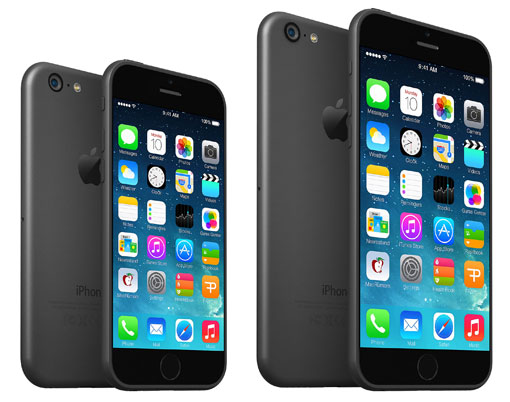
The report contrasts a story from Chinese web portal Tencent last month claiming that Apple would launch the 4.7-inch iPhone on Friday, September 19, which would be in line with the past two iPhone launches. Apple typically launches new products on a Friday, while a Thursday launch would be unlikely.
Furthermore, Apple abandoning on the 16 GB model on the 4.7-inch iPhone 6 would make it likely that the company does not include such an option on the bigger 5.5-inch version. A report from Wei Feng last month noted that Apple would offer a 128GB variant only for the 5.5-inch iPhone 6, stating that the storage size difference would act as a major differentiator between both models. It is possible that Apple may call the 5.5-inch iPhone 6 the iPhone Air, as suppliers were once rumored to be using that name when referring to the device.
It is unknown whether Apple will launch both the 4.7-inch and 5.5-inch iPhone 6 simultaneously. Bloomberg claimed last month that company would be doing so, as previous reports noted issues with display technology and battery life would delay the device’s launch.
Aside from a larger display, the iPhone 6 is expected to come with a thinner profile, a faster A8 processor, and other new features. The camera of the 5.5-inch iPhone 6 is also said to feature an optical image stabilization system, while the smaller 4.7-inch iPhone will use a new lens module.
 AIVAnet