



Leaks, lies and the bottom line

“The iPhone 6 will be released globally on September 19th,” an email in my inbox reads. I don’t know who the tipster is, nor how they came across this nugget of information. The communication came from an email service called Leak, which allows anyone to send emails anonymously so the receiver can’t trace it or reply to it. It could’ve come from Apple CEO Tim Cook himself and I’d have no way of knowing. (Though I doubt it.)
Leaks like this not only show up all the time, they’ve increased in number over the years — and now that it’s easy to start anonymous rumors without accountability, our inboxes will simply give up. We are becoming a leak-obsessed culture. Nearly everyone wants to know about tomorrow’s devices, today, and few (if any) smartphones get launched without someone spilling the beans. The next iPhone hasn’t even been announced yet, but millions of people already think they know what it looks like and what it will do, thanks to images of its supposed chassis, casing and sapphire display. Even if the leaks aren’t accurate, it’s too late — there are likely plenty of folks who have already (bizarrely) decided whether to buy it or not.
Spoiler alert!

Leaks like the iPhone 6 images are the consumer electronics equivalent of spoilers. The “show” in this case is the product launch event in which new devices are shown off to the world for the first time. Accurate or not, leaks tarnish the experience of seeing the final product officially unveiled: They set expectations too low or too high, and you’ll probably look elsewhere for a new device if the images are unflattering. A smartphone’s fate could be sealed before it officially exists.
While most people hate spoilers — try tweeting about the end of a Game of Thrones episode on a Sunday night, I dare you — they seem to love leaks. When popular vlogger Marques Brownlee showed off the alleged next iPhone’s sapphire display cover in a video, it generated millions of views. Professional leaksters like Sonny Dickson and Evan Blass (who recently retired his @evleaks persona) have amassed hundreds of thousands of followers eager to see the next big thing.
While most people hate spoilers, they seem to love leaks.
Leaks are a rule, not the exception, in our increasingly connected world. Rumors can originate from multiple sources: Employees willing to risk their careers to get the word out; publicly accessible websites and listings, including the FCC and China’s TENAA databases; controlled leaks sent out by the company on purpose; and a network of suppliers, partners and carriers who all get their hands on the device closer to release. “[Companies] rely on a fairly complex supply chain of parts and manufacturing provided by other companies, and as such it’s extremely difficult to avoid leaks,” said Jan Dawson, chief analyst at Jackdaw Research.
Even worse, apps like Leak and Secret (which allows you to post confessions to friends anonymously) make it harder to distinguish truth from fiction, because it emboldens both the legit tipsters and the imposters. A week before Google VP Vic Gundotra left the company, someone posted a Secret claiming that the exec was interviewing; shortly after, another post on Secret declared that TechCrunch Editor-in-Chief Alexia Tsotsis would leave the company the next day. (Tsotsis appeared on video the day of her rumored departure to prove that she was, in fact, not leaving.)
Collateral Damage

When Apple’s iPhone 4 prototype was left in a bar, the company’s curtain of secrecy lifted like nobody had ever seen before. This mistake arguably got more press coverage than the official unveiling itself, but company attorney George Riley stated in court documents that the incident cost his employer immensely. Riley said: “By publishing details about the phone and its features … people that would have otherwise purchased a currently existing Apple product would wait for the next item to be released.” That said, Apple’s iPhone release schedule is hardly unpredictable, evidenced by the fact that it rarely moves launch events to other times of the year; most fans were likely already aware that the iPhone 4 would come out soon, and were going to wait until it arrived in stores regardless. But in theory, any unforeseen hit to potential quarterly sales could be devastating to the company’s earnings reports and investor expectations.
Dawson believes there are two scenarios in which leaks cause financial harm: A new phone appears to be coming out sooner than people expect, which typically decreases sales; and when unflattering leaks make the phone look less compelling than people hoped, prompting them to buy something else instead. Given recent whispers that the new iPhone will come in two sizes, both of which are larger than the 5s, the latter argument makes sense; if people trust those rumors, they may have already decided whether or not they’ll buy one.
Much of the damage comes during product launches, the result of deflated hype that normally builds ahead of the keynote.
For a company like Apple, loss of sales is only half the issue. Dawson argues that much of the damage comes during product launches, the result of deflated hype that normally builds ahead of the keynote. “[Apple] relies on showmanship and the big reveal, and leaks take the wind out of that pretty badly, especially if they’re detailed and accurate.” When companies are eager to wow audiences with a whiz-bang presentation, they put a lot of emphasis on the element of surprise and — they hope — delight.
Ken Hong, global communications director at LG Electronics, reckons the in-hand experience of the device itself (or at least the first impressions from the press) outweighs the damage that any rumor could do to the company. “The industry has evolved to the point where journalists don’t attend press conferences to only hear product details, but also to experience products and to meet the people behind the products.”

Damage caused by false leaks are difficult to predict, because it depends on the expectations they set. “The only time [inaccurate rumors] really help,” said Ramon Llamas, mobile analyst at IDC, “is if that company surpasses those expectations, in which case, we’re all happy.” One example Llamas used was when rumors in 2006 claimed that the original iPhone would look like the iPod classic, complete with a click wheel. The final product was fortunately nothing of the sort. (We later learned that Apple had considered a click wheel early on, but dropped the concept for a touchscreen.)
Alternatively, inaccurate leaks can also lead to disappointment when the product is finally announced, if expectations are too high. Early rumors indicated the Samsung Galaxy S5 would come with a quad HD display and eye scanner. Later reports refuted these claims, and each new leak leading up to the launch event felt like a downhill plunge to many eager fans because the flagship just didn’t have the same oomph as the first leaks suggested. Samsung eventually released a quad HD version of the GS5 later, but it’s currently only available in Asia.
With so many false rumors floating around, Hong says it’s difficult to prove that leaks hurt a company’s bottom line. “No one knows if the leak is true or not until the company confirms it,” he said. “It may have been different five years ago when everyone believed the leaks they heard, but that’s no longer the case.”

Blass believes the positive results are more evident than the negative. “Whenever you see hundreds of comments in a leak thread, discussing the most … minute details of the leaked device, that’s a big win for the manufacturer,” he said. “The main goal of a marketing team is to get new product in front of as many eyeballs as possible.” Instead of enjoying one or two news cycles, leaks give a product exposure for a much longer period of time.
Companies can also use public reaction from leaks as a focus group. Sonny Dickson, a full-time leakster known for his Apple and Samsung rumors and images, says that feedback based on early images and rumors can help companies make a few last-minute product tweaks. “I’m just a part of the product cycle,” Dickson said.
Regardless of how it impacts the company, all of us — the consumers — are directly affected. Leaks and rumors typically embody our first impressions of an upcoming device, and we tend to have an early emotional attachment or detachment to it. Seeing a cool new phone for the first time is thrilling and exciting; it satisfies our inner geek. But it also influences our decision to buy or pass on the rumored device. Additionally, we’ll tell friends and family about it, and the word of mouth will spread.
“The main goal of a marketing team is to get new product in front of as many eyeballs as possible.”
Leaks can encourage competition between manufacturers. “If I leak an Apple part that is very important to their next product and the public reacts well, I’ve just created pressure on Apple’s competitors,” Dickson said. “They’re going to have to work harder to counter this hype and create hype of their own.” Over time, this competition results in better products for consumers to enjoy, and increases the speed at which new features come out.
Blass points out that consumers and companies aren’t the only ones impacted by leaks. “In my mind, the biggest, and most disturbing, real-world effect of leaks has to do with the teams that build and market the handsets themselves,” he said. “You go to work every day, toiling in secret for months or even years, all in preparation for a single day, a single launch, a single moment in time, when the product is supposed to be revealed to the world, on stage, for the first time. Leaks take a lot of the magic out of those launches, and thus they slowly eat away at phone teams as they watch their carefully laid plans slowly laid bare for the entire world to see.”
Damage Control

Earlier this year, Mat Smith and I visited wireless companies in South Korea to be briefed on upcoming products. We had to sign non-disclosure agreements, which are written documents stating that we could not disclose the things we saw or heard until a later date. As we entered many of the buildings on one company’s campus, we were required to leave our electronic equipment at the door, and the list of unapproved devices included nearly every conceivable thing capable of recording imagery, sound or data. (So, nearly everything was banned.) Manufacturers are obviously taking steps to protect their trade secrets, yet the products we saw were leaked through other sources shortly after we returned home. Can anything be done about it?
The answer’s likely, “No.” Most companies do things like watermarking confidential firmware to track leaked screenshots, mandating non-disclosure agreements to be signed by partners and putting phones in boxy disguises when the team needs to test the network in the real world. But those actions only go so far to prevent leaks. After all, Blass retired @evleaks last week for personal reasons, but others will step up to take his place; the community of leaksters is extremely competitive. “It’s like putting a finger in one hole in the dike,” LG’s Hong said. “More [leaks] will appear.” One industry insider, who asked to remain anonymous, said their company cannot make contingency plans based on the likelihood that leaks will occur; they simply have to “roll with the punches.”
“It’s like putting a finger in one hole in the dike; more [leaks] will appear.”
High-profile launches are often the most difficult to keep quiet about. “The more people care about the information, the more likely it is to leak,” said Dawson. The biggest leaks are incredibly valuable: Gizmodo got its hands on the lost iPhone 4 prototype for a few thousand dollars and was rewarded with millions of page views. As long as the public craves the latest phone leaks, details will surface somehow.
Some executives, such as Huawei’s Chairman of Devices Richard Yu, have tried an “if you can’t beat ‘em, join ‘em” strategy. Yu has notoriously leaked images through Sina Weibo, a social media service in China. (He’s also discussed unannounced products with Engadget in multiple interviews.) Others have attempted to quell future leaks by inflicting punishments on those who make a living from leaking their products. Taylor Wimberly, former editor-in-chief of AndroidAndMe, said Motorola representatives kicked him out of a press event because he leaked the original Droid.
Companies will always fight leaks, but they will never win. Leaks are just a fact of life in our digital age, so consumers may as well embrace them. The question remains: With technology making it easier for any armchair Photoshopper to create deceptive rumors, won’t it become more difficult to separate the wheat from the chaff? Dickson says no, because it comes down to the leakster’s track record. “If [a leak] doesn’t pan out, are people going to trust the source the next time? When I leak a product, I leak it with confidence.” If all of his competition establishes a similar mindset, the future of leaks may not be bleak after all.
[Image Credits: Getty Creative, Gizmodo, @evleaks]
Filed under: Cellphones, Wireless, Mobile
.CPlase_panel display:none;

Celebrities outside of the US can now get Facebook’s Mentions app

If you didn’t already know, Facebook is targeting the celebrity set with a new iPhone-only app called Mentions. However, when it launched in July, it was only available to musicians, actors, athletes and government officials in the US. Today, the company has lifted one restriction, making it available to socially important people in over 40 countries worldwide, including the UK. The bad news is that you’re probably not a big enough deal to use it. Mentions is designed to help VIP’s interact with fans via their verified Facebook page, allowing them to post updates, host live Q&A sessions and identify if they’re trending. Tyrese Gibson supposedly used it to share news of Apple’s Beats acquisition with the world, but really it’s the overworked PAs trying to keep on top of their employers’ social lives who will be secretly rubbing their hands following today’s expansion.
Filed under: Cellphones, Internet, Mobile, Facebook
Source: Facebook Mentions (App Store)
.CPlase_panel display:none;
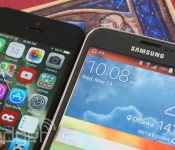
Apple and Samsung agree to drop all their patent lawsuits outside of the US

So much for fighting to the bitter end — Apple and Samsung have just announced an agreement that will see them end all patent lawsuits against each other outside of the US. For those not keeping score, that means they’re dropping cases in Australia, France, Germany, Italy, Japan, the Netherlands, South Korea and (phew!) the UK. The two tech companies aren’t automatically buddy-buddy after this, however. Besides continuing their existing American cases, they aren’t pursuing any licensing deals or other pacts that would avoid trouble in the future. Still, if you’ve been hoping that Apple and Samsung would finally make nice and focus on beating each other in the marketplace instead of the courtroom, you’re much closer to getting your wish.
Filed under: Cellphones, Mobile, Apple, Samsung
Source: Bloomberg
.CPlase_panel display:none;

Apple will reportedly announce its next iPhone on September 9th

Grab that box of sodium chloride, folks — it’s rumor time. Re/Code is reporting that Apple will hold its next iPhone event on September 9th. And while any publication can pull a date out of the hat and report on it, this particular entity has a good track record predicting Apple events (even when it was AllThingsD). This date places it just a few days after Samsung’s upcoming product launch at the IFA trade show in Berlin; traditionally, this is where the Korean manufacturer announces its next Note flagship smartphone, so it’s not too hard to see Apple taking on its arch rival with a similar-sized product. Still, it’s not set in stone, so we’ll let you know as soon as we get official word from Cupertino.
[Image Credit: Getty Images]
Filed under: Cellphones, Wireless, Mobile, Apple
Source: Recode
.CPlase_panel display:none;

Samsung’s Galaxy Alpha will allegedly be even thinner than the iPhone 5s

Samsung Galaxy Alpha leaks are extremely persistent. This might indicate that the August 13 will indeed be the device’s release date, as it was rumored. We’ve seen images of the device and alleged specifications from multiple sources, you can check all that out if you follow this link. New images of the device leaked from… Read more »
The post Samsung’s Galaxy Alpha will allegedly be even thinner than the iPhone 5s appeared first on AndroidGuys.
.CPlase_panel display:none;

San Francisco airport beacons help the blind get around using their phones

San Francisco International is about to make life decidedly easier for blind and visually impaired travelers. The airport has teamed up with Indoo.rs to unveil a Bluetooth beacon system that will help these passengers find their way through Terminal 2 using only their phone. When users walk past one of the 500 transmitters, their devices will announce nearby points of interest; they can find flight gates, ATMs, information desks and power outlets without asking for help. An early version of the necessary app also has a directory for sighted visitors.
The guide technology only works on iOS devices so far, but The Verge understands that it will eventually support Android-toting guests as well. Indoo.rs expects the service to be available either late in the third quarter or early in the fourth (think September or October), although you won’t want to plan trips around that estimate — it’s up to SFO to flip the switch. Whenever the beacons are ready for action, they should give many fliers a new level of independence.
[Image credit: Thom Watson, Flickr]
Filed under: Cellphones, Transportation, Mobile
Via: The Verge
.CPlase_panel display:none;

Typo’s iPhone keyboard is back and it still looks a lot like a BlackBerry

Auto-correct fails can be pretty hilarious, but if you’d rather avoid them altogether (boo!) maybe a litigious phone case’s second coming is up your alley. See, earlier this year Ryan Seacrest’s iPhone accessory company, Typo, found itself on the wrong side of the law when BlackBerry filed suit against it. Why? Because, well, its product looked an awful lot like something you’d find on one of the Canadian outfit’s devices. But, that copyright infringement applied to Typo, not the almost identical Typo 2. As iMore tells is, the American Idol host has added a few new bits and bobs like a lock key, backlight and battery indicator to the keyboard that’ll hopefully distract Chen and Co.’s attorneys. The accessory starts shipping this September, but you can pre-order now for $99 — whether its maker is back in court by then is anyone’s guess.
Filed under: Cellphones, Mobile, Blackberry
Via: iMore
Source: Typo
.CPlase_panel display:none;
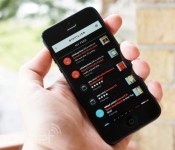
Distiller builds a social network for whiskey lovers

If you’re a whiskey drinker, finding the perfect bottle can be a daunting quest; just because something is well-rated doesn’t mean that it suits your tastes. You’re about to get some help from your friends, though, as Distiller has turned its recommendation service into a full-fledged social network. You can now follow others with similar palates to see what they say about that Colonel E.H. Taylor or Lagavulin you’ve been meaning to try. You can also leave comments, and everyone has a “top shelf” in their profile to reflect their absolute favorites. Distiller can’t promise that others will share your love of Bulleit Bourbon, but it should be easier to find that like-minded connoisseur. Swing by Apple’s App Store or Google Play to give this social spirit service a try.
Filed under: Cellphones, Internet, Mobile
Source: App Store, Google Play
.CPlase_panel display:none;
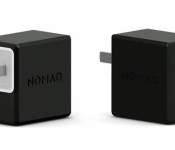
NomadPlus turns your iPhone’s wall plug into an external battery

Yes, you can technically buy external batteries that have their own plugs built-in. However, Nomad’s bring-your-own strategy is not just efficient, but cheap — the Plus will cost $39 ($20 if you use the code “nomadplus” within the next few days), or considerably less than a dedicated external battery like Mophie’s $50, 1,350mAh Power Reserve. You’ll have to wait until the end of November before you can pick one up, but it might be worth waiting if you don’t need the additional electricity right away.
Filed under: Cellphones, Peripherals, Mobile
Source: Nomad
.CPlase_panel display:none;

OneNote on iOS and Mac now lets you attach files

Like it or not, school is fast approaching. However, Microsoft thinks it can make the fall semester a little more bearable with big updates to OneNote on both iOS and the Mac. Both apps now let you attach files to your notes; you can include audio recordings from a lecture to add some context to what you wrote, for example. If you add a PDF printout, you can also jot down annotations.
There’s more than just attachment support in this upgrade, as you might expect, and some of the improvements are meant as much for the corporate crowd as students. You can now open and edit OneDrive for Business notebooks, and it’s possible to both lock and unlock password-protected sections if you don’t want everyone peeping your content. Other updates let you shuffle the order of pages in a notebook, and (on the Mac) share them as email. The refinements probably won’t improve your grades if you’re headed to class in the next several weeks, but they may help you make sense of hastily-written notes when you’re studying for a big exam.
Filed under: Software, Microsoft
Source: OneNote Blog
.CPlase_panel display:none;
 AIVAnet
