



Pushbullet launches apps for iPad, Mac and Safari

Pushbullet has revealed its latest suite of applications, but this time they’re designed purely for iPad, Mac, and Safari. Just like its Android client, these apps for Apple products allow users to copy and paste text across multiple devices, mirror notifications from their smartphone to their computer, and instantly transfer files, links and photographs between hardware regardless of its operating system.
Hit the break below to see Pushbullet’s new apps in action.
Click here to view the embedded video.
We’d love to know what you think of the new apps — so be sure to drop us a comment in the section below.
Download: iPad, Mac and Safari.
Source: Pushbullet
Come comment on this article: Pushbullet launches apps for iPad, Mac and Safari

Hulu’s former CEO lets you try his YouTube alternative

Hulu’s ex-CEO Jason Kilar has been extolling the virtues of Vessel, his would-be YouTube rival, for weeks. Today, though, you can finally find out whether or not it’s all that it’s cracked up to be — Vessel has launched an invitation-only public beta. You’ll have to watch on an iOS device or the web (Android is coming “soon”), but you’ll otherwise have a month’s worth of unfettered access to the service’s early, professional-level content. There’s no word on when Vessel will be available invitation-free. Even so, the beta is at least proof that the video hub exists as more than just a well-meaning concept.
Filed under: Cellphones, Internet, Mobile
Source: Vessel

Chrome for iOS plays nicely with Mac browsers, big iPhones

At long last, Google has overhauled its Chrome browser for iOS to fit into the company’s Material Design language — and thankfully, it’s a lot more than a fresh coat of paint. The newly released Chrome 40 gives you the expected bright colors, flat surfaces and fancy animations of Google’s latest interface philosophy, but its big deal is rich support for iOS 8. The app is now fully compatible with larger iPhones, and it’ll hand off web links to the preferred browser on your Mac (if you’re running OS X Yosemite, that is). If you’re a fan of Chrome but wish that it fit better into Apple’s world, you’ll want to swing by the App Store for the update.
Filed under: Cellphones, Internet, Software, Mobile, Google
Via: 9to5Mac
Source: App Store, Chrome Releases

Khan Academy brings its online course catalog to the iPad

Despite having an iOS app for some time now, Khan Academy hasn’t offered the full range of course material on those mobile devices. With an update today, though, eager learners can access the company’s full range of courses on an iPad. The new version brings 150,000 exercises to the mobile device, with the opportunity to get instant feedback. Khan Academy’s iOS software got some slate-specific tools too, including handwriting recognition and a “friendly guide” that observes your response time to suggest activities that’ll help you get better at the tough questions. There aren’t any plans to bring the app to Android or Windows yet, as the e-learning provider says iPad is it’s most popular platform behind the desktop experience. However, folks with one of Apple’s tablets can nab the update from iTunes now.
[Photo credit: Neilson Barnard/Getty Images for The New York Times]

Hangouts for iOS now shows your Google Voice messages

If you rely on your iPhone for Google Voice, Hangouts just became much, much more useful. As on Android, the messaging app’s iOS version now shows your Google Voice texts and voicemail — you won’t have to switch apps just because you’re embroiled in an online conversation. There are a few tangible upgrades even if you live well outside of Google Voice’s service area, for that matter. You now get smart suggestions for sharing your location when it’s relevant, and you can set status messages if you’re eager to let everyone know what you’re doing. All told, it’s easily worth swinging by the App Store for an update.
Filed under: Cellphones, Internet, Mobile, Google
Source: App Store
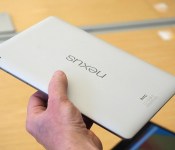
The truth comes out: the Nexus 9 wasn’t designed as an iPad killer
 With Google announcing its new Android Nexus devices and Android Lollipop on October 15th and Apple announcing its new iPad lineup on October 16th, you could have been forgiven for thinking Google intended to pit the Nexus 9 against the iPads and wanted to one-up their release by announcing the new Nexus tablet a day earlier. As it turns out, the Nexus 9 wasn’t designed as an iPad killer as Alberto Villarreal, the Nexus 9’s head industrial designer, elucidates:
“We wanted to accelerate the premium market for Android tablets… it has a lot of attributes and definitely will bring the quality for other companies to do better.”
 In a lot of ways, this makes sense for both the Nexus 6 and Nexus 9, and indeed, many of Google’s previous Nexus devices – Nexus devices have always pushed the boundaries of what is possible in Android devices, both on a software and hardware level, so that manufacturers have something to aim for and surpass, something which the Nexus 9, at the very least, does for Android tablets. Obviously, Google has more recently toyed with affordable options like the Nexus 4, Nexus 5 and Nexus 7 (and to a lesser extent the Nexus 10) and it has proven to be effective, if not lucrative, but perhaps Google has seen the need to lead the Android market again, something which is epitomized by the HTC-manufactured Nexus 9. And as for why Google chose HTC to help manufacture and design the Nexus 9?
“We saw the One and really liked how their designs were very simple, focused on usability and removed things that didn’t need to be there… they have nice craft and precision details and materials.” says Villarreal.
And that’s something we can’t argue with. The Nexus 9 is now available to pre-order on the Google Play Store starting at $399 USD.
Source: engadget
//<![CDATA[
ord = window.ord || Math.floor(Math.random()*1E16);
document.write('‘);
//]]>
The post The truth comes out: the Nexus 9 wasn’t designed as an iPad killer appeared first on AndroidSPIN.
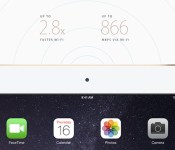
AT&T locks your iPad Air 2’s SIM so you can’t switch carriers without a new one

Apple’s iPad Air 2 launched with a very, very pleasant surprise: If you splurged on an LTE model, you could choose whether you wanted to jump on Sprint’s, T-Mobile’s or AT&T’s networks (along with EE’s if you’re in the UK), with nary a SIM card swap in sight. It seemed pretty brilliant, really: you get the ability to pick a data plan that works best for you even if it’s not from the same carrier each time, and Apple no longer has to juggle different iPad models for different carrier partners. Alas, if only everyone played by the same rules. At first we thought the only caveat was that Verizon hasn’t thrown its support behind Apple’s split-personality SIM, but it turns out if you sign up for a spot of surfing with AT&T, you won’t be able to switch to any other network without procuring another Apple SIM. Just lovely, no?
Reports of AT&T’s clinginess first started making the rounds on Twitter (see image below, courtesy of Twitter user @PilotMike), and Apple has confirmed to us that this is sadly just how the system works. Meanwhile, AT&T clarified its stance to Re/code, noting that while the iPad remains an unlocked device you can throw any ol’ compatible SIM into, you’re still on the hook for another Apple SIM card if you want to be able to play the field. When asked why AT&T chose to lock things down after activation, a carrier spokesperson told Re/code’s Ina Fried that’s “it’s just simply the way we’ve chosen to do it.” Going down this particular rabbit hole is AT&T’s prerogative, but hey — in doing so, it’s only giving its rivals more ammo.

Via: TechCrunch
Source: MacRumors

Queen Elizabeth II takes to an iPad to send her first Tweet

Queen Elizabeth II of England is pretty seriously old-school. She casually signs her name, “Elizabeth R.” (the “R” stands for “Regina” or, in English, “Regent”). She wears killer matching outfits (as seen above) that would be at home in 1962. But she’s also not above jumping into the modern age every now and again. Take, for instance, the tweet that she sent this morning — her first ever — from London’s Science Museum. It’s how she helped open an exhibit on “The Information Age” — a live-action tweet from an iPad.
There’s some contestation over whether she sent the tweet herself; the tweet originates on an iPhone, though the Queen was clearly using an iPad. Does it really matter? Do you care? This is all a publicity stunt anyway, right? Let’s all just enjoy that beautiful blue dress and the killer matching hat. The tweet, in all its glory, can be found below.
Update: We’ve got an especially hilarious update on the did she/didn’t she debate, straight from a spokesperson for the Queen of England: “If an iPhone was involved it was purely processology.” And no, in case you’re wondering, “processology” isn’t a real word.
It is a pleasure to open the Information Age exhibition today at the @ScienceMuseum and I hope people will enjoy visiting. Elizabeth R.
– BritishMonarchy (@BritishMonarchy) October 24, 2014
[Image credit: @BritishMonarchy]
Filed under: Internet, Software, Mobile, Apple
Source: Twitter
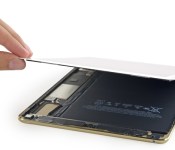
See what makes the iPad Air 2 so skinny

It’s safe to say that you don’t buy most Apple devices these days with the expectation that you can open them up, and it looks like the iPad Air 2 is no exception. Do-it-yourself repair shop iFixit has torn down the new tablet and found that it’s even tougher (or at least, more expensive) to fix than its predecessor in a few respects. That bonded display may be great for cutting back on reflections, but it increases the risk of breaking the panel when you’re prying things open — and it’ll cost more to replace if you do break it, since you can’t separate the glass from the LCD. Problems from last year persist, too, such as the use of glue to hold seemingly everything together instead of clips or screws. Is this a deal breaker if you’re set on getting an extra-slim iPad? Probably not, but it’s something to consider if you normally prefer to fix gadgets at home instead of taking them back to the store.
Source: iFixit
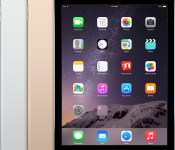
First iPad Air 2 Reviews: ‘Ridiculously Fast’, ‘Vibrant Display’, Thinner Profile Comes at the Cost of Battery Life
Following Apple’s October 16 event that saw the debut of the iPad Air 2 and the iPad mini 3, Apple provided multiple publications with review units. The embargo has now lifted on review posts, so we’ve gathered some of the relevant excerpts from each site in order to highlight general release reactions to the new tablet.

Apple’s iPad Air 2 is an entire millimeter thinner than the original iPad Air, and Apple has billed it as the thinnest tablet in the world. It offers a new A8X processor, Touch ID fingerprint support, an anti-reflective screen coating, 802.11ac Wi-Fi, and an improved 8-megapixel rear camera.
Walt Mossberg, Re/code:
So when Apple brought out new iPads last week, and I had a chance to test them over the past four days, you might think I’d be pretty excited about them — but I’m not. They are, in most respects, the best iPads ever made. But for average users, they represent only a modest evolutionary improvement over last year’s models, not the kind of big change that the first iPad Air or the Retina display iPad mini did last year. […]
The Air 2 didn’t allow me to hold or carry the tablet longer and more comfortably than the Air. Its weight of 0.96 pounds isn’t discernibly lighter than the Air’s weight of one pound. And its thickness of 0.24 inches is a barely noticeable reduction from the Air’s 0.29 inches.
Nilay Patel, The Verge:
The Air 2 has a vibrant, sharp display that looks almost painted on. Apple says the new antireflective coating on the Air 2 reduces glare by 56 percent, but I didn’t really notice it making a huge difference; you definitely can’t use it in bright sunlight. […]
Inside the iPad Air 2 lies Apple’s new A8X chip, which is a variant of the A8 found in the iPhone 6 and 6 Plus with additional graphics capabilities. It’s ridiculously fast — noticeably faster to load web pages and launch apps than my iPad Air, and it has so much graphics headroom that I’m eager to see how game developers take advantage of it.
Darrell Etherington, TechCrunch:
The 6.1 mm chassis just makes all the difference when it comes to the Air feeling like something that you could comfortably hold for long periods of time, and even for all-day computing, should you need it (and it’s easy to imagine an event coordinator, for instance, needing exactly that).
Our review unit came in Apple’s gold finish, and let me just say that on the iPad, that means there’s a lot of gold going on. Apple’s take on this particular metal color is better than most, but this definitely isn’t my favourite finish. The Air 2 in either space grey or silver still looks fantastic however, and the gold is definitely going to stand out in a crowd, especially if you’re also using the iPad as a camera.
Brad Molen, Engadget:
A thinner profile comes at the expense of battery size. The new Air’s is 5.1Whr smaller than the old one, but Apple still promises that you’ll get the same 10-hour battery life because the A8X is more power-efficient. Real-life use shows that the original Air still rules the roost; after a day of heavy use, I typically went to bed with around 20 percent left in the tank. If you’re only using it moderately — say, for casual content creation or consumption — you should get a little over two days. In our video test, in which an HD movie plays through the life of the battery, the Air 2 squeezed out 11 hours and 15 minutes, significantly lower than last year’s Air and about an hour short of the Samsung Tab S. […]

The Air 2 also doesn’t have a mute switch, which I didn’t think would be a huge loss until I actually found myself trying to use it and becoming frustrated more frequently than I expected. Your new options are to press and hold the volume down button or go into the Control Center and press the mute key; if you used the switch to lock screen orientation, you’ll need to do that in the Control Center as well. A microphone now sits where the mute switch once was; there’s another one right next to the camera.
Joanna Stern, The Wall Street Journal:
That anti-reflective screen also makes a great, though admittedly ginormous, viewfinder for snapping nature shots with the revamped 8-megapixel camera. It takes much crisper shots than before, and in many cases, ones as good as those I can take with my iPhone 6. But I won’t bring my iPad to some mountain peak, as some Apple promo shots suggest.
Besides, when I set the iPad Air 2 down for a second on a bench, it slid off and hit concrete, shattering the screen. Sure, I’m to blame, but if Apple wants me to climb every mountain armed with nothing but an iPad, ruggedness should be as important as anti-reflectivity.
Harry McCracken, Fast Company:
The weirdest fact about the iPad Air 2 is that Apple isn’t publicizing (or even acknowledging) one of its best new features. The tablet now has 2GB of RAM, up from the rather cramped 1GB allotment in the original iPad Air. (Some competitors, like the Galaxy Tab 10.1, have even more.)
Doubling the RAM means that the iPad can keep more apps and browser tabs in memory without having to reload anything. That results in a speed boost which which is very apparent as you hop between apps and load new web pages.
Lance Ulanoff, Mashable
To get an anecdotal sense of the performance, I installed a pair of console-level games: Asphalt 8 Airborne and Modern Combat 5: Blackout. Each of these games is notable for rich imagery and physics including smoke, water, rain, and reflections. The games looked and worked great on the original iPad Air and worked just as well — if not better — on the iPad Air 2.

However, Apple isn’t just blowing smoke when it says the A8X is more powerful. I ran Geekbench 3 on both Airs and found that that Apple’s A8X has 3 cores (the A7 had 2) and that the multicore score for the iPad Air 2 is nearly double that of the original Air. The singlecore score for the iPad Air 2 is only slightly better than that of the iPad Air.
Other Reviews:
Farhad Manjoo, The New York Times
Samuel Gibbs, The Guardian
David Pogue, Yahoo Tech
Chris Davies, Slashgear
Matt Warman, The Telegraph
The iPad Air 2 is currently available for pre-order from Apple’s online store, with prices starting at $499. Apple has not yet revealed when the new tablets will be available in stores, but the first pre-orders will be arriving to customers this week.
 AIVAnet