



South Korea shuns Huawei over fears that it spies on the US

We’ve long known that the US government has major security concerns about Huawei, despite the Chinese company’s insistence that it’s free of Communist Party influence. As a result, Huawei has been barred from taking on infrastructure contracts within the Land of the Free, but it appears this safeguard still isn’t enough: According to the Wall Street Journal, the US has now risked further diplomatic awkwardness by asking its key ally in the region, South Korea, to re-route all sensitive communications that involve the US away from any Huawei-built equipment. The State Department has partly denied this report, saying that South Korea has changed its policy out of its own volition, but it follows that there must be some degree of concern that Huawei’s systems in Korea are accessible to Chinese spies, and perhaps in turn to North Korean ones, too. The only other explanation is that the US and South Korea are holding a very public and very unfair grudge against a totally innocent company. Who knows what the truth is? Beyond throwing in the obvious pot-kettle metaphor, we’re not really qualified to comment.
Filed under: Cellphones, Internet, Mobile
Via: Reuters
Source: Wall Street Journal
Huawei bringing smartwatch to Mobile World Congress
Chinese hardware maker Huawei will bring its own smartwatch to Mobile World Congress later this month, says the Wall Street Journal. In addition to its first wearable device, Huawei will also introduce a pair of tablets and a new smartphone. The phone will be the successor to the Ascend P6, which has been rumored as of late to be the Ascend P7 “Sophie”. Unfortunately, Huawei stayed tight-lipped about the smartwatch; we’ll have to wait until February 24 to find the official details.
The post Huawei bringing smartwatch to Mobile World Congress appeared first on AndroidGuys.
The week’s best Android rumors (February 7)
HTC Nexus tablet
HTC and Google may again partner for a Nexus product, this time a “high end” tablet. Details are very light at the moment, however it’s rumored for release in Q3 2014.
Asus 8-inch Nexus tablet
Google and Asus will release an 8-inch Nexus tablet by the end of April, says semi-unreliable Digitimes. Rather than fighting it out in the 7-inch space yet again, Google wants to put distance between the larger smartphones and other tablets.

Samsung Galaxy S5
Samsung will reportedly tone down the introduction of the flagship smartphone when it’s introduced later this month, says the New York Times.
As for the hardware, the latest chatter says we should expect a 2.5GHz quad-core Snapdragon processor or an octa-core 64-bit Exynos SoC clocked at 2GHz – varies by market. Additionally, the display may be a 5.2-inch/5.25-inch AMOLED display with WQHD resolution (2,560 x 1,440 pixels). Rounding the specs, we’re told to look for 3GB RAM, 32GB/64GB/128GB internal storage capacities, a 16-megapixel rear camera, a front-facing 3.2-megapixel camera and a 3,200 mAh battery. Reportedly, this is will be the first Samsung flagship to feature an all-metal case.
Samsung Galaxy S5 Active
As we’ve seen with the Galaxy S4, Samsung is alleged to be working on a waterproof version of the upcoming smartphone. It’s not known if it will arrive at the same time as the standard model.
Samsung Galaxy S5 Zoom
Indian import database Zauba is listing a Samsung SM-C115 “mobile camera for R&D purpose”, leading some to assume this is the camera-centric version of the forthcoming flagship.

Samsung TouchWiz UI
Leaked screenshots, which have since been pulled, show flatter user interface elements in Samsung’s S Health app. Presumably, Samsung will employ the same aesthetics across all of its apps in upcoming devices.

Sony’s nearly bezel-free smartphone
Two images posted on Chinese-language Digi-Wo forum might be our first look at Sony’s next flagship smartphone experience. Although they are blurry, the photos do show a handset with almost zero bezel around the screen, something that could lead to smaller devices with bigger screens.

HTC Desire 310
The upcoming Desire 310 may be rather unique as it pertains to the software front. Leaked photos suggest the device could run a stock Android experience with HTC’s BlinkFeed sprinkled atop.
Huawei Ascend P7 “Sophia”
Huawei’s first smartphone to come with KitKat under the hood is alleged to be the 5-inch Ascend P7. Rumors say this model will have a 1080p HD display, quad-core 1.6GHz HiSilicon 910 processor, 2GB RAM, 16GB internal storage, and a 2460mAh battery. The front side should house an 8-megapixel camera with the rear offering a 13-megapixel shooter.
Samsung Galaxy Grand 2 with LTE
Another version of the Samsung Galaxy Grand 2 is on the way, according to a user manual found on Samsung’s website. The key difference between this and the other model is that users can tap into 4G LTE data connectivity.
The post The week’s best Android rumors (February 7) appeared first on AndroidGuys.
Huawei’s new high-resolution tablet may give the Nexus 7 a run for its money

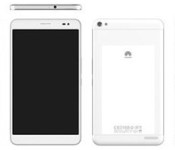
There isn’t much choice among 7-inch Android tablets with high-resolution screens — the Nexus 7 is frequently the only practical option. However, it’s about to get a proper challenger. China’s TENAA has certified the Huawei MediaPad X1 7.0, a small slate with a 1,920 x 1,200 display. It’s not clear that the X1′s 1.6GHz quad-core Hisilicon processor will outperform the Snapdragon S4 Pro inside the Nexus, but the device will be a featherweight at just 8.4 ounces and 0.3 inch thick. There’s also 3G inside. About the only clear setback is the use of Android 4.2 — where’s KitKat, Huawei? The company hasn’t said when it might reveal the new MediaPad, but certification raises the possibility of an announcement in the near future.
Filed under: Tablets
Via: The Droid Guy, Android Community
Source: TENAA (translated)
Smartphone sales may have topped 1 billion in 2013, depending on who you ask

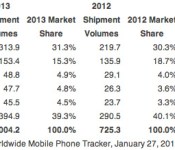
You once had to look to the broader cellphone market to see more than a billion phones ship in one year. Well, times have changed… at least, if you ask the right analysts. IDC now estimates that smartphone shipments topped one billion for the first time in 2013. However, Strategy Analytics begs to differ — it reckons that shipments fell just short, at 990 million. Whether or not the industry hit its symbolic milestone, the roughly 40 percent increase over 2012 data shows that the smartphone market had plenty of room to grow last year. Samsung led the pack with 31.3 percent of the the market, while Apple dipped to 15.3 percent as both Samsung and Chinese manufacturers (including Huawei and Lenovo) chipped away at its second-place position.
As for what happened in the fourth quarter? Both analyst groups say that Samsung was once again the top vendor, although they note that the Korean firm’s share was largely flat at 29 percent. Not that Apple fared any better, as its record-setting iPhone shipments weren’t enough to prevent a slide to 18 percent share. Huawei, LG and Lenovo were the real victors — each of them typically gained a point or more of share in the past year. IDC chalks some of this up to the rise of very low-cost smartphones, which are quickly taking over developing markets like China and India. Companies which focus on more expensive handsets, such as Apple and Samsung, have the most to lose in these areas.

Filed under: Cellphones, Mobile, Apple, Samsung, LG, Lenovo
Source: IDC, Strategy Analytics

Huawei pays off Apple and Microsoft-led consortium in Android patent spat

While Google does all it can to avoid the Android patent headache brought on by the “Rockstar” patent group, another of the consortium’s targets has decided it wants out. FOSSPatents reports that Huawei, one of seven Android OEMs sued alongside the search giant, filed a joint motion with Rockstar and its subsidiary to dismiss claims that it infringed on numerous networking and UI patents. The move suggests that the Chinese company chose the less costly option of settling instead of embarking on an expensive legal battle. Bear in mind that the Rockstar consortium counts Apple, Microsoft, BlackBerry, Sony and Ericsson as members, which closed the purchase of thousands of patents previously owned by Nortel for $4.5 billion. With a deal seemingly worked out, Huawei is free to use Rockstar’s patents without fear of future reprisals, leaving Samsung, LG, ASUS, HTC, Pantech, ZTE and Google firmly in Rockstar’s crosshairs. Huawei’s settlement prove decisive, however, as it demonstrates the group’s patent claims have merit, which could motivate the remaining phone makers to broker their own deals.
Filed under: Cellphones, Software, Mobile, Microsoft, Google
Source: FOSSPatents
Huawei tweaks Ascend P6 chipset, tacks on an ‘S’ for good measure

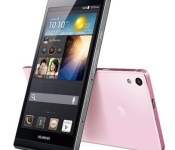
We had some issues with Huawei’s Ascend P6 when we reviewed it last year — despite a sleek thin design, a gorgeous display and a solid camera, it simply lacked oomph. Now the company has given the handset a slight revision, bumping its original 1.5GHz quad-core processor up to 1.6GHz. Unfortunately, the phone’s new silicon still doesn’t support LTE, and not much else has changed: the phone still has 2GB of RAM, a 4.7-inch display and a 2,000mAh battery. All in all, it doesn’t sound too different from the original model, but it Huawei did tweak its moniker; it’s now the Ascend P6 S. Well, that’s something. Folks looking for the revision will find it at Huawei’s Vmall store at the source link below.
Filed under: Cellphones
Via: GSMArena
Source: Vmall
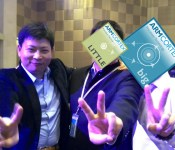
Huawei’s Richard Yu says octa-core HiSilicon chip is ready, will feature multi-mode LTE

It’s been a year since Huawei’s Richard Yu’s teased his company’s octa-core HiSilicon SoC, and according to the exec’s recent Sina Weibo post (screenshot after the break), said product is finally ready. In fact, Yu revealed that his company’s launched two new 28nm HPM chips. The octa-core model (likely the K3V3) features the usual quad Cortex-A15 plus quad Cortex-A7 big.LITTLE combo (as implemented by Samsung Exynos 5 Octa); and there’s also a new quad-core Cortex-A9 model (likely the K3V2 Pro), which succeeds the 40nm K3V2 that features the same architecture. What’s unclear is whether the octa-core chip will allow all eight cores to run simultaneously, but what we do know is that both chips come with a multi-mode LTE modem that will also handle both WCDMA and China Mobile’s TD-SCDMA radios.
Yu also made a separate post to say we’re entering the era of 64-bit octa-core processor (Cortex-A53 plus Cortex-A57) this year, but the message was deleted soon afterwards. What a tease. Anyhow, we have a feeling that Huawei will be showing off its first device powered by its own octa-core chip at MWC next month. That’s not to say Huawei’s saying goodbye to Qualcomm and MediaTek, though — Yu confirmed that he’ll have more “high-end” devices that will feature chips supplied by these two companies.

Via: Engadget Chinese
Source: Sina Weibo
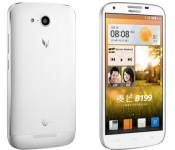
Huawei launches 5.5-inch B199 in China with a battery for hire

Huawei recently outed the Ascend Mate 2 with a colossal 4,000mAh battery that can actually charge other devices, and it’s now brought that tech to a mid-range handset. The 5.5-inch B199 is a successor to the A199, and packs similar specs: a 720p screen, 2GB of RAM, 16GB of storage (expandable via MicroSD slot), dual sims (3G only) and a quad-core processor. The new model, though, has a Snapdragon, rather than a Huawei K3V2 CPU and also carries a much larger battery: 3,000mAh instead of 2,100mAh. Huawei says that’ll power the phone through long browsing sessions and even let you charge other devices — though it’d be odd to be packing another cell phone when you already have one with two sims. And given those dual-sims, we’d not expect the $330 phone to be available outside China and similar markets.
Filed under: Cellphones, Mobile
Via: Engadget Chinese (translated)
Source: Huawei
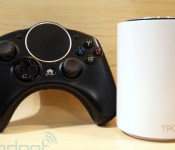
Huawei hops on the Android gaming bandwagon with Tron mini-console

The jury’s still out on Android gaming (exhibit A: OUYA), but that’s not stopping Huawei from taking a dive into that niche corner of the industry. Its Tegra 4-based Tron mini-console, announced here at CES 2014, pairs a cylindrical-shaped hub with a Bluetooth controller that hews quite closely to the Xbox 360 mold OUYA also went after. Before we get your hopes up though, take note that Tron’s for China only — at least, for now anyway. A Huawei rep did say that the company’s looking into further market expansion, but given its track record with smartphones in the US, we have a hard time believing Tron will see these shores anytime soon.
The Tron console itself runs a half-skinned version of Android JellyBean (version 4.2.3) that presents a clean menu overlay with feature tiles for access to games, Huawei’s store, video, application, settings and featured titles. That slick menu selection comes to a screeching halt, however, as soon as you attempt to select anything other than games, bringing you face-to-face with Android’s ugly underbelly — much like on the OUYA.
Storage-wise, the Tron will come in 16GB/32GB configurations, but that space can be expanded up to 64GB via a microSD slot at its base. There’s also support for Ethernet, USB 3.0, audio out, WiFi a/b/g/n/ac and 2GB RAM to aide the Tegra 4 chip inside. The Tron console, of which there are black and white versions, is housed in a glossy plastic shell (sorry, no flashing strips of neon light) with a large power button that nearly occupies its entire top. Overall, it’s an underwhelming design — something more than one Engadget editor referred to as “wastebin-like.” You can judge for yourself in the gallery below.
The Tron controller is an Xbox 360 controller by way of OUYA. So much so, that the button placement is nearly identical save for that giant, circular touchpad smack dab in the center. Users that pick up the controller will be greeted with four actions buttons (X, Y, A, B), four shoulder triggers, as well as buttons for home, mute, view and menu. There’s even a headphone jack just tucked beneath the front face. The controller is actually incredibly light, but that lightness comes across as a con rather than an asset. It just makes the whole thing feel cheap and disposable, an impression not helped by the materials used.
Gameplay was good, not great. There was a slight latency noticeable when effecting button presses, but nothing that seemed like it’d get in the way of the onscreen action. We weren’t able to get much clarity on the openness of the platform — a Huawei rep told us games would need to be optimized for Tron before appearing in the Store — but we assume side-loading Android games wouldn’t pose any problem. 4K playback is also supported on the console and was demoed from within the video submenu.
Huawei hasn’t locked down final pricing on the Tron just yet, but we’ve heard the Android mini-console should arrive with a sub-$150 price point. Again, it’s destined for China-only in Q2 of this year, but if you really need to get your hands on it, there’s always the option to import.
 AIVAnet