


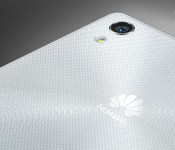
Huawei Acend P7 gallery

Here’s the latest flagship Huawei smartphone, the Ascend P7. Read more about its announcement here.


The post Huawei Acend P7 gallery appeared first on AndroidGuys.
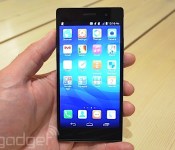
Huawei’s Ascend P7 wants to be the LTE phone of the people

With the Ascend P6, Huawei looked to build a smartphone that emphasized design and material quality over performance. Unfortunately, it shipped without LTE at a time when networks were making a big push on the new standard, and so marginalized the P6 in favor of devices from rival manufacturers. Lesson suitably learned, the company is back with the P7, a handset that’s marketed as a cheaper alternative to the Samsung Galaxy S5 or HTC One M8. Unlike its predecessor, it comes with LTE and a series of refinements that should eliminate all of the issues that were found with last year’s model. We’ve spent some time with the prototype, and wanted to share with you our initial impressions.
Unlike the previous generation, which had an aluminum band around the edge and a coated aluminum back, both sides of the P7 are coated in a generous helping of Corning’s Gorilla Glass 3. Despite resembling a bizarro-world iPhone 4, the metallic band doesn’t comprise part of the phone’s antenna assembly, so you’ll be spared any concerns over “death grip.” Speaking of which, the prominent microSD and SIM card slots remain down the right-hand side of the slab, but the headphone jack plug-cum-ejector pin is gone — it may have been a neat design trick, but it was hardly the most practical of features.
Despite having a 5-inch display, it’s also deceptively small, given that the bezels on either side of the 1,920 x 1,080 screen have been shrunk to under 3mm on either side. The in-cell Japan Display screen itself has a pixel density of 445 ppi, the same as the Nexus 5, and appeared to be bright and sharp — not that we had any issues with last year’s model. Speaking of which, the company wasn’t prepared to talk pricing, but we gather that the P7 will retail for the same rough bracket that you could grab the P6, hovering under $600.
The Ascend P7 comes with the company’s Emotion UI 2.3 that sits between you and KitKat (Android 4.4). As usual, there’s mostly refinements and finesses placed upon what we’ve seen before, including a low-battery mode that’ll push the phone’s UI into grayscale to warn you to find an outlet. It may not be new, but Huawei is also going to start emphasizing that you can now switch from Emotion UI to a simplified home screen that’s pretty reminiscent of Windows Phone 8. With big, bright blocks, it’s designed for smartphone novices and those with poor eyesight, and means that this device could supplant the Lumia 620 as a device you’d buy for an elderly family member due to its relative ease of use.

Huawei has no background in imaging technology, so for the P7′s camera, it once again teamed up with Sony for the BSI shooter on the rear side of the device. This time out, however, you’ll be using a 13-megapixel sensor and a lens with an f/2.0 aperture. You’ll also get the usual nifty tweaks including HDR and real-time filtering for all of those faux-Instagram shots of your dinner. The company is also working on a one-second snapshot function, whereby a sharp double-press of the volume key will instantly take a picture from standby mode. There are also options like audio snapshot, where you can take 10 seconds of ambient noise to accompany each image, and the ability to add text and watermarks to your pictures.
If you were excited at the 5-megapixel forward-facing camera on the P6, then the 8-megapixel unit (with an f/2.4, five-element aspherical lens) that replaces it will have you screaming in apoplexy. In addition to the face-beautification modes that were found on last year’s model, there’s now a Selfie Panorama mode, which will let you take a wide location shot with your fizzog obscuring most of the historic location you’re capturing.

One of our biggest complaints about the P6 had to do with the Huawei-made system-on-chip that ran things from within. The homegrown 1.5GHz quad-core K3V2 silicon was efficient, sure, but was entirely unable to keep up with smartphones carrying chips from NVIDIA or Qualcomm. Has the company learned its lesson? It’s too soon to tell, but we do know that it’ll be another homemade variant of an ARM Cortex-A9 with a quad-core 1.8GHz CPU, a Mali-450 MP4 GPU, 2GB of LPDDR3 RAM and 16GB storage.
When we tested the 2,000mAh battery on the P6, we were dismayed to see that it lasted for less than five hours on a charge. Huawei, however, claims that it acted quickly to switch battery suppliers in the wake of those early reviews, and produced several software tweaks to ensure that customers didn’t suffer from the same fate. The cell inside the P7 has only a modest increase, to 2,500mAh, but we’re told that the company has been working hard to make certain that it’ll have even more staying power, despite the huge demands of the new LTE modem.

All in all, the Huawei P7 is a device where time and effort has mostly been spent fixing the gripes of last generation’s hardware. The pre-production model that we used was comfortable in the hand with surprisingly solid build quality. Huawei may still be in the second or third tier of handset makers, but it’s easy to forget that it’s only been making phones under its own flag for less than five years. We’re looking forward to seeing what this device can do under the rigorous conditions of a full review, so check back in the near future to find out more.
Sharif Sakr contributed to this report.
Filed under: Cellphones, Mobile, Google

Huawei makes an investment in its international image

Outside of its home grounds, Huawei hasn’t had the easiest of times making a dent in markets such as the US and Europe. But that’s not to say the company hasn’t been been trying. Just last year, the Chinese communications giant outlined a plan to regain its share of the European smartphone market, with the focus being to build premium handsets and spend more money on research and development. Now, based on that foundation, Huawei founder Ren Zhengfei intends to expand his company’s presence in Europe by investing even more and boosting hires in the region.
In a recent interview with the Wall Street Journal, Zhengfei said that the company will further increase investment in European R&D, in an effort to change people’s perception of Huawei being a “mysterious” corporation. As part of this strategy, Huawei is set to “extend an employee incentive plan to all key non-Chinese employees this year in order to attract and keep top talent,” according to the WSJ report.
Across the pond, meanwhile, in the all-important United States market, Zhengfei believes that Huawei’s image has been temporarily tainted, after having to deal with accusations of holding corrupted ties to the Chinese government by US Congress. “I believe at the end of the day that it might take 10 or 20 years for the US to know that Huawei is a company with integrity and a good face,” Ren told the Wall Street Journal.
[Image credit: AP Photo/Huawei Technologies Co.]
Filed under: Cellphones, Wireless, Mobile
Source: Wall Street Journal
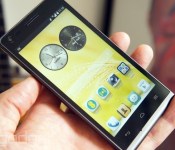
EE’s homegrown Kestrel smartphone now available for £99

EE announced at the end of March it would be taking its first stab at own-brand hardware with the Kestrel, a 4G handset for thrifty speed merchants. Well, the Android smartphone is now available to buy online or over the phone for £99 on pay-as-you-go, or from £14 per month on EE’s new entry-level 4G tariffs. Aside from its price, the Kestrel has a few other things going for it, like a capable quad-core Snapdragon 400 heart and Cat 4 LTE radio which can, in theory, handle the maximum 150Mbps download speeds of EE’s “Extra” plans. It’s now the cheapest way to jump on EE’s ever-expanding 4G network, and we have one in our possession, so keep an eye out for our full review in the near future.
Filed under: Cellphones
Source: EE
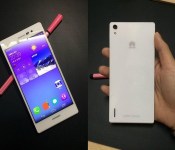
Huawei Ascend P7 photos leak ahead of launch

Only a few days before the Huawei Ascend P7 is due to be launched in Paris, the yet to be announced device has been leaked out.
Visually, the Huawei Ascend P7 shares the same design as the generation P6 before, with some subtle changes in the usual hardware and software enhancements.
The P7 is set to have a 5-inch 1080p display, Android 4.4.2 KitKat, a 13-Megapixel rear camera and a 8-Megapixel camera at the front. This is coupled with 2GB of RAM and a Quad-Core CPU.
SOURCE: cnBeta
The post Huawei Ascend P7 photos leak ahead of launch appeared first on AndroidGuys.

Huawei readies Ascend Mate 2 for U.S. launch

Huawei has opened up a new website for the Ascend Mate 2 ahead of an eventual U.S. debut. From the looks of things, the Ascend Mate 2 will be sold directly to U.S. consumers; pricing and availability are unknown.
Initially unveiled as CES a few months back, the Huawei smartphone features 6.1-inch 720p display, quad-core 1.6GHz processor, 2GB RAM. 16GB internal storage, and a 4050mAh battery. The rear camera offers 13-megapixels while the front-facing shooter packs 5-megapixels. Powered by Android 4.4 KitKat, the Ascend Mate 2 includes Huawei’s latest Emotion UI.
The post Huawei readies Ascend Mate 2 for U.S. launch appeared first on AndroidGuys.

Weekends with Engadget: the future of Oculus Rift, new HTC One review and more!

Welcome to Weekends with Engadget, a quick peek back at the top headlines from the past seven days — all handpicked by the editors here at the site. For even more news, subscribe to our Flipboard magazine!

Can Oculus survive the Facebook effect?
Earlier this week, the internet responded to Facebook’s $2 billion acquisition of Oculus VR with a swift fury. But it’s not all bad news. Our own Marc Perton points out, the deal doesn’t change the essence of the Oculus Rift, or its potential for non-gaming applications.

HTC One review (2014): a great phone, but no longer a game-changer
HTC’s new One is official, and it’s quite the looker. With a sleek unibody chassis reminiscent of last year’s model, the new One packs a larger 5-inch screen, and a brand new version of its Sense UI. What’s more, the handset is one sale in the US today, starting at $199 for the 16GB version.

iTunes Radio now streams the news, thanks to NPR
Last week, NPR announced that it joined iTunes Radio as the music streaming service’s first news channel. It may be the exclusive station for iDevice users at the moment, but we expect that won’t last for long.

Lenovo ThinkPad X1 Carbon review (2014): new, but not necessarily improved
The new ThinkPad X1 Carbon brings everything Lenovo fans loved about the original X1 Carbon, just in a lighter, slimmer package. Some users, however, may not enjoy its new “adaptive panel,” which replaces the traditional Fn keys. You can pick one up for $1,259, but be warned: the X1 Carbon has the shortest battery life in its class.

Turkish government bans YouTube following attempt to remove corruption videos
The Turkish government has struck again, this time banning YouTube in what appears to be an attempt to remove videos that contain evidence of political corruption. At this point, the restriction is active on several ISPs and continues to roll out.

San Francisco Giants (and most of MLB) adopt Apple’s iBeacon for an enhanced ballpark experience
The iBeacon is a small Apple device that boosts iPhone location services through Bluetooth — and the San Francisco Giants are outfitting their entire stadium with the tech. For the Giants, as well as 19 other MLB teams following suit, the iBeacon is yet another way to bring mobile interaction with fans to the next level.

Facebook: A visual history
Mark Zuckerberg’s social network turned 10 this year, so we took a look back at its design changes over the course of the decade. From profile redesigns to quarterly News Feed tweaks and open betas, constantly adapting aesthetics to catering to user habits has been a driving force for Facebook for quite some time.

Office for iPad review: three beautiful apps, each with strong competition
After quite a few leaks, Microsoft officially outed its Office for iPad offering. Those curious to try it out will need an Office 365 subscription in order to opt in and OneDrive for cloud accessibility, making it an optimal choice for those already invested in Redmond’s wares. Click through for all of the details in our full review.

This is what Facebook could look like on Oculus Rift (video)
As you’re probably aware, Facebook dropped $2 billion on Oculus VR with the intent to bring “completely new kinds of experiences” to us all. And while that leaves much to the imagination, Chaotic Moon studios has an idea of what that could look like.

NSA spied on Huawei founder’s emails to implicate him as a Communist Party insider
The New York Times managed to get a glimpse of documents suggesting that the NSA was hacking into the email account of Huawei founder, Ren Zhengfei. Apparently the government has been creating “back doors” in the company’s systems since 2009.
Subscribe to Weekends with Engadget on Flipboard today!
Filed under: Misc
UK’s EE to launch own-brand LTE smartphone for just £100 off-contract

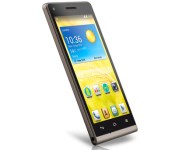
We got wind that EE was cooking up an own-brand smartphone for its 4G network a couple of weeks ago, and now the UK operator’s ready to come clean about the device. It’s called the Kestrel, and as we suspected, it’ll offer the cheapest ride on EE’s LTE network at £100 on pay-as-you-go (PAYG), or free from £14 per month on the new entry-level tariff, when it launches towards the end of April. Now, being £30 less on PAYG than Alcatel’s One Touch Idol S (which is also free from £14 per month), a mixed-bag of specs was to be expected. On the plus side, it’s packing a 1.2GHz quad-core Snapdragon 400 and as a Cat 4 handset, it’s capable of maxing out the theoretical 150Mbps download speeds of EE’s “Extra” plans. Not so enticing is the 4.5-inch qHD display (960 x 540), and beyond that, we’re looking at 1GB of RAM, 8 gigs of storage (with a microSD slot for expansion), a 2,000mAh battery, 5-megapixel main camera and 1-megapixel front-facer.
The Kestrel’s running Android 4.3 Jelly Bean behind Huawei’s Emotion UI, with bloatware comprising a couple of EE apps and “free games,” as the spec sheet puts it. Curiously, Amazon’s app suite is also pre-loaded on the device alongside Google’s familiar services. We’ve had a very brief encounter with a prototype handset, which was pleasant enough with its angular styling and “graphite” tint. Further indication of Huawei’s involvement as EE’s ODM can be seen in the phone’s curved bottom edge, which is fairly common to the Chinese company’s own devices. According to EE, a homegrown handset was always part of the network’s long-term plan — one that doesn’t stop with the Kestrel.
In fact, this is just the first in a series of planned devices bearing EE branding and named after British birds of prey. We don’t need to tell you that the Kestrel is all about affordability, but it would now seem the only way is up. We don’t know if some kind of own-brand flagship makes as much sense as a bargain offering, but we’re happy to wait for the EE Barn Owl to be announced before passing any formal judgement.
Filed under: Cellphones, Mobile
Daily Roundup: NSA spies on Huawei, Google Now for Chrome and more!

You might say the day is never really done in consumer technology news. Your workday, however, hopefully draws to a close at some point. This is the Daily Roundup on Engadget, a quick peek back at the top headlines for the past 24 hours — all handpicked by the editors here at the site. Click on through the break, and enjoy.
NSA spied on Huawei founder’s emails to implicate him as a Communist Party insider
The New York Times managed to get a glimpse of documents suggesting that the NSA was hacking into the email account of Huawei founder, Ren Zhengfei. Apparently the government has been creating “back doors” in the company’s systems since 2009.

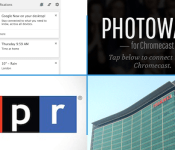
Google’s Photowall for Chromecast lets you doodle on photos, beam them to your TV
Google’s new app, called Photowall, lets Chromecast owners beam images and doodles straight to their TV. The iOS and Android apps are available now, so download away. And don’t worry WP8 users, there’s a web app too.

Google Now officially lands in Chrome
The power of Now has finally landed in Google’s Chrome. Basically, it works the same way that it does on your smartphone, though cards pop up from your OSes notification area.
iTunes Radio now streams the news, thanks to NPR
Earlier today, NPR announced that it joined iTunes Radio as the music streaming service’s first news channel. It may be the exclusive station for iDevice users at the moment, but we expect that won’t last for long.
You also might like:

NSA spied on Huawei founder’s emails to implicate him as a Communist Party insider

Ren Zhengfei might seem to us like a man of mystery; a quintessential “elusive figure” about whom we know very little beyond the facts that he founded Huawei and has had some (partly refuted) connections to the Chinese Communist Party. According to documents leaked by Edward Snowden and seen by Der Spiegel and The New York Times, however, there are snoops inside the NSA who know him much better than we do — not least because they’ve been reading his private emails.
The leaked documents suggest that the NSA has been hacking into Huawei’s HQ in Shenzen since 2009 for two different purposes: Firstly, to create “back doors” into the company’s international telecoms infrastructure, thereby allowing for deeper spying wherever that infrastructure is used (i.e., precisely what the US has accused Huawei of doing on behalf of the Chinese state); and secondly, to monitor internal communications, including messages sent by Zhengfei and Chairwoman Sun Yafang, based on the suspicion that these people are deliberately furthering China’s “SIGINT” (signals intelligence) capabilities.
The NSA’s activities apparently reached the point where one agency worker complained of having “so much data that we don’t know what to do with it.” But despite the amount of information collected, none of the leaked documents appear to prove or disprove America’s primary fear about Huawei being a security threat. This lack of evidence has led Huawei’s US spokesman, Bill Plummer, to take the ironic stance of calling on the US government to help clear his company’s name:
“If such espionage has been truly conducted, then it is known that the company is independent and has no unusual ties to any government, and that knowledge should be relayed publicly to put an end to an era of mis- and disinformation.”
Filed under: Cellphones, Mobile
Source: Der Spiegel, New York Times
 AIVAnet